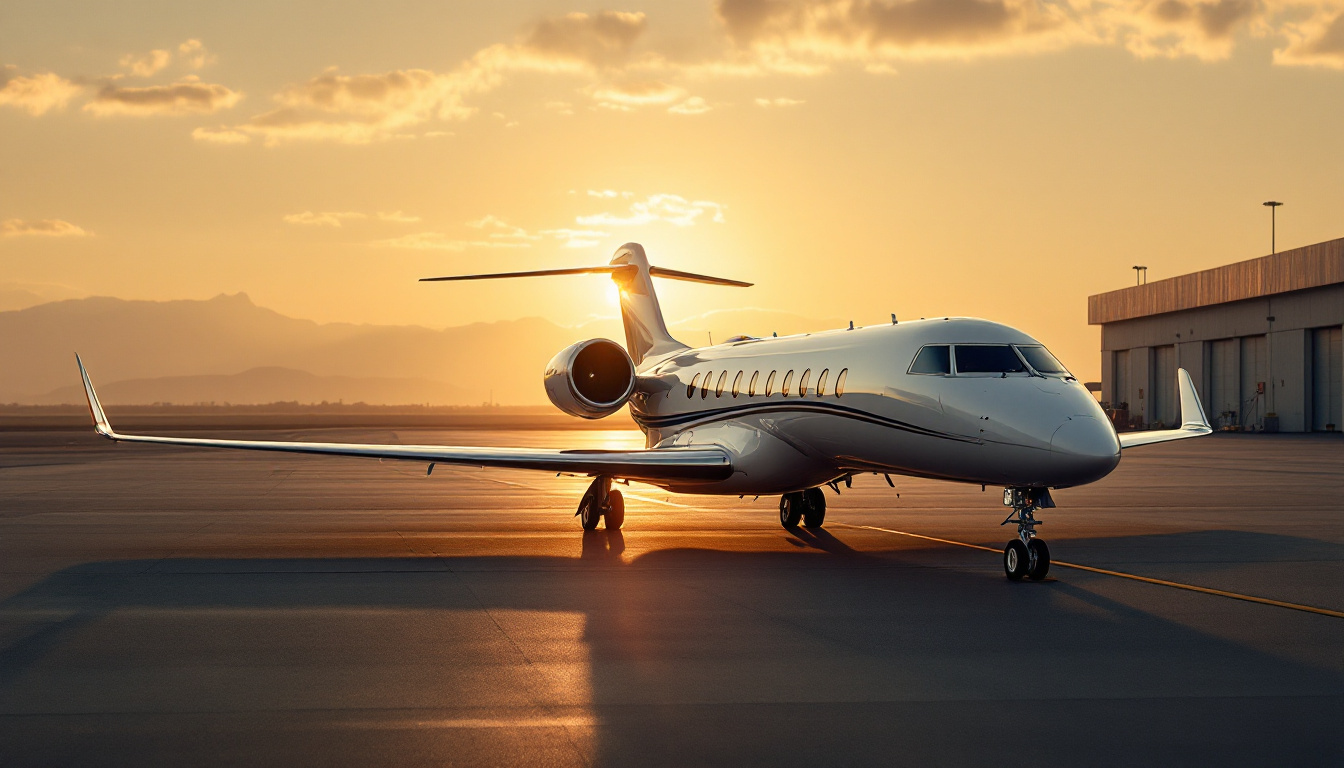
The Dassault Falcon 6X has spent its first two years in service quietly building the operational track record that determines whether a new business jet succeeds commercially over its production lifecycle. The aircraft now sits at more than 20 delivered units, over 5,000 fleet operating hours, and is in the process of progressively extending its certification envelope through steep-approach approval (obtained earlier in 2026) and the pending high-altitude airport approval. The 2026 picture for the type is one of steady commercial progress against challenging competition from the larger and longer-range Gulfstream and Bombardier alternatives.
This is the read on where the Falcon 6X actually sits as it approaches the end of its third operating year, what the in-service experience has revealed, and how the type fits into the broader Dassault programme that culminates with the eventual Falcon 10X delivery later in the decade.
The certification and EIS history
The Falcon 6X received joint EASA and FAA type certification in August 2023, with the first customer delivery and entry into service occurring on 30 November 2023. The aircraft is the second-generation Dassault large-cabin product, designed to succeed the established Falcon 7X (which has been in production since 2007) and to share the production base at Bordeaux-Mérignac with the larger Falcon 8X (which entered service in 2016).
The certification programme ran broadly on the schedule Dassault had projected through 2022-2023, though it included one significant delay early in the programme — the discovery during early flight testing of an issue with the Pratt & Whitney Canada PW812D engine that required component-level modifications and delayed the type’s EIS by approximately 12 months. The corrective action was implemented and the certification subsequently proceeded without further significant delays.
The EIS itself was conducted on schedule with the first customer delivery in late November 2023. The first-year operational experience through 2024 was characterised by the typical pattern of any new type entering service — gradual scaling of the production cadence, progressive expansion of the operational envelope, and the typical sequence of in-service teething issues that are resolved through service bulletins and progressive product improvements.
The 2025-2026 delivery position
By late 2025, more than 20 Falcon 6Xs had been delivered with the fleet accumulating over 5,000 hours of operational time. The 5,000-hour figure is a meaningful milestone for a new type at this stage of EIS — it represents approximately 250 hours per delivered aircraft on average, which is consistent with the steady operational utilisation that established business jets typically achieve in their early years.
Production at Bordeaux-Mérignac has been progressively scaling through 2024-2026. Dassault has not publicly disclosed the specific production cadence target for the 6X, but the demonstrated delivery pace through 2025 was approximately 12 to 15 aircraft per year, with the 2026 target understood to be in the range of 18 to 22 aircraft. The full order book at this stage of the programme has not been publicly disclosed, but industry estimates put the cumulative order intake at approximately 50 to 70 aircraft as of mid-2026 — a healthy book for a new type at this point in its production lifecycle.
The customer mix is broad — corporate flight departments, charter operators, fractional operators (Dassault is in discussion with several US-based fractional and charter operators about substantial fleet positions in the type), and private owners across the global wealth markets. The geographic distribution skews modestly toward Europe and the Middle East, with North American adoption building progressively as the operational track record matures.
The technical envelope extension
Dassault’s progressive extension of the 6X’s certified operating envelope has continued through 2024-2026. The steep-approach certification — obtained earlier in 2026 — clears the aircraft for operations at airports requiring approach angles steeper than the standard 3 degrees. London City Airport is the principal European example of a steep-approach airport in the business-aviation network; several smaller US, Caribbean, and European airports also require steep-approach certification for access.
The pending certification effort is high-altitude airport operation. The Falcon 6X’s current 9,000-foot airport elevation limit covers the substantial majority of business-aviation-relevant airports globally but excludes several specific destinations — Aspen (7,820 feet), Telluride (9,070 feet, immediately above the current limit), and several South American (La Paz, Cusco) and Asian (Lhasa) high-altitude destinations. Dassault is working through the certification programme to extend the limit progressively, with the next milestone likely to clear access to most of the currently-excluded destinations.
The technical envelope extensions matter for the commercial positioning of the type. The Gulfstream G500/G600 and the Bombardier Global 5500/6500 have been progressively certified at most of the relevant high-altitude airports through their respective operational histories. The Falcon 6X needs to match the operational flexibility of the established competitors to be fully competitive in the segment.
The competitive positioning
The Falcon 6X competes principally against:
The Gulfstream G500 and G600, which offer comparable range, slightly larger cabin volume in the G600 case, and the established Gulfstream operational network. The G500/G600 has been in service since 2018 and 2019 respectively and has built a substantial in-service track record with approximately 200+ delivered aircraft as of mid-2026.
The Bombardier Global 5500 and 6500, which offer comparable range, slightly different cabin layout, and the established Bombardier service network. The Global 5500/6500 has been in service since 2019 and has built its own substantial in-service track record.
The structural advantage of the Falcon 6X is the cabin width — the aircraft offers the widest cabin in its competitive segment at approximately 8 feet 6 inches, versus approximately 7 feet 11 inches on the Global 5500/6500 and approximately 7 feet 11 inches on the G500/G600. The cabin volume difference is meaningful for buyers prioritising the cabin environment over other operational characteristics.
The structural disadvantage of the Falcon 6X has been the slightly later EIS timing — the type entered service approximately five years after the Gulfstream and Bombardier competitors and has been working to close the in-service track record gap. The 2026 position is that the 6X has substantially closed that gap, with the 5,000+ fleet hours and the 20+ delivered aircraft demonstrating that the type’s operational reliability is at the standard the segment requires.
The Falcon 10X context
The longer-term strategic context for the 6X is the pending Falcon 10X, which Dassault is now targeting for a maiden flight in 2026 with entry into service likely in 2028. The 10X is positioned to compete directly against the Gulfstream G700/G800 and Bombardier Global 7500/8000 at the ultra-large-cabin end of the long-range segment, and represents Dassault’s response to the size and range escalation that has characterised the long-range business jet market through the past decade.
The 10X programme has been subject to certification timeline pressure and Dassault has progressively adjusted the EIS expectation over the past several years. The current 2028 EIS target is later than the original programme schedule but is within the range of credibility given Dassault’s track record on the 6X certification programme. The 10X’s commercial success will depend significantly on the type’s ability to differentiate against the established Gulfstream G700 (in service since 2024) and the new Bombardier Global 8000 (in service since 2025-2026) — both of which will have built substantial in-service track records by the time the 10X reaches the market.
What this means for buyers
For a buyer at the Falcon 6X’s competitive segment (large-cabin, transcontinental-to-long-range), the 2026 6X is now a credible alternative to the Gulfstream G500/G600 and Bombardier Global 5500/6500. The cabin width is the principal differentiator on the aircraft side; the established Dassault service network in Europe and the Middle East is the principal differentiator on the operational side. The aircraft’s in-service track record is now adequate to support a fleet commitment with reasonable confidence.
For a charter customer flying on the type, the Falcon 6X is increasingly available across the global charter fleet as the delivered aircraft enter charter operation. The aircraft’s cabin environment is generally well-regarded; the operational reliability is at the segment standard.
For a fractional buyer considering Falcon products specifically, the 6X is not currently available in US fractional ownership (NetJets does not offer Dassault types; Flexjet’s potential introduction of a Dassault type is among the candidates for the “new fleet type” the operator has indicated). The European fractional market has more Dassault availability through several smaller fractional operators.
The 2026 outlook for the Falcon 6X is for continued steady commercial progress, continued certification envelope extension, and gradual market share build against the established Gulfstream and Bombardier competitors. The type’s commercial trajectory through the back half of the decade will depend significantly on the broader Dassault programme, including the eventual 10X entry into service and the corresponding strategic positioning of the 6X within the Dassault long-range product range.
Verification
Filed against the following sources, last verified on April 17, 2026. The desk re-checks the source URLs on every dated modification of the piece.
- https://www.flightglobal.com/aerospace/dassault-falcon-6x-secures-european-and-us-certification/154655.article
- https://www.aerotime.aero/articles/ddassault-aviation-falcon-6x-enters-service
- https://simpleflying.com/dassault-falcon-6x-private-jet-certified-faa-easa/
- https://www.dassault-aviation.com/en/group/press/press-kits/dassaults-falcon-6x-receives-easa-and-faa-certification/
- https://www.flightglobal.com/business-aviation/dassault-targets-falcon-10x-maiden-sortie-in-2026-as-6x-ramp-up-gains-pace/165371.article
- https://aviationa2z.com/index.php/2025/11/19/dassault-falcon-10x-set-for-maiden-flight-in-2026/
- https://www.dassault-aviation.com/en/group/about-us/highlights/
Standing Questions
- When was the Falcon 6X certified and entered service?
- EASA and FAA joint type certification was obtained in August 2023. The first customer delivery and entry into service was on 30 November 2023. The aircraft is the second-generation Dassault large-cabin product following the Falcon 7X and 8X.
- How many Falcon 6Xs have been delivered?
- More than 20 aircraft as of late 2025, with the fleet having accumulated over 5,000 hours of operational time. Production continues to accelerate at the Bordeaux-Mérignac assembly line, and Dassault has been progressively scaling the delivery cadence through 2024-2026. The full order book has not been publicly disclosed at the unit-aircraft level.
- What is the Falcon 10X status?
- Dassault is targeting a maiden flight in 2026 for the larger Falcon 10X, with entry into service likely in 2028 based on the typical certification timeline for a new clean-sheet design. The 10X is positioned to compete directly with the Gulfstream G700/G800 and Bombardier Global 7500/8000 at the ultra-large-cabin end of the long-range segment. The aircraft has been the subject of certification timeline pressure and Dassault has progressively adjusted the EIS expectation over the past several years.
- What is the Falcon 6X's competitive positioning?
- The 6X is positioned against the Gulfstream G500/G600 and the Bombardier Global 5500/6500 in the large-cabin, transcontinental-to-long-range segment. The aircraft offers approximately 5,500 nautical miles of range, a Mach 0.90 maximum operating speed, the widest cabin in its segment, and the established Dassault operational characteristics (the company's strong reputation for engineering quality and pilot-friendly handling). The aircraft is generally well-regarded but has faced commercial pressure from the larger and longer-range Gulfstream and Bombardier alternatives.
- What is the recent certification envelope extension?
- Dassault has obtained steep-approach certification for the Falcon 6X earlier in 2026, which clears the type for operations at airports requiring approach angles steeper than the standard 3 degrees (London City being the principal example in the US/European business-aviation network). High-altitude airport operation is the next certification target — the aircraft's current 9,000-foot limit will be progressively extended to enable operations from higher-altitude airports including the Aspen, Telluride, and several South American and Asian destinations.