The premise
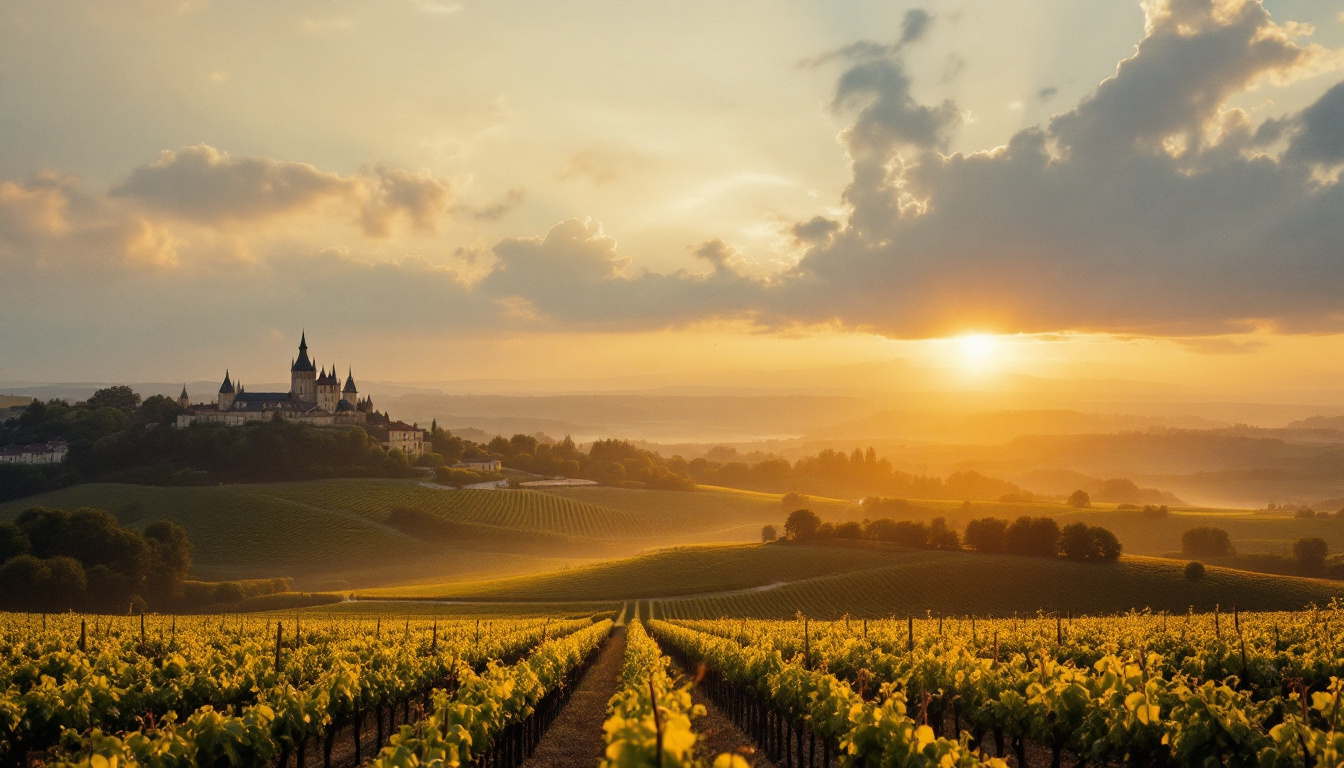
Two of France’s great spirit regions in seven days. Bordeaux is the wine country — the Médoc and Saint-Émilion structurally divide the appellation map (Left Bank for Cabernet Sauvignon dominant, Right Bank for Merlot dominant), and the trip threads both. Cognac is the brandy country — a smaller and quieter wine region (the Charente vineyards) where the eau de vie is distilled and aged in oak for the structural production of the world’s most-recognised spirit. The two regions are 2 hours apart by car and pair into a single trip that takes the guest through France’s two most-exported alcoholic categories without overlapping in either.
This trip is not the casual Bordeaux food trip (which would centre on the city of Bordeaux and the Saint-Émilion lunch loop). It is not the Champagne-and-Burgundy trip. It is the spirit-region-anchored trip for the guest who wants to see the production side of both Bordeaux and Cognac at the level of detail a curated week allows.
The logistics
Arrival is into Bordeaux Mérignac (BOD) for the inbound. BOD connects from London (BA, Air France), Paris (Air France), and several European capitals. The transatlantic routing is typically via Paris CDG with a same-day BOD connection (90 minutes flight time, 45-minute transfer at CDG). Direct Bordeaux from New York or Boston is not currently a year-round routing; the standard is Paris-Bordeaux connection.
Ground for the full itinerary is private car with a driver-guide. The Bordeaux specialist operators are Bordeaux Wine Trip, Rustic Vines, Bordeaux Excellence, and Ophorus. The Cognac side typically uses a different driver-guide (the regions are different specialisations); the desk’s standing operator on the Cognac side is Cognac Etape. Day rates with a driver-guide and Mercedes V-Class run approximately EUR 600-900.
Internal routing:
- BOD to COMO Cordeillan-Bages (Pauillac): 1 hour by car via the D2 Route des Châteaux
- Pauillac to Saint-Émilion: 1 hour by car via the A10 and the Saint-Émilion exit
- Saint-Émilion to Cognac: 1 hour 45 minutes by car via the A10 north and the Cognac exit
- Cognac to BOD return: 2 hours 30 minutes by car
The desk’s standing recommendation is private car for the full week — the inter-region drives are scenic country routes (the Médoc Wine Route through the village clusters of Pauillac, Saint-Julien, and Saint-Estèphe is one of the country’s best wine-region drives) and the lighter rural traffic compared to the Paris-region equivalent makes the driver experience comfortable.
The day-by-day
Day 1 — Bordeaux arrival and Pauillac transfer
Land BOD morning. Private car directly to Pauillac (1 hour). Check in to COMO Cordeillan-Bages. The property is a 19th-century château set in 2 hectares of vineyards in the historic hamlet of Bages, with the interiors by Paola Navone. The restaurant by Fabien Ferré (consultant-chef, the team that runs the dining programme) is the headline F&B and books at the same time as the room.
Afternoon walk through the Bages village and the adjacent Lynch-Bages estate (the Cazes family’s wine cellars are open to walk-by visits even outside the formal tasting programme). The Lynch-Bages Bakery (the village bakery the Cazes family opened as part of the local economy revival) is the standing morning coffee stop for the week.
Welcome dinner at Restaurant by Fabien Ferré at COMO Cordeillan-Bages.
Day 2 — Pauillac First Growths morning
Day’s structural anchor: the First Growth visit. The desk’s standing programme for a full Pauillac day is one First Growth in the morning, lunch at the COMO or at one of the village restaurants, and a Second Growth or Cru Bourgeois in the afternoon.
Morning option 1: Château Mouton Rothschild (the most visitor-accessible of the three Pauillac First Growths, with the famous artist label series and the Mouton Cadet history). The visit includes the cellar tour, the Mouton museum (the artist label collection), and a tasting of the current vintage. Approximately 90 minutes.
Morning option 2: Château Latour (the most exclusive of the three; requires personal introduction or the highest-tier concierge access). The visit includes the cellar and a tasting of the Pavillon de Latour, the Forts de Latour, and the Grand Vin Latour vertical.
Lunch at COMO Cordeillan-Bages or at the Lynch-Bages-owned Cafe Lavinal in the village.
Afternoon at Château Pichon-Longueville Comtesse de Lalande or at Château Pichon Baron (the two Pichon Second Growths, the more accessible afternoon visits — both run regular tastings with advance booking).
Dinner at Le Lion d’Or in Pauillac village (the local bistro institution) or back at the hotel.
Day 3 — Saint-Estèphe and Margaux
Day’s structural arc: north to Saint-Estèphe in the morning, south to Margaux in the afternoon. Saint-Estèphe and Margaux are the two appellations adjacent to Pauillac and together form the Médoc Left Bank’s structural anchors.
Morning at Château Cos d’Estournel (the most exuberant exterior in the Médoc — the 19th-century mansion built by Louis Gaspard d’Estournel with the pagoda-influenced façade). The visit includes the cellar and the museum of the d’Estournel family’s Indian-trade history. Or at Château Montrose (the more austere Second Growth, the Pauillac-style winemaking in Saint-Estèphe).
Lunch at the Château Lynch-Bages restaurant or at the Hostellerie de Plaisance Margaux (Marc Veyrat’s project in the Margaux village).
Afternoon at Château Margaux (the Premier Grand Cru, the Mansart-designed château with the 19th-century neoclassical façade). The visit includes the cellar, the Pavillon Rouge tasting room, and the Grand Vin Margaux current-vintage tasting. Or at Château Palmer (the famous Third Growth that performs at First Growth quality, often the harder visit to secure but the more interesting cellar).
Return to Pauillac for the evening. Dinner at Restaurant by Fabien Ferré or at the COMO terrace.
Day 4 — Pauillac to Saint-Émilion
Morning departure from COMO Cordeillan-Bages. Drive 1 hour to Saint-Émilion via the A10 and the Saint-Émilion exit.
Pre-lunch visit at Château Cheval Blanc (the right-bank Premier Grand Cru Classé A, owned by LVMH, with the contemporary Christian de Portzamparc-designed cellar opened in 2011). The visit includes the cellar, the gravity-flow winemaking system, and a tasting of the current Cheval Blanc.
Lunch at L’Envers du Décor in Saint-Émilion village (the David Suire institution, the regional anchor restaurant) or at Hostellerie de Plaisance (the Michelin-starred hotel restaurant by chef Yannick Alleno).
Afternoon at Château Pavie (the other Premier Grand Cru Classé A on the Saint-Émilion plateau, owned by Gérard Perse, with the dramatic cellar architecture). Or at Château Ausone (the smaller Premier Grand Cru on the cliffside).
Check in to Hostellerie de Plaisance (the village’s headline hotel, 20 rooms in the centre of Saint-Émilion) or to the Château Hôtel Grand Barrail (the 14-room château 4 kilometres from the village on the surrounding vineyards).
Walking circuit of Saint-Émilion at dusk — the Monolithic Church (the 12th-century underground church carved into the limestone), the Cloître des Cordeliers (the Franciscan monastery ruins), the Tour du Roi (the 13th-century watchtower with the village panorama). Dinner at the hotel restaurant.
Day 5 — Saint-Émilion to Cognac
Morning visits — Pomerol if Day 4 did not include them. Pomerol is the small appellation adjacent to Saint-Émilion (only 800 hectares total, the home of Pétrus, Le Pin, La Conseillante, Lafleur). The icon Pomerol estates do not accept visitors but the second-tier estates (Vieux Château Certan, Château La Conseillante for advance-booked guests of the trade) do. The standing morning is Château La Conseillante (the visitor-accessible Pomerol icon, advance booking required) or a guided Pomerol vineyard walk with a regional sommelier.
Lunch at Hostellerie de Plaisance or at La Goutte d’Huile in nearby Castillon-la-Bataille.
Afternoon drive Saint-Émilion to Cognac (1 hour 45 minutes). The route catches Libourne, Castillon, and the Charente countryside.
Check in to Château de Bagnolet (Hennessy’s curated 12-room château outside Cognac town, open to guests of the maison) or to the Hôtel Chais Monnet (the centre-of-Cognac boutique opened 2018 in a converted distillery on the river). The desk’s standing pick is Château de Bagnolet for the maison-led brief and Chais Monnet for the urban Cognac brief.
Welcome dinner at the property.
Day 6 — Cognac maisons
The structural Cognac day is the visit programme — the four large maisons (Hennessy, Martell, Remy Martin, Courvoisier) plus the two boutique tier (Frapin, Camus, A.E. Dor). All operate visitor programmes with tastings of the VS, VSOP, and XO grades, plus the maison-specific premium tier (Hennessy Paradis, Remy Louis XIII, Martell Cordon Bleu).
The desk’s standing day: morning at Hennessy (the headquarters tour, the cellar, the Founder’s Cellar tasting) followed by lunch at the maison or at La Ribaudière (the regional fine-dining institution outside Cognac), afternoon at Frapin (the family-owned smaller maison with the single-estate Grande Champagne credentials) or at Remy Martin (the Cellar Master tour and the Louis XIII tasting).
Dinner at La Maison in Cognac (the contemporary fine-dining anchor) or back at the property.
Day 7 — Departure
Morning at the property. Optional final visit at one of the maisons or a Charente boat trip on the river. Afternoon transfer to Bordeaux Mérignac (2 hours 30 minutes by car). International departure from BOD via Paris CDG.
The standing recommendations
For a first-time Bordeaux and Cognac trip, couple: 3 nights COMO Cordeillan-Bages, 1 night Hostellerie de Plaisance Saint-Émilion, 2 nights Château de Bagnolet by Hennessy. September-October harvest window.
For the more contemporary brief: 3 nights at La Grande Maison de Bernard Magrez in Bordeaux city (the Joël Robuchon hotel) + 1 night Hostellerie de Plaisance + 2 nights Chais Monnet Cognac. The Bordeaux city anchor replaces the Pauillac anchor; the trade-off is the easier urban evenings versus the more vineyard-immersive Pauillac base.
For a family of four: COMO Cordeillan-Bages has limited family inventory; consider a 4-night Bordeaux city base at the Intercontinental Le Grand Hôtel Bordeaux as the alternative for a family brief. The wine programme is more flexible from a Bordeaux city base.
For a wine-collector or trade brief: the First Growth visits become the trip’s structural anchors and the itinerary builds out from the confirmed appointments. Book the First Growth visits 12-16 weeks ahead through the maison’s relations team or via a luxury concierge with established trade access.
For the dedicated Cognac brief (skip Bordeaux): 5 nights at Château de Bagnolet with the full maison rotation (Hennessy, Martell, Remy Martin, Courvoisier, Frapin) and the Charente river day.
The reservations math
The all-in for the 7-day shoulder version for two:
- COMO Cordeillan-Bages 3 nights at approximately EUR 700 per night = EUR 2,100
- Hostellerie de Plaisance Saint-Émilion 1 night approximately EUR 750
- Château de Bagnolet by Hennessy 2 nights at approximately EUR 850 per night = EUR 1,700
- Driver-guide and private car 6 days at approximately EUR 700 per day = EUR 4,200
- F&B above breakfast (Fabien Ferré, Hostellerie de Plaisance, La Ribaudière, daily lunches): approximately EUR 3,500-5,000
- Château visit fees (First Growths typically EUR 100-300 per person per visit; Cognac maisons EUR 50-200 per visit; private tastings extra): approximately EUR 2,500-4,000 across the week
- BOD transfers in and out: approximately EUR 500
Total all-in for the 7-day shoulder version for two: approximately EUR 15,000-18,500 before international air.
The harvest-week version (mid-September through mid-October) lands approximately 15-20 percent higher at the COMO and the Saint-Émilion properties.
Deposit and cancellation: COMO Cordeillan-Bages takes 30 percent at booking with the balance 30 days before arrival. Château de Bagnolet operates as a Hennessy invitation programme and typically settles full balance 30 days before arrival. The First Growth and Cognac maison visit deposits vary; book the visits in parallel with the hotel and assume non-refundable inside 14 days.
Lead times: 5-7 months for the September-October harvest window. 4-5 months for May-June. The First Growth visits require 6-12 weeks of advance booking; the Cognac maison visits 4-6 weeks. The desk’s standing recommendation is to book the visits first and let the hotel inventory build around the confirmed appointments.
Standing Questions
- When to go?
- Two windows. Mid-September through mid-October catches harvest (the structural high point — the picking, the early crush, the cellar deliveries, the visits include the most active estate operations). Late May through mid-June catches the bud-break and the fully-leafed vines, with cooler weather and a less crowded vineyard schedule. The desk's pick for a first-time wine trip is the September-October harvest window for the cellar activity and the colour of the vines. July-August is structurally wrong — most châteaux close for the August summer break and the heat compresses the visit programme. November-March is the off-season; visits are sparser and the cold cellar visits are the structural experience of that window.
- Which First Growths actually accept visitors?
- The five Médoc First Growths (Château Lafite Rothschild, Château Margaux, Château Latour, Château Mouton Rothschild, and Château Haut-Brion) all accept private visits but are by reservation only, with 6-12-week advance booking through the château's communication department or via a luxury concierge. Lafite is the strictest (typically Tuesdays only, only by personal recommendation), Mouton Rothschild and Margaux are the more accessible (private visits with tastings at the château's discretion), Haut-Brion is in suburban Bordeaux and easier to fit. The right-bank First Growth equivalents (Château Cheval Blanc, Château Pavie, Château Ausone — the Saint-Émilion Premier Grand Cru Classé A names) are similarly by reservation. The Pomerol icons (Pétrus, Le Pin) do not generally accept visitors.
- COMO Cordeillan-Bages or another Médoc anchor?
- COMO Cordeillan-Bages (a 19th-century château in the hamlet of Bages in Pauillac, 28 rooms, taken over by COMO in 2023 from the Cazes family of Château Lynch-Bages, with the restaurant by Fabien Ferré who held three Michelin stars at La Vague d'Or before joining) is the desk's standing pick. The property sits on the Médoc Wine Route in the heart of Pauillac, the appellation that contains three of the five First Growths (Lafite, Latour, Mouton Rothschild). The alternative anchors are Château Cordeillan-Bages's neighbour the Cazes family's Maison Bages, the Relais et Châteaux Château de Trojan, and the boutique Cordis hotel in nearby Saint-Estèphe. For a 3-night Médoc anchor, COMO Cordeillan-Bages is the structural choice.
- Saint-Émilion — overnight or day trip?
- Overnight. Saint-Émilion is a UNESCO-listed village on the right bank, 45 minutes from Pauillac and 1 hour from Cognac. The overnight is the cleaner brief — you do the morning Pauillac departure, the Pomerol and Saint-Émilion visits over the day, lunch at one of the village restaurants (L'Envers du Décor or the Hostellerie de Plaisance), the village walking circuit at dusk (the Monolithic Church, the Cloître des Cordeliers ruins), and the morning departure to Cognac. The day-trip-from-Pauillac alternative compresses the right-bank visits awkwardly and misses the village's evening.
- Lead times?
- 5-7 months for September-October harvest week at COMO Cordeillan-Bages. 4-6 months for May-June. The First Growth château visits require 6-12 weeks of advance booking and structurally restrict the itinerary planning — book the château visits before locking the hotel inventory. Hennessy's Château de Bagnolet in Cognac is the bottleneck on the Cognac side (the maison runs the property as a curated experience and books out 4-6 months ahead for harvest).