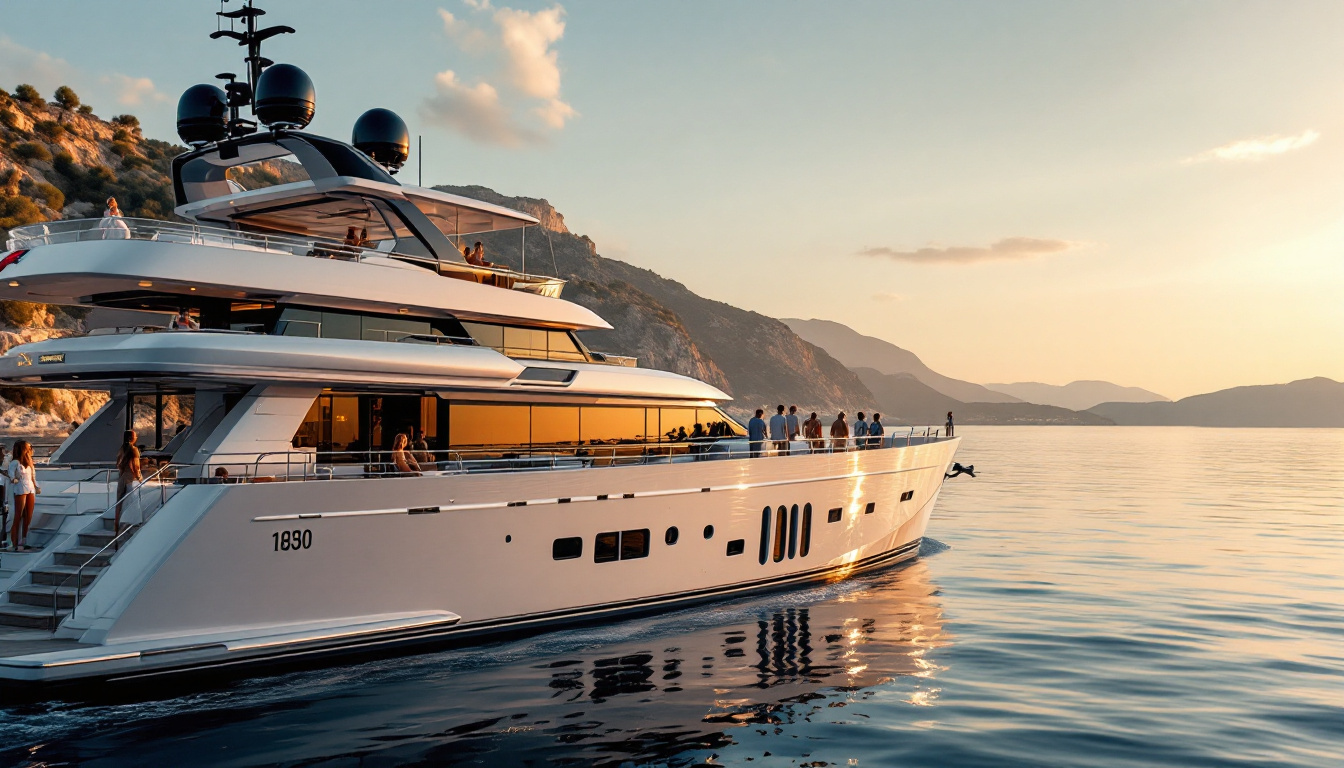
The premise
A 7-night Mediterranean yacht charter in the summer 2026 season, structured as a single broker engagement with one of the major-market houses (Burgess, Edmiston, Fraser, IYC, Camper & Nicholsons) and a single yacht reservation. The brief is for guests who are either first-time charterers researching the market structure or returning charterers refreshing the working knowledge of the rate bands, the APA mechanics, and the MYBA contract framework. The trip is the week itself, not the multi-week passage charter (which is a different conversation).
This is the desk’s working primer on the market mechanics rather than a specific itinerary. The yacht charter market is structurally information-asymmetric — the broker controls the inventory access, the rate negotiation, and the contract — and the most expensive mistakes are made by guests who book directly off a marketing brochure without understanding the all-in. The below is the desk’s read on how the market actually works.
The broker market
The Mediterranean charter market is intermediated by approximately 30 major-house brokers and several hundred smaller agencies. The major houses — Burgess, Edmiston, Fraser, IYC, Camper & Nicholsons, Y.CO, Northrop & Johnson, Cecil Wright — have access to the majority of the charter fleet through the MYBA (Mediterranean Yacht Brokers Association) Central Listing system, which is the industry’s shared inventory database. A yacht listed for charter through any one MYBA broker is generally bookable through any other MYBA broker.
This means the broker choice is less about inventory access than about the relationship with your assigned charter manager. The charter manager is the person who will:
- Brief you on the available yachts that fit your dates and party size
- Arrange the yacht visit (the in-marina visit at Antibes, Cannes, Genoa, or Palma during the off-season is the desk’s standing recommendation before any booking decision above EUR 500,000)
- Negotiate the charter fee and the APA terms with the central agent (the broker representing the yacht owner)
- Manage the MYBA contract, the deposit schedule, the APA delivery, and the pre-departure provisioning brief
- Be your point of contact during the charter for any issues
The major houses also publish the annual MED Charter Show invitations (the September Cannes Yachting Festival, the September Monaco Yacht Show), which are the right venues for a guest who wants to see multiple yachts back-to-back before booking.
The yacht segments
The Mediterranean charter fleet falls into roughly four size and price segments:
30-40 metre motor yachts: EUR 100,000-200,000 per week base. The entry segment for serious motor-yacht charter. Typically 8-10 guests in 4-5 cabins, crew of 6-9. Examples: Sanlorenzo SL96, Princess M-Class, Ferretti Custom Line. The water toys are limited (a tender, a few Seabobs, basic snorkel kit), the helicopter pad is not standard, and the layouts are more compact. The segment that delivers the best per-guest economics for a couple or small family of 4-6.
40-60 metre motor yachts: EUR 200,000-650,000 per week base. The middle segment that constitutes the bulk of the active charter fleet. Typically 10-12 guests in 5-6 cabins, crew of 9-14. Examples: Benetti Mediterraneo, Sanlorenzo SL120, Heesen 50-metre. Better water toys (a larger tender, a smaller tender, Seabobs, jet-skis, wakeboard kit, paddleboards, snorkel kit), often with a beach club aft, and the dedicated wellness areas. The segment most charter parties book.
60-80 metre motor yachts: EUR 650,000-1,500,000 per week base. The upper segment. Typically 12 guests in 6-7 cabins, crew of 16-22. Examples: Lurssen 70-metre Solandge, Oceanco DAR, Feadship 70-80 metre. The full water-toy garage (with a 12-metre tender, a Falcon tender, sailboats, kayaks, paddleboards, jet-skis, water-skiing equipment), the dedicated spa, the helicopter pad capable of receiving a 5- or 6-seat machine. The segment where the difference between yachts becomes idiosyncratic — each yacht has a defining design feature and the broker’s research before the booking matters most.
90 metres-plus: EUR 1,500,000-2,500,000+ per week base. The largest charter yachts. Typically 12 guests (the SOLAS regulations effectively cap commercial charter at 12 guests irrespective of yacht size; larger guest counts require a passenger-vessel certification that is materially more expensive to operate), crew of 25-40. Examples: Lurssen Madsummer, Oceanco Aviva, Lurssen Flying Fox. The full superyacht amenity programme — multiple swimming pools, a cinema, a beach club spanning the full beam, multiple helicopters, the dedicated submarine. The largest yachts are charter outliers — most are private-use only, with charter availability constrained to specific weeks per year.
The all-in math
The base charter fee is the line item the broker will quote first. The all-in is structurally larger by 40-60 percent.
The standard build-up:
- Base charter fee. The headline rate for the week.
- APA (Advance Provisioning Allowance). Typically 25-35 percent of the base fee, paid 30 days before embarkation. The APA funds fuel (the largest single cost — a 60-metre motor yacht burns approximately 250-400 litres per hour of diesel at cruise, plus generator load at anchor), provisioning (food, alcohol, sundries), dockage and marina fees (which are punishing in the Western Med peak — the Monaco and the Antibes harbour fees alone can reach EUR 5,000-15,000 per night for the larger yachts), and any specialty supplies. APA is reconciled at end-of-charter; unspent funds are returned.
- VAT. Calculated on the base charter fee and on a portion of the APA, with the rate determined by the cruising-itinerary jurisdiction and the yacht’s flag. The headline rates are 20 percent (France), 22 percent (Italy), 21 percent (Spain), 13 percent (Croatia, Greece), 18 percent (Turkey, Malta). Most jurisdictions have lump-sum or reduced-rate methodologies that lower the effective rate; the broker handles the calculation.
- Crew gratuity. Industry standard is 10-20 percent of the base charter fee, paid in cash at end-of-charter directly to the captain for distribution to the crew. The 15 percent figure is the most-commonly quoted standard.
- Delivery and redelivery fees. If the charter starts at one port and ends at another (an open-jaw charter), the delivery and redelivery legs are billed separately based on hourly fuel burn and crew-day cost.
For a representative 60-metre motor yacht at EUR 650,000 base per week in the Western Med:
- Base: EUR 650,000
- APA (30 percent): EUR 195,000
- VAT (effective approximately 11 percent on the French Flag with the reduction): EUR 71,500
- Crew gratuity (15 percent): EUR 97,500
- All-in: approximately EUR 1,014,000
For the same yacht in the Eastern Med (Greek islands, with the lower marina costs and the lower VAT):
- Base: EUR 550,000 (the Eastern Med discount is typically 15-25 percent vs Western Med equivalent)
- APA (25 percent — fuel and dockage materially lower in Greece): EUR 137,500
- VAT (13 percent Greek): EUR 71,500
- Crew gratuity (15 percent): EUR 82,500
- All-in: approximately EUR 841,500
The Eastern Med saves approximately EUR 170,000 on the same yacht in the same week.
The contract structure
The standard Mediterranean charter contract is the MYBA Charter Agreement, the industry-standard template developed by the Mediterranean Yacht Brokers Association and used by virtually every major broker. The key contract terms:
- Deposit: 50 percent at signature, 50 percent at 30 days before embarkation. The APA is paid separately at 30 days out.
- Cancellation: Inside 60 days, generally 50 percent of the base fee; inside 30 days, 100 percent of the base fee. Force majeure clauses cover specific weather and government-restriction events.
- Insurance: The yacht’s hull insurance is the owner’s responsibility. The charter guest is responsible for the personal effects insurance and is strongly recommended to purchase trip-cancellation insurance separately.
- Itinerary: The agreed itinerary is in the contract but is at the captain’s discretion based on weather and operational conditions; the captain has the final authority on the cruising programme.
- Crew: The yacht’s regular crew is the charter crew. The captain’s name, the chef’s name, and the chief stewardess’s name are typically in the brochure and at the time of booking you should expect to receive the crew CVs.
The preference sheet
Approximately 4-6 weeks before embarkation, the broker will deliver the preference sheet — a 15-25-page questionnaire covering the food and beverage preferences (allergies, favourite wines, preferred spirits, dietary restrictions, cuisine styles), the water-toy preferences (which kit to have provisioned aboard), the cabin allocation, the celebration occasions (birthdays, anniversaries) during the charter, and the itinerary preferences (must-visit anchorages, dining ashore at specific restaurants). The preference sheet is the operational document the captain and the chief stewardess use to provision and plan the week. Returning it complete and on time materially improves the charter experience.
The standing recommendations
For first-time charter parties: book a 50-metre motor yacht in the Eastern Med for a Greek-islands week in mid-June or early September. The price-quality ratio is the strongest in the market, the anchorages are uncrowded relative to the Western Med peak, and the islands’ character (Mykonos, Antiparos, Santorini, Folegandros) does not require the social calendar that the Western Med July-August week implies.
For returning charter parties: the Sardinian Costa Smeralda week in the first week of August on a 60-70 metre yacht is the desk’s standing recommendation. The Costa Smeralda is the Italian Mediterranean’s social peak (the Porto Cervo regatta, the Phi Beach, the Cala di Volpe set) and the anchorages between La Maddalena and the Bonifacio Straits are among the best in the Mediterranean.
For the long-time charterer: the Croatian Dalmatian coast (Dubrovnik to Split, with the islands of Hvar, Vis, and Korčula) is the desk’s contrarian pick. The Croatian market has matured materially over the last decade, the anchorages remain less crowded than the Italian or French equivalents, and the rate card is competitive with the Eastern Med Greek programme.
For the yacht-visit before booking: the September Monaco Yacht Show (the week before is the prime broker-introduction week with all the brokers’ charter teams in town) is the desk’s standing recommendation for any charter party considering a yacht above EUR 1,000,000 per week. The yacht visit at the show or at a private viewing in the off-season at Antibes or Palma is the only way to actually assess the layout and the crew before signing.
The reservations math
For a 50-metre motor yacht in the Eastern Med (Greek islands) for a 7-night charter in mid-June:
- Base: approximately EUR 300,000-450,000
- APA: approximately EUR 75,000-135,000
- VAT (Greek 13 percent on base): approximately EUR 39,000-58,500
- Crew gratuity: approximately EUR 45,000-67,500
- All-in: approximately EUR 460,000-710,000 for the week
- Per-couple (for a 4-couple party of 8 guests): approximately EUR 115,000-178,000 per couple
For a 70-metre motor yacht in the Western Med (French Riviera) for a 7-night charter in early August:
- Base: approximately EUR 800,000-1,200,000
- APA (35 percent — Western Med peak fuel and dockage): approximately EUR 280,000-420,000
- VAT (French effective 11-13 percent with reduction): approximately EUR 88,000-150,000
- Crew gratuity: approximately EUR 120,000-180,000
- All-in: approximately EUR 1,290,000-1,950,000 for the week
- Per-couple (for a 6-couple party of 12 guests): approximately EUR 215,000-325,000 per couple
Deposit terms: 50 percent at MYBA contract signature; 50 percent at 30 days before embarkation; APA at 30 days before embarkation. Cancellation inside 60 days is 50 percent; inside 30 days is the full base plus the APA.
Lead times: 12-18 months for the prime weeks (the second and third weeks of July, the first three weeks of August, the Monaco Grand Prix week in late May, the Cannes Film Festival weeks in mid-May) on the most-requested yachts; 9-12 months for shoulder dates; 4-6 months for the September shoulder. The largest charter yachts (90 metres-plus) are typically booked 18-24 months out for August.
Standing Questions
- Burgess, Edmiston, Fraser, IYC, or Camper & Nicholsons — which broker?
- All five are credible major-market brokers and all five have access to most of the charter-fleet inventory through the MYBA Central Listing system; the broker choice is more about the personal relationship with your assigned charter manager than about inventory access. Burgess and Edmiston are the two largest by yacht count; Fraser is the strongest in the long-running European charter heritage; IYC is the strongest in the contemporary motor-yacht segment; Camper & Nicholsons is the oldest house with the strongest sailing programme. The desk's recommendation for a first-time charter is the broker that came recommended by someone who has chartered three or more times themselves.
- Western Med or Eastern Med for the week?
- Different trips. Western Med (the French Riviera between St-Tropez and Monaco, the Italian Riviera between Portofino and the Amalfi Coast, the Balearic Islands) is the social-summer register — the Pampelonne beach clubs, the Monaco shoulder events, the Sardinian Costa Smeralda. Eastern Med (the Greek islands — the Cyclades, the Dodecanese, the Sporades — and the Turkish Mediterranean coast between Bodrum and Marmaris) is the slower-paced register with the more dramatic anchorages, the less-developed harbours, and meaningfully better pricing on the equivalent yacht. Western Med pricing in July-August runs approximately 25-40 percent above the same yacht in the Eastern Med.
- What is the APA and how should I budget for it?
- The Advance Provisioning Allowance is the upfront fund (typically 25-35 percent of the base charter fee) paid 30 days before embarkation that the captain uses for fuel, food, beverages, dockage, marina fees, and the day-to-day operating expenses during the charter. The APA is reconciled at the end of the charter — unspent funds are returned, overspent funds are invoiced. For a 30-metre motor yacht at EUR 150,000 base, plan on EUR 37,500-52,500 APA; for the larger yachts in the EUR 800,000-1,200,000 base range, plan on EUR 200,000-420,000 APA. Fuel is the largest single APA cost and is structurally non-negotiable.
- VAT — how is it calculated?
- Mediterranean charter VAT runs by jurisdiction: France 20 percent (with the historical French Flag Reduction lowering the effective rate to approximately 10-13 percent on French-flagged yachts under specific conditions), Italy 22 percent (with the lump-sum methodology lowering the effective rate on certain itineraries), Spain 21 percent, Croatia 13 percent, Greece 13 percent, Turkey 18 percent, Malta 18 percent (with the Maltese leasing structure lowering the effective rate). The VAT applies to the base charter fee and to a portion of the APA. The flag state of the yacht and the cruising itinerary together determine the applicable rate, and the broker handles the calculation as part of the contract.
- How early to book?
- 12-18 months for the prime weeks (the second and third weeks of July, the first three weeks of August, the Monaco Grand Prix week in late May, the Cannes Film Festival weeks in mid-May) on the most-requested yachts; 9-12 months for shoulder dates; 4-6 months for the September shoulder. The largest charter yachts (90 metres-plus) are typically booked 18-24 months out for August. For the Christmas-Caribbean season the same booking horizon applies in reverse.