The premise
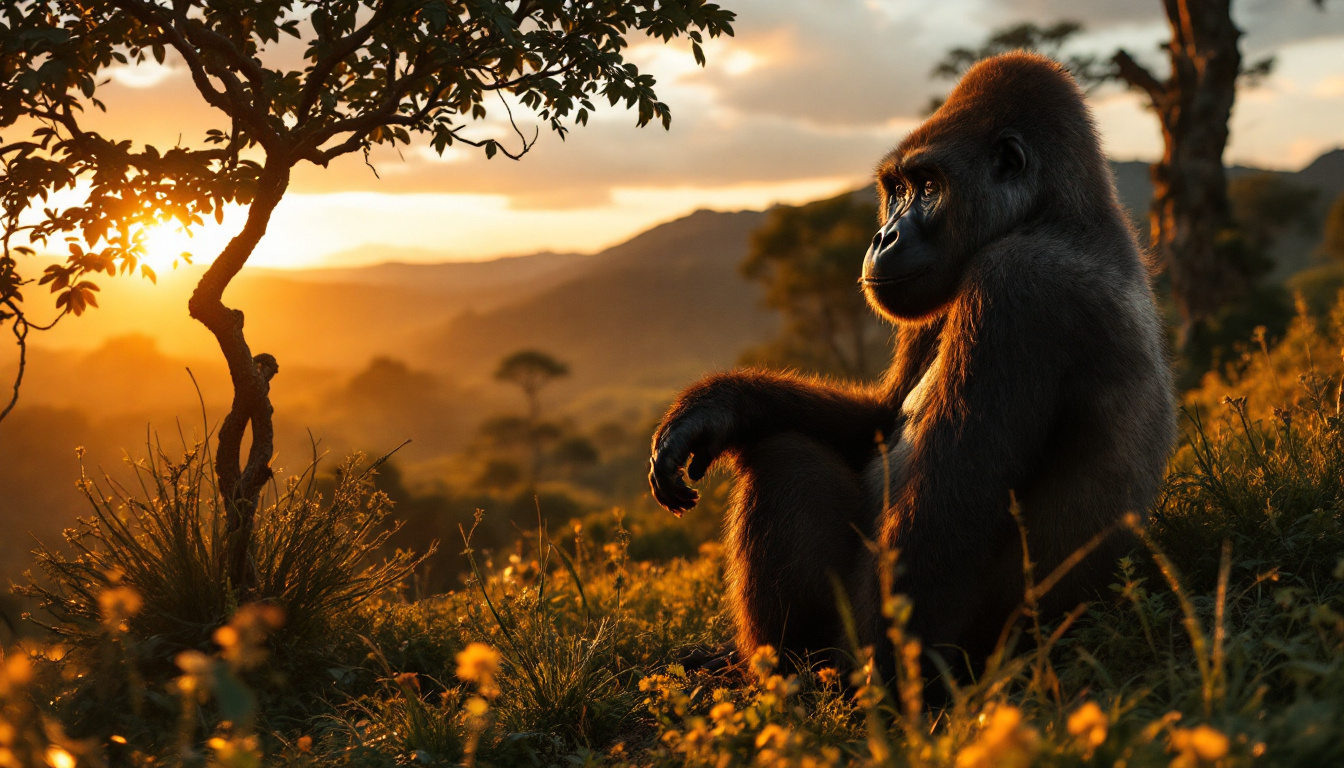
The Rwanda gorilla trek is the densest expression of high-stakes wildlife tourism on the planet. There are approximately 1,063 mountain gorillas remaining (the 2024 census figure, the species recovery from a 1980s low of 254 individuals to over 1,000 today is the global conservation success story), split between three populations — the Virunga Massif (Rwanda, Uganda, DRC), Bwindi (Uganda), and the smaller Sarambwe (DRC). The Rwanda side of the Virunga is structurally the most controlled, the most permit-rationed, and the most luxury-supplied of the three trekking countries.
This trip is the headline Rwanda gorilla week — 4 nights at Wilderness Bisate, two gorilla treks, a golden monkey trek, and a Kigali bookend. The Rwandan side is the more expensive of the three countries (US $1,500 permit versus Uganda’s US $800) but compensates with the better lodge inventory, the closer trailhead access from Kigali (2.5 hours by road versus 8-10 hours for Bwindi), and the conservation programme that the permit fee directly funds.
The logistics
Arrival is into Kigali International (KGL). KGL is one of Africa’s better-functioning small international airports; transatlantic routings come via Brussels (Brussels Airlines), Amsterdam (KLM), Doha (Qatar Airways), Addis Ababa (Ethiopian), or Dubai (Emirates and flyDubai). The RwandAir direct routings include London and several African capitals.
Ground for the full itinerary is private car with English-speaking driver-guide arranged by the lodge or by Volcanoes Safaris (one of the standing operators, separate from Volcanoes National Park itself). Day rates with a driver-guide and 4WD run approximately US $250-400.
The structural transfers:
- Kigali to Volcanoes National Park (the Kinigi park headquarters at the base of Mount Sabyinyo, 2 minutes from the Bisate trailhead): approximately 2.5 hours by road via the A1 (a paved highway in good condition through rolling Rwandan farmland)
- Volcanoes National Park park boundary to Bisate Lodge: 5 minutes by 4WD on a single-track approach road
- The trek-day routing: the lodge transfers you 30-45 minutes by 4WD to the Kinigi park headquarters for the 07:00 ranger briefing, then onward 30-60 minutes by 4WD to the assigned trailhead
Helicopter from Kigali to Bisate is available (approximately 45 minutes versus 2.5 hours by road, US $4,500-6,000 one-way for the 4-passenger Eurocopter) but is rarely the right tool — the road drive is one of the trip’s quieter cultural experiences (rolling tea plantations, the Murambi and Bigogwe valleys, the small village markets) and worth doing at least one-way.
The day-by-day
Day 1 — Kigali arrival
Land KGL afternoon or evening. Private car to The Retreat by Heaven (the Pat Klein-and-Josh Ruxin boutique on Norvegienne Hill, 20 rooms, the country’s most established Kigali hotel) or to One&Only Nyungwe House Kigali (the new urban property of the One&Only Gorilla’s Nest sister, opened 2024). Dinner at Heaven Restaurant or at the Inzora Rooftop Cafe.
The morning of day 2 includes the Kigali Genocide Memorial visit — the desk’s standing recommendation is to include the memorial in the trip’s first half day. The memorial is the structural reckoning with the 1994 Genocide Against the Tutsi; the country’s recovery, the gorilla conservation story, and the Bisate Lodge itself sit downstream of this history.
Day 2 — Kigali to Bisate
Morning at the Kigali Genocide Memorial (90 minutes). Lunch at Repub Lounge or at Khana Khazana. Afternoon transfer by private car to Volcanoes National Park (2.5 hours).
Check in at Wilderness Bisate Lodge. The six villas are forest-cone-shaped, with thatched walls and floor-to-ceiling glass facing Mount Bisoke. Each villa has a fireplace, a soaking tub, and the bed positioned for the volcanic view. The central guest area, dining room, and bar are in the main lodge structure 200 metres uphill from the villas.
Quiet afternoon. Welcome dinner at the lodge. Briefing on the morning’s trek.
Day 3 — First gorilla trek
Pre-dawn breakfast (06:00). Drive to Kinigi park headquarters (30-45 minutes). 07:00 ranger briefing — the morning briefing is the assignment of families to trekkers (the rangers consider age, fitness, and trek preference; the lodge advocates for the appropriate family). After the briefing, drive to the assigned trailhead (15-60 minutes depending on the family) and start the trek.
The trek itself: hike with the assigned ranger and trackers through bamboo forest and montane rainforest until the gorilla family is located. Once with the gorillas, the regulation is one hour with the family at a 7-metre minimum distance — sit, watch, photograph, no flash. Then trek back to the trailhead.
Return to Bisate by mid-afternoon. Lunch (or a late lunch depending on the trek length). Afternoon spa or rest. Dinner at the lodge.
Day 4 — Second gorilla trek
The second trek operates the same structure as Day 3 but typically with a different family. The lodge typically arranges for a different family than Day 3 to give a fuller picture of gorilla social structure. The second day’s trek is often the better day photographically (you have learned the rhythm, the trekker bond with the trackers is stronger, the family behaviour is sometimes more relaxed in mid-week).
Return to the lodge by mid-afternoon. The afternoon includes the optional Indigenous Tree Planting (Bisate’s reforestation programme — each guest plants a tree as part of the lodge’s conservation contribution) or the Nature Walk on the lodge property.
Evening: Bisate’s “fireside cinema” — the lodge’s documentary screenings on the gorilla research history (the Dian Fossey programme at the Karisoke Research Center) and the conservation success story.
Day 5 — Golden monkey trek and Dian Fossey hike
Morning: golden monkey trek. The golden monkey is a smaller and less-rationed permit (no daily cap, US $100 per person) and the trek is structurally easier (the golden monkey troops live at lower elevations in the bamboo forest). The encounter is in a similar 1-hour-with-family format and is the secondary primate experience of the park.
Afternoon: Dian Fossey grave hike (optional, the Karisoke Research Center site at 3,000 metres where Dian Fossey ran her gorilla research programme from 1967 to her 1985 murder). The hike is 3 hours each way and is the more committed afternoon option. Alternative: the Musanze caves or the lodge spa.
Final dinner at the lodge with the lodge’s manager and the resident conservation team.
Day 6 — Bisate to Kigali
Morning Bisate departure (the lodge’s leaving ritual includes the IGCP — International Gorilla Conservation Programme — fund contribution and the certificate of trek completion). Private car back to Kigali (2.5 hours).
Check in to The Retreat by Heaven or to One&Only Nyungwe House Kigali. Afternoon in Kigali — Kimironko Market, the Inema Arts Center, the Question Coffee roaster. Final dinner at the Pili Pili rooftop or at the Hut Restaurant.
Day 7 — Departure
Departure morning. KGL is 30 minutes from central Kigali. Most international departures from KGL are evening (the Doha and Brussels routings) or overnight (the Amsterdam routing); the day is structurally a half-day in Kigali before the departure transfer.
The standing recommendations
For a first-time couple’s 7-day Rwanda gorilla trip: The Retreat by Heaven Kigali (1 + 1 nights), Wilderness Bisate forest villa (4 nights), 2 gorilla treks, 1 golden monkey trek, June-September.
For the most service-intensive brief: Singita Kwitonda Lodge (8 suites, opened 2019) as the substitution for Bisate. Singita’s standard service infrastructure (the larger central kitchen, the wine cellar programme, the in-villa amenity programme) is the more institutional option versus Bisate’s more lodge-character feel.
For a family of four or a multi-generational group: One&Only Gorilla’s Nest (the larger property accommodates the multi-generational brief with the connecting suites, the kid-friendly pool deck, and the in-resort programme for the non-trekking afternoons). Two-bedroom suite option exists.
For the more extended brief: add 3-4 nights at One&Only Nyungwe House at Nyungwe Forest National Park in southwest Rwanda (the chimpanzee trekking, the canopy walk, the tea plantations). The full Rwanda primate trip is then 10-11 days. The Nyungwe House sits at 1,950 metres on a tea plantation adjacent to the Nyungwe forest.
For Uganda combination: extend with 4-5 nights at Sanctuary Gorilla Forest Camp or Bwindi Lodge for the Bwindi gorilla experience (Uganda’s permit is US $800 versus Rwanda’s US $1,500, but the trek is significantly more demanding). The Uganda extension adds approximately US $4,500-7,000 per couple including the permits and the cross-border transfers.
The reservations math
The all-in for the 7-day Rwanda gorilla trip for two in shoulder:
- Kigali 2 nights at The Retreat by Heaven at approximately US $450 = US $900
- Wilderness Bisate Lodge 4 nights at approximately US $2,800 per person per night fully-inclusive (with all meals, drinks, on-property activities, transfers, conservation contribution) = approximately US $22,400
- Gorilla permits (2 treks per person x 2 people) at US $1,500 each = US $6,000
- Golden monkey permits (1 trek per person x 2 people) at US $100 each = US $200
- Driver-guide and private car for transfers, Kigali ground, Genocide Memorial: approximately US $1,500-2,000
- F&B above Bisate inclusive (Kigali dinners): approximately US $400-600
- KGL transfers in and out: approximately US $200
- Trek porter fees, lodge gratuities, contingencies: approximately US $400-600
Total all-in for the 7-day shoulder version for two: approximately US $32,000-34,000 before international air.
The peak June-September version of the same trip lands approximately 15-20 percent higher (Bisate’s peak rate at US $3,795 per person per night drives the math).
Deposit and cancellation: Wilderness Bisate runs 30 percent at booking with the balance 60 days before arrival; festive Christmas-New Year requires full prepayment 90 days out. The gorilla permits are non-refundable at issue — the lodge typically buys the permits 30-60 days out and the booking commitment hardens at the same time. Cancellation inside 60 days at Bisate is the full balance.
Lead times: 9-12 months for June-September peak at Bisate (the 6-villa inventory is the structural bottleneck). 5-7 months for January-February shoulder. The Rwanda Development Board issues permits 56 per day; for the peak weeks the permits sell out at the RDB level 6-8 months ahead. The Bisate buyout for a 12-guest group runs 12-18 months ahead.
Standing Questions
- When to go?
- Year-round but the desk's pick is June-September (the long dry season — the easier treks, drier mountain conditions, the more reliable gorilla family activity patterns) or December-February (the short dry season). The wet windows (March-May, October-November) bring genuine mountain rain — gorilla trekking still operates but the trail conditions are mud-and-slip, and the photographic quality is reduced. June-September is the structural peak and the lodge rates are accordingly higher; January-February is the off-peak value window and is increasingly recommended for the climate and the lower trekker-crowd.
- Bisate or Singita Kwitonda or One&Only Gorilla's Nest?
- Three propositions. Wilderness Bisate (6 villas in the Bisate cone, designed by Nicholas Plewman, opened 2017 by Wilderness Safaris — the desk's standing pick) is the cone-shaped villa property in the volcanic foothills with the most-photographed Rwanda lodge architecture. Singita Kwitonda (8 suites on the edge of Volcanoes National Park, opened 2019 by Singita) is the larger and more service-intensive maison, with the larger central kitchen and a more curated wine programme. One&Only Gorilla's Nest (21 suites in the Virunga foothills, opened 2019 by One&Only on a Kerry Hill-designed compound) is the largest of the three. Bisate is the desk's standing pick for a couple's brief; Kwitonda for the service-led brief; Gorilla's Nest for a family or larger group.
- How many gorilla treks?
- Two minimum on a 4-night Bisate stay. The desk's standing programme is two gorilla treks on consecutive days (typically days 2 and 3) plus a golden monkey trek (the smaller and less-rationed permit, in the same Volcanoes National Park) on day 4. Each gorilla trek is a separate US $1,500 permit and is structurally a half-day (the trek can run 2-8 hours each way depending on which gorilla family you are assigned to track that day). The Rwanda Development Board allocates families on the morning of the trek — the lodge does not control which family you visit, but they coordinate with the rangers to advocate for the easier or harder families based on the guest's fitness.
- Trek difficulty — how hard?
- Variable but routinely physical. The Volcanoes National Park rises from 2,500 metres at the park boundary to 4,500 metres at the summit of Karisimbi. Most gorilla family treks take place between 2,800 and 3,500 metres — altitude is the structural challenge. The trek itself is bamboo-and-rainforest terrain, often muddy, frequently steep. The trek time ranges from 2-8 hours each way; the Susa, Sabyinyo, and Karisimbi families tend to be the more difficult treks (further into the park, steeper terrain), while the Agashya, Kwitonda, and Hirwa families tend to be the more accessible. Reasonable hiking fitness is required; the lodge can engage porters at approximately US $20 per person per day.
- Lead times?
- 9-12 months for June-September peak at Bisate (the property has only 6 villas — structurally the bottleneck). 6-8 months for January-February shoulder. The Rwanda Development Board gorilla permits are technically bookable 1-2 years ahead and are typically arranged by the lodge as part of the booking. Permits are issued 56 per day (eight families, seven trekkers each), so they are structurally rationed; the prime peak weeks (June, July, September) sell out 6-8 months ahead at the Rwanda Development Board level.