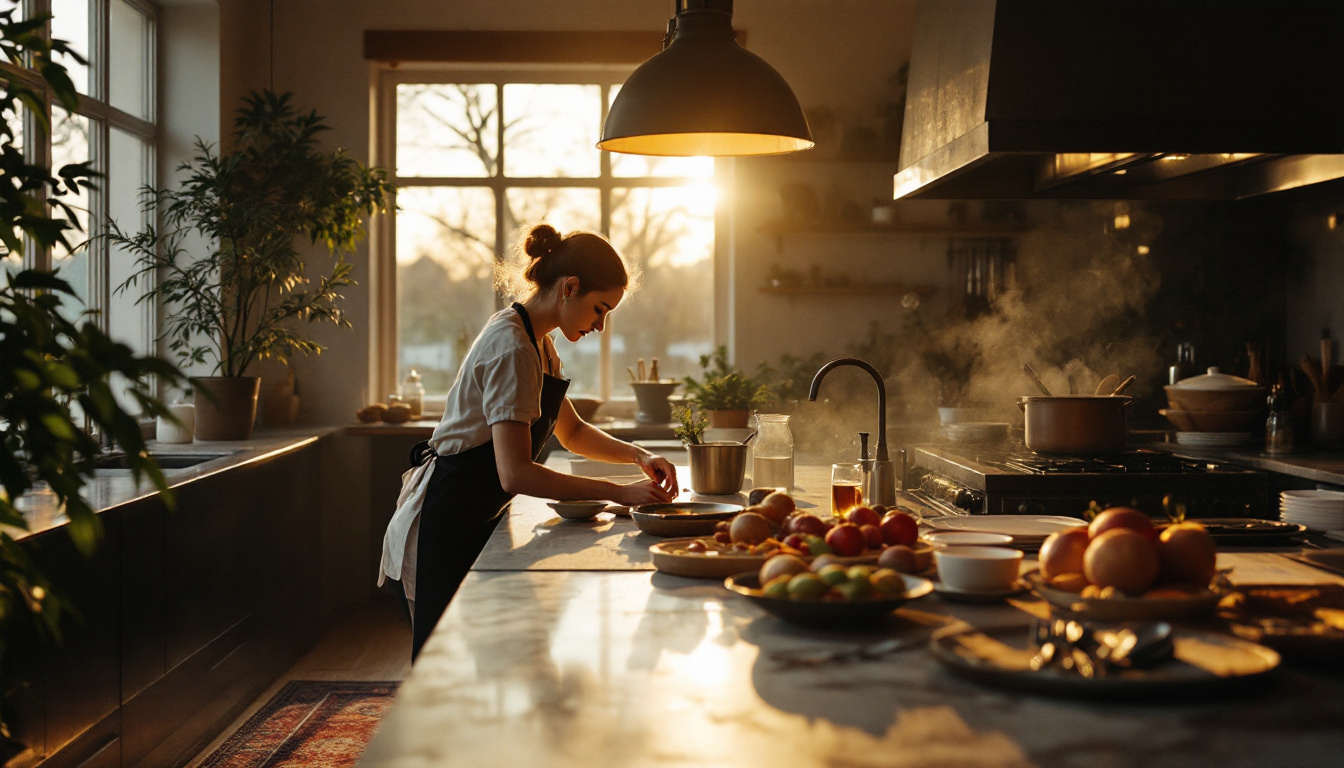
This is a Stockholm dispatch from the morning after a long dinner at Restaurant Frantzén. I am at a window table at a café on Drottninggatan, the snow is doing the slow Swedish thing on the street outside, and my notebook from last night is in front of me with the courses listed in the order they arrived. I want to write this while the meal is still in my mouth.
Frantzén has three Michelin stars. It became the first restaurant in Sweden to get them in February 2018 and has held them since. The chef, Björn Frantzén, is now the only chef in the world to hold three three-star restaurants simultaneously — Frantzén in Stockholm, Zén in Singapore, FZN in Dubai. The Stockholm property is the original and remains the flagship. The current building, on Klara Norra, has been the home of the restaurant since 2017 when it moved from the cramped original Frantzén/Lindeberg address.
The arrival
You ring a bell. The door opens. A staff member takes your coat and walks you through to a low, dark vestibule where the lounge service begins. This is the choreography of the meal: it does not start in the dining room. It starts in the lounge with a small parade of pre-bites, a glass of champagne, and a measured pace that resets your clock to the kitchen’s clock.
I am not going to itemise the snacks. I will say that the kitchen’s signature opening — a langoustine bite that has been on the menu in some form since the move — was as precise as I remembered. The Frantzén discipline is visible at the first bite. It is also visible at the second.
Up the stairs
After the lounge you are walked up a narrow staircase to the main dining room. The room is dark, wood-panelled, and contained. Twenty-three seats, set wide apart. The lighting is keyed to the plates. The music is not music exactly; it is a very low ambient track that you forget about within ninety seconds. The room temperature is correct.
The service brigade is large for a room this size and the choreography is rehearsed in the way that the best three-star service is rehearsed — nothing feels staged, but every movement has been thought through. Cutlery arrives before you reach for it. Bread is offered three times across the meal and never repeated unnecessarily. Wine is poured with the bottle visible long enough for you to read the label before it disappears.
The kitchen pass
I had asked, when I booked, whether the chef’s table inside the kitchen was available; it was not. What was available was a brief pass-through at the start of the savoury courses. They walk you through the kitchen, you stand at the pass for a moment, the chef on duty acknowledges you, you watch a plate go up, and you are walked back to your seat. It takes ninety seconds. It changes the shape of the rest of the meal.
What I noticed at the pass: the kitchen is not loud. There is no shouting. The plating station has three plates working at a time, no more. The expediter speaks at conversational volume. The brigade is tight, focused, and small for a kitchen of this output. I counted fourteen cooks. I expected more.
The menu
The menu is a set tasting. About fifteen courses, including the lounge pre-bites and the petits fours. The Nordic vocabulary is the dominant vocabulary — reindeer moss, brown butter, fermented elements, juniper, the great Scandinavian dairy lexicon — but Frantzén has always run a strong Asian sub-current and it is present in this menu too. A dashi-led broth course, a course that quietly invoked Japanese pickling tradition, a finishing element that nodded toward Singapore.
I will flag the dish of the night, which was a langoustine course built around a butter and a fermented something that the captain explained twice and that I still did not understand. The langoustine itself was barely cooked. The sauce was the dish. I asked to know more and the captain offered to send a card with the breakdown, which arrived with the petits fours. The card is now in my notebook and will outlast my memory of the dish.
The wine
I took the standard pairing. It runs through champagne, white Burgundy, an off-piste German Riesling, a Jura that I had not had before, and finishes with two reds and a dessert wine. The sommelier — long-tenured, calm, fluent in the kitchen’s vocabulary — paced the pours correctly. There were no awkward gaps and no overlapping pours.
A separate sake pairing is offered and would be the right choice if you have a serious sake interest. I did not take it this time. I will next time.
What has changed in eight years
The Klara Norra version of Frantzén opened in 2017 and earned the three stars in February 2018. Eight years on, the room is calmer than the original was, the service is more rehearsed, and the food is more confident. Some of the original early-three-star anxiety has gone out of the kitchen and what is left is a tighter, more relaxed expression of the same vocabulary. The dishes do less work to impress and more work to be correct.
The group’s other three-star openings — Zén in 2021, FZN in 2024 — have changed Björn Frantzén’s role. He is less often in the Stockholm kitchen than he was during the run-up to the third star. The system he has built has had to absorb the absence. By the evidence of last night, it has.
What did not work
A cheese course that arrived too cold. A wine pour that overlapped a course transition by about ninety seconds and left me with two half-full glasses for a moment. The petits fours felt slightly mechanical after the precision of the savoury courses. These are small things. I am noting them because at this level small things are the things.
The bill
I will not print the number. The pricing is in line with the world’s other top three-star tables. It is the meal you save for. The Stockholm hotel bill that goes with it is the easier number.
Where to stay
Walking distance is the answer. I stayed at the Grand Hotel on the waterfront, which is a fifteen-minute walk to the restaurant and lets you walk back to your room after dinner along the water in any weather that is not actively dangerous. The walk back through the snow last night took twenty-two minutes. I did not want it to end.
The morning after
The morning after a fifteen-course tasting is its own meal. I am having a single open sandwich with cured salmon and a black coffee. It is enough.
Standing Questions
- How many Michelin stars does Frantzén hold?
- Three. It became the first restaurant in Sweden to be awarded three Michelin stars in February 2018 and has held them since. Björn Frantzén is currently the only chef in the world to helm three three-star restaurants — Frantzén in Stockholm, Zén in Singapore, and FZN in Dubai.
- How do you book?
- Online through the restaurant's reservation portal, on a rolling release schedule. The release dates are published in advance. Tables go fast. The chef's table inside the kitchen is a separate booking and a deeper waitlist.
- Is Björn Frantzén in the kitchen?
- Sometimes. He divides his time across the group's properties. The Stockholm kitchen is run day-to-day by a long-tenured executive team. The cooking is not dependent on his physical presence; the system is.
- Is it worth flying for?
- If you are in Northern Europe, yes. If you are flying from further afield, it should be paired with at least two other Nordic objectives — Noma's seasonal pop-up, a Faviken-alumni project, or a stop at one of Stockholm's better second-tier restaurants — to justify the trip.