I have rented twice on Mustique — once in February 2022 at Sundance, once in November 2025 at Hibiscus — and the brief I have given myself for this piece is to put a clear map on a market that is genuinely peculiar in its structure. Mustique is not like St Barth, not like Anguilla, not like the rest of the Caribbean. There is one rental agent. One. The villas are not listed on third-party portals; the rates are not negotiated through brokers; the owner relationships, the staff payroll, the grocery delivery, the airport, the dock, the equestrian centre, and the two hotels are all run by one entity. That entity — The Mustique Company — is itself owned by the homeowners. If you buy a villa on Mustique you become a shareholder; if you rent a villa on Mustique you are renting from the same company that paves the road outside it.
This structure produces a market that behaves differently than any other in the region. The rates are predictable. The service complement is predictable. The shoulder-season discounts are predictable. The villa standards are policed by the company itself, which has an internal grading committee that has refused to rent properties that have fallen below the maintenance standard. And the lead times — which on St Barth have stretched out to fourteen months for festive — are on Mustique perhaps the longest in the Caribbean, with the trophy tier of properties substantially booked twelve to eighteen months ahead for festive and four to six months ahead for high winter.
What follows is a field brief on how the Mustique market actually works in 2026.
The company
The Mustique Company was formed in 1989, when the Tennant family — descendants of Colin Tennant, the third Baron Glenconner, who had purchased the island in 1958 for GBP 45,000 and developed it through the 1960s and 1970s — transferred ownership of the island infrastructure to a corporation jointly held by the homeowners. Tennant himself, the figure behind the early invitation to Princess Margaret and the development of the original villa programme, had run the island as a personal project for thirty years. The transfer to the homeowners was, by all accounts, partly financial necessity and partly an experiment in collective stewardship. It worked.
The company today employs approximately 500 people. It runs the Cotton House hotel (17 keys, the older property, sister to the original 18th-century cotton warehouse around which the development began), Firefly (eight keys, the smaller and more eccentric property), the airport, the medical clinic, the grocery, the boutiques, the equestrian centre, Basil’s Bar (the celebrated beachside institution, recently rebuilt after storm damage), and the villa-rental programme that is the centre of this brief. The company also owns and operates Mustique Airways, the inter-island air service that runs the seven-aircraft Britten-Norman Islander fleet between Barbados, St Vincent, Canouan, Union, and Mustique. If you arrive on a commercial inter-island flight, you almost certainly arrive on a Mustique Airways plane.
The villa rental programme handles approximately 90 properties in any given season. The number moves slightly year to year as owners decide whether to enter the rental pool for the upcoming year, but the working count has been stable in the 88-to-94 range across the last decade. The remaining villas — perhaps 15 to 20 — are kept off the market entirely and used only by the owner family and their guests.
The rate structure
Mustique runs on two principal rate seasons, and the structure is unusually transparent for the Caribbean upper end — the company publishes the weeklies on the company’s villa-rental site and they hold to the published number with very limited discretion.
The high season runs from 4 January to 30 April. Within this window, rates are flat — there is no festive premium because the festive premium is built into the booking pattern (festive guests stay 14 nights at the high-season weekly, not at a separate festive weekly as on St Barth). The trophy tier — Villa Palm Beach at USD 130,000 per week is the canonical reference — sits between USD 100,000 and USD 200,000 per week. The top tier of working properties (Hibiscus at USD 79,000) runs USD 60,000 to USD 95,000. The middle tier — what most working budgets actually book — runs USD 38,000 to USD 60,000 per week. Sundance at USD 55,000 is the canonical reference. The entry tier, which includes Les Jolies Eaux (Princess Margaret’s original villa, retained in the rental programme since her death in 2002), Tortuga, and a handful of other three- and four-bedroom properties, sits between USD 30,000 and USD 38,000.
The low season runs from 1 May to 18 December. Rates fall by roughly 25–35 percent. Hibiscus drops from USD 79,000 to USD 60,000. Sundance drops from USD 55,000 to USD 38,000. Les Jolies Eaux holds at USD 35,000 (the entry tier discounts less in absolute dollars than the top tier). Tortuga drops to USD 34,000. The weather through May is reliable; June and the first half of July are warm and quiet; August and September are the lowest weeks of the year and a number of villas come off the rental pool for owner-occupancy or for staff holiday; October through mid-November is the second sweet spot, with weather settled and the island gathering pace for the season.
To every rate, add 11 percent government tax (St Vincent and the Grenadines applies this to all accommodation rentals) and 12 percent island fee (a charge specific to Mustique that funds the shared island infrastructure — roads, electricity, water desalination, the medical clinic, the airport). The combined add is 23 percent, which on a USD 60,000 week is a USD 13,800 supplement. Add to that the discretionary 5–10 percent staff gratuity, distributed at the end of the stay among the villa staff complement. On a USD 60,000 weekly the all-in including tax, fee, and gratuity comes to roughly USD 76,500 to USD 80,000.
What is included for that number is unusually generous. The standard Mustique villa runs a staff complement of four to six full-time positions: butler, cook, housekeeper, gardener, and (in larger villas) a laundress and second housekeeper. The cook prepares all meals on the property to guest preference; you provision through the company’s grocery and the cost goes against the master folio. Daily housekeeping, laundry, and pool service are included. The Mule (the standard Mustique vehicle — a roofless quad-style four-wheeler, branded with the villa name on the side) is included with each villa for the duration of the stay. Petrol is on the master folio. WiFi, water, and electricity are included.
What is not included: meals at the Cotton House, Firefly, or Basil’s; provisioning at the grocery; equestrian centre charges; boat charter; spa services; tennis pro fees; airport transfer (built into the Mustique Airways ticket on the company carrier). The master folio at the end of a typical seven-day stay for a family of six in a middle-tier villa runs an additional USD 4,000–USD 8,000 in provisioning and extras.
The lead times
Festive on Mustique works on a longer lead than St Barth. The trophy tier (the dozen or so largest and most-requested properties) was substantially committed for festive 2026–2027 by April 2026; if you ask for Palm Beach or one of its peers for late December 2026 you are unlikely to find it. The second tier (the USD 60,000–USD 95,000 weekly range, perhaps 20 to 25 properties) is committed by July or August for the following festive. Working budgets in the USD 38,000–USD 60,000 range can usually find a property at five to seven months out. The entry tier holds availability into late autumn for the upcoming festive in most years.
High winter (4 January–30 April) is far easier. The trophy tier moves at six to nine months out; the second tier at three to five months; the middle tier and below frequently has availability inside 60 days. The shoulder window (May–early December) has availability inside 30 days on most properties most weeks of the year.
The properties — a working taxonomy
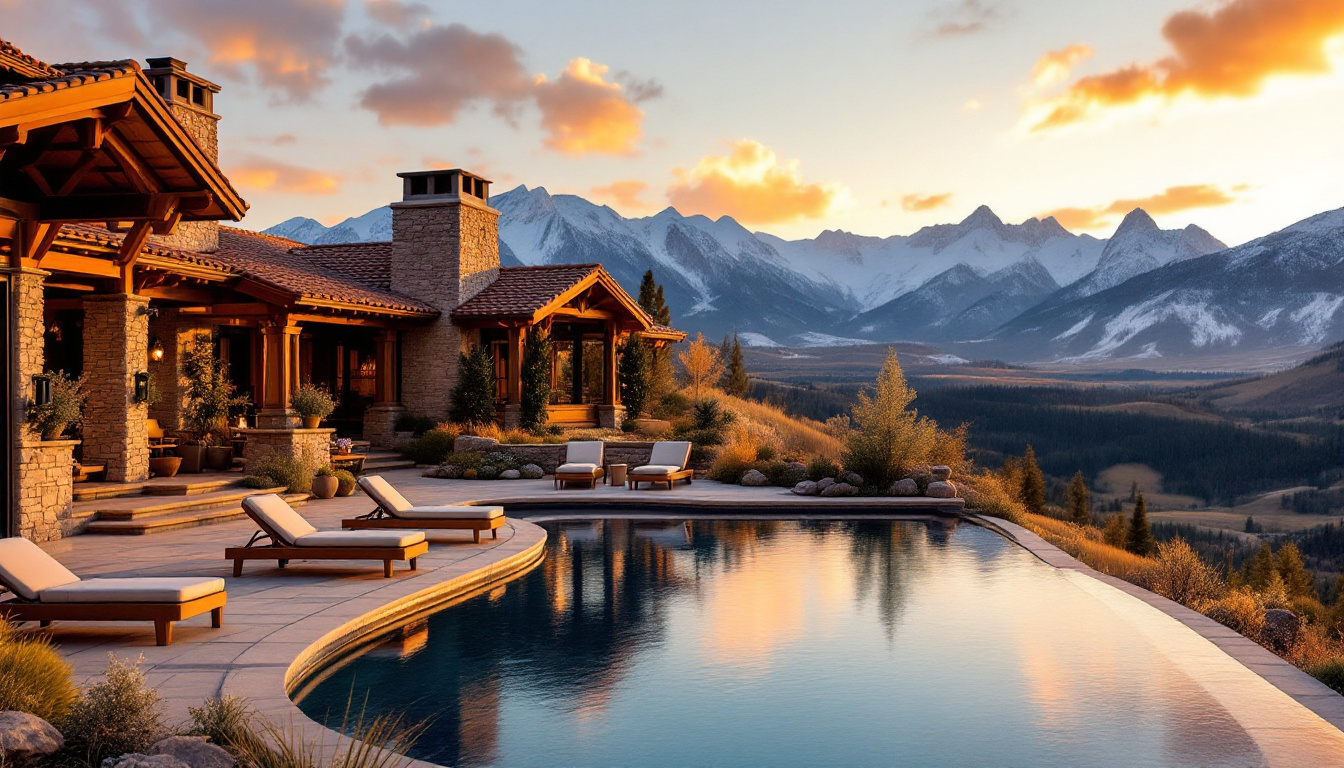
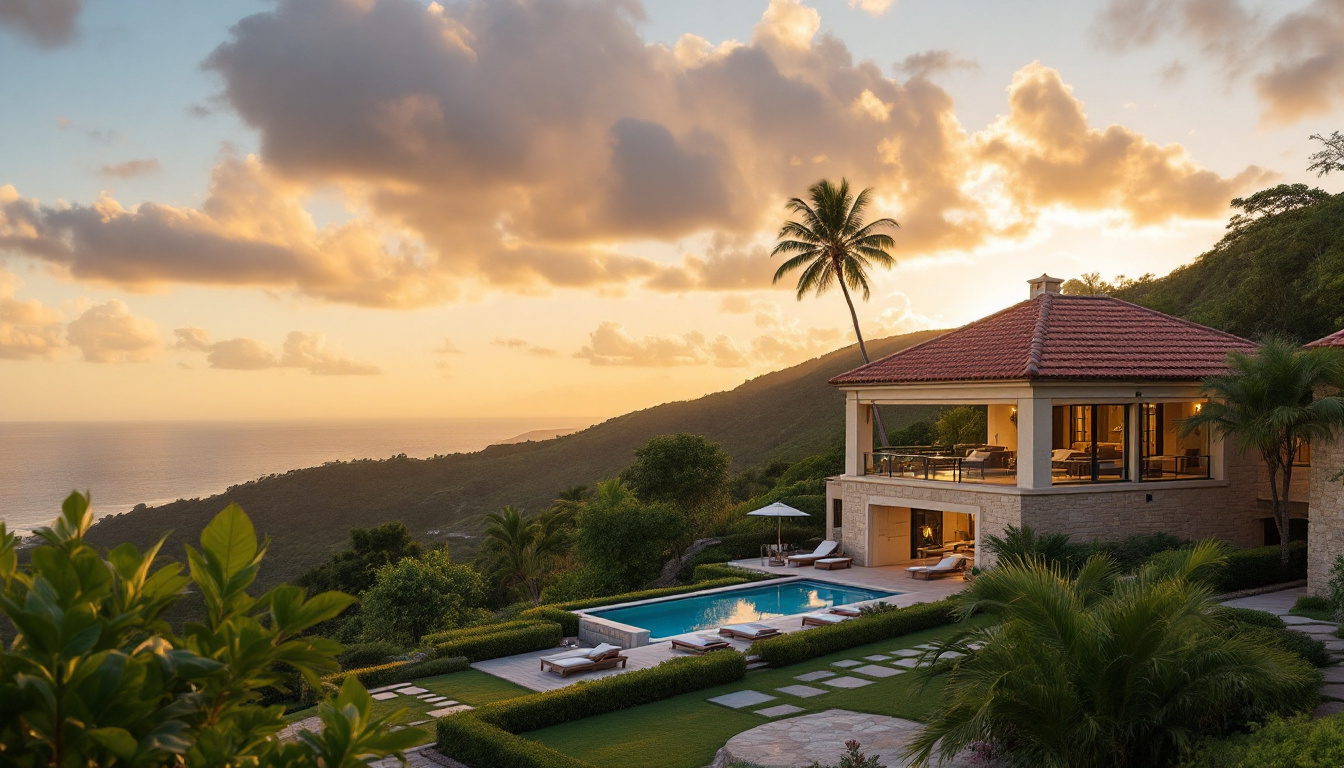
Mustique villas vary considerably in vintage and character. The early-period houses (1968–1985, the Tennant-era development) were designed in a Caribbean colonial-meets-folly style and tend to have heavy mahogany interiors, deep verandahs, and the original-era pool layouts. Sundance is a representative early-period property; the bones are honest and the staff training is deep, but the bathrooms and kitchens reflect their era. The middle-period houses (1986–2005) introduced more contemporary West Indian vernacular, with lighter colour palettes, modern kitchens, and pool layouts that integrate better with the main pavilion. Hibiscus, where I spent the November 2025 week, is a representative middle-period property and is the one I would point a first-time visitor to — it has the scale (six bedrooms in three pavilions), the staff (a complement of six), and a kitchen pavilion that genuinely works.
The contemporary tier (2010–present) is a smaller number of properties — perhaps 12 to 15 — built or substantially rebuilt in the last fifteen years. These are the trophy properties. Architecture is more ambitious; finishes are at international standard; the pool and outdoor entertaining infrastructure is built to entertain twenty to forty guests. Palm Beach sits in this tier. The trade-off, in my view, is that the contemporary tier feels more like a Hamptons or Mediterranean villa than like Mustique — the island’s idiom is the middle-period vernacular, and a guest looking for the particular feel of the island is better served by Hibiscus or its peers than by Palm Beach or its peers.
Les Jolies Eaux deserves its own paragraph. Princess Margaret was given the five-acre plot by Colin Tennant as a wedding present in 1960; the villa, designed by Oliver Messel, was completed in 1973. It was Margaret’s personal villa until her death in 2002, when it passed to her son David, the second Viscount Linley, who entered it into the rental programme in 2003 after a careful restoration. The villa is small by Mustique standards — three bedrooms in the main pavilion, two more in a guest cottage — and the design is unapologetically of its period. It is also, for guests with a sense of the history of the island, the only place to stay. The weekly weekly holds at USD 35,000 year-round, which is by a meaningful margin the most efficient use of a Mustique budget.
The verdict
Mustique is not a market where you negotiate. It is not a market where the rate moves materially between a quote and a booking. It is not a market with shadow inventory or off-platform listings or a layer of brokers extracting margin. There is one company, one published rate, one staff payroll, one infrastructure system, and one experience. The trade-off is that the company’s view of what the island should be is the only view that matters — and a guest who arrives expecting to find the kinetic energy of St Barth or the resort scaffolding of a Four Seasons will be confused.
What Mustique is, instead, is the longest-running successful experiment in private-island residential development in the Caribbean. The villas are good. The staff are exceptional. The infrastructure works. The rates are honest. The shoulder window is the right window to first see the place.
If you have not been, go in May.
Standing Questions
- Who actually owns and runs Mustique?
- The Mustique Company, a corporation formed in 1989 and owned by the homeowners on the island. Every villa owner is a shareholder. The company employs roughly 500 people on the island — staff for villas, the Cotton House and Firefly hotels, the airport, the grocery, the equestrian centre, the boutiques, and the road and dock infrastructure. There is no other property manager, no other rental agent. If you rent on Mustique, you rent through the company.
- How many villas can you actually rent?
- Roughly 90 of the island's 100-plus private villas are rentable in any given season, with the working count fluctuating year to year as owners decide whether to keep their property out of the pool. The remainder are owner-only or held off the market entirely. Approximately a dozen properties anchor the festive-week trophy tier.
- What is the realistic high-season budget?
- For the 4 January–30 April window, plan on USD 34,000 to USD 55,000 per week for a four-bedroom property in the second tier, USD 60,000 to USD 95,000 per week for a top-tier four-to-six-bedroom property, and USD 100,000 to USD 200,000 per week for the small trophy tier. Add 11% government tax, 12% island fee, and a discretionary 5–10% staff gratuity at the end of the stay. Most villas come fully staffed — typical complement is butler, cook, housekeeper, gardener, and laundress.
- What is the shoulder window?
- 1 May through 18 December. Rates fall by approximately 25–35% off high season — Hibiscus moves from USD 79,000 to USD 60,000 per week, Sundance from USD 55,000 to USD 38,000, Les Jolies Eaux holds at USD 35,000. Weather is reliable through mid-November (hurricane risk is lower than St Barth's), the staff complement is unchanged, and the island is far quieter.
- How do I get there?
- Connect to Barbados (BGI) or St Vincent (SVD), then onto Mustique Airways (the company-owned air service) for the 25-minute flight to Mustique. A handful of jets can land on the island's 3,100-foot runway; turboprops and heavier private jets are common. The Mustique Company handles all ground transport on the island via the standard Mustique vehicle — a Mule, branded — assigned to each villa.