I have stayed at Aman Venice once, for three nights in March 2026, in a Palazzo Stanza (the entry-grade suite category) facing the internal courtyard. I have also taken two lunches at the property in earlier years (2019 and 2023) and one dinner in 2021. This review reflects the March stay and the cumulative dining visits.
The arrival
Aman Venice is reached by water taxi or, for the patient, by a 12-minute walk from the Rialto via a network of San Polo calli that, in my experience, is impossible to navigate without GPS the first time and impossible to forget after the second. The conventional arrival is by water — the porta d’acqua, the palazzo’s main canal landing, opens directly off the Grand Canal at the broad San Silvestro bend, and the water-taxi driver pulls in alongside a small marble landing that has been the palazzo’s principal entry since the Coccina family commissioned the building from Giangiacomo dei Grigi in the mid-1500s.
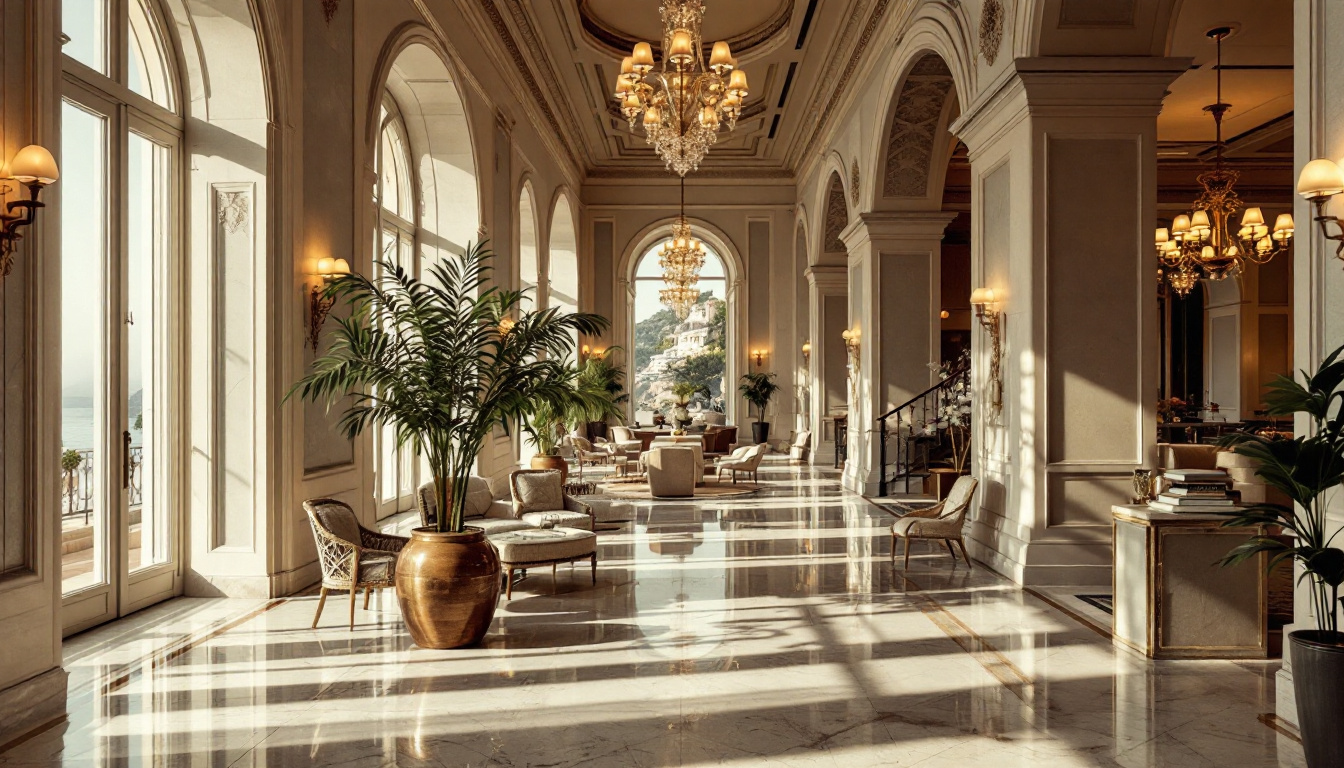
The arrival is the most architecturally serious arrival in any Venice hotel. You step out of the launch onto a 16th-century marble landing, climb six worn stone steps, and enter the androne — the ground-floor reception hall — which runs the full depth of the palazzo and opens onto a small private garden at the rear. The garden, which is large by central-Venice standards (roughly 1,000 square metres), is the second of the Aman’s unfair architectural advantages. The first is the Tiepolo ceiling on the piano nobile upstairs.
Check-in happens in the courtyard, seated, with a small glass of Veneto sparkling and a chilled towel. The director who handled the check-in on 21 March 2026 was Iuri Niero, on his eighth year with the property, who walked me through the building rather than handing me a key — Aman’s house style at Venice is to treat the arrival as an architectural tour as much as a hotel check-in, and the building rewards the treatment.
Setting score: 4.8. The half-point deduction is the calle approach: the foot route from the Rialto involves four crossings of small bridges and a final calle so narrow that two people with luggage cannot pass. The water arrival is the answer.
The suite
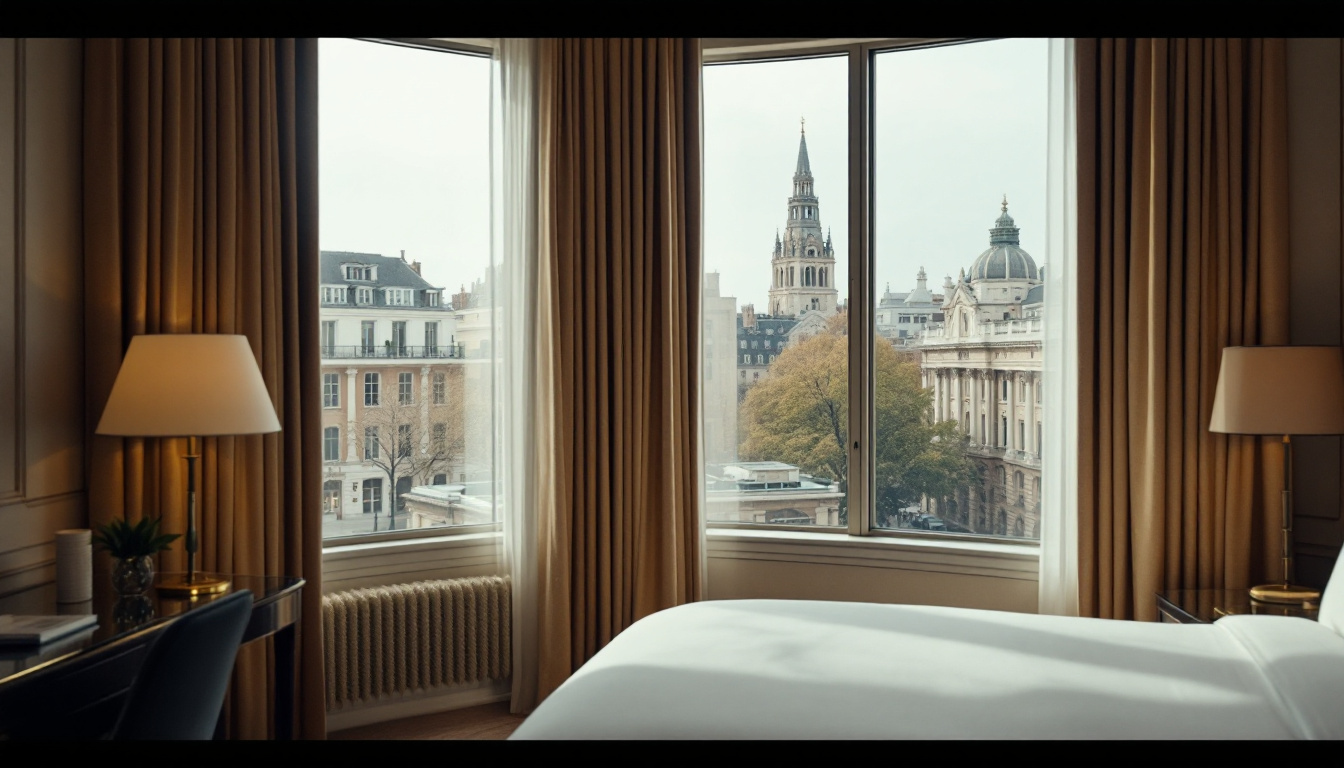
I took a Palazzo Stanza — the entry-grade suite, courtyard-facing, on the second piano nobile. The room is 50 square metres with a small balcony onto the internal garden, a configuration the hotel offers for guests who want the architectural quality of the palazzo without the Grand Canal premium.
Material specifics:
- The ceiling is the original 17th-century stuccoed-and-painted plasterwork, restored under the Aman conversion in 2012-2013 by a team of Venetian craftsmen whose names are listed in a small leather folder in the room. The conservation is the most serious in any Venice hotel I have seen.
- The floor is Venetian terrazzo, restored to the 16th-century recipe (marble chips set in lime). The terrazzo is uneven in the way Venetian terrazzo always is; if you want a hotel where the floor is dead flat, this is not it.
- The bed is dressed in Rivolta Carmignani linen on a custom frame the Aman commissioned in 2013. The pillows offered a choice of three densities.
- The bathroom is in Rosso di Verona marble, with a freestanding tub, a separate shower, and a generous double vanity. Amenities are Aman’s own range — the same fragrance across the global portfolio, in the recycled-glass pump bottles introduced in 2022.
- The minibar runs an honest list. A carafe of still water filtered on site, two small bottles of Veneto white, a tin of Aman-brand grissini, and (in a small detail that says something about the operating mind) a half-bottle of Cipriani-brand Bellini mix — the only place in Venice where you can have a properly-mixed Bellini in your room at 6 a.m.
The room is not the largest in the Aman portfolio — the Tokyo and Kyoto properties run larger averages — but the proportions are the proportions of a 16th-century Venetian piano nobile, and the proportion-correctness is the asset. The Grand Canal-facing suites (the Alcova Tiepolo Suite, the Mocenigo, the Sansovino) run from 75 to 95 square metres and are the rooms that justify the rate ladder.
Suites score: 4.8. The deduction is the courtyard category’s lower ceiling height — the second piano nobile is two metres lower than the first, which marginally reduces the architectural punch.
The service
Service at Aman Venice is the dimension on which the property is most often criticised, and the criticism has substance. The Aman house service standard — calm, anticipatory, light-touch — does not always survive the operational complexity of running a 24-key hotel in a 16th-century palazzo with three separate dining rooms, a spa, and a canal-front operation. During my three-night stay I had two moments of friction that I would not have experienced at the Cipriani or at Hotel du Cap.
The first: the in-room espresso machine on the first morning needed descaling. I called housekeeping; the call took 18 minutes to return; the machine was replaced (rather than descaled) after a further 22 minutes; a small note was left, but no breakfast credit was offered. The same situation at the Cipriani in 2021 produced a complimentary breakfast and a smaller, written apology from the F&B director.
The second: a request for a 7 p.m. water-taxi to a 7.30 p.m. dinner reservation in Cannaregio was confirmed at the concierge desk, then re-confirmed at 5 p.m., then the taxi failed to arrive until 7.15. We arrived at the restaurant 25 minutes late. The Aman team apologised, comped the launch, and arranged for the restaurant to hold the table — but the failure should not have happened at all.
Against these two frictions, however, are the Aman strengths the team does deliver. The reservation team pre-arrived the room with my preferred pillow combination from a 2019 La Sponda reservation (cross-referenced from the wider Aman/LVMH guest history, which they have integrated since 2022). The housekeeping team noticed that I had been working on a book in the room and silently moved a small writing desk under better light on the second day. The dinner sommelier on the third night, when I asked for a Friuli white below EUR 150, came back with three options at three different price points without pushing the most expensive.
The Aman Venice service operates at the 75th percentile of Aman group standard. It is the property at which the brand’s house style is hardest to deliver, because the building’s complexity is the highest. The team manages, mostly, but the margin is narrower than at the simpler Aman properties.
Service score: 4.5. The deductions are the espresso-machine incident, the water-taxi failure, and a small but persistent gap between the front-of-house language (assured, anticipatory) and the back-of-house follow-through.
The table
Aman Venice operates three dining rooms. Arva, on the first piano nobile, is the principal restaurant — a Tiepolo-ceilinged dining room with a market-driven Veneto menu under chef Dario Ossola (in post since 2017). The Garden Restaurant, on the canal-side ground floor, runs lunch and lighter dinner in the private garden. Arva Bar holds the early-evening drinks operation.
The cooking at Arva is the Aman dining grammar correctly applied: ingredient-led, Veneto-rooted, restrained presentation, no tasting-menu obligation. The March dinner I took on the second night:
- A starter of warm radicchio tardivo from Treviso, grilled, dressed with a salsa verde and a single anchovy fillet.
- A bigoli pasta in a sauce of duck ragu and Marsala — the Veneto’s pasta-and-game pairing, executed without ornament.
- A grilled branzino from the lagoon, served on its bone, with a side of grilled spring onions and a salsa of capers and lemon.
- A baba al rum, made tableside, the rum poured to taste — competent but not the equal of the Sirenuse version.
The wine list is 600 references with adequate Veneto and Friuli coverage. The Burgundy list is thinner than the rate-card suggests it should be; I asked for a Premier Cru white from Meursault below EUR 250 and the list offered three. (Cipriani’s list, for reference, would offer twelve.) Sommelier Federico Beccari is engaged and honest about the gaps in the list; he recommended a 2020 Vie di Romans Sauvignon from Friuli that paired well with the radicchio.
The Garden Restaurant lunch on the second day was the better meal — simpler, more honest, served in the most beautiful private garden in central Venice. A burrata with grilled peaches and pistachio, a tagliolini with sea-urchin and lemon zest, an espresso. The Garden is the room I would recommend to a guest with one meal at the hotel.
Table score: 4.5. The deduction is the Burgundy list depth and the Arva pricing, which (at the dinner I took, EUR 285 per person before wine) is at the top of the Venice market without being clearly the best food in Venice.
The detail
The detail score at Aman Venice accumulates in the architectural and operational decisions that are specific to the palazzo and to the Aman house grammar.
From the March stay:
- The Tiepolo frescoes on the piano nobile — by Giandomenico Tiepolo (son of the more famous Giambattista), with the celebrated “Charlatan” and “Minuette” cycles, plus a separate Giambattista work in the Alcova Tiepolo Suite — are the principal architectural assets of the building. The hotel does not market them heavily, which is the correct decision. Guests are invited to spend time in the room (Sala Tiepolo, used for the larger dinners and for the daily aperitivo); the lighting is intentionally low; the frescoes do not photograph well, which is the point.
- The hotel’s small spa, in the garden wing’s basement, includes a hammam in Carrara marble and a yoga studio with views of the canal. The treatment list runs to 18 items; the spa manager (whose tenure at Aman properties spans 14 years) does not push add-ons.
- The Aman boat — a 1965 Riva Tritone, fully restored — is held for guest excursions to the lagoon and is operated by a captain named Giorgio whose grandfather skippered the same vessel for its original owner. The history is verifiable; the experience of being on the boat in the early-morning lagoon light is among the strongest hotel-experience offerings in Venice.
- The garden’s herb beds supply the Arva kitchen daily; the head gardener (a woman named Sara, in post since 2016) walks the herb path with interested guests on request.
- Turndown delivers a small box of Aman-branded chocolates (made in Switzerland) and a printed note with the next day’s weather and tide. The tide note is the most useful operational detail any Venice hotel provides — flood warnings, alta acqua predictions — and is the kind of small infrastructural intelligence I would expect from a hotel of this rate.
Detail score: 4.7. The deduction is the absence of a pool (architecturally unavoidable) and the slightly inconsistent housekeeping turn-down quality across the three nights — the first and third nights were complete; the second night’s turndown missed the bed-side carafe refill.
The Standard
| Dimension | Score | Note |
|---|---|---|
| Setting | 4.8 | Palazzo Papadopoli, Grand Canal, the private garden. |
| Suites | 4.8 | 16th-century proportions; conservation-grade restoration. |
| Service | 4.5 | Aman standard mostly held; espresso and water-taxi friction. |
| Table | 4.5 | Arva is good; Burgundy list is light; Garden is the move. |
| Detail | 4.7 | The Tiepolo, the Riva, the tide note. |
Property score: 4.66.
Verdict
At the Standard.
Aman Venice is the most architecturally serious hotel in Venice and the one that asks the most of its operating team. The building — two piani nobili of a 16th-century palazzo on the Grand Canal, with a Tiepolo ceiling, a private garden, a working canal landing, and the Arrivabene family in residence on the floor above — is a hotel asset of a kind that simply does not exist elsewhere in the city.
The friction in the service operation is real but limited; the dining is good without being the city’s best; the suites are extraordinary; the detail accumulates. The property earns its rate on the strength of the architecture and the architectural conservation, both of which Jean-Michel Gathy’s 2013 conversion handled with a restraint that the contemporary luxury vernacular has mostly lost.
If you are choosing between Aman Venice and Hotel Cipriani for a four-night stay, the choice comes down to whether you want a hotel that is a 16th-century palazzo (Aman) or a 1958 hotel on a three-acre Giudecca garden (Cipriani). Both are At the Standard. I would, narrowly, send the architecture-led traveller to the Aman and the everyone-else traveller to the Cipriani.
Reservations
Aman Venice, Palazzo Papadopoli, Calle Tiepolo 1364, San Polo, 30125 Venice, Italy. Reservations: +39 041 270 7333 or via Aman’s central booking. The hotel operates year-round.
March rates from EUR 2,400 for a Palazzo Stanza (courtyard category); Grand Canal-facing suites from EUR 4,800; the Alcova Tiepolo Suite (the property’s principal canal-front suite) from EUR 15,500.
Venice Marco Polo airport (VCE) is a 30-minute water-taxi transfer; Aman will arrange the Riva Tritone for arrivals on request, subject to weather. From Santa Lucia rail station, the same water-taxi is roughly 8 minutes.
Standing Questions
- Is the entire Palazzo Papadopoli given over to the hotel?
- No. The hotel occupies most of the palazzo across two piani nobili, but the Arrivabene family — the palazzo's owners since 1864 — retain a private apartment on the upper floor. The arrangement is unusual for Aman and is the principal reason the hotel feels lived-in rather than fully programmed.
- Does the hotel have a pool?
- No. The palazzo's protected status and central San Polo location preclude a pool. The hotel's spa, in the basement-level garden wing, includes two hammams and a yoga studio. Guests who want a swim are referred to the Cipriani for a day-pass arrangement.
- Is the dining room open to non-residents?
- Yes, by reservation. Arva (the all-day dining room) and the Garden Restaurant both take outside guests subject to availability; non-residents should book at least a week ahead.
- Is there water-taxi access directly to the hotel?
- Yes. The palazzo has its own canal landing (the porta d'acqua) directly off the Grand Canal at the San Silvestro bend, between the Rialto and Ca' Foscari. Water-taxi arrivals come straight to the front door.
- Did George Clooney really get married there?
- Yes. Clooney and Amal Alamuddin were married at the property in September 2014. The hotel has been (mostly) reluctant to lean on the fact in marketing, which I take as a credit to its operating culture.