I have stayed at the Connaught four times — most recently for three nights in January 2026 in a Junior Room on the third floor, and previously in 2018, 2021, and 2023. I have also taken six dinners at Hélène Darroze and a long list of drinks at the Connaught Bar over the same period. This review reflects the January 2026 stay, with prior visits as supporting evidence.
The arrival
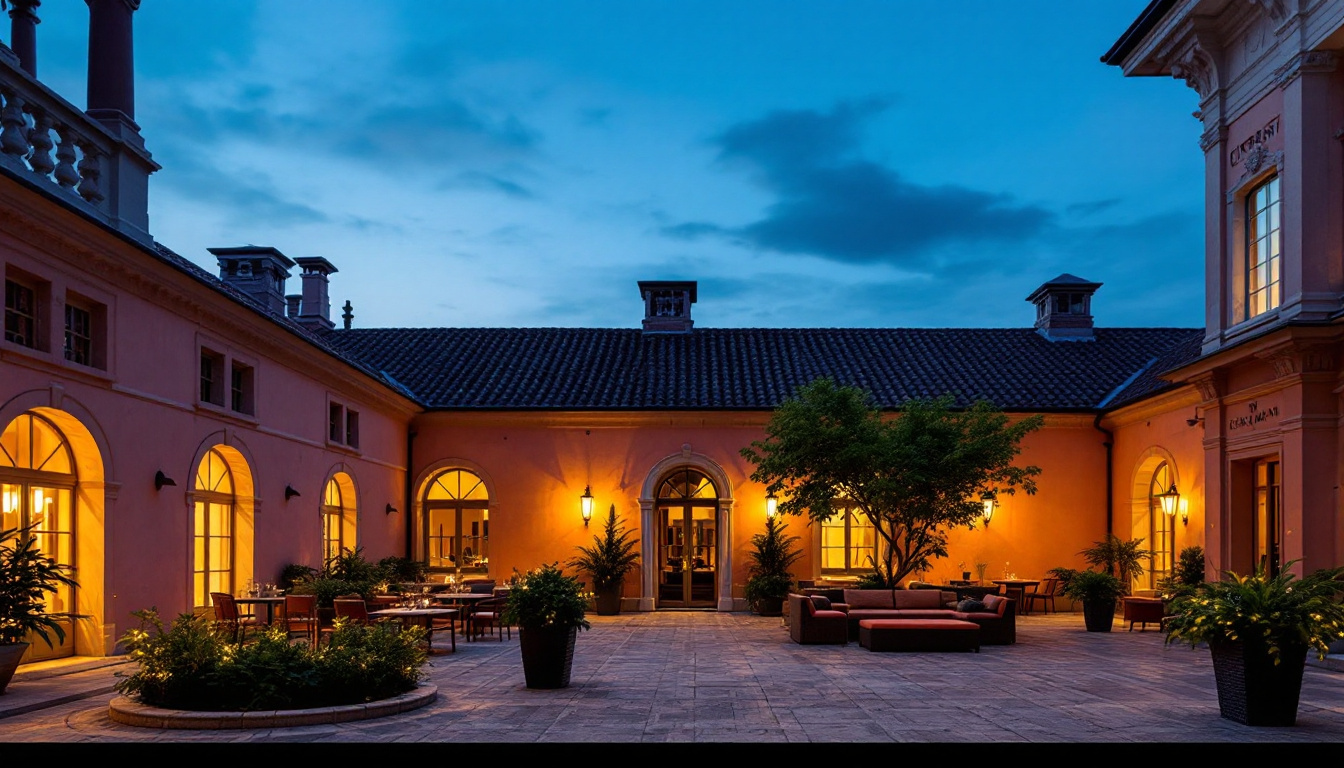
The Connaught arrives at the corner of Carlos Place and Mount Street, on a quiet block of Mayfair where the only neighbours of any commercial weight are the Carlos Place flower shop, the Loro Piana boutique, and the Connaught Bar’s own discreet side entrance. The arrival is to a small porte-cochère with a single liveried doorman — there is no fleet of cars in the way the Dorchester runs them down Park Lane — and the building’s red-brick Queen Anne-revival facade, designed by Isaacs and Florence and completed in 1897, looks more like a senior club than a 121-room hotel.
The arrival’s defining detail is Tadao Ando’s Silence water feature in the centre of the Carlos Place island, commissioned by the Maybourne group in 2011 and unveiled in 2012. Silence is a low circular basin of dark granite with a flat sheet of water across the top — the water moves, but only barely — and it occupies the geometric centre of the Carlos Place arrival sequence. The piece is the rare hotel commission that actually changes the arrival, slowing the pace of the approach before the doorman opens the door.
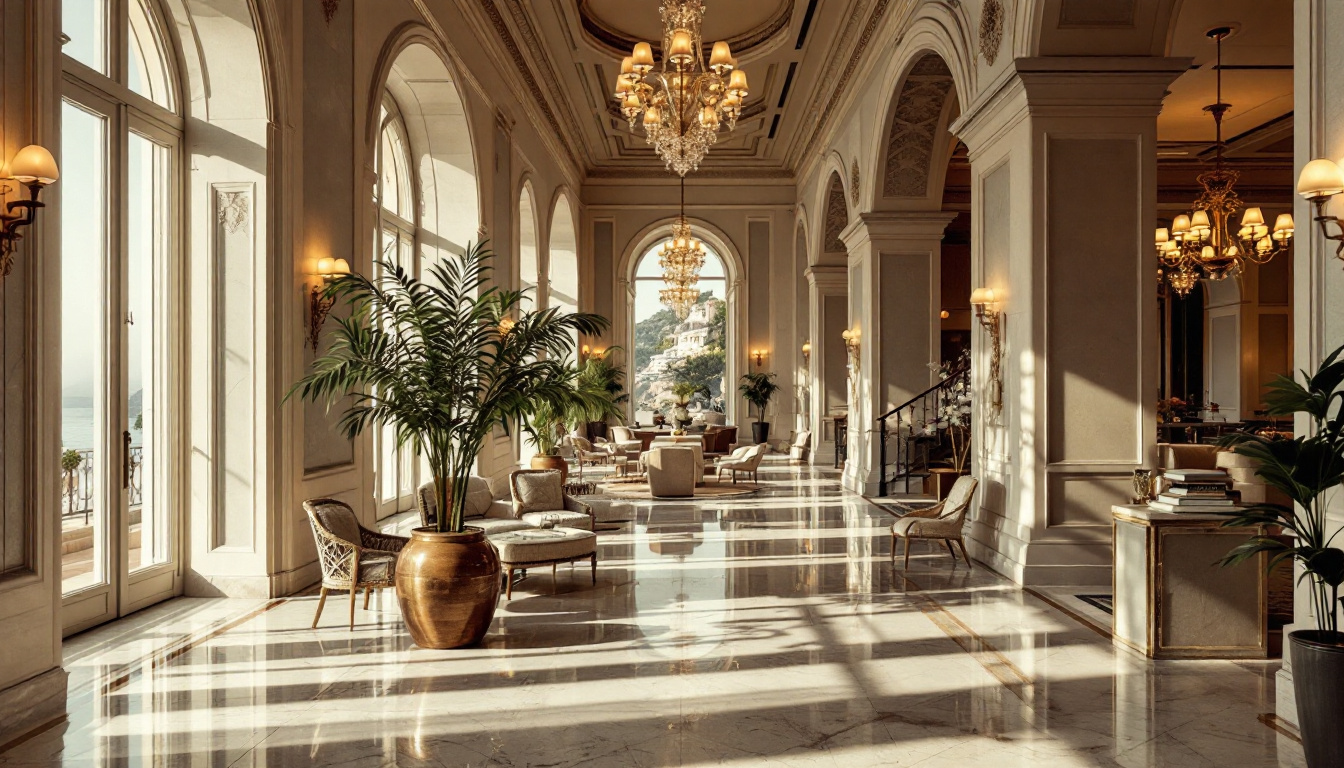
Check-in on 17 January 2026 was handled by Eleanor Hardcastle (Front Office Manager), at the reception desk on the right of the small lobby. The Connaught’s check-in is the most-discreet of any London grand hotel — the desk is set back behind two columns, the receptionist remains seated, and the welcome is a single coupe of Pol Roger rather than the more elaborate champagne-and-canapé set-pieces that the Lanesborough or the Bulgari run. The room key was issued and the floor manager — Jamie Pellow — escorted me up the restored main staircase to the third floor.
Setting score: 4.7. The Connaught’s Mayfair address is the most-Mayfair of any London hotel — Claridge’s is two streets to the north, the Ritz is on Piccadilly, the Berkeley is on Wilton Place — and the corner of Mount Street and Carlos Place is the most-architecturally-correct of the four. The deduction is the Carlos Place taxi rank, which sometimes overflows onto the porte-cochère in the early evening.
The suite
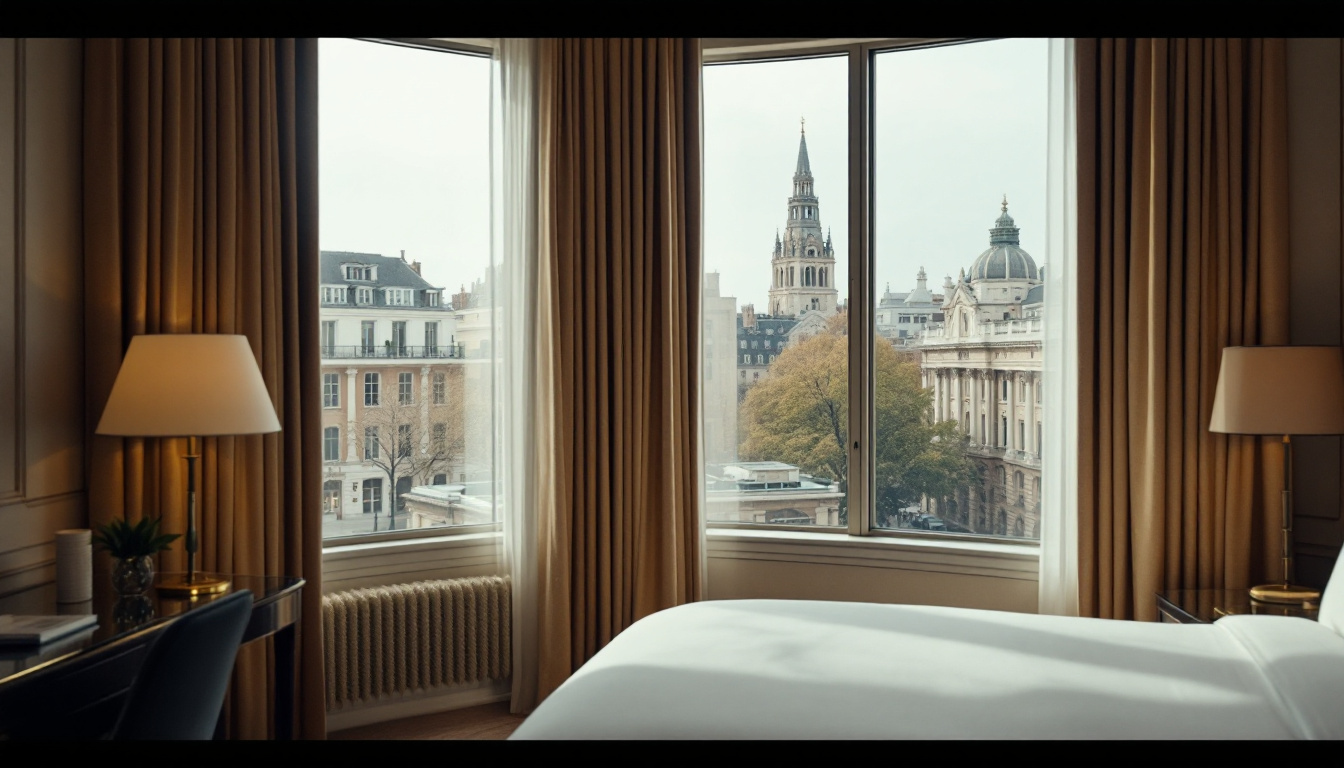
I took a Junior Room — the entry-grade category, at 35 square metres, on the third floor (Connaught Wing, Carlos Place-facing). The room is a single bay on the corner of the building, with two windows onto Carlos Place and one onto the side street, and is one of the most-light-favourable categories at the property.
Material specifics, from my notes:
- The 2007 Guy Oliver restoration is the visual reference. Oliver’s brief was to restore the Connaught’s English-house register without the heavy chintz that the pre-restoration property had drifted into — warm cream walls, hand-knotted Persian rugs, walnut-burr writing desks, and a single oil painting (in my room, an attributed Edwardian landscape that the housekeeping team identified as a watercolour by Walter Tyndale).
- The floor is fitted in a deep-pile Brintons broadloom (Brintons is the heritage supplier for most of the Maybourne portfolio), with the walnut joinery laid as a perimeter border around the carpet.
- The bed is Hypnos (the Maybourne-standard supplier since 2007), dressed in Frette linens, with a four-pillow menu offered by phone before turndown.
- The bathroom is in Calacatta marble with a separate freestanding tub and shower, with Cire Trudon amenities (the Maybourne house-brand collaboration since 2022). The bath salts are the Trudon Cyrnos; the soap is the Trudon Solis.
- The minibar runs the Maybourne house list — Pol Roger half-bottles, a small selection of Connaught Bar pre-batched cocktails (the in-house Vesper, the Connaught Martini, the Bloody Mary), still and sparkling water in glass, and a small fridge of Highland Spring still water from the spa supplier.
- The technology is restrained. A single Bang & Olufsen Beoplay speaker, a Loewe television hidden behind a hand-painted folding screen, a single bedside Bose alarm clock with the time set by the housekeeping team to the second. No iPad-driven room controls; analogue switches only. The choice is correct.
The Junior Rooms are the entry-grade category. The Deluxe Rooms (45 sqm) run the same brief in a larger envelope. The Junior Suites (60 sqm) add a separate seating area; the Mayfair Suites (90 sqm) add a writing study; the Apartments (110-170 sqm) are the dedicated long-stay product, with the Connaught Suite (300 sqm, on the top floor) the property’s flagship.
Suites score: 4.6. The Guy Oliver restoration is the visual asset; the Brintons-and-Frette specification is the operating asset; the half-point deduction is the entry-grade Junior Rooms’ size relative to the rates charged. At GBP 1,100 a night the room should be 45 sqm rather than 35.
The service
Service at the Connaught is the dimension on which the property is at its most-Maybourne. The Maybourne house standard — calm, formal, English-classic — is delivered with a consistency that the Berkeley and Claridge’s also run but that, at the Connaught, has the additional asset of the property’s smaller footprint (121 keys versus Claridge’s 203 and the Berkeley’s 190).
In practice during my January stay the service operated at a level I would describe as the highest in London. The pre-arrival contact was from Naomi Whittaker (Reservations Manager), who confirmed the room category, the dinner reservation at Hélène Darroze for the second evening, and a small request I had made for a particular Pol Roger vintage (2015) to be available by the glass at the Connaught Bar. On arrival the requested vintage was on the bar’s by-the-glass list; the dinner reservation was confirmed at a quiet table in the dining room; the room had a small ikebana-style flower arrangement (the in-house florist is Aesme Studio, the property’s supplier since 2019).
The Connaught’s service strength is the operational follow-through. On the second morning I asked the floor manager (Jamie Pellow, who handled all three days) for a small repair to a coat seam — the work was done by an in-house seamstress (the Connaught is one of the only London hotels to keep an in-house tailor on call), the coat was returned within two hours, and the work was invisible. On the third afternoon I asked for a copy of a particular out-of-print book; the concierge desk (Olivia Wren, on her seventh year at the property) called three Mayfair booksellers and found a copy at Heywood Hill, which was delivered to the room by close of business. The bookseller invoiced the hotel; the hotel invoiced me at the bookseller’s price (no markup).
The frictions during the stay were small. The in-room espresso (the Maybourne-standard La Marzocco Linea Mini) was on the second day delivering a slightly under-extracted shot; housekeeping replaced the machine within ten minutes. The bath robe on the third day was a half-size too small; replaced within twenty. Neither friction broke the stay; both were caught and fixed before I needed to escalate.
Service score: 4.8. The Connaught is operating at the top of the London market for the dimension. The deduction is the in-room espresso machine’s first-morning calibration — a small but real friction — and the bath-robe sizing on the third day.
The table
The Connaught runs four food-and-beverage outlets: Hélène Darroze at the Connaught (three Michelin stars, two services per day Tuesday through Saturday, 32 covers), Jean-Georges at the Connaught (the casual all-day restaurant on the ground floor, three services daily, 80 covers), the Connaught Bar (the property’s headline drinking room, designed by David Collins in 2008), and the Red Room (a smaller drinking and tea room on the Carlos Place side, also Collins). The four-outlet structure is the deepest in any London grand hotel.
I took dinner at Hélène Darroze on the second evening of the January stay. Cumulative coverage with prior visits gives me six dinners at Darroze across the property’s last seven years.
Hélène Darroze is the table that justifies the rate. Darroze’s cooking — Landes-Gascon by training, with a heavy emphasis on south-west French produce and a long-running relationship with the Aquitaine bass and Pyrenean lamb suppliers — runs a tasting menu structure with a seasonal main and four supporting courses. The January menu (the property runs four menus a year, January through March being the winter game card) ran seven courses for GBP 215, with the wine pairing at GBP 165. The standout courses were the closing lamb (a saddle from a Bigorre Black Pyrenean lamb, with a sauce that worked the carcass for 48 hours), the closing pre-dessert of caramelised pear with hazelnut praline, and an unexpectedly strong amuse of langoustine carpaccio with a yuzu zest. The wine pairing was thoughtful, with the sommelier (Mirko Benzo, on his fourth year at the property) opening the bottles at the table rather than from a side station.
The Connaught Bar is the property’s second-most-visited dining-floor asset. Designed by David Collins Studio in 2008 (with the silver-leaf walls, the dark green leather, and the geometric platinum-leaf ceiling), the bar runs Agostino Perrone’s house cocktail menu — the signature Connaught Martini, prepared at the table from a trolley with a choice of five aromatic bitters, is the bar’s headline service. The bar ranked No. 1 on the World’s 50 Best Bars list in both 2020 and 2021, and has been on the list every year since 2009.
Jean-Georges is the all-day. Jean-Georges Vongerichten’s London outpost, opened in 2008, runs the same broad Asian-fusion menu as the New York flagship; the cooking is not the equal of Darroze but the room (Hubert Le Gall’s interiors, with the painted glass ceiling) is the most-visited light-lunch room in Mayfair.
Table score: 4.8. The Darroze-Connaught Bar combination is the strongest hotel F&B pairing in London. The deduction is the breakfast service at Jean-Georges, which on a Saturday morning runs slow.
The detail
The Connaught’s detail dimension is the least-uneven of any London grand hotel. The Maybourne house-standard is enforced consistently across the portfolio, and the Connaught — as the smallest of the three London properties — is where the standard is at its tightest.
The smaller details, in my notes:
- The in-room writing pad is Smythson, the in-room pen is a Connaught-branded Caran d’Ache, the in-room slippers are leather-soled and embroidered. The in-room flowers are Aesme Studio (twice-weekly change). The turndown chocolate is a single Pierre Hermé macaron (the same Hermé that Cheval Blanc Paris runs in-house, suggesting the supplier is a hotel-grade rather than an exclusive arrangement).
- The in-room minibar offers a non-alcoholic Connaught Bar cocktail (the Connaught Garden, made with a house-distilled botanical extract) at no charge.
- The in-house car is a Bentley Mulsanne (one of three the property runs); transfers within central London are complimentary for in-house guests.
- The bath products are Cire Trudon (Maybourne-standard); the bathroom hair dryer is a Dyson Supersonic; the bedside USB chargers run both USB-A and USB-C — a small but real upgrade on Cheval Blanc Paris.
- The Aman Spa Connaught, on the lower-ground floor with a 16-metre lap pool, is the in-house spa partnership. The spa is open to non-residents by appointment but residents have priority on same-day bookings.
Against these strengths, the smaller failures. The in-room television (a 55-inch Loewe behind a hand-painted screen) takes seventeen seconds to wake from standby — a small friction that recurred every time I used it. The in-room iPad is a tutorial that I never finished reading. The room rate at the Junior category does not include breakfast, which I find an irritation at GBP 1,100 a night.
Detail score: 4.5. The Maybourne house standard is the asset; the Loewe wake time is the friction; the no-included-breakfast at Junior is the operating choice that should be revisited.
The Standard
The five-dimension breakdown, with the published Standard rubric:
- Setting: 4.7. Mayfair, Carlos Place, Tadao Ando’s Silence. The most architecturally correct address in London grand-hotel inventory.
- Suites: 4.6. Guy Oliver’s restoration delivers; the entry-grade Junior Rooms run small for the rate.
- Service: 4.8. The Maybourne house standard at its tightest. The in-house tailor and the Heywood Hill book-finding service are the operating tells.
- Table: 4.8. Hélène Darroze at three stars and the Connaught Bar at World’s 50 Best No. 1 — the deepest hotel F&B in London.
- Detail: 4.5. Trudon, Aesme, Smythson, the Bentley; the Loewe wake time and the no-breakfast deduct.
Property score: 4.68. Rounded one decimal: 4.7.
Verdict: at-the-standard. The Connaught is the operational standard against which I measure every other London grand hotel. The Berkeley is more contemporary; Claridge’s is more Art Deco; the Lanesborough is more theatrical; the Savoy is more historic. The Connaught is the one that delivers the highest service-and-table density for the rate, in the most architecturally correct Mayfair location.
Verdict and reservations
The Connaught, Carlos Place, Mayfair, London W1K 2AL. Reservations through the Maybourne website, through the Leading Hotels of the World reservation line, or through the property directly at +44 20 7499 7070. January (low-season) Junior Rooms from GBP 1,050; Deluxe Rooms from GBP 1,350; Junior Suites from GBP 1,950; Mayfair Suites from GBP 3,200; the Connaught Suite from GBP 18,000. Hélène Darroze reservations through the property; non-resident reservations subject to a 90-day window and a credit-card hold. The Connaught Bar takes walk-ins until capacity; reservations for the front room only.
The right room is a Mayfair Suite at minimum, with the corner-of-Mount-Street category the strongest. The right meal is Hélène Darroze on a Tuesday or Wednesday evening with the GBP 165 wine pairing. The right drink is a Connaught Martini at the bar before dinner, prepared at the table. The wrong room is a Junior on Carlos Place in high season at full rate. The wrong meal is Jean-Georges at Saturday brunch. The wrong move is to expect the Claridge’s Art Deco set-piece arrival; the Connaught’s brief is the senior-club arrival, and the discretion is correct.
Standing Questions
- Is the Connaught the same property it was before the 2007 restoration?
- Structurally yes; operationally not entirely. The Maybourne group closed the hotel for fifteen months in 2007 for a GBP 70 million restoration led by interior designer Guy Oliver, which reduced the room count, rebuilt the main staircase, and added the Aman Spa. The restored hotel reopened in December 2007.
- Does Hélène Darroze still hold three Michelin stars?
- Yes. Hélène Darroze at The Connaught received its third Michelin star in the 2021 guide, and has retained the three stars in every Great Britain and Ireland guide since. Reservations open three months ahead; Friday and Saturday dinner books out in the first 48 hours of release.
- Can non-residents drink at the Connaught Bar?
- Yes. The Connaught Bar takes walk-ins until capacity, with reservations available for the front room only. The bar is on the World's 50 Best Bars list every year since the list began separately ranking bars in 2009, and ranked No. 1 in both 2020 and 2021.
- Does the hotel have a pool?
- Yes — a 16-metre lap pool on the lower-ground floor, part of the Aman Spa Connaught, which opened with the 2007 restoration. The pool is residents-only; the spa treatments are open to non-residents by appointment.
- Is the Connaught owned by the same group as Claridge's?
- Yes. The Maybourne Hotel Group, controlled since 2015 by the Qatari Constellation Hotels Holding investment vehicle, owns the Connaught, Claridge's, and the Berkeley in London, plus the Maybourne Riviera in Roquebrune-Cap-Martin and the Maybourne Beverly Hills.