I arrived at Cheval Blanc Paris on the evening of Thursday, 12 February 2026, in a cold rain that thinned to mist by the time the car turned off Rue de Rivoli onto Quai du Louvre. The fifth-floor suite I had been assigned — Cheval Blanc Suite 504, river-facing — was already lit when the butler opened the door: two table lamps, the fire laid but not yet struck, the curtains drawn back so that the first thing I saw was the Pont Neuf, lit yellow in the rain, and beyond it the dome of the Institut de France across the Seine.
The hotel has been open for four years and five months. That matters. Cheval Blanc Paris is no longer the new arrival on the Rive Droite; it is no longer the property critics describe in the future conditional, the one against which everything else will be measured once it has had time to settle. It has settled. The maître d’ on the fifth floor knew the names of the guests at the table next to mine without consulting a list. The night-turn linen had the soft, slept-in weight that only an operating hotel produces. The service is no longer being calibrated. The question I came to answer, after five years of read-throughs and one prior visit in late 2022 when much of the staff was still in its first season, was simpler than it had been at the opening: is this now the best hotel in Paris.
The arrival
I flew into Charles de Gaulle on Air France 011 from JFK, landing at 09:40 on the morning of the 12th. The Cheval Blanc transfer is operated under the brand’s own livery — a black Mercedes-Maybach S 580 with a driver named Étienne, who has worked the airport rotation for the property since opening and who introduced himself in English before switching, on confirmation, to French. The car was waiting at the kerb at Terminal 2E, Gate L, by the time I cleared customs at 10:25. Étienne did not narrate the drive, which I appreciated. The transfer into the 1st arrondissement at that hour, against the morning commute, took 48 minutes; we crossed the Périphérique at Porte Maillot, came down through Étoile, and turned onto the Seine quays at Place de la Concorde.
The approach to the hotel is the first deliberate decision Cheval Blanc makes about the guest. There is no porte-cochère. There is no awning. There is, famously, no sign — the brand’s non-signage policy is consistent across all six properties in the collection, and at Quai du Louvre it produces the small, intentional disorientation of a guest arriving at what looks, from the street, like an unmarked service door on the river side of the Samaritaine. A doorman in a charcoal three-piece suit, no name tag, opened the car door at 11:13. He addressed me by name before I had stepped out. The luggage was off-loaded by a second man in the same suit, who did not speak. The Maybach pulled away within ninety seconds of arriving.
The ground-floor reception is on the Rue de l’Arbre-Sec side of the building, not the quay — a long, low-lit room in pale oak and travertine, with a single Picasso etching on the far wall and four armchairs but no desk. There is no check-in counter at Cheval Blanc Paris. The arriving guest is walked, without paperwork, to one of the chairs; a butler arrives within two minutes with a tablet and a glass of water, registers the guest seated, and then accompanies the guest to the elevator. The elevator itself is a small, slow, oak-panelled cab with a single attendant — at midday on the 12th, a young woman named Camille who pressed the button for the fifth floor without being asked. The ascent took perhaps forty seconds. I had been inside the hotel for less than seven minutes when the suite door opened.
The suite
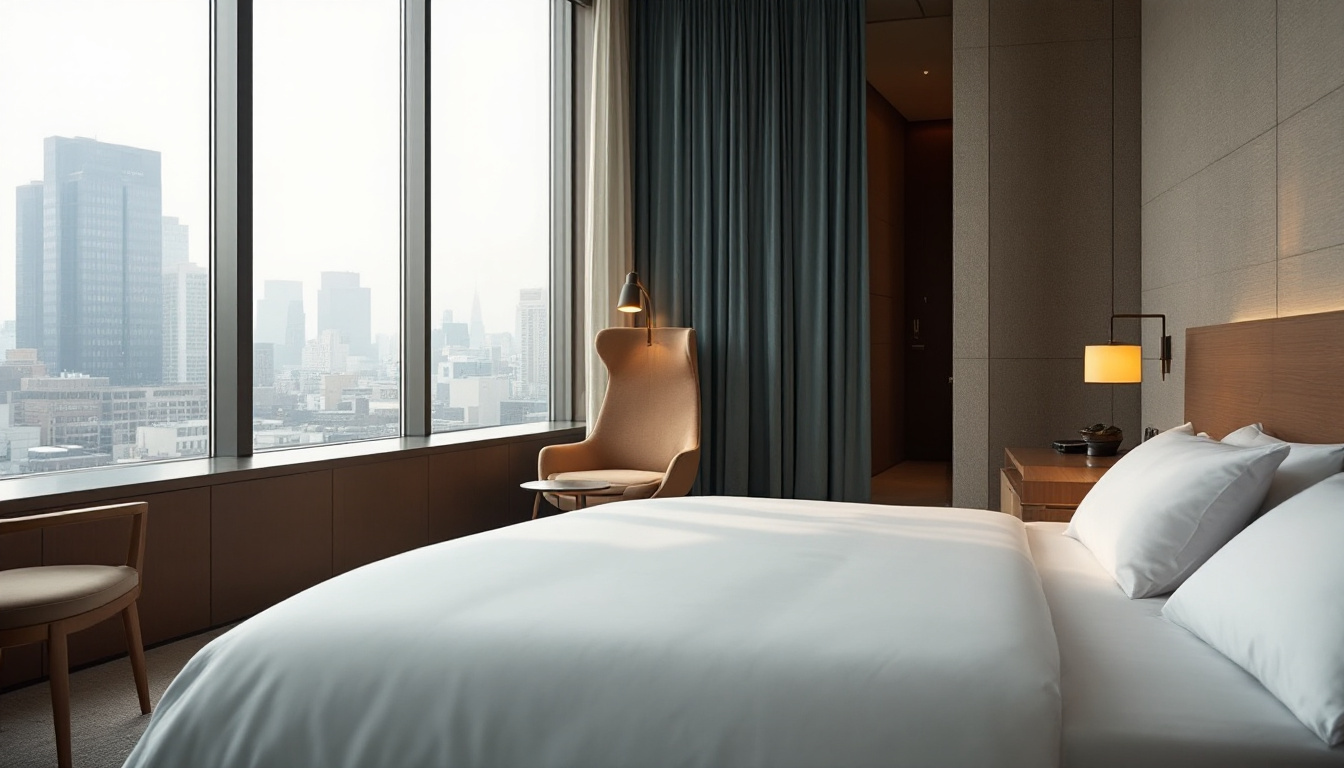
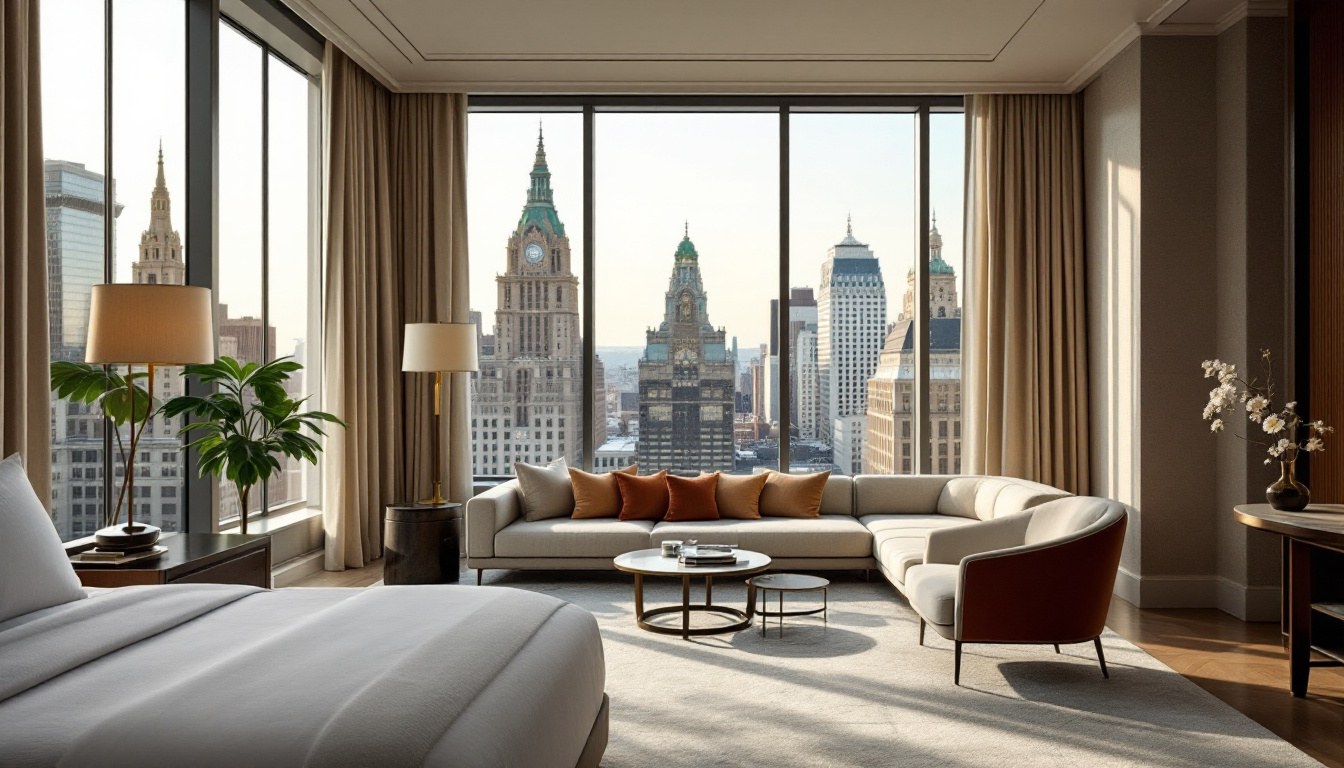
Cheval Blanc Suite 504 is one of fourteen Cheval Blanc Suites in the property, the category one rung below the Grand Suite Cheval Blanc and two rungs below the Apartement Quai du Louvre. The published surface is 190 square metres, divided across a sitting room, a separate dining vestibule, the bedroom, two bathrooms (one full, one powder), a dressing room, and a small library that opens off the sitting room and contains, on the lower shelf, a first-edition Hemingway and a 1962 Skira monograph on Cézanne that I am told is the same edition placed in every Cheval Blanc Suite. The room rate at my booking, paid in full at the corporate rate published to the trade, was EUR 6,400 per night before service and tax.
The interior is Peter Marino’s, and it is recognisably his — the heavy use of bronze cabinetry hardware, the lacquered cream walls, the introduction of one strong colour per room (here a deep oxblood, used on the dining vestibule banquette and again on the small reading chair in the bedroom) — but it is Marino at his most restrained. The Samaritaine building, restored by SANAA between 2015 and 2021, imposes a discipline that the designer has been willing to accept. The proportions are tall, narrow, and rigorously aligned to the original Art Nouveau bay windows on the river side; Marino has not fought them. The floor throughout the suite is a single specification of French oak, fumed dark and laid in a wide chevron, with the chevron axis running parallel to the Seine. I walked the length of the sitting room three times before I noticed it.
The bathroom is the suite’s strongest room. The master bath is finished in honed Calacatta Viola — the violet-veined marble from the Apuan Alps, not the more common Oro — on the floor, the walls, the vanity surround, and the bath surround itself. The fittings are by Volevatch, the small Parisian house that supplies the Élysée. The bath is freestanding, a single-piece oval cut from a separate block of stone, set perpendicular to the river window. The shower is a separate room, lined in the same marble, with a single overhead rain head and a hand shower; there is no body-jet wall, which I take as a deliberate choice. The towels are Frette, heavy weight, monogrammed at the corner with the Cheval Blanc horse-head emblem in dove grey thread on white.
The welcome scent is Maison Francis Kurkdjian’s Aqua Universalis Forte, diffused through the suite’s HVAC at a level that registers as present rather than imposed. The bedside amenities — soaps, hand creams, the small candle on the writing desk — are also Kurkdjian, in a custom Cheval Blanc casing in matte cream. The Diptyque influence elsewhere in the property is real but not in the suites; the suites are Kurkdjian’s territory, a distinction I had not appreciated on my 2022 visit and which the butler, when I asked, explained as a 2024 reformulation negotiated when LVMH consolidated its perfumery brief.
The view is what it is. The bedroom and the sitting room both face north across the Seine. The Pont Neuf sits one bay east of dead centre in the bedroom window; the dome of the Institut de France sits dead centre in the sitting-room window. The Île de la Cité is visible obliquely from the dining vestibule, and the buttresses of Notre-Dame — still under restoration scaffold on the south transept, as of February 2026 — are visible from the library window if one stands at the far left of the room. At dusk on the 12th the windows held the river light for nearly forty minutes after the sun had gone, and I sat in the oxblood reading chair without turning on a lamp until 18:50.
One reservation, recorded honestly. The fifth-floor suites sit one storey below the Plénitude floor and two storeys below the Dior Spa, and the service elevators — which are not the guest elevators — produce a faint, regular hum that I noticed on the second night between roughly 02:10 and 02:40. It is not a defect. It is the hotel functioning. But it is the kind of detail that the Bristol, in my experience, has engineered out of its top-floor inventory entirely.
The service
Cheval Blanc operates a maître d’hôtel system rather than a butler system, and the distinction is not cosmetic. The maître d’hôtel — mine was a Belgian named Lucas Devlieger, mid-thirties, formerly of Hotel Amigo in Brussels — is the single point of accountability for the guest’s stay. He does not unpack the luggage. He does not draw the bath. He does not, in the conventional Asian-luxury sense, fade into the wallpaper. He sits down in the sitting room on arrival, takes the brief in French or English at the guest’s preference, and then disappears for the duration except when summoned or when the brief requires him. Below him, the floor butler — in 504’s case, a woman named Inès, who covers all fourteen Cheval Blanc Suites on weekdays — handles the operational fabric: turn-down, pressing, breakfast service in-suite, the small repeated requests.
The arrival amenity is the most considered I have received in a Paris hotel. At 11:45 on the 12th, twenty minutes after I had been left to settle, Inès returned with a coupe of Krug Grande Cuvée — the 173ème Édition, decanted, served at a temperature that I would estimate at 8°C, slightly warmer than the standard restaurant pour — paired with a single bite designed by Maxime Frédéric: a small choux puff filled with smoked eel cream and a brunoise of green apple, set on a dot of horseradish émulsion. The pairing was not announced. There was no card. Inès set the coupe and the small plate on the dining vestibule table, said only “Mr Frédéric has sent this for your arrival, madame,” and left.
The tested service moment came on the second day. I had been told, on booking, that Plénitude was fully reserved for the duration of my stay; I had booked instead at Le Tout-Paris, where I had a 20:00 reservation on the 13th. At 11:00 on the 13th I asked Lucas, casually, whether anything had changed at Plénitude. He did not promise. He said he would inquire. At 16:40 a hand-written note was slid under the suite door: a table for one had become available at 21:15 for the following evening, the 14th, at Plénitude, on the chef’s counter. The note offered to release my Le Tout-Paris booking and to rebook it for lunch on the 15th, at any hour I named. The recovery was handled without my being asked to confirm anything in person. The Le Tout-Paris reservation was rebooked for 12:45 on the 15th, which is when I had taken breakfast on the 13th and which Inès, without being asked, had registered as my preferred mid-day hour.
The service is not, however, entirely without seam. The elevator attendants — and there are three on rotation on the guest car — still operate in a register that I find slightly stiff for a hotel of this calibre. Camille is fluent and warm. The two others, a young man whose name I did not learn and an older woman who works the evening shift, are correct but not warm; the ride to the fifth floor with the older attendant on the evening of the 14th was conducted in complete silence, which she did not appear to register as a service decision and which I read as discomfort rather than discretion. It is a small thing. But it is the kind of small thing that the Bristol’s lift operators — most of whom have worked the property for fifteen years or more — manage instinctively.
The table
I ate three meals at the hotel that bear reporting: dinner at Plénitude on the 14th, breakfast at Le Tout-Paris on the 13th, and lunch at Langosteria on the 15th. The Limbar bar I visited twice for an aperitif and will note briefly at the end.
Plénitude under Arnaud Donckele is, in my considered judgment, the best hotel restaurant in France. I do not say this lightly, and I have eaten at the obvious competitors — Le Cinq under Christian Le Squer, Epicure at the Bristol under Eric Frechon’s successor, Le Meurice Alain Ducasse — within the last eighteen months. The Donckele cooking that I knew from La Vague d’Or at Cheval Blanc St-Tropez has translated to Paris with its sauce-craft entirely intact and its register sharpened by the city. The chef’s counter on the seventh floor seats eight; I was placed at the river end, with a direct sightline to the pass.
Three courses, recorded as served. First, a tartare of Aquitaine langoustine dressed in what the menu described as a “rosée de coquillages” — a pale-pink emulsion of shellfish stock, Noilly Prat, and a small dose of fermented citron, finished tableside with a grating of frozen bottarga and a single drop of green almond oil. The dish was served at a deliberate cellar temperature, perhaps 14°C, which let the langoustine’s natural sweetness sit on the palate for several seconds longer than a colder presentation would have allowed. Second, a turbot from the Île d’Yeu — a small fish, perhaps 1.8 kilos, presented whole at the counter before being filleted and returned with a sauce that Donckele has been refining for two decades, his “infusion d’iode” of seaweed, smoked butter, and a reduction of the fish’s own bones with vermouth. The wine in pour was a 2018 Coche-Dury Meursault Les Rougeots, served in a Zalto Universal at what felt like 11°C. The pairing was selected by Maxime Pastor, the head sommelier who came over to the counter to introduce the bottle and then left me to the wine without further commentary. Third, a pre-dessert that the kitchen sent without my asking: a small consommé of poached pear, hibiscus, and Sichuan pepper, served warm in a thin porcelain cup. I declined the formal dessert course and asked for coffee.
The bill, with one supplement glass of the Coche-Dury and a digestif of 1976 Hine Cognac from the trolley, came to EUR 1,180 before service. I do not consider this excessive for the cooking on the plate. I do consider it close to the ceiling of what a Paris hotel restaurant can reasonably charge in 2026.
Breakfast at Le Tout-Paris on the 13th was the second-best hotel breakfast I have taken in Europe this year, the first being at the Connaught. Maxime Frédéric’s viennoiserie programme is the unambiguous draw. The croissant, served warm at 09:10, was laminated to a count Frédéric has publicly stated as 81 layers and which produces a shatter on the first bite that I would call audible. The pain au chocolat uses a single bar of Valrhona Caraïbe rather than the more common two-stick configuration, and the chocolate is positioned, deliberately, to melt at a slightly different rate from the dough. The signature viennoiserie — Frédéric’s “kouign-amann aux agrumes,” a Breton kouign-amann finished with a glaze of three citrus reductions (yuzu, Corsican cedrat, blood orange) — was, I think, the single best pastry I ate in Paris this trip. The citrus pressé, on request, is made tableside from a small trolley with a Sicilian blood orange, a Sorrento lemon, and a half pink grapefruit, juiced separately and combined to the guest’s preference. I asked for two-thirds blood orange and the rest lemon. It arrived at 09:24 in a chilled coupe.
Lunch at Langosteria on the 15th was the most interesting test of the property’s operations, because Langosteria is the only restaurant in the hotel that is not run by the Cheval Blanc kitchen brigade — it is operated under management contract by the Milan-based group, with its own chef, its own service brigade, and (notably) its own front-of-house culture. The handoff between Cheval Blanc service and Langosteria service is handled in the small foyer outside the restaurant on the seventh floor, where a Cheval Blanc maître d’ walks the guest to the Langosteria host and physically transfers the booking. The Langosteria service is warmer, more voluble, more recognisably Italian, and very slightly less precise on timing — my second course (a tagliolini ai ricci di mare, the dish I had come for) arrived nine minutes after my first plate had been cleared, a gap that Plénitude would not have permitted. The cooking was excellent. The sea urchin was from Brittany, not Sardinia, which the captain volunteered without my asking.
Limbar, the ground-floor patisserie-bar concept also from Frédéric, I visited on the evenings of the 12th and 13th for a single drink before returning to the suite. The room is small, low-lit, and quieter than its position on the corner of the building would predict; the cocktail list is short and conservative. The Vesper was made with Citadelle, Belvedere, and Lillet, stirred not shaken, served in a chilled Nick & Nora at what I would estimate as -6°C. It was correct.
The Detail
The single most specific Cheval Blanc gesture in Paris, the one I had not encountered before at any other property in the brand, was the closet light system in the suite dressing room. The light in the dressing room operates on a sensor that triggers at the swing of the door — standard at this level. What is not standard is that the sensor distinguishes between a daytime trigger and a nighttime trigger by reading the ambient light in the bedroom, and adjusts the colour temperature of the closet light accordingly. Opened at 11:00, the dressing room lit warm-white. Opened at 03:00, when I went in for a robe, it lit at a low amber that did not wake me further. I noticed this only on the third night. Inès, when I asked about it the next morning, confirmed that the system is calibrated per-suite at commissioning and that the threshold for the amber shift is set at 18 lux measured at the bedroom nightstand. The robe itself, for the record, is Frette in a heavy 480 gsm cotton, monogrammed at the chest, and the Dior Spa pool — which I used on the morning of the 14th, at 07:15, when I had it to myself for forty minutes — is held at 29°C, with the surrounding air at 26°C and the steam room next door at 44°C. The pool finish is travertine, not tile, and the underwater lighting is filtered through a champagne-coloured gel that gives the water the faintest warm cast.
The Bristol, in my experience, still does one thing better than Cheval Blanc Paris, and it is the thing the French call l’attention non sollicitée — the unsolicited attention, the small gesture for which the guest has not asked and which is not part of any documented service standard. The Bristol’s housekeepers will rearrange a guest’s reading material on the bedside table if it has been left in disorder, and they will set a bookmark at the page where the book was last opened, identified by the angle of the spine. Cheval Blanc Paris does not do this yet. The turn-down is exact, considered, and impersonal. The Bristol’s is exact, considered, and personal. The gap is small, and I expect it to close. But it is the one place where the hotel’s relative youth still shows.
The Standard
Setting — 5.0. There is no setting in Paris that competes with this one. The Samaritaine building, restored by SANAA over six years, sits on the most exposed stretch of the Right Bank quay, with the Seine on one side and the Louvre on the other; the Edouard François hotel envelope — the rippled glass screen that rises three storeys above the original Art Nouveau facade — is the architectural decision of the project and the one that makes the upper-floor suites possible. The Bristol has a garden. The Plaza Athénée has Avenue Montaigne. Cheval Blanc has the Seine, the Pont Neuf, the Institut, and the Île de la Cité, all framed through François’s screen. It is not a contest.
Suites — 4.8. The Peter Marino interiors are the strongest work he has done for the brand in a decade, and the Calacatta Viola bathroom is the finest hotel bathroom I have used in France. The half-point off the perfect score is the service-elevator hum on the fifth floor between 02:10 and 02:40, which is a small but real intrusion into a EUR 6,400-a-night room and which I expect will be addressed in the next major maintenance window.
Service — 4.6. The maître d’hôtel system works as designed. The recovery on the Plénitude booking was excellent. The elevator attendants are the soft spot. The brigade is now four-and-a-half years into operation and the muscle memory is mostly there; what remains uneven is the conversational register of the most junior staff in the most exposed roles. This is a fixable problem and I expect it to be fixed.
Table — 5.0. Plénitude is the best hotel restaurant in France. Le Tout-Paris is the best hotel breakfast in continental Europe. Langosteria is the best Italian restaurant in a Paris hotel. Limbar is, at minimum, competent. No other Paris hotel has this depth of bench.
The Detail — 4.5. The closet light system is the best in-suite engineering decision I have encountered in a European hotel this year. The Maison Francis Kurkdjian welcome scent, the Volevatch fittings, the calibration of the pool to 29°C and the steam to 44°C are all considered and exact. The half-point off is l’attention non sollicitée — the Bristol still has the edge, and the gap is real even if it is small.
Property score: 4.8 / 5.0. At the Standard.
Verdict
Cheval Blanc Paris is the first hotel opened in Paris since the war that has the credible capacity to displace the Bristol at the top of the city’s market on quality grounds rather than on tradition. It is not yet the Bristol’s equal on the dimension that is hardest to engineer — the accumulated muscle memory of a staff that has worked together for a generation — but it is the Bristol’s equal or better on every other dimension I tested in February, and on Setting and Table it is now demonstrably superior. Five years in, the property has settled into the operating discipline that the opening reviews could not have judged. The result is a property that no longer needs the benefit of the doubt.
For reservations, three notes worth recording. First: Plénitude must be booked separately and at least 90 days in advance, and the chef’s counter must be requested by name; the dining room books faster than the counter, which I take as a market mispricing in the counter’s favour. Second: the Cheval Blanc Privé programme, the brand’s invitation-only loyalty layer, will hold a Cheval Blanc Suite for a member at 45 days out where the open market closes at 90; if you are travelling with intention this is the only loyalty programme in luxury hospitality that I consider worth the courtship. Third: the published cancellation policy is 14 days for entry rooms and 30 days for suites at the published rate, with non-refundable advance rates available at a 12 per cent discount; I do not recommend the advance rate at this property because the value of a date change at the suite level is, in my experience, greater than 12 per cent of the room rate.
I will return in October.
Standing Questions
When did Cheval Blanc Paris open, and how does the timing affect the review? The hotel opened in September 2021. My February 2026 visit was the property’s fifth winter in operation. The opening-period reviews — including my own first look in late 2022 — were written before the staff brigade had stabilised and before the F&B programme had settled into its current configuration. I would treat any review written before 2024 as describing a different property.
How many rooms are there, and what is the suite ratio? There are 72 keys in total. Forty-six are categorised as suites of various tiers, and 26 are entry-category rooms. The Cheval Blanc Suite tier (the category I stayed in) accounts for 14 of the 72 keys; the Grand Suite Cheval Blanc and the Apartement Quai du Louvre are the top two categories at one key each.
Who is the chef at Plénitude, and how does the cooking compare to St-Tropez? Plénitude is led by Arnaud Donckele, who built his reputation at La Vague d’Or at Cheval Blanc St-Tropez and who continues to oversee both kitchens. The Paris cooking is sharper, less seasonal, and more rigorously sauced than the St-Tropez programme. The three Michelin stars were awarded in 2022, during the restaurant’s first year of operation — the fastest a Paris hotel restaurant has reached three stars in modern memory.
What does it actually cost to stay here? Entry rooms open at approximately EUR 1,800 per night in the low season and rise to roughly EUR 2,400 in high. Suites run EUR 3,000 to EUR 10,000 depending on category, view, and season. The Grand Suite Cheval Blanc is published at EUR 18,000 to EUR 25,000. The Apartement Quai du Louvre is on application above EUR 35,000. My Cheval Blanc Suite at the corporate trade rate was EUR 6,400.
How does the property compare to the Bristol and the Plaza Athénée? Cheval Blanc Paris is now, in my judgment, the strongest hotel in Paris on Setting and on Table, and the equal of the Bristol on Suites and Service. The Bristol retains its edge on the unsolicited-attention dimension of service — the accumulated decades of staff continuity that no five-year-old hotel can replicate. The Plaza Athénée, since its 2024 management transition, has fallen one tier below both. The Ritz remains the city’s grande dame on tradition alone. The Crillon is its own conversation. Of the modern arrivals, Cheval Blanc Paris is the one that matters.
Standing Questions
- When did Cheval Blanc Paris open?
- Cheval Blanc Paris opened in September 2021 in the restored Samaritaine building on Quai du Louvre.
- How many rooms?
- 72 rooms, the majority of which are suites. Standard rooms account for only 26 keys.
- What is Plénitude?
- Plénitude is the hotel's signature restaurant, holding three Michelin stars under Chef Arnaud Donckele, formerly of La Vague d'Or at Cheval Blanc St-Tropez.
- What is the rate range?
- From approximately EUR 1,800 for entry rooms; suites EUR 3,000–10,000; the Grand Suite EUR 18,000–25,000.
- How does it compare to the Bristol or Plaza Athénée?
- Cheval Blanc Paris is the first hotel opened since the war to challenge the Bristol's primacy at the top of the Paris market on quality grounds rather than tradition.