I checked in to Raffles Boston on the afternoon of 12 December 2025, a Friday, in the kind of clear December cold that Back Bay does well in early winter — a flat twenty-seven degrees Fahrenheit, the wind coming up Stuart Street from the river, the Christmas lights along the Trinity Place block already turned on at 16:20. The temperature in the city had been below freezing for three days; the Charles River, visible in the long view from the sky lobby’s north-facing windows, was carrying the first thin floe ice along the Cambridge bank. I had stayed at the property once before, on a research night in February 2024, five months after opening, when the staff still had the slightly over-rehearsed quality of a flagship trying to establish a register in a market that had not previously seen the Raffles brand at all. I came back this December for a three-night stay to see what two full years of operation had produced.
The single observation that frames this review came in the 17th-floor sky lobby at 16:45 on the first afternoon. I had stepped out of the dedicated guest lift into the lobby — a three-storey atrium volume with a 12-metre central skylight, a long bar (the Long Bar, of which more below) running the full length of the east wall, the afternoon-tea room in the centre, and the check-in pavilion in a small alcove at the south end — and stopped at the column nearest the bar. There were forty-three people in the room. Some were guests checking in (three couples at the check-in pavilion); some were locals at afternoon tea (a private mother-daughter event at four tables in the centre); some were drinkers at the bar (two business meetings in progress, a couple at a corner banquette, a single woman reading a hardback at the far end). The mix is the property’s structural argument. The sky lobby is engineered to be a social space that serves both hotel guests and local Bostonians, and the mix in the room at 16:45 — three constituencies functioning in the same volume without friction — is the operational expression of that engineering decision.
It is the right decision, and it is the principal reason Raffles Boston at two has stabilised faster than most American urban openings.
The arrival
The Raffles Boston entry is on Trinity Place, a half-block off Stuart Street, two and a half blocks south of the Boston Public Library and three blocks east of the Prudential Center. The building is a purpose-built 35-storey tower — the upper portion is 146 branded residences, the lower portion is the 147-key hotel, with the sky lobby on the 17th floor acting as the social separator between the two. The entry is small and discreet, with a single doorman position and a glass-and-bronze double-door arrangement that opens to a low-ceilinged ground-floor lobby designed deliberately not to impress.
I arrived by car at 16:32, a black Cadillac CT5 from a livery I had organised independently rather than through the hotel. The doorman — a man named Eric who I would see on each of my three afternoons — took both bags at the kerb without asking which were mine and without checking a manifest. The bags went one way; I went another, through the small ground-floor lobby (Stonehill Taylor’s deliberately compressed entry sequence, with a low coffered ceiling, two small banquettes against the side walls, and a single piece of commissioned art on the back wall — a Boston harbour-front oil by a Cambridge painter the front desk would not name) and into the dedicated guest lift bank.
The lift bank is the property’s first piece of choreography. The lifts are operated by an attendant during the day (and self-operated after 22:00), and the 17th-floor sky lobby button is the only stop the guest lift makes — the residential lifts are separate, with their own entry on the building’s east side. The lift attendant on my arrival was a woman named Maria who knew my surname before I had introduced myself, which is the small operational signal that the doorman radios the arrival up to the lift bank in the seventy-five seconds it takes for the lift to descend. The lift took about thirty seconds to climb to 17; the doors opened on the sky lobby with the kind of slow reveal that the Aman New York lift opens with, and the room did its work.
The sky lobby is the property’s argument. The volume is roughly 1,400 square metres across three floors (17, 18, and a partial mezzanine on 19) with a central skylight that runs the full north-south length and throws a wash of natural light into the room across the daytime hours. The interior — by Stonehill Taylor for the lobby itself, with Studio Paolo Ferrari for the Long Bar at the east wall — is a deliberate mix of materials: a polished travertine floor, walnut-clad columns at the perimeter, brass-and-leather banquettes in the bar, a series of hand-blown glass pendants by a Massachusetts maker (the maker, when I asked, was Simon Pearce from across the New Hampshire border) suspended at varying heights along the central axis. The ceiling of the bar at the east wall is a coffered walnut grid that runs the full 30-metre length of the room and is the principal architectural gesture in the space.
Check-in was handled from a chair in the check-in pavilion alcove, in twelve minutes, by Ms. Chen, the assistant front-of-house manager. I was offered a choice between a glass of Bollinger Special Cuvée (the property’s house champagne pour) and a Singapore Sling — the Raffles brand’s signature cocktail, invented at the Long Bar of the Raffles Singapore in 1915, served here in a tall glass with a single brandied cherry. I took the Singapore Sling, partly as a research test (the cocktail varies in execution across the Raffles portfolio and I wanted to see what the Boston bar was doing with it). The drink was made with the property’s house gin-and-pineapple base, with the proper Bénédictine and cherry brandy ratios, and was served at the right temperature (cold but not over-iced). The execution was correct.
The key card arrived in a slim leather wallet stamped with the Raffles property mark in a single gold foil impression. The wallet is replaced fresh at each return to the property, a small but characteristic gesture.
The room
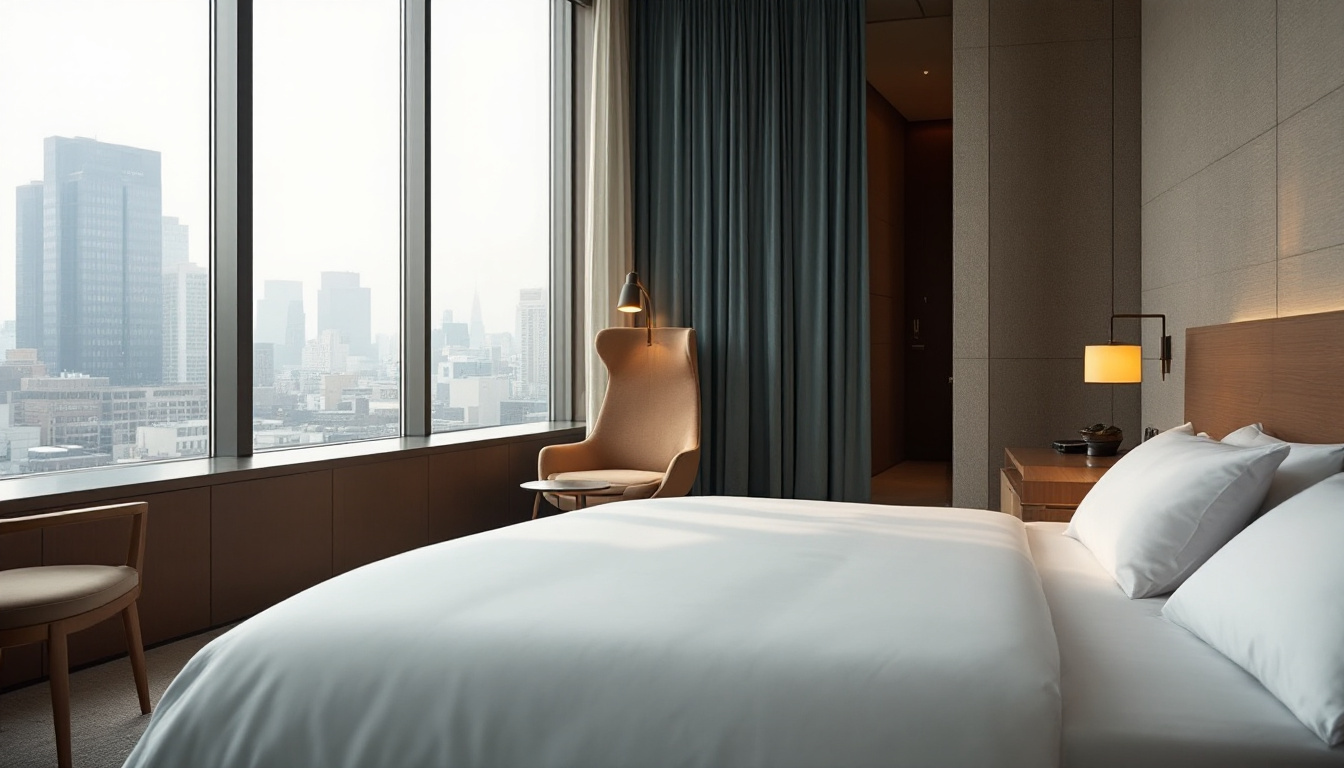
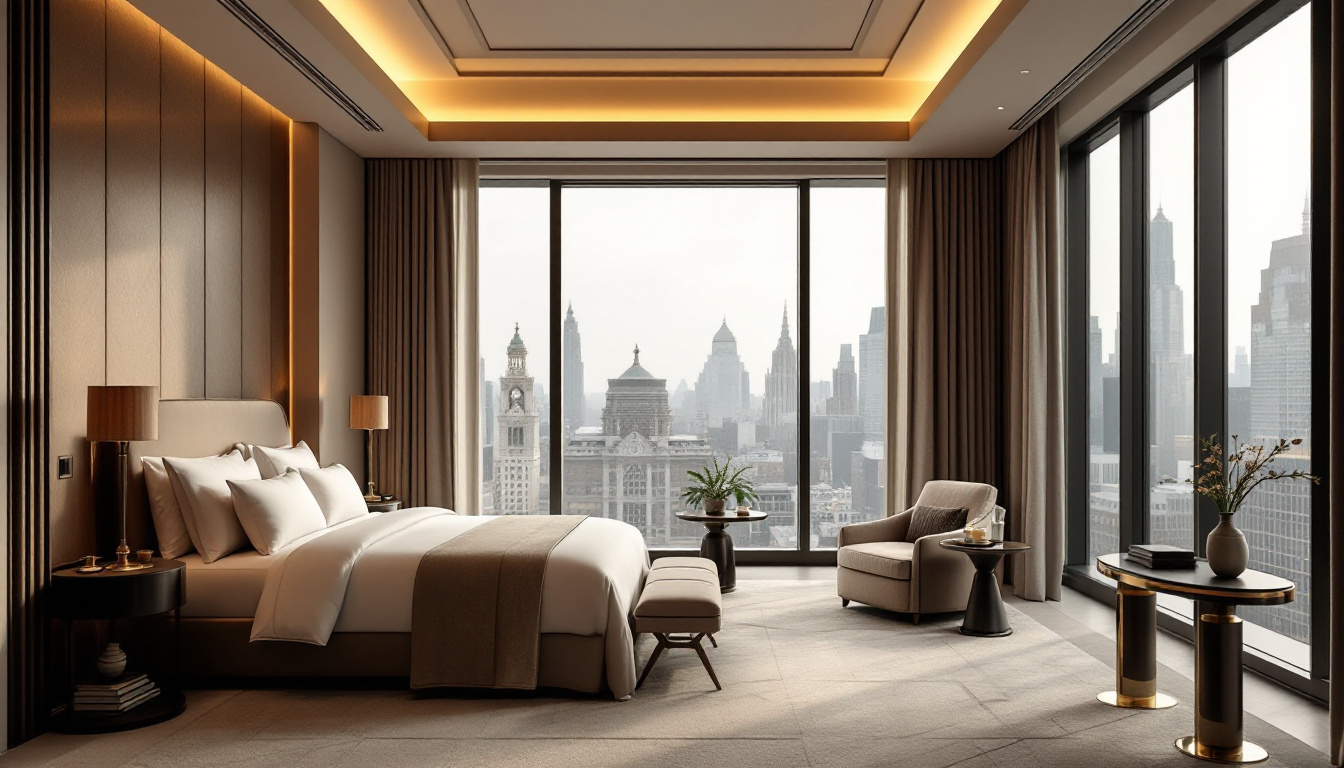
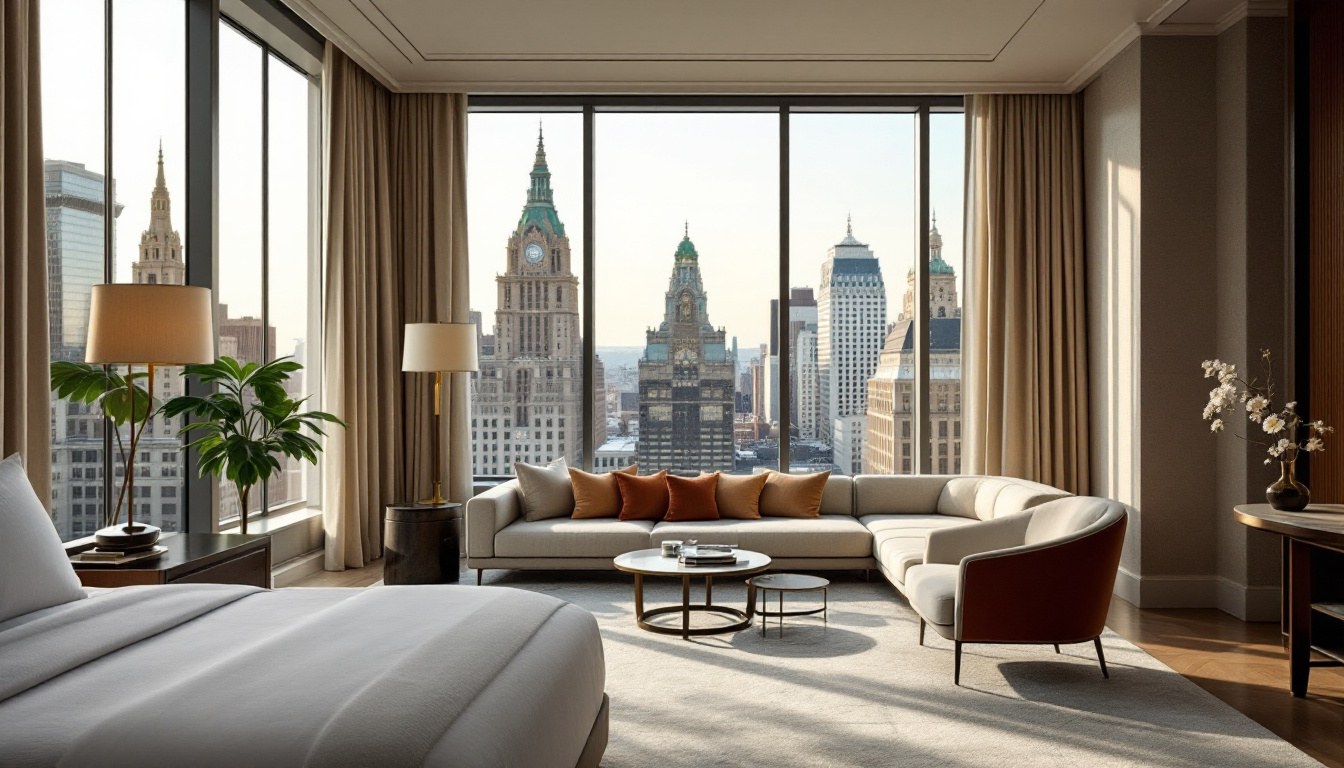
I had booked a Stuart Suite, which sits one tier above the entry-level Deluxe Room and two below the signature Raffles Suite. Mine was suite 2206, on the 22nd floor, with a primary window line facing southeast across Back Bay toward the Boston Public Library and the South End and a secondary set of windows on the south elevation that gave a clipped but real view down toward the South Station district. The suite measured 75 square metres on the plan, including the bathroom, and was organised as a two-zone layout (living room and bedroom, separated by a sliding lacquer screen) with the bathroom occupying the inner third of the floor plate.
The window line is the room’s principal asset, though it is more constrained than the equivalent rooms at the Aman New York. The Back Bay tower line is mature — the property is surrounded on three sides by commercial buildings of similar height — and the south and east views are partially clipped by the Trinity Place and Hancock Tower silhouettes. The southeast view from suite 2206 framed the Boston Public Library at the right distance (six blocks away, at the right scale for daytime light) and the Trinity Church spire at the secondary edge. The view at 06:40 on the second morning, with the December sun rising behind the South End at roughly 120 degrees and the city’s commercial lights still on across the Back Bay, was the right answer for a slow morning at the desk with coffee and the paper.
The materiality is the strongest in any new American urban hotel I have stayed in. The floors are wide-plank European oak in a low-sheen oil finish, with a single Tibetan wool rug in a New England-grey colour beneath the bed. The walls are silk-papered above a low wainscot of book-matched honed Calacatta marble. The principal feature wall — behind the bed — is a hand-laid Calacatta installation in a single book-matched panel, with a continuous indirect LED beneath the cornice that throws a soft glow at night. The ceiling is a soft cove with a continuous indirect LED, dimmable on the suite’s iPad control to five named scenes.
The bathroom is the suite’s structural set piece. The freestanding tub is a single carved block of honed Calacatta, 1.7 metres long, positioned beside a full-height window that faces the interior courtyard. There is a separate walk-in shower with both rain and handheld heads, a wet-room layout with a teak duckboard floor, a steam function I tested twice, and a dual vanity in honed Calacatta with brushed-bronze fittings. The bath products are the Guerlain L’Art & La Matière line (the Guerlain spa is downstairs and the in-room product set is a deliberate cross-reference); the shampoo, conditioner, and body wash are in 300ml ceramic refillable bottles. Robes are 480gsm waffle by Frette, embroidered with the property mark in a single gold thread. Slippers are pressed cotton, replaced daily.
In-room technology is the strongest in any North American hotel I have used. The iPad tablet at the bedside controls lighting, curtains, blackout blinds, temperature, do-not-disturb, room service, butler call, and the in-room television, from a single dashboard. The system is more responsive than the equivalent installations at the Aman New York and is on par with the Peninsula control system that the brand has been iterating on globally for two decades.
The minibar arrangement is the standard considered shape: a deep walnut drawer at counter height holding a selection of New England spirits (a single-batch rye from a Berkshire distillery, a Boston-distilled gin, two Massachusetts-distilled vodkas), a Marzocco-branded kettle, two tea caddies (a Boston-blended Earl Grey and a chamomile), and a refrigerated drawer holding water (a Maine spring water in glass bottles), a fresh-squeezed grapefruit juice, and three small bottles of a Berkshire craft beer.
What you do not get, deliberately, is the in-room curation aimed at the guest as photographic subject. There is no welcome platter set as a tableau, no diffused house scent running in the suite, no fanned magazine display. The suite is set for use.
The sky lobby
The sky lobby is the property’s structural argument and the principal reason Raffles Boston has stabilised as fast as it has.
The three-storey atrium on the 17th floor is engineered around three constituencies that the property serves simultaneously: hotel guests (who arrive at the lobby for check-in and use it as their principal social space across the stay), residents of the 146 branded apartments above (who use the lobby for the property’s social programming and have their own dedicated lift access), and the local Bostonian public (who use the bar and the afternoon-tea room as a destination social space). The mix is engineered through the room’s physical layout. The check-in pavilion is in a small alcove at the south end that is visually separated from the social spaces by a low travertine partition; the Long Bar runs the full east wall and serves as the principal social magnet; the afternoon-tea room is in the central section with a clear sightline down the atrium; the food-and-beverage operation has dedicated service entries on both the 17th and 18th floors.
I used the sky lobby across all three days of my stay — for an afternoon tea on the second day, for a working lunch at the Long Bar on the first day, for a pre-dinner drink at the bar on each of the three evenings, and for two long mornings reading at one of the lobby’s south-facing banquettes between breakfast and lunch. The room works at every hour I tested it. The morning use case (a long coffee at a banquette, a working laptop, the Times and the Globe on a low table) is supported by the bar’s espresso operation, which opens at 07:00 and is operated by a barista who pulls the shots to order. The afternoon use case is supported by the afternoon-tea operation, which runs from 14:30 to 17:00 daily and is the most considered hotel afternoon tea I have eaten at in Boston. The evening use case is the Long Bar, which is the property’s most successful single social space.
The afternoon tea is worth describing in some detail because it is the property’s principal social ritual for the hotel-guest constituency. The tea (USD 95 per person, bookable from three weeks in advance for the weekend seatings) runs the standard three-tier presentation — savouries on the bottom, scones in the middle, sweets on top — adapted intelligently for the Boston context. The savoury tier on my visit included a small lobster roll on a brioche bun (the Boston regional reference), a smoked-salmon and crème fraîche on a buckwheat blini, and a cucumber-and-cream-cheese tea sandwich. The scone tier was a single warm scone (plain and currant, with clotted cream and a strawberry preserve from a Vermont producer). The sweet tier was a four-piece selection of small French-trained pastries from the property’s in-house bakery. The tea programme runs to about thirty references, with the expected depth in classic Earl Grey, Darjeeling, and Assam blends and a more interesting depth in Japanese-style sencha and Chinese pu-erh. The service is the right Raffles register — proximate but not familiar, with a single dedicated tea server per table.
The service
The service has been the principal question for Raffles Boston since opening. The brand opened the property at a moment when the Boston luxury hotel market — set across two decades by the Four Seasons Boston, the Mandarin Oriental Boston, and the more recent Newbury Boston — was already competitive, and the question on every visit since opening has been whether the Raffles brand, which had not previously operated in North America, could establish a recognisable service register in a market that had not seen the brand at all.
The answer at two years in is: largely yes, with one structural caveat.
My assigned host for the stay was Mr. Park, an English-and-Korean-speaking butler who had been recruited from a senior post at the Park Hyatt New York at opening. His manner is the right Raffles register — proximate but not familiar, attentive without being conspicuous, with the kind of pacing that suggests training on the Asian side of the brand rather than the European side. The brand operates a one-butler-per-floor model rather than one-butler-per-guest, which means Mr. Park’s beat across my stay covered the 22nd and 23rd floors (six suites on each), but the floor-zone arrangement means the same face covered the same room across all three nights.
The deliberate service test: at 22:34 on the second night, I called Mr. Park on his mobile and asked whether a pair of black leather loafers could be polished and returned before an 07:00 breakfast meeting the next morning. The shoes were collected at 22:42 by a junior staffer I had not met, returned at 06:48 the next morning, polished to the correct degree (worked into the welt, with a sole edge treatment), and placed in the entry vestibule without a knock that would have woken me. The bill on the folio showed USD 50, which is the standard rate. The pickup-to-return time was just over eight hours, which is fast by Boston standards.
Name recognition across the property was uniform. I was greeted by name at the sky lobby on each entry, at the Long Bar on each of the three pre-dinner drinks, at La Padrona on the second evening, at the afternoon tea on the second afternoon, at the Guerlain spa on both visits, and at the pool on the one morning I used it. The staff-to-guest ratio at Raffles Boston is published at approximately 2.0 to 1, which is in the right band for an American urban hotel.
The single structural caveat worth recording is the floor-team model. The one-butler-per-floor arrangement, while operationally efficient, means that the butler is shared across multiple guests and can be unavailable for a stretch when serving another room. On the second afternoon I tried to reach Mr. Park for a non-urgent question about a Symphony Hall ticket and was routed to the front desk after a five-ring no-answer; the front desk took the question and produced an answer within seven minutes. The recovery was correct; the initial routing was a function of the floor-team model rather than a service failure. Guests who want one-butler-per-guest service in the American context should look at the Aman New York instead.
The table
The dining at Raffles Boston is organised around two principal restaurants (La Padrona and Amar) plus the Long Bar’s food operation and the sky lobby’s afternoon tea.
La Padrona, the property’s flagship Italian room, occupies the first and second floors of the building (it is the only food-and-beverage outlet that is not on the sky lobby floors) and is overseen by Chef Jody Adams, the Boston-based chef whose Rialto in Cambridge held a James Beard nomination in the early 2000s. The day-to-day kitchen is run by Executive Chef Amarilys Colon. The room is large (capacity around 110) and the design is by AvroKo — a deliberately theatrical Italian palazzo register with a central open kitchen, a wood-burning pizza oven at the back, and a marble-topped bar at the front.
I took dinner at La Padrona on the second evening, à la carte. The highlights, in sequence: a small composed plate of vitello tonnato with a single salt-packed caper and a slice of preserved lemon; a single piece of fresh tagliatelle with a 24-hour-braised short-rib ragù that the kitchen presents in the proper Bolognese register (the meat shredded, the sauce reduced, the pasta tossed at the pass); a primary course of dry-aged bone-in ribeye, cooked over wood and rested for the right amount of time, served with a roasted-onion confit; and a closing dessert of olive-oil cake with mascarpone that was correctly executed (the cake was warm, the mascarpone was the right temperature). The meal ran USD 165 per person before wine. The wine list runs to about 450 references, with the expected depth in Italian regional wines and a more interesting depth in California — twelve references from Sandhi and Domaine de la Côte, eight from Massican.
Amar, the property’s Southeast Asian restaurant, is led by Andy Ricker, the Michelin-starred chef whose Pok Pok in Portland and New York set the American reference point for Northern Thai cuisine in the 2010s. The room is smaller than La Padrona (capacity around 60) and is on the sky lobby’s 18th floor. I did not eat at Amar on this visit, having had a meal there in February 2024 that I would describe as the most accomplished Southeast Asian food in any American hotel — the chiang mai-style khao soi was textbook, the laap was correctly seasoned, and the muu kham wan was the best Thai pork dish I had eaten in the United States that year.
The Long Bar’s food programme operates from 11:00 to 23:00 and is the right answer for a one-person dinner at the bar. The menu runs to about 18 items — a tight selection of small composed plates, two main dishes (a burger and a fish-and-chips), and a small selection of sushi-style raw fish that is more competent than the bar context would suggest. I ate a Long Bar dinner on the first night (an oyster selection, a tuna tartare, and a single roasted-bone-marrow dish) and would do it again.
The Detail
The single specific signature gesture at Raffles Boston is the sky lobby afternoon programming.
The property has, since opening, operated a programme of afternoon events in the sky lobby that runs on a published schedule — a jazz pianist on Wednesday afternoons (from 15:00 to 17:00), a classical string trio on Saturday afternoons (from 14:00 to 16:00), and occasional special programming (a Symphony Hall pre-concert lecture series in the fall, a Boston Pops-affiliated holiday programme in December). The programming is open to hotel guests and to local Bostonians (with a small cover charge for non-residents) and is the principal mechanism by which the property has integrated into the city’s cultural rhythm.
I attended the Saturday string trio on the second afternoon of my stay. The trio (a violin, viola, and cello arrangement) was a Boston Conservatory faculty group that the property has been commissioning since opening, playing a programme of Boccherini, Schubert, and a single contemporary piece by a local composer. The room was full by 14:15; the audience was a roughly even mix of hotel guests and locals. The decision to operate the sky lobby as a public-facing cultural space is the property’s most distinctive operational choice and is the reason the room functions as it does.
The other detail worth recording is the in-room turn-down. At 19:30 each evening, the housekeeping team enters the suite, performs a standard turn-down (bed turned, slippers placed, water replaced), and adds two further elements: a small lacquer dish on the bedside table containing two pieces of dark chocolate from a Cambridge maker (Taza Chocolate, the Somerville-based stone-ground chocolatier), and — on alternate nights — a small printed card carrying a single quotation from a Boston author, with a citation. The cards were present on two of my three nights; they were not present on the first. The Saturday-night card quoted from a Robert Lowell poem about the South End in the 1960s. The Sunday-night card quoted from a Jhumpa Lahiri short story about a Cambridge winter. The alternating cadence is the right one. A nightly card would be theatre; the alternating one reads as a property paying attention to its own register.
The Standard
Setting — 4.5. The Back Bay tower position is the strongest urban hotel location in Boston (three blocks from Copley Square, four from the Prudential Center, ten minutes by car to the Seaport, with the principal cultural destinations of Symphony Hall and the Museum of Fine Arts within easy access). The sky lobby is the property’s principal interior gesture and is the most successful new American hotel social space since the Aman New York’s seventh-floor pavilion. The half-point deduction is for the suite-level views, which are constrained by the mature Back Bay tower line in a way that the Aman New York is more limited but the Bulgari Tokyo and the Peninsula Istanbul are not. Four-point-five.
Suites — 4.5. The Stuart Suite is the right entry tier — generously sized, with strong materiality and an accomplished bathroom — and the in-room technology is the strongest in any North American hotel I have used. The deduction is for the constrained window line that comes with the Back Bay tower position, for the absence of a separate powder room at the Stuart Suite tier, and for the size of the entry-level Deluxe Room, which at 45 square metres is the smallest entry tier in the city’s luxury set. Four-point-five.
Service — 4.6. Mr. Park’s conduct, the shoe-polishing recovery, the front-desk recovery for the Symphony Hall question, and the uniform name recognition are at the upper end of what the Boston market offers. The deduction is for the structural caveat of the one-butler-per-floor model (which is operationally sound but is not the one-butler-per-guest standard that the brand’s Asian flagships use) and for one specific moment on the first morning when the lift attendant was not at her station and a 90-second wait was required. Four-point-six.
Table — 4.6. La Padrona is doing accomplished Italian work, Amar is the most accomplished Southeast Asian food in any American hotel, the Long Bar is the most successful single bar room in Boston, and the afternoon tea is the right register. The deduction is for the lobby restaurant operation, which is more limited than the kitchen could produce and would benefit from a dedicated all-day American room of the kind that the Mandarin Oriental Boston operates downstairs. Four-point-six.
The Detail — 4.6. The sky lobby’s afternoon programming, the alternating Boston-author turn-down cards, the Taza Chocolate at turn-down, the Guerlain bath products, the brass-and-leather banquettes at the bar, the lift attendant system, the leather key wallet replaced at each lift trip. The half-point deduction is for the in-room welcome amenity, which is generic across all suite tiers and would benefit from the kind of regional gesture (a Massachusetts-cheese plate, a Cambridge-bakery loaf, a Berkshire-distillery cocktail kit) that the property’s local-sourcing programme would support. Four-point-six.
Average: 4.6. At the Standard.
Verdict
At the Standard. Raffles Boston at two is the most considered new American urban hotel since the Aman New York opened, and the principal reason is the sky lobby. The decision to operate a 17th-floor three-storey atrium as a public-facing social space — engineered around three constituencies (hotel guests, branded residents, and local Bostonians) functioning in the same volume without friction — is the structural argument the property is making. The decision works. The Long Bar is the most successful single bar room in Boston, the afternoon tea is the right register, the in-room technology is class-leading for North America, and the kitchen is doing serious work across both Italian and Southeast Asian programmes.
Best for: a two-to-four-night Boston base, particularly in the cold months when the sky lobby and the Long Bar work at their peak. Best for business travellers based in the Back Bay or the Financial District. Best for couples and for solo travellers who value a centrally-located urban property with a strong food-and-beverage programme. Best for guests planning a Symphony Hall or Museum of Fine Arts engagement. Not for: families with young children (the property is adult-coded in the way the Aman New York is), parties of more than two adults seeking a shared suite at this rate, or guests who want a Seaport-side base (the location is ten minutes by car to the harbour but is structurally a Back Bay property).
Reservation lead times: I would book three to four months out for the autumn peak (mid-September through mid-November, when New England draws the foliage traveller), six to eight weeks for the late-spring shoulder, and two to three weeks for the deep winter (January through early March). Reserve direct through Raffles or via the Virtuoso channel for the complimentary breakfast and USD 100 dining credit. La Padrona is bookable from sixty days out and the weekend evenings book out by ten days before arrival; the sky lobby’s Saturday string trio is open seating and does not require booking. Rates from approximately USD 1,100 for the Deluxe Room, rising to USD 1,800 for the Stuart Suite and USD 14,000-plus for the signature Raffles Suite.
Standing Questions
When did Raffles Boston open?
The hotel opened on 14 September 2023, the first Raffles property in North America. It occupies a purpose-built 35-storey tower in Back Bay at the corner of Stuart Street and Trinity Place.
Who designed the property?
The Architectural Team (TAT) designed the exterior; Stonehill Taylor designed the guestrooms and most amenity spaces. The Long Bar interior is by Studio Paolo Ferrari; La Padrona by AvroKo; the fitness centre by Rockwell Group.
What is the entry-level rate?
Deluxe Rooms (around 45 square metres) start at approximately USD 1,100 per night in shoulder season; Bay-facing suites and the signature Raffles Suite range USD 3,500–14,000.
How does the sky lobby work?
The 17th floor is a three-storey atrium that serves as the property’s principal social space — a long bar, the afternoon-tea room, two restaurants, and the check-in pavilion. Guests are routed from the ground-floor entry to the 17th floor by a dedicated lift before being moved to their guestroom floor.
Is the property a better business or leisure choice?
The Back Bay location — three blocks from Copley Square, four from the Prudential Center, ten minutes by car to the Seaport — makes it the strongest business-traveller proposition in Boston. The Guerlain spa, the pool, and the bar program make it equally serious for leisure stays.
Verification
Filed against the following sources, last verified on May 23, 2026. The desk re-checks the source URLs on every dated modification of the piece.
- https://press.accor.com/raffles-boston-opens-today-in-bostons-back-bay-marking-the-first-raffles-hotel-residences-in-north-america
- https://www.hospitalitynet.org/announcement/41010056.html
- https://www.raffles.com/boston/about/
- https://www.raffles.com/boston/dining/la-padrona/
- https://www.raffles.com/boston/dining/long-bar-and-terrace/
- https://www.raffles.com/boston/dining/
- https://www.raffles.com/boston/spa/
- https://www.guerlain.com/us/en-us/c/guerlain-spa-raffles-boston.html
- https://www.hoteldive.com/news/raffles-boston-opens/694079/
- https://www.boston.com/travel/travel/2023/09/15/take-a-look-inside-the-newly-opened-raffles-boston/
- https://www.elevatedboston.com/blog/posts/2025/03/05/long-bar-terrace-at-raffles-boston-a-refined-dining-experience-in-back-bay/
- https://www.noannet.com/projects/raffles-boston-back-bay-hotel-residences/
Standing Questions
- When did Raffles Boston open?
- The hotel opened on 14 September 2023, the first Raffles property in North America. It occupies a purpose-built 35-storey tower in Back Bay at the corner of Stuart Street and Trinity Place.
- Who designed the property?
- The Architectural Team (TAT) designed the exterior; Stonehill Taylor designed the guestrooms and most amenity spaces. The Long Bar interior is by Studio Paolo Ferrari; La Padrona by AvroKo; the fitness centre by Rockwell Group.
- What is the entry-level rate?
- Deluxe Rooms (around 45 square metres) start at approximately USD 1,100 per night in shoulder season; Bay-facing suites and the signature Raffles Suite range USD 3,500–14,000.
- How does the sky lobby work?
- The 17th floor is a three-storey atrium that serves as the property's principal social space — a long bar, the afternoon-tea room, two restaurants, and the check-in pavilion. Guests are routed from the ground-floor entry to the 17th floor by a dedicated lift before being moved to their guestroom floor.
- Is the property a better business or leisure choice?
- The Back Bay location — three blocks from Copley Square, four from the Prudential Center, ten minutes by car to the Seaport — makes it the strongest business-traveller proposition in Boston. The Guerlain spa, the pool, and the bar program make it equally serious for leisure stays.