The address is a single piece of context the brand cannot have overstated and has not had to. 1-5 Grosvenor Place sits at the southwest corner of Hyde Park, opposite the south gates of Buckingham Palace and at the head of Belgravia. The Wellington Arch is across the road. The Hyde Park Corner roundabout is to the north. The eastern end of Knightsbridge starts at the door. There is, in central London, no other vacant plot of this quality that could have come to market in the past half-century. The Peninsula got it, sat on it for over a decade waiting for the planning consents, and then built carefully.
The Building
Hopkins Architects, the British practice with a long history of contextual public work, took the architectural brief. The constraint was severe: the building had to deliver a hotel and twenty-five residences at a scale appropriate to one of the most-watched plots in London, without overpowering the Georgian and Victorian fabric on either side. The site is technically in the City of Westminster; the planning regime is among the strictest in the United Kingdom; the view from Hyde Park back across the building had to be preserved.
The result, walking past it on Grosvenor Place in 2026, reads as deliberately conservative. The façade is Portland stone, the proportions are five-storey-plus-mansard, the rhythm of windows and pilasters takes its cue from the eighteenth-century terraces opposite. There is nothing showy about the elevation. The architectural moves are internal — the courtyard that runs through the middle of the plan, the double-height arrival lobby, the rooftop pavilion that crowns the building — and they reveal themselves only once you are inside.
This is the right answer for this site. A more assertive building would have been wrong; a more timid one would have been a missed opportunity. Hopkins has executed the middle path with the discipline the practice is known for.
Peter Marino’s Interiors
Peter Marino, the American architect and interior designer who has built much of the contemporary luxury-retail vocabulary across LVMH, Chanel and the major fashion houses, served as the interior architect. The brief was to translate the Peninsula brand’s Asian heritage into a London-residential idiom — the same problem Mandarin Oriental was solving across town at the same time, executed here by a designer with a different sensibility.
Marino’s London register is more decorated, more colour-saturated, and more art-led than the Mandarin Oriental property. The lobby is a sequence of rooms rather than a single volume — a Long Hall with an art programme that includes commissioned work by contemporary British artists, a tea room set off the courtyard with a glazed elevation, a bar with a fireplace and a deep amber palette. The whole reads first as a substantial London residence, then as a hotel.
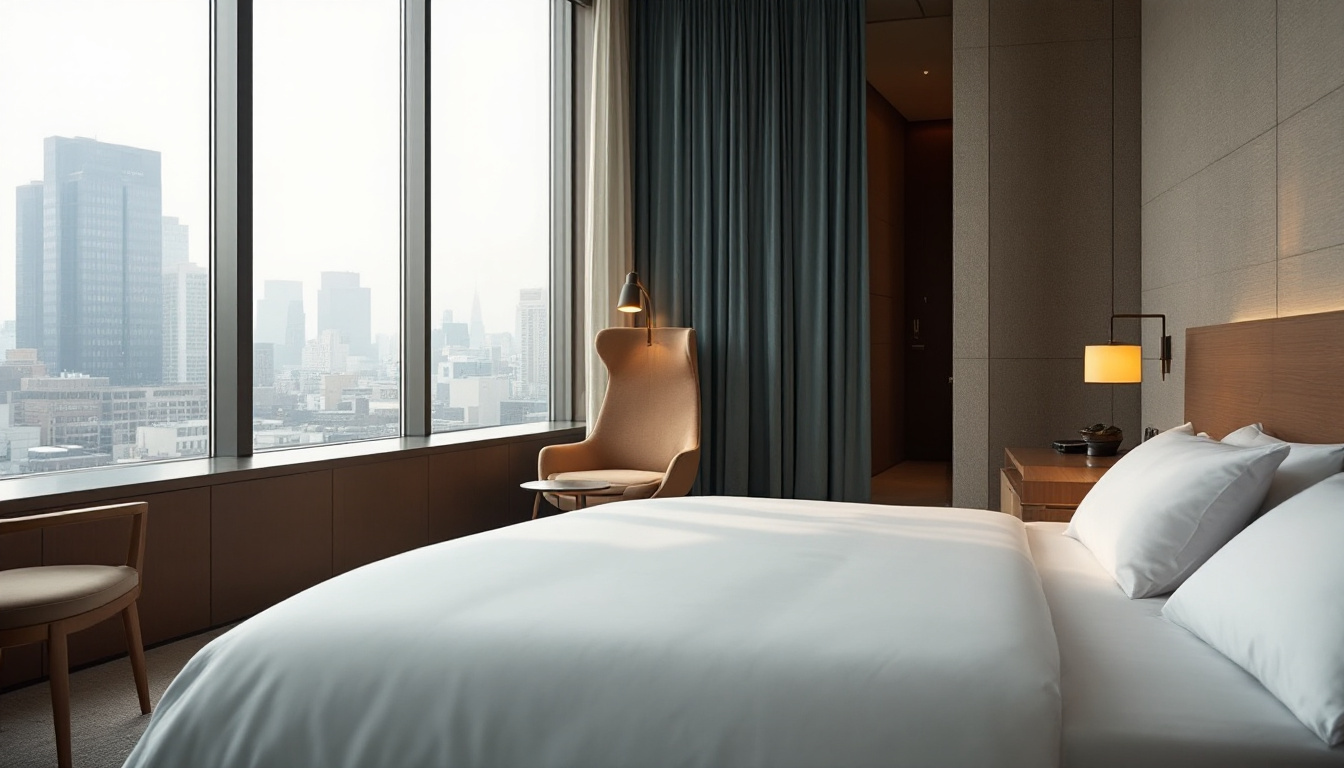
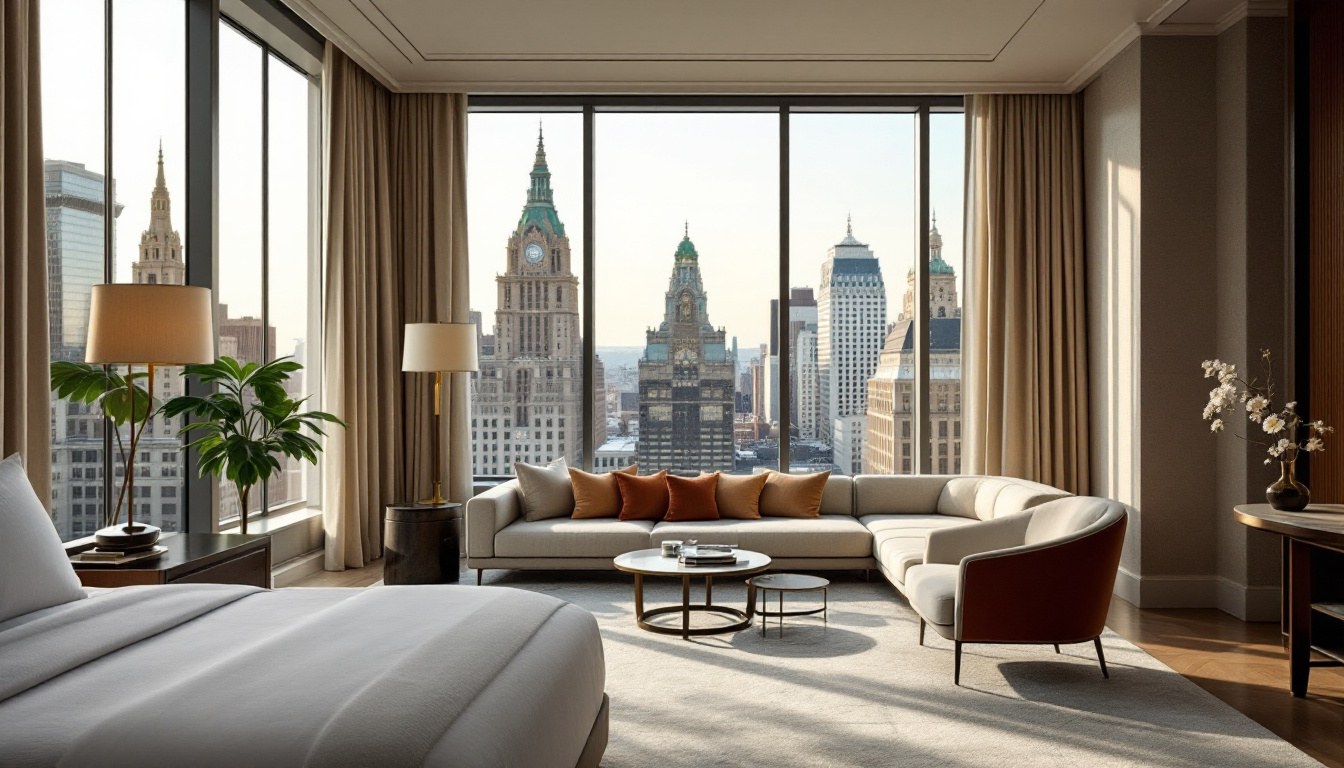
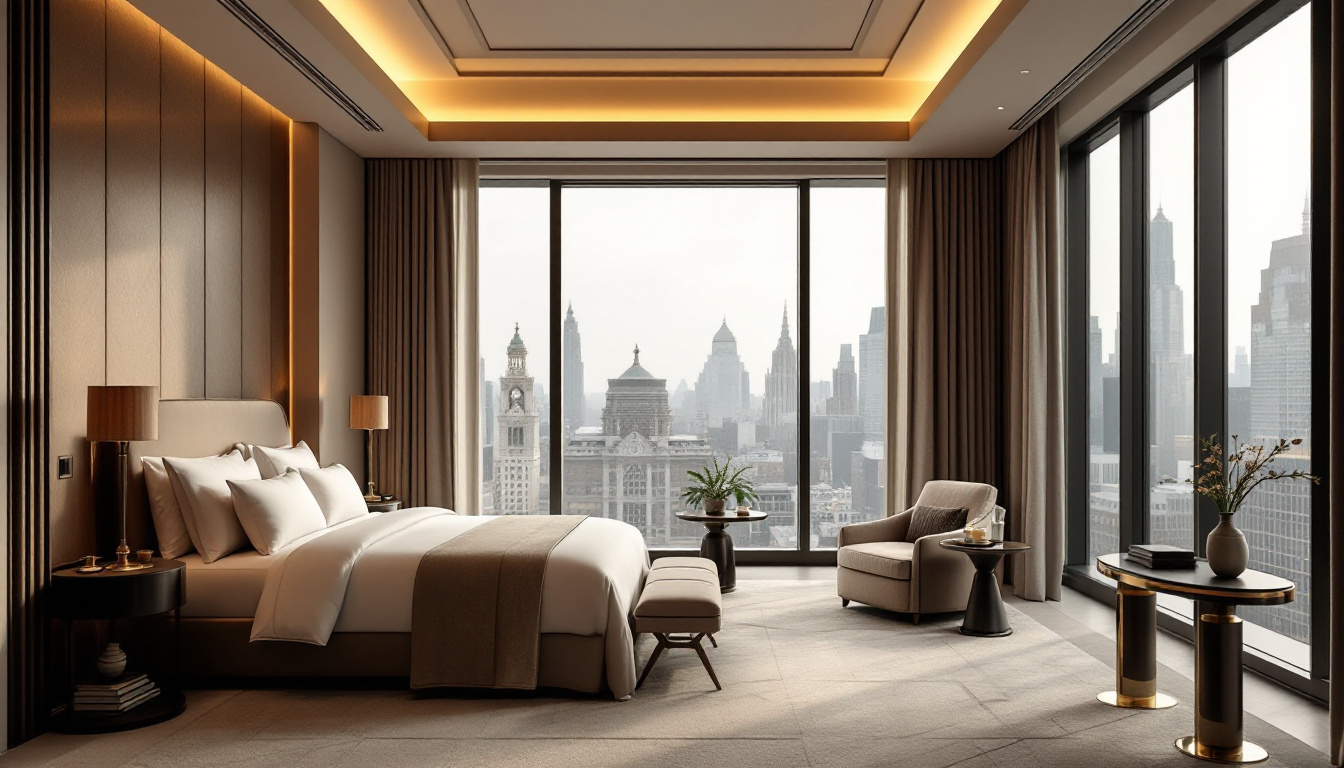
The rooms continue the register. My room — a deluxe suite on the fourth floor, with a small balcony over Grosvenor Place — ran a colour palette of dusky blue, warm cream and brushed bronze. The materials were heavy and English: silk on the walls, deep wool on the carpet, hand-painted joinery, marble (English, not Italian) in the bath. The bed was the deepest I slept in last year. The bath sat in its own room, with a window and a deep window seat. The dressing room had a separate door from the bedroom, which is the move that distinguishes a hotel room from a flat. There was a small library of London books selected by a curator in the brand’s London office — proper London books, not coffee-table editions.
The Service Model
The Peninsula service model is the brand’s longest-running advantage, and the London property is delivering it correctly. Check-in happens in the room. The on-board technology — a discreet tablet that controls lights, climate, drapes and the in-room dining — is the version that works the first time. The minibar is replenished invisibly. The valet runs your laundry on a four-hour turnaround. The page programme — the bellmen in the dove-grey uniforms who manage the lobby — has the trained calm that takes years of management discipline to build, and they have built it from day one.
The fleet is the other Peninsula signature. The hotel runs a small fleet of bespoke Rolls-Royce Phantoms — the brand’s exclusive specification, with a particular green livery — and the airport transfer in one of these is the introduction to the city the brand wants you to have. I will not pretend the car is necessary; I will say it is the most comfortable hour of car travel between Heathrow and central London I have had.
Brooklands
The rooftop restaurant is the kitchen anchor of the property, and the assignment of Claude Bosi to it is the most consequential chef appointment a London hotel has made in this decade. Bosi, who holds three Michelin stars at his Bibendum restaurant in Chelsea, has built one of the most precise classical-French kitchens in the United Kingdom; the Brooklands brief is to translate that precision into a contemporary British register, with the view across Hyde Park as the room’s other anchor.
The room is a glazed pavilion on the seventh floor, with the principal elevation looking north across the park to the Bayswater skyline. The aerodynamic-themed design — Brooklands was the early-twentieth-century motor-racing circuit in Surrey — runs through the joinery and the lighting and stops just short of being heavy-handed. The bar, set against the south wall, has the best view in the room.
The cooking is the part to focus on. The menu compresses a tasting register into a long à la carte; the techniques are classical and the ingredients are British. I had a langoustine course with bisque, fennel and dill that reminded me why Bosi has been one of the British dining room’s most reliable kitchens for two decades. The roast lamb with hispi cabbage and confit garlic was the dish I am still thinking about. The cheese course — British cheese — is the move many London hotels skip and Brooklands does properly.
The wine list runs deeper than it needs to, especially in Burgundy and the Loire. The sommelier on my evening was unusually generous with by-the-glass pairings; ask for the matched flight if you are tasting at length.
The Spa
The spa runs across two levels below ground, with a 25-metre pool, separate hammam and sauna circuits, and a treatment programme that is conventional in its register and excellent in its execution. The pool is properly heated, properly lit, and properly proportioned for serious swimming; the cabana lounge alongside, with daybeds and a small bar, is where you would spend a Sunday afternoon.
The treatments I tried — a 90-minute deep-tissue massage and a separate facial — were both delivered by therapists who came to the property with serious clinical training. The post-treatment relaxation room is the part of the spa I want to single out; the design is restful, the soundproofing is genuine, and an hour after a treatment in that room is qualitatively different from an hour after a treatment in most London hotel spas.
What Did Not Work
A few small calibrations. The all-day-dining room (Canton Blue, on the ground floor) runs a sophisticated Cantonese menu that I think is too sophisticated for the casual lunch slot it is being asked to fill — the kitchen would benefit from a simpler register at lunch and the more ambitious dishes at dinner. The afternoon tea, while properly executed, books out three weeks in advance and the queue management at the door can fray.
The rates are at the top of the London market. The entry room in high season is north of £1,500 a night, and the suites scale steeply from there. The shoulder periods — late January, February, late summer — are the better proposition.
How It Sits
London has had three significant hotel openings this decade: The Peninsula, Mandarin Oriental Mayfair, and Raffles at the OWO. They are doing genuinely different things. The OWO is the most public, the most ceremonial and the most rooted in a historic civic moment. The Mandarin Oriental Mayfair is the most residential, the most contemporary and the most discreet. The Peninsula is, in some ways, the most ambitious — it is the only one of the three trying to deliver a fully integrated luxury-hotel experience on a single new-build plot, with the brand’s full operating system from day one.
If you can stay only once in London, and you have not stayed at The Peninsula, it should be the hotel you book first. The bones are right. The team is right. The kitchen is right. The address is, frankly, perfect.
Verification
Filed against the following sources, last verified on May 30, 2026. The desk re-checks the source URLs on every dated modification of the piece.
- https://www.peninsula.com/-/media/news-room/2023/london/the-peninsula-london-opens/the-peninsula-london-welcomes-its-first-guests-in-the-heart-of-belgravia-on-12-september.pdf
- https://www.peninsula.com/en/newsroom/london/news/the-peninsula-london-welcomes-its-first-guests-in-the-heart-of-belgravia-on-12-september
- https://spearswms.com/luxury/the-peninsula-london-first-uk-hotel-from-luxury-brand-opens-its-doors-in-belgravia/
- https://www.boutiquehotelier.com/peninsula-london-opening-date/
- https://www.wallpaper.com/travel/hotels/the-peninsula-hotel-london-uk
Standing Questions
- When did The Peninsula London open?
- The hotel welcomed its first guests on 12 September 2023, the brand's first hotel in Europe and the most-anticipated London opening of the past decade.
- Who designed the building?
- Hopkins Architects designed the architecture in a register intended to harmonise with the Georgian and Victorian fabric of Belgravia. Peter Marino directed the interiors.
- Who runs the kitchens?
- Michelin three-starred Claude Bosi is the hotel's chef director and oversees Brooklands, the rooftop restaurant serving contemporary British cuisine.
- How many keys does it have?
- 190 guestrooms and suites, plus 25 private residences in the same building.
- Where exactly is it?
- 1-5 Grosvenor Place, at the southwest corner of Hyde Park, opposite the gates of Buckingham Palace and at the head of Belgravia.