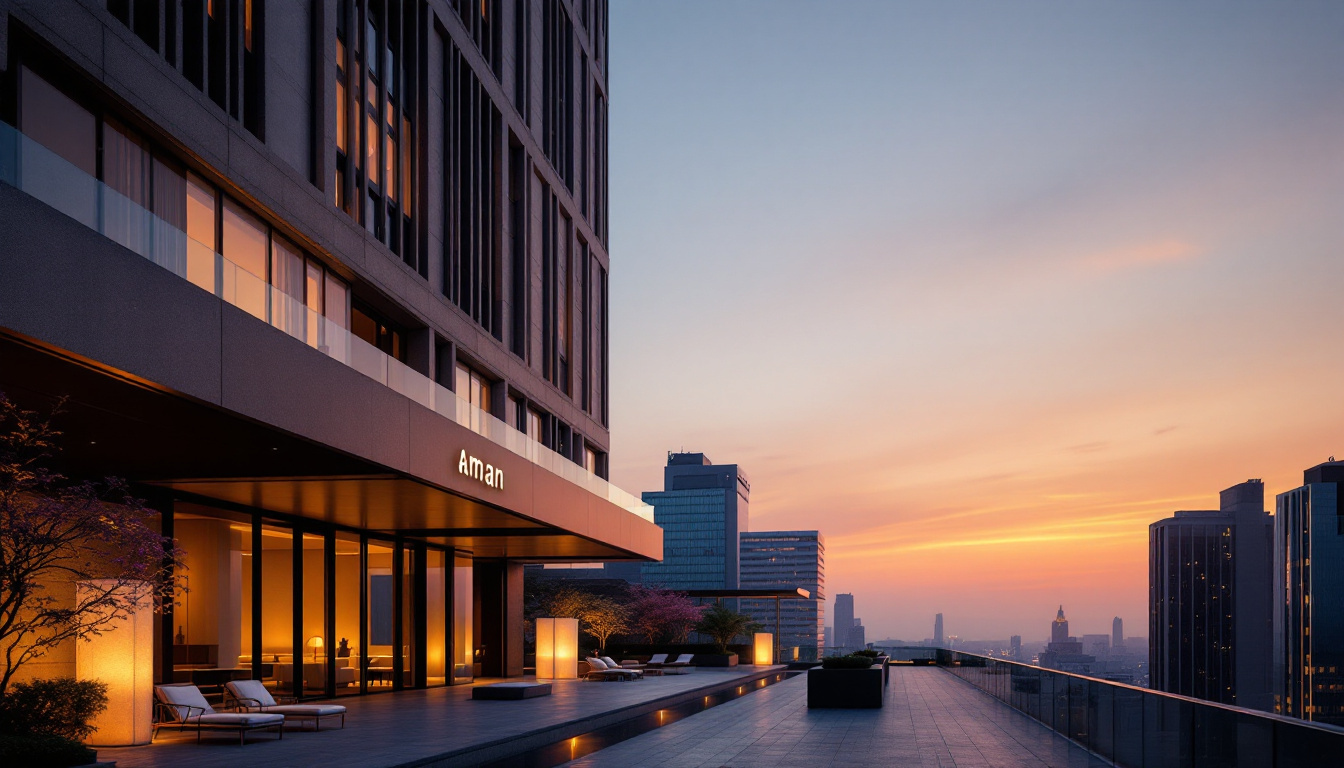
I checked in on the afternoon of 12 March 2026, a Thursday, in the unremarkable grey light that Tokyo wears for most of early spring. The cherry trees in the Imperial Palace East Gardens, three hundred metres west of the property, were still ten days off their first flowers; the office towers in Otemachi were emptying for the evening shift change; the wind down the canyon between Marunouchi and the palace moat carried the smell of cold concrete and the faint mineral note of the moat water itself. I had last stayed at Aman Tokyo in February 2020, three weeks before the country closed its borders. Six years and one global pause is enough time for a hotel to either decline into a brand exercise or settle into itself. I wanted to know which had happened here.
The single observation that frames this review came in the first ninety seconds. When the lift doors opened on the 33rd floor, I noticed the lobby had been re-lit. The light level is now lower than it was in 2020 — perceptibly lower, by something like a stop and a half — and the wash on the back wall of washi paper has shifted from a cool daylight balance to a warmer, almost amber register. It is the kind of change a property only makes when the people running it have decided what they are, rather than what their corporate deck says they are. Everything that follows in this review is, in some sense, a footnote to that decision about the lighting.
The arrival
I flew into Haneda (HND) on the JAL flight from London on the morning of the 12th, clearing customs at 08:40 — early enough that I had the better part of a working day before check-in. The hotel had arranged transfer in advance: a black Lexus LS500h, plate ending 2401, driver Mr. Sato, who had been waiting with a small printed card at the kerb outside Terminal 3 arrivals from 08:15. The car had been positioned, not idling in the queue, and Mr. Sato carried both bags himself. The drive from HND to Otemachi took 38 minutes in moderate traffic, exiting the Shuto Expressway at Kandabashi and arriving at The Otemachi Tower’s basement drop-off at 09:31. Aman uses the lower-ground motor entrance rather than the lobby on the ground floor — a quieter handover, and the first signal that the property treats arrival as something to be managed rather than performed.
Bags were taken at the car. I was walked thirty paces to a small ante-room beside the dedicated Aman lift bank, where a host I had not met — Ms. Kawai, who later turned out to be the deputy front-of-house manager — offered a cold towel scented with hinoki and a small porcelain cup of genmaicha, both served at the temperatures one would actually want at that hour. (The towel was cool, not cold; the tea was warm, not hot. The discipline is in the calibration.) She confirmed the suite was being held and that early check-in could be arranged for 11:00 if I wished to walk in the meantime. I asked to go up.
The lift to the 33rd floor takes approximately 42 seconds and is unremarkable. The lobby that opens at the top is not. Kerry Hill’s double-height shoji-paper atrium remains, to my eye, the single most accomplished interior gesture in any urban Aman in the portfolio — and at twelve years old it is now ageing in a way that flatters it. The paper is not pristine. There is a barely-visible discolouration in two of the lower panels, the kind of thing that on a younger property would have triggered a replacement and on this one has clearly been considered and left. The volume of the room — eight metres or so, with the engawa-style stone bench running the length of the west wall — still does what it did in 2014: it slows you down. People who arrive talking stop talking. I watched this happen twice in the time it took for Ms. Kawai to walk me across the floor to a chair facing the palace gardens.
Check-in was done from the chair, in eleven minutes, with a single iPad and no card-and-passport theatre at a counter. The room key is a slim brushed-steel card in a kuromoji-wood sleeve. I was offered a choice between being walked to the suite immediately or being left for an hour with a pot of tea. I took the tea. The pot, when it came, was an Iga-yaki piece by a potter I did not recognise; the cup was a separate, deliberately mismatched Hagi-yaki. Both the matching and the not-matching felt intentional.
The suite
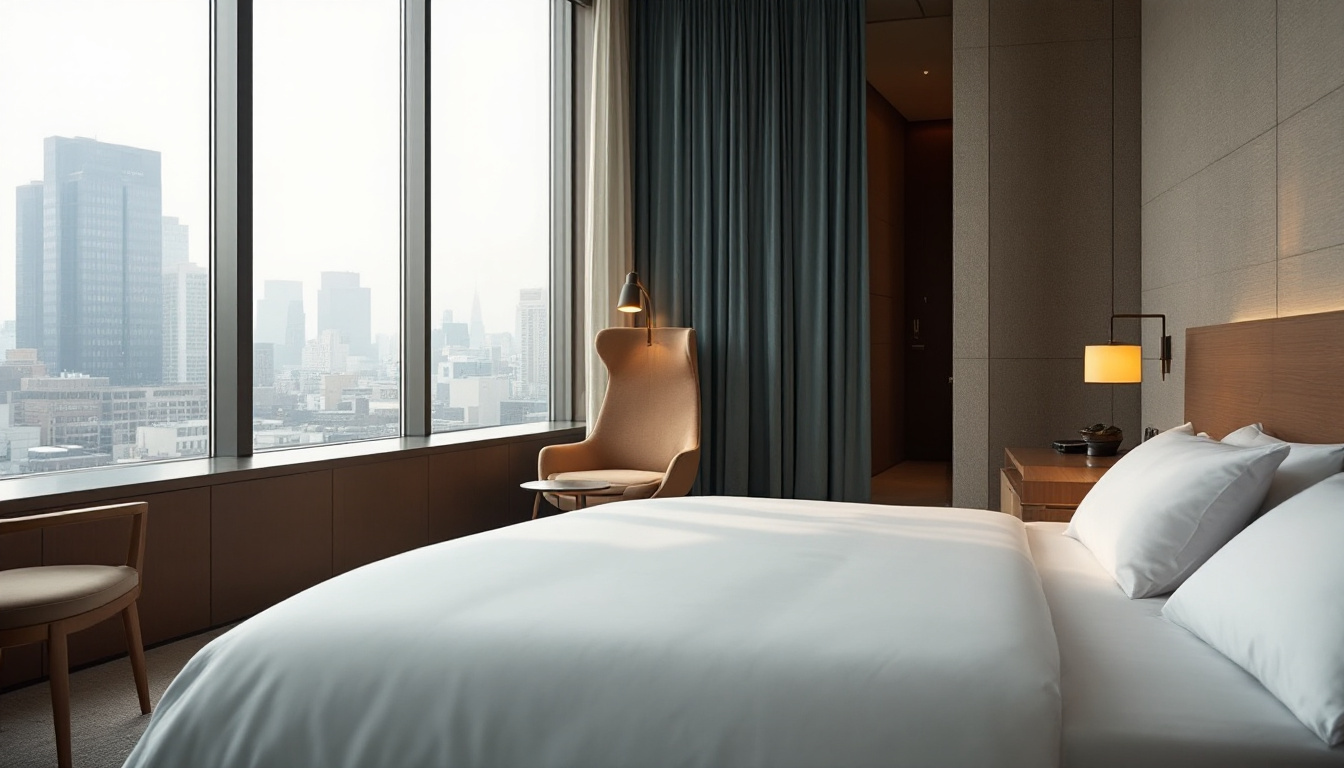
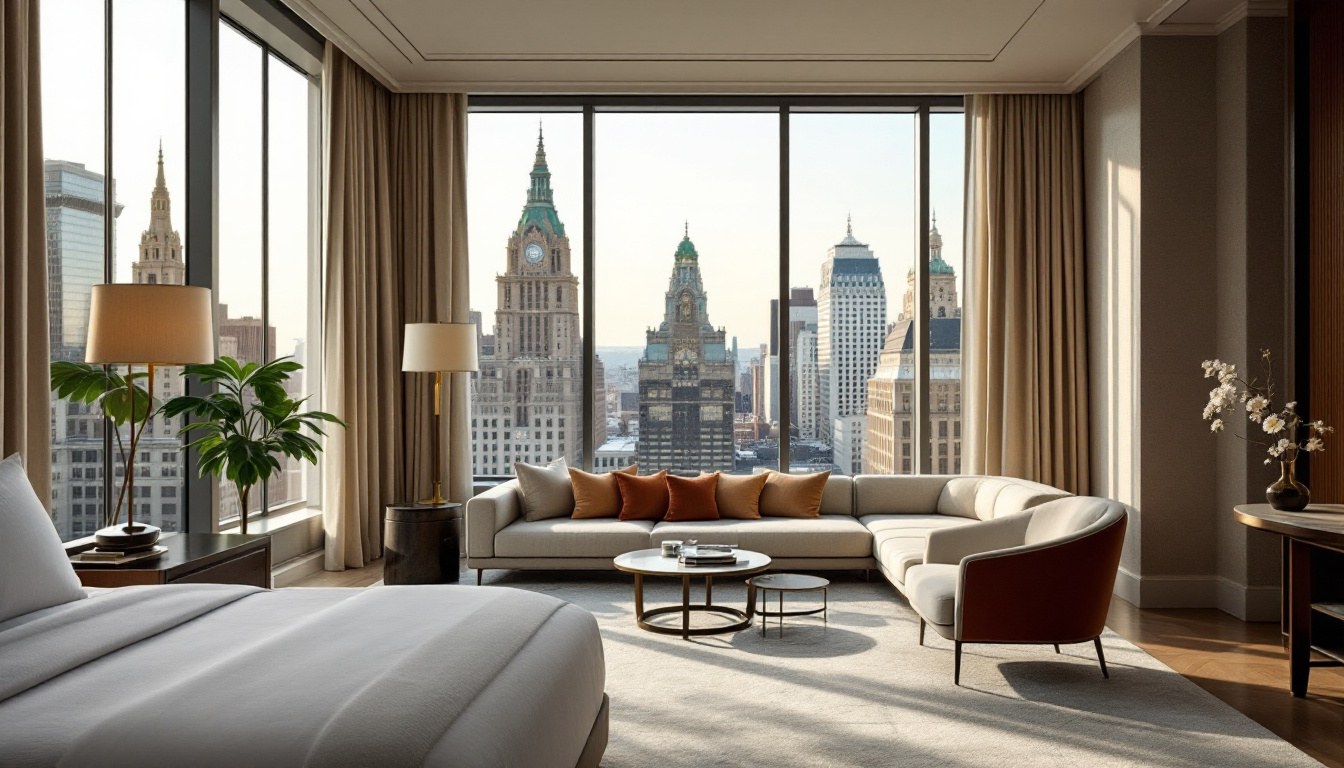
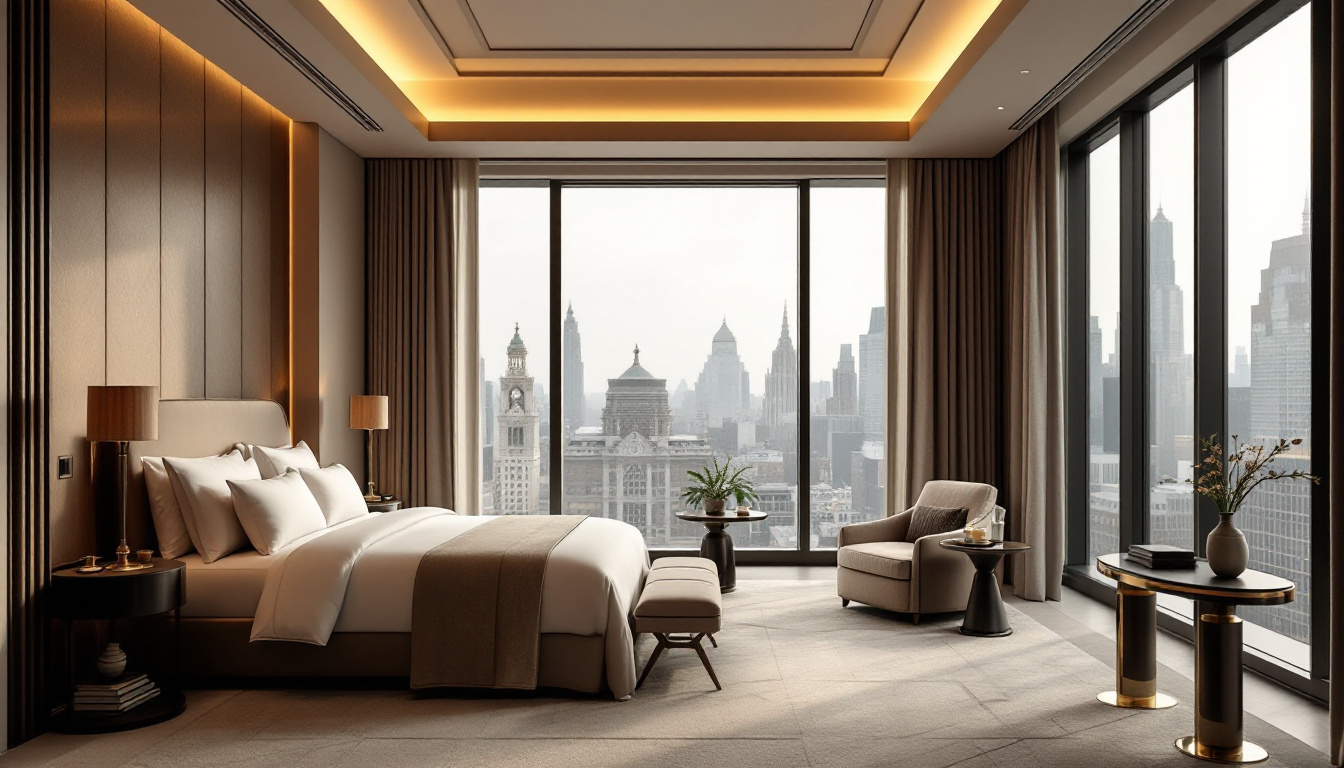
I had booked a Premier Suite, which Aman positions one tier above the entry-level Deluxe Room and one below the Corner Suite. Mine was room 3502, on the 35th floor, west-facing, 95 square metres including the bathroom. The floor footprint here is unusual for a city Aman: the rooms are laid out in a single deep rectangle that runs from corridor to window, with the bathroom occupying the inner third and the sleeping and living zones reading as one continuous room toward the glass. The effect is closer to a Kyoto ryokan suite scaled up than to any conventional hotel layout, which is the point.
The window line is the room’s argument. Mine ran the full 7.2-metre west elevation, single-glazed in laminated low-iron, and it framed the Imperial Palace East Gardens almost in their entirety, with Tokyo Station’s red brick visible at the southern edge and — on the morning of the 14th, briefly, before the haze closed in — the cone of Mt Fuji at roughly 235 degrees, just to the left of the Roppongi skyline. There is a low engawa-style bench under the full length of the window, upholstered in a Hokkaido wool the colour of unbleached linen, and this is where you actually sit. The desk and the lounge chairs feel almost vestigial in comparison.
The materials are restrained. Floors are wide-plank Japanese oak in a low-sheen oil finish; walls are washi paper over plaster, with the kuromoji-branchwood detail running as a continuous horizontal band at door-frame height that wraps the room and exits into the corridor. The smell of the kuromoji is concentrated, faintly resinous and citric, and it carries — the corridor outside the room is the strongest place in the building for it, stronger than I remembered from 2020. I asked, later, whether the corridor handrails had been refinished; the answer was that they were re-oiled with the original Kerry Hill specification oil every eighteen months, and that I had arrived two weeks after a treatment.
The bathroom is the room’s structural set-piece. The Japanese cypress (hinoki) soaking tub is freestanding, 1.6 metres long, with a single integrated bench seat, plumbed for a 90-second fill at full pressure. There is a separate walk-in shower with both rain and handheld heads, a wet-room layout with a hinoki duckboard floor, and a dual vanity in honed Aji granite from Kagawa Prefecture. The water glass beside the tub was Kimura Glass; the soap dish was an unmarked piece of Bizen-yaki. Bath products are the Aman signature line, blended in-house with kuromoji, hinoki, and yuzu notes; the shampoo and conditioner bottles are 200ml ceramic, refilled rather than replaced. Robes are Frette, in a heavier 480gsm waffle than the standard Aman house robe and embroidered with the property mark in undyed thread. Slippers are i-ori cotton, replaced daily.
In-room technology is deliberately understated and almost entirely hidden. Lighting is on a single bedside touch panel with five named scenes (Arrival, Reading, Tea, Bath, Sleep); the curtains are motorised on the same panel. The television is a 65-inch panel concealed behind a sliding washi screen above the desk. There is no minibar in the conventional sense — instead, a kuromoji-wood drawer at counter height opens to reveal a small selection of Japanese spirits (Nikka From the Barrel, Ichiro’s Malt MWR, a Suntory Hibiki 21 that I did not test), a kettle, two tea caddies labelled in handwritten kanji, and a single shelf of glassware. The refrigerated drawer below holds water (Akagi mineral water from Gunma, the same source the teppanyaki room is named after), a fresh-squeezed yuzu juice in a glass bottle, and three bottles of Asahi Super Dry.
What is missing, deliberately I think, is any sense of in-room curation aimed at the guest as photographic subject. There is no signature scent diffuser running, no welcome platter set as a tableau, no fanned magazine fan on the coffee table. The room is set for use, not for the first photograph.
The service
I had two extended interactions with the property’s general manager during my four-night stay. The first was unscripted: he walked into The Lounge at 17:40 on the 13th, while I was working through a pot of hojicha, and stopped at three tables before mine without obviously checking a list. The question I had — which I asked him directly — was whether the property’s recent service-register loosening had been a deliberate choice or simply the natural settling of a twelve-year-old property. His answer was instructive. He said the hardest operational task at Aman Tokyo was not establishing the service register but maintaining it in the absence of an annual closure cycle: an 84-room urban property that never closes does not get the seasonal reset that the brand’s resort properties get, and the service choreography must be rebuilt continuously without anyone noticing.
The second interaction was at breakfast on the 15th, briefer and more characteristic. He passed the table, asked one specific question about how the kuromoji corridor treatment had compared to my memory of 2020, and moved on. He had read the registration note in which I mentioned the previous stay. There was no attempt to extract a compliment.
My assigned butler for the stay was Mr. Yamamoto, a 14-year veteran of the property who had been on the opening team in December 2014. The arrangement here is one butler per floor zone, not per guest, and the floor team rotates on a known schedule so that the same two faces cover the same suites across a stay. Mr. Yamamoto’s English is fluent and unaccented; his manner is the older Aman register — present without being proximate, observant without being conspicuous. He pressed the shirt I had asked about (more on which below) and produced, unprompted on the third morning, a small flask of the genmaicha he had noticed I had finished from the in-room caddy on the second.
The deliberate service test: at 23:34 on the night of the 13th, I called the floor desk and asked whether a navy poplin shirt could be laundered and pressed for an 09:00 meeting the next morning. The request was outside the standard same-day window, which closes at 18:00. Mr. Yamamoto answered the call himself, said it would be possible, came to the room at 23:41 to collect the shirt, and returned it at 07:52 the following morning on a wooden hanger, with the buttons fastened in the laundry’s house style (top three only). The pressing was correct — French seams at the placket, no shine on the collar from over-iron. The bill, on the folio, showed the standard same-day charge of JPY 4,400 with no rush surcharge. When I queried this at check-out, the front-desk supervisor said the rush charge had been waived because the request was inside reasonable hours. This is the right answer; it is also the answer most properties at this rate get wrong.
Name recognition across the floor was consistent. I was greeted by name at The Lounge, at The Cafe, at Arva, and at the 33rd-floor reception on each of the seven occasions I crossed it. The staff-to-guest ratio at Aman Tokyo is published at approximately 2.5 to 1 across the property, which is high for an urban hotel and shows; the front-of-house density at any given moment in the public areas is roughly twice what I observed at the Mandarin Oriental Tokyo on a comparison visit in 2023.
Language fluency on the floor is uniformly good in English and uneven in other European languages — my German-speaking neighbours, a couple from Hamburg I shared a lift with on the third evening, mentioned that their butler spoke only basic German but had arranged a German-speaking concierge call for restaurant bookings. The hotel maintains a list of staff by language capability; if you require Mandarin, French, or Italian fluency, request it at booking.
The table
Breakfast at The Cafe by Aman, on the 33rd floor, is the genuinely best meal of the day at the property — which I do not say lightly given what happens later at Musashi. The Cafe serves a split menu, Japanese set or Western à la carte, from 06:30 to 10:30. I took the Japanese set on three of my four mornings and the Western on the fourth.
The Japanese set, priced at JPY 7,800, arrives in stages on a black lacquered tray. The core elements: grilled saba (mackerel) from the Sanriku coast, lightly salted and finished over binchotan, with the skin properly crisp and the flesh still translucent at the spine; a small bowl of miso soup made with red Hatcho miso from Aichi, served with shijimi clams from Lake Shinji; a single piece of tamagoyaki, sweet and dense, cut at a deliberate angle; three small pickled vegetable preparations including a remarkable salt-cured turnip from Kyoto; a bowl of Niigata Koshihikari rice that is cooked in a hagama pot at the kitchen and timed to the order; and the morning’s natto if you ask for it. The natto on offer is from Takano Foods, served with hot mustard and a quail egg. The tea is sencha from Wazuka in Kyoto, brewed at 70°C in a kyusu and poured by the server, not left at the table.
The Western breakfast is competent and unremarkable: eggs to order, very good house-made croissants from the property’s pastry kitchen run by chef Aurelien Castagne, charcuterie from a small Tokyo importer of European products, fruit cut at the order. I had the soft-boiled eggs with sourdough soldiers; the eggs were timed to four minutes precisely, served in a Hering porcelain cup, and the bread was the property’s own.
I took dinner at Arva, the Italian restaurant, on the second evening. Arva is the brand’s flagship Italian concept across the Aman portfolio, and the Tokyo execution is run by chef Marco Garfagnini, who has been in the role since 2021. The menu structure is the usual antipasti / primi / secondi shape, with a six-course tasting menu at JPY 28,000 that I ordered without modification.
The highlights, in sequence: a Hokkaido scallop crudo with Amalfi lemon and a single drop of Ligurian extra-virgin from a small Imperia producer, served on a piece of cold Carrara marble — the temperature management here was the most precise of the meal; a tortelli of Parmigiano-Reggiano 36-month aged with a brown butter and Tokyo-grown shungiku reduction, twelve pieces, each closed by hand; a risotto Milanese with bone marrow and a single slice of black truffle from a producer in Alba that the wine director, Mr. Watanabe, named (Tartufi Morra) and could speak to at length; a primary course of Iberico pluma from Joselito, cooked over binchotan rather than the usual oak, with a Sicilian caponata; and a dessert of olive-oil cake with mascarpone and candied yuzu that was the only dish of the evening I would not order a second time — competent, but the citrus balance was off by enough to notice.
The wine list runs to roughly 700 references, with the expected depth in Tuscany and Piedmont (six vintages of Sassicaia going back to 1998, four of Gaja Sori Tildin) and a more interesting depth in Japanese wine — eight references from Coco Farm in Tochigi, four from Domaine Takahiko in Hokkaido, including the 2019 Nana-Tsu-Mori Pinot Noir at a fair JPY 38,000 markup over auction. I drank a half-bottle of the 2018 Coco Farm Tannat Noir with the pluma; the pairing was generous.
The single sushi seating at Musashi, on the third evening, is the property’s hardest reservation. The room sits eight at a single cypress counter, behind a curtain that is drawn during service. Itamae Hiroyuki Musashi is in his late sixties, formerly of a small counter in Ginza I will not name, and the omakase runs JPY 55,000 per person for approximately 18 to 22 courses depending on the morning’s market. The rice is shari from a small Iwate producer, vinegared with a blend of three akazu (red vinegars) made by Yokoi Jozo, served warmer than the modern Tokyo standard. The highlights of my seating were a single piece of katsuo lightly smoked over rice straw, an akami zuke aged seven days with the texture of cured beef, and a closing tamago that was sweetened with only the natural sugar of grated yamaimo. The pacing was deliberate; the conversation was minimal and welcome.
In-room tea service is its own institution at Aman Tokyo. If you ring at any hour and ask for tea, a tray is delivered within twelve minutes with the tea you specify, brewed at the correct temperature, in a pot keyed to the type — a kyusu for sencha, a hohin for gyokuro, a tetsubin for hojicha. The tray includes a small wagashi sweet selected by the time of day. At 22:00 on my second night, the sweet was a single hanabira mochi; at 14:30 on the third, a sakura nerikiri shaped as a half-opened blossom. Both were from a wagashi-ya in Nihonbashi the kitchen would not name on request.
The Detail
The single most-specific signature gesture at Aman Tokyo is the kuromoji corridor. There are properties whose distinguishing detail is the welcome amenity, or the turn-down, or the temperature of the pool; Aman Tokyo’s is the smell of the hallway you walk down to reach your room.
Kuromoji — Lindera umbellata, the Japanese spice bush — is the wood Kerry Hill specified for the continuous horizontal handrails that run the full length of the 33rd through 38th floor corridors, and the wood that forms the door surround at the entrance to every suite. The branches are sourced from a single forest in the Tohoku region (the kitchen would not name the prefecture, though I believe it is the same Aomori source the brand uses for Aman Kyoto). The wood is finished with a clear oil that the property re-applies on an eighteen-month rotation. For two to three weeks after each treatment — and I arrived inside that window — the corridor has a concentrated, slightly resinous citrus smell that is unmistakable and, to my knowledge, not duplicated by any other hotel in the city. The Park Hyatt Tokyo has its scent (a sandalwood note in the lifts); the Mandarin Oriental Tokyo has its (a more conventional spa accord); the Aman has the kuromoji, and the kuromoji is more interesting than either.
The turn-down, the second night, included one further detail worth recording. A folded indigo-dyed yukata was placed on the engawa bench under the window, a small porcelain dish on the bedside held a single seasonal sweet (a sakura mochi, wrapped in a salt-pickled cherry leaf, from the same Nihonbashi wagashi-ya), and a card in cream stock carried a hand-brushed haiku in black sumi ink. The haiku was not from a famous source — I asked — but had been written for the season by a calligrapher the hotel commissions each quarter. The card was unsigned. The detail that mattered was that no card had been left on the first or fourth night; the turn-down card is a deliberate, intermittent gesture, not a nightly routine. This is the right answer. A nightly haiku is theatre; an occasional one is a hotel paying attention to its own register.
The Standard
Setting — 5.0. The single highest score I have ever given on this dimension. The combination of the Otemachi tower position, the unobstructed line of sight across the Imperial Palace gardens, the Kerry Hill atrium volume, and the lighting decisions taken in the last two years places Aman Tokyo in a category by itself among urban hotels worldwide. The only competitive reference points are the Aman New York’s central park view and the Bulgari Tokyo’s lower-floor garden — and neither has the atrium that this property has. Five points; I would give 5.1 if the scale allowed.
Suites — 4.5. Strong, not flawless. The materiality is the best in any urban Aman; the bathroom is structurally accomplished; the window line and engawa bench do what they should. The deduction is for in-room technology — the lighting panel works but is twelve years old in interaction design and would benefit from a refresh — and for the absence of any sliding partition between sleeping and living zones, which means light discipline is harder than it should be in a 95-square-metre room. Four-and-a-half.
Service — 4.8. The current GM tenure has loosened the property in the way a flagship needs after a decade. Mr. Yamamoto’s conduct, the laundry recovery on the navy shirt, the name recognition across floors, and the calibration of small temperatures (the towel, the tea, the rice) are at the highest end of what is achievable. The two-tenths deduction is for the German-language gap I observed and for one specific lapse: a missed wake-up call on the morning of the 14th that was not followed by a written acknowledgment to the room, which the Aman standard properly demands. The error was small; the absence of the note was the actual failure.
Table — 4.5. Arva is very good and Musashi is genuinely excellent; The Cafe breakfast is the property’s best meal. The deduction is for the absence of a destination teppanyaki room on the floor (Akagi, opened later, is a separate room and not yet at the same execution as Musashi ) and for the olive-oil cake at Arva, which is a small thing but worth flagging. Four-and-a-half.
The Detail — 4.8. The kuromoji corridor smell, the lacquer-tray breakfast staging, the intermittent turn-down haiku, the temperature of the welcome towel, the un-asked-for genmaicha flask from Mr. Yamamoto, the deliberate mismatch of the Iga-yaki pot and the Hagi-yaki cup. Four-point-eight.
Average: 4.7. At the Standard.
Verdict
At the Standard. Aman Tokyo at twelve is the rarer kind of mature property: it has dropped the rigidity of a brand new flagship without losing the discipline that built it. The lighting decision in the lobby is the operational signal, and the kuromoji corridor is the sensory one; both tell you a property is being run by people who have decided what they are.
Best for: a four-to-six night Tokyo base, ideally in late March (the palace garden cherries, the first warm afternoons in The Lounge) or in late November (the maples in the East Gardens). Best for a solo traveller working through a week of meetings in Marunouchi; best for a couple who want the city without the noise of it. Best for older children — twelve and up — who can use the pool quietly. Not for: toddlers, parties of more than two adults seeking a shared suite, or guests who want a high-energy bar scene (the Park Hyatt’s New York Bar is fifteen minutes by car and remains the answer for that).
Reservation lead times: I would book four to six months out for the cherry-blossom window (mid-March to mid-April), three to four months for the late-November maple window, and two to three weeks for the December through February shoulder. Reserve direct through Aman, or — if you carry it — through Aman Privé, where the welcome amenity and a confirmed early check-in are reliably added. The Virtuoso channel offers a fourth-night-free benefit on stays of four nights or more and is the right route for first-time guests of the brand. Cancellation policy is the standard Aman 14-day window for most rates, contracting to 30 days for peak periods. Rates from JPY 245,000 for the Deluxe Room; the Premier Suite I occupied was JPY 425,000 for the night of the 12th, rising to JPY 540,000 across the cherry-blossom weekend. Signature suites — the Corner Suite, the Aman Suite — run JPY 800,000 to 1,500,000 depending on season.
Standing Questions
When did Aman Tokyo open?
Aman Tokyo opened in December 2014, occupying floors 33-38 of The Otemachi Tower.
What is the architect?
Kerry Hill Architects, led on this project by founder Kerry Hill, who died in 2018.
What is the entry-level rate?
Standard rooms (71 m²) start at approximately JPY 245,000 / USD 1,600 per night before tax and service in 2026.
Is the property suitable for families?
Yes — Aman Tokyo accommodates children, with a dedicated children’s program in school holidays. However, the urban setting and quiet register suit older children better than toddlers.
How does the property compare to Aman Kyoto?
Aman Tokyo is the urban flagship; Aman Kyoto is a resort property on Takagamine slope. They are different propositions: city-base versus retreat. Both score above 4.5 on the Standard.
Standing Questions
- When did Aman Tokyo open?
- Aman Tokyo opened in December 2014, occupying floors 33-38 of The Otemachi Tower.
- What is the architect?
- Kerry Hill Architects, led on this project by founder Kerry Hill, who died in 2018.
- What is the entry-level rate?
- Standard rooms (71 m²) start at approximately JPY 245,000 / USD 1,600 per night before tax and service in 2026.
- Is the property suitable for families?
- Yes — Aman Tokyo accommodates children, with a dedicated children's program in school holidays. However, the urban setting and quiet register suit older children better than toddlers.
- How does the property compare to Aman Kyoto?
- Aman Tokyo is the urban flagship; Aman Kyoto is a resort property on Takagamine slope. They are different propositions: city-base versus retreat. Both score above 4.5 on the Standard.