I have stayed at Claridge’s three times — most recently for three nights in January 2026 in a Mayfair Suite on the fourth floor, and previously in 2019 and 2022. I have also taken eight afternoon teas at the property over fifteen years and three dinners in the Foyer (twice under Davies and Brook in 2020 and once under the current Humm plant-based programme in November 2025). This review reflects the January 2026 stay.
The arrival
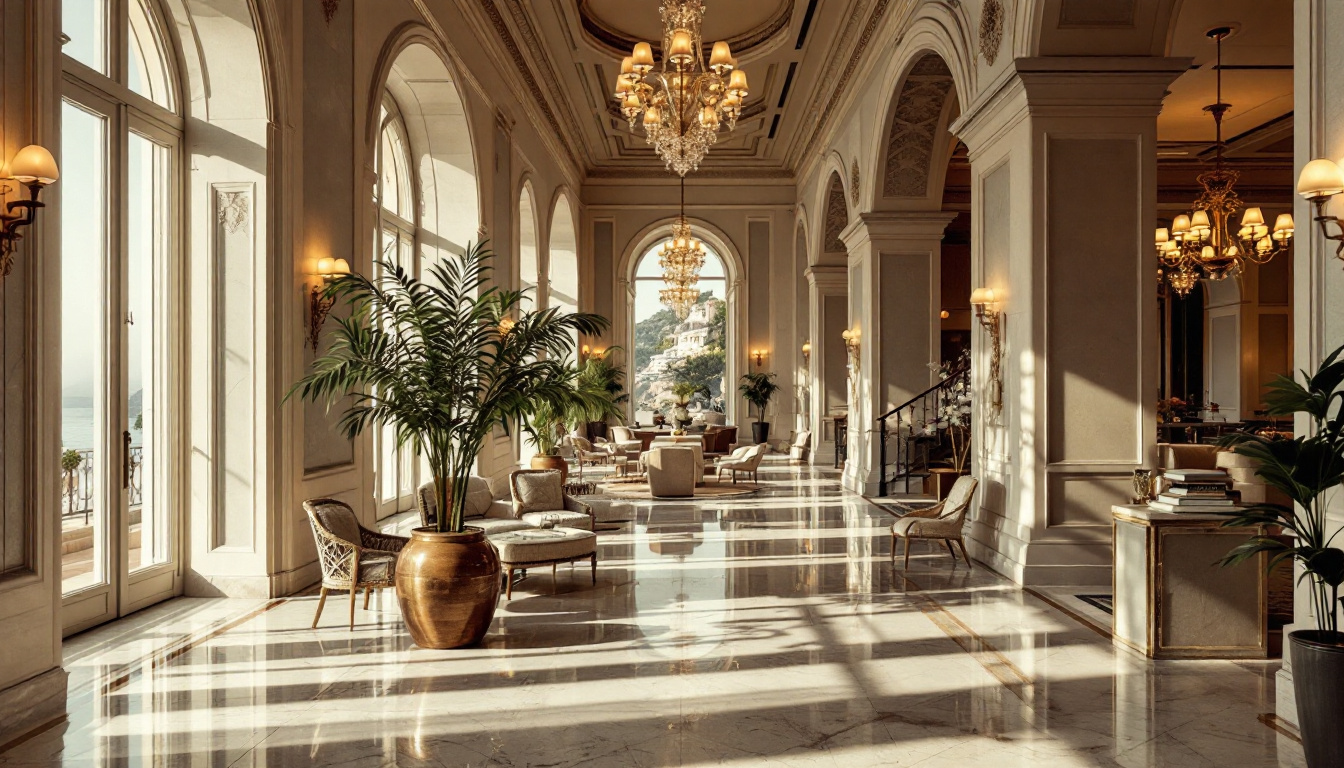
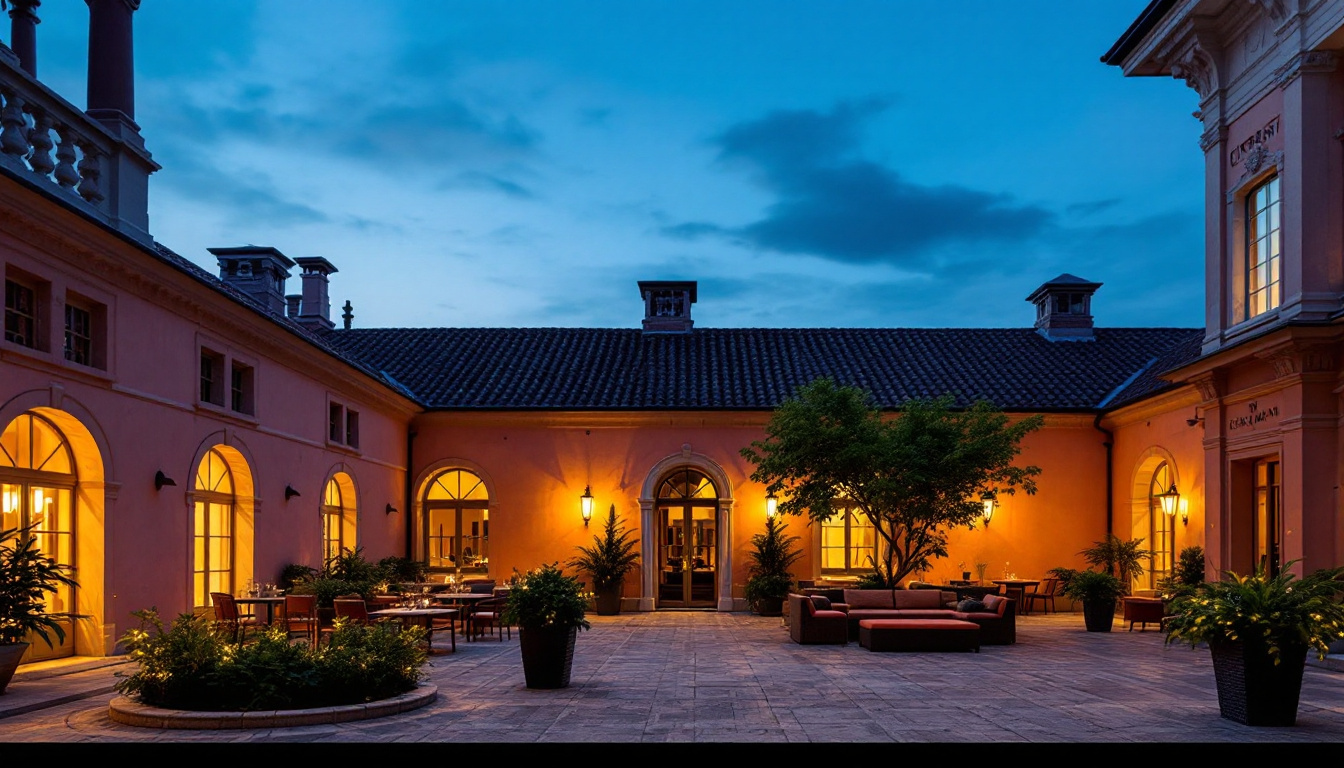
Claridge’s arrives on the corner of Brook Street and Davies Street, two streets north of the Connaught and three west of the Berkeley. The arrival sequence is the most-theatrical of the three London Maybourne properties: a long red-and-black tiled awning on Brook Street, a small fleet of Bentleys and Range Rovers at the kerb, two doormen in green-and-gold livery, and the property’s distinctive black-and-white checkerboard marble floor visible through the glazed doors before you step in.
The arrival is set-piece London hotel arrival. The Connaught’s brief is the senior-club discretion; Claridge’s brief is the Art Deco set-piece. The contrast is intentional: the Maybourne portfolio runs three London properties with three operating registers, and Claridge’s holds the public-theatre slot.
Check-in on 19 January 2026 was handled by Imogen Pearce (Front Office Manager), at the reception desk on the right of the lobby. The check-in is by appointment: the doormen radio ahead so that the room is ready before the guest reaches the desk, and the check-in itself is a single five-minute exchange (a key, a small map of the property, a brief introduction to the floor manager who handles the floor for the duration of the stay). The Foyer — the public room at the centre of the property — was running its mid-afternoon programme at 4 p.m., and the lobby brushed against it as I crossed to the lift.
Setting score: 4.7. The Brook Street address is the most-visited grand-hotel address in London, in the sense that the Foyer’s daily afternoon tea draws non-resident traffic in a way that the Connaught and the Berkeley do not. The deduction is exactly that: the property’s public-theatre register means that the lobby is sometimes more like a railway station than a private maison.
The suite
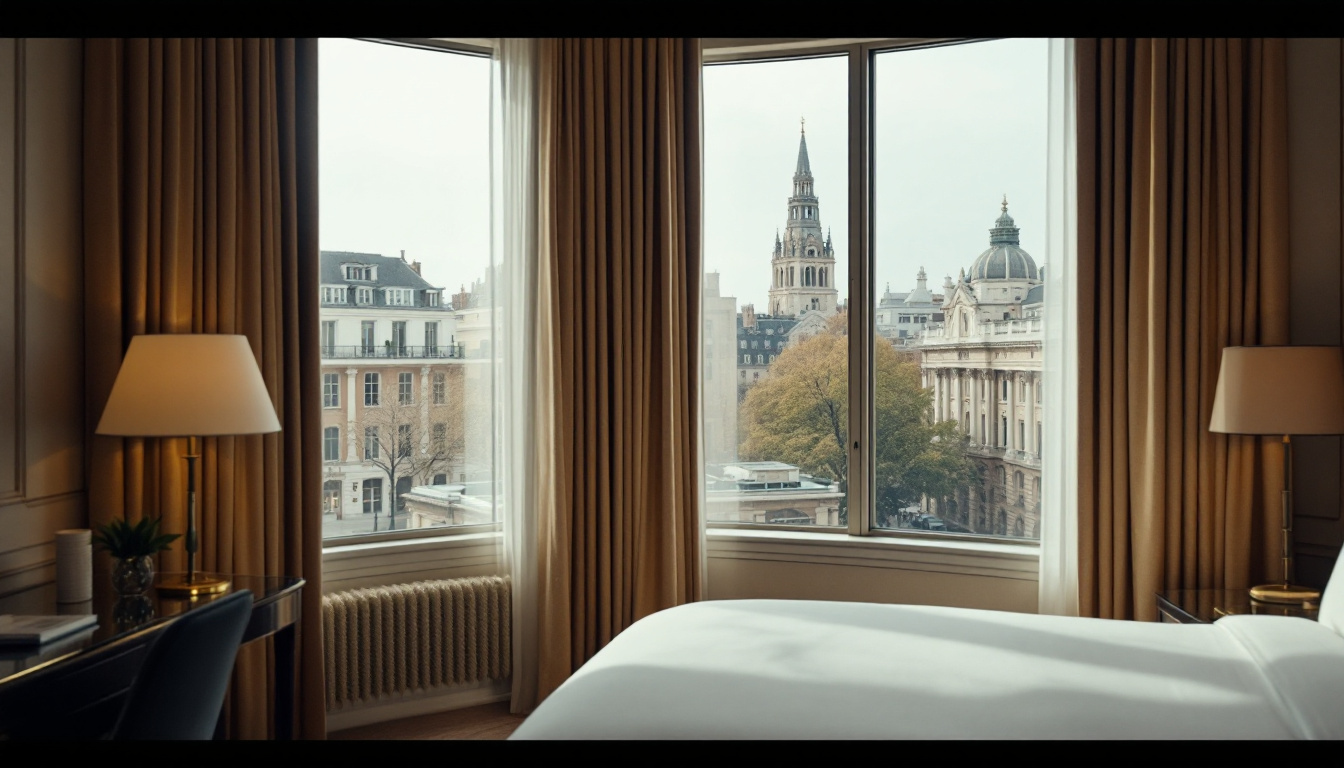
I took a Mayfair Suite — the entry-grade suite category, on the fourth floor, in the Brook Street wing — at 72 square metres with a separate sitting room, a single bedroom with a king bed, and a marble bathroom. The Mayfair Suites were redesigned by Bryan O’Sullivan Studio in 2018-2020, and my room was in the second tranche of that redesign.
Material specifics, from my notes:
- The Bryan O’Sullivan brief was to retain the Art Deco bones of the 1929-30 Basil Ionides and Oswald Milne rebuild while running a slightly softer palette — warm cream walls, pale-blue silk upholstery on the sitting-room sofa, hand-knotted Persian rugs on the floor, and a single signed Erté lithograph on the bedroom wall (the housekeeping team identified mine as “Erté, ‘The Plumed Hat,’ 1981 edition,” which is consistent with the Erté programme the hotel has run since the 1980s).
- The floor in the sitting room is Versailles oak parquet under the rug; in the bedroom is fitted Brintons broadloom (the same Maybourne-standard supplier as the Connaught).
- The bed is Vispring (the Mayfair Suite category runs the higher Vispring rather than the Junior categories’ Hypnos), dressed in Frette linens, with a six-pillow menu offered at turndown.
- The bathroom is in Statuario marble with a freestanding Lefroy Brooks tub, a separate shower, and a separate WC. Amenities are Hermès D’Orange Verte (the Maybourne-Hermès relationship has been continuous since 2008).
- The minibar runs the Claridge’s house list — Pol Roger half-bottles, Salon by the half when in season, a small selection of David Collins-era cocktail pre-batches (the Flapper, the Davies, the Claridge’s Old Fashioned), still and sparkling water in glass.
- The technology is, like the Connaught, restrained. A Bang & Olufsen system, a Loewe television hidden behind a hand-mirrored Art Deco panel, an analogue alarm clock. No iPad room controls.
The Mayfair Suite category is the entry-grade suite. The Brook Penthouse (designed by David Linley in 2015) is the property’s flagship at 320 square metres on the seventh floor. The Diane von Furstenberg Penthouse (designed in 2008) sits at 260 sqm. The Suites Olliver-designed (the most-recent O’Sullivan tranche) run 90-130 sqm. The Superior Queen entry-grade rooms run 35 sqm.
Suites score: 4.6. The O’Sullivan redesign is the visual asset; the Mayfair Suite at 72 sqm is sized correctly for the rate. The deduction is the entry-grade Superior Queens at 35 sqm — the smallest entry-grade in any London grand hotel, and the category most-often used by international tour operators in a way that distorts the property’s average guest experience.
The service
Service at Claridge’s runs the Maybourne house standard with the Claridge’s-specific overlay: the property is the only one of the three London Maybournes that operates a full set of public rooms (the Foyer, the Reading Room, the Painter’s Room, the Fumoir), and the service team has to manage the simultaneous demands of in-house guests and the heavy non-resident traffic that those rooms draw.
The Maybourne standard runs to the same brief I described in my Connaught review — calm, formal, English-classic, with a focus on operational follow-through. The Claridge’s-specific overlay is the floor-manager system, in which a single named floor manager handles a small group of rooms for the duration of a stay. My floor manager on the January stay was Henry Liss, on his third year at the property, who handled all three days.
The follow-through during my stay was strong. On the first evening I asked Liss whether the Painter’s Room was available for a quick drink before dinner; he had a table held within ten minutes. On the second day I asked whether the in-house car (the Claridge’s Bentley) could drop me at the British Museum and then return for a 4 p.m. afternoon tea; the car was on standby at the museum at the requested time. On the third morning I asked for a small repair to a shoe; the work was done by an in-house cobbler (rare in London hotels) and the shoe was returned within four hours.
The frictions during the stay were larger than at the Connaught. The first morning’s room-service breakfast was delivered to a Mayfair Suite that the runner mistook for a Connaught Suite (the property’s two suite categories with similar names create confusion in the room-service runners) — the wrong tray was delivered, replaced within ten minutes, but the friction should not have occurred. The second evening’s afternoon-tea booking was double-booked at the table I had requested (the window-side two-top in the Foyer); the head of service apologised and re-seated us at a comparable table, but the booking system had clearly missed a step.
Service score: 4.7. The Maybourne house standard is the asset; the simultaneous in-house and non-resident demand on the public rooms is the operating challenge. The Claridge’s team manages it more competently than any peer property I know in London. The half-point deduction is the room-service mix-up and the booking double-up.
The table
Claridge’s runs five food and beverage outlets: the Foyer (the property’s headline room, with both afternoon tea and the Daniel Humm plant-based dinner programme), the Painter’s Room (a cocktail bar in the former rear lobby, designed by Bryan O’Sullivan in 2021 with a Cecil Beaton-era picture programme), the Fumoir (the Art Deco cigar-bar-turned-cocktail-room from the 1929-30 rebuild), the Reading Room (the all-day light dining room with the Foyer’s overflow programme), and the Davies and Brook space (currently programmed for Humm’s evening menu and private events).
I took afternoon tea on the second day, the Humm plant-based dinner on the second evening, and breakfast in the Foyer on the third morning. Cumulative coverage includes eight afternoon teas across fifteen years.
The afternoon tea is the property’s headline service. The tea programme runs five sittings daily (12:00, 13:30, 15:00, 16:30, 17:30, plus a 19:00 high-tea on Saturdays), at GBP 95 per person for the Classic, GBP 115 for the Champagne, GBP 145 for the Vintage. The food programme runs the standard three-tier tray (savoury, scone, cake) with the additional Claridge’s-specific dietary accommodations (the gluten-free, vegan, kosher and dairy-free versions are all run as full menus rather than as substitutes). The tea selection runs to 50 references; the in-house blend is Claridge’s Royal, a Ceylon and Darjeeling combination.
The Humm plant-based dinner is the Foyer’s evening programme. Daniel Humm’s plant-based menu — the same broad approach as his Eleven Madison Park reset in 2021, with a five-course tasting at GBP 220 and a seven-course extended tasting at GBP 280 — was the menu that closed Davies and Brook in 2021 (when Maybourne would not accept the move to fully plant-based) and reopened in the Foyer space in late 2023 after a two-year negotiation. The cooking on my January visit was strong on the vegetable preparations and the sauce work but uneven on the heavier courses (a roasted celeriac with hazelnut butter, the menu’s main course on my visit, was over-roasted by ten degrees). The wine pairing was the more interesting half: the sommelier (Adam Stoffel) ran a Burgundy-and-Loire pairing without forcing the orange-wine register that plant-based menus often default to.
The Painter’s Room is the property’s strongest drinking room. Designed by Bryan O’Sullivan in 2021, with a programme of original Cecil Beaton-era paintings on loan from a private collection, the room runs a tight 30-cocktail menu under bar manager Denis Broci. The signature is the Painter’s Old Fashioned, made with a house-aged Buffalo Trace bourbon and a small drop of Suze.
Table score: 4.5. The afternoon tea is the asset; the Humm plant-based dinner is competent without being great; the Painter’s Room is the strongest hotel cocktail bar in London after the Connaught Bar. The half-point deduction is the Humm dinner’s unevenness — the main course on my visit should not have been over-roasted.
The detail
The Claridge’s detail dimension runs the Maybourne house standard with the property’s Art Deco overlay. The detail strengths are in the public-room programme (the Foyer’s pianist, the Reading Room’s printed daily menu, the Painter’s Room’s curated picture-list) and in the in-room set-piece detail (the Hermès amenities, the Smythson stationery, the Vispring bed). The detail friction is in the operational follow-through that I have already noted in the service section.
The smaller details, in my notes:
- The in-room writing pad is Smythson, the in-room pen is a Claridge’s-branded Caran d’Ache, the in-room slippers are leather-soled (Tweedy of Mayfair) and embroidered. The in-room flowers are run by Aesme Studio (the same supplier as the Connaught). The turndown chocolate is a single hand-made Maison Bertaux mille-feuille, refrigerated.
- The in-house car is a Bentley Mulsanne (one of three the property runs) or a Range Rover Sentinel (one of two). Transfers within central London are complimentary for in-house guests.
- The bath products are Hermès D’Orange Verte (Maybourne-standard); the bathroom hair dryer is a Dyson Supersonic; the bedside USB chargers run both USB-A and USB-C.
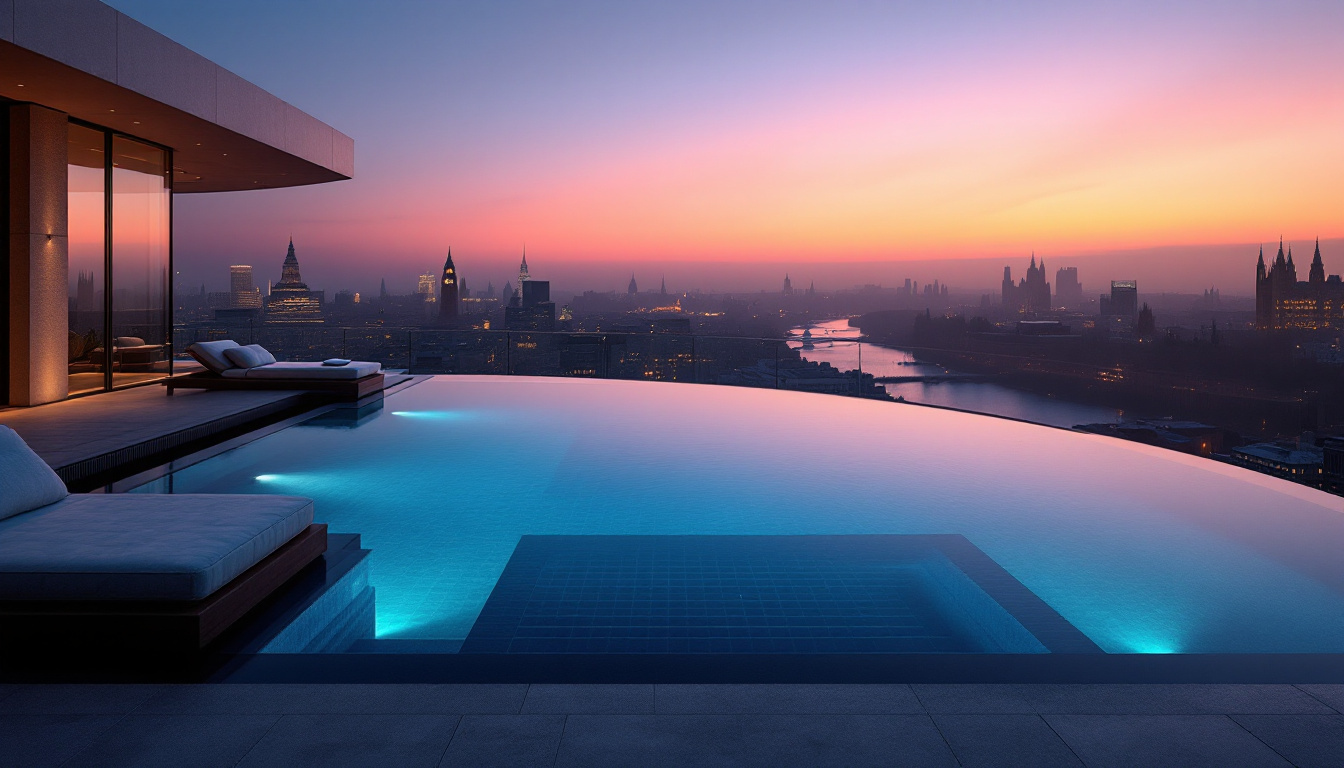
- The Claridge’s Spa, designed by Andre Fu and opened in autumn 2023, is the in-house spa and runs a 20-metre pool, a hammam, two saunas, eight treatment rooms, and a separate hair salon. The spa is open to non-residents by appointment but in-house guests have priority on same-day bookings and a daily 90-minute pool slot held against the room.
- The in-room television, hidden behind a hand-mirrored Art Deco panel, is a 65-inch Loewe with a fast wake time (under 5 seconds) — a small but real upgrade on the Connaught’s Loewe.
Against these strengths, the smaller failures. The in-room safe is a generic Yale (not the more-secure Caractère used at the Connaught); the in-room iPad is a tutorial; the in-room minibar is metered (not complimentary, unlike Cheval Blanc Paris).
Detail score: 4.6. The Maybourne house standard and the Andre Fu spa are the assets; the metered minibar and the Yale safe are the friction.
The Standard
The five-dimension breakdown, with the published Standard rubric:
- Setting: 4.7. Brook Street, the Art Deco public rooms, the most-theatrical of the three London Maybournes. The lobby’s non-resident traffic deducts.
- Suites: 4.6. Bryan O’Sullivan’s Mayfair Suite redesign is the asset; the entry-grade Superior Queens at 35 sqm are the deduction.
- Service: 4.7. The Maybourne house standard at full extension; the in-house cobbler is the tell. The room-service mix-up and afternoon-tea double-up deduct.
- Table: 4.5. The afternoon tea, the Painter’s Room, the Humm plant-based programme. The Humm dinner’s unevenness on the main course is the half-point deduction.
- Detail: 4.6. Smythson, Aesme, Hermès, the Andre Fu spa, the Loewe fast wake. The metered minibar and the Yale safe deduct.
Property score: 4.62. Rounded one decimal: 4.6.
Verdict: at-the-standard. Claridge’s is the most-visited London grand hotel, and the most-public. The Connaught is the operational standard; Claridge’s is the experiential set-piece. The two properties run the same Maybourne house standard but to different briefs. For a London trip in which afternoon tea, the Foyer, and the Painter’s Room are the geographic anchors, the answer is Claridge’s. For a trip in which the most-private grand-hotel arrival in London is the priority, the answer is the Connaught.
Verdict and reservations
Claridge’s, Brook Street, Mayfair, London W1K 4HR. Reservations through the Maybourne website, through the Leading Hotels of the World reservation line, or through the property directly at +44 20 7629 8860. January (low-season) Superior Queens from GBP 920; Deluxe Kings from GBP 1,150; Mayfair Suites from GBP 1,850; Diane von Furstenberg Penthouse from GBP 22,000; Brook Penthouse from GBP 28,000. Afternoon tea reservations through OpenTable or the property directly; the three-month window for weekend service is binding. The Foyer at dinner takes reservations through the property; the Painter’s Room takes reservations or walk-ins to capacity.
The right room is a Mayfair Suite at minimum; the O’Sullivan-redesigned categories are the strongest. The right meal is afternoon tea in the Foyer on a midweek afternoon at the 15:00 sitting (the pianist is on, the room is at half-capacity, the service is at its most-relaxed). The right drink is a Painter’s Old Fashioned at the Painter’s Room before dinner. The wrong room is a Superior Queen in high season at full rate; the category is too small for the property’s reputation. The wrong meal is a Saturday-afternoon tea booked in advance for six (the room runs better at half-capacity than at full). The wrong move is to take the Humm dinner without checking the menu — the plant-based programme is competent but not yet equal to the room.
Standing Questions
- Is Claridge's owned by the same group as the Connaught?
- Yes. The Maybourne Hotel Group, controlled since 2015 by the Qatari Constellation Hotels Holding investment vehicle, owns Claridge's, the Connaught, and the Berkeley in London. The three London properties are run as separate operations with separate general managers.
- Did Claridge's add a basement spa?
- Yes. The Claridge's Spa, designed by Andre Fu and opened in autumn 2023, is built in a new five-storey basement excavated beneath the property between 2017 and 2023 — one of the most-engineering-intensive London hotel projects of the decade. The spa includes a 20-metre pool, a hammam, and treatment rooms.
- Is the Foyer open to non-residents?
- Yes. The Foyer and Reading Room are open to non-residents for breakfast, lunch, afternoon tea, and dinner. Afternoon tea (Claridge's signature service, established in 1856 and continuously offered since) requires booking three months ahead for weekend service.
- What's the Davies and Brook situation now?
- Daniel Humm's Davies and Brook closed in July 2021 after Maybourne would not agree to a fully plant-based menu. The same Foyer space now runs Humm's plant-based Foyer at Claridge's menu (introduced in late 2023) as the dining-room programme alongside afternoon tea.
- Are there still rooms decorated by Diane von Furstenberg?
- Yes. The Diane von Furstenberg-designed Penthouse and a small group of suites on the upper floors remain part of the room inventory, dating from her 2008 collaboration with the hotel. They are programmed alongside Linley-designed and Bryan O'Sullivan-designed categories elsewhere in the property.