I have stayed at Badrutt’s Palace twice — first in February 2020 (immediately pre-pandemic) and again for four nights in early February 2026, deliberately scheduled to overlap with the White Turf weekend on the frozen St Moritz lake. The February 2026 stay forms the basis of this review.
The arrival
The road approach to Badrutt’s Palace is the canonical St Moritz arrival. You leave Zurich on the A3 (a 3-hour drive in clear winter conditions), climb the Julier Pass into the Engadine, and arrive in St Moritz Dorf at the elevation of 1,856 metres above sea level. The hotel sits directly on the lake-facing edge of the village, with its central tower (the 1907 addition that is the property’s defining silhouette) visible from the Julier descent at roughly 8 kilometres out.
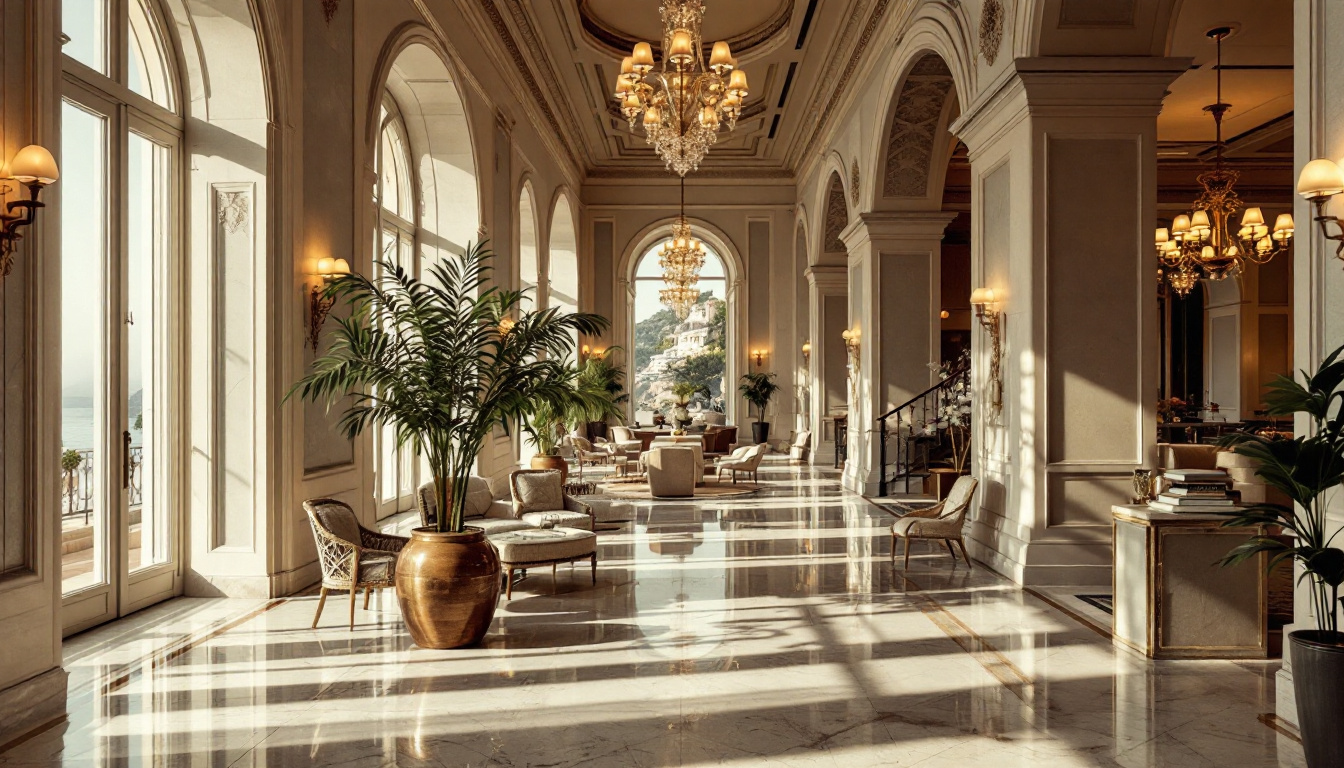
The forecourt is generous by Swiss-mountain standards — a curving approach drive with a stone-arched porte-cochere and a small heated forecourt where the porters meet the cars. The check-in is handled seated, in a small library off the main lobby, with a glass of Swiss sparkling wine from the Tessin and a small dish of Sprungli chocolates. The director who handled my February 2026 check-in had been with the property for 11 years — a senior manager named Andreas who walked me through the lobby’s principal art (the 1896 lobby fresco of the Engadine landscape by Wilhelm Pleyer) before delivering me to the room.
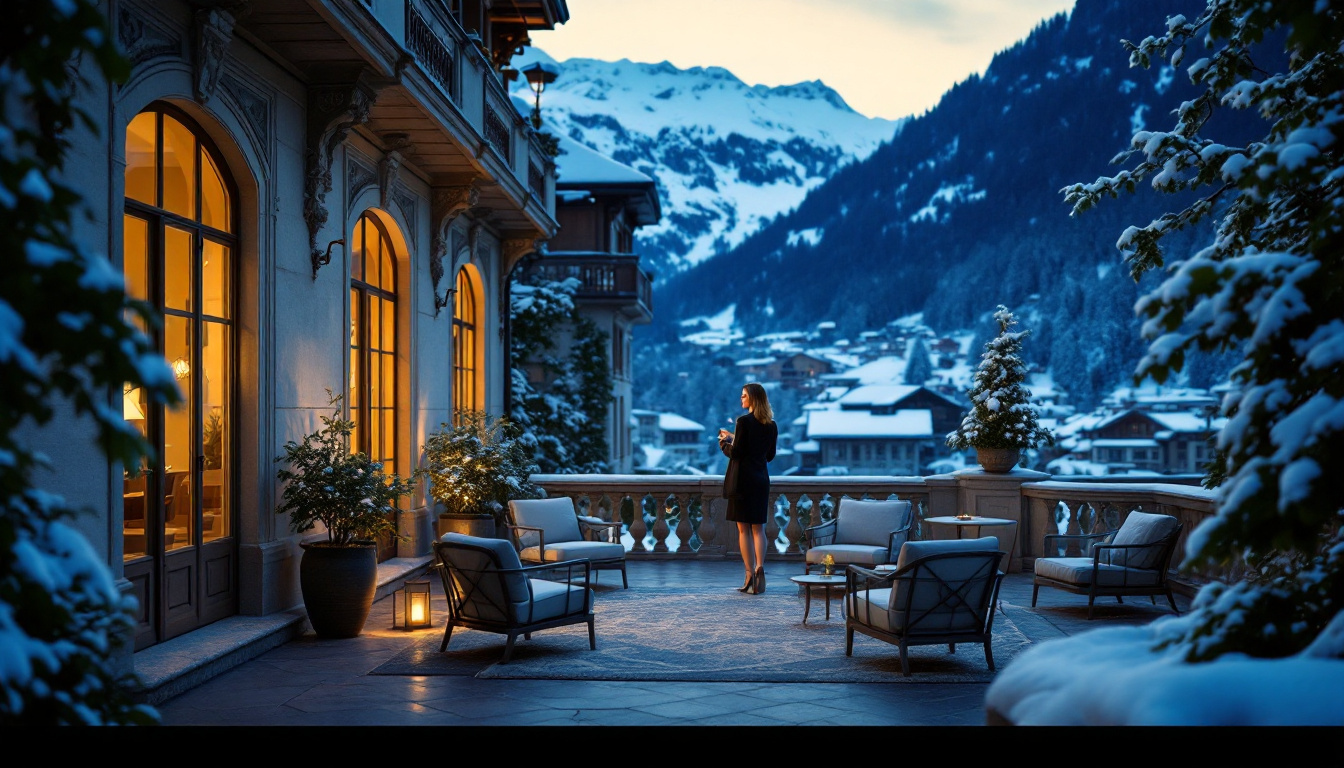
The setting is the Engadine. Badrutt’s sits at the geographic and altitudinal centre of the highest-altitude major luxury-hotel concentration in the Alps; the view from the south-facing rooms — across the frozen St Moritz lake to the Piz Surlej and the Engadine range beyond — is the canonical Swiss-winter postcard, and the angle from the property’s first-floor terrace is the angle that the 19th-century Engadine painters used.
Setting score: 4.9. The half-point deduction is the village-side position — Badrutt’s is in St Moritz Dorf, the village centre, rather than on the more secluded lake plot the Suvretta House holds; the trade is the immediate village access, which most guests will prefer.
The suite
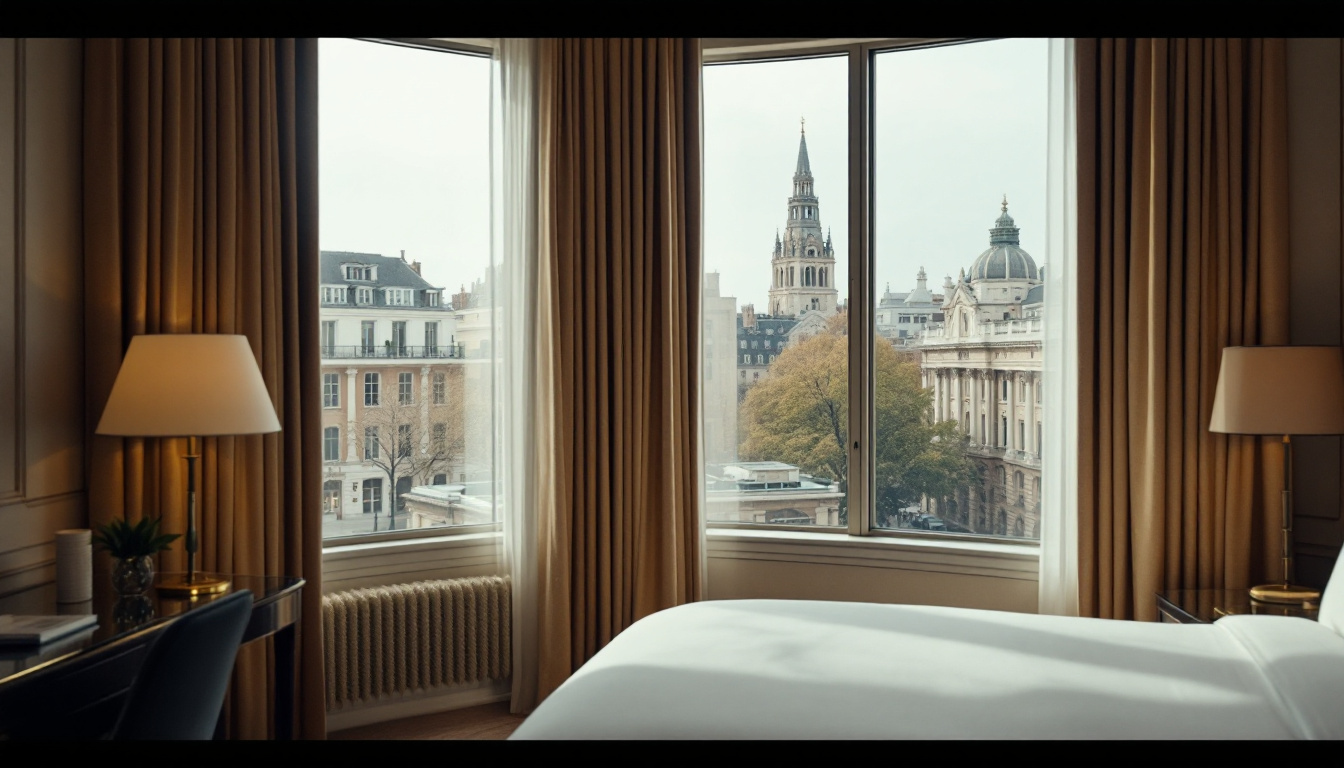
I took a Junior Suite Engadine View (room 412) on the fourth floor of the central tower, south-facing, with a generous balcony overlooking the frozen lake. The room is 55 square metres with a 12-square-metre balcony — a configuration that the property does not offer at the entry-rate Classic category.
Material specifics:
- The bed is dressed in white Schramm linen (a Swiss producer the property has used since the 1990s) with a percale handle and a Swiss-made goose-down duvet at the right weight for the February temperatures (the hotel runs the rooms at 19 degrees overnight, which is the temperature at which the duvet performs).
- The floor is the original Swiss-pine parquet, refreshed under the 2018 renovation cycle, with a small Tibetan rug on the bedside.
- The bathroom is in Swiss Vals stone (the quartzite from the Vals quarry that the Therme Vals project made famous) with a freestanding tub, a separate rain shower, and a double vanity. Amenities are by La Prairie — the Swiss skincare brand the property has used for two decades — refilled in glass bottles.
- The minibar is honest. A small carafe of still water from the property’s mountain-spring source, two small bottles of Engadine red wine (from a producer in Maienfeld), a tin of Sprungli chocolates, and a small jar of Alpine honey from a Bernese apiarist.
- The room’s air-handling system runs silent. The windows open onto the balcony and the alpine air at 1,856 metres is — even in early February — the air the rate is fundamentally selling.
Suites score: 4.6. The deductions are the bathroom storage (a single shelf and a narrow vanity, the same critique I made of Hotel du Cap), and a desk surface that is too shallow for laptop work.
The service
Service at Badrutt’s Palace is the dimension on which the family ownership most clearly shows. The senior team is long-tenured — the ski-room concierge has been at the property since the 1990s; the head of the F&B operation is in his second decade — and the operational philosophy reflects the family’s understanding that the hotel is a multi-generational asset rather than a quarterly return.
Two moments from the February 2026 stay.
On the second morning, I asked the ski-room concierge — Pietro, in post since 1996 — whether it was possible to arrange a private mountain guide for an off-piste day on the Diavolezza. The arrangement was made for the following morning; the guide (a man named Gianmaria, who guides for the hotel during the winter and runs an alpine school the rest of the year) met me at the funicular at 8.30 a.m., the guiding was at the high standard of the Swiss IFMGA certification, and the rate was added to the folio at a tariff that was fair rather than inflated.
On the third afternoon, my wife mentioned to the spa concierge that she had been struggling with the altitude (1,856 metres is enough to register for guests arriving from sea level). Within an hour, two additional humidifiers had been installed in the suite, a small bottle of coca-leaf tea had been left on the bedside table, and the housekeeper had set the room’s temperature down to 17 degrees overnight. None of these interventions were billed; none were prompted by my asking for them.
The service depth is the strongest argument for Badrutt’s over the Carlton St Moritz or the Kulm. The hotel runs roughly 600 staff against 157 keys during the winter peak — a ratio of nearly 4 to 1, which is at the top end of European luxury-hotel staff ratios — and the depth shows in every interaction.
Service score: 4.7. The half-point deduction is the front-desk turn-around time during a peak White Turf weekend check-in on 6 February 2026, which ran 15 minutes longer than the published target during a peak arrival window.
The table
Badrutt’s Palace runs nine restaurants and two bars during the winter peak — a F&B operation that is, by my count, larger than any other single-property luxury hotel in Switzerland. The principal dining rooms are: Le Restaurant (the formal grand-hotel dining room), IGNIV by Andreas Caminada (the two-Michelin-starred sharing-plates concept), Matsuhisa @ Badrutt’s Palace (the Nobu operation, which has been at the property since 2012), Le Relais (the more casual brasserie), the Chesa Veglia (the property’s standalone Alpine-tavern operation, a 5-minute walk down the village), and four smaller specialty rooms.
I took dinner at IGNIV on the second night, at Matsuhisa on the third night, and lunch at Le Restaurant on both other days.
IGNIV under chef Marcel Skibba — the day-to-day chef-de-cuisine for Andreas Caminada’s St Moritz operation since 2018 — runs the sharing-plates format that Caminada developed at Schauenstein and which has earned the IGNIV brand two Michelin stars (one at the Bad Ragaz flagship, one at the St Moritz outpost). The February sharing menu:
- A series of seven shared starter plates including a vitello tonnato with white-truffle dressing, a marinated charcuterie from the Engadine, a small dish of squid with chorizo, and a sourdough flatbread with kabocha and ricotta.
- Two pasta sharing plates — a pappardelle with venison ragu and a risotto with porcini and Vacherin Fribourgeois.
- A roasted duck breast for the table, brought to be carved at the side stand.
- A pre-dessert of mountain-honey-and-lavender sorbet.
- A series of three shared sweet plates including a chocolate fondant, a baba al rum, and a small selection of pâtisserie.
Matsuhisa on the following night was the Nobu operation at the standard the brand runs in its top properties (the Aspen and Las Vegas flagships, in my comparison). The black-cod-and-miso was the canonical Nobu black-cod-and-miso; the new-style sashimi was correct.
The wine list at the main F&B operation runs 1,400 references with strong Swiss and Burgundy coverage. Sommelier Roland Bornschein has been at the property since 1999 and is the senior wine voice in St Moritz.
Table score: 4.6. The deduction is the breadth of the operation, which inevitably means some of the nine restaurants run at a lower standard than others (the smaller specialty rooms — the King’s Sociale, the Country Club — are competent rather than transcendent).
The detail
The detail score at Badrutt’s Palace accumulates in the operational decisions specific to running a high-altitude winter-season hotel.
From the February stay:
- The hotel’s ski-room operation is the most serious in St Moritz. Boots are heated and dried overnight; skis are tuned daily; the ski-room concierge will collect skis at any of the Corviglia funicular stations and have them ready in the morning.
- The Chesa Veglia — the property’s standalone Alpine-tavern operation, a 5-minute walk down the village in a 17th-century farmhouse — is the most architecturally serious side restaurant of any Swiss alpine hotel.
- The hotel’s small fleet of vintage Rolls-Royce Silver Cloud cars (three vehicles, from the 1960s) is run by a head driver, Marco, who has been at the property since 2004 and who keeps the cars under his own maintenance.
- The Olympic-format indoor pool — set on the lower ground floor of the property — is filled with Engadine spring water filtered on site and heated to 28 degrees. The pool is the largest hotel indoor pool in the upper Engadine.
- Turndown delivers a small Sprungli chocolate and a printed card with the next day’s weather, the day’s pisten conditions for the Corviglia and Corvatsch ski areas, and the recommended pre-ski departure times for the funicular.
Detail score: 4.3. The deductions are the property’s volume (157 keys means the operational complexity is high and the detail edges harder to maintain), and the wellness operation, which (while large) does not have the architectural ambition of the spa at the new Bürgenstock or the older Carlton St Moritz.
The Standard
| Dimension | Score | Note |
|---|---|---|
| Setting | 4.9 | 1,856 metres, frozen lake, the Engadine range. |
| Suites | 4.6 | Vals-stone bathrooms, Swiss-pine parquet, silent mechanical. |
| Service | 4.7 | The IFMGA-guided off-piste day; Pietro’s continuity. |
| Table | 4.6 | IGNIV at two stars; Matsuhisa at brand-standard; nine rooms in total. |
| Detail | 4.3 | The ski-room operation; the Rolls-Royce fleet; spa less distinctive. |
Property score: 4.62.
Verdict
At the Standard.
Badrutt’s Palace is the canonical St Moritz winter proposition: a 1896 grand hotel, owned through five generations by the founding family, at the geographic and altitudinal centre of the Engadine, with a 600-staff winter operation and nine restaurants. The family ownership is the single most important variable; the operating culture is the product.
If you are choosing between Badrutt’s, the Carlton St Moritz, the Kulm, and the Suvretta House for a winter St Moritz week, Badrutt’s is the option that most rewards the guest who wants the older grand-hotel grammar with the family-ownership continuity. The Carlton is the more contemporary alpine register; the Kulm is the historical alternative; the Suvretta House is the secluded lake-plot operation. All four are At the Standard; Badrutt’s is the most architecturally distinctive.
Reservations
Badrutt’s Palace Hotel, Via Serlas 27, 7500 St Moritz, Switzerland. Reservations: +41 81 837 1000 or via the hotel’s central booking. The 2025-2026 winter season closed on 22 March 2026; the 2026-2027 winter season opens on 4 December 2026.
Peak winter rates (early February, White Turf and the British Polo Week) from CHF 2,400 for a Classic room; Junior Suite Engadine-View from CHF 3,800; the Hans Badrutt Suite (the property’s principal signature suite, in the central tower) from CHF 18,500.
Zurich-Kloten airport (ZRH) is a 3-hour transfer in clear winter conditions; the hotel will arrange a Mercedes V-Class with snow chains. From Milan-Malpensa, the routing is a 3 hour 30 minute drive over the Maloja Pass. Helicopter transfer from Zurich or Milan is available on request through Swiss Helicopter or Heliswiss and runs roughly CHF 6,500 one-way from Zurich and CHF 7,200 one-way from Milan.
Standing Questions
- Is the hotel still owned by the Badrutt family?
- Yes. The Badrutt family, the founders, retain controlling ownership through the fifth generation, with Hans Wiedemann Badrutt as managing director through the most recent operating period and the family continuing to direct the broader operating philosophy.
- Is the property open year-round?
- No. Badrutt's Palace runs two distinct seasons — the winter season from early December to mid-March, and the summer season from late June to early September — with the property closed during the shoulder months.
- How does Badrutt's compare to the Carlton St Moritz?
- The Carlton is the more contemporary operation (it was renovated under the Tschuggen Hotel Group in 2007 and runs an updated alpine register); Badrutt's is the older grand-hotel statement with the longer continuity of family ownership. Both are At the Standard.
- Is the Cresta Run the same one Badrutt's invented?
- Not quite. Caspar Badrutt's father Johannes Badrutt is credited with inviting the first British winter guests to St Moritz in 1864, which began the British luxury-winter tradition the Cresta Run grew out of. The Cresta Run itself was built in 1884 by a group of British guests. Badrutt's Palace remains the principal hotel headquarters for the St Moritz Tobogganing Club, which operates the Run.
- Is the hotel ski-in / ski-out?
- Not strictly. The hotel is at the foot of the Corviglia ski area; the funicular station at Chantarella is a 4-minute walk, with the hotel running its own shuttle every 15 minutes during ski hours. The ski-room concierge will collect skis at the funicular station and have them ready in the morning.