I have stayed at the Grand-Hôtel du Cap-Ferrat twice — most recently for four nights in mid-April 2026 in a Deluxe Sea-View Room on the second floor of the original 1908 palace, and previously for three nights in September 2022. I have also taken six meals at Le Cap and three at Club Dauphin across the two stays. This review reflects the April 2026 stay.
The arrival
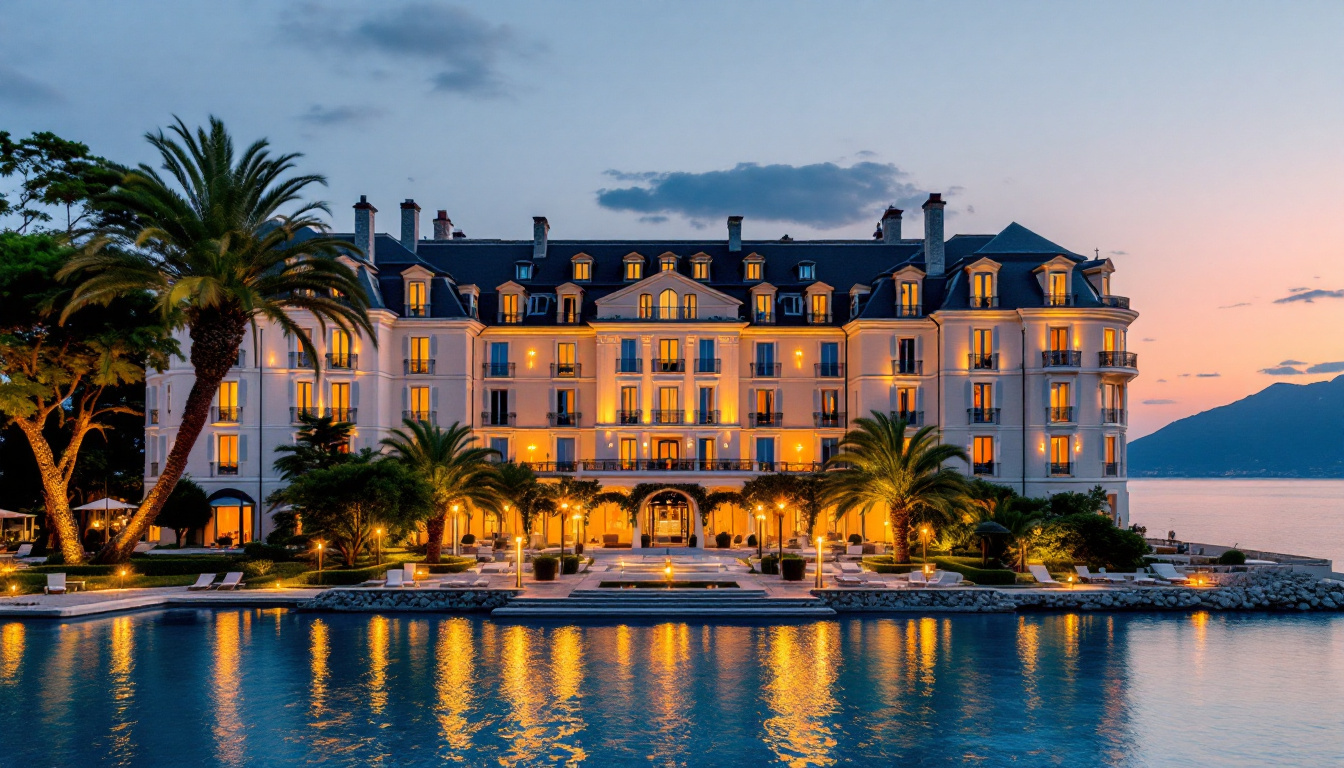
The Grand-Hôtel du Cap-Ferrat arrives at the southern tip of the Saint-Jean-Cap-Ferrat peninsula, on the wooded headland that sits between Beaulieu-sur-Mer to the north and Villefranche-sur-Mer to the west. The drive from Nice Airport runs 25 minutes via the A8 and the corniches; the drive from Monaco runs 35 minutes via the basse corniche. The property has its own gated driveway running through 200 metres of Aleppo pine forest before opening into the front courtyard, and the building’s pale stucco facade — the 1908 Henri Carpentier palace — appears around the final bend.
The arrival is the most-architecturally-serious arrival of any Riviera hotel I know. The Hotel du Cap-Eden-Roc on Cap d’Antibes is the longer-established competitor; La Réserve de Beaulieu is the more-private; the Royal Riviera further along the same peninsula is the more-modest. The Grand-Hôtel’s combination — the 1908 palace, the seven hectares of grounds, the Eiffel rotunda, the Aleppo-pine drive — is the most-architecturally-distinctive single arrival in the whole Côte d’Azur set.
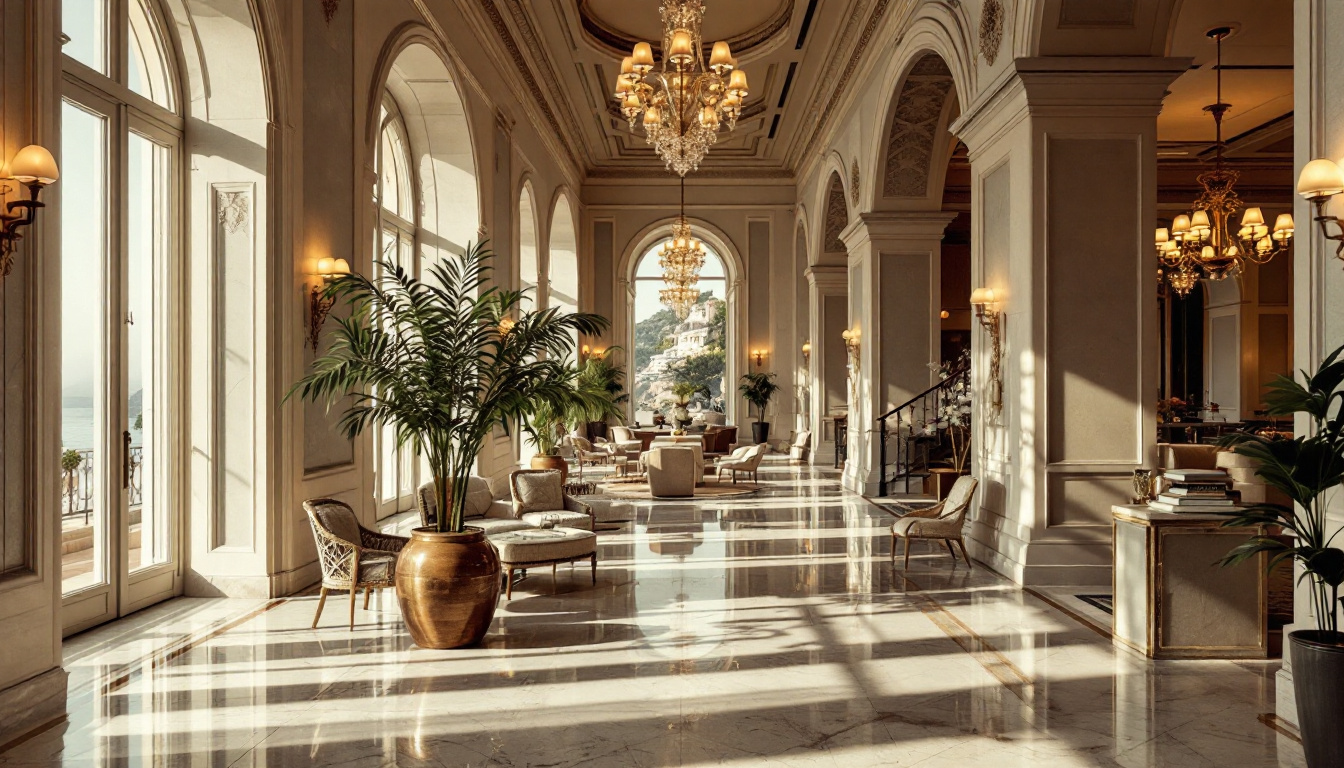
Check-in on 11 April 2026 was handled by Cyril Mahé (Chef de Réception), at the seated reception in the lobby alcove off the main hall. The check-in is the seated French house standard: the guest is escorted to a small armchair, a glass of Champagne is offered (a Henriot Brut Souverain on my visit), and the registration takes place over a small leather-topped writing desk rather than at a counter. The floor manager (Margaux Sénéchal, who handled the room for the duration) walked me through the building before the room — the main lobby, the rotunda, the Le Cap dining room, the funicular vestibule — in about twenty minutes.
The arrival’s defining detail is Eiffel’s rotunda, which is the room you enter at the end of the main hall. The rotunda is a circular glass-walled hall, 12 metres in diameter, with the original 1909 Eiffel steelwork still bearing the structural load. The room opens directly onto the southern terrace and the Aleppo-pine view down to the cove. The first time I saw the rotunda (in September 2022) I thought it was the property’s most-overrated set-piece. On second visit, in April light, I changed my mind.
Setting score: 4.9. The Cap-Ferrat peninsula is the most-protected single piece of Riviera coastline, and the property’s position at the peninsula’s southern tip is the most-protected single piece of the peninsula. The seven-hectare grounds, the funicular cove, the Eiffel rotunda, the saltwater pool — none of these are replicated at any other Riviera hotel. The deduction is the only thing it could be: the small operational friction of being a 35-minute drive from Monaco and a 25-minute drive from Nice, which means that the hotel is a destination rather than a base.
The suite
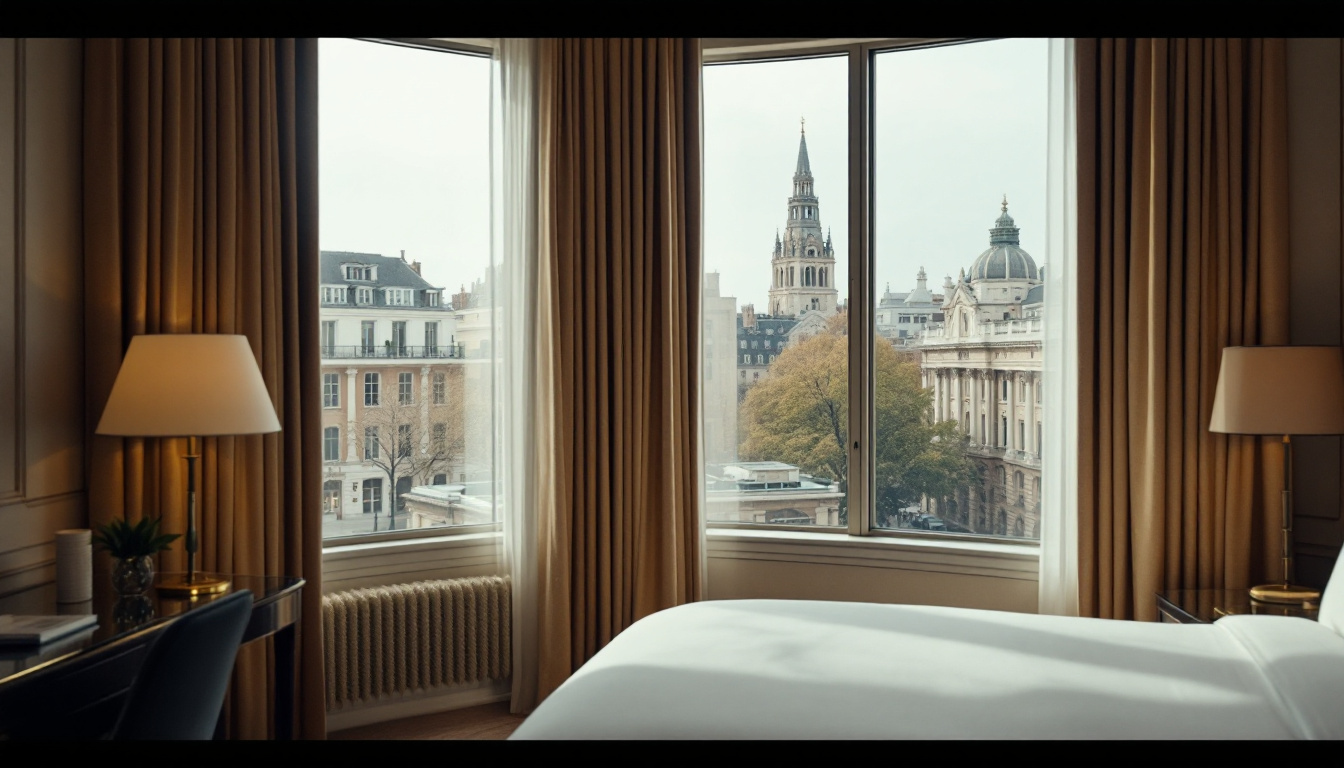
I took a Deluxe Sea-View Room — the entry-grade sea-view category, on the second floor of the original 1908 palace, south-facing — at 50 square metres with a small balcony and a Mediterranean-blue view down through the Aleppo pines. The room is part of the Pierre-Yves Rochon 2009 renovation programme, with a small soft-refresh touched in 2021 (textiles replaced, bathroom hardware updated, in-room art rotation).
Material specifics, from my notes:
- The Rochon brief was to restore the 1908 palace’s room programme in a register that read as 1908 grand-Riviera rather than as 1970s grand-Riviera (which is what the building’s pre-2007 programme had drifted into). The colour register is pale Mediterranean — soft blue, cream, gold accent — with a single signed Riviera-painter watercolour on the wall (mine was attributed to a Henri Manguin school piece from the property’s own collection).
- The floor is wide-plank oak with a hand-loomed Aubusson-style rug in the sitting area.
- The bed is a Treca de Paris bespoke mattress on a hand-carved wooden frame, dressed in Yves Delorme linens (the Four Seasons-standard French linen supplier), with a four-pillow menu offered at turndown.
- The bathroom is in Bianco Carrara marble with a freestanding tub, a separate walk-in shower, and a separate WC. Amenities are Diptyque Eau Rose (the Four Seasons house-brand collaboration since 2019).
- The minibar runs a small selection of Provençal rosés (a Domaines Ott, a Château Minuty, a Domaine Tempier), a small selection of in-house cocktails (the Cap-Ferrat Spritz, the Eiffel Old Fashioned), and Niçoise still and sparkling water. The minibar is at a charge.
- The technology is restrained. A Bang & Olufsen Beoplay speaker, a Loewe television, a Lutron lighting system. The room iPad runs lighting, curtains, room service, and the Diptyque-fragrance preference.
The Deluxe Sea-View Room is the entry-grade sea-view category. The Deluxe Garden Rooms (the entry-grade non-sea-view category) run 40 sqm; the Deluxe Sea-View Rooms run 50; the Premium Sea-View Rooms run 60; the Junior Suites run 75; the Penthouses on the Residence wing run 110-180. The Villa Rose-Pierre — a free-standing 1908 villa with three bedrooms, a private pool, and a private courtyard — runs 300 sqm and is the property’s flagship.
Suites score: 4.6. The Rochon programme is the asset; the 1908 palace room shells are the second; the Diptyque-fragrance preference detail is the third. The deduction is the room safe (a Yale generic), the in-room espresso machine (a Nespresso capsule), and the air conditioning (the 1908 palace’s HVAC system is not as quiet as a 2020s build).
The service
Service at the Grand-Hôtel du Cap-Ferrat runs the Four Seasons house standard with the property-specific overlay that the hotel has run an unusually-long-tenure staff (the average front-of-house tenure runs to 8 years, against a Four Seasons portfolio average of around 5). The combination is the operational asset.
The pre-arrival contact was from Anaïs Gallard (Reservations Manager), who confirmed the room category, a Le Cap dinner reservation for the second evening, a Club Dauphin lunch for the third day, and a small request for a particular Provençal rosé (a 2022 Domaine Tempier Bandol Rosé) to be available by the glass at the pool bar. On arrival the requested wine was on the pool-bar list, the dinner reservation was confirmed at a window-side table, and the room had a small handwritten note from the GM (Olivier Chavy, in his fifth year at the property) acknowledging my return after the 2022 stay.
The follow-through during the stay was strong. The first morning the housekeeping team noticed that I had been writing at the desk in low light and silently moved the writing-desk lamp. The second day the floor manager (Margaux Sénéchal) arranged a private funicular trip down to the cove for an unscheduled mid-morning swim. The third afternoon the pool team noticed that I had not had a Provençal rosé poured at lunch and brought a small glass of the Domaine Tempier to my cabana on the cove without my asking.
The frictions during the stay were operationally small. The second evening’s room-service order (a small Le Cap appetizer course) was 18 minutes late from the order time. The third morning the in-room espresso (the Nespresso capsule, which I had already flagged in my notes as a deduction) was clearly outclassed by the Le Cap espresso; housekeeping replaced the capsule machine with a small La Marzocco Linea Mini brought up from the bar within 25 minutes, which was the right response. The fourth morning’s check-out tray arrived 8 minutes late; the in-house car (the property’s Mercedes V-Class for airport transfer) was on time.
Service score: 4.6. The Four Seasons house standard and the long-tenure staff are the asset; the small operational frictions are the deduction. The property scored slightly lower than I would have expected from a property with this staff tenure — the 18-minute late room service should not happen, but it is a real operational tell.
The table
The Grand-Hôtel runs four food-and-beverage outlets: Le Cap (the headline restaurant, dinner-only Tuesday through Saturday, 40 covers, one Michelin star, coastal-Mediterranean under chef Yoric Tieche), Club Dauphin (the all-day cove restaurant by the saltwater pool, three services in season, 80 covers), La Véranda (the all-day light dining room in the rotunda anteroom, three services daily, 60 covers), and the Pool Bar (the casual all-day programme by the saltwater pool, 30 covers).
I took dinner at Le Cap on the second evening, lunch at Club Dauphin on the third day, breakfast in the rotunda on three mornings, and a small pool-bar lunch on the fourth day.
Le Cap is the property’s strongest single F&B asset. Yoric Tieche’s kitchen runs a coastal-Mediterranean menu with a strong vegetable section drawn from the property’s own kitchen garden (an unusually well-developed in-house garden programme for a Riviera hotel — the property runs a head gardener, Jean-Luc Vidal, who has been at the property since 2018 and who sets the kitchen’s vegetable agenda each week). The April tasting ran seven courses for EUR 245, with the wine pairing at EUR 180. The standout courses were the chilled almond gazpacho with house-cured Mediterranean prawn, the tagliolini al limone with sea urchin, and the closing pavlova with property-garden strawberry and basil.
Club Dauphin is the second strongest. The cove restaurant runs an all-day programme — coffee and pastries from 9 a.m., a small lunch menu from noon to 4 p.m. (the kitchen specialises in the carved-table cured fish programme; the lunch menu also runs a careful salade Niçoise and a small selection of grilled coastal fish), an afternoon programme from 4 to 6 p.m., and a small dinner programme from 7 to 10. The lunch on my third day ran the cured Mediterranean bonito tartare, the carved bonito and the small grilled red mullet, and a closing coffee granita. The cooking is competent and the location — a stone-walled cove restaurant directly over the Mediterranean — is the headline.
La Véranda is the all-day light dining room. The breakfast service is the strongest meal — a careful French petit-déjeuner programme with a small egg-and-Mediterranean-fish lunch programme — and is the breakfast room I would recommend over the in-room breakfast.
Table score: 4.7. Le Cap at the one-star standard, Club Dauphin at the cove-restaurant standard, La Véranda as the strongest hotel breakfast room. The deduction is the Pool Bar, which is competent without being a destination.
The detail
The detail dimension at the Grand-Hôtel runs the Four Seasons house standard with the property-specific Riviera-house overlay. The detail strengths are in the spa programme (the 7,500 sq ft Pierre-Yves Rochon-designed spa with the indoor pool), the in-room small-detail programme, and the funicular-to-cove operation.
The smaller details, in my notes:
- The in-room writing pad is Pineider (the Four Seasons-portfolio supplier since 2018); the in-room pen is a Four Seasons-branded Caran d’Ache 849; the in-room slippers are leather-soled. The in-room flowers are a small Mediterranean arrangement (in April: bougainvillea, lavender) refreshed every three days.
- The funicular to the cove is the property’s headline operational detail. The funicular runs from the upper grounds to the cove on a 90-second descent, on demand from 7 a.m. to 11 p.m., with an in-house attendant.
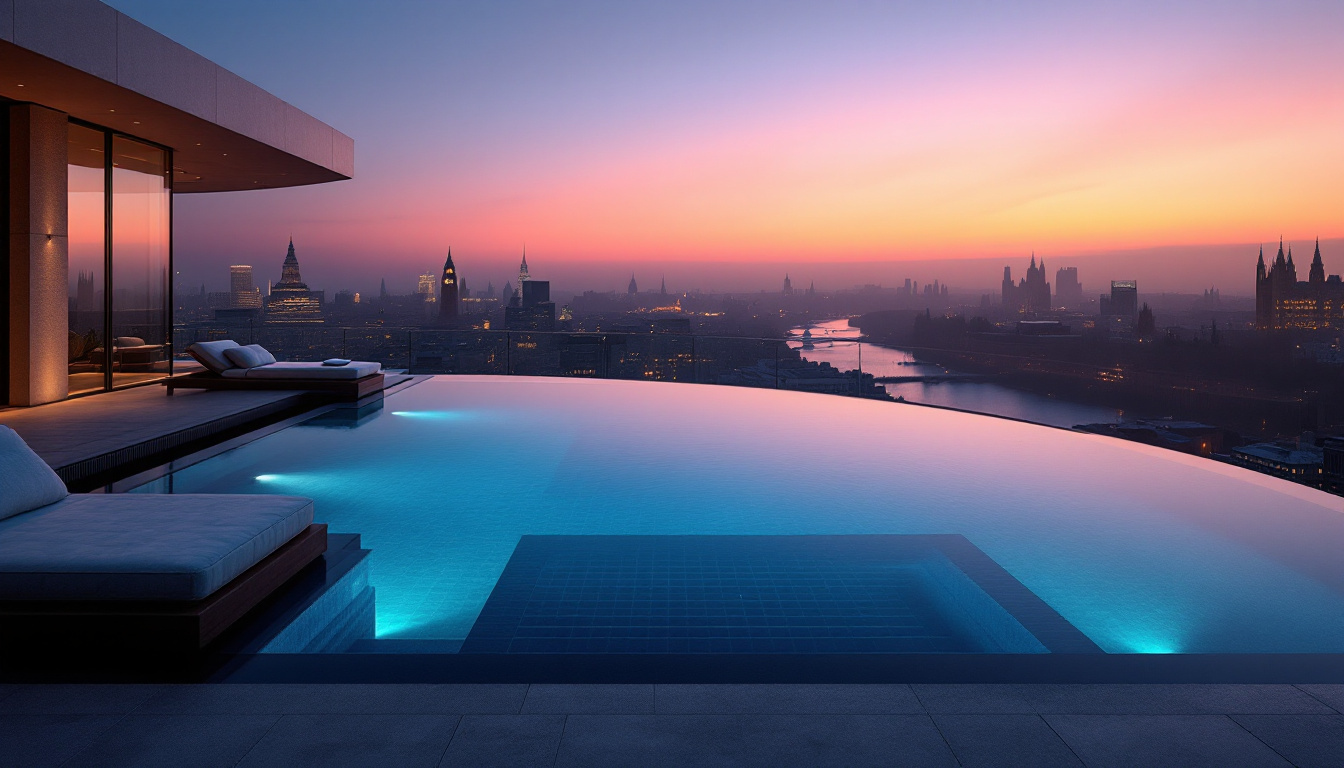
- The Olympic-size saltwater pool — the largest hotel saltwater pool on the Riviera — is the second headline detail. The pool is heated to 27°C in shoulder season and unheated in high summer.
- The bath products are Diptyque Eau Rose (Four Seasons-standard); the bathroom hair dryer is a Dyson Supersonic; the bedside USB chargers run both USB-A and USB-C.
- The turndown service runs a single dark-chocolate truffle from a Nice chocolatier (Maison Auer, the property’s supplier since 2017), the bedside light dimmed, the morning weather and tide report, and a small dish of Provençal almonds.
- The in-room television is a Loewe with a fast wake time; the room-iPad lighting controls are functional and elegant.
Against these strengths, the smaller failures. The in-room minibar is at a charge (not complimentary, unlike the Alpina Gstaad). The in-room safe is a generic Yale. The Nespresso espresso machine is the deduction I have already noted in the service section.
Detail score: 4.5. The funicular cove operation, the saltwater pool, and the Pineider stationery are the assets; the in-room safe and the metered minibar are the deduction.
The Standard
The five-dimension breakdown, with the published Standard rubric:
- Setting: 4.9. The Cap-Ferrat peninsula, the 1908 palace, the Eiffel rotunda, the 7-hectare grounds. The single highest setting score in this set of reviews.
- Suites: 4.6. The Rochon programme and the Diptyque-fragrance detail are the assets; the Yale safe, the Nespresso, and the 1908 HVAC are the deduction.
- Service: 4.6. The Four Seasons house standard and the long-tenure staff are the asset; the room-service late delivery is the deduction.
- Table: 4.7. Le Cap at one star, Club Dauphin at the cove standard, La Véranda as breakfast room.
- Detail: 4.5. The funicular and the saltwater pool are the assets; the metered minibar and Yale safe deduct.
Property score: 4.66. Rounded one decimal: 4.7.
Verdict: at-the-standard. The Grand-Hôtel du Cap-Ferrat is the property I would book if the priority is the Riviera’s most-architecturally-serious peninsula address. The Hotel du Cap-Eden-Roc on Cap d’Antibes is the longer-established competitor and a slightly more-set-piece arrival; La Réserve de Beaulieu is the more-private; the Royal Riviera further along the same peninsula is the more-modest. The Grand-Hôtel is the one that runs the deepest combination of architectural set-piece (the 1908 palace, the Eiffel rotunda) and operational follow-through (the funicular, the saltwater pool, the kitchen garden). The 0.1 gap between Grand-Hôtel du Cap-Ferrat and Hotel du Cap-Eden-Roc in setting is real but small; the gap in service and operations is in favour of the Grand-Hôtel.
Verdict and reservations
Grand-Hôtel du Cap-Ferrat, A Four Seasons Hotel, 71 Boulevard du Général de Gaulle, 06230 Saint-Jean-Cap-Ferrat, France. Reservations through Four Seasons direct, through the Four Seasons Preferred Partner programme, or through the property directly at +33 4 93 76 50 50. April (shoulder-season) Deluxe Garden Rooms from EUR 1,800; Deluxe Sea-View Rooms from EUR 2,400; Premium Sea-View from EUR 3,200; Junior Suites from EUR 4,800; Residence Suites from EUR 8,500; Villa Rose-Pierre on request (a EUR 35,000-per-night ask in high season). Le Cap reservations through the property; the booking window is 90 days. Club Dauphin reservations through the property; the cove operation runs Easter through October.
The right room is a Deluxe Sea-View on the second floor of the 1908 palace, south-facing. The right meal is Le Cap on a midweek evening with the EUR 180 wine pairing. The right cove visit is the 10 a.m. funicular down for a swim followed by a Club Dauphin lunch. The wrong room is a Deluxe Garden in low season (the garden-view category is on the rear of the building, with no Mediterranean view). The wrong meal is the Pool Bar at lunch on a Saturday in high season (the room is too crowded). The wrong move is to expect a base-of-the-Riviera location — the property is the destination, and the 25-minute drive to Nice is the operating fact.
Standing Questions
- Did Gustave Eiffel really design the rotunda?
- Yes. The hotel's celebrated rotunda — the round, glass-walled hall on the southern end of the original 1908 palace, looking out across the Aleppo pines toward Cap-Ferrat's southern tip — was designed and built by Gustave Eiffel's office in 1909, the year after the hotel opened. The rotunda is original and structurally unrestored, with only the glazing and finishes refreshed in the 2009 Pierre-Yves Rochon programme.
- When did Four Seasons take over?
- Four Seasons rebranded the property in 2015. The hotel was independently operated as the Grand-Hôtel du Cap-Ferrat for most of the 20th century, then operated by the Travelyst group with various management arrangements through the early 2000s. The Four Seasons branding came in 2015 with a management agreement; the ownership is held by a private family office.
- How big is the peninsula property?
- Seven hectares (17 acres). The grounds include the 1908 palace, the contemporary Residence wing (added 2009), the Villa Rose-Pierre, the Olympic-size saltwater pool, the funicular down to the rocky cove, the tennis court, and roughly 4 hectares of Aleppo-pine forest. The grounds are the second-largest of any hotel on the Riviera.
- Is the cove accessible from the hotel?
- Yes. The hotel's beach club (Club Dauphin) is a private rocky cove on the southern side of the peninsula, accessed by a funicular from the upper hotel grounds. The cove includes the saltwater pool, the Club Dauphin restaurant, a small bar, and a set of private cabanas. The cove is residents-only.
- Is the Michelin programme still running at Le Cap?
- Yes. Le Cap, the property's headline restaurant under chef Yoric Tieche (since 2014), holds one Michelin star (awarded 2017, retained continuously). The kitchen runs a coastal-Mediterranean menu with a strong vegetable section drawn from the property's own garden.