I have stayed at the Hotel de Russie three times — most recently for three nights in early May 2026 in a Junior Suite on the second floor (garden-view), and previously in 2020 and 2023. I have also taken seven dinners at Le Jardin de Russie and a long list of Stravinskij Bar drinks across the three stays. This review reflects the May 2026 stay.
The arrival
The Hotel de Russie arrives at the junction of Via del Babuino and Piazza del Popolo, at the southern end of the Piazza on the Pincio side. The building’s main door is on Via del Babuino — the street that runs from the Piazza del Popolo south to the Piazza di Spagna and the Spanish Steps — and the small porte-cochère is set into the building’s pale Valadier facade with a single doorman and a small turning circle for taxis.
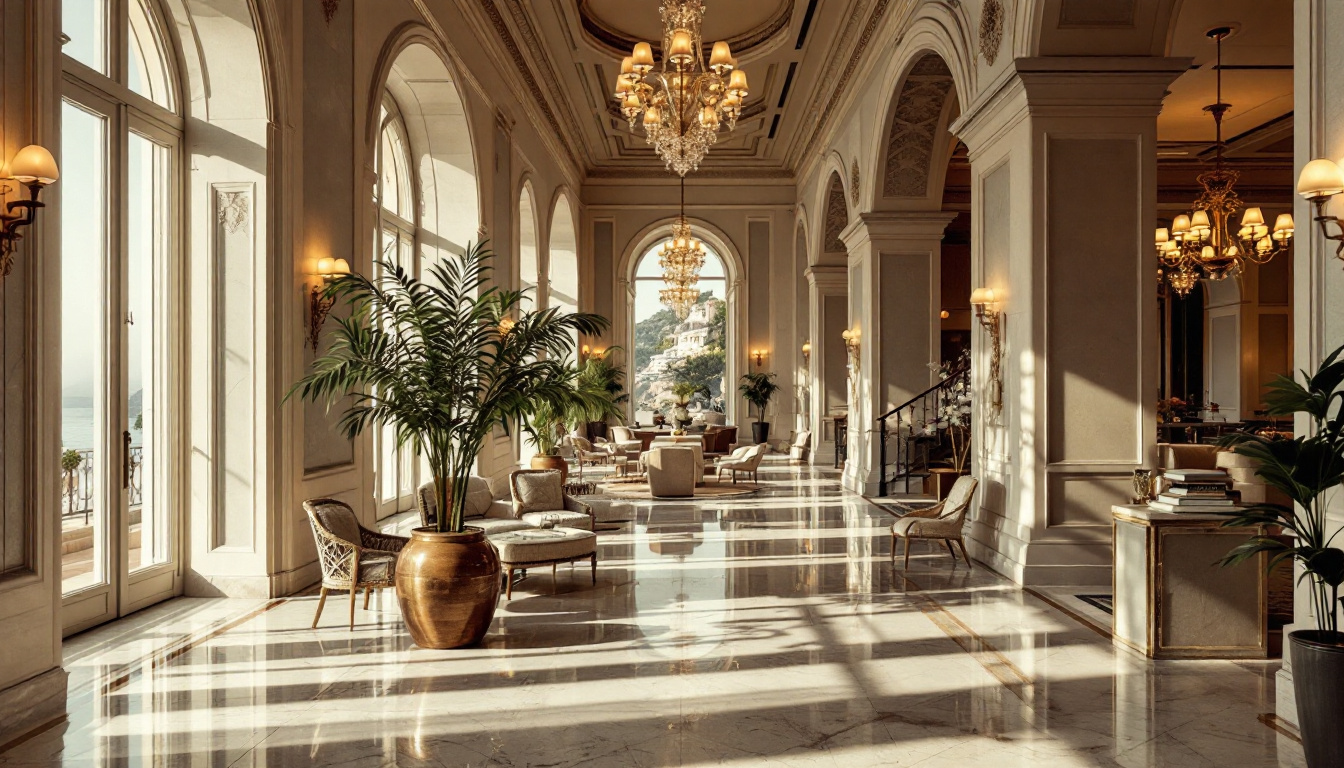
The arrival sequence is the most-discreet of any of the central Roman grand hotels. The Hassler announces itself at the top of the Spanish Steps; the Hotel Eden announces itself with its rooftop bar; the de Russie sits behind a quiet Valadier facade between two of Rome’s most-trafficked piazzas, and the discretion is the operating asset. The taxi drops at Via del Babuino 9, the doorman opens the building’s main door, and the lobby — a small marble-floored hall with a single bronze sculpture — runs to the right of the entrance.
Check-in on 3 May 2026 was handled by Marco Vannini (Front Office Manager) at the lobby’s central reception. The check-in is the seated Rocco Forte standard — a small glass of Prosecco on a leather-topped registration desk, a small printed map of the property, and a key card issued by hand. The floor manager (Beatrice Costanzi, who handled the room for the duration) walked me up through the garden — the registration is in the lobby, the introduction to the property happens by walking the secret garden — in about ten minutes.
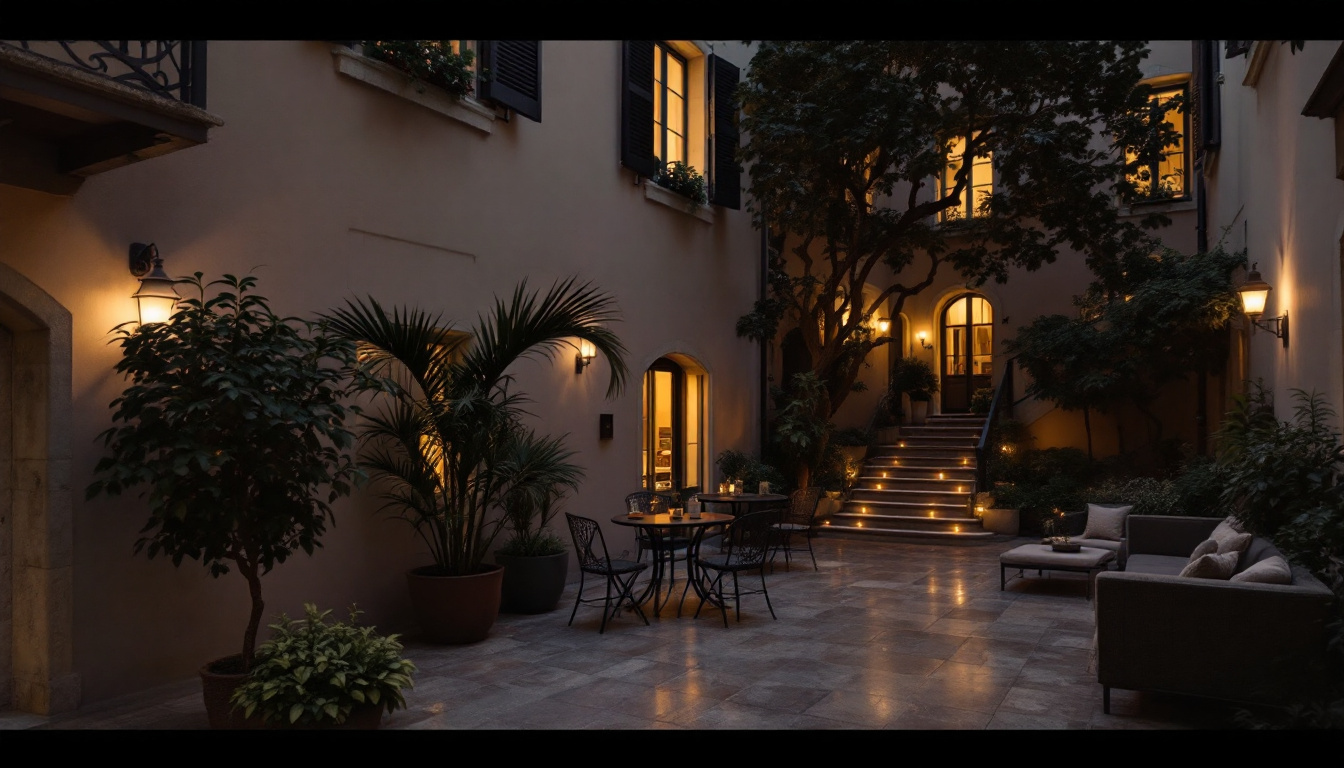
The Stravinskij Garden is the property’s defining asset. The garden runs from the back of the hotel to the foot of the Pincio hill, with lemon trees, jasmine, a single bay tree, and the central pebble path that leads up to a small terrace at the rear. The garden is approximately 1,300 sqm and is walled on three sides — the hotel building on the east, the Pincio retaining wall on the south, and the neighbouring building on the west — with the fourth (north) side open to the Stravinskij Bar’s open doors.
Setting score: 4.8. The Via del Babuino and Piazza del Popolo position is the most-central of the central-Roman grand hotels, and the Stravinskij Garden is the most-distinctive single architectural asset of any Roman hotel. The deduction is the Via del Babuino itself, which is a fashion-street and which between noon and 6 p.m. is one of the most-pedestrian-trafficked streets in central Rome — the foot traffic comes close to the porte-cochère and the arrival sequence runs at a slightly faster pace than the property would like.
The suite
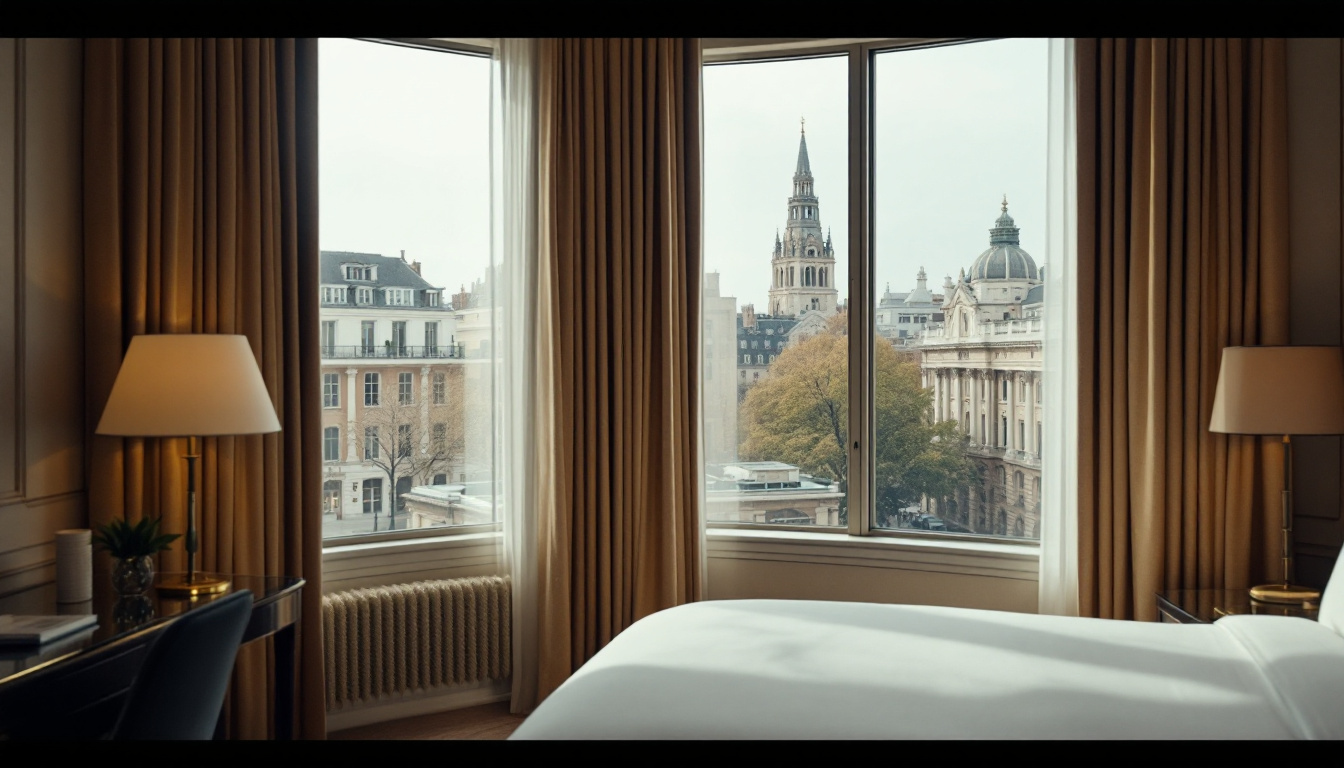
I took a Junior Suite — the entry-grade suite category, on the second floor, with a small private terrace overlooking the Stravinskij Garden — at 55 square metres. The Junior Suite was part of the Olga Polizzi and Tommaso Ziffer 2000 renovation, with a soft-refresh programme touched in 2020 (textiles replaced, lighting updated, bathroom hardware refreshed).
Material specifics, from my notes:
- The Polizzi-Ziffer brief was to run a contemporary-Roman register that read as 21st-century Roman rather than as 19th-century Roman (which the Valadier building’s bones would have invited). The colour register is warm cream walls, pale-blue silk upholstery, and a single contemporary Roman-school painting on the wall (mine was a Pietro Annigoni-school portrait piece from the property’s contemporary collection).
- The floor in the sitting room is wide-plank oak with a hand-loomed Roman-school rug; in the bedroom is fitted wool broadloom in a herringbone pattern.
- The bed is a Treca de Paris bespoke mattress on a hand-carved Italian walnut frame, dressed in Pratesi linens (the Italian Rocco Forte-portfolio supplier since 2005), with a five-pillow menu offered at turndown.
- The bathroom is in Bianco Carrara marble with a freestanding tub, a separate walk-in shower, and a separate WC. Amenities are Irene Forte Skincare (the Forte-family in-house brand, launched 2018 and rolled across the Rocco Forte portfolio).
- The minibar runs a small selection of Italian wines (a Brunello, a Sassicaia, a Cortese di Gavi), a small selection of Stravinskij Bar pre-batched cocktails, and Roman still and sparkling water. The minibar is at a charge.
- The technology is restrained but modern. A Bang & Olufsen Beoplay speaker, a Loewe television hidden behind a sliding wood-and-marble panel, a Lutron lighting system with both touch and analogue controls. The room iPad runs lighting, curtains, and room service.
The Junior Suite is the entry-grade suite. The Classic Rooms (the entry-grade room category) run 28 sqm — slightly larger than the Hassler’s Classic Doubles but smaller than the Cap-Ferrat’s Deluxe Garden Rooms; the Superior Rooms run 35 sqm; the Deluxe Rooms run 40; the Junior Suites run 55; the Picasso Suites (named for Pablo Picasso, who stayed at the property in 1917 and in 1949) run 80; the Nijinsky Suite (the property’s flagship, named for Vaslav Nijinsky, who stayed in 1916) runs 230 with a 200 sqm private terrace overlooking the garden.
Suites score: 4.6. The Polizzi-Ziffer fit-out is the asset; the in-room technology integration is the second; the garden-view terrace is the third. The deduction is the entry-grade Classic Rooms at 28 sqm and the property’s higher-rate non-garden-view rooms, which are the rooms most often shown to first-time guests and which face the relatively-busy Via del Babuino rather than the garden.
The service
Service at the Hotel de Russie runs the Rocco Forte house standard at its most-Roman. The Forte standard — careful, calm, knowing of local detail, with a particular Forte-family attention to the in-room small-detail programme — is delivered with the operational rigour of a portfolio operation rather than the family-house operation of the Hassler.
The pre-arrival contact was from Anna Sirio (Reservations Manager), who confirmed the suite category, a Le Jardin de Russie reservation for the second evening, a Stravinskij Bar pre-dinner cocktail reservation for the same evening, and a small request I had made for a particular Roman bookbinder (Antica Legatoria, a small bookbindery on Via dei Coronari) to be on the concierge’s list for a possible mid-stay visit. On arrival the requested bookbinder visit was on Beatrice Costanzi’s daybook for the second afternoon; the Le Jardin reservation was confirmed at a garden-side two-top; and the room had a small handwritten note from the GM (Mauro Governato, in his third year at the property) acknowledging my return.
The follow-through during the stay was strong. The first evening the housekeeping team noticed that the in-room iPad was loading the room-service menu slowly and replaced the iPad within an hour (a small but meaningful operational tell — most properties would have left the slow iPad alone). The second morning the floor manager (Beatrice Costanzi) arranged for the Roman bookbinder visit to be timed to a 4 p.m. window when the workshop was at its quietest, with the in-house Mercedes-Benz E-Class for the transfer. The third afternoon the Stravinskij Bar team noticed that I had been ordering Negronis on each of the previous two evenings and offered a small pre-Negroni Aperol Sour as a house gesture on the third afternoon’s pre-dinner sitting.
The frictions during the stay were small. The first night’s room service order (a small Le Jardin antipasto for two) was 15 minutes late — within the property’s stated 20-minute window but at the upper end. The second morning’s coffee delivery was correct on the first try. The third evening’s spa booking (a 90-minute Roman-tradition treatment) was started 8 minutes late because the previous booking had over-run by exactly 8 minutes; the spa apologised and added 8 minutes to the treatment, which was the right response.
Service score: 4.7. The Rocco Forte house standard is the asset; the iPad-replacement operational tell is the strongest single service moment of this review; the in-stay pre-Negroni gesture is the second. The deduction is the spa over-run, which is operationally small but should not happen.
The table
The Hotel de Russie runs four food-and-beverage outlets: Le Jardin de Russie (the headline restaurant on the garden terrace, three services daily, 80 covers, under chef Fulvio Pierangelini since 2009), the Stravinskij Bar (the headline cocktail bar with an open door to the garden, all-day, 60 covers), the Stravinskij Lounge (the all-day light dining and tea programme, 40 covers), and the in-pool Pool Bar (summer only, 20 covers). The four-outlet structure is the deepest in any Roman grand hotel after the Hotel Eden.
I took dinner at Le Jardin de Russie on the second evening, a Stravinskij Bar cocktail on the same evening, a Stravinskij Lounge afternoon tea on the second afternoon, and breakfast on three mornings in Le Jardin. Cumulative coverage gives me seven Le Jardin dinners across three stays.
Le Jardin de Russie is the property’s strongest single F&B asset. Fulvio Pierangelini’s kitchen — Pierangelini brought to the property a three-star pedigree from his pre-Russie kitchen at Gambero Rosso in San Vincenzo (Tuscany, 1991-2008) — runs a coastal-Italian programme with a careful Roman overlay. The May tasting ran six courses for EUR 195, with the wine pairing at EUR 140. The standout courses were the cured Roman bass with sea-urchin and a small Roman-cherry-tomato salsa, the tagliatelle al ragù with hand-cut pasta and a 24-hour-cooked Maremmana beef ragù, and the closing pre-dessert of pear-and-Sardinian-saffron sorbet.
The Stravinskij Bar is the property’s second-strongest F&B asset and one of the most-visited cocktail rooms in Rome. The bar — opened in 2000 with the Polizzi-Ziffer renovation, and run by bar manager Massimo D’Addezio since 2003 — has a small but unusually careful Italian-classic cocktail programme. The signature is the Stravinskij Negroni, made with a house-aged Tanqueray and a small dash of Mediterranean orange. The bar takes walk-ins to capacity and is one of the only Roman hotel bars where the in-resident guest does not get a reserved-seating priority — the room is small enough that the queue rotates fairly.
The Stravinskij Lounge is the all-day. The light-dining programme runs a careful small-plates menu (cured fish, small pasta portions, a Roman-style fritto misto) and an afternoon-tea service that is the only proper Roman-tradition afternoon tea in any of the city’s grand hotels (the tea is served with Roman-tradition pastries — small bocconotti, ricotta-and-pear tarts, hand-made baci di dama). The room is dressed in the Polizzi-Ziffer contemporary register and runs as the secondary daytime gathering space.
Table score: 4.6. Le Jardin at the Pierangelini standard, the Stravinskij Bar at the Roman-cocktail standard, the Stravinskij Lounge afternoon tea as a distinctive offering. The deduction is Le Jardin’s lack of a Michelin star, which would not change the cooking but which is a reasonable proxy for the property’s underperformance relative to the kitchen’s pedigree.
The detail
The detail dimension at the Hotel de Russie runs the Rocco Forte house standard with the Irene Forte Skincare in-house brand as the operating tell. The detail strengths are in the in-room small-detail programme, the spa, and the garden’s operational management.
The smaller details, in my notes:
- The in-room writing pad is custom Hotel de Russie-branded stock (printed on Fabriano Roman cotton-rag paper, a small detail that is correct for the property); the in-room pen is a Hotel de Russie-branded Aurora 88 (the Italian-Aurora fountain pen, the right choice for a Roman hotel); the in-room slippers are leather-soled and embroidered. The in-room flowers are a small Roman arrangement refreshed every three days.
- The De Russie Wellness Zone, on the lower-ground floor, includes a 14-metre indoor pool, two hammams, two saunas, six treatment rooms, and a separate Irene Forte skincare-treatment wing. The spa is open to non-residents by appointment but residents have priority on same-day bookings.
- The in-house car is a Mercedes E-Class for inner-city transfers, a Mercedes V-Class for airport and longer transfers; transfers within the Roman historic centre are complimentary for in-house guests.
- The bath products are Irene Forte Skincare (Rocco Forte-portfolio supplier); the bathroom hair dryer is a Dyson Supersonic; the bedside USB chargers run both USB-A and USB-C.
- The turndown service runs a single Italian-tradition pastry (a small pasticcino from a Roman pasticceria, refrigerated), the bedside light dimmed, the morning weather and the day’s events at the property’s Pincio-side terrace.
- The in-room television is a Loewe with a fast wake time (under 4 seconds); the room-iPad lighting and curtain controls are functional and elegant.
Against these strengths, the smaller failures. The in-room minibar is at a charge (not complimentary). The in-room safe is a generic Yale.
Detail score: 4.5. The Irene Forte Skincare programme, the De Russie Wellness Zone, and the Aurora 88 pen are the assets; the metered minibar and Yale safe are the deduction.
The Standard
The five-dimension breakdown, with the published Standard rubric:
- Setting: 4.8. Via del Babuino, the Stravinskij Garden, the Pincio adjacency, and the Piazza del Popolo. The most-distinctive single architectural asset of any Roman hotel.
- Suites: 4.6. The Polizzi-Ziffer fit-out and the garden-view terrace are the assets; the entry-grade Classic Rooms at 28 sqm and the Via del Babuino-facing higher-rate non-garden rooms are the deduction.
- Service: 4.7. The Rocco Forte house standard at its most-Roman; the iPad-replacement operational tell is the strongest single service moment of this review.
- Table: 4.6. Le Jardin at the Pierangelini standard, the Stravinskij Bar at the Roman-cocktail standard, the Stravinskij Lounge afternoon tea.
- Detail: 4.5. The Irene Forte Skincare programme and the Aurora 88 pen are the assets; the metered minibar and Yale safe are the deduction.
Property score: 4.64. Rounded one decimal: 4.6.
Verdict: at-the-standard. The Hotel de Russie is the most-operationally-polished of the Roman grand hotels — the Hassler is the more-distinctive in position, the Hotel Eden is the more-set-piece, the Six Senses Rome is the newer. The de Russie is the one that runs the deepest combination of Rocco Forte house standard and Roman-specific architectural asset (the Stravinskij Garden, the Valadier building, the Polizzi-Ziffer renovation, the Pierangelini kitchen). For a Roman trip in which the priority is the Piazza del Popolo position, the Stravinskij Garden, and a strong but un-starred kitchen, the answer is the de Russie.
Verdict and reservations
Hotel de Russie, Via del Babuino 9, 00187 Rome, Italy. Reservations through the Rocco Forte website, through Leading Hotels of the World, or through the property directly at +39 06 32 88 81. May (shoulder-to-high-season) Classic Rooms from EUR 1,050; Superior Rooms from EUR 1,250; Deluxe Rooms from EUR 1,550; Junior Suites from EUR 2,200; Picasso Suites from EUR 4,800; Nijinsky Suite on request (a EUR 14,500-per-night ask in shoulder season). Le Jardin de Russie reservations through the property or via OpenTable. Stravinskij Bar walk-ins.
The right room is a Junior Suite on the second floor, garden-facing. The right meal is Le Jardin on a midweek evening with the EUR 140 wine pairing, taken on the garden terrace in mild weather. The right cocktail is a Stravinskij Negroni on the secret-garden terrace at 7 p.m. The wrong room is a Classic Room facing Via del Babuino in high season (the noise carries until late). The wrong meal is the Stravinskij Lounge as a destination dinner (it isn’t one — it’s an all-day light-dining room). The wrong move is to book without a garden room; the Stravinskij Garden is the property’s asset, and the Junior Suite garden-view is the minimum that lets the asset work.
Standing Questions
- Did Giuseppe Valadier really design the original building?
- Yes. The building that houses the Hotel de Russie was designed by Roman architect Giuseppe Valadier between 1816 and 1818, in the same period as Valadier's redesign of the adjacent Piazza del Popolo (1811-1822). The building's Russian-imperial guest history — the hotel was the preferred Roman stay of the Russian Imperial House and Russian Romantic painters in the 19th century — is the source of the property name.
- When did Rocco Forte take over?
- Sir Rocco Forte reopened the property as a Rocco Forte Hotel on 15 April 2000, following a 24-month renovation under interior designer Olga Polizzi (Rocco Forte's sister) and architect Tommaso Ziffer. The property had been closed for several years before the Forte acquisition.
- Is the secret garden as advertised?
- Yes. The Stravinskij Garden — named for Igor Stravinskij, who stayed at the hotel in 1917 — is a roughly 1,300 sqm walled garden between the hotel and the Pincio gardens at the foot of the Villa Borghese hill. The garden is open to non-residents only as Stravinskij Bar customers; the hotel's residents have access throughout. The garden is the secret-garden that the hotel's marketing has run since 2000.
- Does Le Jardin de Russie hold a Michelin star?
- No. Le Jardin de Russie, the property's headline restaurant under chef Fulvio Pierangelini (since 2009), runs a coastal-Italian programme and has been on the Michelin radar continuously but does not currently hold a star. Pierangelini's pre-Russie three-star history (at Gambero Rosso in San Vincenzo, 1991-2008) is the reference point.
- Is the Stravinskij Bar still the room it was?
- Yes. The Stravinskij Bar — the property's headline cocktail room, on the ground floor with an open door to the secret garden — remains under bar manager Massimo D'Addezio and runs the same broad Italian-classic and house-cocktail programme as it did at opening. The bar takes walk-ins until capacity.