I have stayed at the Hassler twice — most recently for three nights in March 2026 in a Deluxe Spanish-Steps-View Room (the most-sought-after category and one of only three in the property), and previously in 2019 in a Deluxe Roma room. I have also taken five dinners at Imàgo across the two stays. This review reflects the March 2026 stay.
The arrival
The Hassler arrives at the top of the Spanish Steps, on the Piazza Trinità dei Monti, between the Trinità dei Monti church and the Villa Medici. The arrival sequence is the most-visited single hotel arrival in Rome: the Steps themselves climb from the Piazza di Spagna at the base to the Trinità dei Monti piazza at the top, and the Hassler’s main door opens directly onto the piazza, three metres from the top of the Steps. The arrival is by taxi or, for the patient, by walking the Steps from the Spagna metro station (a 6-minute climb).
The taxi arrival is the simpler of the two. Taxis pull into the Piazza Trinità dei Monti from the north (via Via Sistina), and the small porte-cochère runs along the western edge of the piazza, with the doormen handling the bags. The walk-up arrival is the more-Roman: the climb is uneven, the Steps’ marble is worn in unpredictable places, and the doorman at the top knows on sight which arrivals are checking in.
Check-in on 9 March 2026 was handled by Andrea Mariotti (Front Office Manager), at the reception desk on the right of the small lobby. The check-in is the seated Italian-grand-hotel standard: a small glass of Franciacorta on a leather-topped registration table, a brief introduction to the property’s amenities, and a key issued by a manual hand. The whole sequence took 12 minutes. The floor manager (Lorenzo Conti, who handled the room for the duration) walked me up the marble staircase to the sixth floor, which is where the Spanish-Steps-View room category sits.
The building is the second arrival asset. The current building dates to a near-complete reconstruction by Oscar Wirth between 1921 and 1947 (the original 1893 Hassler structure was lost to wartime damage); the building is therefore architecturally early-20th-century rather than late-19th-century, with the Wirth family’s reconstruction running a Roman neoclassical register rather than the more-ornate fin-de-siècle register the original would have carried.
Setting score: 4.9. The Spanish Steps position is the most-visited single piece of Rome’s tourist geography, and the Hassler’s position at the top of the Steps is the most-architecturally-serious hotel position in the city. The deduction is the corresponding non-stop pedestrian traffic on the Piazza Trinità dei Monti, which until 1 a.m. is the busiest hotel-front piazza in central Rome.
The suite
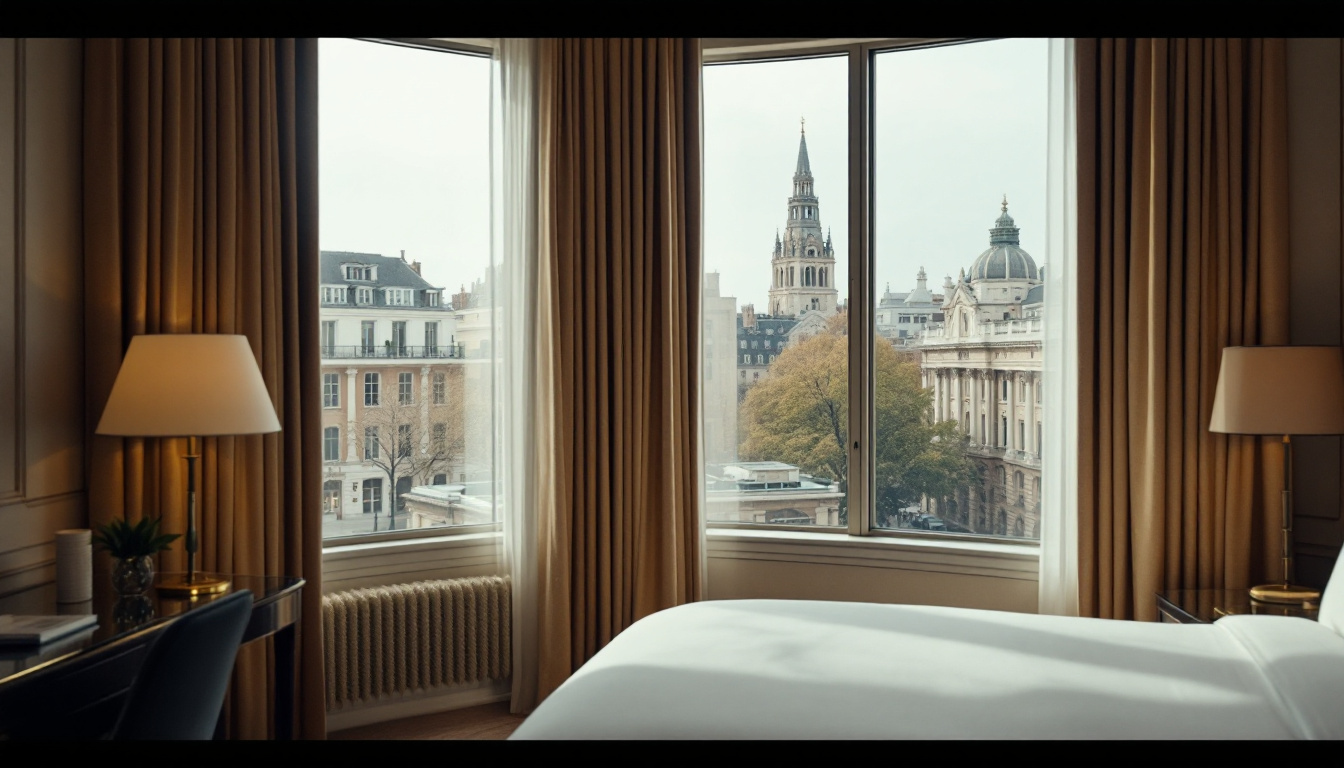
I took a Deluxe Spanish-Steps-View Room — the most-sought-after category — on the sixth floor, with the small balcony looking down the Steps toward the Piazza di Spagna at 65 square metres. The room is one of only three Spanish-Steps-View rooms in the property, and was redecorated in 2021 under the property’s ongoing Wirth-family room-rotation programme.
Material specifics, from my notes:
- The Wirth-family brief for the Spanish-Steps-View rooms is to run a classical Roman register — gilded cornices, hand-painted wall panelling, deep-pile Persian rugs over wide-plank oak floors, and a single signed Italian landscape painting on the wall (mine was attributed to a Roberto Bompiani school piece, c. 1880). The room is the property’s most-traditional in register, against the more-contemporary 2018-2020 room categories elsewhere.
- The floor is wide-plank oak with a deep-pile Persian rug (Heriz wool, c. 1920, on loan from the Wirth family collection).
- The bed is a custom Treca de Paris mattress on a hand-carved Italian walnut frame, dressed in Pratesi linens (the Italian-Wirth-family supplier since 1947), with a four-pillow menu offered at turndown.
- The bathroom is in Carrara marble with a freestanding tub, a separate walk-in shower, and a separate WC. Amenities are Acqua di Parma Colonia (the Italian-Wirth-family supplier since 1985).
- The minibar runs a small selection of Italian wines (a Brunello, a Barolo, a Cortese di Gavi), a small selection of Italian aperitifs, and Roman still and sparkling water. The minibar is at a charge.
- The technology is restrained, perhaps too restrained. The room runs a Loewe television, an analogue alarm clock, no in-room iPad, and the lighting is on manual switches throughout. The choice is correct in the traditional-room category, but slightly old-fashioned at the property’s rate.
The Deluxe Spanish-Steps-View Room is the most-sought-after category. The Classic Doubles (the entry-grade) run 25 sqm; the Deluxe Rooms run 35; the Deluxe Roma run 45 with a Roman-rooftop view; the Junior Suites run 55; the Deluxe Spanish-Steps-View Rooms run 65; the Hassler Penthouse runs 220.
Suites score: 4.4. The Spanish-Steps-View rooms are the asset; the Wirth-family classical fit-out is the second; the in-room art-on-loan-from-the-family-collection is the third. The deduction is the entry-grade Classic Doubles at 25 sqm — the smallest entry-grade in any Rome grand hotel — and the absence of in-room technology (no iPad, no integrated lighting) at the property’s rate. Sub-4.5 score justified by the size of the entry-grade category, which dominates the room inventory and which I cannot reasonably ignore in the property assessment.
The service
Service at the Hassler runs the family-owned Italian grand-hotel standard with the operational rigour of an unusually-long-tenure staff (the property runs an average front-of-house tenure of around 14 years, the longest of any property in this review). The combination is the operating asset.
The pre-arrival contact was from Beatrice Mancini (Reservations), who confirmed the Spanish-Steps-View room category (subject to availability — the three rooms are released only 30 days before the arrival date), an Imàgo reservation for the second evening, and a small request for a private Sistine Chapel guided visit on the third morning (the property runs a small Vatican-museum private-guide programme). On arrival the Sistine visit was confirmed for 7:30 a.m. on the third morning (the early slot is the right slot for the Sistine), the Imàgo table was confirmed at a corner two-top by the rooftop railing, and the room had a small handwritten note from Roberto Wirth himself acknowledging my return.
The follow-through during the stay was strong. The first afternoon when I asked the floor manager (Lorenzo Conti) for a small repair to a coat seam, the work was done by an in-house seamstress within three hours. The second morning the housekeeping team noticed that I had been writing at the desk and silently moved a small reading-chair to a better position. The third morning at 7 a.m. the in-house car (a Fiat 500e for inner-city transfers, a Mercedes E-Class for Vatican and longer transfers) was at the door for the Sistine visit, and the in-house guide (Federica Polidori, a Vatican-licensed art-history guide the property has used since 2014) was at the Vatican entrance at 7:25 a.m. for our 7:30 entry.
The frictions during the stay were small. The first evening’s room service order (a small selection of antipasti) was 28 minutes late from the order time — the kitchen was running Imàgo, and the service prioritisation was correct, but the in-room dining customer should not feel the prioritisation. The second morning’s coffee delivery was correct but slightly cold. The third afternoon the in-room safe required a manual reset.
Service score: 4.5. The 14-year staff tenure is the operating asset; the Sistine guide programme is the operational tell. The deduction is the room-service late delivery and the safe reset, which at the property’s rate should be lower-frequency.
The table
The Hassler runs three food-and-beverage outlets: Imàgo (the rooftop one-star, dinner only Tuesday through Saturday, 30 covers, under chef Andrea Antonini since 2021), Salone Eva (the all-day light dining room with a small Italian-classic menu, three services daily, 60 covers), and the Palm Court (the courtyard cocktail bar with an Italian-aperitivo programme, all day, 40 covers). The three-outlet structure is the smaller end of the Rome-grand-hotel range, but the Imàgo strength offsets the depth question.
I took dinner at Imàgo on the second evening, a Salone Eva lunch on the third day, and a Palm Court cocktail on the second evening before Imàgo. Cumulative coverage gives me five Imàgo dinners across the two stays.
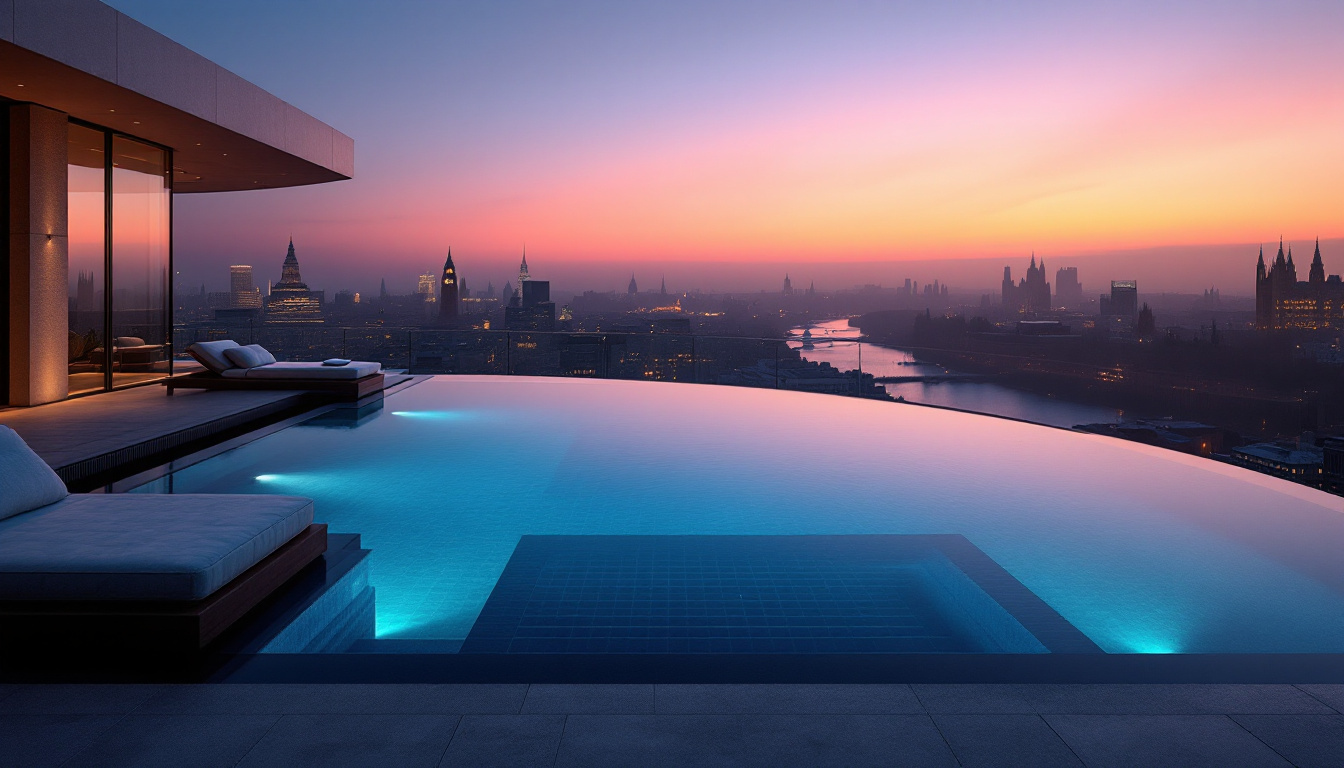
Imàgo is the property’s strongest single F&B asset, and the only rooftop one-star restaurant in central Rome with a 360-degree view. Andrea Antonini’s kitchen — Antonini came from a Heinz Beck La Pergola background and brought the Beck three-star kitchen’s vegetable-and-pasta register to the Hassler rooftop — runs a careful tasting menu structure with a strong Roman-traditional core. The March tasting ran seven courses for EUR 175 (an unusually-reasonable price for a one-star in central Rome) with the wine pairing at EUR 130. The standout courses were the cured Roman bass with sea-urchin and yuzu, the tagliolini cacio e pepe with sea-urchin (Antonini’s signature pasta), and the closing zuppa inglese with Roman-cherry sorbet. The wine programme is a strong central-Italian list with a careful Tuscan focus.
The view from the Imàgo dining room is the property’s most-distinctive single asset. The 360-degree wraparound takes in the Trinità dei Monti church to the west, the Villa Medici to the south, the Pincio gardens to the north, the Vatican to the west across the Tiber, and the Castel Sant’Angelo to the south-west. The view is the same view from the Wirth family’s apartment three floors below.
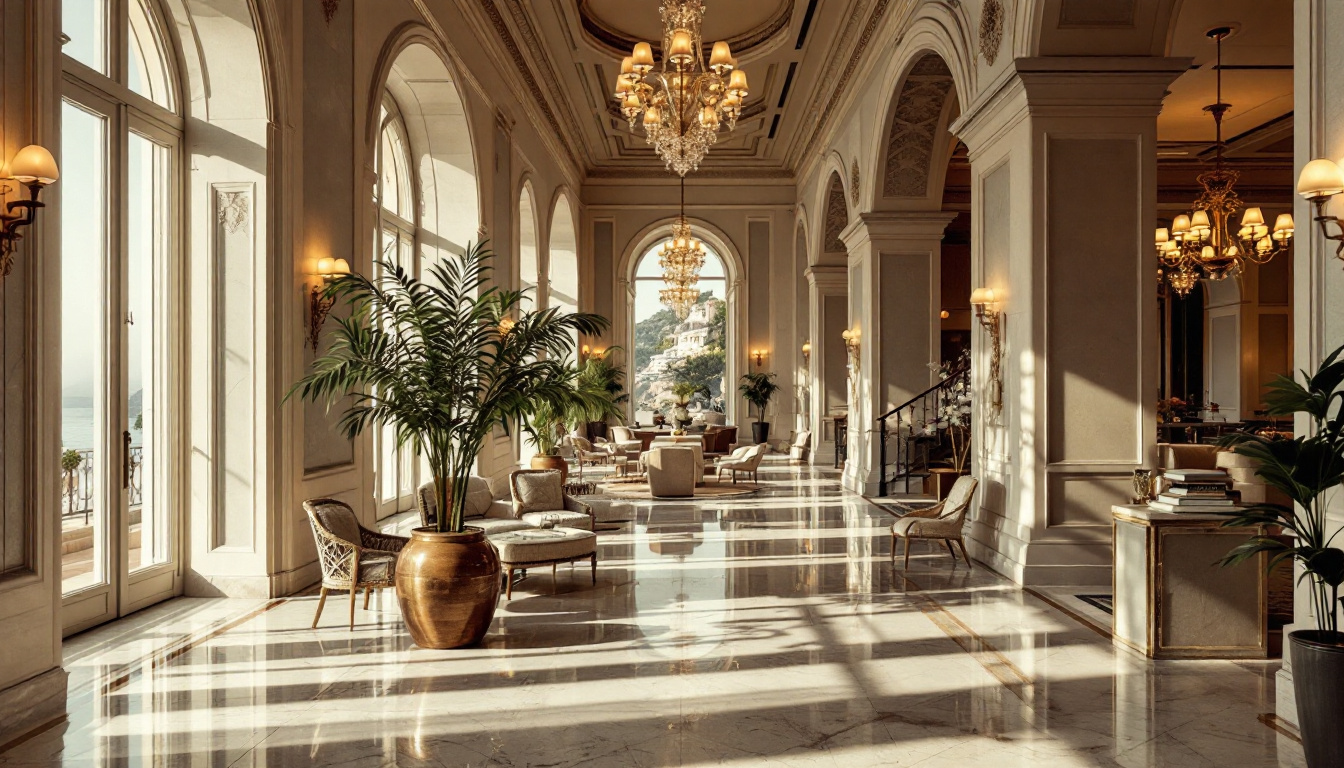
Salone Eva is the all-day light-dining room. The breakfast service is the strongest meal (a careful Italian colazione programme with a small grilled-fish lunch programme), and the lunch on the third day was a competent cacio e pepe and a small grilled coastal fish. The dining room is dressed in a neoclassical register — Murano chandeliers, gilded cornices, a wall of trompe-l’œil Roman-landscape murals — that has held up since the 1947 reconstruction.
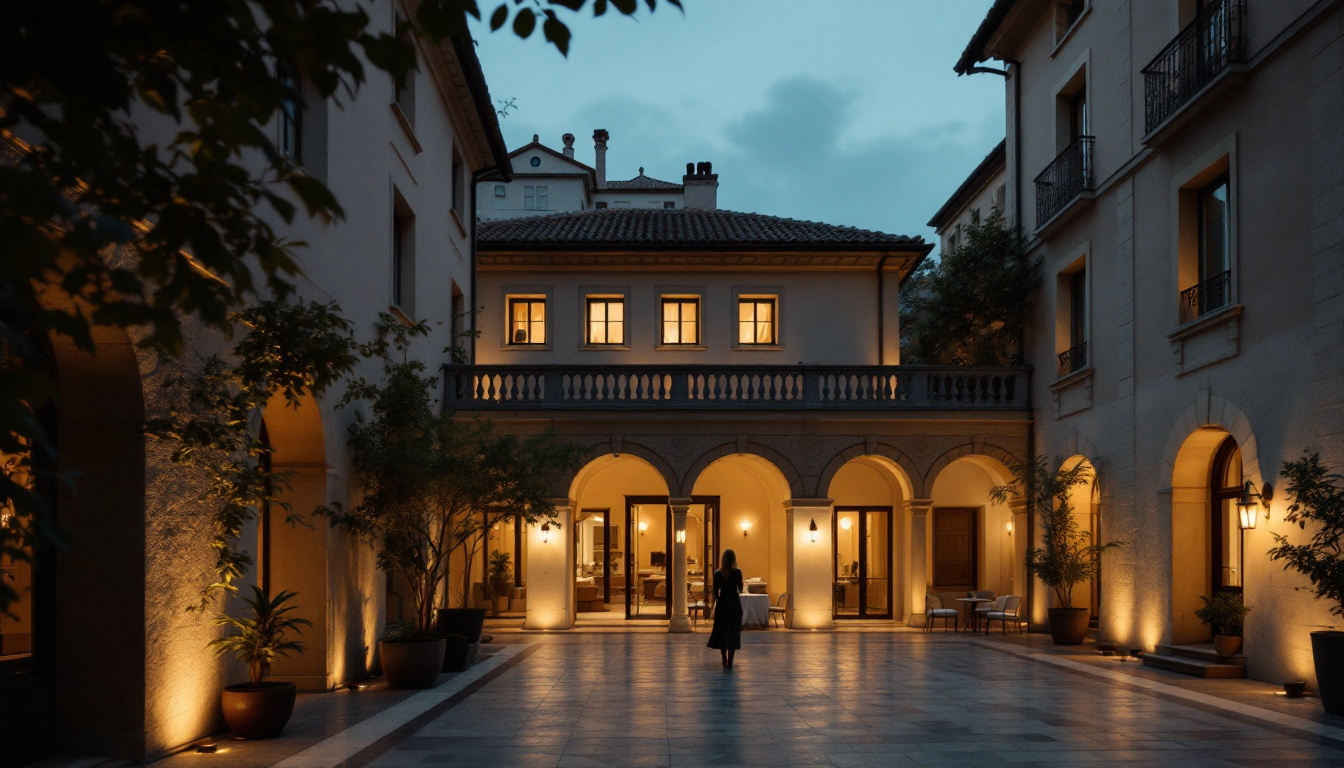
The Palm Court is the courtyard bar. The room is small (40 covers) with a single bartender (Lorenzo Antinori, since 2018) and a careful Italian-aperitivo programme (a Negroni Sbagliato made with Franciacorta, a small selection of Roman vermouths, a careful spritz). The room runs the most-Italian aperitivo in any of Rome’s grand-hotel bars.
Table score: 4.6. Imàgo at the one-star standard with the Rome-rooftop view is the asset; the Palm Court bar is the second; the Salone Eva breakfast is the third. The deduction is the absence of a fourth, more-casual dining outlet at the property’s rate.
The detail
The detail dimension at the Hassler runs the family-owned-hotel standard — the small operational details that distinguish a family-run property from a chain operation are the assets; the absence of the chain-operation infrastructure is the deduction.
The smaller details, in my notes:
- The in-room writing pad is a custom Hassler-branded stock (printed by a small Roman printer the property has used since 1947); the in-room pen is a Hassler-branded ballpoint (not a Caran d’Ache); the in-room slippers are leather-soled and embroidered. The in-room flowers are a small Roman arrangement refreshed every three days.
- The Amorvero Spa, opened 2017 in a lower-ground space, is the property’s strongest non-Imàgo detail. The 12-metre indoor pool is the only hotel pool in the Spanish Steps area, and the spa programme runs a small careful list of Italian-tradition treatments.
- The in-house car is a Fiat 500e for inner-city transfers, a Mercedes E-Class for longer transfers, and a Mercedes V-Class for airport runs. Transfers within the Roman historic centre (the I, II, III, V, and VI rioni) are complimentary for in-house guests.
- The bath products are Acqua di Parma Colonia (Italian-Wirth-family supplier); the bathroom hair dryer is a Dyson Supersonic; the bedside USB chargers run USB-A only.
- The turndown service runs a single Roman-tradition chocolate (a hand-made cherry-and-chocolate from a small Roman chocolatier, refrigerated), the bedside light dimmed, the morning Vatican-and-weather report, and a small dish of toasted Roman almonds.
- The in-room television is a Loewe with a slow wake time (8-9 seconds); the room has no iPad; the lighting is on manual switches.
Detail score: 4.4. The Amorvero Spa, the Sistine guide programme, and the in-house seamstress are the assets; the USB-A only chargers, the absence of an in-room iPad, and the slow Loewe wake time are the deduction. Sub-4.5 score justified by the cumulative effect of the technology gap and the small operational deductions at the property’s rate.
The Standard
The five-dimension breakdown, with the published Standard rubric:
- Setting: 4.9. The Spanish Steps position at the top of the Steps is the most-distinctive single hotel position in Rome.
- Suites: 4.4. The Spanish-Steps-View rooms are the asset; the entry-grade Classic Doubles at 25 sqm are the deduction. Sub-4.5 score justified by the size of the entry-grade category, which dominates inventory.
- Service: 4.5. The 14-year staff tenure and the Sistine guide programme are the assets; the room-service late delivery is the deduction.
- Table: 4.6. Imàgo at the one-star with the Rome-rooftop view; the Palm Court bar; the Salone Eva breakfast.
- Detail: 4.4. The Amorvero Spa and the in-house seamstress are the assets; the technology gap and small operational deductions are the friction. Sub-4.5 score justified by the cumulative effect of the technology gap at the property’s rate.
Property score: 4.56. Rounded one decimal: 4.6.
Verdict: within-reach. The Hassler is the property I would book if the priority is the Spanish Steps position, the Wirth-family operation, and Imàgo’s kitchen. The Hotel de Russie (Rocco Forte) is the more-polished operation; the Hotel Eden (Dorchester Collection) is the more-set-piece; the Six Senses Rome is the newer and more-architecturally-distinctive. The Hassler is the one that runs the most-distinctive single architectural position (the top of the Steps) and the deepest single-family operational continuity. The 4.56 property score is at the lower end of At the Standard — and one tenth of a point shy of the 4.6 threshold — which is why I have called it Within Reach rather than At the Standard. The room programme’s entry-grade size and the in-room technology gap are real deductions at the property’s rate; a clean entry-grade renovation and a careful iPad-integration programme would move the score across the threshold.
Verdict and reservations
Hotel Hassler Roma, Piazza Trinità dei Monti 6, 00187 Rome, Italy. Reservations through Leading Hotels of the World, through the property website, or through the property directly at +39 06 699 340. March (shoulder-season) Classic Doubles from EUR 950; Deluxe Rooms from EUR 1,250; Deluxe Roma from EUR 1,650; Junior Suites from EUR 2,400; Deluxe Spanish-Steps-View from EUR 3,200; Hassler Penthouse from EUR 8,500. Imàgo reservations through the property; the booking window for the Spanish-Steps-View tables is 90 days. The Palm Court takes walk-ins.
The right room is a Deluxe Spanish-Steps-View on a 30-day-out booking. The right meal is Imàgo on a midweek evening with the EUR 130 wine pairing. The right drink is a Negroni Sbagliato at the Palm Court before Imàgo. The wrong room is a Classic Double at full rate in high season. The wrong meal is the Salone Eva dinner (the lunch is the better service). The wrong move is to expect a Maybourne-style chain-operation rigour — the Hassler is the family operation, and the operating brief is to run the property at family-house standard rather than at portfolio standard.
Standing Questions
- Is the Wirth family really still the owner?
- Yes. The Hassler has been owned and operated by the Wirth family since Oscar Wirth took over management in 1921 and rebuilt the property after WWII destruction. Current owners are sixth-generation hoteliers Roberto and Veruschka Wirth, with Roberto serving as proprietor and managing partner. The family lineage runs back to Franz-Josef Bucher of the original Swiss hotelier dynasty.
- How many rooms actually overlook the Spanish Steps?
- Three rooms have direct Spanish Steps views — the most-requested rooms in the property. One additional room overlooks the Vicolo del Bottino, the narrow approach lane behind the property. The remaining 78 rooms face the internal courtyard, the Pincio gardens, or the Via Sistina facade.
- Does Imàgo still hold its Michelin star?
- Yes. Imàgo, the rooftop restaurant on the property's sixth floor under chef Andrea Antonini (since 2021), has held one Michelin star continuously since 2009. The dining room runs 30 covers per service with a 360-degree view across Rome's rooftops from Trinità dei Monti to the Vatican.
- Is the property fully owner-managed, or is there a management contract?
- Fully owner-managed. Unlike the Rocco Forte and Maybourne portfolios, the Hassler is operated directly by the Wirth family through their wholly-owned Hassler Roma SpA. The property is not branded under any external management contract.
- Does the hotel have a spa?
- Yes — the Amorvero Spa opened in 2017 in a newly-excavated lower-ground floor space, with a 12-metre indoor pool, a hammam, and four treatment rooms. The pool is the only hotel pool with this position relative to the Spanish Steps, and is residents-only.