I have stayed at La Mamounia three times — in 2018 (pre-Jouin-Manku refurbishment), in 2023 (mid-refurbishment, in the unrenovated north wing), and most recently for four nights in March 2026, in a Deluxe room in the renovated central wing. The March stay forms the basis of this review.
The arrival
The road approach to La Mamounia is the city’s most-photographed hotel arrival. You leave the western bypass at the Bab Jdid gate, follow Avenue Bab Jdid for 400 metres, and arrive at a long approach drive lined with date palms and bougainvillea that the hotel has held under the same configuration since the 1920s. The driver — assuming you have arranged the hotel’s car — pulls in to a generous porte-cochere, the porters in red livery take the bags, and you are inside a vast lobby before the engine has cooled.
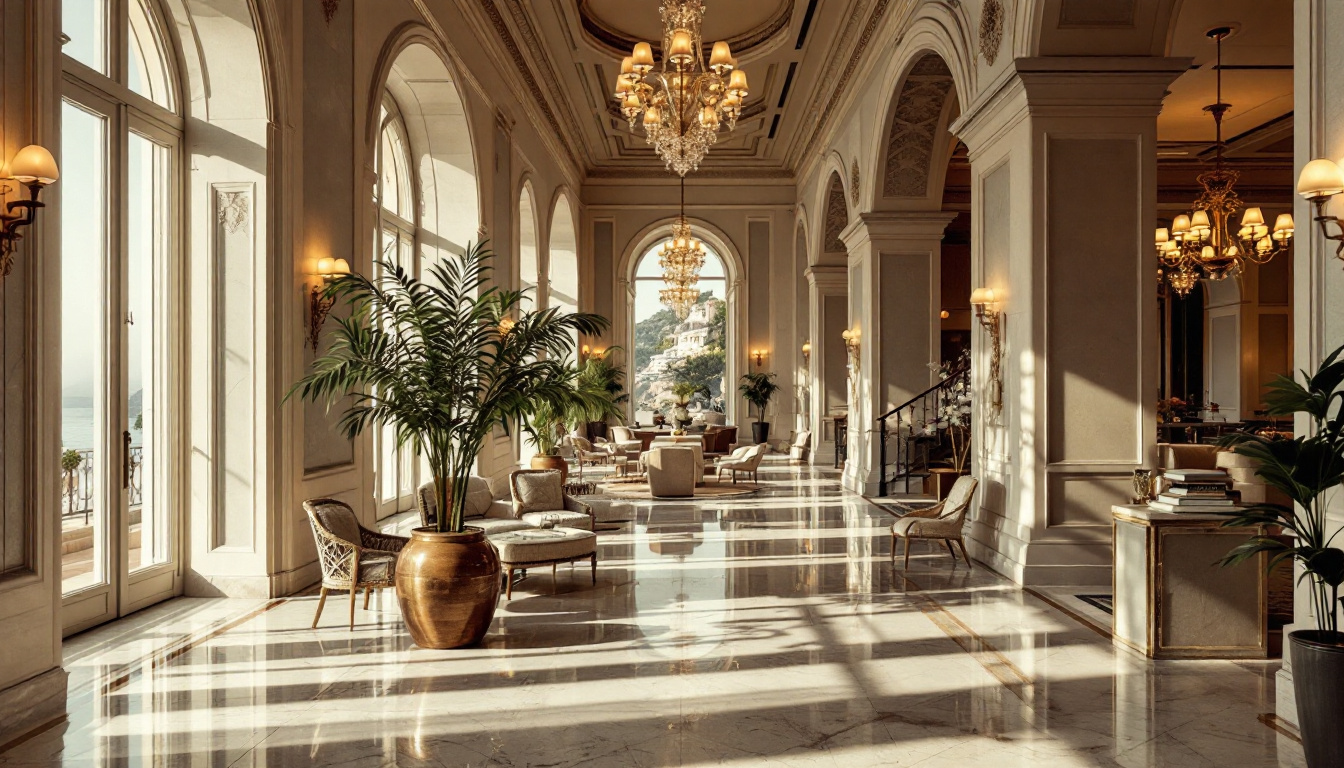
The lobby is the Jouin-Manku-refurbished version (the 2021 redesign) — a long, low, lantern-lit hall in cream and Atlas-cedar tones, with the original 1923 columns retained and the previous Garcia-era brass and lacquered red removed. The check-in is handled at small individual tables, seated, with mint tea poured at the table and a small dish of dates from the Tafilalt. The director who handled my March check-in, a man named Karim who joined the property in 2016, walked me through the building’s central corridor rather than directly to the room — the architectural tour at La Mamounia is the same kind of welcome the Aman Venice runs, scaled up to the larger property.
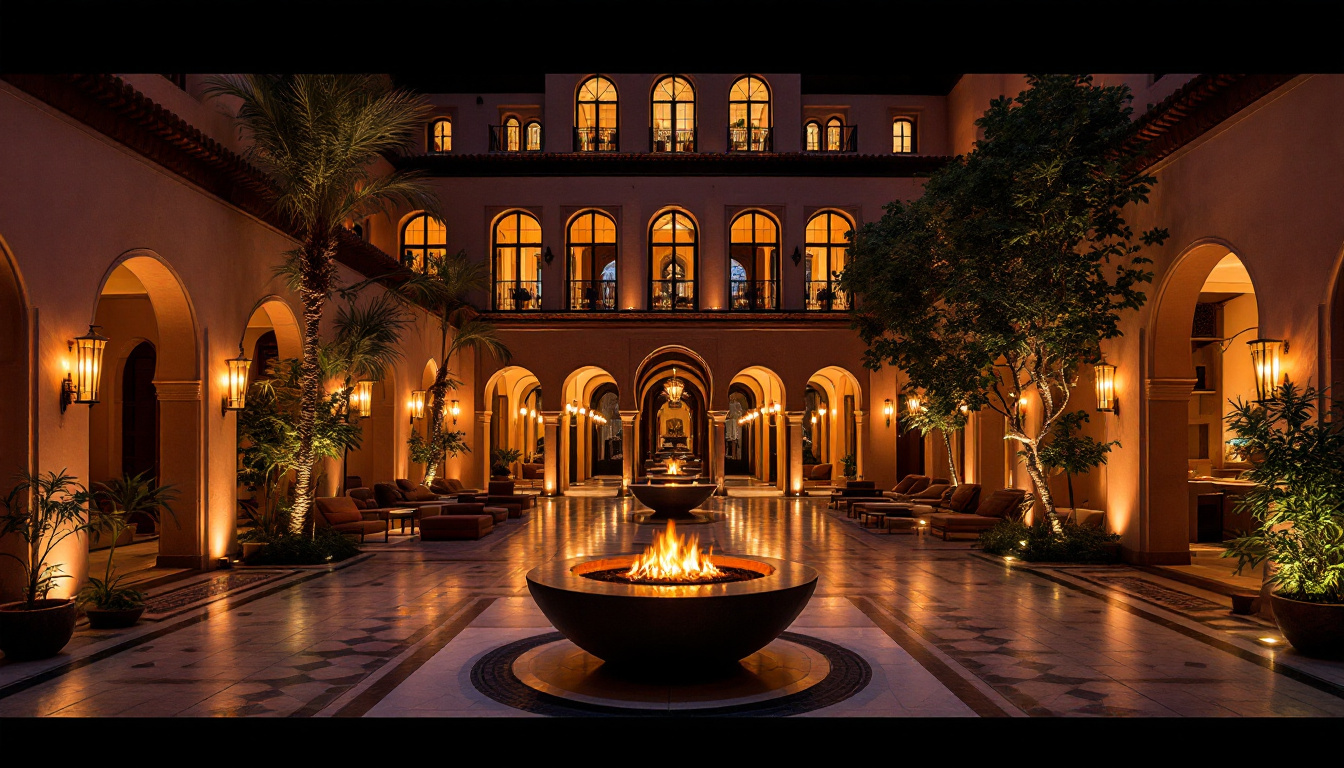
The setting is what the rate buys at La Mamounia. The hotel occupies the 15-hectare walled garden plot that the Sultan Mohammed ben Abdallah gave to his son Moulay Mamoun in the 18th century — a contiguous plot that no other Marrakech hotel can match, with mature olive groves, a Majorelle-influenced cactus garden (laid out by Jacques Majorelle himself in the 1946 expansion), citrus walks, and the rose garden that the property has maintained continuously since 1923. The 15-hectare plot, within the medina walls, is the asset.
Setting score: 4.8. The half-point deduction is the medina-side road noise — Avenue Bab Jdid and the western ring road are audible from the perimeter rooms during peak traffic. The interior of the property is acoustically isolated; the perimeter is not.
The suite
I took a Deluxe Garden room (room 412) in the renovated central wing, post-Jouin-Manku. The room is 65 square metres with a small terrace overlooking the cactus garden and a partial sightline to the Koutoubia minaret.
Material specifics from the post-refurbishment configuration:
- The bed is dressed in white Frette linen with a percale handle and a Hungarian goose-down duvet at the right weight for the March temperatures.
- The floor is a new oak parquet in the bedroom and Moroccan zellige tile in the bathroom and entrance hall. The parquet is a renovation choice I find slightly off-register for Marrakech — the older configuration ran cement tile that read more correctly as Moroccan vernacular.
- The bathroom is in cream-toned bejmat marble with a freestanding tub, a separate rain shower, and a double vanity. Amenities are by Maroc Maroc (a Moroccan brand the hotel has used since the Garcia-era refurbishment), refilled in glass bottles.
- The minibar is honest. A small carafe of still water filtered on site, two small bottles of Volubilia rosé (a Moroccan rosé from Meknes), a tin of Mamounia-branded amlou (the Moroccan almond-argan paste), and a small dish of preserved lemons.
- The room’s air-handling system runs silent and the windows actually open onto the terrace — a feature that the new-build five-stars in Marrakech have mostly abandoned.
What the suite did not give me, which would lift it from a 4.5 to a 4.7, is the architectural specificity of the older unrefurbished category — the new central-wing rooms are more comfortable but read less as La Mamounia than the older garden-pavilion rooms (which I had on the 2018 stay). The Jouin-Manku redesign has lifted the comfort baseline but flattened the architectural distinction.
Suites score: 4.5. The deductions are the parquet flooring choice, the new central-wing rooms reading slightly generic against the property’s vintage, and a desk surface that is too shallow for laptop work.
The service
Service at La Mamounia is the dimension on which the property’s century of operating tenure most clearly shows. The senior team is long-tenured; the F&B operation runs at the high end of Moroccan hotel standards; the small frictions of running a 209-key property within the medina walls are managed by a logistics team whose work is invisible until you start to notice it.
Two moments from the March stay.
On the second afternoon, I asked the concierge — Younes, with the property since 2011 — whether it was possible to arrange a private visit to the Yves Saint Laurent Museum’s archival rooms (the conserved couture rooms not open to the public, which the museum makes available by appointment to a small list of luxury hotel concierges). The visit was arranged for 11 a.m. the following day; the museum’s curator gave us 90 minutes in the archive rooms with full access to the 1976-1983 Moroccan-influenced collections. The arrangement is the kind of access that the Marrakech luxury market depends on, and which the older operating teams understand how to deploy.
On the third evening, my wife mentioned to the F&B captain — Hassan, with the property since 2007 — that she had not been able to find a particular sweet (a Moroccan almond-and-orange-flower confection called sellou) at any of the medina sweet shops. The sweet appeared, wrapped in waxed paper and tied with a small ribbon, at the next morning’s breakfast. Hassan had sent his cousin’s wife to buy it from her grandmother’s pantry. No charge appeared on the folio.
The service depth is the strongest argument for La Mamounia over the newer Marrakech competitors. The hotel runs roughly 700 staff against 209 keys; the ratio is lower than the Royal Mansour’s, but the staff tenure is longer and the institutional memory deeper.
Service score: 4.6. The half-point deduction is the front-desk turn-around time on the March 14 check-in afternoon, which ran 16 minutes longer than the published target during a peak arrival window.
The table
La Mamounia operates four principal dining rooms. Le Marocain — in the standalone pavilion in the garden — is the Moroccan dining room and the most architecturally serious of the four. L’Italien holds the previously-Michelin-starred Italian operation. Le Pavillon de la Piscine runs the daytime poolside dining. The Churchill Bar — named for Winston Churchill, who stayed at the property repeatedly between 1935 and 1959 — holds the cocktail and tapas-style operation.
I took dinner at Le Marocain on the second night and at L’Italien on the third.
Le Marocain under executive chef Rachid Agouray runs the classical Moroccan canon with the technique-confidence the property’s century allows. The March menu:
- A tea-and-bread course with three Moroccan flatbreads and three teas, identical in form to the Royal Mansour’s opening but executed at a quieter register.
- A starter of seven mezze, with the standout being a smoked-aubergine zaalouk and a marinated squid from Essaouira.
- A pastilla of pigeon and almond — the canonical Moroccan stuffed-pastry, executed with the right balance of cinnamon and powdered sugar.
- A tagine of beef cheek with quince and walnut from the Middle Atlas.
- A pre-dessert of orange-blossom sorbet with a single saffron strand.
- A baklava and Moroccan-mint-tea course.
L’Italien on the following night was the meal at which the loss of the 2024 Michelin star was most visible. The cooking was competent but not the equal of Le Marocain, and the wine list at L’Italien was thinner than the Italian-restaurant rate-card implied. I would direct guests to Le Marocain for the more serious dinner and to the Churchill Bar for the lighter evening.
The wine list at the main F&B operation runs 850 references with strong French depth (the Bordeaux verticals back to 1989 are credible) and adequate Moroccan coverage. Sommelier Mehdi Hammou is engaged.
Table score: 4.6. The deduction is L’Italien’s slip from the 2024 Michelin form, and the wine list’s relatively thin coverage of Burgundy below the 2018 vintage.
The detail
The detail score at La Mamounia accumulates in the operational decisions that the property’s century of tenure has accumulated.
From the March stay:
- The principal pool — an Olympic-length 50-metre operation set in the garden between the central pavilion and the cactus garden — is the largest hotel pool in central Marrakech and is heated to 26 degrees in March. The pool boys keep a paper sun-lounger reservation book; no upsell.
- The spa, on two levels on the eastern edge of the garden, runs 2,500 square metres with two hammams and a comprehensive treatment list. The hammam protocol — 120 minutes, with full traditional gommage, rhassoul, and a small mint-tea-and-Moroccan-pastries service at the end — is the most serious traditional hammam treatment in any Marrakech hotel.
- The kitchen garden supplies Le Marocain with herbs and vegetables; the head gardener (Said, in post since 2008) propagates the mint and the saffron crocuses on site.
- The hotel’s small fleet of vintage cars — two Mercedes 600s from the 1970s, restored, available for transfers within Marrakech — is run by a head driver, Karim, who knows the souks and the artisan workshops.
- Turndown delivers a small jar of locally-pressed argan oil and a printed card with the next day’s weather and the call-to-prayer times.
Detail score: 4.4. The deductions are the property’s volume — at 209 keys, La Mamounia inevitably has the operational complexity of a larger hotel, and the detail edges that the smaller Royal Mansour delivers are harder to replicate at scale.
The Standard
| Dimension | Score | Note |
|---|---|---|
| Setting | 4.8 | 15-hectare walled garden, the Sultan’s plot. |
| Suites | 4.5 | Post-Jouin-Manku comfort up; architectural specificity slightly down. |
| Service | 4.6 | The YSL archive visit; the sellou retrieval. |
| Table | 4.6 | Le Marocain is the move; L’Italien has slipped. |
| Detail | 4.4 | The hammam protocol, the Olympic pool, the kitchen garden. |
Property score: 4.58.
Verdict
At the Standard.
La Mamounia is the urban centre of gravity for luxury Marrakech: a 209-key grand hotel on a 15-hectare walled garden inside the medina, in continuous operation since 1923, with a service culture that has accumulated a century of repeat custom. The 2020-2023 Jouin-Manku refurbishment has lifted the comfort baseline materially; the property is more livable now than it was under the Garcia configuration.
The architectural decisions of the refurbishment — particularly the parquet flooring in the new central wing — are choices I am ambivalent about; the older Moroccan vernacular read more correctly as La Mamounia than the post-refurbishment register does. The service operation is the property’s defining asset and is the reason the hotel remains, after a century, the city’s most important.
If you are choosing between La Mamounia and the Royal Mansour for a Marrakech week, La Mamounia is the grand-hotel statement on the city’s rampart; the Royal Mansour is the city’s most architecturally serious private-riad operation. Both are At the Standard. Different guests want different things; both are correctly recommendable.
Reservations
La Mamounia, Avenue Bab Jdid, 40040 Marrakech, Morocco. Reservations: +212 5 24 38 86 00 or via the hotel’s central booking. The property operates year-round.
March rates from EUR 1,250 for a Deluxe room (garden view); Junior Suites from EUR 1,850; the Baccarat Suite (the property’s most-frequently-photographed signature suite, with private rooftop terrace and direct Koutoubia minaret sightline) from EUR 8,800; the Murano Suite from EUR 9,200.
Marrakech-Menara airport (RAK) is a 19-minute transfer; the hotel will arrange a Mercedes S-Class. From Casablanca, the routing is the 2 hour 30 minute drive on the A7 expressway or a 50-minute Royal Air Maroc flight.
Standing Questions
- Is La Mamounia inside the medina?
- Yes — La Mamounia sits within the southwest section of the medina walls, on the 15-hectare garden plot the Sultan Mohammed ben Abdallah gave his son Moulay Mamoun in the 18th century. The plot is the largest contiguous walled garden in central Marrakech.
- How does the Jouin-Manku refurbishment compare to the Garcia work?
- The 2006-2009 Garcia refurbishment leaned heavily on Moroccan-orientalist maximalism — brass, deep red, lacquered black. The 2020-2023 Jouin-Manku phased reset has lightened the palette, reorganised the public spaces, and reset the dining and bar operations. The signature spaces (the Churchill Bar, the lobby, the central pavilion) remain recognisable but the overall register is calmer.
- Is the hotel a Leading Hotels of the World property?
- Yes. La Mamounia is a long-standing LHW affiliate; it operates as an independent hotel under the ONA group with a small parallel ownership stake by the Royal Air Maroc pension fund.
- Is there a Michelin-starred restaurant?
- Not at present. La Mamounia's Italian restaurant L'Italien received a Michelin star in 2024 but was not re-awarded in the 2025 Morocco guide. The hotel's principal dining operation is the Moroccan room (Le Marocain) which the Michelin guide listed as Recommended in 2025.
- Is the spa worth the rate?
- Yes. The La Mamounia spa runs 2,500 square metres on two levels with two hammams and a comprehensive treatment list. The signature Mamounia hammam protocol runs 120 minutes and is the most serious traditional hammam treatment in any Marrakech hotel.