I have stayed at the Royal Mansour twice — first in 2019 in a one-bedroom riad over four nights, and again in March 2026 for five nights in a two-bedroom riad. The March stay forms the basis of this review.
The arrival
The road approach to the Royal Mansour is the only part of the hotel that is not architecturally controlled. You leave the M8 expressway from Marrakech-Menara airport (a 17-minute transfer), cross the western bypass, and arrive at a discreet gate in the medina wall that the GPS will probably mislabel. The driver — assuming you have arranged the hotel’s car — turns through the gate, the porters take the bags, and you are inside a small ceremonial forecourt before the engine has cooled.
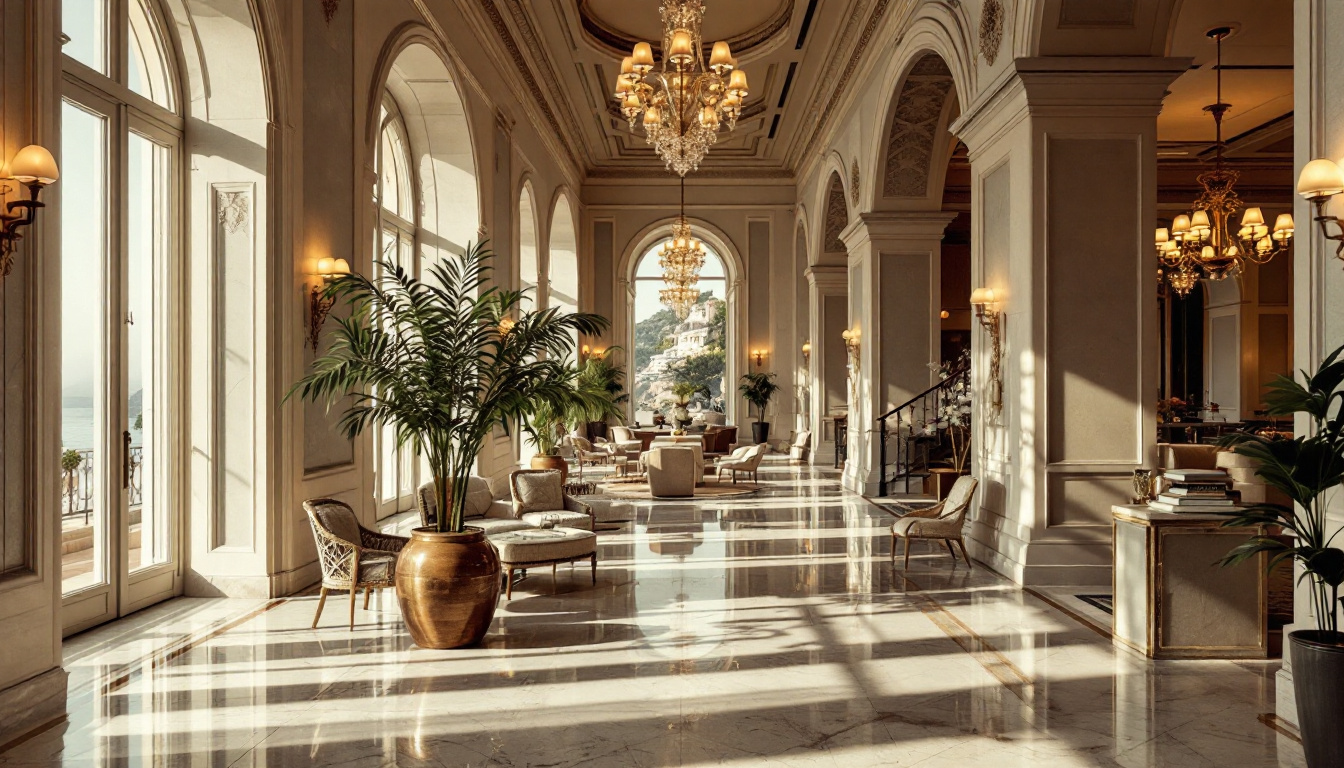
The forecourt itself is the first architectural statement. It is a 25-metre square of zellige tile and carved cedar, with a central fountain and four colonnaded sides; the colonnades open onto the cedar-walled main corridor that the hotel has built as the spine of its 3.5-hectare site. The check-in is handled in a small library off the corridor, seated, with a glass of mint tea poured at the table and a small dish of Moroccan almonds. The director who handled my March check-in had been with the property since the 2010 opening — a senior manager named Khalid whose understanding of the building is as deep as anyone’s at the hotel.
The setting is the 3.5-hectare site within the medina walls that King Mohammed VI assembled for the project in 2007. The hotel’s principal architectural conceit — that it is a series of private riads rather than a single hotel building — is what the site allows; the high medina walls and the cedar-lined corridors create a complete acoustic and visual separation from the urban Marrakech immediately outside. From inside the Royal Mansour you do not hear the city; from outside the Royal Mansour you do not see the hotel.
Setting score: 4.7. The deduction is the medina-edge position, which means the hotel does not have the desert or palmeraie views that the out-of-town properties (the Selman, the Amanjena) offer; the trade is the medina proximity, which most guests will take.
The suite
I took a two-bedroom riad (riad 27) on the eastern side of the property. The riad is 350 square metres across three levels — ground floor with a courtyard, fountain, dining room, salon and kitchenette; first floor with two bedrooms and two bathrooms; rooftop terrace with private plunge pool and lounging area. The configuration is the canonical Royal Mansour proposition; every guest has, in effect, their own three-storey townhouse within the hotel compound.
Material specifics:
- The courtyard fountain is cut from a single block of marble and runs continuously. The fountain noise is the soundtrack of the riad — quiet, constant, the equal of any white-noise machine.
- The walls are clad in carved cedar in the salons and in zellige tile in the courtyards and bathrooms. The carving and the tile work were executed by the 1,500-craftsman team the King commissioned for the 2007-2010 build; the names of the master craftsmen are listed in a small leather folder in each riad.
- The bedrooms are dressed with custom-made beds, white Frette linen, and a pillow menu that runs six options. The bedside lamps are by Italian designer Achille Castiglioni.
- The bathrooms are in Moroccan marble (the cream-toned bejmat from the High Atlas) with freestanding tubs, rain showers, and double vanities. Amenities are the Royal Mansour’s own range — developed in partnership with a fragrance house in Grasse — refilled in glass bottles.
- The kitchenette includes a Nespresso machine, a small refrigerator, and a stock of mint-tea ingredients. The room-service team will bring breakfast to the courtyard if requested; the riad’s ground-floor dining room seats six and is used for the in-riad dinner service the hotel offers.
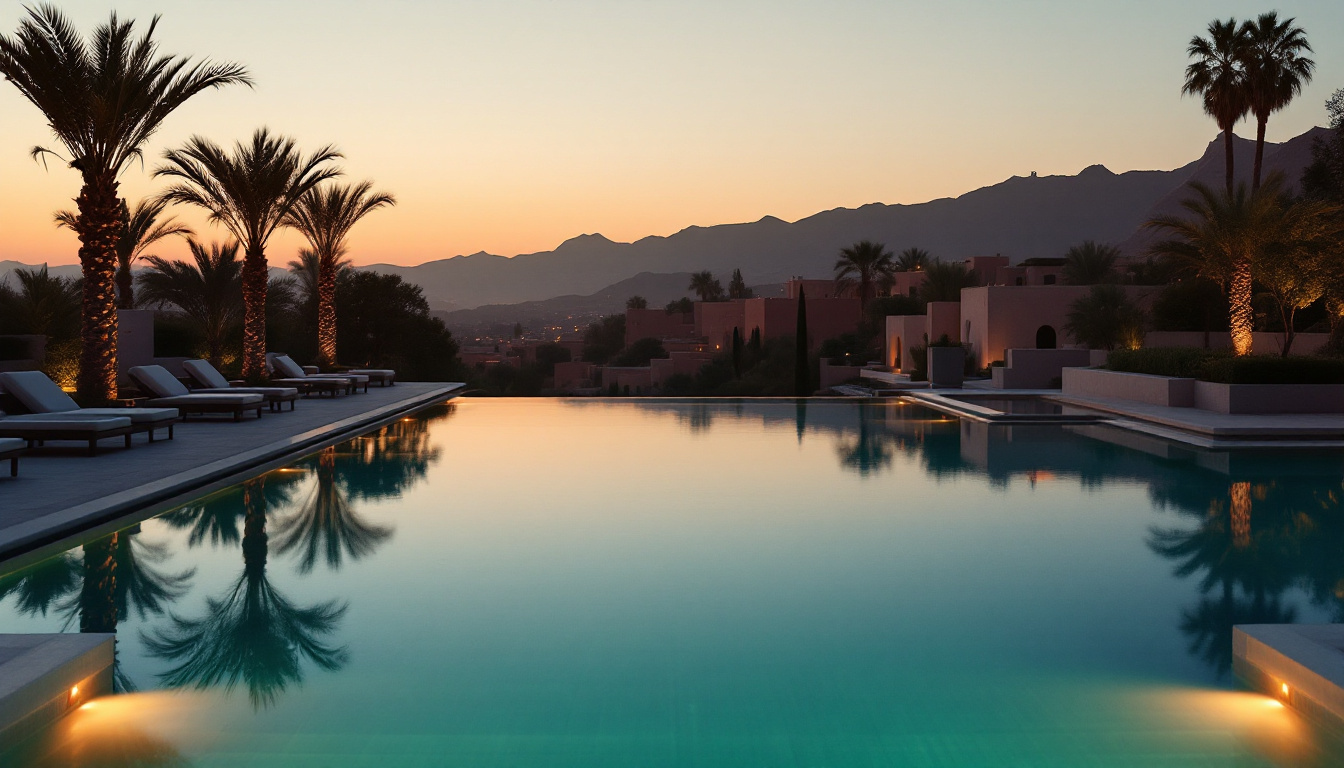
- The rooftop plunge pool is filled with filtered city water, heated to 28 degrees in March, and includes its own butler-call system.
The two-bedroom riad is the rate-card sweet spot — large enough to make the configuration feel right, small enough not to require an entourage to fill. The one-bedroom riads (which I had on the 2019 stay) are tighter on the rooftop terrace but architecturally identical at the ground-floor level.
Suites score: 4.9. The deduction is a small one — the riad’s kitchenette is under-equipped for guests who actually want to use it for cooking (which the hotel’s grocery service makes feasible). The one-tenth deduction reflects this rather than any architectural reservation.
The service
Service at the Royal Mansour is the dimension on which the property is most often praised, and the praise is mostly correct. The service-tunnel infrastructure — the underground network of corridors beneath the riads, through which all housekeeping and F&B staff move — is the operational signature, and the resulting service quality has the property’s defining attribute: the guest sees only the staff they have summoned.
Two moments from the March stay.
On the second morning, I asked the riad butler — a man named Mohammed who is assigned to riad 27 on a rotating basis — whether it was possible to have the courtyard set up for a private lunch for four. The setup was arranged for 1.30 p.m. the same day; the table was laid for four on the courtyard’s marble flooring, with the in-house F&B running a four-course Moroccan lunch (a series of mezze, a tagine of lamb and prunes, a couscous of seven vegetables, a pastilla of pigeon). The cost was added to the folio at a tariff that was reasonable for the rate-card level; the experience of dining in the riad’s own courtyard, with no other guests visible and no staff visible except at moments of service, was the experience the rate is fundamentally trying to deliver.
On the fourth afternoon, my wife mentioned to the spa concierge that she had been struggling with the dry air (Marrakech in March runs at around 18 percent humidity). Within an hour, two additional humidifiers had been installed in the riad, the bed linen had been changed for a higher-thread-count percale, and a small jar of locally-pressed argan oil had been left on the bathroom vanity. None of these interventions were billed; none were prompted.
The service depth is the Royal Mansour’s argument. The hotel runs roughly 700 staff against 53 riads — a ratio of more than 13 to 1, which is among the highest in any luxury hotel I am aware of — and the depth shows in every interaction.
Service score: 4.7. The half-point deduction is the spa’s reception desk, which on the 17 March afternoon ran 8 minutes behind the booked appointment time during a peak booking window.
The table
The Royal Mansour has three principal dining rooms and an in-riad dining option that, in my experience, is the way most longer-stay guests take half their meals.
La Grande Table Marocaine, the principal Moroccan dining room, runs dinner only and holds the property’s most important culinary statement. Under chef Yannick Alleno — whose consulting role has shaped the menu since 2010, with day-to-day execution by chef Bouchaib Kama — the room runs a tasting menu of seven courses focused on the Moroccan classical canon executed with French technique. The March dinner I took:
- A tea-and-bread course of three Moroccan flatbreads (mssemen, baghrir, harcha) with three teas (the green-mint, a red rooibos, a saffron infusion).
- A starter of seven mezze, including a marinated zaalouk, a smoked-pepper taktouka, a beetroot-and-orange salad, a small dish of preserved lemon, a marinated octopus from Essaouira, a small bowl of harira, and a Moroccan-style carpaccio of beef from the Middle Atlas.
- A pastilla of pigeon — the canonical Moroccan stuffed-pastry dish, executed with restraint, the cinnamon and powdered sugar applied with a lighter hand than the tourist version.
- A tagine of lamb shank with quince, served on a small pile of couscous.
- A pre-dessert of orange-blossom sorbet with a single saffron strand.
- A baklava-and-honey course with a small pot of mint tea poured at the table.
La Grande Table Francaise — the property’s French dining room — runs a more conventional French-luxury programme. I took a lunch there on the third day and found the cooking competent rather than transcendent; the Moroccan dining room is the one I would recommend.
The wine list runs 600 references with strong Moroccan coverage (the Domaine de la Zouina verticals back to 2010 are unusual to find outside Morocco) and credible French depth. Sommelier Loubna Charqaoui — one of the few female sommeliers at this level in Morocco — is engaged and pointed me to a 2018 Pierre Andre Burgundy that paired well with the lamb.
Table score: 4.6. The deduction is the French dining room, which does not justify the rate at which it operates, and the wine list’s relatively narrow coverage of Bordeaux below the 2015 vintage.
The detail
The detail score at the Royal Mansour accumulates in the small operational decisions that the King’s commission allowed and that the operating team has maintained since 2010.
From the March stay:
- The service-tunnel network beneath the riads — built into the original 2007-2010 construction — is the most distinctive operational feature of any hotel I know of in North Africa. The corridors are tiled in the same zellige as the guest areas; the staff move through them with hand-held tablets that route housekeeping and F&B requests in real time.
- The spa runs three floors of treatment rooms with a 600-square-metre central pool — the largest hotel spa pool in Morocco. The hammam programme is the most serious in any Marrakech hotel: two separate hammams (one men’s, one women’s), with a full traditional gommage-and-rhassoul protocol that runs 90 minutes.
- The hotel’s kitchen garden — 1,200 square metres on the western edge of the site — supplies the kitchens with herbs and vegetables. The head gardener (Said, in post since 2011) propagates his own mint from cuttings and runs a small lemon and bergamot grove that supplies the cocktail bar.
- The riad turndown delivers a small jar of Moroccan honey from the Middle Atlas and a small printed card with the next day’s weather, the call-to-prayer times, and the recommended departure time for any pre-booked excursions.
- The hotel maintains a stable of three vintage Mercedes Pullman 600s — restored, oiled, and available for guest transfers within Marrakech. The 600s were the official Moroccan royal-family vehicles in the 1970s; the chauffeur (Hassan, in post since the opening) keeps them running.
Detail score: 4.6. The deduction is the property’s heavy reliance on the riad-as-product, which means that guests who want common-space hotel experiences (a bustling lobby bar, a poolside scene) will find the property quieter than expected; the architecture is built for privacy, not for social.
The Standard
| Dimension | Score | Note |
|---|---|---|
| Setting | 4.7 | Medina-edge, 3.5 hectares, the King’s plot. |
| Suites | 4.9 | 53 private riads, three-storey configuration, the craftsman work. |
| Service | 4.7 | The tunnel network, 13:1 staff ratio, the humidifier intervention. |
| Table | 4.6 | La Grande Table Marocaine is the move; French room is weaker. |
| Detail | 4.6 | The spa, the kitchen garden, the Pullman fleet. |
Property score: 4.70.
Verdict
At the Standard.
The Royal Mansour is the rarest of luxury-hotel propositions in 2026: a property commissioned by a sitting monarch as a national statement, built without the conventional commercial constraints, and operated by a team that the original brief allowed to be over-staffed by any contemporary benchmark. The architectural maximalism is the point, not a marketing claim; the service-tunnel infrastructure is the operational signature that the rate is built around.
If you are choosing between the Royal Mansour, the La Mamounia, and Amanjena for a Marrakech week, the Royal Mansour is the option that most rewards the guest who wants to disappear into the private-riad configuration. La Mamounia is the grand-hotel statement on the rampart of the city; the Royal Mansour is the city’s most architecturally serious hotel and the one with the strongest service infrastructure.
Reservations
Royal Mansour Marrakech, Rue Abou Abbas El Sebti, 40000 Marrakech, Morocco. Reservations: +212 5 29 80 80 80 or via the hotel’s central booking. The property operates year-round.
March rates from EUR 1,800 for a one-bedroom riad; two-bedroom riads from EUR 3,800; the four-bedroom Grand Riad from EUR 22,500. All rates include breakfast and one daily transfer within Marrakech.
Marrakech-Menara airport (RAK) is a 17-minute transfer; the hotel will arrange a Mercedes S-Class or, on request, one of the vintage Pullman 600s for a small supplement. From Casablanca, the routing is a 2 hour 40 minute drive or a 45-minute Royal Air Maroc flight; the hotel will arrange the air transfer including ground handling.
Standing Questions
- Is every accommodation a private riad?
- Yes. All 53 accommodations are private riads, each with its own ground-floor courtyard, fountain, dining room, and rooftop terrace. There are no conventional hotel rooms or suites. The smallest is one bedroom; the largest is the four-bedroom Grand Riad.
- What is the service-tunnel system?
- The hotel runs an entire underground network of corridors beneath the riads, used exclusively by staff. The result is that housekeeping, room service, and maintenance move through the property without ever passing through guest-facing spaces. The guest sees, on average, only the staff they have summoned.
- Is the Mansour close to the medina?
- Yes. The hotel sits within the medina walls on the western edge, a 4-minute walk to the Bahia Palace and roughly 8 minutes to the Jemaa el-Fnaa. The hotel will arrange a private guide for the souks who knows the artisan workshops.
- Is the spa worth the rate?
- Yes. The Royal Mansour spa runs three floors of treatment rooms, two hammams, and the largest hotel spa pool in Morocco. The treatment list runs to 38 items; the spa manager has been at the property since the 2010 opening.
- Is the hotel year-round?
- Yes, but rates and conditions vary. The high season is October to April; the summer (June through September) runs hot enough that the hotel offers reduced rates and most guests use the spa and the riad pools heavily.