I have been on Lake Como five times in the past four years — two stays at Villa d’Este, one week at a brokered villa in Laglio in September 2024, three days at the Grand Hotel Tremezzo in May 2025, and a four-day broker visit in the second week of April 2026 that included sit-downs with the Villa d’Este rental programme manager, two Cernobbio-based local agencies, and the Sopranovillas team handling the lake’s international book. The brief I gave myself for this piece was to map the Lake Como villa market as it actually works in 2026, with the Villa d’Este rental programme as the anchor and the wider brokered market mapped around it.
The reason Villa d’Este is the right anchor is that it is the only hotel-attached villa programme on the lake at the genuine top end. The Grand Hotel Tremezzo runs a smaller villa product (the Villa Sola Cabiati, the historical villa attached to the hotel) but the inventory is one property, and the Mandarin Oriental Lake Como (the newer entrant on the eastern arm, opened in 2019) runs an integrated suites-and-residences product but not a true villa programme. Villa d’Este’s rental villas — the historic 19th-century properties on the shoreline immediately adjacent to the hotel, available from approximately EUR 21,190 per week — are the closest a guest can come to staying inside the Villa d’Este world without taking a hotel suite, and they are the right starting point for any UHNW visit to the lake.
What follows is the field brief.
Villa d’Este: the anchor
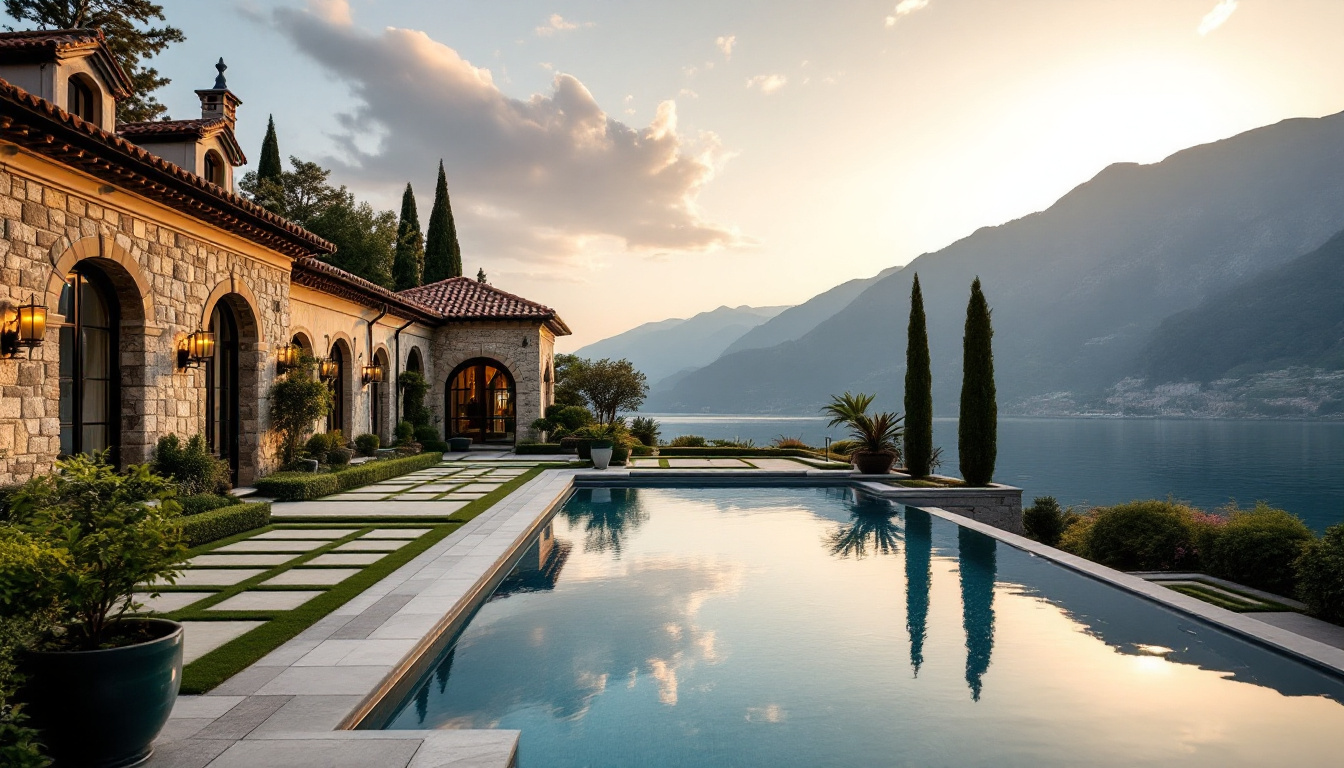
Villa d’Este sits in Cernobbio on the south-west arm of Lake Como, in the present location since 1873 — the property occupies the 16th-century Villa del Garrovo built by Cardinal Tolomeo Gallio, expanded through the 18th and 19th centuries, opened as a hotel in 1873 by the Garagnani family, and run through a succession of stewardships culminating in the current ownership by the Spadolini family (since 1985). The hotel runs 152 keys across the main Villa d’Este (the original cardinal’s palace), the Queen’s Pavilion (the smaller 18th-century building added to the property), and the historic outbuildings. The grounds run sixteen acres of formal Italian garden and woodland on the lakeshore, with the celebrated floating swimming pool — the Sporting Club pool that floats on the lake itself, attached to the shore by a series of pontoons — as the property’s most-photographed feature.
The rental villa programme runs a small set of historic 19th-century villas on the immediate shoreline, available to guests as full villa rentals with hotel privileges. The villas typically run four to six bedrooms with private gardens, direct lake access, and (on several properties) private docks. Staffing is by the hotel housekeeping and F&B teams — meals can be taken in the villa or at any of the hotel restaurants (Veranda, the principal restaurant; Grill, the lakeside option; the breakfast room at the main hotel). Spa, fitness, pool, and sport access at the hotel is included.
The product is positioned at the genuine top end of the lake — entry weeklies start at approximately EUR 21,190 in shoulder season and run to EUR 45,000 and above for the larger villas at peak. What that rate buys, beyond the villa itself, is the only Villa d’Este-branded experience available outside a hotel-suite booking. For a returning visitor who knows the Villa d’Este service standard and wants the privacy of a villa product, this is the right route.
Booking lead in 2026: 6 to 10 months ahead for May, June, and September; 9 to 12 months ahead for July and August. The villa programme is small (perhaps six to eight properties under the rental programme at any time), and the inventory clears early in the year.
The wider brokered market
Below the Villa d’Este rental programme, Lake Como runs a deep brokered villa market across the lake’s three principal stretches.
Sopranovillas, the Mediterranean-villa agency with strong positions across Italy and Greece, runs the largest international-facing Lake Como book — perhaps 80 to 120 properties under management across the lake, with concentration on the south-west arm and the central peninsula. The agency’s strength is in the working- and estate-tier inventory (four- to seven-bedroom properties with pool, lake access, and modern interiors) and in the digital presentation that travels through the international press.
Hidden Italy, the agency that has built its reputation on the Italian Lakes (Como, Maggiore, Garda) over twenty years, runs a smaller but deeply-curated book. Their strength is in the older traditional villas — the 19th- and early-20th-century properties with historical interiors, mature gardens, and the genuine Como vernacular. For a guest who wants the historic Italian-villa product rather than the contemporary-renovation product, Hidden Italy is the first call.
The Thinking Traveller’s Lake Como book is more recent and skews toward properties at the estate and trophy tiers — fewer properties, higher service, more curation, more concierge support during the stay. The agency is the right call for a guest who wants the agency’s hand on the stay throughout rather than only at the booking.
The local Italian-domestic books run through Como-city-based agencies and handle a meaningful share of the lake’s mid-market inventory, but the language and presentation are oriented to Italian guests and the operational ease for a first-time international visitor is lower than the international agencies above.
The rate structure
Lake Como sells primarily by the week, with shorter stays accommodated at most properties for a modest premium. The rate seasons run in three principal bands.
Shoulder season — April through June, September through October — is the rate window I would defend. Working-tier weeklies (three- to four-bedroom villa with pool or lake access) run EUR 6,000 to EUR 14,000. Estate-tier weeklies (five- to seven-bedroom with full staff, private dock, mature grounds) run EUR 18,000 to EUR 40,000. Trophy weeklies (eight-plus bedrooms, named historical provenance, full staff complement, large lakefront) run EUR 30,000 to EUR 70,000. The weather is reliable from May onward, the lake is open, the restaurants are running, the crowds have not arrived.
Peak season — July and August — sees rates rise 60 to 100 percent off shoulder. The working tier moves to EUR 12,000 to EUR 28,000 per week. The estate tier moves to EUR 32,000 to EUR 75,000. The trophy tier moves to EUR 50,000 to EUR 150,000. Booking lead time is 9 to 12 months for the estate and trophy tiers; 4 to 6 months for the working tier; available inside 60 days only on properties that have not yet committed.
Low season — November through March — runs at 30 to 45 percent of shoulder rates. The lake is open but quieter; the ferry schedule contracts; the restaurants run on a reduced calendar; the weather is variable. For a guest with date flexibility and an indoor-pool requirement, low season delivers a genuinely interesting product — the Italian Lakes in winter, the working villages without the high-season traffic, the wine cellars and the long evenings.
The stretch read
The south-west arm — Cernobbio, Moltrasio, Laglio, Carate Urio, Argegno — runs the densest infrastructure on the lake. Cernobbio is the working centre (Villa d’Este, Villa Erba, the village restaurants, the closest connection to Milan and the SS340 corridor). Moltrasio and Laglio sit immediately north of Cernobbio and run the trophy-villa addresses — the privacy is genuine, the lake access is direct, the residential character is set. This is George Clooney country in the popular shorthand — his Villa Oleandra in Laglio is the most-photographed private residence on the lake — and the actual rental product in the area runs at the trophy and estate tiers.
The central peninsula — Bellagio, Tremezzo, Lenno, Mezzegra, Sala Comacina — runs the canonical Lake Como postcard. Bellagio is the village-walk-and-ferry-centred destination, with the Grand Hotel Villa Serbelloni (the older grand hotel on the lake) as the central infrastructure point and the village’s compact layout as the daily-life centre. Tremezzo, across the lake, runs the Grand Hotel Tremezzo (the spa-led property) and the Villa Carlotta (the botanical garden and 18th-century villa). Lenno and Mezzegra are the smaller villages on the same shore. Inventory at the working and estate tiers is meaningful; trophy properties are fewer than on the south-west arm.
The eastern arm — Varenna, Bellano, Lierna — runs the smaller and quieter side of the lake. Varenna is the design-led village, with the Mandarin Oriental Lake Como on the southern edge as the central infrastructure point and the village’s footpath-and-stair layout as the daily-life centre. Inventory is thinner but the character is distinct. For a guest looking for the smaller, less-crowded lake experience at the working and estate tiers, the eastern arm is the right move.
Villa Erba and the lake’s UHNW positioning
The Villa Erba site in Cernobbio — the late-19th-century villa built by the Visconti family, now run as a private events venue — hosts the Broad Arrow Villa d’Este 2026 auction on 16 and 17 May 2026 (78 lots across two days). The auction, which has run annually at the same site for over thirty years, is one of the principal European collector-car events and brings a UHNW guest pool to Cernobbio that overlaps significantly with the lake’s villa-rental market. The week of the auction is the second-tightest rental week of the year on the south-west arm after Concorso d’Eleganza Villa d’Este (the older sister event, held in late May).
For a guest planning a Lake Como week around the auction, book 9 to 12 months ahead and prefer the trophy or estate tier on the south-west arm. For a guest avoiding the auction week, the first two weeks of June and the first three weeks of September are the more relaxed windows.
The booking calculus
For Villa d’Este’s rental programme, go direct to the hotel’s villa team or through a Virtuoso advisor with Como relationships. Book 6 to 10 months ahead for shoulder, 9 to 12 for peak.
For the wider brokered market, Sopranovillas and Hidden Italy are the working first calls for international guests. For trophy properties, add The Thinking Traveller. Book 4 to 6 months ahead for shoulder, 9 to 12 for peak.
Lake Como in 2026 is in a strong place. The infrastructure is mature. The trophy operators are running well. The shoulder windows in May, June, and September deliver the lake at its best. If I were booking the lake for the first time, Cernobbio with the Villa d’Este villa rental programme is the unambiguous answer.
Standing Questions
- What is the Villa d'Este rental programme?
- Villa d'Este, the 152-key hotel in Cernobbio (one of the longest-standing grand hotels in Italy, in the present location since 1873), runs a small attached rental programme of historic 19th-century villas on the shoreline immediately adjacent to the hotel. The villas are available from approximately EUR 21,190 per week and offer full hotel privileges: F&B at the hotel restaurants, spa, the celebrated Sporting Club pool that floats on Lake Como. The villas are typically four to six bedrooms with private gardens and direct lake access. The rental is the closest a guest can come to staying inside the Villa d'Este world without taking a hotel suite.
- What is the realistic weekly budget across the lake?
- Working tier (three- to four-bedroom villa with pool or lake access, on or near one of the principal stretches): EUR 6,000 to EUR 14,000 per week in shoulder season (April–June, September–October), EUR 12,000 to EUR 28,000 in peak (July–August). Estate tier (five- to seven-bedroom with full staff, private dock, mature grounds): EUR 18,000 to EUR 40,000 shoulder, EUR 32,000 to EUR 75,000 peak. Trophy tier (eight-plus bedrooms, named historical provenance, full staff complement, large lakefront): EUR 50,000 to EUR 150,000 per week peak.
- Cernobbio, Bellagio, or Varenna?
- Cernobbio (south-west arm, 5 km from Como city, the Villa d'Este anchor) for a first booking — the deepest infrastructure, the closest connection to Milan, the densest restaurant scene. Bellagio (the central peninsula, the canonical postcard) for the village-walk-and-ferry-centred trip. Tremezzo (across from Bellagio, anchor of the Grand Hotel Tremezzo) for the wellness-led trip. Varenna (eastern arm, the smaller and quieter village) for the design-led smaller-villa option. Moltrasio and Laglio (north of Cernobbio on the south-west arm) for the trophy-villa privacy at the higher end.
- When is the right time to visit Lake Como?
- Mid-May through late June, and the first three weeks of September. The lake is fully open from late April through October. May and June offer the warmest water before July's peak crowds; September runs the second-best window — the harvest at the surrounding vineyards, the festivals at Bellagio and Cernobbio, the restaurants still running at full pace. Avoid the first two weeks of August unless the trip is built around a specific event.
- How do I get to Lake Como?
- Fly into Milan Malpensa (MXP) — the closest international airport, approximately 60 to 75 minutes by road to Cernobbio. Milan Linate (LIN) is the alternative for European routings, 75 to 90 minutes to the lake. The drive up the SS340 road along the south-west arm is part of the experience; the alternative for guests staying on the eastern arm is to take the road to Lecco and approach from the south end. The lake ferries run between the principal villages from mid-March through October.