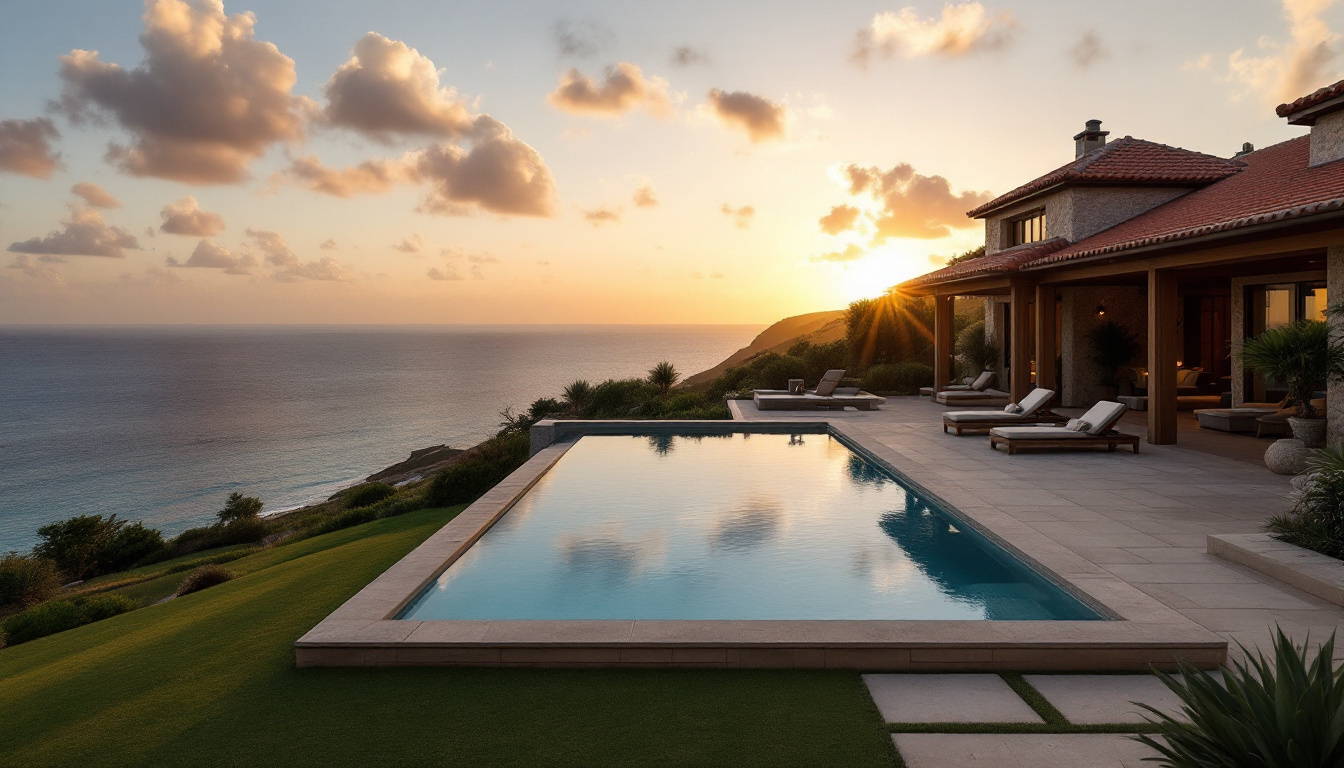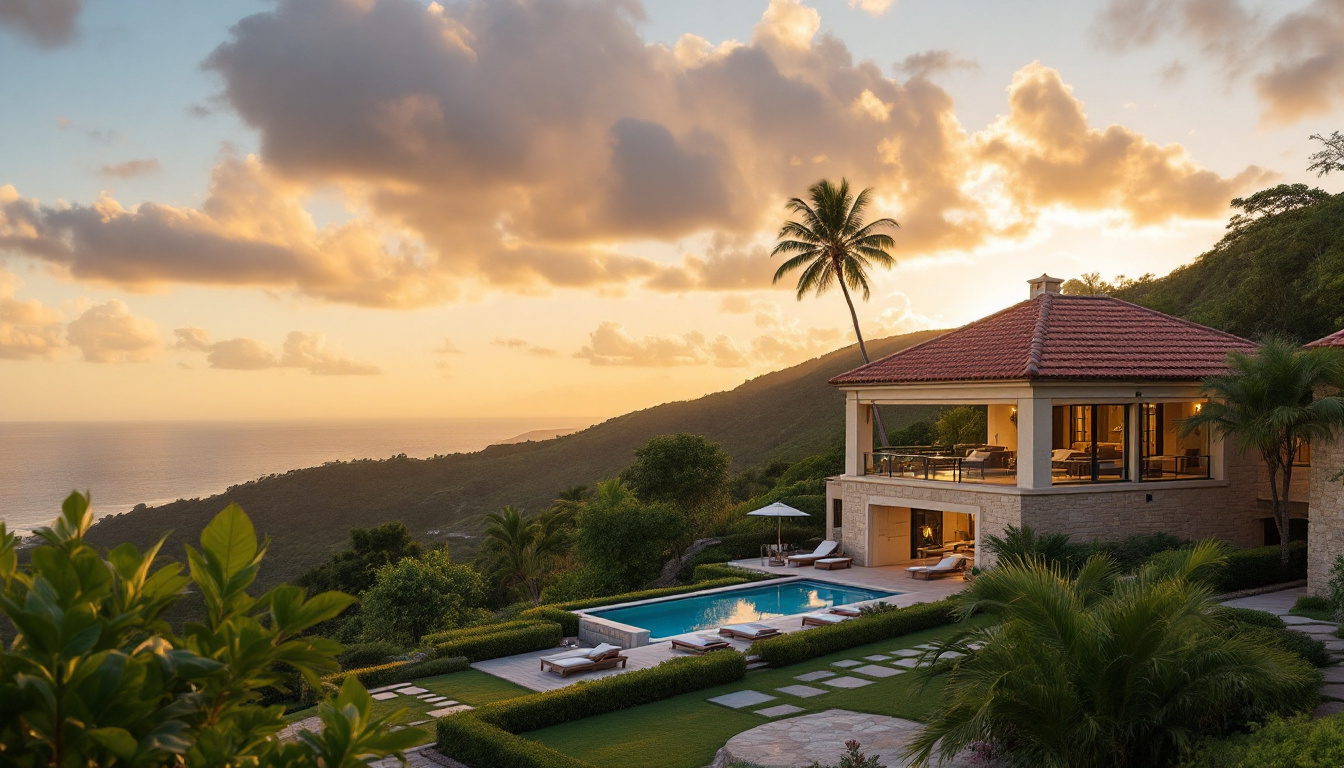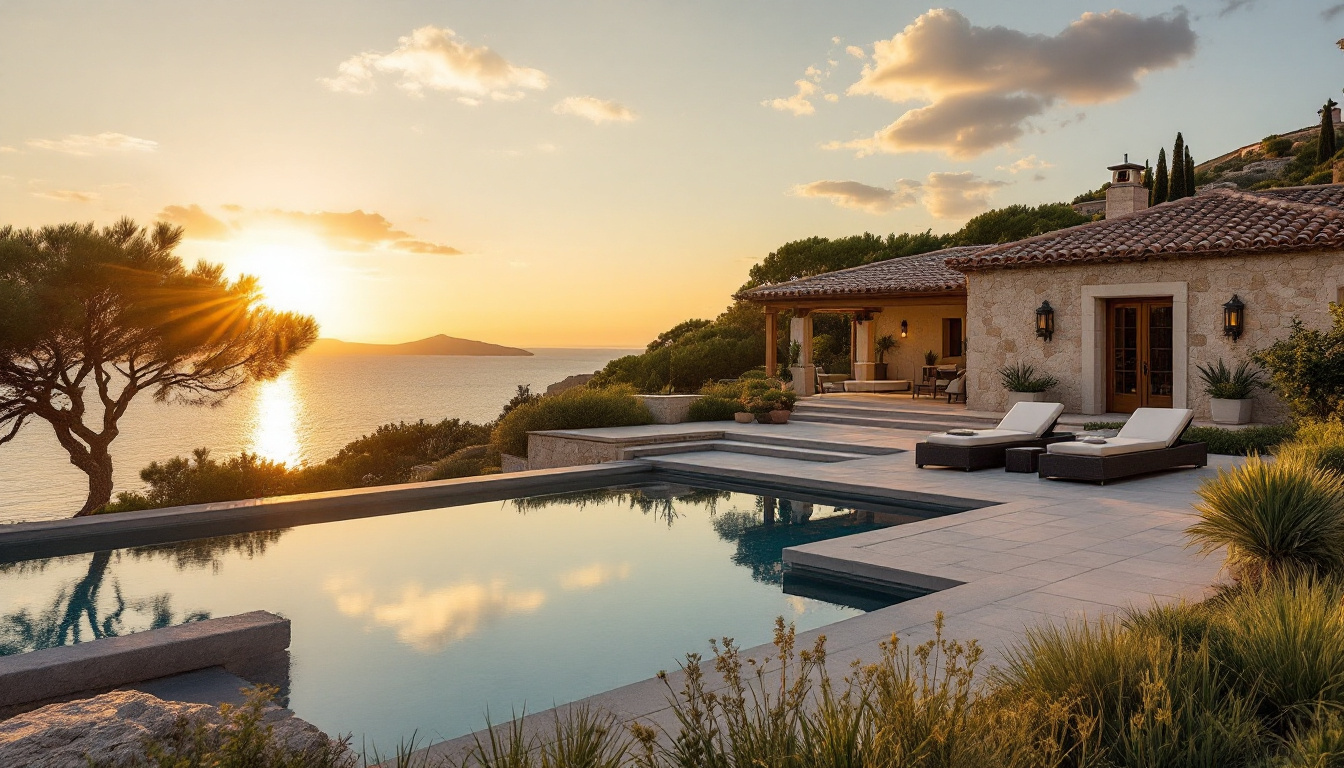
I spent the last week of May 2026 on the Costa Smeralda — three nights at Hotel Pitrizza (the smaller of the four Costa Smeralda Hotels properties, on the headland north of Liscia di Vacca), two nights in a brokered villa above Cala di Volpe arranged through Amarante LVA, sit-downs with the Sardinia Unlimited principals in Porto Cervo, a half-day at the Yacht Club Costa Smeralda — and the brief I gave myself was to put a working map on the private-villa market as it stands in 2026, four months ahead of the August peak.
The Costa Smeralda is the second principal Mediterranean private-villa market alongside St Tropez at the trophy tier, and it operates on a fundamentally different model than the Côte d’Azur. The 55-kilometer stretch of coast was developed from 1962 onward under the Aga Khan IV through the Consorzio Costa Smeralda, with a unified architectural and planning vocabulary that has held over six decades — the granite-stucco-and-terracotta vernacular, the integration with the natural landscape, the strict building height controls, the curated village development around Porto Cervo. The result is a Mediterranean coast that reads as a single coherent product rather than as a string of independent villages — and the villa market reflects that coherence in ways that the more organic St Tropez market does not.
What follows is the field brief.
The Consorzio anchor
The four Costa Smeralda Hotels properties — Hotel Cala di Volpe (the Jacques Couelle-designed flagship, 121 keys, the largest of the four), Hotel Pitrizza (55 keys, the smallest and most discreet, on the headland north of Liscia di Vacca), Hotel Romazzino (90 keys, the beach-resort positioning on Romazzino Bay), and Hotel Cervo (88 keys, the village hotel in Porto Cervo proper) — anchor the resort infrastructure that supports the private-villa market. The group is owned by Smeralda Holding (the property arm controlled by the Qatari Investment Authority since 2012, when QIA acquired the Aga Khan Foundation’s Costa Smeralda holdings) and operated to a unified service standard across the four properties.
For LTS readers planning a villa booking on the Costa Smeralda, the four-property infrastructure is the operational backbone of the wider rental market. Villa guests can book at the hotel restaurants (Beefbar at Cala di Volpe, the Romazzino’s beachfront kitchen, the Cervo’s village table), access the hotels’ spas, and integrate with the broader Costa Smeralda programming (the regatta calendar at the Yacht Club, the polo at the Pevero Golf Club). The villa market does not operate independently of the hotel infrastructure in the way the St Barth villa market operates independently of Le Toiny or Cheval Blanc.
The broker map
Amarante LVA — the Côte d’Azur-headquartered luxury villa agency with a sharply-curated Porto Cervo book — runs the most selective international-facing book on the Costa Smeralda. The book skews to the trophy tier and the upper estate tier, with strong relationships among the headland properties on Pevero Bay and Liscia di Vacca and a digital presentation that travels through the international press. For a trophy-tier booking, Amarante LVA is the first call.
Sardinia Unlimited is the long-standing local agency, headquartered in Olbia with a Porto Cervo presence, and runs the deepest hyperlocal book — perhaps 60 to 80 properties under management at any given time. The agency’s strength is the operational integration on the island — the staff bench, the maintenance network, the local knowledge — that the international-facing agencies cannot match. For any rental requiring on-the-ground responsiveness during the stay, Sardinia Unlimited is the right operational partner.
Amaselections runs the broader luxury villa book across northern Sardinia with strong concentration on the Costa Smeralda and the adjacent coast at Porto Rotondo and Baja Sardinia. The book is deeper than Amarante LVA’s at the working and estate tiers and is the right first call for the four- to six-bedroom villa range.
The Thinking Traveller’s Sardinia book is a recent addition (the agency built its initial reputation on Sicily and Puglia before expanding into Sardinia) and skews toward properties with full agency hand-holding through the stay. The book is smaller but well-presented and well-staffed.
Le Collectionist also holds Costa Smeralda inventory, though the book is thinner than the agency’s Provence book and the agency is the right second or third call rather than the first.
The local Italian-domestic agencies handle a meaningful share of the working-tier inventory but are oriented to Italian guests and the international-guest operational ease is lower than the international agencies above.
The rate structure
The Costa Smeralda runs primarily by the week, with shorter stays accommodated at most properties for a modest premium. Two-week minimums hold on a meaningful share of the trophy tier through July and August.
Peak season — the first week of July through the last week of August — is the seller’s market. Working-tier weeklies (four- to five-bedroom villa with pool, walking distance to one of the principal beaches, in or near Porto Cervo) run EUR 18,000 to EUR 40,000. Estate-tier weeklies (six- to eight-bedroom with full staff, near-beach, larger lot) run EUR 50,000 to EUR 120,000. Trophy-tier weeklies (eight-bedroom-plus oceanfront, full staff complement, headland positioning at Pevero, Romazzino, or Liscia di Vacca) run EUR 130,000 to EUR 280,000. The very top of the trophy tier — perhaps a dozen properties — clears EUR 300,000-plus per week in August.
Within peak, the Ferragosto window (the second week of August through the Assumption holiday on 15 August) is the absolute peak, with rates 15–25 percent above the surrounding peak weeks. The last week of July and the first week of September run at peak rates with no Ferragosto premium.
Shoulder season — the second half of May through late June, and the second half of September through mid-October — runs at 40–60 percent of peak. The working-tier weekly that asked EUR 30,000 in August asks EUR 14,000 to EUR 18,000 in June. The trophy weekly that asked EUR 180,000 in August asks EUR 80,000 to EUR 110,000 in September. The water temperature is comfortable for swimming from mid-May through the first week of October, the village restaurants run their full programmes through September, and the crowds have softened materially.
Low season — mid-October through late April — runs at 25–35 percent of peak for the properties that remain in the rental pool (a meaningful share of the trophy inventory comes off the rental pool entirely outside the May–October window). For a guest with date flexibility and an indoor-amenities requirement, low season delivers genuinely. The trade-off is that the village restaurants, the boutiques, and the marina activity contract significantly outside the season.
Booking lead times in 2026: 9 to 12 months for August trophy and estate tier; 6 to 9 months for July; 3 to 5 months for shoulder; available inside 60 days for low season.
The bay read
Porto Cervo proper anchors the village-and-marina-centred week. The village is the Aga Khan IV’s principal architectural set piece — the Piazzetta with the Sa Conca and Lord Nelson restaurants, the Promenade du Port, the boutique cluster, the central piazza. The Marina di Porto Cervo runs as one of the largest superyacht marinas in the Mediterranean, with a regatta calendar at the Yacht Club Costa Smeralda that runs through July, August, and into early September (the Maxi Yacht Rolex Cup in early September is the headline event). For a guest who wants the village density and the marina activity, Porto Cervo proper is the working answer.
Pevero Bay sits immediately south of Porto Cervo and runs the trophy-villa privacy. The bay contains Grande Pevero and Piccolo Pevero — arguably the two finest beaches on the Costa Smeralda — with the Pevero Golf Club (the 18-hole Robert Trent Jones-designed course) running the inland edge. The villa inventory on the headlands above the bay carries the highest concentration of trophy properties on the Costa Smeralda. For trophy-tier booking with privacy and beach-walking access, Pevero Bay is the right move.
Romazzino, anchored by Hotel Romazzino, runs the resort-anchored beach setting. The bay is wider and more open than Pevero, the beach is longer, the family-villa cluster on the surrounding land carries meaningful estate-tier inventory.
Liscia di Vacca, north of Porto Cervo and immediately south of Hotel Pitrizza, runs the smaller, quieter cove. The inventory is thinner but the privacy is high.
Cala di Volpe, anchored by the Couelle-designed flagship hotel, runs the integrated resort-and-village experience. The bay is small and protected, the hotel’s beach is the working centre, and the villa inventory on the surrounding land sits at the upper estate tier.
Capriccioli, south of the principal cluster, runs the family-villa centre. The beach is the wider, shallower family-friendly water; the villa inventory is at the working and estate tiers; the rates are 15–25 percent below the equivalent Pevero or Romazzino product.
The booking calculus
If I were booking Costa Smeralda for August 2027 today, I would call Amarante LVA and Sardinia Unlimited first with the same parameters (six bedrooms, near-beach Pevero or Romazzino, EUR 90,000 per week ceiling), hold both books for two weeks, and commit inside 30 days. For a trophy-tier booking, Amarante LVA is the unambiguous first call and the timeline extends to 12 to 14 months.
For shoulder bookings in June or September, Amaselections and Sardinia Unlimited are the working first calls and the booking is comfortable at 4 to 6 months ahead.
The Costa Smeralda in 2026 is in a stable position. The Consorzio infrastructure has held its character over six decades and continues to deliver the unified product the Aga Khan IV designed. The Hotel Pitrizza on Liscia di Vacca remains, in my view, the most refined of the four hotel anchors and the right complementary stay for a guest who wants to know the Costa Smeralda before committing to the villa product. If I had only one Costa Smeralda week, the first week of September in an upper-estate villa above Pevero Bay is the answer I would defend.
Standing Questions
- Which broker should I call first?
- For trophy and estate tier (EUR 50,000-plus weekly), Amarante LVA (the Côte d'Azur-and-Sardinia agency with a sharply-curated Porto Cervo book) and Sardinia Unlimited (the long-standing local agency with deep operational integration on the Costa Smeralda) are the working first calls. Amaselections runs the broader luxury book at the estate and working tiers across northern Sardinia. The Thinking Traveller and Le Collectionist hold meaningful Sardinia inventory at the estate tier with stronger digital presentation. For the genuine trophy tier (Pevero Bay headlands, Romazzino front-row), the on-island brokers will route the property direct.
- What is the realistic August weekly budget?
- Working tier (four- to five-bedroom villa with pool, walking distance to one of the principal beaches, in or near Porto Cervo): EUR 18,000 to EUR 40,000 per week in August. Estate tier (six- to eight-bedroom with full staff, near-beach, larger lot): EUR 50,000 to EUR 120,000. Trophy tier (eight-bedroom-plus oceanfront, full staff complement, headland positioning at Pevero, Romazzino, or Liscia di Vacca): EUR 130,000 to EUR 280,000. The very top of the trophy tier — perhaps a dozen properties on the Costa Smeralda — clears EUR 300,000-plus per week in August.
- Which beach is the right base?
- Porto Cervo proper for the village-and-marina-centred week (the Promenade du Port, the village restaurants, the boutique cluster, the Yacht Club Costa Smeralda). Pevero Bay for the trophy-villa privacy and the south-facing setting (Grande Pevero and Piccolo Pevero are arguably the two finest beaches on the Costa Smeralda). Romazzino for the resort-anchored beach setting (Hotel Romazzino is the centre). Liscia di Vacca for the smaller, quieter cove. Cala di Volpe for the integrated resort-and-village experience around Hotel Cala di Volpe. Capriccioli for the family-villa cluster on the wider beach.
- Costa Smeralda or St Tropez for August?
- Different products. Costa Smeralda runs the developed-resort model — the Costa Smeralda Hotels group's four anchor properties, the Yacht Club Costa Smeralda regatta calendar, the Porto Cervo Marina (one of the largest superyacht marinas in the Mediterranean), the unified architectural vocabulary that the Aga Khan IV imposed through the consortium. St Tropez runs the village-and-coast model — the Place des Lices, the Pampelonne beach clubs, the older fishing-village core, the broader Provençal landscape behind. Costa Smeralda is more contained and more resort-integrated; St Tropez has more density and more cross-pollination with the wider region. Both clear at similar trophy-tier rate bands; St Tropez has greater rate variability.
- When is the right time to visit?
- Mid-May through late June, and the first three weeks of September. The Costa Smeralda's water temperature reaches the swimming threshold by mid-May and holds through October. The crowds arrive from the end of June and peak through July and August. September delivers the second-best window — the water is at its warmest, the heat has eased, the village restaurants are still running. Avoid the first three weeks of August (Italian Ferragosto) unless the trip is built around a specific event.