I spent eight days on the Albanian Riviera in early April 2026, running a south-to-north sweep that opened with three nights in Saranda, continued with three nights at Dhërmi on the central coast, and closed with two nights in Vlore at the northern end. The trip was constructed specifically to test the country’s upper-end credibility in 2026, against the working hypothesis that Albania has been overpromised by the trade press across 2023-2025 and that the actual hospitality inventory is meaningfully behind the marketing. The working assessment broadly confirmed the hypothesis: Albania is interesting, the coast is real, the country merits a 4-7 night leg within a wider Adriatic-Ionian trip in 2026, and the upper-tier hospitality is meaningfully behind the equivalent Croatian or Greek offer at this point in the development cycle.
What follows is the field assessment, structured around the three principal anchors of the coast (Saranda in the south, Dhërmi in the centre, Vlore in the north) and the desk’s structural recommendations for guests considering the country in 2026 or 2027.
The country in context
Albania occupies the western Balkan coast between Montenegro to the north, Kosovo and North Macedonia to the east, and Greece to the south, with a population of approximately 2.8 million across an area of roughly 28,750 square kilometres. The country opened to international tourism progressively after the end of the Hoxha-era communist period in 1992, but the structural upper-end market did not emerge until approximately 2015 and has accelerated meaningfully only in the post-pandemic window (roughly 2022 onward). The country is not currently a member of the European Union but is a formal EU candidate (since 2014) and a NATO member (since 2009).
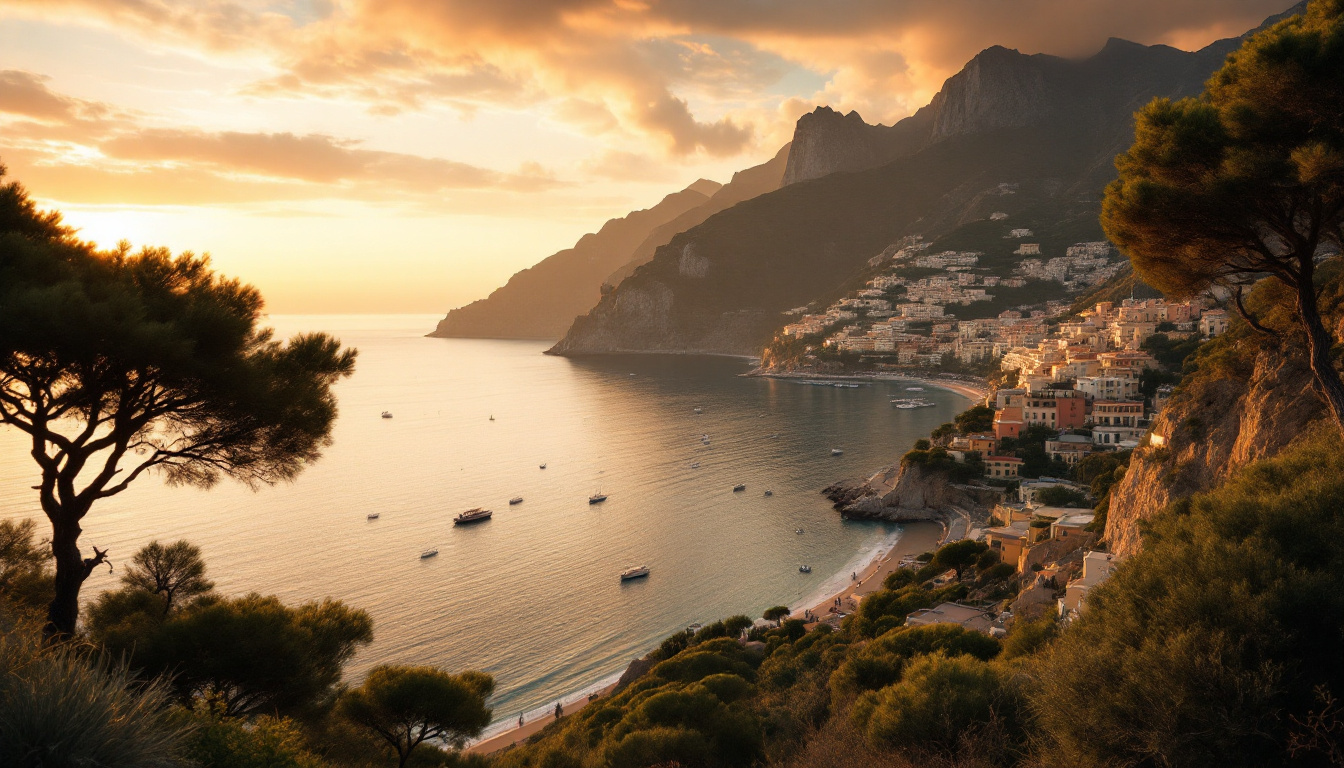
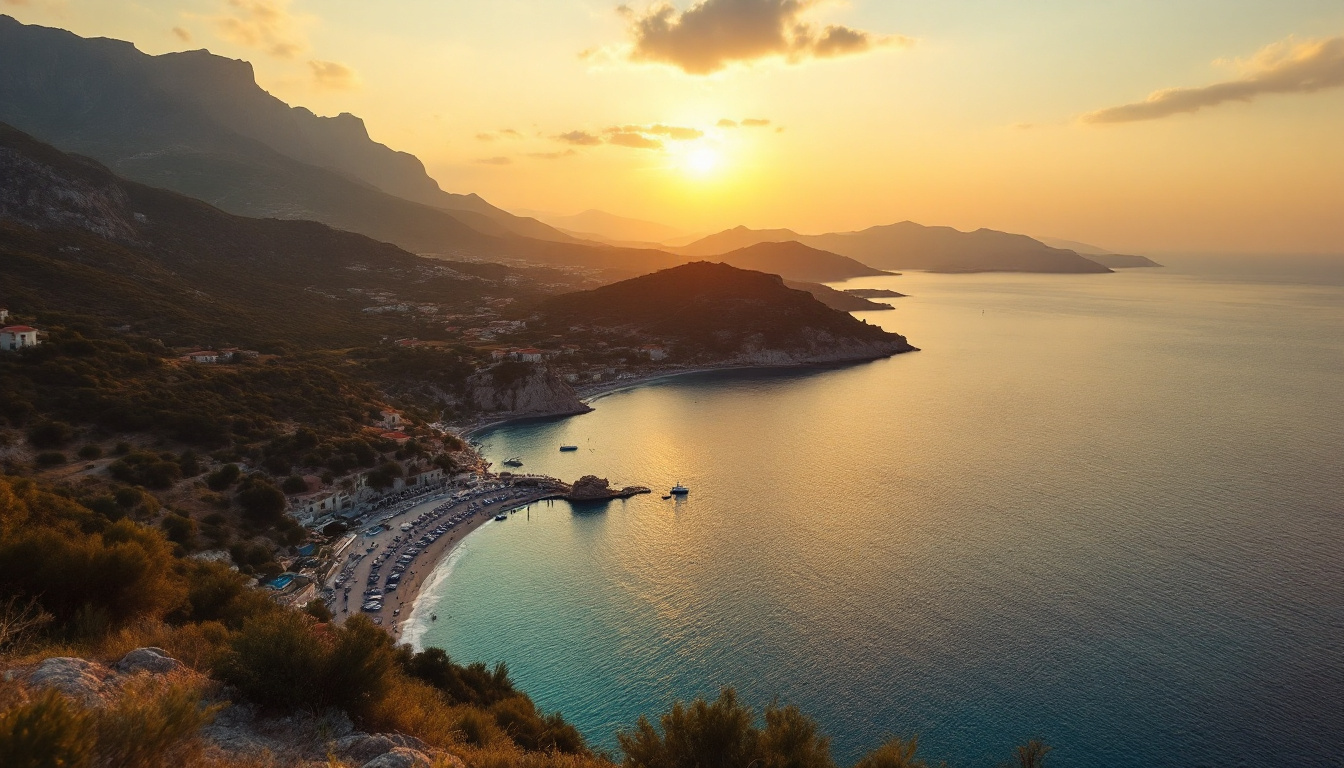
The Albanian Riviera is the roughly 100-kilometre stretch of Ionian coast that runs from the Llogara Pass at the northern end (a 1,027-metre mountain pass on the coastal road, the structural division between the wider Vlore Bay area and the central Riviera) south through the principal coastal villages of Dhërmi, Himara, and Borsh to Saranda at the southern end. The coast carries a distinctive geography of small beach coves separated by limestone cliff sections, with most of the principal villages built up the hillsides above the beach rather than directly on the shoreline.
Saranda: the southern anchor
Saranda is the largest of the southern Riviera towns with a population of approximately 41,000 and the principal southern gateway. The town sits across the Corfu Strait from the Greek island of Corfu (Kerkyra) and the seasonal ferry crossing between Saranda and Corfu Town runs approximately 30-40 minutes; the connection is the structural reason Saranda has emerged as the most accessible Albanian Riviera entry point for Greece-routed guests.
The upper-tier hotel inventory in Saranda is thin. The principal facility-complete property is the Hotel Brilant Saranda on the central waterfront; the smaller and more boutique-oriented properties include Hotel Bougainville Bay, the Demi Hotel, and several smaller waterfront properties. The hospitality polish runs meaningfully below the equivalent Corfu or Greek-mainland tier. The structural recommendation for an upper-tier Saranda stay is to position at one of the smaller boutique properties on the southern edge of the town towards Ksamil rather than in the central waterfront cluster.
The structural strength of Saranda is its position. The town sits within an hour of two of the most significant archaeological sites in Albania: Butrint National Park to the south (the UNESCO-listed ancient Greek and Roman settlement, formally a UNESCO World Heritage Site since 1992, with substantial classical-era ruins on a protected lagoon position) and the Blue Eye natural spring approximately 30 kilometres east. The Ksamil beach village immediately south of Saranda runs the most photogenic small-cove beach geography on the Riviera but carries a sustained overtourism pattern in peak summer.
Dhërmi: the central coast
Dhërmi sits roughly in the middle of the Riviera, approximately 40 kilometres south of the Llogara Pass and 45 kilometres north of Saranda. The village is structurally two villages — an upper old village built up the hillside at approximately 200 metres elevation, and a lower beach cluster that has developed since approximately 2015 around the principal Dhërmi beach. The visual is the canonical Albanian Riviera postcard: a long pebble-and-sand beach approximately 1.5 kilometres in length, framed by limestone cliffs on both ends, with the central village’s white houses and church visible up the hillside above.
The upper-tier hotel inventory at Dhërmi has expanded substantially through 2022-2026. La Brisa Boutique Hotel is the principal small-scale answer (a contemporary property on the southern end of the beach with approximately 30 keys), and the broader cluster includes Folie Marine and several smaller properties at Drymades and Gjipe immediately south of the principal beach. The structural strength of Dhërmi is the central position on the Riviera and the most photogenic beach geography; the structural caution is the sustained-overtourism pattern that the principal Dhërmi beach now carries in peak summer.
The structural recommendation for an upper-tier Dhërmi stay is one of the boutique properties on the southern beach edge (Drymades, Gjipe) or on the upper village, rather than at one of the larger party-oriented beach-club properties on the central beach itself. The peak-summer party-tourism pattern on the central beach (anchored by the Folie Marine beach club and several similar properties) is the principal caution for the upper-end traveller and the structural reason the desk recommends the shoulder windows rather than peak.
Vlore: the northern gateway
Vlore is the second-largest of the Riviera anchor towns with a population of approximately 130,000 and the principal northern gateway. The city sits at the head of the Vlora Bay, an approximately 20-kilometre-long protected bay that runs north-south on the central Albanian coast, with the Karaburun Peninsula forming the western shore of the bay and the principal city built up the eastern shore. The city is approximately 2.5 hours from Tirana airport (TIA) by road on the SH4 coastal motorway.
The principal upper-tier hotel is the Maritim Resort Marina Bay at Vlore, a 93-key contemporary property opened in 2017 approximately 700 metres from Liro Beach on the south side of Vlora Bay. The property is the largest single facility-complete upper-tier hotel on the Albanian coast and runs the most comprehensive hospitality programme in the country: a serious spa, three restaurants, a marina with private boat access, and a well-developed children’s programme. The hospitality polish runs at the upper end of the central-European 5-star standard but does not approach the equivalent Croatian or Greek upper tier; the property is the structural answer for guests who want the largest single facility on the Albanian coast and is the most defensible booking for a family or larger-party programme.
The structural strength of Vlore is the Karaburun-Sazan Marine National Park immediately west of the city. The protected marine area runs across the western Karaburun Peninsula and Sazan Island and is the only marine national park in Albania; the park is accessed by boat charter from Vlore and carries the most pristine sea-cave and beach geography on the Albanian coast. The structural caution is the sustained urban-tourism pattern in Vlore city centre itself and the relatively undeveloped restaurant and bar programme outside the Maritim Resort.
Transfer architecture and timing
The Albanian Riviera transfer architecture in 2026 runs on three principal axes: Tirana-Saranda (approximately 3.5-4 hours by road, the principal international approach for guests flying TIA); Tirana-Vlore (approximately 2.5-3 hours by road, the shorter routing for guests positioning to the northern Riviera); and the Corfu-Saranda ferry (approximately 30-40 minutes, multiple daily seasonal sailings, the structural Greek-side routing). The internal Vlore-Saranda coastal road (SH8) is the principal Riviera transfer route and runs approximately 3 hours end-to-end with the Llogara Pass as the principal slow section; the road has been substantially upgraded since approximately 2018 but retains single-carriageway sections through the central villages.
The peak-summer transfer congestion on the Riviera is meaningful and growing. The Vlore-Saranda road runs at sustained slow-moving traffic through the principal beach villages in July and August, and the Corfu-Saranda ferry runs at capacity through the peak weeks with extended port turnaround times. The structural recommendation for transfer planning is to build buffer time into any peak-summer itinerary and to favour the shoulder windows wherever possible.
The structural alternative: multi-country positioning
The desk’s structural recommendation for the 2026 Albania trip is to position the country as a 4-7 night leg within a wider Adriatic-Ionian programme rather than as a standalone two-week destination. The structurally most legible combinations are: Corfu (4-5 nights at the Greek-side anchors of Domes Miramare and the Corfu boutique cluster) plus southern Albania (3-4 nights at Saranda and Dhërmi); Puglia (Borgo Egnazia plus the Apulian masseria circuit) plus a ferry crossing to central Albania (Vlore) for 3-4 nights; or Montenegro (Boka Bay and the Adriatic Coast at Aman Sveti Stefan or Regent Porto Montenegro) plus a northern Albania extension. All three combinations leverage Albania’s strongest cards (the cultural and natural interest, the comparatively low rate point) while positioning the upper-tier hospitality programme in the country with the more developed infrastructure.
The desk view
The structural assessment after the eight-day Albanian Riviera sweep is that the country is interesting, the coast is real, and the upper-tier hospitality is meaningfully behind the marketing in 2026. The country merits a serious upper-end visit; the structural answer is to position the trip as a multi-country Adriatic-Ionian programme with managed expectations on the hospitality side and to favour the shoulder windows rather than peak. The 2027-2028 horizon will likely carry the first generation of structurally upper-tier hotel openings on the central Riviera (several announced properties remain in development); the inflection point for Albania as a standalone upper-end destination is more likely the 2028 horizon than the immediate 2026 season.
The structural caution for 2026 is the sustained-overtourism pattern on the principal beach villages in peak summer, the relatively undeveloped restaurant and bar programme outside the principal hotels, and the structural unfamiliarity of the country’s logistics for the first-time visitor. The desk’s working position is that Albania is bookable, with disclosure, for guests who specifically want an emerging-destination experience and who are prepared to accept the hospitality polish that the inventory currently delivers.
Standing Questions
- Is Albania actually bookable at the upper end in 2026?
- Yes, with material qualifications. The upper-tier hotel inventory remains thin (the Maritim Resort Marina Bay at Vlore is the largest single facility-complete property at 93 keys; the smaller boutique products at Dhërmi and Himara run at meaningfully lower polish than the equivalent Croatian or Greek inventory; the Saranda inventory remains under development with several announced properties not yet open). The structural recommendation for 2026 is to treat Albania as a 4-7 night leg within a wider Adriatic-Ionian programme rather than as a standalone two-week destination, and to manage expectations on the hospitality side accordingly. The country is meaningfully more interesting on the natural and cultural side than the hotel inventory currently reflects.
- What is the right base?
- Dhërmi is the structural answer for an upper-tier base on the Albanian Riviera in 2026. The village sits roughly halfway between Vlore and Saranda on the central coast, carries the most photogenic beach geography (the central Dhërmi beach with the cliff backdrop is the canonical Albanian Riviera visual), and has the densest cluster of boutique properties on the coast. La Brisa Boutique Hotel is the principal small-scale answer at Dhërmi; the broader cluster includes several smaller properties at Drymades and Gjipe immediately south of the principal beach. Vlore is the right answer for guests who want the larger Maritim Resort facility; Saranda is the right answer for guests who specifically want the Corfu-ferry adjacency.
- What is the country's tourism trajectory?
- Aggressive. Albania has run one of the fastest tourism-growth trajectories in Europe through 2022-2026, with international visitor arrivals approximately tripling from the 2019 baseline. The structural drivers are the post-pandemic European visitor pattern (Albania re-emerged as a comparatively affordable Mediterranean alternative), the substantial road-infrastructure investment along the coast (the SH8 coastal road has been progressively upgraded between Vlore and Saranda), the access expansion (Tirana airport TIA has expanded carrier coverage substantially, and the smaller Vlore airport project remains in development), and the announced upper-tier hotel investment programme. The trajectory carries both opportunity (the next 18-24 months represent a structural inflection point at the upper end) and risk (the visitor-density pattern on the principal Dhërmi beach is already showing peak-summer stress in 2026).
- How does access work?
- Tirana airport (TIA) is the principal international gateway and runs approximately 3-4 hours by road to Saranda or the southern Riviera. The structural alternative for guests coming from Italy is the ferry from Bari or Brindisi to Durres or Vlore (approximately 8 hours overnight). The structural alternative for guests coming from Greece is the seasonal Corfu-Saranda ferry (approximately 30-40 minutes, multiple daily sailings in summer). The Vlore-Saranda southern coast road (SH8) is the principal internal transfer route and runs roughly 3 hours end-to-end with the Llogara Pass at the northern end as the principal slow section.
- When is the right season?
- Mid-May through mid-June and mid-September through mid-October are the structural shoulder windows for the Albanian Riviera. The weather is reliably warm enough for the swimming programmes, the visitor density on the principal beach villages is at its lowest, and the upper-tier hotels are running at meaningfully better rates. July and August carry the densest visitor pattern (Dhërmi central beach now runs at sustained-overtourism density in peak summer), the highest visitor-density pressure on the road infrastructure, and the most aggressive party-tourism pattern in the principal coastal villages. The shoulder windows are strongly preferred for the upper-end traveller.