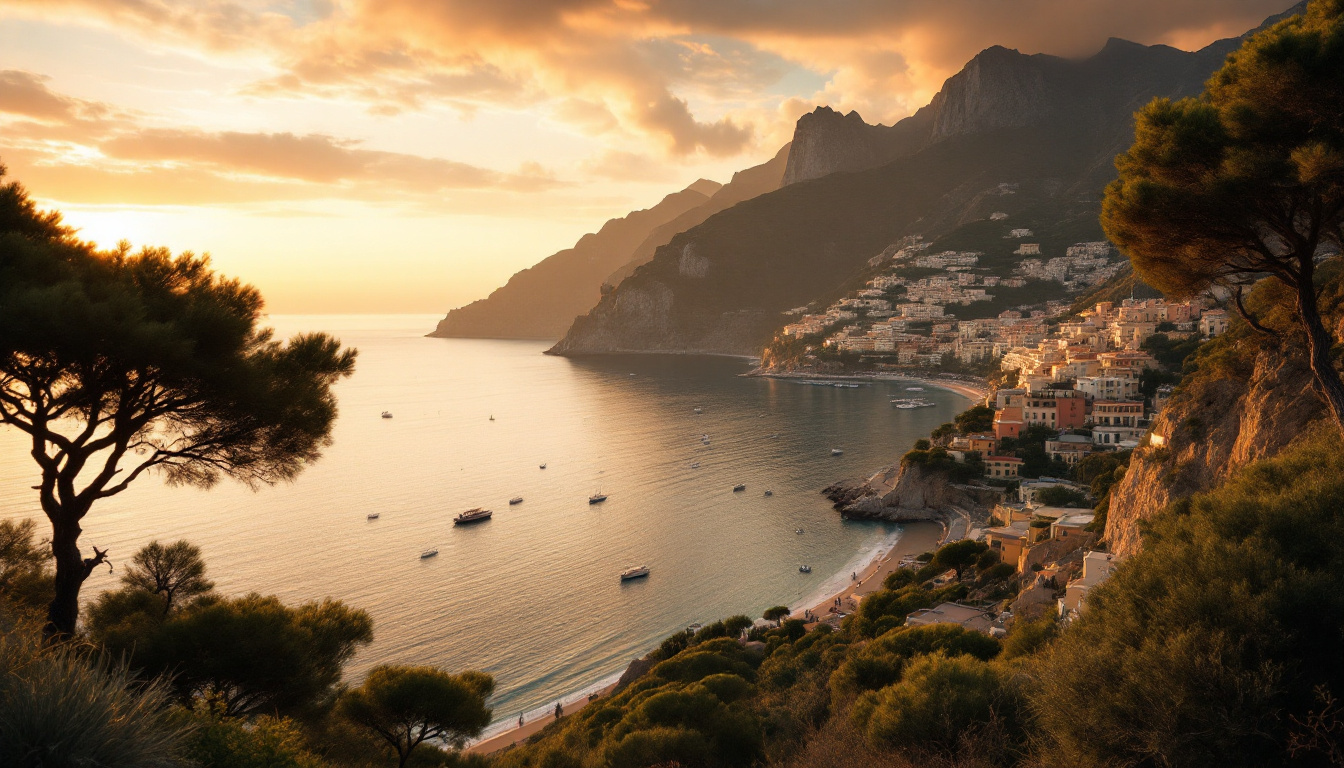
I spent five days on the Amalfi Coast in late May 2026, running an upper-tier audit across Positano, Amalfi, and Ravello with day-trip extensions to Capri and the Conca dei Marini coastline. The trip was constructed specifically to test whether the structural overtourism pattern that the desk and the broader trade press have flagged across 2024 and 2025 has now crossed into a permanent condition, and whether the upper-tier hospitality on the coast can still credibly be recommended to a guest who has not previously visited. The working assessment is clear: the structural problem is now permanent, the upper hotels remain credible but operate as enclaves within a deteriorating broader setting, and the desk recommendation for most 2026 guests is to position around the coast rather than on it.
What follows is the field assessment, beginning with the structural diagnosis and continuing with the desk’s recommended alternative programme for guests who want a southern-Italian-coast trip in 2026 but who are not specifically committed to the Amalfi geography.
The structural diagnosis
The Amalfi Coast is a 50-kilometre stretch of the southern Sorrentine Peninsula shoreline that runs roughly from Vietri sul Mare in the east to Positano in the west, with the principal villages of Amalfi, Atrani, Ravello, Furore, Praiano, Conca dei Marini, and Positano arranged along the SS163 corniche road that the Italian state built between 1832 and 1855. The coast has been a recognised UNESCO World Heritage Site since 1997 and has carried the structural luxury-hospitality category since approximately the 1950s, when Le Sirenuse opened as a hotel in Positano and the post-war American visitor pattern began.
The structural overtourism problem on the Amalfi Coast in 2026 has three components. First, the village geography: the principal villages of Positano, Amalfi, and Ravello were built into the cliff geography between approximately the 9th and 14th centuries, with narrow stairways, small piazze, and meaningfully constrained circulation patterns that do not scale to a contemporary mass-tourism visitor load. The streets of central Positano carry approximately 12,000 daily visitors in peak summer through a village that historically housed approximately 4,000 residents; the working pattern is one of sustained gridlock in the principal stairways during daylight hours from approximately 10:00 to 18:00.
Second, the cruise-ship pattern: the principal cruise lines now deploy day-tripper tenders into Amalfi town and Capri on a sustained summer schedule, with multiple-thousand-passenger ships positioning offshore and discharging onto a village dock infrastructure that was not designed for that load. The cruise-day pattern is structurally additive to the overnight visitor load and is the single component of the overtourism pattern that has accelerated most aggressively since 2022.
Third, the corniche road pattern: the SS163 between Sorrento and Vietri sul Mare is structurally a single carriageway with limited overtaking sections and a narrow pavement throughout. The peak-summer pattern is one of sustained slow-moving traffic with frequent multi-hour blockages, particularly between Positano and Amalfi where the road geometry is at its narrowest. The transfer between Positano and Amalfi, a nominal 16-kilometre drive, can run two to three hours in peak traffic. The structural alternative is the maritime transfer programme (the regular ferries from Salerno to Positano and Amalfi, plus the private boat charters that most of the upper hotels operate); the desk recommendation for any 2026 visit is to use the maritime transfer for any movement along the coast and to treat the road as a single-direction transfer at the start and end of the stay.
The upper-tier hotels: still credible
Notwithstanding the structural diagnosis, the upper-tier hotels on the Amalfi Coast continue to operate at the upper end of the European category and remain credibly recommendable for the guest who specifically needs to be on the canonical coast. The shortlist runs as follows.
Le Sirenuse in Positano is the structural anchor of the category. The hotel has operated as a luxury property since 1951, runs 58 keys across the converted Sersale family palazzo on the upper village stairway, and carries one of the most refined hospitality programmes in southern Italy. The hotel kitchen runs the Champagne Bar and the more ambitious La Sponda restaurant; La Sponda holds one Michelin star and is the principal destination dining experience on the coast. Le Sirenuse’s structural strength is its operating continuity (the Sersale family has owned and operated the hotel for three generations without sale) and its rate discipline (the upper-suite rates run at approximately EUR 4,500-EUR 8,000 per night in peak season but with meaningful continuity through the season). The desk has reviewed Le Sirenuse positively in the past and continues to recommend it for the first-time guest who wants the most established Amalfi product.
Il San Pietro di Positano runs a smaller and more discreet programme on the eastern cliff outside the village of Positano proper. The hotel has 56 keys, a serious garden plan, a beach club with private boat shuttle, and a kitchen led by chef Alois Vanlangenaeker that holds one Michelin star. Il San Pietro is the structural answer for a guest who wants to be near Positano but specifically not in the village; the cliff position is approximately 1.5 kilometres east of the central piazza and is reached by a single internal road and a private boat shuttle.
Caruso, A Belmond Hotel in Ravello runs the most architecturally substantial property on the coast, in the 11th-century Palazzo d’Afflitto on the upper Ravello terrace. The hotel has 50 keys across the historic main building and the Belvedere annex, the most dramatic infinity pool on the coast (the structural Ravello postcard view), and a serious garden programme. The kitchen at the Belvedere restaurant holds one Michelin star. Ravello sits roughly 350 metres above the coast on the upper terrace and is meaningfully cooler in peak summer than the lower villages.
Santa Caterina in Amalfi runs 66 keys in the 19th-century cliff villa on the western edge of Amalfi town. The hotel has remained in continuous family operation since 1880 and carries a more traditional hospitality programme than the Belmond properties; the structural strength is the cliff position with the most direct sea access of any Amalfi-town hotel.
Monastero Santa Rosa in Conca dei Marini runs the smallest and most cloistered of the upper-tier programmes: 20 keys in a converted 17th-century monastery on the cliff between Amalfi and Positano. The hotel is the structural answer for guests who specifically want the smallest-scale and most secluded Amalfi product.
The desk’s structural recommendation for guests who book the canonical coast in 2026 is to book Le Sirenuse, Il San Pietro, Caruso, or Monastero Santa Rosa, to maximise the time on hotel grounds, to use the hotel boat programmes for any movement along the coast, and to avoid the principal village centres during daylight peak hours.
Capri: the formal restrictions
The Capri municipal administration has introduced organised-tour-group restrictions for the May 2026 season that represent the most concrete management response to overtourism in the Bay of Naples in recent memory. The restrictions cap organised tour groups at 40 guests per party, require advance notification from tour operators, and introduce new circulation rules through the principal town of Capri. The structural intent is to address the visitor-load pattern that has put approximately 50,000 visitors per day onto an island with a resident population of roughly 13,000-15,000 in peak summer.
The restrictions do not affect private guests on independent itineraries and do not affect overnight visitors at the principal Capri hotels (J.K. Place Capri, Capri Tiberio Palace, Hotel La Palma, Capri Palace at Anacapri). The structural recommendation for guests who specifically want the Capri experience is to book overnight at one of the principal hotels rather than approach the island as a day trip, and to time the principal town of Capri visits for the early morning (before approximately 10:00) and the late afternoon (after approximately 17:00), when the day-tripper density is at its lowest.
The desk’s alternative programme
The structural alternative to the Amalfi Coast for the 2026 season is Puglia, and the principal property recommendation is Borgo Egnazia at Savelletri di Fasano. Borgo Egnazia runs 184 keys across a purpose-built Apulian-vernacular masseria-village complex on the Adriatic coast roughly 80 minutes by road from Bari-Palese (BRI). The hotel has operated since 2010 under the San Domenico Hotels group and runs the deepest hospitality programme in the Italian south: serious-grade spa (the Vair Spa runs a 1,800-square-metre treatment programme), four pools, a serious children’s programme, and three restaurants of varying ambition including the Michelin-starred Due Camini. The rate point for 2026 ran approximately EUR 1,000-EUR 4,500 per night across the room tiers, which is meaningfully below the equivalent Amalfi Coast rate band and runs at a markedly lower visitor-density baseline.
The structural Puglia shortlist runs Borgo Egnazia as the principal answer, Masseria San Domenico (the older sister property at 35 keys with the more traditional masseria character), Masseria Torre Maizza (the Rocco Forte property at 40 keys with the more contemporary design), and Masseria Le Carrube (the smaller boutique answer at 21 keys). The Puglia hotels are concentrated on the central Adriatic shoreline between Brindisi and Fasano; the southern Apulian coast (Otranto, Castro, the Capo Santa Maria di Leuca) carries a thinner upper-tier inventory but a markedly quieter shoreline and the most authentic small-village geography.
The Bay of Naples alternative — Ischia and Procida — is structurally smaller. Mezzatorre Hotel & Thermal Spa on Ischia runs 56 keys on the western tip of the island with a serious thermal-spa programme, the most polished hospitality on the island, and the most photogenic cliff-pool sequence in the Bay of Naples. The Albergo della Regina Isabella in Lacco Ameno is the second principal Ischia option at 121 keys with a longer operating history. Procida carries no formal upper-tier inventory but is a defensible day-trip from Ischia and is the most photogenic of the three Bay of Naples islands.
The Cilento Coast — the stretch of southern Campanian coast south of Salerno — is a more obscure but structurally credible alternative for guests who want a southern-Italian-coast experience with very low visitor density. The upper-tier inventory is thin but exists; the small-scale boutique properties along the Cilento are a meaningfully different category from Amalfi and are the right answer for the second-time southern-Italy traveller.
The desk view
The structural assessment after the five-day Amalfi sweep is that the canonical coast has crossed into a permanent overtourism pattern and that the visitor experience outside the upper hotels has meaningfully deteriorated since the 2022 baseline. The upper hotels themselves remain credible but operate as enclaves within a deteriorating broader setting. For the first-time southern-Italy traveller, the desk recommendation for 2026 is Puglia (Borgo Egnazia and the Apulian masseria circuit) rather than the Amalfi Coast. For the returning visitor who specifically wants the canonical coast, the desk recommendation is the early-October or late-May shoulder, the upper hotels (Le Sirenuse, Il San Pietro, Caruso, Santa Caterina, or Monastero Santa Rosa), and a structural commitment to staying on hotel grounds and using the maritime transfer programme rather than the corniche road for any coast movement.
Standing Questions
- Is the Amalfi Coast still bookable in 2026?
- Yes, but with material qualifications. The principal upper-tier hotels (Le Sirenuse and Il San Pietro in Positano, Caruso and Palazzo Avino in Ravello, Santa Caterina in Amalfi, Monastero Santa Rosa in Conca dei Marini) continue to operate at the upper end of the category and are the structural answer for guests who specifically need to be on the canonical coast. The working conditions outside the hotels — village density, transfer congestion on the SS163 corniche road, restaurant access in the principal villages — have meaningfully deteriorated since the 2022-2023 baseline and are the structural problem the desk now flags.
- What are the Capri 2026 restrictions?
- The Capri municipal administration has introduced organised-tour-group restrictions for the May 2026 season, with a maximum party size of 40 guests for any single group, advance notification requirements for tour operators, and new circulation rules through the principal town of Capri. The restrictions are intended to address the structural overtourism pattern that has put approximately 50,000 visitors per day onto an island with a resident population of roughly 13,000-15,000 in peak summer. The restrictions do not affect private guests on independent itineraries, but the principal town of Capri is now functionally inaccessible in mid-July through August during daylight hours regardless of party size.
- What is the desk's structural alternative?
- Puglia. Borgo Egnazia in Savelletri di Fasano is the structural upper-tier answer at 184 keys with the deepest hospitality programme in the Italian south; the property is roughly 80 minutes from Bari-Palese (BRI) by road and offers serious-grade luxury hospitality at a meaningfully lower visitor-density baseline than the Amalfi Coast principal villages. The Masseria San Domenico, Masseria Torre Maizza (the Rocco Forte property), and Masseria Le Carrube run smaller-scale alternatives. The southern Apulian coast (Otranto, Castro, the Capo Santa Maria di Leuca) carries a thinner inventory but a markedly quieter shoreline.
- What about Ischia and Procida?
- Ischia and Procida sit in the same Bay of Naples as Capri but carry meaningfully different visitor patterns and meaningfully thinner luxury inventory. Mezzatorre Hotel & Thermal Spa on Ischia is the structural upper-tier answer at 56 keys with the most polished hospitality programme on the island. The Albergo della Regina Isabella in Lacco Ameno is the second principal option. Procida is structurally smaller and carries no formal upper-tier inventory but is the most photogenic of the three Bay of Naples islands and a defensible day-trip extension from Ischia. The Bay of Naples islands are not a complete Amalfi substitute but are the closest off-Amalfi alternative geographically.
- When is the right season?
- The structural recommendation for 2026 is to avoid the peak weeks of mid-July through August on the canonical Amalfi Coast altogether and to position the trip to either the mid-May through mid-June shoulder or the mid-September through mid-October shoulder. The shoulder windows carry materially lower visitor density in the principal villages and meaningfully better access to the restaurant reservations and ferry transfers that structurally fail at peak. The October 1-15 window is the desk's preferred timing for a 2026 visit; the weather is reliably warm enough for the boat programmes, the village density is at its lowest since spring, and the upper hotels are running their closing weeks of the season.