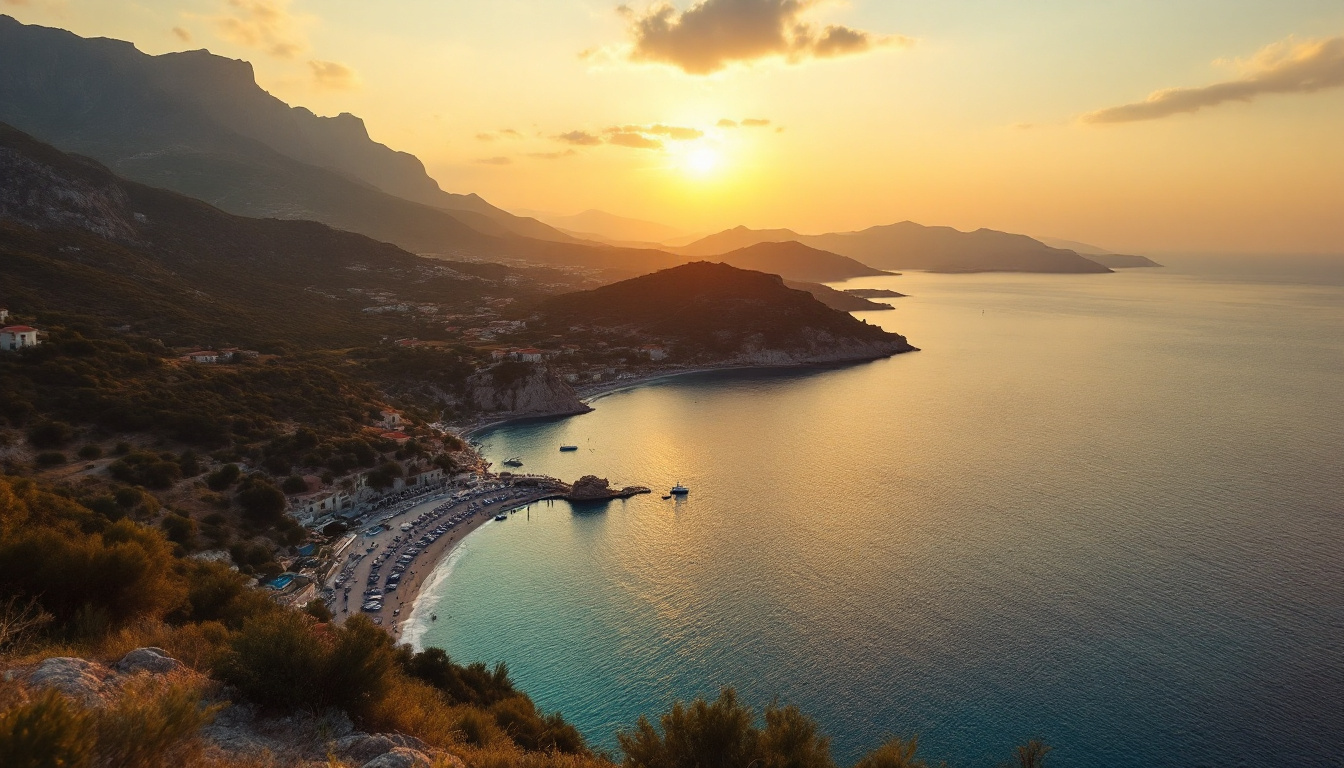
I spent twelve days in the central Dalmatian island chain in late May 2026, running a four-island sweep that opened with five nights at Maslina Resort on Hvar, continued with three nights at the Lesic Dimitri Palace on Korcula, and closed with three nights on Vis (split between the harbour villages of Vis Town and Komiža) and a final day-trip to Mljet from Korcula. The trip was constructed specifically to assess where the Croatian Adriatic upper-end market stands in 2026, roughly four years after the Maslina opening reset the category, and whether the secondary islands (Korcula, Vis, Mljet) carry enough credible inventory to support a multi-island programme.
The working assessment is that the Croatian Adriatic now carries one structurally serious upper-tier hotel (Maslina), a developing secondary inventory on Korcula, and a thinner but architecturally distinctive offer on Vis. Mljet is a national-park excursion rather than a destination in its own right at the upper end. The desk’s structural recommendation for the 2026 season is a 10-12 night Hvar-Korcula-Vis combination with Maslina as the primary base and a three-night Korcula segment as the working secondary leg.
Hvar: the Maslina reset
Hvar is the longest of the central Dalmatian islands (approximately 68 kilometres on the long axis, the longest of the populated Croatian islands) with a permanent population of roughly 11,000 distributed across four principal towns: Hvar Town on the western end (the principal visitor centre), Stari Grad on the northwest coast (the historic founding settlement, UNESCO-listed for its Stari Grad Plain agricultural division), Jelsa in the central north, and Sucuraj at the eastern tip. The island is roughly 90 minutes by catamaran from Split, the principal mainland gateway and the regional airport (Split-Kaštela, SPU).
The structural anchor of the upper-tier Hvar inventory is Maslina Resort, opened in 2021 on a protected position above Maslinica Bay roughly 4 kilometres east of Stari Grad. The property runs 50 rooms and 3 villas across approximately 2 hectares of pine forest with direct sea access through the protected bay, a 600-square-metre Pharomatiq Wellness area with the most ambitious wellness programme on the Croatian coast, an in-house Mediterranean restaurant programme led by chef Marko Filipovic, and a serious children’s programme. The hospitality posture is the most disciplined on the Croatian Adriatic; the property is owned and operated by an independent ownership group with a working position that the hotel should function as a year-round operating asset (Maslina runs an extended shoulder season through November in the working years, though the formal peak season closes at the end of October).
The rate point at Maslina in late May 2026 ran approximately EUR 600 per night for the entry-level rooms and approximately EUR 2,200 for the principal sea-view suites; the three villas (Pakleni, Lavanda, Maslina) ran at approximately EUR 3,000-EUR 5,500 per night with full villa facilities. The property is the most polished contemporary luxury product on the Croatian Adriatic and the structural answer for any upper-tier Hvar booking in 2026.
Hvar Town itself carries the broader hospitality inventory: the Adriana (Suncani Hvar group, the principal historic anchor in Hvar Town), the Amfora Grand Beach Resort (the largest single property on the island at 324 keys, on the western edge of Hvar Town), and the Riva Marina Hvar (a smaller boutique property on the harbour). Hvar Town is the structural visitor centre and carries the densest restaurant and bar programme on the island; the structural caution is the sustained-overtourism pattern that the central harbour and old-town square now carry in peak summer.
Korcula: the second island
Korcula sits roughly 30 kilometres south of Hvar across the central Adriatic and is reached by catamaran from Split (approximately 3 hours) or by the local ferry from the Pelješac peninsula at Orebic (a 15-minute crossing that is the structural standard for guests coming from Dubrovnik). The island is approximately 47 kilometres long with a population of roughly 15,500 distributed across four principal towns: Korcula Town on the northeast tip (the historic walled town that is the principal visitor centre), Vela Luka on the western end (a working fishing town), Lumbarda on the eastern tip (the principal wine village), and Smokvica in the central south (a smaller agricultural village).
The principal upper-tier hotel is the Lesic Dimitri Palace in Korcula Town, a 7-suite restored bishop’s palace in the historic walled town. The hotel is the most architecturally distinctive small property on the Croatian Adriatic and is the structural answer for guests who specifically want a Korcula Town stay. The Aminess Lume on the southern coast (a 248-key contemporary resort property opened in 2023) carries the broader-facility answer at a meaningfully lower rate point.
The structural advantage of Korcula is the wine country. The Pelješac peninsula adjacent to Korcula carries the most serious red-wine production in Croatia, anchored by the Plavac Mali variety in the appellations of Dingač and Postup. The principal Pelješac estates (Grgich Vina, Korta Katarina, Saints Hills, Dingač Vinarija) run polished tasting programmes that are accessible from Korcula by a 20-minute ferry crossing and a short drive. The combined Korcula-Pelješac itinerary is the structural food-and-wine answer for the 2026 Croatian Adriatic trip.
Vis: the further island
Vis sits roughly 50 kilometres south of Split and is the most distant of the principal inhabited Croatian islands from the mainland. The island is approximately 90 square kilometres with a population of roughly 3,500 distributed primarily across the two harbour towns of Vis Town on the eastern coast and Komiža on the western coast. The island was a Yugoslav military closed zone until 1989 and carries a markedly different infrastructure pattern from Hvar or Korcula: the formal upper-tier hotel inventory is thin, the principal accommodation pattern is boutique guesthouse and private villa rental, and the visitor density is meaningfully lower than the comparable central Dalmatian islands.
The Hotel San Giorgio in Vis Town (a 10-key boutique property in a converted historic building on the harbour) is the most polished small-scale answer. Hotel Issa in Vis Town (named after the ancient Greek colony that became the historic foundation of the town) runs a larger and more conventional programme. Komiža carries the smaller hotels Bisevo and Komiža as the principal harbour anchors.
The structural strength of Vis is the harbour visual and the surrounding small-island programme. The Pakleni Islands off the southern coast of Hvar and the Blue Cave on Biševo (a small island off the western coast of Vis) are accessible by day-boat charter and are the principal sea-cave and beach-bay programme in the central Adriatic. The structural caution is the thin upper-tier inventory; Vis is the right answer for a 3-4 night secondary segment within a wider Croatian programme rather than the right answer for a primary base.
Mljet: the national-park excursion
Mljet sits roughly 30 kilometres south of Korcula and is reached by catamaran from Dubrovnik (approximately 90 minutes) or by the smaller ferries from Korcula and Sobra. The western third of the island is designated Mljet National Park, the oldest of the eight Croatian national parks (established 1960), and contains two salt-water lakes (Veliko Jezero and Malo Jezero) with the small 12th-century Benedictine monastery of Saint Mary on a small island in Veliko Jezero. The structural pattern for the national park is a half-day or full-day excursion that combines a walking circuit of the lakes with the boat trip out to the monastery island.
The formal hotel inventory on Mljet is thin. The Odisej Hotel at Pomena (a 153-key conventional resort property on the western coast) is the only meaningful organised hotel on the island. The structural answer for an upper-tier Mljet experience is a day-trip from Dubrovnik or Korcula rather than an overnight, or a private boat charter with overnight at anchor in one of the protected bays.
Transfer architecture
The Croatian Adriatic transfer architecture in 2026 is built around three principal mainland gateways: Split-Kaštela (SPU) for the central islands of Hvar, Brac, and Vis; Dubrovnik (DBV) for the southern islands of Korcula, Mljet, and Lastovo; and Zagreb (ZAG) for the northern coast and inland routes. The principal catamaran operators (Krilo Shipping, Jadrolinija) run high-frequency seasonal service between Split and the central island harbours; the Krilo daily catamaran from Split to Hvar Town runs in approximately 90 minutes and is the structural standard for upper-tier guest transfers.
The yacht-charter market is meaningfully developed on the Croatian Adriatic; the principal charter base is Split, with secondary bases at Trogir and Sibenik. The structural alternative to the catamaran routing is a private motor-yacht charter that runs the island circuit as a continuous itinerary with overnight at anchor or in marina; the rate point for a captained motor yacht with full crew runs approximately EUR 25,000-EUR 80,000 per week for the upper-mid-tier vessels.
The desk view
The structural assessment after the twelve-day Croatian Adriatic sweep is that the upper-tier inventory has materially improved since the 2018 baseline and is now credible for an international upper-end traveller, but that the inventory is structurally thin compared to the Italian or French Mediterranean equivalents. Hvar is the structural anchor and Maslina Resort is the single most defensible upper-tier hotel on the Croatian coast. Korcula is a credible secondary island with a thinner inventory and meaningful wine-country adjacency. Vis is the right answer for the second-time visitor who specifically wants the further and less-developed island. Mljet is a national-park excursion rather than an overnight destination at the upper end.
The desk’s structural recommendation for 2026 is a 10-night Hvar-Korcula-Vis combination, with Maslina Resort as the primary base for five nights, Lesic Dimitri Palace as the Korcula leg for three nights, and a closing Vis segment for two nights. The peak weeks of July and August carry the highest visitor density and the most aggressive yacht-charter traffic; the structural shoulder windows of mid-May through mid-June and mid-September through mid-October are the desk’s preferred timing for the 2026 season.
Standing Questions
- Which Croatian island is the structural answer?
- Hvar, for the upper-end traveller in 2026. The island carries the deepest hospitality inventory in the central Dalmatian chain (Maslina Resort near Stari Grad as the upper-tier anchor, plus the Adriana, Amfora, and Riva hotels in Hvar Town itself), the most reliable ferry and catamaran connections from Split (the principal mainland gateway), the most developed restaurant programme on the islands, and the most established summer visitor pattern. Hvar Town itself carries a sustained-overtourism pattern in peak summer that the desk now flags as a working caution; the structural recommendation is to position on the Stari Grad or central-island side of Hvar rather than in Hvar Town.
- What does Maslina Resort actually offer?
- Maslina Resort runs 50 rooms and three villas across approximately 2 hectares of pine forest above Maslinica Bay on the north coast of Hvar, roughly 4 kilometres from the town of Stari Grad. The hotel opened in 2021 and is the most polished contemporary luxury product on the Croatian Adriatic coast. The hospitality programme includes a 600-square-metre Pharomatiq Wellness area (steam rooms, sauna, cold-plunge pool, and treatment programme), an in-house Mediterranean restaurant programme led by chef Marko Filipovic, a serious children's programme, and direct sea access through the protected Maslinica Bay. Rate points in May 2026 ran approximately EUR 600-EUR 2,200 per night across the room categories.
- Korcula or Vis for the secondary island?
- Korcula for the more developed visitor programme, Vis for the more authentic island experience. Korcula has the more polished upper-tier inventory (Lesic Dimitri Palace in Korcula Town as the primary anchor, plus the Aminess Lume on the southern coast and several smaller boutique properties), a more accessible position in the Pelješac channel, and a more developed wine country (the Pelješac peninsula adjacent to Korcula carries the most serious red-wine production in Croatia). Vis sits further out to sea (the most distant of the principal Croatian inhabited islands from the mainland), carries the thinnest formal upper-tier hotel inventory, and runs the most authentic island visitor pattern; the principal harbours of Vis Town and Komiža are among the most photogenic in the Adriatic.
- What about Mljet?
- Mljet is structurally a national-park island; the western third of the island is designated Mljet National Park (the oldest of the eight Croatian national parks, established 1960) and carries a protected forest and two salt-water lakes. The formal hotel inventory is thin: the Odisej Hotel at Pomena (a 153-key conventional resort property) is the only meaningful organised hotel on the island. The structural answer for an upper-tier Mljet stay is a day-trip from Dubrovnik or Korcula rather than an overnight, or a private boat charter with overnight at anchor in one of the protected bays.
- When is the right season?
- Mid-May through mid-June and mid-September through mid-October are the structural shoulder windows for the Croatian Adriatic. The weather is reliably warm enough for the swimming programmes, the visitor density on Hvar Town and the principal harbours is at its lowest, and the upper-tier hotels are running at meaningfully better rates than peak. July and August carry the densest crowds, the most aggressive yacht-charter traffic in the principal harbours, and the highest rate points. The shoulder windows are the desk's preferred timing for the 2026 season; the early-October window is particularly defensible for the warm-sea swimming and the Pelješac wine harvest.