I spent eleven days in the Faroe Islands in late August 2025, the closing weeks of the brief Faroese high season, working from a base at Hotel Føroyar above Tórshavn and travelling on a series of day-trip excursions to the principal islands of the archipelago. The trip was constructed specifically to assess the state of the country’s high-end visitor inventory after a substantial period of expansion since approximately 2020, and to test the working hypothesis that the Faroe Islands have moved from a quietly niche North Atlantic destination into a serious if small contender within the contemporary Nordic high-end travel market. The hypothesis was, on the working evidence, confirmed.
The Faroe Islands sit in the North Atlantic between Iceland and Scotland, approximately 320 kilometres northwest of Scotland’s northernmost point and approximately 430 kilometres southeast of Iceland’s southeastern coast. The archipelago covers approximately 1,400 square kilometres across eighteen volcanic islands, of which seventeen are inhabited. The population is approximately 54,000, of whom roughly 22,000 live in or around the capital Tórshavn on the eastern shore of Streymoy. The country is a self-administering region of the Kingdom of Denmark with its own parliament (the Løgting), its own language (Faroese, a distinct West Scandinavian language closely related to Icelandic), and its own currency (the Faroese króna, pegged 1:1 to the Danish krone). The country is not a member of the European Union.
The Koks pivot
The Faroese dining scene in 2026 is built around two restaurants — Koks (now relocated to the remote Leynavatn lake site in the central Streymoy interior) and PAZ (the new Tórshavn restaurant opened by Poul Andrias Ziska, the former chef-patron of Koks, in June 2025). The two restaurants are operationally related — Ziska was the chef who built Koks’s international reputation from approximately 2014 onwards and who held the kitchen’s two Michelin stars from 2019 through his departure in 2024 — but are presented as distinct and complementary expressions of contemporary Faroese cooking.
Koks operates from a remote stone building at Leynavatn (a small inland lake in the centre of Streymoy, approximately 30 minutes by car from Tórshavn and accessible only by a private transfer arranged by the restaurant). The current kitchen is run by chef Filip Trygvason, who took the head-chef position in late 2024 after Ziska’s departure. The cooking is in the same Faroese-modernist tradition that Ziska established — long-running fermentation programmes, extensive use of the wild herbs and seaweeds of the Faroese landscape, the kitchen’s longstanding relationships with the small group of Faroese fishermen and sheep farmers that supply the room — but with a slightly different sensibility under the new leadership. The two-star Michelin designation was retained at the 2025 Nordic guide announcement and at the 2026 announcement. The tasting menu runs approximately fifteen courses across three hours at DKK 3,200 per guest. The restaurant operates Wednesday through Saturday, single seating per evening at 19:30.
PAZ — the Tórshavn restaurant Ziska opened in June 2025 in a converted 19th-century warehouse on the Tórshavn old harbour — earned two Michelin stars in its inaugural year, the fastest Michelin two-star designation in Nordic dining history. The kitchen runs a smaller tasting menu (twelve courses across two and a half hours at DKK 2,800 per guest) in a more relaxed urban format than Koks. The cooking is recognisably from the same tradition as Koks — the same Faroese-modernist vocabulary, the same fermentation focus, the same emphasis on the wild ingredients of the archipelago — but with a slightly different presentation that reflects the urban-Tórshavn setting and the closer proximity to the small Faroese agricultural producers that supply the kitchen.
I ate at both rooms across the eleven-day trip. The two experiences are complementary and are, for a guest making a single Faroese trip, both worth landing.
Tórshavn
Tórshavn — the small Faroese capital, with a population of approximately 22,000 in the city proper and another 8,000 in the immediate surrounding area — sits on the eastern shore of Streymoy at the head of a small natural harbour. The city is among the smallest national capitals in Europe and is, in working terms, more of a small fishing port that happens to host the Faroese government than a city in the conventional European sense. The historic centre — the Tinganes peninsula, a small rocky outcrop in the harbour that has been the seat of the Faroese parliament since the Viking era and is now a small district of preserved 16th and 17th century timber-framed buildings with characteristic grass roofs — is the most architecturally complete preserved historic centre I have seen in any North Atlantic capital.
I stayed at Hotel Føroyar — the 62-room hotel on the hill above the city, with the most complete views across Tórshavn to the sound between Streymoy and the smaller island of Nólsoy beyond — for nine of the eleven nights. The hotel is, in my working view, the structural right answer for a first-time Faroese visitor. The rooms are contemporary in design (the hotel was substantially refurbished in 2009 by the well-known Danish architectural firm BIG, with further updates in 2019), the geothermal heating system (the hotel runs on its own geothermal source from boreholes over 200 metres below the building) is exceptional, and the in-house ROKS restaurant runs the most accessible serious contemporary Faroese cooking in the country.
The room rate ran DKK 2,800 per night for a standard double with sound view in late August (the high-season rate), against approximately DKK 1,600 in the shoulder windows (April-May and September-October) and approximately DKK 1,200 in the off-season (November through March). The hotel was at approximately 90 percent occupancy across the late August stay.
I spent the remaining two nights at Havgrím Seaside Hotel 1948 — the 14-room boutique property on the central Tórshavn seafront, in a 1948 building that was refurbished to high contemporary standard in 2018 by the Faroese architectural studio Henning Larsen. The hotel is the right answer for a more atmospheric Tórshavn stay and for guests who want a smaller-scale property. The room rate ran DKK 3,400 per night in late August, slightly above the Hotel Føroyar rate.
The outer islands
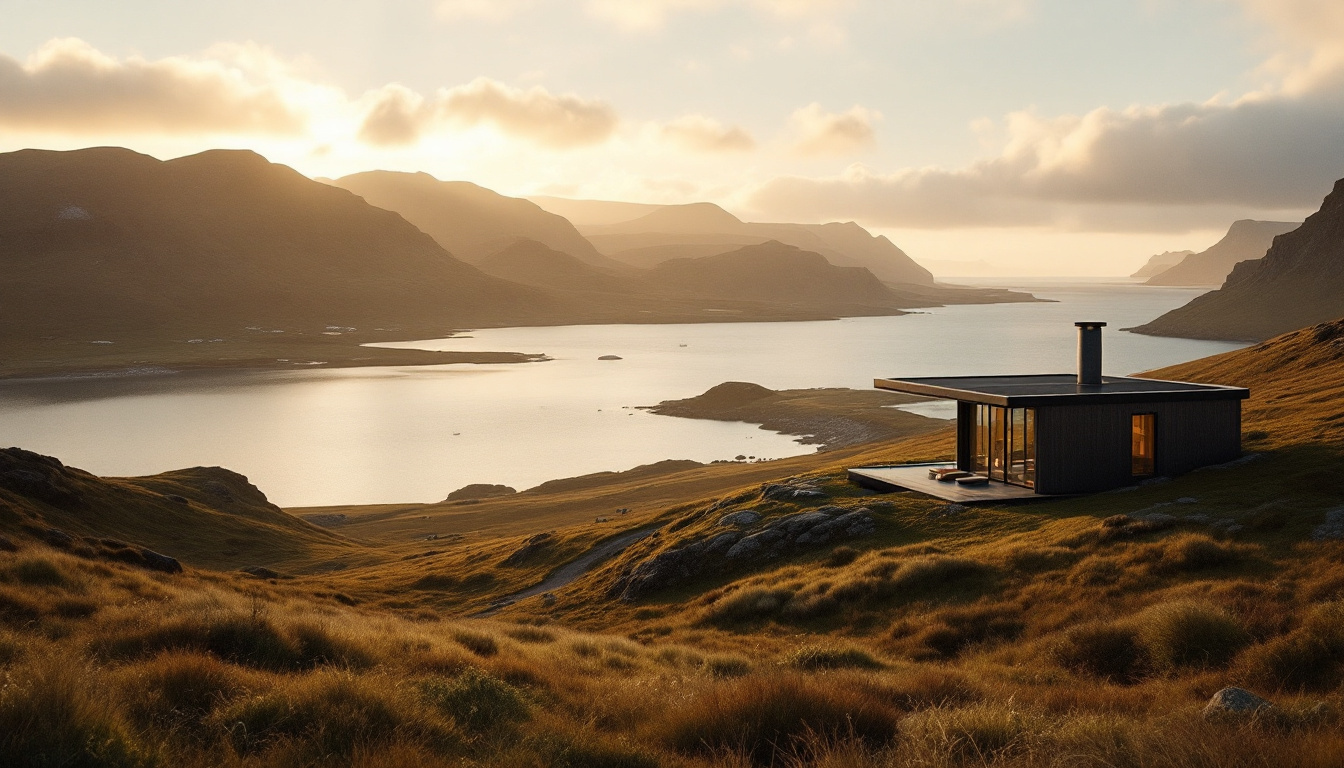
The Faroese landscape outside Tórshavn is the principal scenic argument for the destination. The archipelago carries some of the most dramatic coastal scenery in the North Atlantic — 1,000-metre sea cliffs on the western islands, deep glacially-cut sea inlets that nearly bisect several of the islands, the small isolated village of Gásadalur on Vágar with its famous waterfall pouring directly into the Atlantic at the cliff edge, the spectacular Slættaratindur peak on Eysturoy (the highest point in the Faroes at 882 metres) — that is, for a guest with even moderate landscape interest, the principal reason to visit.
The driving network across the principal islands is excellent. The undersea Eysturoyartunnilin tunnel between Streymoy and Eysturoy (opened 2020) and the Sandoyartunnilin between Streymoy and Sandoy (opened 2023) have substantially increased the accessibility of the central islands. The narrow Gásadalstunnilin tunnel (opened 2004) provides road access to the previously isolated village of Gásadalur on Vágar. The total road network across the principal islands is approximately 460 kilometres and most of the island can be covered in a series of half-day or full-day driving loops from a Tórshavn base.
The principal day-trip itineraries from Tórshavn:
Vágar and the western cliff: the drive to Gásadalur and the Múlafossur waterfall (approximately 45 minutes from Tórshavn), with onward hiking options across the western Vágar peninsula and a visit to the village of Bøur on the southern Vágar coast. The Mykines island ferry (operating from Sørvágur on the western tip of Vágar) provides access to the puffin colonies on Mykines during the May-August window; the ferry runs once or twice daily depending on weather.
Eysturoy and the northern islands: the drive through the central Eysturoy valley to the village of Gjógv at the northern tip of Eysturoy (approximately 80 minutes from Tórshavn), with onward access to the small island of Kalsoy via the ferry from Klaksvík (the second-largest Faroese settlement). The famous Kallur lighthouse hike on Kalsoy (a two-hour return walk to the northern tip of the island, with one of the most dramatic single coastal viewpoints in the North Atlantic) is the principal hiking target.
Suðuroy in the south: the larger southern island, accessible via a 2-hour ferry from Tórshavn (operating twice daily across the year), with extensive coastal cliffs and the small fishing villages of Tvøroyri and Vágur as the principal settlements. The Suðuroy day trip is a long day from Tórshavn (the ferry timing produces a tight schedule); the alternative is an overnight stay at one of the small Suðuroy guesthouses.
The weather
The Faroese weather is the principal practical constraint on the destination. The islands sit in the path of the North Atlantic westerly wind regime and carry some of the most variable weather in the European temperate zone. The annual rainfall in Tórshavn runs approximately 1,300 millimetres (against approximately 750 millimetres in London and approximately 850 millimetres in Bergen) across approximately 280 rain days per year. The wind is consistently strong (the annual average is approximately 16 knots; gusts exceeding 50 knots are recorded multiple times per year). The temperature is moderate (annual average approximately 7 degrees Celsius; the summer peak is approximately 13 degrees Celsius) but the wind-chill effect substantially reduces the felt temperature.
The high season runs May through August and is the only window in which the weather is reliably moderate enough for full-day outdoor activities. The shoulder windows in April and September-October are workable but carry meaningfully higher weather risk. The off-season from November through March is genuinely challenging for an outdoor-focused visitor — the daylight is short (approximately 5 hours of daylight at the winter solstice), the wind is at its strongest, and many of the outer-island ferries operate on reduced schedules.
What this means for a 2026 trip
The Faroe Islands in 2026 are at an interesting working moment. The high-end visitor inventory is substantially larger than it was in 2018. The dining scene — anchored by Koks at Leynavatn and PAZ in Tórshavn — is operating at a higher level than at any previous point in the country’s history. The hotel inventory has expanded with the Hilton Garden Inn addition in 2021 and several smaller boutique properties since. The road network has been substantially upgraded with the recent tunnel openings. The Atlantic Airways flight network has expanded to include direct connections from Paris, Edinburgh, and Bergen alongside the longer-standing Copenhagen and Reykjavík routes.
For a guest considering a single Faroese trip in 2026, the structural answer is a six-to-eight-night itinerary in the May through August high season, based at Hotel Føroyar or Havgrím Seaside Hotel 1948 in Tórshavn, with day-trip excursions to Vágar, Eysturoy, and (weather permitting) Suðuroy. The trip should include one dinner at Koks (booked three months out, on the Wednesday or Thursday slot for slightly easier availability), one dinner at PAZ (booked similarly), one dinner at ROKS at Hotel Føroyar, and a single more relaxed evening at Áarstova in the Tórshavn old town. The total trip cost runs USD 9,000 to 14,000 per couple for an eight-night stay including the principal dining experiences and a rental car.
The Faroe Islands are not the right answer for every luxury traveller — the destination is small in scale, the weather is genuinely variable, the hospitality programme is more reserved than the comparable Icelandic or Norwegian high-end inventory — but for a guest who has been considering a North Atlantic trip and who is drawn to the combination of dramatic landscape and serious contemporary Nordic cooking, 2026 is the strongest single working window the country has produced.
Standing Questions
- Is the Faroe Islands a viable high-end destination?
- Yes, but with substantial qualifications. The Faroese inventory is small (the total room count across all luxury and serious-boutique properties is approximately 400 keys across the archipelago, against roughly 8,000 rooms in comparable Icelandic luxury inventory), the season is short (May through August is the working high season; the rest of the year carries genuine weather risk and limited daylight), and the international flight access is limited (Atlantic Airways is the principal carrier, with roughly 15 weekly direct flights from Copenhagen, four from Edinburgh, three from Reykjavík, and two from Paris-CDG in the summer schedule). The destination is the right answer for guests who specifically want a small-scale North Atlantic experience at the upper end of contemporary Nordic dining; it is the wrong answer for guests who want polished resort hospitality at scale.
- Where should I eat?
- Koks restaurant continues to operate at the highest level of Faroese cooking with two Michelin stars and is the principal destination dining experience in the country. The restaurant relocated in 2022 from its original Funningur location to a remote site at Leynavatn lake in the central Streymoy interior; the location is accessible only by private transfer arranged by the restaurant. PAZ, the new Tórshavn restaurant by Poul Andrias Ziska (former chef-patron of Koks, with PAZ since June 2025), earned two Michelin stars in its inaugural year and is the principal in-city dining option. ROKS in the Hotel Føroyar runs a more accessible contemporary Faroese programme. Áarstova in Tórshavn old town runs traditional Faroese cooking in a historic 18th-century house. Reserve all four well in advance — the Koks and PAZ booking windows close approximately three months out for prime dates.
- Which islands should I visit?
- The principal Tórshavn-area circuit covers Streymoy (the main island, where Tórshavn is located), Eysturoy (the second-largest island, connected to Streymoy by an undersea tunnel and a bridge), and Vágar (the western island, where the airport is located). The standard 4-to-6-night itinerary covers these three. A more extensive itinerary adds Suðuroy in the south (the longest of the southern islands, with the most dramatic coastal cliffs), Sandoy in the centre (the smaller agricultural island, more rural), and Kalsoy in the north (the narrow vertical island, with the famous Kallur lighthouse hike). The outer islands (Mykines for the puffin colonies, Stóra Dímun for the historical sheep farms) are worth day trips during the May-August window.
- What about accommodation?
- Hotel Føroyar (62 rooms, on the hill above Tórshavn with views across the city to the sound) is the structural recommendation for a first-time visit; the rooms are contemporary, the geothermal heating system is exceptional, and the in-house ROKS restaurant is the most accessible contemporary Faroese dining in the country. Havgrím Seaside Hotel 1948 (14 rooms, on the seafront in central Tórshavn) is the right answer for a more boutique stay. The Hilton Garden Inn Tórshavn (140 rooms, opened 2021) is the largest and most contemporary hotel in the country but is more conventionally corporate in its hospitality posture. For a more remote stay, the Gjáargarður Guesthouse in the village of Gjógv on Eysturoy and the smaller Hotel Vágar near the airport are the principal boutique options.
- What does access look like?
- Atlantic Airways is the principal carrier and operates the most direct international flights to Vágar Airport (FAE), the only commercial airport in the archipelago. The summer 2026 schedule includes approximately 15 weekly direct flights from Copenhagen (1h45m), four weekly from Edinburgh (1h35m), three weekly from Reykjavík (1h30m), and two weekly from Paris-CDG (2h45m), with seasonal flights from Bergen, Oslo, Hamburg, and Barcelona during the summer months. The flight schedule is meaningfully weather-dependent (the FAE runway sits in a narrow valley and is subject to fog delays); build buffer time into the connection schedule. The ferry connection from Hirtshals in northern Denmark on the Smyril Line operates twice weekly during the summer (32 hours each way) and is the alternative access for guests with car-touring ambitions in the islands.