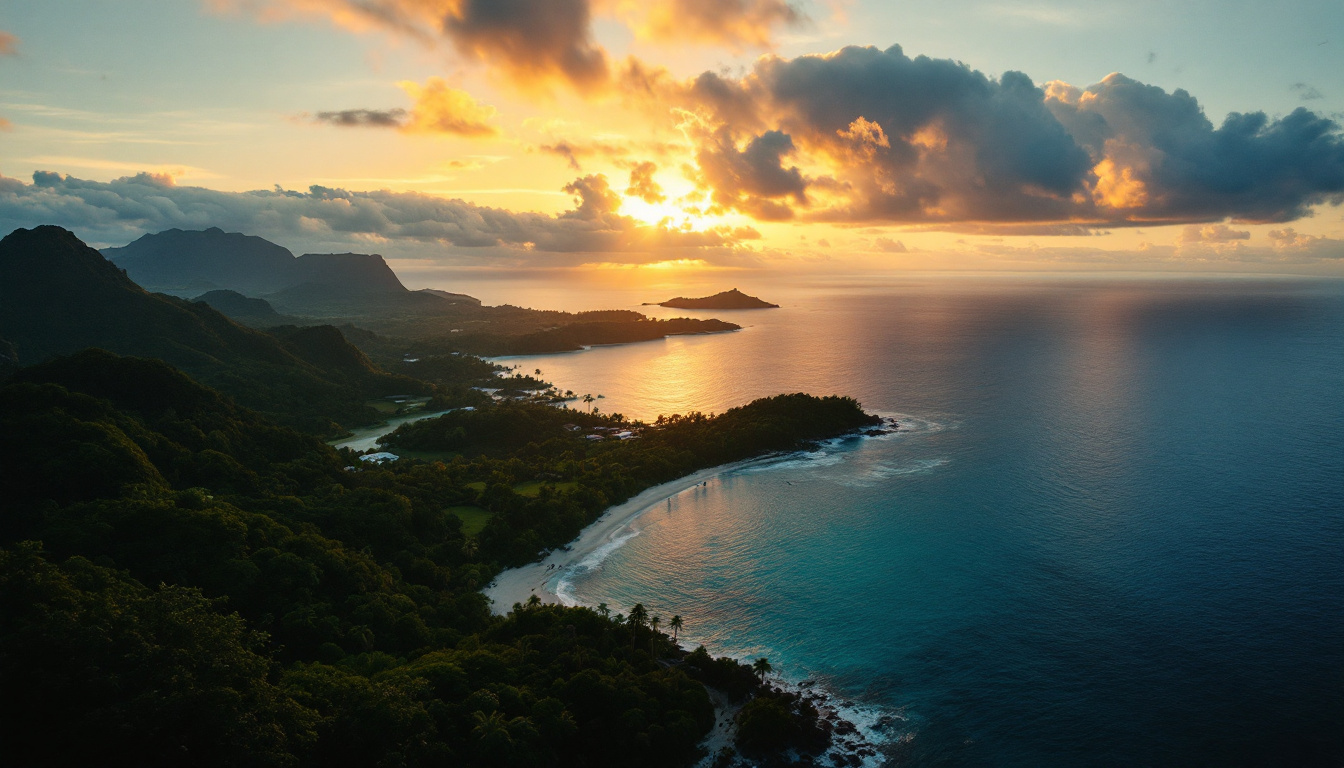
I spent fourteen nights across the South Pacific in November 2025, the early shoulder of the high season, splitting the time between The Brando on Tetiaroa (six nights), Wakaya Island Resort in Fiji (four nights), and Vatuvara Private Islands in Fiji’s northern Lau group (four nights). The trip was the longest single piece of South Pacific reporting I have done since 2018 and was specifically constructed to test the working hypothesis that the region’s serious private-island bracket — the resorts charging USD 2,500 per villa per night and above, with full board, on islands that are owned and operated as single-property destinations — is the most quietly underdeveloped luxury market in the Pacific basin. The hypothesis, by the end of the trip, was confirmed.
The South Pacific private-island market is small. There are perhaps fifteen properties globally that meet the working definition (single-island, full-board, fewer than fifty keys, USD 2,500 or higher per villa per night). Eight of them are in Fiji. Two are in French Polynesia. Two are in the Cook Islands. One each is in Vanuatu, the Solomon Islands, and Papua New Guinea. The market is dominated, in working revenue terms, by The Brando on Tetiaroa — the most architecturally ambitious and the most institutionally established of the group — and by a small number of Fijian properties whose ownership and management arrangements have been remarkably stable across the past decade.
The Brando: Tetiaroa atoll, French Polynesia
The Brando occupies the private atoll of Tetiaroa, a coral atoll of thirteen islets approximately fifty kilometres north of the main island of Tahiti, in the Society Islands group of French Polynesia. The atoll was purchased by the actor Marlon Brando in 1967 from the Duff family (the third-generation owners since the original acquisition from the Tahitian royal family in 1904). Brando held the atoll until his death in 2004, occupying a small private residence on the main motu but resisting all commercial development; the family trust opened the current resort in July 2014, ten years after his death, on the main motu of Onetahi.
The resort comprises thirty-five villas and one larger Teremoana Residence (a three-bedroom oceanfront house used for family bookings and for occasional celebrity stays). The villas are constructed from local materials — coconut wood, pandanus thatch, woven palm — and are oriented along the western beach of the motu to face the sunset across the lagoon. The resort runs three restaurants (the principal restaurant Beachcomber Café under chef Jonathan Pasco, the small Lagoon Bar at the southern end of the property, and the more formal Les Mutinés restaurant in the central pavilion), a spa, an organic garden that supplies most of the kitchen’s vegetable produce, and a serious research-and-education facility (the Tetiaroa Society, founded by Brando’s family in 2008, runs a working coral-reef research programme from the property).
I stayed in Villa 22 for six nights — a one-bedroom beachfront villa on the western beach with a private plunge pool, a small outdoor pavilion, and direct sand access to the lagoon. The villa is approximately 110 square metres internal plus 60 square metres of outdoor pavilion. The interior is finished in coconut wood and lime-washed plaster; the bedroom is on a slight elevation above the living room; the bathroom has both an indoor and an outdoor shower. The roof is pandanus thatch. The villa carries no air conditioning by default — the design relies on cross-ventilation from the prevailing trade wind — but a small split-system unit is available on request and is necessary in the wet season.
The kitchen, run by chef Jonathan Pasco since 2018, is the most serious restaurant kitchen in the South Pacific. The principal restaurant runs a single nightly tasting menu (six to eight courses, drawing on Polynesian and French fine-dining vocabulary) and a more relaxed à la carte format at lunch. The Le Mutinés private dining room operates as a more formal extension of the kitchen, seating twelve and running an extended tasting menu by reservation. The kitchen sources most of its produce from the on-site organic garden, supplements with fish from the lagoon (a small daily catch from the resort’s own boat, run by a fisherman from the nearby motu of Tahuna), and imports only what cannot be produced locally (wine, dairy, certain meat, and the upper-tier seafood).
The cost runs USD 4,200 per villa per night at the lowest beachfront category in the shoulder season, rising to USD 8,500 in the high season. The two-bedroom villas run USD 8,500 to 12,500. The Teremoana Residence runs USD 25,000 to 35,000. The rate is all-inclusive of food, non-premium beverages, transfers, and most activities. The premium wine list runs at supplement. The transfer is by private ATR-72 charter from Papeete (twenty minutes’ flight).
Wakaya Island Resort, Fiji
Wakaya Island Resort occupies the western shore of Wakaya — a 2,200-acre private island in central Fiji, approximately 20 kilometres east of Viti Levu and 40 kilometres south of Vanua Levu. The island was purchased by the Canadian businessman David Gilmour (the co-founder of FIJI Water; not the Pink Floyd guitarist of the same name) in 1972 and developed as a private estate before the resort opened in 1994. The resort has been operated by the Gilmour family across the past three decades and was renovated most recently in 2018 after a six-month closure.
The property runs nine principal accommodations — eight bures (the traditional Fijian thatched-roof villa form) and one larger oceanfront Vale (the larger family-format villa, currently the resort’s signature accommodation). The total guest capacity at any single time is twenty-eight. The resort is structured around a single principal restaurant under chef Anthony Healy (formerly of the Cape Mentelle Winery in Western Australia, with the resort since 2019), a spa, a working organic garden, a dive operation (the Wakaya house reef is among the most developed in central Fiji), and a small horse-stabling facility (the resort offers guided horseback rides across the interior of the island).
I stayed in Bure 4 for four nights — a one-bedroom oceanfront bure on the western beach, approximately 90 square metres internal plus 40 square metres of outdoor pavilion, with a private plunge pool, indoor and outdoor showers, and direct sand access to the beach. The roof is traditional Fijian thatch. The interior is finished in dark Fijian hardwood and lime-washed walls. The air conditioning is a split-system unit; the cross-ventilation works for most of the year but the unit is genuinely necessary in the wet season.
The cost runs USD 2,500 to 4,500 per villa per night all-inclusive of food, all non-premium beverages, most activities (the diving and horseback riding are at a supplement), and transfers. The transfer is by private charter aircraft from Nadi (a 45-minute flight on the resort’s own Cessna Caravan).
The Wakaya cooking is good but is not at the level of the Brando’s kitchen. The Wakaya diving — and the Wakaya house reef in particular — is meaningfully better than the Brando’s. The Wakaya guest experience is more relaxed and less architecturally programmed than the Brando’s. The two resorts are, in working terms, complementary expressions of the South Pacific private-island concept; the Brando is the more polished hospitality product, Wakaya is the more authentic island stay.
Vatuvara Private Islands, Fiji
Vatuvara Private Islands occupies Kaibu Island — a 760-acre private island in the northern Lau group of eastern Fiji, approximately 300 kilometres east of Viti Levu and 200 kilometres east of Vanua Levu. The Lau group is the most remote inhabited region in Fiji; the access requires a 90-minute private charter flight from Nadi and the islands are surrounded by an extensive reef system that has been only lightly explored compared to the more developed reefs of the central and western Fijian islands.
The resort comprises three principal villas — Villa Bagh (the original three-bedroom oceanfront house, opened 2014), Villa Levu (a four-bedroom villa, opened 2017), and Villa Tovu (a smaller two-bedroom villa, opened 2019). The total guest capacity is approximately twenty. The property is run as a small all-inclusive operation by the New Zealand-based Mead family, who hold the development rights from the local village.
I stayed in Villa Bagh for four nights — a three-bedroom oceanfront villa on the western beach, approximately 280 square metres internal plus 120 square metres of outdoor pavilion, with a private 12-metre infinity pool, indoor and outdoor showers in each bedroom, and a private chef on call for in-villa dining. The villa is the closest equivalent in the South Pacific to a serious private rental in the Caribbean or the Indian Ocean — the experience is closer to a friends’ weekend at a serious private house than to a hotel stay.
The cost runs approximately USD 4,000 per villa per night including the private aircraft from Nadi, all food and non-premium beverages, and most activities. The room is, in my working judgement, the strongest value proposition in the South Pacific private-island bracket — the cost per guest is substantially lower than the Brando, the privacy is substantially higher, and the diving and snorkelling on the surrounding reef is at a level that is rare in central Fiji.
The room is the right answer for a multi-generational family trip, for a small group of close friends, or for a couple who wants the most secluded possible South Pacific experience. The trade-off is the access — the 90-minute Lau-group flight is more weather-dependent than the central-Fiji flights, and the return to Nadi on a windy morning can be delayed by several hours.
The Vatulele question
The original Vatulele Island Resort on the southern Fijian island of the same name — a nineteen-bure all-inclusive resort that opened in 1990 and operated through 2014 — was the property that defined the southern Fijian private-island bracket through the 1990s and 2000s and is still the room that older South Pacific guests ask about first when planning a return to the region. The resort closed in 2014 after a series of financial difficulties (the operating company entered receivership in April 2014; the property closed in August). Multiple relaunch attempts have been announced — most recently in 2021, with a planned partnership between the Vatulele village and an Australian luxury operator — but none has yet produced a working reopening.
The lease has reverted to the local village ownership. The original bures are, on satellite imagery and on the reports of two recent visitors I spoke with, in advanced structural decay. The reopening is unlikely at any meaningful luxury standard within the current decade.
The southern Fijian private-island slot is now held by Six Senses Fiji on Malolo (opened 2018, fifty-six villas), Vomo Island Resort (a more conventional fifty-bure all-inclusive on Vomo), and the smaller Yasawa Island Resort. None of the three is at the Vatulele standard of the 2000s. The bracket is, in working terms, vacant.
What this means for a 2026 South Pacific trip
The South Pacific in 2026 is a region where the supply of serious private-island accommodation has not meaningfully grown in the past decade. The Brando opened in 2014; Vatuvara opened the first villa the same year; Wakaya was renovated in 2018; Six Senses Fiji opened in 2018. No new property at the relevant tier has opened in the region since 2019. The COVID-era recovery has been slower in the South Pacific than in the Caribbean or the Indian Ocean (the international airline capacity to Fiji and Tahiti is still below 2019 levels in mid-2026). The pricing has risen approximately 30 percent across the bracket since 2019 in line with the broader Asia-Pacific luxury inflation.
For a guest who is making one South Pacific trip in 2026, the working answer remains: a single nine-to-twelve-night stay at one of the four serious private-island properties (the Brando, Wakaya, Vatuvara, or Six Senses Fiji), supplemented with a two-night Papeete or Nadi city stop at one end of the trip. The Brando is the architecturally most complete answer; Wakaya is the most relaxed; Vatuvara is the most private; Six Senses Fiji is the most contemporary in its hospitality posture. All four are bookable for the 2026 high season with three to four months of planning. All four are worth the trip for the right guest.
Standing Questions
- Which is the right answer for a first-time South Pacific trip?
- The Brando, if your trip can support the cost. The Tetiaroa atoll is the most architecturally complete of the four resorts (the property was designed by the late French architect Pierre Lacombe and the late Hawaiian architect Bensley Design Studios collaboration); the kitchen is the most serious in the South Pacific (under chef Jonathan Pasco; the room held a Michelin recommendation in 2024); and the access from Papeete via the resort's own ATR turboprop charter is the most painless private-island access in the region. Wakaya is the better answer if your trip emphasises diving (the house reef is more developed than at the Brando) and if your budget is meaningfully lower.
- What is the best season for the South Pacific?
- The high season runs June through October — the southern-hemisphere winter and early spring — when temperatures are at 24-28 degrees Celsius, humidity is moderate, and the rainfall is at its lowest. The shoulder season runs May and November and is the best value-to-weather window. The wet season runs December through April; the resorts remain open through this period but the rainfall is heavier (particularly January through March, the cyclone window), the diving is less reliable, and the rates drop substantially. The Brando closes for an annual maintenance window in February.
- How does access work?
- For French Polynesia (the Brando): fly to Papeete (PPT) on Air Tahiti Nui from Los Angeles, Tokyo, or Auckland; the Brando charters a private ATR-72 turboprop from Papeete to the Tetiaroa airstrip, twenty minutes' flight. For Fiji (Wakaya, Vatuvara): fly to Nadi (NAN) on Fiji Airways from Los Angeles, Sydney, Auckland, or Tokyo; the resorts run private charter aircraft from Nadi (45 minutes to Wakaya; 90 minutes to Vatuvara). The Nadi connection adds roughly six hours of total travel time over the Brando's Papeete connection.
- What about Vatulele? It's been on closed lists for a decade.
- Correct. The original Vatulele Island Resort in southern Fiji — a 19-bure property opened in 1990 — closed in 2014 after financial difficulties and has not reopened despite multiple announced relaunch attempts (the most recent in 2021 was abandoned). The southern Fiji private-island bracket is now held by Six Senses Fiji on Malolo (opened 2018), Vomo Island Resort, and the smaller Yasawa Island Resort. The Vatulele lease has reverted to the village owners. The room is unlikely to reopen at any meaningful luxury standard.
- Should I combine multiple islands in one trip?
- Probably not on a first trip. The South Pacific is a slow region; the resorts are designed to be the entire experience rather than one stop on an itinerary. A single nine-to-twelve-night stay at the Brando, or at Wakaya, or at Vatuvara, is the structural right answer for a first visit. Combining French Polynesia and Fiji in a single trip adds two long flights and a meaningful jet-lag re-set in the middle of the trip; the working compromise is to spend twelve nights at one property and to add two nights at a senior Papeete or Nadi hotel at either end of the trip.