I went to Alchemist on a Friday in late January 2026, on the second-to-last service of the winter menu before the kitchen rolled to the new spring sequence. The booking was made in August 2025, the moment the February calendar released, and the receipt arrived in my inbox forty-three minutes after the calendar opened. The dinner ran for six hours and four minutes, from 18:30 to 00:34. I have spent the four days since trying to articulate what the kitchen does. What follows is the attempt.
Alchemist is the working project of Rasmus Munk, a Danish chef born in 1991 in Randers, in eastern Jutland, who trained at the Henne Kirkeby Kro in western Jutland and at Treadwell’s in Niagara before opening the first iteration of Alchemist in 2015 in a forty-seat room in central Copenhagen. The original Alchemist closed in 2018; Munk reopened the project in July 2019 at the current scale — a 2,200-square-metre converted warehouse on the harbour island of Refshaleøen, with an investment of approximately DKK 100 million from private backers led by the lawyer Lars Seier Christensen. The new format is one of the most expensive single restaurant builds in European culinary history. The kitchen holds two Michelin stars in the 2026 Danish guide, ranks No. 5 on the 2025 World’s 50 Best list (up from No. 8 in 2024), and Munk was named Best Chef in the World at the 2024 Best Chef Awards. He is thirty-four years old at the time of writing.
The cuisine Munk practises does not fit conventional categories. He calls it ‘holistic cuisine,’ a working term he has used since 2017 to describe a cooking philosophy that treats the plate as one element in a broader experience that also includes theatre, politics, ethics, environmental statement, and immersive multimedia. Ferran Adrià, in a 2023 interview, identified Munk’s holistic concept as the only fine-dining vanguard genuinely moving the discipline forward at this moment. Whatever you make of the term, the kitchen at Refshalevej 173C is sui generis. There is no other restaurant in the world that operates at this scale, at this technical level, with this combination of theatre and craft.
The building
The Alchemist building is itself a piece of the meal. The warehouse occupies a single industrial parcel on the south end of Refshaleøen and was a steel-fabrication facility for the B&W shipyard until the early 1990s. Munk’s team gutted the interior in 2018 and constructed, inside the original brick shell, a sequence of five connected interior spaces designed to serve as the physical structure of the dinner. The visitor moves through the spaces in a defined order across the six hours of the meal.
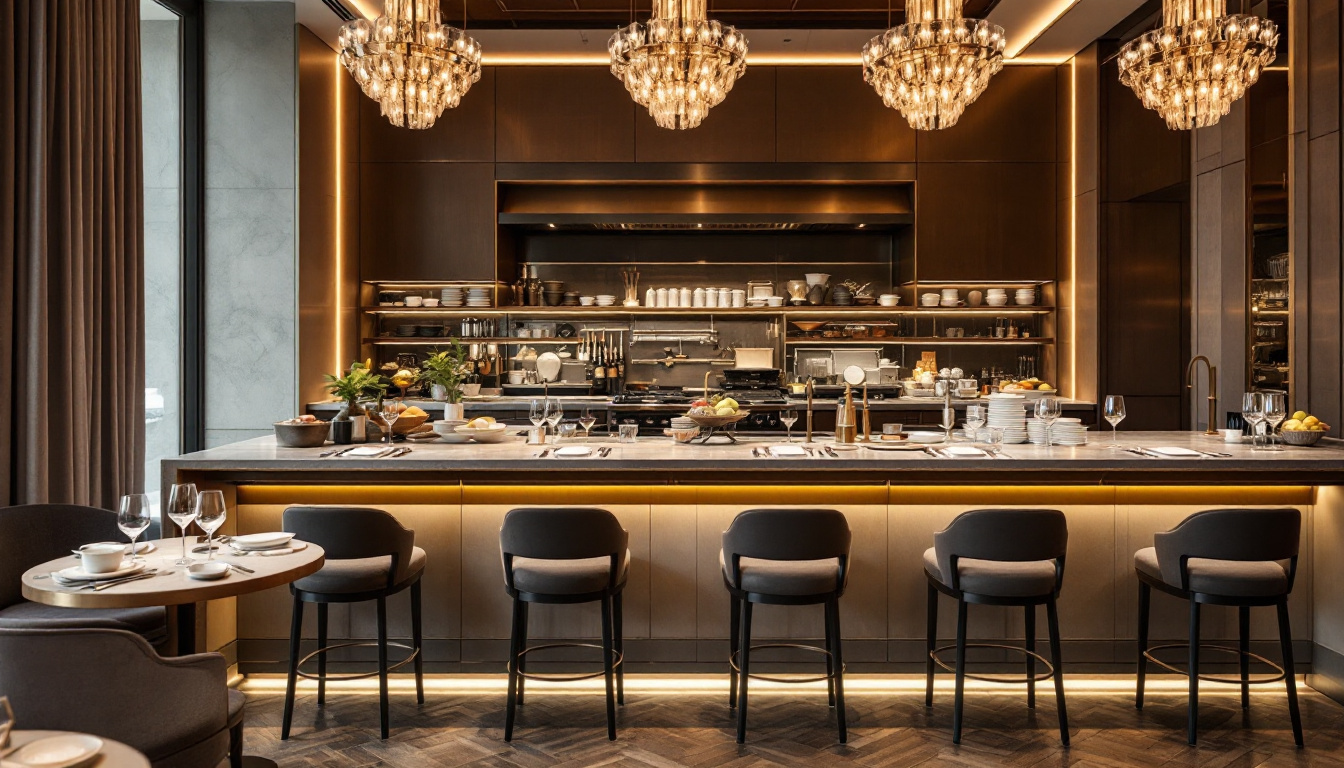
The first space is the entrance — a small ante-room with a long marble bar where guests are greeted with the first impression of the evening (a small piece of theatre involving a wax-sealed envelope and a single bite of cured fish). The second space is the kitchen pass — guests are walked through the working kitchen, past the brigade of approximately thirty cooks at full service, and served three impressions standing at the pass while the brigade plates around them. The third space is the main dining room, which Alchemist calls the dome — a circular hall, twelve metres in diameter, with a domed ceiling that functions as an immersive video projection surface. The dome takes the forty guests of the evening on a long horseshoe-shaped banquette around the perimeter and is the space where the majority of the seated impressions are served (approximately twenty courses across two hours and twenty minutes). The fourth space is the laboratory — a small kitchen-and-workshop space where guests are served three or four impressions while observing the kitchen’s research team at work on fermentation and product development. The fifth and final space is the bar — a small dark room with a long zinc counter where the dessert sequence and the final impressions are served across the last hour of the meal.
The structural design of the five spaces is the most important single element of Munk’s working method. The meal does not happen on plates alone — the meal happens through movement between spaces, through the changing register of each space, through the choreography of the evening across six hours. No other restaurant in Europe approaches this scale of physical design.
The opening impressions
The first impression of the evening is delivered in the entrance bar at 18:35 — a small wax-sealed envelope, presented to each guest by a server in a black uniform, containing a single small dried piece of cured Atlantic cod and a printed card with a short paragraph about the global fishing industry. The card is signed by Munk personally. The opening impression is the menu’s first statement of intent — the cooking will be political, will engage directly with the ethical and environmental context of the food, will refuse to pretend that the act of eating at a fine-dining table is divorced from the wider systems that feed the food onto the table.
The second impression — served on the floor of the kitchen pass, standing — is a small piece of theatre about plastic waste. The course is served on a small ceramic plate shaped like a globe, with a single piece of edible ‘plastic’ (a sheet of gel made from agar and seaweed, formed to resemble a piece of clear plastic packaging) sitting on top of a small mound of cured trout roe. The course is meant to be eaten as a single bite. The cooking is, in the technical sense, simple. The presentation and the framing are the work.
The third impression — also at the pass — is a small piece of grilled bread with a smoked-butter spread, served on a small piece of wood as a deliberate moment of quiet between the political opening and the dome sequence to come. Munk’s brigade understands that the meal needs pacing as much as content; the third impression is the breath between the entrance and the dome.
The dome
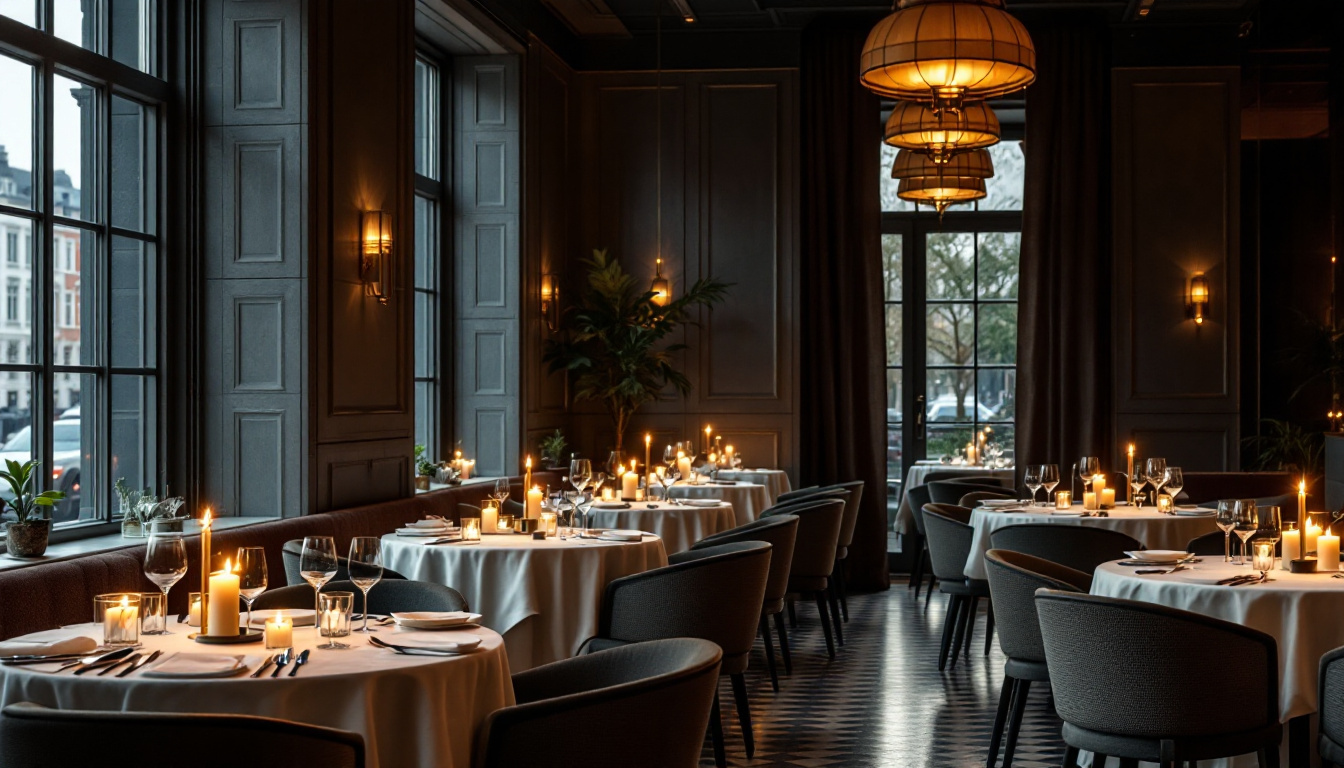
The dome is the architectural centrepiece of Alchemist and the space where most of the seated impressions are served. The room is twelve metres in diameter, with a coffered ceiling that doubles as a 360-degree video projection surface. The lighting is fully programmable across the evening and shifts by impression — at the opening of the dome sequence the lighting was a deep blue dusk, at the midpoint a star field with constellation overlay (an astrophysics narration played overhead), at the close a slow morning-light transition timed to the closing impressions of the seated sequence.
The seated impressions in the dome are too numerous to describe individually — approximately twenty across the two hours and twenty minutes I sat there. The defining courses, in my reading, were these.
A single impression served on a fake silicone tongue — a piece of cured Norwegian salmon, with a small dressing of horseradish and dill, served on a flesh-coloured silicone facsimile of a human tongue. The guest eats the salmon directly off the tongue, holding the silicone with both hands. The course is theatrical at the level of provocation but the cooking is precise — the cure is short (six hours), the dill is from the kitchen’s own herb garden, the horseradish is fresh-grated at the pass.
An impression served inside a small glass dome with a frozen herb mist inside — when the server lifts the lid, the mist rolls out across the table and a single small dish of cured scallop and frozen yuzu juice is revealed underneath. The technical work behind the mist (a liquid-nitrogen reservoir that the kitchen times to release at the moment of service) is precise; the visual effect is theatrical; the cooking on the plate is, again, restrained and good.
An impression served on a small black ceramic plate shaped like a human skull — a tartare of dry-aged horse meat with a single quail-egg yolk, served at room temperature with a small drop of fermented black-garlic vinaigrette. The skull is the kitchen’s nod to the European memento mori tradition; the cooking is technical and the meat is excellent (sourced from a small horse farm in southern Jutland with which the kitchen has worked since 2020).
The dome’s final seated impression — and the moment that, for me, the meal turned from the spectacular into the genuinely moving — was a single small bowl of warm chicken broth with a single dumpling of slow-braised pork floating in it, served as the ceiling projected a long sequence of historical food-aid photographs from the World Food Programme archive. The impression is the kitchen’s tribute to the work of the United Nations World Food Programme; a portion of the bill from every dinner at Alchemist is donated to WFP through Munk’s JunkFood NGO. The course is the menu’s clearest statement that the holistic-cuisine framework is more than aesthetic posture — Munk is using the wealth of the dining room to fund the food security work that he has built into the structure of the restaurant.
The laboratory
The fourth space, the laboratory, is reached by a short walk across the building at the close of the dome sequence (approximately 22:40 on my evening). The space is a small open kitchen with a long fermentation rack along one wall, a tasting bar in the centre, and the kitchen’s research team — a brigade of four — working at the bench. The team is at the bench through service. The work they do during the evening is real research work, not theatre — they are testing fermentations, calibrating new pairings, prepping product for the kitchen’s commercial line.
The three impressions served in the laboratory are the menu’s most technically advanced and the least theatrically presented. The first is a small spoonful of two-year-old fermented black-currant paste, served on a single warm cracker. The second is a single bite of insect-protein bread (a sourdough bread made with cricket flour, baked daily in the laboratory), served with a small dressing of fermented honey. The third is a small piece of cured kelp from a Faroese producer, treated as if it were prosciutto — sliced thin, served at room temperature on a warm piece of bread with a single drop of olive oil. The laboratory impressions are the kitchen’s most direct demonstration of its working research method.
The bar
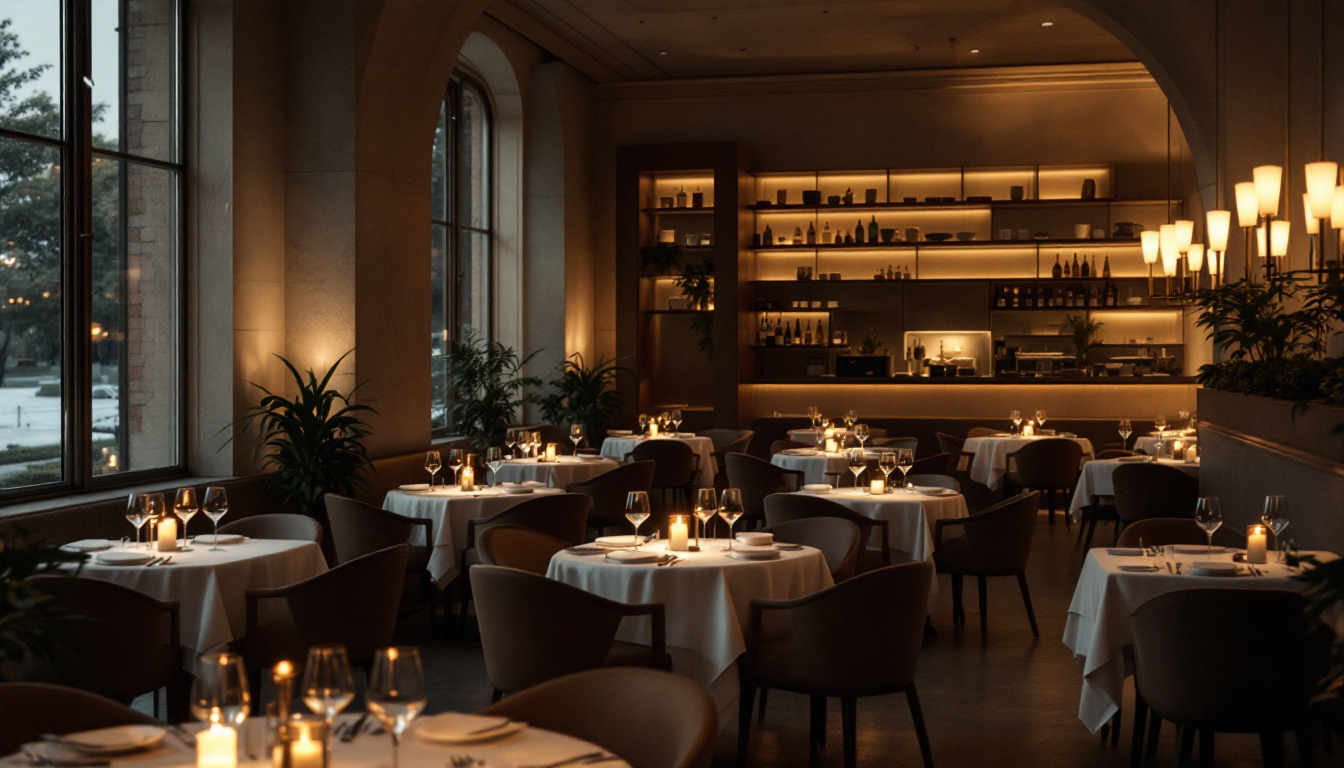
The bar is the final space of the evening — a small dark zinc-countered room at the south end of the building where the dessert sequence and the closing impressions are served across the last hour of the meal. The bar takes the forty guests of the evening across two long sides, with the bar staff working in the centre. The lighting is low. The pacing slows.
The dessert sequence at Alchemist runs approximately ten impressions across forty minutes and is the kitchen’s most technically restrained sequence of the evening — after five hours of theatre and political statement and immersive video, the dessert programme returns to plate-level craftsmanship and quietude. The defining desserts on the January menu were a single small piece of frozen sea-buckthorn parfait set on a warm milk crisp, a small bowl of warm porridge with a foam of smoked butter and a single crystallised sage leaf, and a closing impression of a small spoonful of fermented honey poured from a beehive that sits on the bar. The beehive is real; the bees are not present during service.
The bill came at 00:30. The total, for the standard pairing, was DKK 6,500 plus a small tip. The walk to the harbour-bus stop took four minutes. The bus back to Nyhavn took ten.
The verdict
Alchemist is the most ambitious single piece of restaurant design in Europe. The cooking is technically excellent across all fifty impressions; the theatre is genuinely theatre rather than gimmick; the political and ethical framing of the meal is sincere rather than decorative. The full six-hour structure is the experience. There is no shorter version of Alchemist; there is no à la carte; there is no way to engage with the kitchen’s work other than by committing to the full evening.
The cost is the cost. DKK 6,500 per guest is roughly the same as the headline menu price at Geranium across town, and the experience runs nearly twice as long. The value proposition is not the per-hour cost; the value proposition is the depth of the design and the singularity of the framework. There is nothing else like this restaurant on the planet at this moment.
I would book Alchemist once. The meal is too long and too intense to repeat at short intervals. But the once is essential — for any serious eater who wants to understand where contemporary fine dining is genuinely advancing in 2026, the dome at Refshalevej 173C is the place to spend six hours.
Verification
Filed against the following sources, last verified on April 11, 2026. The desk re-checks the source URLs on every dated modification of the piece.
- https://en.wikipedia.org/wiki/Alchemist_(restaurant)
- https://guide.michelin.com/en/capital-region/copenhagen/restaurant/alchemist
- https://thingstodocph.com/copenhagen-michelin-starred-restaurants/
- https://www.foodinspiration.com/us/chef-rasmus-munks-holistic-cuisine-at-alchemist-restaurant-in-copenhagen/
- https://suitcasemag.com/rasmus-munk/
Standing Questions
- What is 'holistic cuisine' as Munk defines it?
- Munk's working term for what the kitchen does — cuisine that engages not only taste and technique but emotion, ethics, politics, science, and theatre. In practice the format means the kitchen serves approximately fifty 'impressions' (small courses, set pieces, immersive moments) across a six-hour evening, organised across five physical spaces in the warehouse. Some impressions are conventional plates of food. Others are theatre — a course served on a fake tongue, a course delivered through a soundscape, a course presented inside the planetarium-style dome of the main dining room with an astrophysics narration above. Ferran Adrià has called Munk's holistic concept the only fine-dining vanguard genuinely working in 2026.
- How do I book and what does it cost?
- Bookings open via the restaurant's website on the first day of each month for the month six months ahead — bookings for August 2026 opened on 1 February 2026 at 10:00 Copenhagen time and were fully allocated within forty minutes. The headline cost is DKK 6,500 per guest (approximately EUR 875 or USD 950 at 2026 exchange rates), inclusive of the full impression menu and the standard drinks pairing. The pairing is mandatory for every guest at the table. An upgraded 'connoisseur' pairing is available at DKK 9,500. Payment for the full party is taken in advance at booking. Cancellation is not permitted within sixty days of the booking.
- How long is the dinner and what should I prepare for?
- The dinner runs from 18:30 to approximately 00:30, six hours of active service. Guests are asked to arrive ten minutes early for a welcome impression in the entrance space; the main dining room session begins at 19:00 sharp. Across the evening you will move between five spaces — the entrance, the kitchen pass, the main dining room (the 'dome'), the laboratory, and the bar — and you will be on your feet for portions of the meal. Dress code is smart casual; the kitchen has explicitly moved away from requiring jackets. Bring comfortable shoes. The meal is too long, too intense, and too immersive to be the centrepiece of a busy day; clear the rest of the day around it.
- Where is Refshaleøen and how do I reach the restaurant?
- Refshaleøen is the former B&W shipyard island east of central Copenhagen, ten minutes by harbour bus from Nyhavn or fifteen minutes by taxi from central Copenhagen. The island has become, since the late 2010s, the city's primary creative and food district — it also houses Noma (until 2024), 108 (until closure), Empirical Spirits, and a number of music venues and start-up workshops. The restaurant is at Refshalevej 173C, in a converted warehouse with a large copper-clad facade. There is no signage. The entrance is the unmarked black door at the south end of the building. Taxis can drop directly outside; the harbour bus (route 991, 992) runs to Refshaleøen Plads, a four-minute walk from the entrance.
- What does the post-meal evening look like?
- The dinner ends around 00:30. The kitchen offers a small closing space in the bar at the entrance, where guests can have a final drink and a closing impression before leaving; most diners stay for thirty to sixty minutes. Taxis are easy to call back to central Copenhagen. The closing piece of the evening — a small spoonful of fermented honey served from a beehive at the bar — is the kitchen's quiet signature and is worth waiting for. Stay at the Hotel d'Angleterre or the Sanders for the night; both can hold a late check-in if the booking is made in advance.