I had a 12:30 lunch reservation at Pic on a Wednesday in late February 2026 — the lunch service, deliberately chosen for the relaxed midweek timing and the TGV-back-to-Paris afternoon return. I took the early train from Gare de Lyon at 07:23, arrived at Valence TGV at 09:42, took the local connection to Valence-Ville at 09:58, and walked the five blocks south to avenue Victor Hugo. The Maison Pic property — a three-storey Belle Époque villa with a pale-cream stucco facade and a small wrought-iron gate at the entrance — sits on the south side of avenue Victor Hugo, set back from the street by a small courtyard with a single mature plane tree at the centre. The maître d’, Christian Tournier (who has been at the restaurant since 2002), met me at the courtyard entrance and walked me through to table eleven in the main dining room.
Pic is the four-generation family kitchen whose roots run back to Sophie and Eugène Pic’s 1889 Auberge du Pin in the hills of Saint-Péray, Ardèche. André Pic (1893-1984) — Sophie’s son — moved the restaurant to the present Valence building in 1936 and earned its first three Michelin stars in 1939. André’s son Jacques regained the third star in 1973 (after the restaurant had been demoted in the 1950s) and held the three stars until 1995, three years after his death in 1992; the restaurant was reduced to two stars in 1995. Anne-Sophie’s brother Alain ran the kitchen at two stars from 1995 to 1997, then handed the kitchen to Anne-Sophie — who had not been the family’s intended successor and had been working in management consulting in Paris through her twenties — when she returned to Valence to take over the operation. She regained the second lost star in 2007. She is, as of 2026, the only female chef in the world currently holding three Michelin stars at any property anywhere in the world. She holds ten Michelin stars across her global portfolio (the Valence three-star, plus two-star properties at the Beau-Rivage Palace in Lausanne and at Raffles in London, plus one-star and one-star-pending properties in Singapore, Paris, and Megève). She is, by Michelin star count, the most decorated female chef in the history of the guide.
The kitchen at Valence is the family kitchen and is the only one of Pic’s properties that she works personally on a daily basis. I am writing this review four days after the lunch.
The room
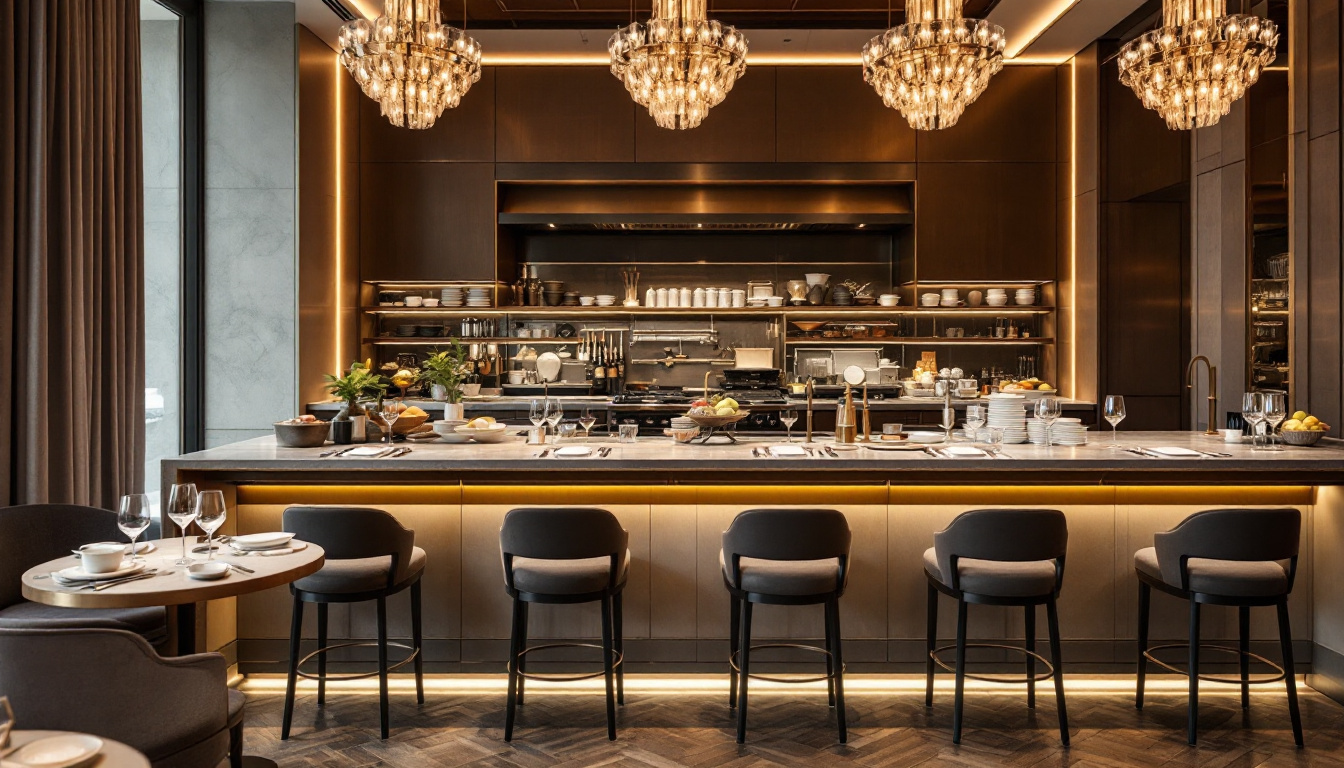
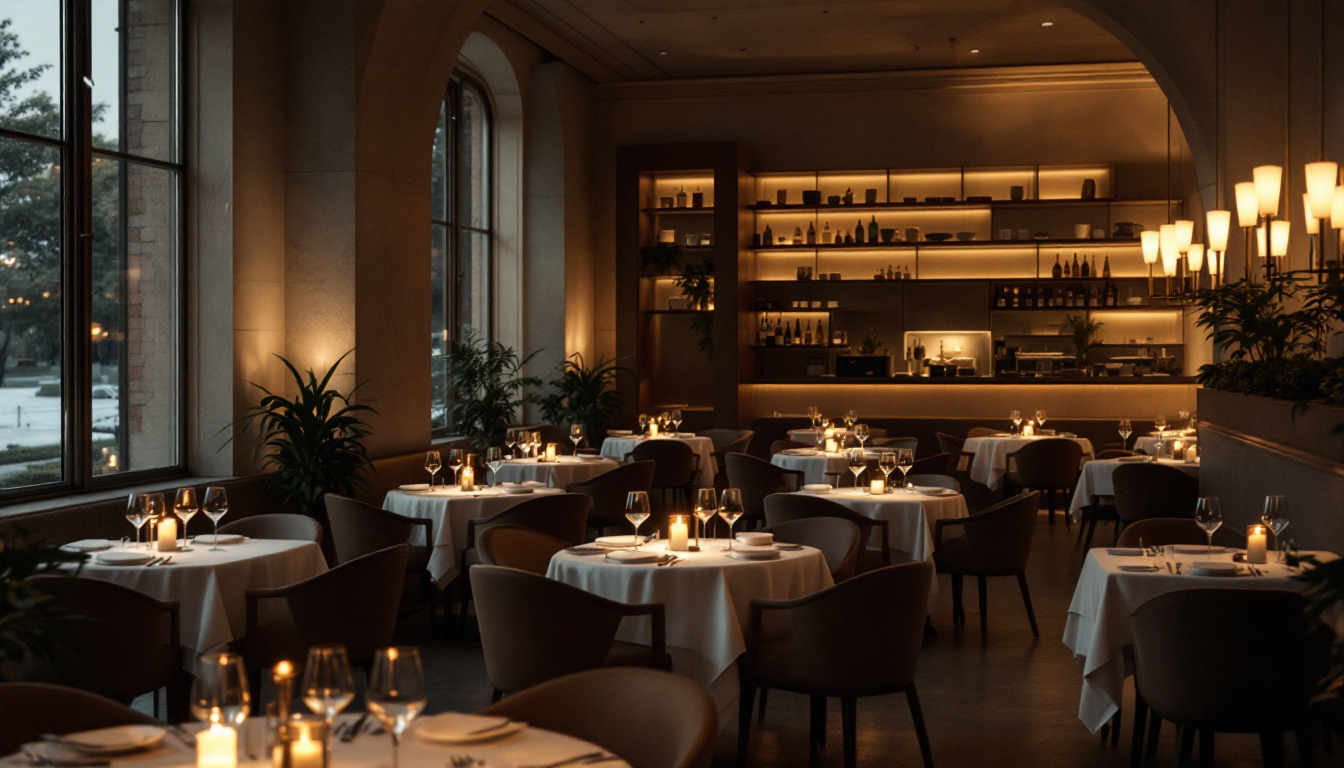
The Maison Pic dining room takes the ground floor of the main villa — approximately 1,400 square feet, organised in two connected rooms (a smaller front room of six tables looking onto the courtyard, a larger back room of ten tables looking onto the small interior garden). The aesthetic is the deliberate contemporary French regional vocabulary that Pic developed in a 2014 renovation by the Paris design firm Bismut & Bismut: warm grey walls in a soft fabric finish, pale-oak parquet, ivory linen tablecloths, low warm lighting from small individual fixtures over each table.
The room takes approximately fifty covers across sixteen tables. Service is led by Christian Tournier with a brigade of nine on the floor for the lunch service. The pacing on this lunch was the relaxed Rhône Valley pace — courses arrived at calculated intervals across two hours and forty minutes, the table was checked frequently without being interrupted, the wine glasses were refilled at the right moments.
The opening
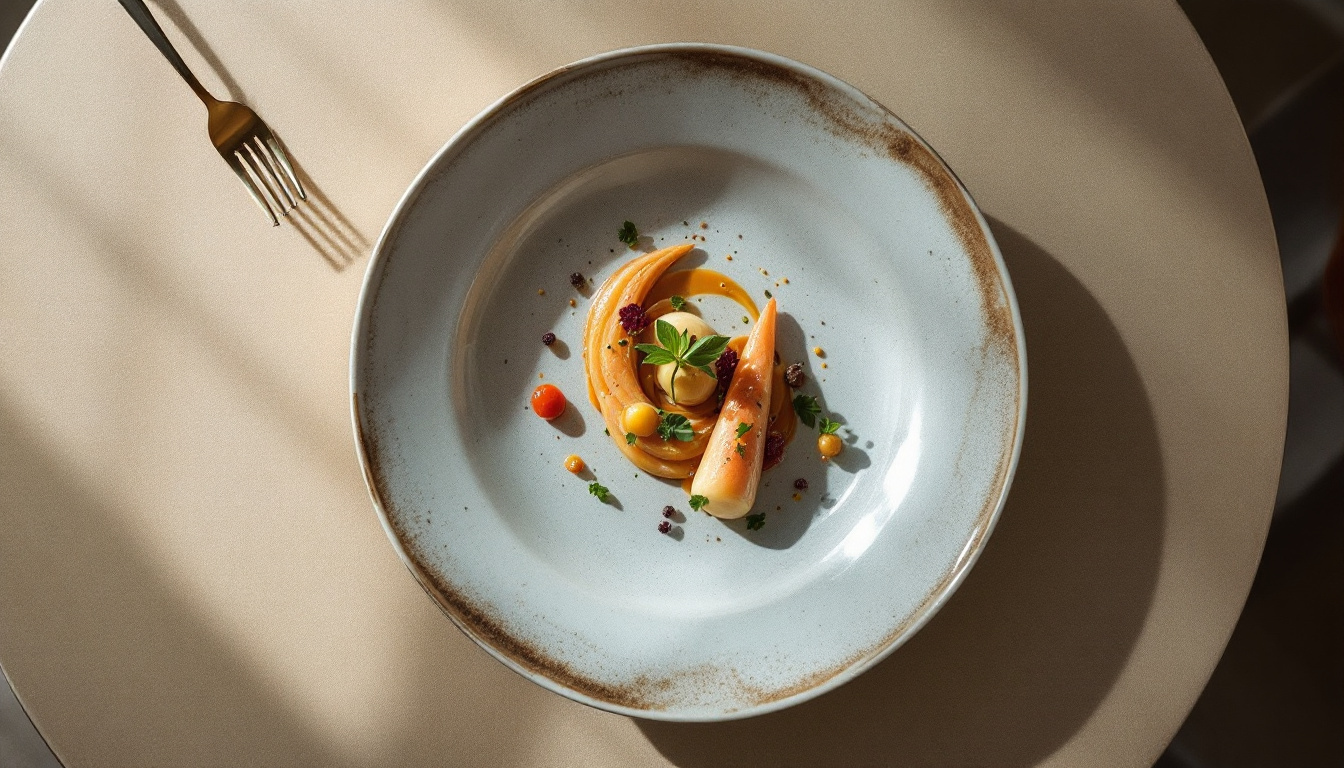
The opening course of the lunch tasting was the kitchen’s signature crayfish — small Lake Geneva crayfish (sourced from a small producer in the Haut-Léman that the kitchen has worked with since 2009), briefly poached in a delicate aromatic court-bouillon of lemongrass, ginger, and citrus zest, served at room temperature on a small bed of estate olive oil with a single petal of nasturtium and a thin slice of pickled cucumber. The course is the kitchen’s most-served single piece and has been on the menu in essentially the same form since 2011.
The course is the menu’s clearest demonstration of Pic’s working framework — aromatic complexity. The crayfish itself is the protein. The court-bouillon contributes the first aromatic dimension (the lemongrass and ginger). The estate olive oil contributes the second (a fruity Provençal nose). The nasturtium contributes the third (a peppery green aromatic). The pickled cucumber contributes the fourth (a sharp acid that resets the palate between bites). The diner can, with attention, isolate each aromatic dimension as a separate sensory event across the eating of the course. The technique is genuinely Pic’s own and is the defining method of the menu.
The mille-feuille blanc
The second course was the kitchen’s most-photographed single piece — the Mille-feuille Blanc. The course is a small individual layered pastry, approximately three inches square, built in seven thin layers: a base layer of white-chocolate ganache, a layer of grated white truffle (Alba, sourced from a Piedmont producer the kitchen works with from October through January), a layer of poached white asparagus, a layer of white-chocolate ganache again, a layer of grated white truffle again, a layer of poached white asparagus again, a closing layer of white-chocolate ganache. The pastry is built at the pass and served at the table within ninety seconds of assembly, with the layers still distinct.
The course is the menu’s most direct demonstration of the layered aromatic framework. The three ingredients — white truffle, white asparagus, white chocolate — are each contributing a separate aromatic register. The white chocolate is the cocoa-and-vanilla base. The white truffle is the deep umami top note. The white asparagus is the green vegetal middle. The course is meant to be eaten in three or four bites, with each bite carrying all three aromatic registers in different proportions.
The course was, on this lunch, the most technically demanding single piece of the meal. The white truffle was the right intensity (approximately five grams per serving at retail cost of approximately EUR 100). The white asparagus was the right firmness. The white chocolate ganache was the right richness. The combination as a whole was the kitchen’s most photographically arresting single piece and the meal’s defining moment.
The five other defining courses
The third course was a small bowl of warm chestnut velouté with a single piece of poached lobster and a small dressing of cocoa-and-coffee reduction. The course was the menu’s clearest demonstration of Pic’s bridging of sweet and savoury aromatic vocabularies — the chestnut velouté carries a deep sweet base, the lobster contributes the protein and the briny acid, the cocoa-and-coffee reduction adds a deep bitter top note. The combination is, in lesser hands, a category error; in Pic’s hands, it is the menu’s quietest piece of compositional balance.
The fourth course was a single piece of slow-roasted turbot, sourced from a North Sea producer, served with a small sauce of jasmine-tea reduction and a thin layer of estate olive oil. The course is the kitchen’s most direct expression of the contemporary Northern Rhône fine-dining vocabulary — clean protein, restrained sauce, aromatic top note.
The fifth course was the menu’s substantial main — a single piece of slow-roasted lamb saddle, sourced from a small farm in the Drôme département twenty minutes east of the restaurant, served with a small puree of estate root vegetables and a thin reduction of lamb jus finished with a small splash of génépi (the local alpine liqueur). The lamb was twenty-eight days dry-aged. The roast was at low temperature for forty minutes followed by a brief rest. The course was the menu’s quietest piece of conventional French technique.
The sixth course was the menu’s transition to dessert — a small dish of grilled estate peach with a single petal of edible flower and a thin layer of crystallised verbena. The peach was from a small orchard in the Drôme valley, harvested the previous summer and held in a controlled-atmosphere cold storage that the kitchen has used since 2018 to preserve summer fruit for the winter menu.
The seventh and final course was the formal dessert — a small composition of dark-chocolate ganache, fennel sorbet, and a thin layer of crystallised liquorice. The combination is one of Pic’s standing pastry compositions and has been on the menu in some form since 2015. The course was the right balance of bitter, sweet, and aromatic, and was the right close to the meal’s aromatic arc.
The wine
The wine list at Pic runs to approximately 1,800 references and is one of the deepest Northern Rhône programmes in France. The list is heavily weighted toward Côte-Rôtie, Hermitage, and the surrounding Northern Rhône appellations (Cornas, Saint-Joseph, Crozes-Hermitage) — Valence is, geographically, the gateway to the Northern Rhône, and the cellar reflects the kitchen’s position in the appellation. The list is run by sommelier Paz Levinson, who came in from Virgilio Martinez’s Central in Lima in 2014 and who has built one of the most thoughtful regional French programmes in Europe.
The pairing programme on the lunch tasting was the classic pairing at EUR 165 per guest, which ran five wines across the seven courses. The standout pairings were a 2019 Domaine du Tunnel Saint-Péray Roussanne with the mille-feuille blanc and a 2015 Jamet Côte-Rôtie with the lamb — both were the right wines for the courses and the pairing as a whole was the most considered Northern Rhône pairing I have taken at any kitchen in the region.
For diners who prefer to drink by the bottle, the cellar’s deepest section is the Côte-Rôtie programme — a Jamet vertical from 1990 to 2020, a Guigal La Mouline vertical from 1980 to 2018, and a Jean-Louis Chave Hermitage vertical from 1985 to 2019 are the cellar’s three signature offerings.
The hotel
The Maison Pic hotel — thirteen rooms across the upper two floors of the main villa and the adjacent annexe — is the right close to the dinner. I had checked into room seven on the second floor (a corner room with windows looking onto the courtyard and a view of the small interior garden) for the previous night. The room was 480 square feet, with a heavy wooden bed, a working fireplace, a deep soaking tub in the marble bathroom, and a small private terrace looking onto the garden. The room rate was EUR 480 per night including breakfast, plus tax.
Breakfast at the hotel was served in the small ground-floor dining room from 08:00 to 10:30, on a continental menu with estate honey, regional cheese, two breads from a small Valence bakery, soft-boiled eggs from a small farm in the Drôme, and coffee from a small Lyon roaster. The breakfast was the hotel’s quietest piece of programming and was the right opening to the day.
The verdict
Pic is the most precisely composed three-star kitchen in the Rhône Valley and is, in my reading, the most technically distinctive three-star kitchen in southern France. The aromatic-complexity framework is genuinely Pic’s own. The mille-feuille blanc is the meal’s defining moment. The room is the warmest contemporary French regional dining room I have eaten in. The wine programme is the most thoughtful Northern Rhône cellar in the appellation.
The bill, for the seven-course lunch with the classic pairing and service, came to EUR 412 per guest. The TGV back to Paris at 17:30 put me back in the capital by 19:50. Pic is the right Rhône Valley three-star booking for a serious eater making a first visit to the region, and the right second booking for a returning visitor who has already done one of the Lyon three-stars. The aromatic framework is the kitchen’s defining contribution to contemporary French cooking; book the lunch and take the late-afternoon TGV back to Paris.
Verification
Filed against the following sources, last verified on June 4, 2026. The desk re-checks the source URLs on every dated modification of the piece.
- https://www.anne-sophie-pic.com/en/restaurant-pic
- https://guide.michelin.com/us/en/auvergne-rhone-alpes/valence/restaurant/pic
- https://en.wikipedia.org/wiki/Anne-Sophie_Pic
- https://www.relaischateaux.com/us/restaurant/pic/
- https://guide.michelin.com/is/people/maison-pic-anne-sophie-pic-michelin-star-inspiration-1/news
Standing Questions
- How do I reach Valence and where is the restaurant?
- Valence sits in the southern Rhône Valley, ninety minutes south of Lyon by car and two hours north of Marseille. The TGV from Paris Gare de Lyon to Valence TGV station takes two hours twenty minutes; the station is fifteen minutes north of the town by taxi. The restaurant occupies 285 avenue Victor Hugo on the south side of central Valence, a ten-minute drive from the TGV station. The most reliable approach for international visitors is to fly into Lyon Saint-Exupéry (LYS), pick up a hire car, and drive ninety minutes south on the A7 — the route runs along the Rhône through some of the most consequential wine country in France.
- What does the menu structure look like in 2026?
- Anne-Sophie Pic runs the menu in two formats. Lunch is a seven 'port of call' tasting at EUR 175 per guest — the kitchen's term for course rather than the conventional French 'plat,' reflecting Pic's framing of the menu as a journey through aromatic compositions. Dinner is a ten 'port of call' tasting at EUR 380. There is no à la carte. Both menus rotate seasonally and the printed menu given to the table is the day's menu. Wine pairings run at two tiers — classic at EUR 165 (lunch) or EUR 280 (dinner) and reserve at EUR 380 (lunch) or EUR 580 (dinner). The reserve pairing draws from the cellar's substantial collection of older Northern Rhône bottlings.
- What makes Pic's cooking distinctive at the three-star level?
- Pic's working framework is aromatic complexity — the kitchen's signature technique is the layered combination of multiple individual aromatic preparations on a single plate, each contributing a separate aromatic dimension that the diner can isolate and identify across the eating of the course. The kitchen's standing dishes include the 'Mille-feuille Blanc' (a layered millefeuille of three white aromatic preparations — white truffle, white asparagus, and white chocolate), the kitchen's signature crayfish course, and a closing pastry programme that has become one of the most photographed in France. The cooking is technically French but the framework is genuinely Pic's own.
- Should I stay at the property's hotel?
- Yes if you can secure one of the thirteen rooms. The Pic hotel — formally Maison Pic — occupies the same Belle Époque villa as the restaurant and the family residence, with thirteen rooms across three floors in the EUR 380 to EUR 720 band depending on season. The rooms are spacious by the standards of contemporary French regional hotels, breakfast is included (served in the small ground-floor dining room from 08:00 to 10:30), and the property holds a Relais & Châteaux designation. The hotel is genuinely the right close to the dinner — Valence is a small town with limited high-end accommodation outside the property.
- What is the most efficient way to book?
- Reservations open via the restaurant's website 90 days in advance. Prime weekend windows (Friday and Saturday dinner) are allocated within twenty minutes of the window opening; weekday lunch is more achievable inside thirty days. A deposit of EUR 150 per guest is required at booking. Cancellation is permitted up to seven days before service for a full refund. The kitchen is closed Monday and Tuesday, and the annual closure runs late December through 20 January. For a TGV-from-Paris day trip, take the lunch — the TGV back to Paris at 17:30 puts you back in the capital by 19:50.