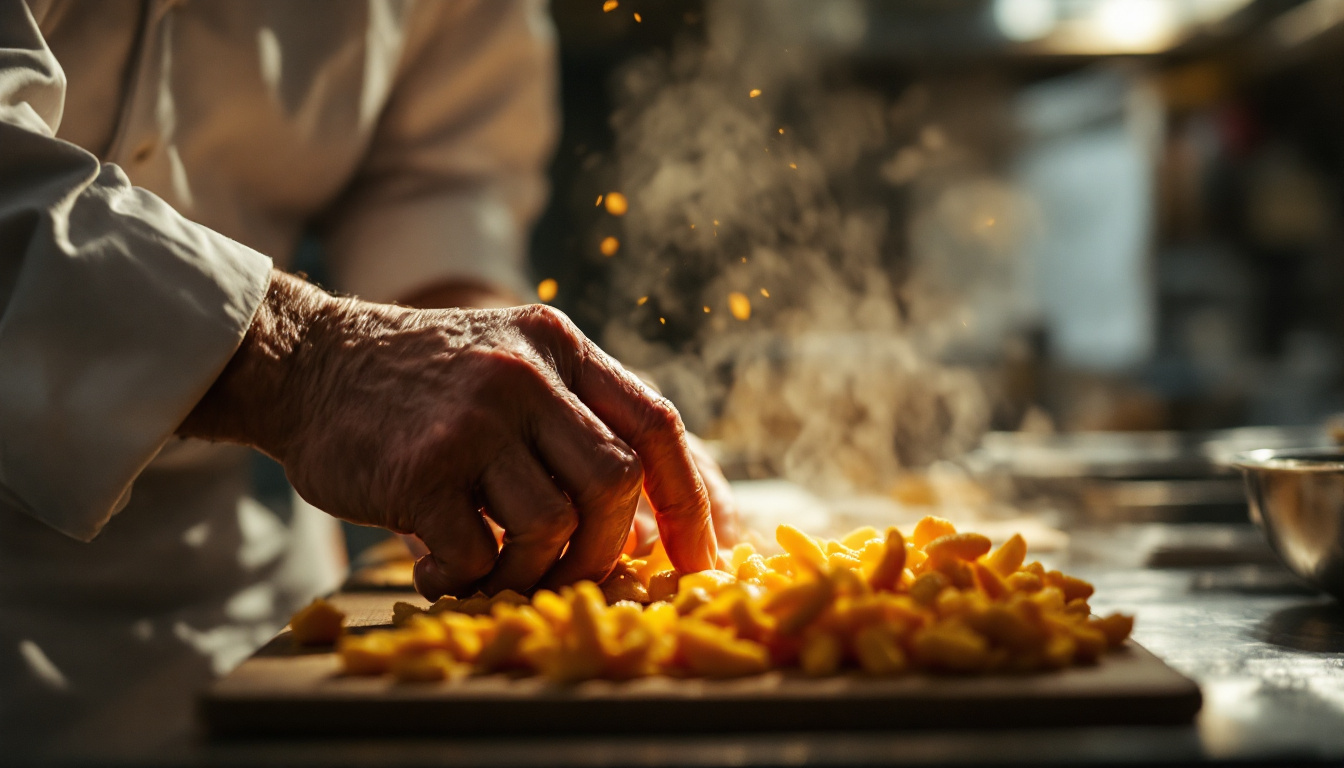
I visited the Le Meurice tea-time programme on a Tuesday afternoon in early May 2026, and the Cédric Grolet Opéra boutique the following morning. The two visits, taken together, cover the breadth of what is the most consequential single pastry programme in contemporary global fine dining.
Cédric Grolet is, at forty in 2026, the most consequential single pastry chef of the modern era. He joined Le Meurice in 2011 as a senior pastry sous-chef at the age of twenty-five, took over as executive pastry chef in 2018, and earned the Best Pastry Chef in the World award from the World’s 50 Best Restaurants in 2018 and the James Beard Foundation Outstanding Pastry Chef award the same year. He has been the most-discussed single pastry chef in the global pastry-and-fine-dining scene across the past eight years, and his signature trompe-l’oeil fruit sculptures — small individual desserts sculpted to look exactly like the fruit they are made from — became the most photographed dessert in global fine dining across the 2018-2024 period.
The programme he runs is unusually broad for a contemporary pastry chef. He oversees the dessert programme at Restaurant Le Meurice Alain Ducasse (the hotel’s two-Michelin-star main restaurant), the tea-time programme at Le Dali (the hotel’s afternoon-tea lounge), and the two retail boutiques (La Pâtisserie du Meurice par Cédric Grolet at 6 rue de Castiglione and Cédric Grolet Opéra at 35 avenue de l’Opéra). The boutiques sell directly to the Paris public and have become, since their respective openings in 2018 and 2020, two of the most-visited contemporary pastry destinations in the city.
Le Meurice and Le Dali
Le Meurice is the Dorchester Collection’s Paris palace hotel — a 1835 property occupying a full block on rue de Rivoli directly across from the Tuileries Garden. The hotel is one of the four official Paris ‘palace’ hotels (alongside the Ritz, the Plaza Athénée, and Le Bristol), holds the official ‘Palace’ designation from the French ministry of tourism, and has held the designation continuously since the system was introduced in 2011. The hotel’s main restaurant, Restaurant Le Meurice Alain Ducasse, has held two Michelin stars since 2016, and the hotel’s tea-time programme at Le Dali has been the venue for Grolet’s most-photographed work across the past eight years.
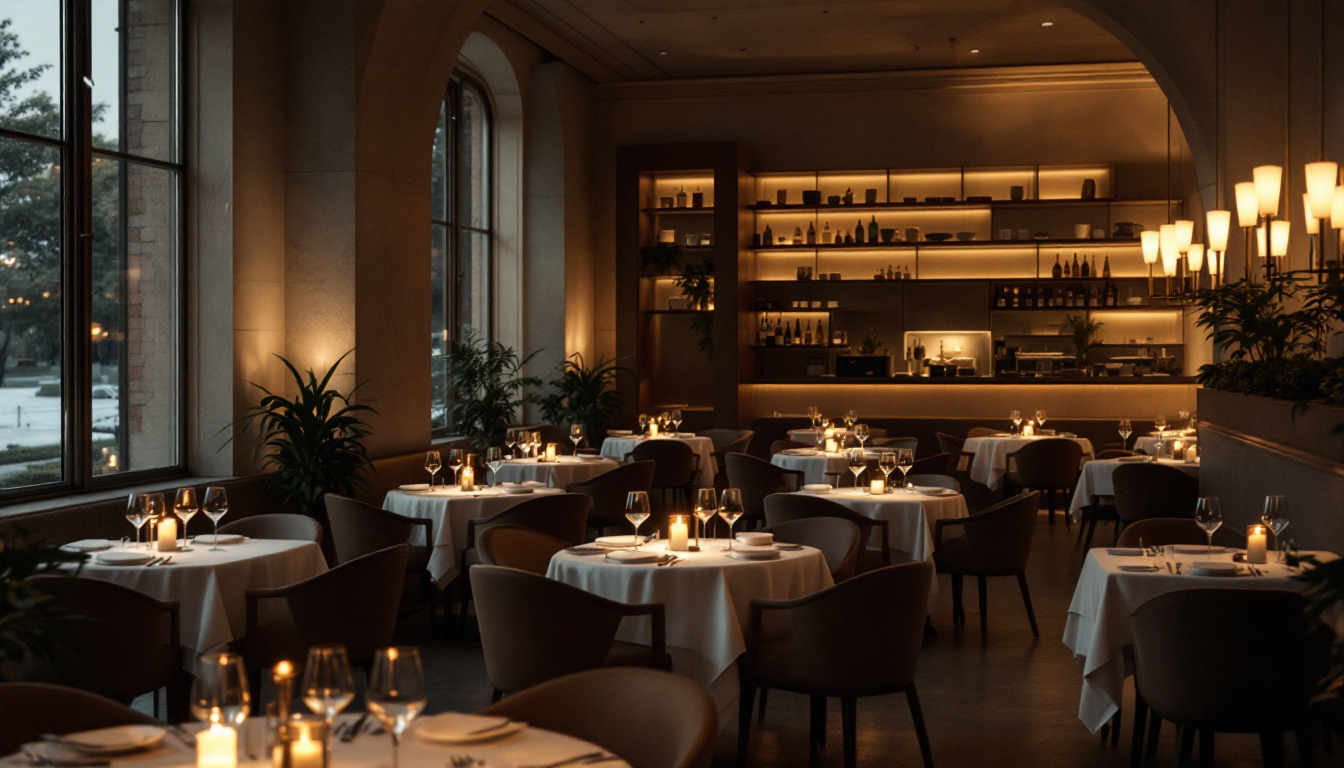
I had a 15:30 reservation at Le Dali. The lounge — a small open salon at the centre of the hotel’s ground floor, designed by Philippe Starck in 2007 around a large mural ceiling by Ara Starck (Philippe’s daughter) depicting an abstract Salvador Dalí — takes approximately forty covers across small individual tables. The tea service runs from 15:00 to 18:00 daily at EUR 95 per guest, includes the hotel’s full tea programme (a small selection of small savoury pieces, scones with clotted cream, and the closing pastry sequence), and culminates in the Grolet trompe-l’oeil sequence — approximately twelve small individual pastries presented as a single composition on a three-tier silver stand.
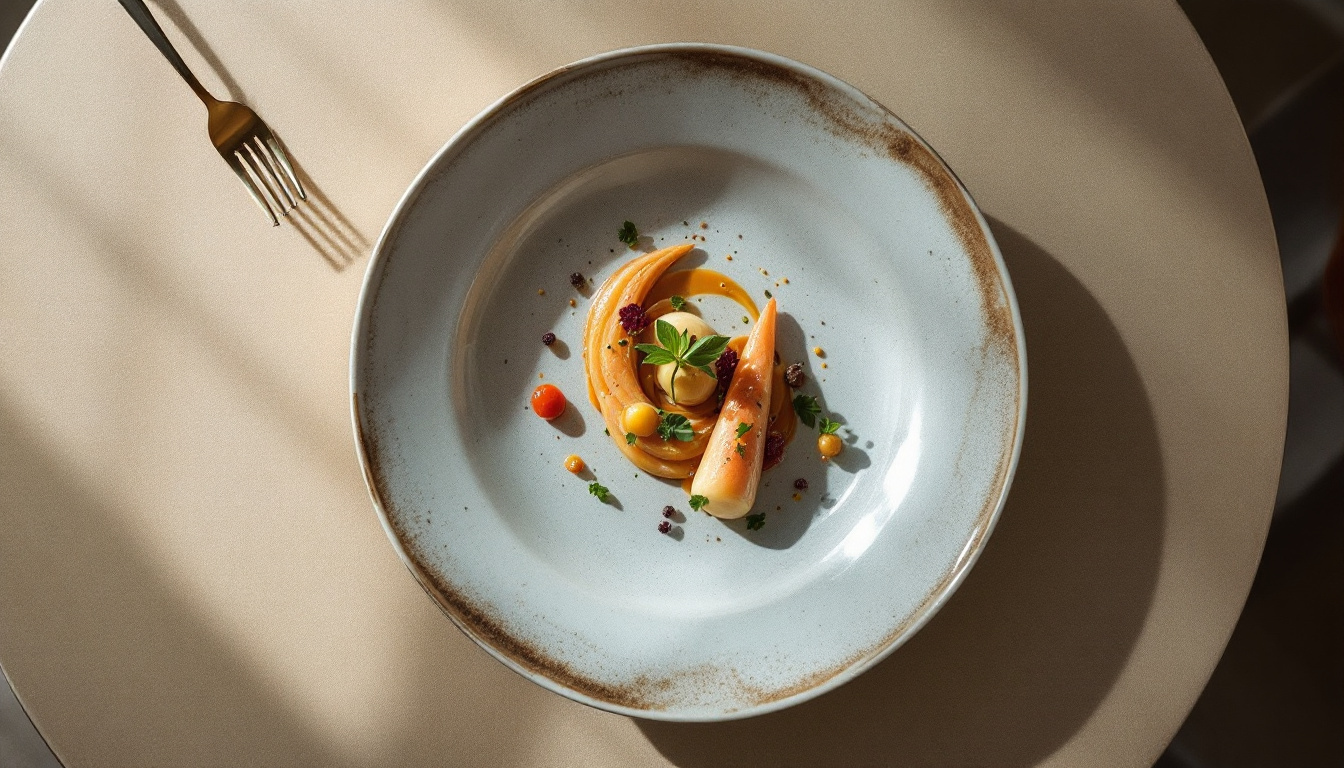
The Grolet sequence on this afternoon included six trompe-l’oeil fruit sculptures (the lemon, the hazelnut, the apple, the cherry, the pear, and a more recent addition of the fig), four small individual classical Paris pastries (a small Paris-Brest, a small Saint-Honoré, a small religieuse, a small small éclair), and two seasonal pieces (a small individual strawberry tart and a small individual rhubarb composition). The presentation was the kitchen’s most direct demonstration of the trompe-l’oeil framework — the six fruit sculptures, arranged on a single tier of the silver stand, read on first sight as a small bowl of fresh fruit.
The trompe-l’oeil lemon
The single Grolet piece that more than any other has defined his career is the trompe-l’oeil lemon. The pastry is a small individual dessert, approximately the size of a real Sicilian lemon, sculpted from a sphere of lemon-curd-filled white-chocolate ganache and painted with a yellow-and-green food-grade pigment that exactly matches the colour of a real lemon. A small green stem of crystallised sugar protrudes from the top.
The pastry is, on first sight, indistinguishable from an actual lemon. The trick is the food-grade pigment — Grolet developed the pigment recipe across approximately two years of technical work in 2016 and 2017, working with a small French food-pigment supplier to develop a paint that matches the colour and texture of citrus fruit precisely while remaining edible. The texture of the painted surface is the technical demonstration: the pigment is applied with a fine brush in multiple layers, with each layer dried before the next is applied, and the final surface has the slight pebbled texture of a real lemon skin.
The pastry is meant to be cut open at the table. The diner is given a small knife and asked to slice the lemon down the middle. The interior reveals the lemon-curd-filled white-chocolate ganache — a thin shell of white-chocolate ganache encasing a generous filling of fresh lemon curd, with a small crystallised sugar pip at the centre. The flavour is the right balance of acid and cream — the lemon curd is genuinely tart, the white-chocolate ganache contributes the sweetness, the combination is the kitchen’s most precisely composed single piece of pastry work.
The lemon was, on this afternoon, the right piece of theatre. The visual surprise of the indistinguishable-from-fruit exterior, the textural surprise of the curd-and-ganache interior, the flavour surprise of the precisely balanced acid-and-sweetness — the three surprises across approximately ninety seconds of eating define the framework that Grolet has built across the past eight years.
The five other defining pieces
The trompe-l’oeil hazelnut is the second most-photographed Grolet piece. The pastry is a small individual dessert sculpted to look like a single Piedmont hazelnut, with the same painted-pigment surface technique. The interior is a small praline filling with a thin layer of milk-chocolate ganache. The hazelnut was, on this afternoon, the right piece of textural work — the painted surface had the slight pebbled texture of a real hazelnut shell, the interior had the right richness of the praline filling.
The trompe-l’oeil apple is a small individual dessert sculpted to look like a single small red apple, with the same painted-pigment surface technique. The interior is a small apple-and-Calvados filling with a thin layer of crystallised sugar. The piece is one of Grolet’s longer-running standing pieces and has been on the Le Dali programme since 2018.
The trompe-l’oeil cherry is a small individual dessert sculpted to look like a single small cherry, with the same painted-pigment surface technique. The interior is a small cherry-and-kirsch filling. The cherry is the smallest of the trompe-l’oeil pieces — approximately the size of a real cherry, with a small stem of crystallised sugar attached.
The trompe-l’oeil pear is a small individual dessert sculpted to look like a single small Comice pear, with the same painted-pigment surface technique. The interior is a small pear-and-poire-Williams filling. The pear is the largest of the trompe-l’oeil pieces and is the most technically demanding single sculpture — the slight asymmetry of a real pear is the most difficult shape to imitate.
The Paris-Brest at Le Dali is Grolet’s contemporary intervention in the classical Paris pastry tradition. The dish is a small individual ring of choux pastry filled with a hazelnut-praline buttercream, dusted with powdered sugar, with a single roasted hazelnut at the centre. The Paris-Brest is one of the kitchen’s standing classical pieces and is the framework’s clearest demonstration that the trompe-l’oeil sculpture is a creative extension rather than a replacement of the classical Paris pastry vocabulary.
The Opéra boutique
I visited the Cédric Grolet Opéra boutique on a Wednesday morning at 08:45 (the boutique opens at 09:00 daily). The queue at the entrance, when I arrived, was approximately eighteen people long. The boutique occupies a small two-storey space at 35 avenue de l’Opéra, two blocks south of the Opéra Garnier — the ground floor is the retail counter and a small sit-down café space, the upper floor is the production kitchen where the boutique’s viennoiserie is baked fresh each morning.
The viennoiserie programme is the boutique’s most-discussed single offering and has been one of the most-discussed contemporary pastry programmes in Paris since the boutique opened in 2020. The signature pieces are the classic butter croissant (a small individual croissant, baked daily, retail price EUR 4.50), the rolled hazelnut praline croissant (a more elaborate piece with a hazelnut-praline filling rolled into the dough, EUR 8), and the limited daily-edition viennoiserie (typically a more elaborate piece released only on a particular day, EUR 12 to EUR 18).
I ordered the classic butter croissant, the rolled hazelnut praline croissant, and the limited daily-edition piece (which on this Wednesday was a small individual brioche filled with caramelised banana and a thin layer of dark chocolate). I sat at one of the boutique’s six small sit-down tables and ate the three pieces with a coffee from the boutique’s small espresso bar.
The classic butter croissant was, on this morning, the best contemporary Paris butter croissant I have eaten in the past five years. The lamination was visible across approximately twenty-four distinct layers in the cross-section, the exterior was the right depth of caramelised brown without being burnt, the interior was the right honeycomb structure with no compressed areas. The flavour was the right balance of the AOP butter (Grolet uses a single supplier — the Beillevaire butter from the Loire-Atlantique region) and the slightly fermented dough.
The rolled hazelnut praline croissant was the more technically demanding piece. The hazelnut-praline filling was rolled into the dough at the lamination stage and is visible in the cross-section as a series of thin alternating bands of praline and butter-laminated dough. The combination of the salt of the butter, the sweetness of the praline, and the crisp exterior was the kitchen’s most direct expression of contemporary contemporary French viennoiserie at the top of the discipline.
The retail programme
The retail trompe-l’oeil programme at the Opéra boutique runs at EUR 18 to EUR 24 per individual fruit sculpture. The pieces sell out quickly each day — the click-and-collect window opens at midnight Paris time for the following day and is typically allocated within two hours for the signature pieces (the lemon, the hazelnut, the cherry, the apple). Walk-in visitors who arrive after 11:00 typically find the signature pieces sold out for the day.
The boutique also runs a small individual-pastry retail programme at slightly lower prices — small éclairs (EUR 8), small Paris-Brests (EUR 12), small religieuses (EUR 10), small tarts (EUR 8 to EUR 14 depending on filling). These are achievable without the click-and-collect and are the right answer for a visitor who wants to taste the Grolet vocabulary without committing to the trompe-l’oeil signature programme.
The verdict
Cédric Grolet at Le Meurice is the most consequential single pastry programme of the contemporary era. The trompe-l’oeil framework is genuinely Grolet’s own contribution to global pastry. The Le Dali tea-time programme is the most efficient way to experience the full trompe-l’oeil sequence. The Opéra viennoiserie is the most distinctive contemporary Paris croissant programme. The combination across Le Meurice and the two boutiques is the deepest single pastry-and-viennoiserie programme in Paris.
The bill at Le Dali, for the EUR 95 tea service with a small bottle of Beillevaire AOP champagne, came to EUR 145 per guest. The Opéra boutique bill for the three viennoiserie and a coffee came to EUR 26. The combined Paris pastry day for a single guest, across the two visits, came to approximately EUR 170 — substantially less than a single Michelin-starred dinner, and arguably more memorable.
If you are visiting Paris and want to understand the contemporary pastry scene at its current top, the day should include both Le Dali at 15:30 and the Opéra boutique at 09:00. The two visits, in combination, are the right introduction to the most consequential pastry programme in the modern era.
Verification
Filed against the following sources, last verified on June 4, 2026. The desk re-checks the source URLs on every dated modification of the piece.
- https://cedric-grolet.com/meurice/en/
- https://www.dorchestercollection.com/the-edit/paris/meet-executive-pastry-chef-cedric-grolet
- https://www.dorchestercollection.com/paris/le-meurice/dining/la-patisserie-du-meurice-par-cedric-grolet
- https://www.parisselectbook.com/en/2026/03/19/cedric-grolet-at-le-meurice-discover-his-trompe-loeil-fruits-at-the-palaces-tea-time/
- https://www.sortiraparis.com/en/where-to-eat-in-paris/brunch-cafe-tea-time/articles/341673-cedric-grolet-s-tea-time-at-le-meurice-in-paris-deceptively-realistic-pastries-and-classic-savory-dishes-with-a-modern-twist
Standing Questions
- Where are the Grolet boutiques and how do I find them?
- Cédric Grolet operates two retail pastry boutiques in central Paris. The flagship is La Pâtisserie du Meurice par Cédric Grolet at 6 rue de Castiglione, in the 1st arrondissement two blocks east of the Place Vendôme and directly behind Le Meurice hotel. The boutique opened in 2018 and is the most direct retail expression of the pastry programme. The second is Cédric Grolet Opéra at 35 avenue de l'Opéra, in the 2nd arrondissement, opened in 2020 — the larger of the two boutiques, with a small café space inside for sit-down service. Both boutiques operate on a click-and-collect model in addition to walk-in retail; the click-and-collect window for the most-photographed signature pastries opens at midnight Paris time for the following day and is typically allocated within two hours.
- What is the trompe-l'oeil framework?
- Grolet's signature single creative format since approximately 2017 has been the trompe-l'oeil fruit pastry — small individual desserts sculpted to look exactly like the fruit they are made from, then painted with food-grade pigments to imitate the colour and texture of the fruit. The most-photographed single piece is the trompe-l'oeil lemon — a small pastry approximately the size of a real lemon, sculpted from a sphere of lemon-curd-filled white-chocolate ganache, painted with a yellow-and-green food-grade pigment that exactly matches the colour of a Sicilian lemon, with a small green stem of crystallised sugar at the top. The pastry is meant to be cut open at the table to reveal the cream-and-curd interior. The format is the framework Grolet has been most associated with in global pastry coverage and has been the technical reference point for an entire generation of pastry chefs since 2018.
- Can I dine at Le Meurice's main restaurant for Grolet pastries?
- Yes. Restaurant Le Meurice Alain Ducasse — the hotel's two-Michelin-star main restaurant, led by Amaury Bouhours under Alain Ducasse's consulting direction — runs Grolet's pastry programme at dinner. The restaurant's tasting menu (seven courses at EUR 320) includes two Grolet desserts as the closing courses. The tea-time programme — La Pâtisserie du Meurice tea service, served at the hotel's Le Dali lounge from 15:00 to 18:00 daily — is the most accessible way to experience the full Grolet trompe-l'oeil sequence. The tea service runs EUR 95 per guest and includes approximately twelve small individual Grolet pastries plus the hotel's standard tea-and-savouries programme.
- How do I book the click-and-collect for the boutiques?
- The click-and-collect window opens at midnight Paris time on the Grolet website for collection the following day. The signature trompe-l'oeil pastries (the lemon, the hazelnut, the cherry, the apple) are typically allocated within two hours; the bestsellers like the Paris-Brest and the croissant programme are achievable inside twelve hours. The click-and-collect allows you to book a specific pickup window at the boutique to avoid the walk-in queue, which on prime weekend mornings stretches to ninety minutes outside the Castiglione flagship. For first-time visitors, the click-and-collect is the right answer.
- What is the Grolet croissant programme and is it worth the queue?
- Grolet's viennoiserie programme — the morning programme of croissants, pains au chocolat, and other classical French breakfast pastries — was launched at the Opéra boutique in 2020 and has become the most-discussed contemporary croissant programme in Paris. The signature pieces are the classic butter croissant (EUR 4.50), the rolled hazelnut praline croissant (EUR 8), and the limited daily-edition viennoiserie that the boutique releases each morning (typically a more elaborate piece, EUR 12 to EUR 18). The viennoiserie is, in my reading on multiple visits since 2021, genuinely at the top of the contemporary Paris croissant scene. The queue at the Opéra boutique on weekend mornings is real — ninety minutes is typical — and the right approach is click-and-collect or a weekday morning visit.