I drove up to Mirazur on a clear Wednesday in late January 2026, the week the restaurant reopened from its winter closure. The drive from Nice airport took forty minutes on the A8, the last fifteen of them climbing through the hairpin turns of the Avenue Aristide Briand above central Menton. The restaurant occupies a four-storey 1930s villa set into the hillside at six hundred metres from the Italian border — close enough that the dining-room windows look directly across the Roya river valley into the Italian Liguria coastline. The villa is painted a deep ochre. The terraces below the restaurant — three of them, each set into the hillside, planted with citrus, herbs, edible flowers, and root vegetables — fall away toward the sea below.
Mauro Colagreco took over the restaurant in 2006, in his late twenties, having previously cooked at Bernard Loiseau’s Côte d’Or in Saulieu and at Alain Passard’s Arpège in Paris. He is Argentine by birth, French by residence, and Italian by genetic heritage and culinary instinct — the kitchen at Mirazur is the working synthesis of those three cuisines, expressed through the produce of a particular six-hundred-metre stretch of hillside on the French-Italian border. The kitchen has held three Michelin stars since 2019 and a Green Star (the Michelin sustainability designation) since 2020. In 2019, the World’s 50 Best list named Mirazur the No. 1 restaurant in the world. Colagreco himself, since 2020, has expanded the operation to include a second restaurant in Buenos Aires (Carne, a more casual project), several Latin American collaborations, and a hotel-restaurant programme at the Capella in Bangkok where he runs the signature Côte.
The Menton kitchen is the parent. I am writing this review three days after the lunch I had there.
The room
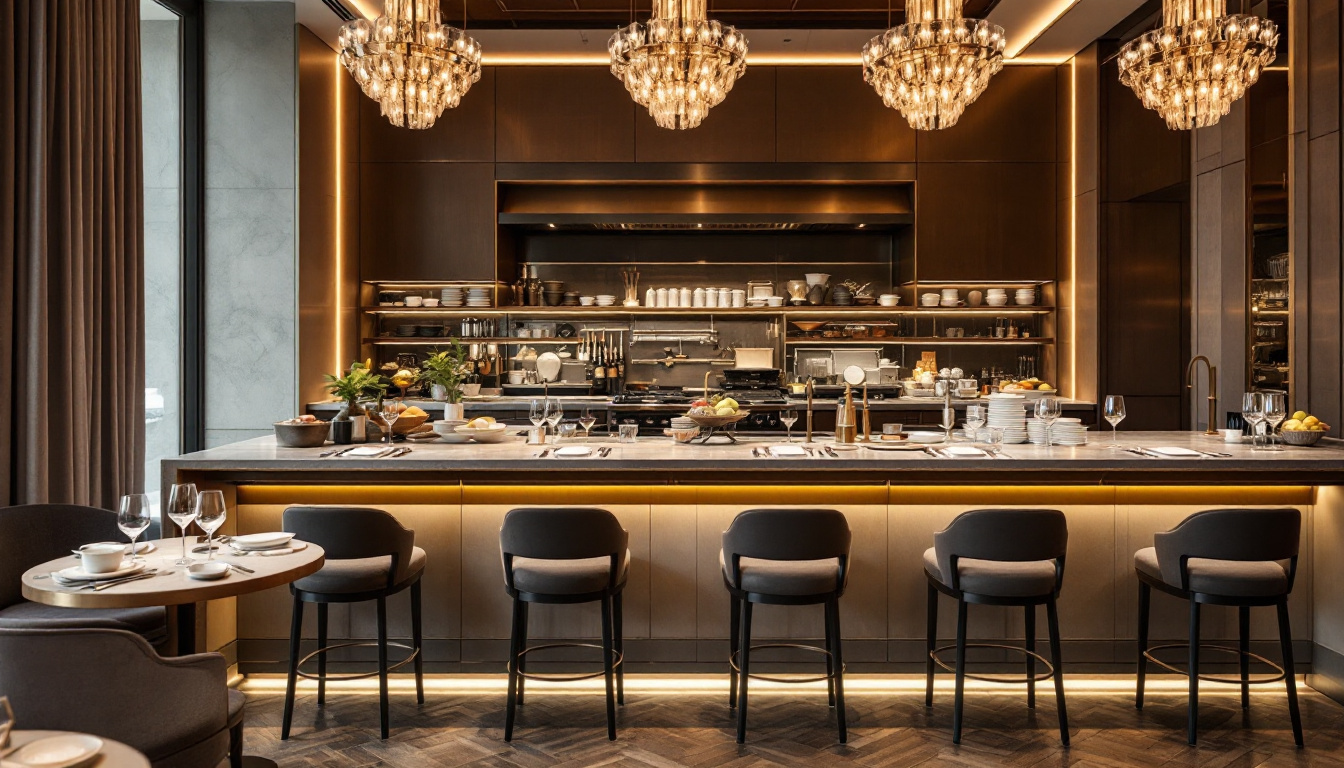
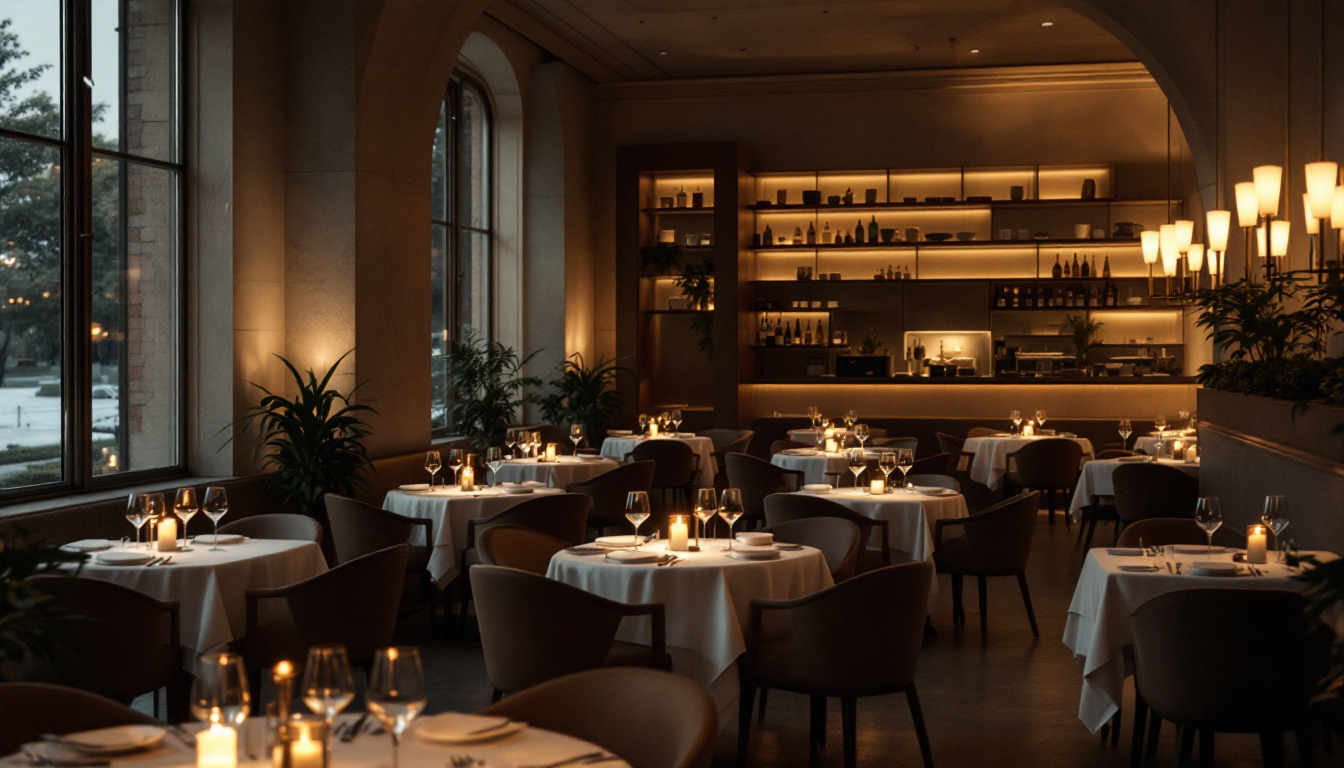
The Mirazur dining room takes the second floor of the villa and is organised in three terraced levels stepping down toward the sea-facing wall, which is a single long bank of floor-to-ceiling windows. The room is bright. The colour palette is muted (warm white walls, pale-wood floors, ochre-leather banquettes). The lighting at lunch is the Mediterranean sun — there is no artificial lighting needed in the dining room during the day, and the kitchen has designed the meal’s pacing around this fact: courses with strong visual presentation arrive when the light is at its highest, around 13:00, and the more contemplative courses arrive after 14:00 when the sun has begun to drop.
The room takes twelve tables across the three levels, for approximately fifty covers per service. Service is led by maître d’ Florent Joly, who came in from L’Ambroisie in Paris in 2018, with a brigade of eight on the floor. The pace was unhurried. The first amuse arrived eleven minutes after I sat down; the final petit four was cleared at 16:42, three hours and forty minutes after the meal began. The pacing on this kind of menu — designed to be eaten in conjunction with the view, not despite it — is a separate piece of craft from the cooking itself, and Joly’s team manages it with precision.
The menu structure
Colagreco’s working framework is the biodynamic calendar. The kitchen runs four primary menus across the year — Fleur (flowers), Fruit (fruit), Feuille (leaf), Racine (root) — and the active menu at any given moment is determined by the season. The January reopening menu was Racine, the root menu, and ran twelve courses across three hours and forty minutes.
The further wrinkle on the system is the lunar overlay. Colagreco’s kitchen, since 2019, consults the lunar calendar each week to determine which courses will lead the service. The biodynamic farming framework that Mirazur uses (developed in the 1920s by Rudolf Steiner and codified through the modern French biodynamic movement) holds that the lunar phase affects the energetic properties of root, leaf, flower, and fruit at different times of the month. The kitchen has translated this into a working menu rule: when the moon is waning toward new, the menu leads with roots; when waxing toward full, it leads with leaf and flower courses. Whether you accept the biodynamic premise as physical reality or as a kitchen heuristic, the effect on the menu is real — the same menu, eaten two weeks apart, will sequence its courses differently.
The opening
The first amuse on the Racine menu was a single small piece of citrus — a candied bergamot peel, sourced from the estate orchard a hundred metres below the dining room and prepared the previous afternoon by the pastry brigade. The bergamot was served on a small piece of warm sourdough flatbread, with a single curl of crème fraiche from a producer in the Mercantour mountains north of Menton. The course is the kitchen’s announcement of place — bergamot is the citrus of Menton, the variety the town has farmed since the seventeenth century, and the opening of the menu in January is the kitchen’s calendar marker.
The second amuse — a small bowl of warm chickpea panisse with a single piece of grilled artichoke and a small pour of estate olive oil — is the kitchen’s bridge from Menton to the broader Provençal kitchen. Panisse is a Niçois street food (a thick chickpea-flour porridge, fried in olive oil); Colagreco serves a refined version, fried to a deep crust and broken open at the table to reveal a still-creamy interior. The artichoke was a winter violet variety from a farmer in Hyères, two hours west.
The seven defining courses
The third course, and the menu’s first formal seated course, was a single piece of raw bonito, briefly cured in olive oil and lemon, served with a small dressing of fermented carrot juice and a single petal of nasturtium. The bonito was line-caught off the Ligurian coast that morning and delivered overland through the border. The course is the kitchen’s first demonstration of its core seafood programme — Colagreco works with five small-boat fishermen along a fifty-kilometre stretch of coast on either side of the border, and the bonito had been on the bait line at 06:30, in the kitchen by 09:00, and on the plate by 13:15.
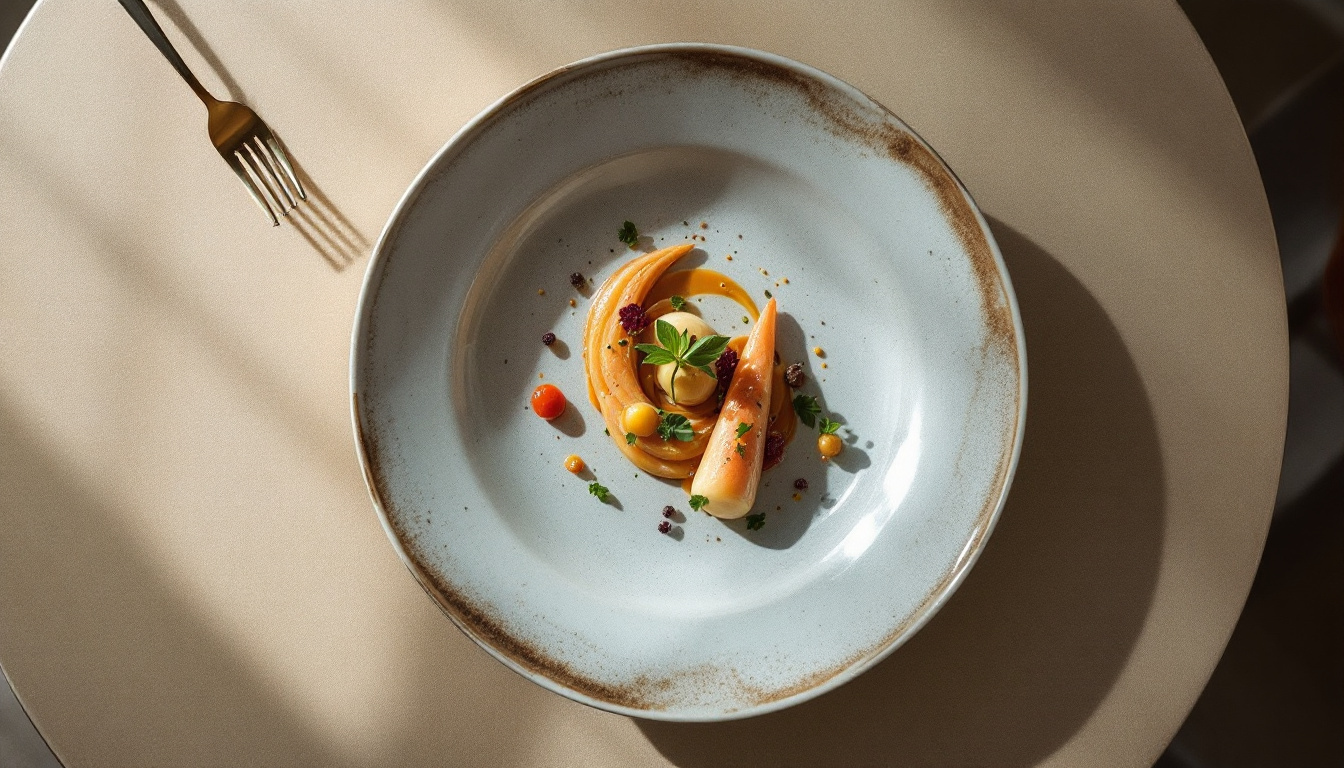
The fifth course was the menu’s first root demonstration — a small ceramic bowl of warm beetroot, slow-cooked at 85°C for six hours in a sealed glass jar with a small pour of estate honey, served with a single slice of cured trout roe and a dressing of black garlic. The technique is the kitchen’s signature for root vegetables — slow heat in a sealed vessel preserves the structural integrity of the root while drawing out the sugar concentration. The beetroot was sourced from the lower estate garden, harvested that morning, and held in the kitchen’s cold cupboard for less than three hours before service.
The seventh course was the menu’s most technically demanding — a single piece of roasted salsify, the surface caramelised to a deep amber over a wood-fired plancha, set on a small mound of black-truffle pureé with a single shaving of fresh truffle (Périgord, sourced from a small producer in the Vaucluse, ninety minutes west). Salsify is a root that overcooks within seconds and that loses its delicate vegetal character if rushed; Colagreco’s kitchen cooks it three times — a long initial poach in mild dashi, a brief rest in olive oil, a final char on the plancha — and the timing across the three cooks is what the dish stands or falls on.
The eighth course was the menu’s substantial main — a piece of slow-roasted estate lamb (from a small farm in the Mercantour, two hours north, that Mirazur has worked with since 2012), served with a confit of root vegetables from the lower garden and a reduction of the cooking juices. The lamb was eight weeks old at slaughter; the roast was at 140°C for three hours, with the surface finished briefly over olive-wood coals at the pass.
The ninth course was the menu’s transition to dessert — a single piece of warm sweet potato, candied in a syrup of estate honey and rosemary, served with a quenelle of brown-butter ice cream and a single curl of crystallised root ginger. The course is one of the kitchen’s longest-running standing dishes (it has appeared on the Racine menu in some form every January since 2018) and is the menu’s clearest expression of Colagreco’s working principle that the root vegetables of the French-Italian border are themselves sweet enough to anchor a dessert without supplementary sugar.
The tenth course was the formal dessert — a small plate of estate mandarin, segments served raw with a fennel granita and a small piece of cured mandarin peel — and the eleventh and twelfth courses were the kitchen’s mignardise programme, brought to table on a small wooden tray with eight separate small bites of pastry and confectionery.
The garden
The estate gardens at Mirazur are themselves a small piece of the meal. The kitchen runs three separate growing areas — the upper terraced garden directly below the dining room (used for herbs, edible flowers, and salad leaves), the lower garden at the foot of the hill (used for root vegetables, alliums, and brassicas), and the citrus orchard on the eastern slope (used for the estate’s bergamot, mandarin, lemon, and yuzu).
The garden walk after the lunch (at 17:30 sharp, led by head gardener Mario Vialard) took forty-five minutes and covered all three growing areas. The terraced garden directly below the dining room is the most visible — it can be seen through the dining-room windows during the meal — and is planted in approximately thirty separate beds organised by family (umbelliferae in one bed, brassicaceae in another, alliums in a third). The lower garden, accessed by a steep set of stone steps cut into the hillside, is the larger of the three at approximately a hectare; the citrus orchard, accessed by a small footpath that runs along the eastern slope of the property, contains approximately 120 mature trees including several rare local varieties of bergamot that the orchard has propagated from cuttings since 2009.
The garden walk is the experience that most diners do not anticipate and that, in my reading, is the single best reason to book a lunch over a dinner — the garden is only meaningfully visible in daylight, and the walk is only offered in the late afternoon.
The wine
The wine list at Mirazur runs to approximately 1,500 references and is led by chef sommelier Antonio Trotta, who came in from Don Alfonso 1890 in Sant’Agata sui Due Golfi in 2015. The list is heavily weighted toward Italian and French wines (with Italian wines slightly outnumbering French — the kitchen’s location on the border is reflected in the cellar as much as in the menu) and contains a small but serious section on biodynamic wines from across Europe.
The pairing programme is offered in two formats — a ‘classic’ pairing of seven wines at EUR 220 and a ‘reserve’ pairing of seven wines drawn from the cellar’s deeper bottles at EUR 380. The classic pairing on the Racine menu I took included a 2020 Domaine Trapet Marsannay opened for the lamb course and a 2019 Quintarelli Recioto della Valpolicella poured with the sweet potato — both well-judged.
The list’s signature programme is the small section of estate Ligurian and Niçois wines, including the kitchen’s working partnership with the small biodynamic producer Cascina degli Ulivi in Piedmont — the 2022 Cascina degli Ulivi Filagnotti white was the by-the-bottle choice I took with the bonito course and was extraordinary.
The verdict
Mirazur is the most place-specific three-star kitchen on the western Mediterranean. The cooking is rigorously tied to a particular six-hundred-metre stretch of hillside on the French-Italian border, the menus rotate with the calendar in a way that almost no other three-star room attempts, and the integration with the estate gardens is the deepest of any three-star kitchen I have visited outside of SingleThread in California. The cooking is at its best on the seafood and the root vegetables, in my reading — Colagreco’s technical command is unmistakable across the menu, but the courses that are most fully his own are the courses built from ingredients produced within walking distance of the kitchen.
The lunch was three hours and forty minutes. The bill, with the classic pairing and service, came to EUR 692 per guest. The drive back to Nice took fifty minutes in the evening light. I would book Mirazur six months out for a window table at lunch, and I would build the trip around the lunch rather than around the night — Menton is a small town with a quiet evening, and the meal itself is so substantial that the rest of the day should be quiet.
Verification
Filed against the following sources, last verified on May 23, 2026. The desk re-checks the source URLs on every dated modification of the piece.
- https://guide.michelin.com/en/provence-alpes-cote-dazur/menton/restaurant/mirazur
- https://www.mirazur.fr/en/
- https://en.wikipedia.org/wiki/Mirazur
- https://en.wikipedia.org/wiki/Mauro_Colagreco
- https://www.relaischateaux.com/us/restaurant/restaurant-mirazur/
Standing Questions
- How do I reach Mirazur from Nice or Monaco?
- The restaurant sits at 30 Avenue Aristide Briand in Menton, on the eastern end of the Côte d'Azur, six hundred metres from the Italian border. The drive from Nice Côte d'Azur airport (NCE) takes forty-five minutes on the A8 in light traffic; the drive from Monaco's Casino Square takes twenty minutes via the Basse Corniche. The local train from Nice-Ville to Menton-Garavan station runs roughly every thirty minutes and takes thirty-five minutes; the station is a fifteen-minute walk uphill to the restaurant. If you are coming from Monaco for lunch, hire a car or a transfer — the post-meal walk back downhill into Menton's old town is part of the experience.
- What are the four menus and how do I choose?
- Colagreco's kitchen rotates four primary tasting menus across the calendar year, structured around the four classical categories of the biodynamic kitchen garden — Fleur (flowers), Fruit (fruit), Feuille (leaf), Racine (root). In practice the kitchen runs Fleur in spring (April through June), Fruit in summer (July through September), Feuille in early autumn (October through mid-November), and Racine after the winter reopening in February through March. The menu structure shifts within each category according to the phase of the moon — Colagreco has built a working biodynamic calendar that the kitchen consults at each service planning. There is no à la carte. There is no choice of menu at booking; the kitchen serves whichever menu is current on the night.
- What does the menu actually cost?
- The Mirazur tasting menu was priced at EUR 380 per guest as of the 2026 guide, drinks excluded. The wine pairing is offered in two formats — a 'classic' pairing of seven wines at EUR 220 and a 'reserve' pairing at EUR 380. Lunch and dinner are priced identically. There is a service charge of 15% added to the bill. Card payment only — the room does not accept cash.
- Is the garden visit possible and how do I arrange it?
- Yes. The kitchen runs a small daily garden tour at 14:30 (after the lunch service) and 17:30 (before the evening service), led by one of the gardening team and lasting approximately forty minutes. The tour covers the three estate gardens — the terraced garden directly below the restaurant, the larger lower garden at the foot of the hill, and the citrus orchard on the eastern slope. The tour is offered to guests who have dined at the restaurant and is free of charge; arrange it at booking by emailing the reservations team. Wear closed shoes — the terraces are steep and the soil is loose after rain.
- Where do I stay in Menton?
- Menton itself has limited high-end accommodation — the most reliable choice is the Riva Art & Spa Hotel on the seafront (fifteen-minute walk from the restaurant, rooms from EUR 280 in shoulder season). The more polished choice is to stay in Monaco — the Hotel de Paris or the Hotel Metropole are both twenty minutes' drive from the restaurant and put you in central Monte-Carlo for the rest of the trip. If you want the genuine Italian Riviera experience, drive five minutes across the border to Ventimiglia and stay at the Grand Hotel del Mare in Bordighera (twelve minutes east) — a 1930s seafront property in EUR 320 to EUR 480 territory depending on season.