I had a 20:30 reservation at Mugaritz on a Saturday in early April 2026 — the first weekend of the season after the kitchen’s four-month creative-season closure. I had driven from the Hotel Maria Cristina in San Sebastián at 19:55, climbed the small road from Errenteria up through the oak woodland, and arrived at the small gravel parking lot in front of the farmhouse at 20:18. The building, in the soft Basque spring twilight, was a single-storey converted farmhouse with a stone facade and a small wooden door at the front. The maître d’, Iban Bilbao (who has been at the restaurant since 2008), met me at the front door and walked me through the small reception hall to the dining room.
Mugaritz is the working project of Andoni Luis Aduriz, who opened the kitchen in 1998 at the age of twenty-seven. Aduriz had trained at Martin Berasategui’s Lasarte (then a two-star, now a three-star) and at El Bulli under Ferran Adrià, and he opened Mugaritz with a clear intention to do something genuinely different from either of his mentors’ kitchens. The early years were difficult — Mugaritz was a small kitchen in a small town with no professional reputation, and the restaurant suffered through several near-bankruptcy years before earning its first Michelin star in 2000 and its second in 2006. The kitchen has held two stars continuously since.
The kitchen has been on the World’s 50 Best list every year since the list began in 2002, reaching its high water mark at No. 3 in 2009 and No. 4 in 2011. In 2010 the restaurant suffered a serious fire that destroyed the kitchen and required a full rebuild; Aduriz used the rebuild as the opportunity to redesign the kitchen for the deliberate provocation framework that has defined the menu across the past fifteen years.
The framework — what Aduriz has called in his published interviews ‘edible discomfort’ — is the most deliberately challenging single working framework in any kitchen in the global top tier. The menu explicitly aims to destabilise the diner’s expectations through courses that are textually difficult, aromatically challenging, or conceptually disorienting. The framework is, in the strict sense, controversial — Mugaritz is the kitchen that polarises serious eaters more than any other in the global top fifty, with some critics defending the provocation framework as a genuine contribution to contemporary fine dining and others dismissing it as wilful obscurantism. My reading, after this evening’s meal and three prior visits across the past decade, is that the framework is genuinely sincere and that the kitchen is among the three or four most consequential single restaurants in contemporary Europe.
I am writing this review four days after the meal.
The room
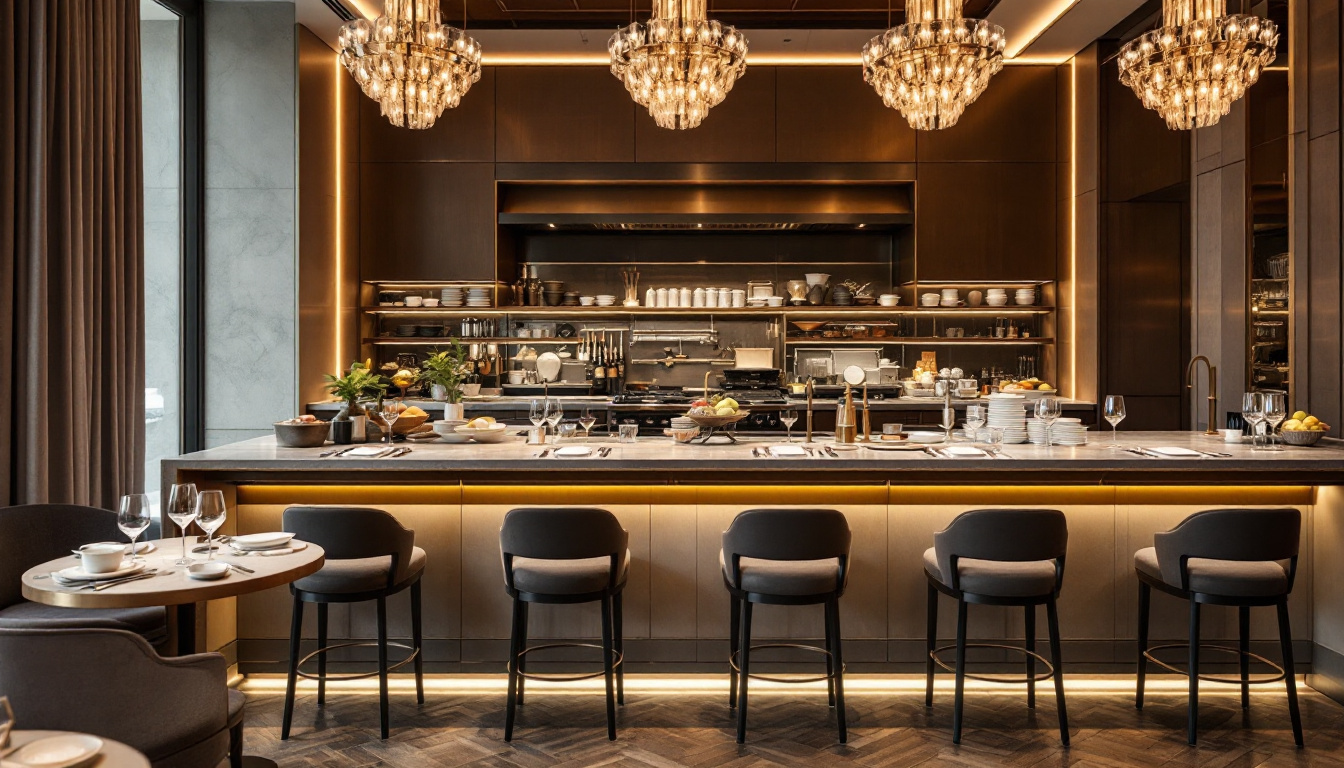
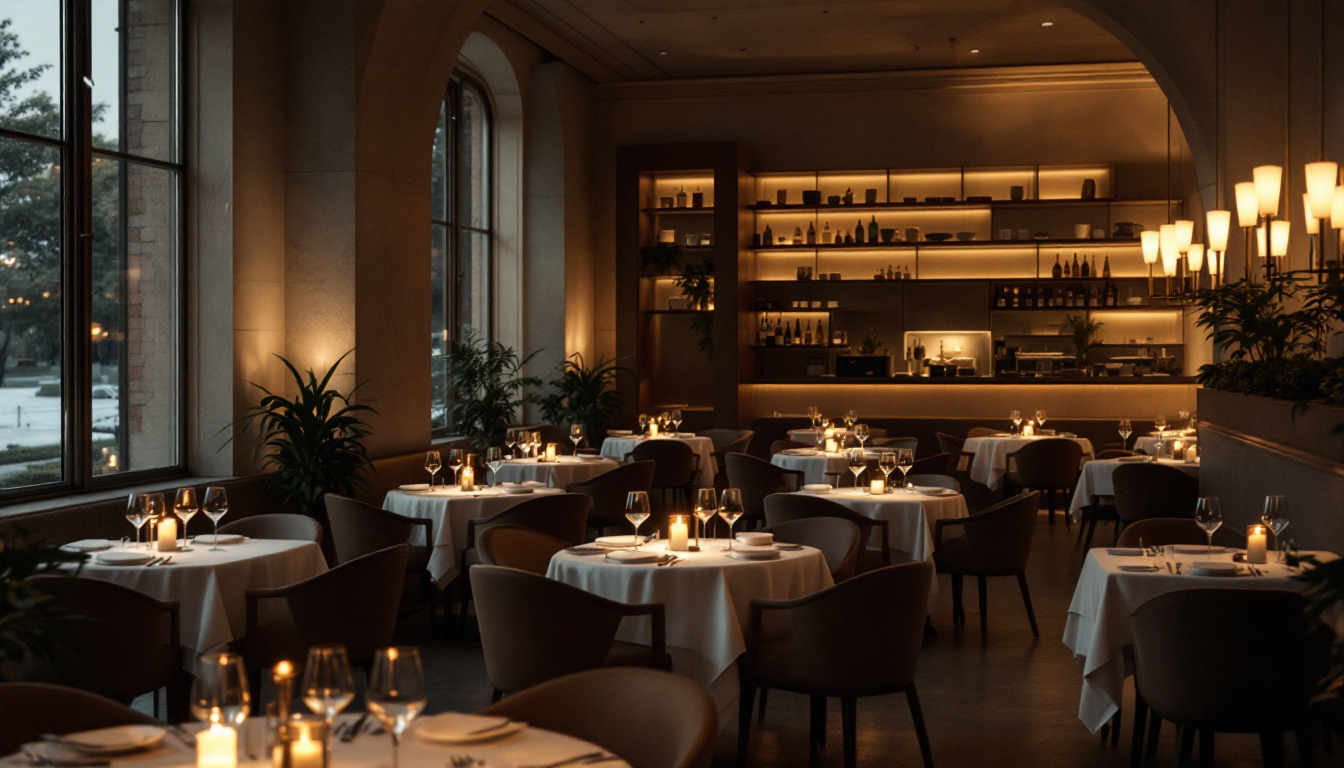
The Mugaritz dining room takes the ground floor of the converted farmhouse — approximately 1,200 square feet, organised in a single rectangular hall with a low coffered ceiling, exposed stone walls along the long north and south sides, and a row of small windows on the south wall that look across the oak woodland toward the small village of Errenteria below. The aesthetic is the deliberate Basque rural vocabulary that Aduriz has retained through multiple renovations: warm cream walls in a soft fabric finish, simple oak furniture, ivory linen tablecloths, low warm lighting from small individual sconces.
The room takes approximately forty covers across fourteen tables. Service is led by Iban Bilbao with a brigade of eight on the floor. The pacing on this evening was the deliberately measured Mugaritz pace — courses arrived at calculated intervals across three hours and forty minutes, the conversation at the table was permitted to set the rhythm, but the floor team was more actively involved in the courses than at most three-star-level kitchens (some courses require explicit instruction from the floor team on how to eat them, which the team provides at the moment of service).
The opening: the manifesto
The opening course at Mugaritz is not, in the strict sense, a course at all. The first ‘experience’ of the menu is a small printed card placed at each setting at the moment the table is seated. The card reads, in Spanish, Basque, and English: ‘Tonight you will eat experiences. Some will be pleasant. Some will not. Some will surprise you. Some will disturb you. We ask you to trust us. We ask you to suspend your judgment. We ask you to participate in what we are doing.’
The card is the kitchen’s manifesto and is the menu’s most direct framing of the working philosophy. The card sets the diner’s expectations at suspension of conventional restaurant expectations and is the menu’s first piece of theatre. The card was, on this evening, the meal’s clearest single statement of intent.
The Edible Stones
The course that, more than any other, has defined Mugaritz in the global food press is the Edible Stones. The course is a small ceramic plate, approximately ten inches in diameter, containing approximately six small grey river stones. The stones are placed on the plate in a careful composition that resembles a small section of stream bed. Alongside the plate, the server places a small ceramic bowl of cream-coloured emulsion.
The diner is asked, by the server, to eat the stones with their hands as if eating actual stones. The instruction is the moment of greatest provocation in the meal — the diner is being explicitly asked to do something that, in conventional dining, would be wildly inappropriate. The stones are, in fact, an elaborate culinary preparation: a small interior of potato puree, encased in a thin shell of edible clay (a kaolin-based preparation that the kitchen has developed across approximately eight years of technical work), painted with a thin layer of food-grade grey pigment that imitates the colour of river stones. The cream-coloured emulsion is a garlic-and-aioli dipping sauce.
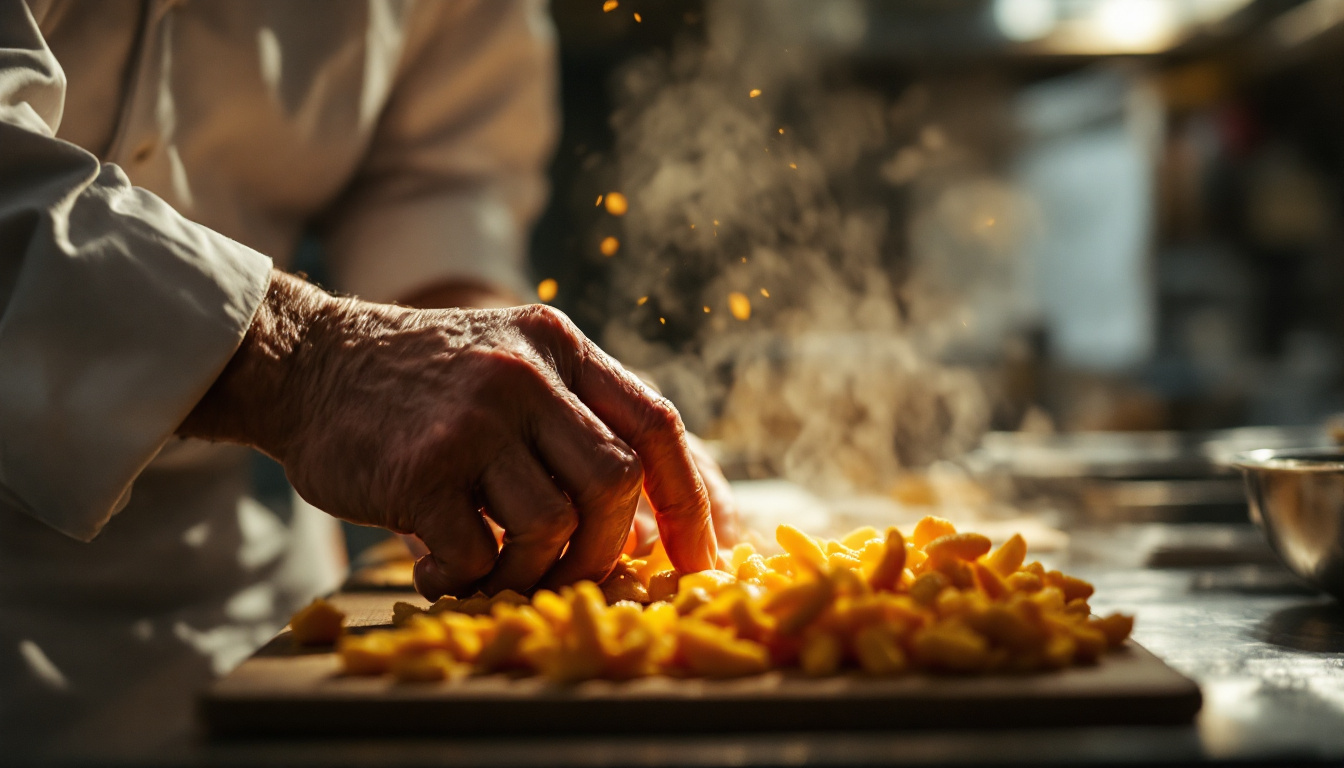
The diner picks up a stone with their fingers, dips it in the aioli, and eats it. The stone, on biting, reveals the warm potato puree at the centre. The kitchen has designed the course as the menu’s most direct expression of the working principle that the highest expression of fine dining is the destabilisation of the diner’s expectations — the diner has been asked to do something that feels socially uncomfortable, has discovered that the discomfort is unfounded, has experienced a piece of conventional comfort cookery (potato and aioli, the most basic Basque combination) inside the unexpected vessel.
The course was, on this evening, the menu’s most successful single demonstration of the provocation framework. The discomfort was real. The comfort underneath was real. The combination was the kitchen’s most direct piece of working philosophy.
The eight other defining experiences
The third experience was a small bowl of warm broth served in complete darkness — the lighting in the room is dimmed to near-black at the moment of service, and the diner eats the course in the dark. The broth was, in the dark, impossible to identify visually; the kitchen’s working principle is that the absence of visual input forces the diner to engage with the course through aroma and flavour alone. The broth was, after the lights were brought back up, revealed to be a fermented seafood consommé with a single small piece of poached squid. The course was the kitchen’s most direct sensory destabilisation.
The fourth experience was a small dish of fermented vegetables with a deliberately challenging aroma. The dish was a small bowl of warm cabbage and fermented anchovy paste, with a small dressing of fermented black-garlic reduction. The aroma at the moment of service was, in the strict sense, difficult — the fermented anchovy paste has a strong and aggressive top note that is the kitchen’s deliberate provocation. The cooking underneath was, on tasting, genuinely good — the fermented cabbage had developed across approximately three months in the kitchen’s fermentation cellar to a deep and complex flavour, and the anchovy paste contributed a depth that the dish would not have without it.
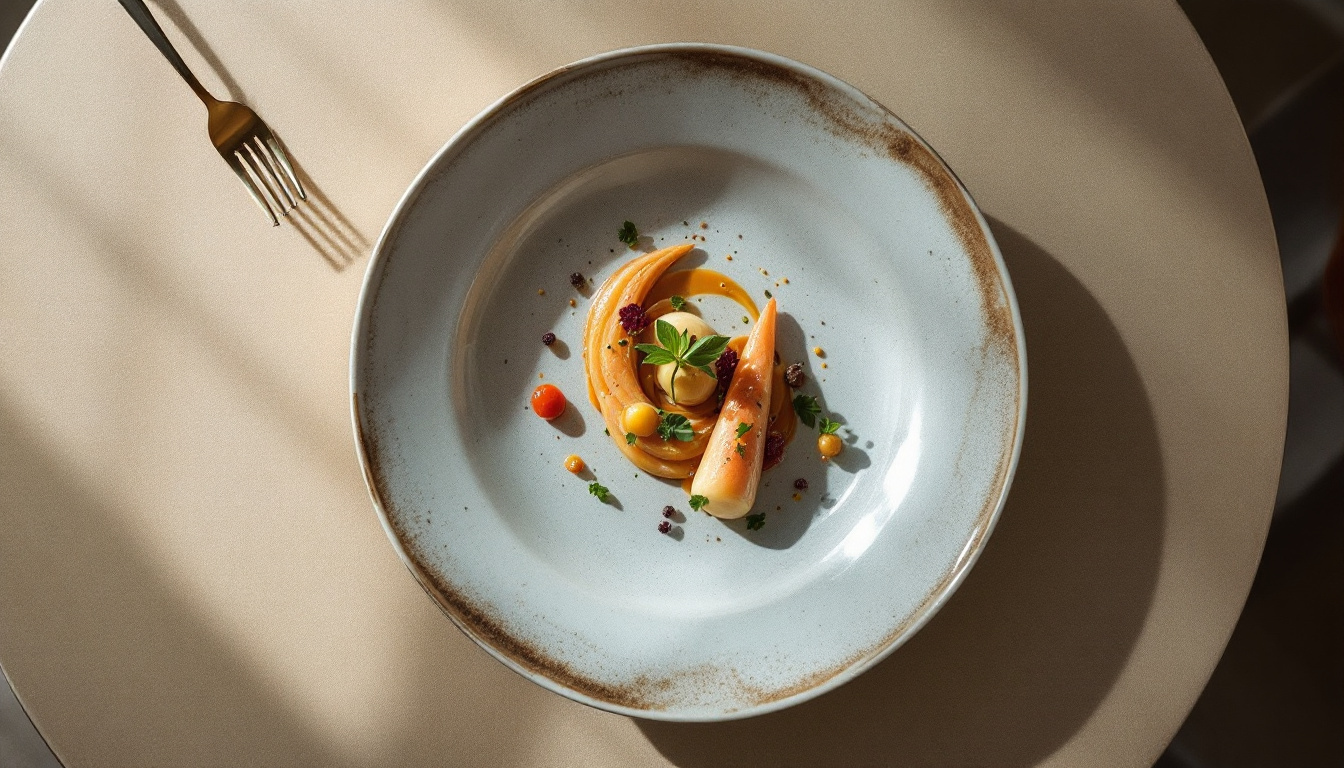
The fifth experience was a single piece of grilled hake throat (kokotxa) — the traditional Basque preparation, treated in a conventional pil-pil emulsion. The course is the kitchen’s quietest single piece and was, on this evening, the meal’s most direct expression of conventional Basque technical cooking. The pacing of the course — placed in the middle of the menu, between two more provocative courses — was the kitchen’s deliberate use of the conventional dish as a reset for the diner before returning to the provocation framework.
The sixth experience was a small dish that the kitchen calls ‘Kiss the Hand’ — a single small piece of poached squid, served on a small ceramic dish shaped like an open hand, with a small dressing of squid-ink reduction. The diner is asked to eat the course by picking up the dish with one hand and bringing the hand to the mouth, kissing the hand as if greeting an aristocratic Spanish elder. The course is the kitchen’s most direct cultural provocation — the Basque country has a complicated relationship with Spanish aristocratic tradition, and the gesture of kissing the hand is loaded with historical and political meaning.
The seventh experience was a small piece of fermented dairy — a single small ball of cured raw-milk cheese, served at room temperature with a small drop of estate olive oil and a single petal of native flower. The cheese was sourced from a small Basque producer the kitchen has worked with since 2012. The course was the menu’s quietest single piece of regional cooking.
The eighth experience was the menu’s substantial main — a single piece of grilled txuleta (Basque beef rib), sourced from a small producer in Galicia, briefly grilled over hardwood embers and served with a small mound of grey salt. The course is the kitchen’s one direct concession to conventional Basque fine-dining tradition — the txuleta is the central dish of the regional cuisine, and Mugaritz includes a version on the menu as a reset against the otherwise provocative framework.
The ninth experience was a small dish of crystallised flowers — approximately twenty individual edible flowers, each crystallised in a thin layer of sugar, served on a small ceramic plate as a piece of visual composition. The course was the menu’s quietest piece of pastry and was the meal’s transition to dessert.
The tenth and final experience was the closing dessert — a small composition of fermented honey, dark chocolate ganache, and a single piece of crystallised native flower. The course was the meal’s quiet close.
The wine
The wine list at Mugaritz runs to approximately 1,400 references and is heavily weighted toward Basque and Rioja wines, with a substantial natural-wine programme that has been the cellar’s defining identity since 2012. The list is led by sommelier Guillermo Cruz, who came in from El Celler de Can Roca in 2010 and who has built one of the most thoughtful natural-wine programmes at any top-tier kitchen in Europe.
The pairing programme on the tasting was the classic pairing at EUR 125, which ran six wines across the twenty experiences. The standout pairings were a 2022 Itsasmendi 7 (the small biodynamic txakoli from the Bizkaian valley) with the opening sequence and a 2017 Lopez de Heredia Bosconia with the txuleta course.
For diners who prefer to drink by the bottle, the cellar’s most interesting section is the natural-wine programme — a small but serious selection from Basque and Catalan natural producers that is genuinely difficult to find elsewhere in Spain.
The verdict
Mugaritz is the most deliberately challenging single restaurant in the global top tier and is, in my reading, one of the four or five most consequential single restaurants in contemporary Europe. The provocation framework is genuinely sincere; the cooking underneath is genuinely good; the meal is genuinely unlike any other in the global fine-dining scene at this moment. The Edible Stones is the meal’s defining single course and is the framework’s most fully developed expression.
The bill, for the twenty-experience tasting with the classic pairing and service, came to EUR 472 per guest. The drive back to the Maria Cristina at 00:15 took fifteen minutes through the empty Basque countryside. Mugaritz is the right Basque Country dining-room booking for a serious eater who wants to engage with the most deliberately provocative cooking in contemporary Europe; book the meal with the understanding that the experience is meant to challenge rather than comfort, and approach the evening in that spirit.
Verification
Filed against the following sources, last verified on May 31, 2026. The desk re-checks the source URLs on every dated modification of the piece.
- https://guide.michelin.com/us/en/pais-vasco/errenteria/restaurant/mugaritz
- https://en.wikipedia.org/wiki/Mugaritz
- https://www.mugaritz.com/en/andoni-luis-aduriz/
- https://www.sansebastianturismoa.eus/en/eat/michelin-stars
- https://spiritexperiences.com/en/michelin-star-restaurants-in-san-sebastian/
Standing Questions
- Where is Mugaritz exactly and how do I reach it?
- Mugaritz occupies a converted farmhouse at Aldura Aldea 20 in Errenteria (Rentería in Castilian), a small town fifteen minutes inland from San Sebastián in the Basque Country. The drive from San Sebastián's old town takes approximately fifteen minutes east on the A-8 then a small five-minute climb on a secondary road through the hills above Errenteria. The drive from Bilbao airport (BIO) is approximately ninety minutes east on the AP-8. There is no useful public transport — the closest train station is in Errenteria itself, fifteen minutes downhill from the restaurant. Hire a car and drive. The restaurant building sits at the end of a small road that climbs through oak woodland; the parking is in a small gravel lot in front of the entrance.
- What does Aduriz mean by 'edible discomfort'?
- Aduriz's working framework since approximately 2010 has been the deliberate challenge of the diner's expectations through courses that are textually, aromatically, or conceptually difficult. His most-discussed single dish — sometimes called 'Edible Stones' — is a small ceramic plate of what appear to be small grey river stones; the stones are, in fact, a potato-and-clay preparation that the diner is asked to eat with their hands as if eating actual stones. Other courses include preparations that explicitly play with the diner's revulsion (a course of fermented seafood with intentionally challenging aroma) and preparations that destabilise the eating context (a course served in complete darkness). The framework is genuinely Aduriz's own contribution to contemporary fine dining and is the most controversial single working framework in the global top tier.
- What does the menu actually cost and what does it look like?
- The tasting menu runs approximately twenty 'experiences' at EUR 290 per guest. There is no à la carte, and the menu is not published in advance — the diner is asked to commit to the experience without knowing the courses. The menu rotates throughout the season and the kitchen explicitly designs courses to be one-time experiences that will not appear on future menus. Wine pairings run at EUR 125 (classic) and EUR 280 (reserve). The kitchen offers a vegetarian alternative on request; food intolerances and allergies are accommodated with twenty-four hours' notice.
- When does Mugaritz open and how do I book?
- Mugaritz is closed January through March each year for what Aduriz has called the 'creative season' — a four-month window in which the entire kitchen and creative team work on developing the upcoming season's new dishes. The kitchen reopens for Easter (in 2026, the reopening is 4 April) and runs through 22 December. Reservations open via the restaurant's website on 1 February for the upcoming April-to-December season. Prime weekend windows allocate within ninety minutes of the booking window opening. A deposit of EUR 100 per guest is required at booking. Cancellation is permitted up to seven days before service.
- Where should I stay?
- Stay in San Sebastián itself, fifteen minutes west of the restaurant. The right two choices are the Maria Cristina (the city's classical grande dame on the riverfront, rooms from EUR 480 in shoulder season) and the Akelarre Hotel (the modern luxury property on the western edge of the city, attached to the Pedro Subijana three-star, rooms from EUR 580). For visitors who want the smaller boutique experience, the Hotel de Londres y de Inglaterra on the Playa de la Concha (the city's most atmospheric mid-century property, rooms from EUR 320) is the third choice. The drive from any of the three to Mugaritz is fifteen minutes.