I had a 12:30 reservation at Arpège on a Tuesday in early January 2026 — the lunch tasting, deliberately chosen for the daylight hours that the kitchen has been organised around since the 2024 plant-based announcement. I walked from my hotel near the Hôtel des Invalides through the cold dry January air, three blocks east to the corner of rue de Varenne and rue de Bourgogne, and arrived at the small wooden door at 84 rue de Varenne at 12:23. The maître d’, Pascal Bardet (who has been at the restaurant since 1998), met me at the door and walked me through the small entry hall to table seven in the back room.
Arpège is the longest-running three-Michelin-star vegetable kitchen in the world. Alain Passard took over the building from his mentor Alain Senderens in 1986 (the room was L’Archestrate before, the three-star kitchen Senderens had built across the 1970s and early 1980s), kept the three stars Senderens had earned, lost one star in 1996 after a poorly received renovation, regained the third star later in 1996, and has held three stars continuously since. In 2001, Passard made the most consequential single decision of his career — he removed red meat from the menu, citing what he described as a personal crisis of confidence in industrial meat production. He pivoted the menu progressively across the 2000s toward vegetables; he began commissioning estate gardens in 2003. By 2010 the menu was largely vegetable-forward with a small fish and poultry programme. In July 2024, at the age of sixty-eight, Passard announced that the menu would be fully plant-based — no animal protein of any kind, no fish, no eggs, no dairy, no honey.
The 2024 announcement was the most consequential single menu pivot in the modern history of European three-star cooking. The question that followed the announcement, across the eighteen months that have passed since, was whether Michelin would maintain the third star designation. The 2025 France guide maintained it. The 2026 France guide (released in March 2026) confirmed it. The decision is, in my reading, the Michelin France team’s most deliberate signal in two decades that the third star is awarded for cooking quality rather than for ingredient category.
I am writing this review three days after the lunch. What follows is one diner’s account of a single seven-course lunch tasting, served at table seven in the back room, eighteen months after the plant-based pivot.
The room
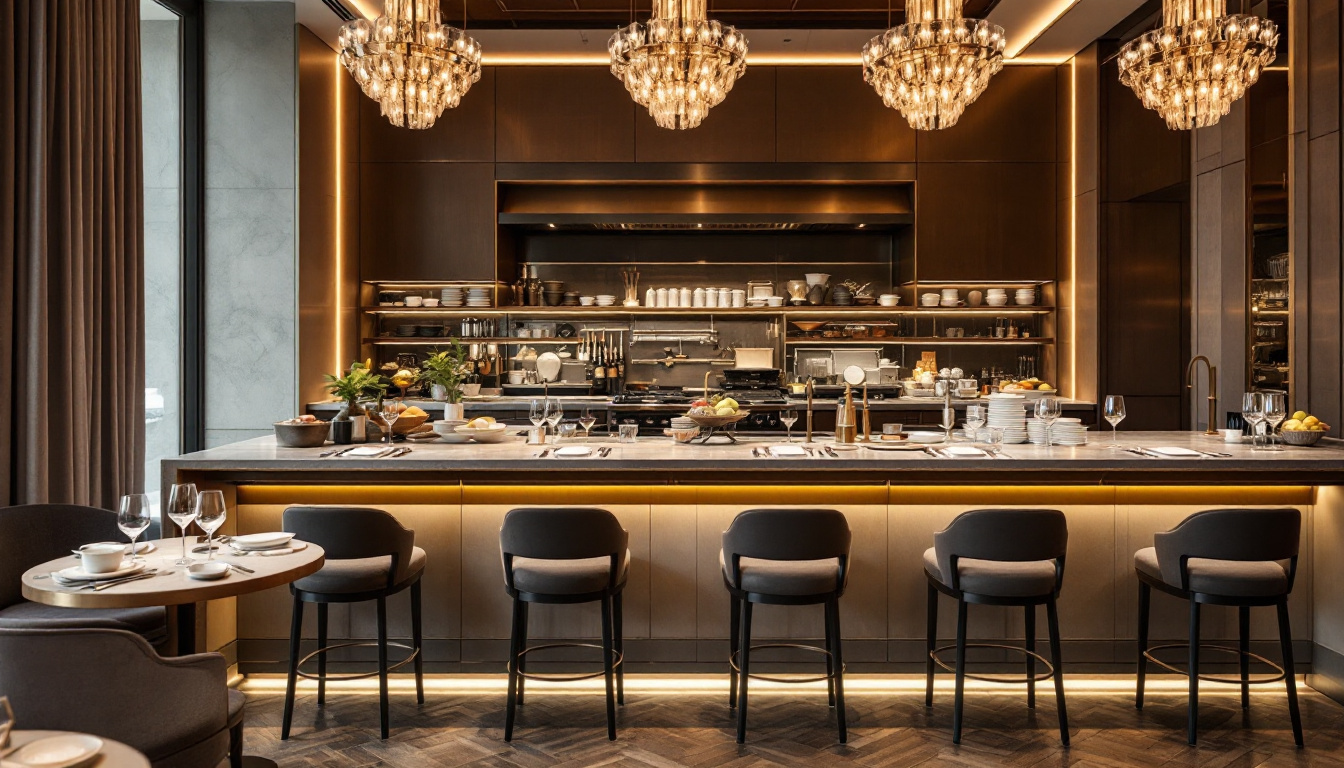
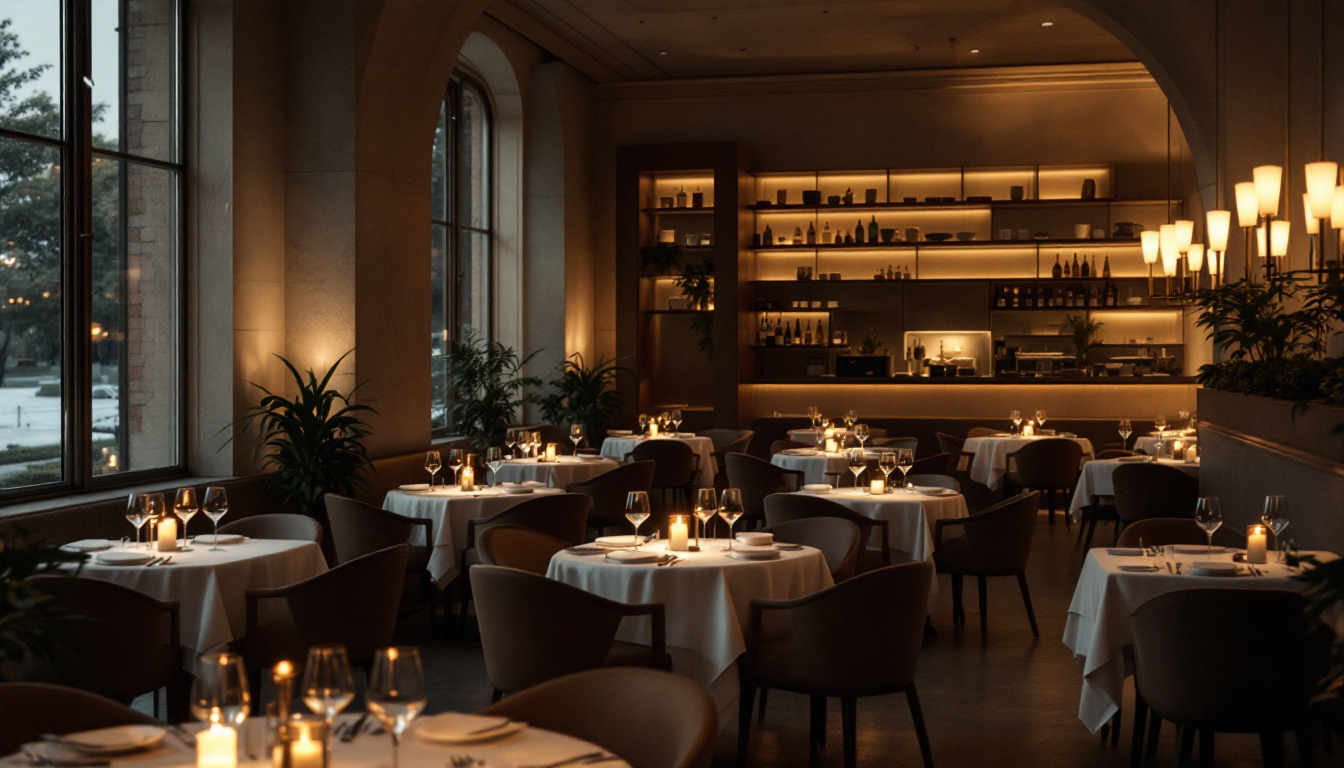
The Arpège dining room takes the ground floor of the rue de Varenne building — approximately 800 square feet, organised in two small connected rooms (a front room of six tables looking onto the street, a back room of four tables looking into a small interior courtyard). The aesthetic is the deliberate 1990s Parisian fine-dining vocabulary that Passard has not substantially altered since the 1996 renovation: warm panelled walls in pear wood, a row of small Lalique chandeliers along the central ceiling line, white linen tablecloths, low warm lighting. The room is, by the standards of contemporary three-star design, quietly conservative. The conservatism is deliberate. Passard has been explicit, in his published interviews, that the room is meant to be the unchanging architectural framework against which the menu’s evolution becomes visible.
The dining room takes approximately twenty-eight covers across ten tables. Service is led by Pascal Bardet with a brigade of six on the floor. The pacing on a Tuesday lunch at Arpège is the relaxed Parisian pace — courses arrive at calculated intervals across two hours and forty-five minutes, the table is checked frequently without being interrupted, the conversation at the table is permitted to set the rhythm. The pacing is the right pace for the menu.
The opening: the carrot tartare
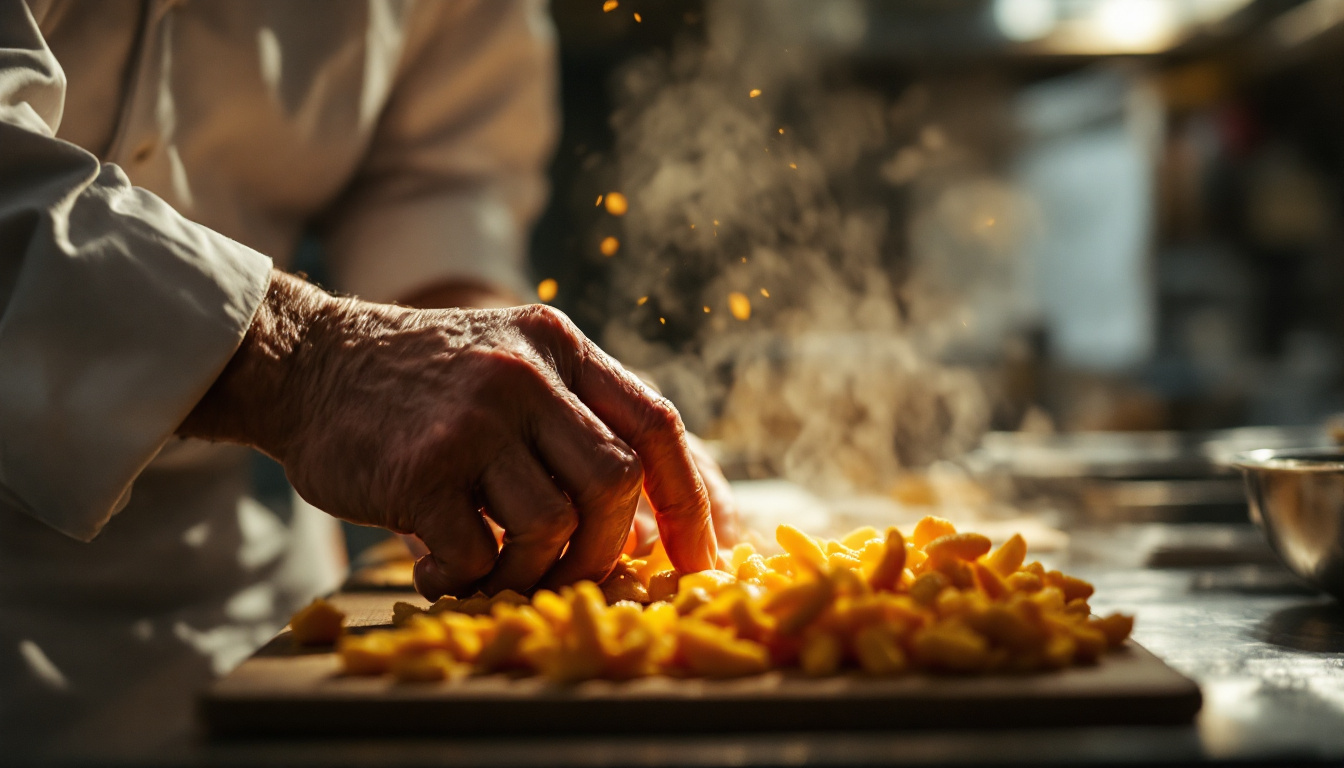
The opening course at Arpège is the kitchen’s standing signature — the carrot tartare — and has been on the menu in essentially the same form since 2008. The course is a small individual plate containing a small mound of finely diced raw carrot (sourced from the Fillé-sur-Sarthe garden, harvested two days before service), dressed with a small drop of estate olive oil, a small spoon of cold-pressed apple vinegar from a Loire producer, and a single petal of marigold from the kitchen’s herb garden. The carrot has been hand-diced to a uniform 3mm dice. The plate is dressed at the pass with a single small spoon of black olive tapenade.
The course is the kitchen’s clearest announcement of intent. The plant-based pivot is not, the carrot tartare says, a constraint that forces compromise — it is the kitchen’s working framework, and the framework is sufficient to produce the kind of opening course that sets the tone for the rest of the meal. The carrot on this evening was the right firmness, the right sweetness, the right depth of the estate olive oil. The course was, in the technical sense, what the carrot is — sweet root, dressed with the simplest possible French vinaigrette, finished with a small tapenade. The course was also the best opening course of any meal I had in Paris in this trip.
The jardiniere
The second course is the menu’s most visually arresting single piece — the jardiniere. The course is a single large round plate, approximately twelve inches in diameter, containing approximately twenty-two separate vegetable preparations arranged in a careful composition that resembles a small garden. The vegetables on my plate included a single roasted baby beetroot, a small mound of slow-cooked black-trumpet mushrooms, a single piece of confit fennel, a small spoon of grilled artichoke, a single petal of nasturtium, a small mound of pickled cucumber, a single small carrot glazed in maple syrup, a small piece of slow-roasted celery root, and twelve other small individual preparations.
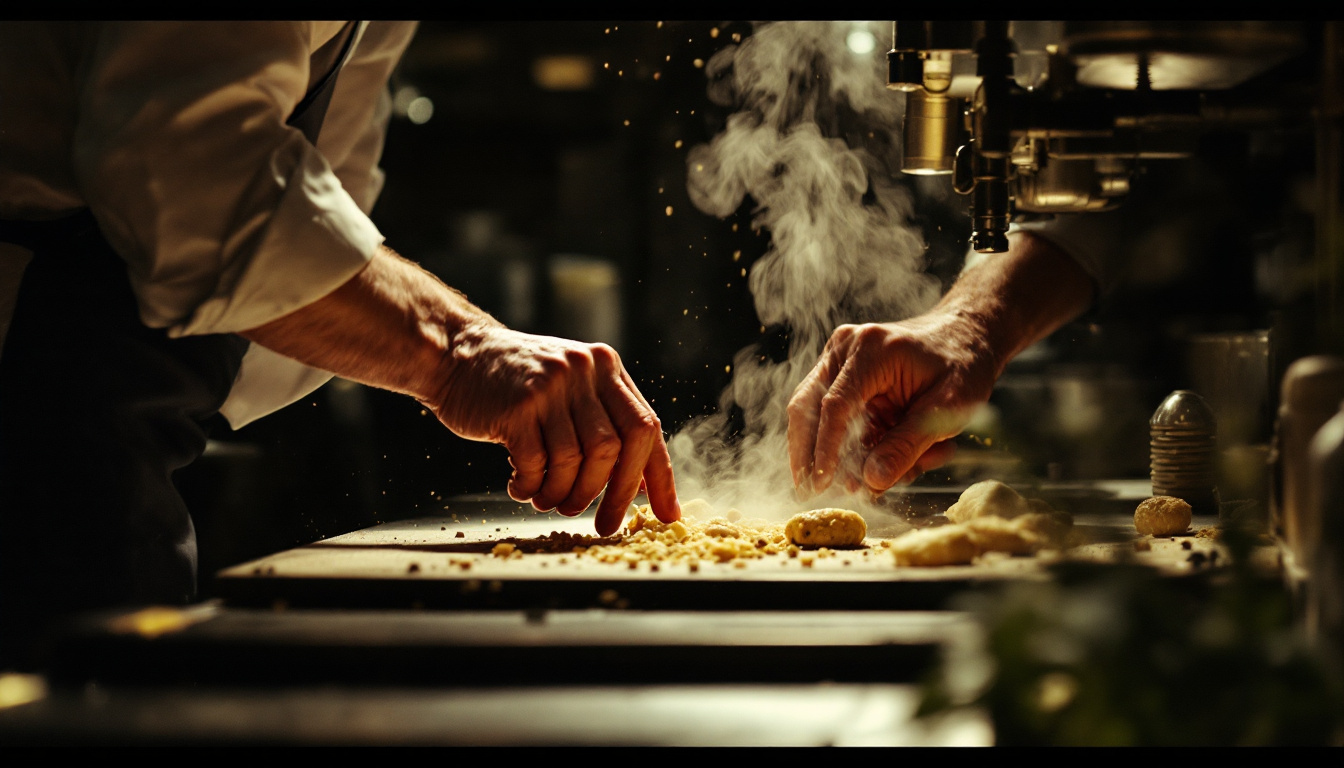
The course is meant to be eaten in two or three bites per vegetable, working clockwise around the plate. The technical demand on the kitchen is the assembly — each plate is built individually at the pass by Passard or one of his two senior cooks, with each vegetable plated in a specific position to create the visual composition. The course takes approximately forty-five minutes to eat at the relaxed Parisian pace. The course is the kitchen’s most direct demonstration that vegetable cookery, at this technical level, is sufficient to organise a three-star menu around.
The five other defining courses
The third course was a small bowl of warm sweet-pea velouté with a single piece of slow-cooked turnip and a small dressing of pea-shoot oil. The velouté was made from a single batch of estate sweet peas, pureed with a small amount of vegetable stock and finished with a small touch of estate olive oil; the texture was the texture of a properly built French velouté, but with no cream and no butter. The course was the menu’s quietest single piece and was the demonstration that the plant-based framework does not require the kitchen to abandon the classical French sauce vocabulary.
The fourth course was a single piece of slow-roasted celery root, cooked at low temperature in a sealed clay pot for six hours, served with a small spoon of black-truffle puree (Périgord, sourced from a small producer in the Vaucluse) and a thin reduction of vegetable stock and red wine. The course was the kitchen’s most direct demonstration of the slow-cook technique that has become the kitchen’s signature method for root vegetables since the plant-based pivot. The celery root was the right firmness, the truffle was the right intensity, the reduction was the right depth.
The fifth course was the menu’s substantial main — a single piece of slow-roasted celeriac, the surface caramelised to a deep amber over a wood-fired plancha, served on a small mound of fermented black-garlic puree with a thin reduction of mushroom stock. The course is the kitchen’s clearest expression of the working principle that root vegetables, at high technical control, can carry the structural weight of a main course in the traditional French menu sense. The celeriac was sourced from the Bois-Giroult garden, was harvested four days before service, and was the right depth of cooking.
The sixth course was the menu’s transition to dessert — a small dish of estate apple, sliced thin and briefly grilled, served with a small spoon of fermented apple-juice reduction and a single petal of edible flower. The apple was from a single small orchard on the Bois-Giroult estate, was harvested the previous autumn and held in cold storage, and was the right firmness at this point in the year.
The seventh and final course was the formal dessert — a small composition of estate pear, slow-poached in a syrup of estate sugar and a small splash of cider, served with a small piece of warm pear-and-walnut tart and a thin reduction of pear cider. The tart was the kitchen’s most direct demonstration of the dessert-pivot the plant-based programme has required — no dairy in the pastry, no eggs in the filling, a working format that uses estate fruit and grain to produce the textural complexity that conventional dessert pastry relies on butter and eggs to deliver.
The gardens
The estate gardens at Arpège are themselves a small piece of the meal. Passard operates three separate growing areas — Fillé-sur-Sarthe in the Loire Valley (six hectares, the largest and the longest-operated, since 2003), Le Bois-Giroult in the Eure (four hectares, since 2007), and a small biodynamic plot in the Bay of Mont-Saint-Michel (two hectares, since 2014). The three gardens are organised by category — Fillé-sur-Sarthe produces the bulk of the kitchen’s root vegetables, brassicas, and grains; Bois-Giroult is the orchard estate (apples, pears, plums, stone fruit) and the alliums; the Mont-Saint-Michel plot produces the kitchen’s leaf and herb programme.
The gardens are visitable by prior arrangement for guests who have dined at the restaurant. Fillé-sur-Sarthe is a two-hour drive west from Paris and is the right destination for a serious eater who wants to see the kitchen’s working source. The garden tour at Fillé takes a full afternoon and is led by the estate’s head gardener, Christophe Dougé, who has worked with Passard since 2005.
The wine
The wine list at Arpège runs to approximately 1,200 references and is led by sommelier David Biraud, who came in from the Tour d’Argent in 2013. The list is heavily weighted toward Burgundy and the Loire (the Loire programme is one of the deepest in Paris and was built deliberately to pair with the vegetable menu — the Sancerre and Pouilly-Fumé sections are the cellar’s strongest), with a useful smaller section on Rhône and a thoughtful programme on grower Champagne.
The pairing programme is offered in two formats — a ‘classic’ pairing of five wines at EUR 145 per guest and a ‘reserve’ pairing of five wines drawn from the cellar’s older bottles at EUR 280. I took the classic pairing on this lunch. The standout pairings were a 2019 Domaine Roulot Bourgogne Blanc with the carrot tartare and a 2018 François Cotat Sancerre Les Monts Damnés with the celeriac.
For diners who prefer to drink by the bottle, the cellar’s deepest section is the Loire — the Sancerre verticals from François Cotat and Edmond Vatan are unusually deep, and the Vouvray section (built around Foreau and Huet) is one of the strongest in Paris.
The verdict
Arpège is the most consequential single restaurant in Paris at this moment. The plant-based pivot is the most ambitious single menu decision in the modern history of European three-star cooking, and the kitchen at 84 rue de Varenne in 2026 — eighteen months after the announcement — is operating at the technical level that the third-star designation requires. The cooking is rigorous; the gardens are the working source of the menu; the room is the deliberate unchanging framework against which the menu’s evolution becomes visible.
The bill, for the seven-course lunch with the classic pairing and service, came to EUR 478 per guest. The walk back to the Hôtel des Invalides through the cold January air took eight minutes. The Parisian afternoon at 16:00 in early January, in the warm post-meal half-hour, was the right close to the meal.
If you have not eaten at Arpège since the 2024 plant-based pivot, the booking is the most consequential single restaurant decision you can make in Paris in 2026.
Verification
Filed against the following sources, last verified on January 17, 2026. The desk re-checks the source URLs on every dated modification of the piece.
- https://www.alain-passard.com/en/
- https://guide.michelin.com/en/ile-de-france/paris/restaurant/arpege
- https://www.veganfoodandliving.com/news/french-chef-michelin-star-paris-restaurant-plant-based-vegan/
- https://www.forksoverknives.com/restaurants/michelin-starred-arpege-paris-goes-mostly-vegan-overnight/
- https://www.greenqueen.com.hk/three-michelin-star-restaurant-arpege-vegan-plant-based-alain-passard/
Standing Questions
- Where is Arpège exactly and how do I reach it?
- Arpège occupies 84 rue de Varenne in the 7th arrondissement, on the south side of the street between rue de Bourgogne and boulevard des Invalides. The closest metro is Varenne on line 13, a two-minute walk east. The Musée Rodin is two blocks west, the Hôtel des Invalides is three blocks south. The building has a small understated facade in the 7th arrondissement classical style — limestone, with a single wooden door and a small brass plaque reading 'Arpège' at eye level. There is no exterior signage beyond the plaque.
- What does the plant-based menu actually look like?
- Since July 2024, the menu has been entirely free of animal protein, fish, eggs, dairy, and honey. The kitchen runs two formats — a seven-course lunch tasting at EUR 260 and a twelve-course dinner tasting at EUR 420 — both built around vegetables, fruit, herbs, flowers, and grain. Passard sources from three estate kitchen gardens that he has operated since the early 2000s: Fillé-sur-Sarthe (Loire Valley, the largest at six hectares), Le Bois-Giroult (Eure, the second garden at four hectares), and a small biodynamic plot in the Bay of Mont-Saint-Michel. The menu rotates daily based on what arrives at the kitchen each morning from the gardens. Headline standing dishes include the 'jardiniere' (a presentation of approximately twenty separate vegetable preparations on a single large plate) and the kitchen's signature carrot tartare.
- Is the three-star status secure given the plant-based pivot?
- Yes, as of the 2026 France guide. Michelin reconfirmed the three-star designation in the 2025 and 2026 guides following the July 2024 menu announcement. The decision was watched closely in the French food press — Arpège is the first Western three-star kitchen to operate on a fully plant-based menu, and the question of whether Michelin would maintain the rating was a live debate during 2024-2025. The maintained rating is, in my reading, a deliberate signal from the Michelin France team that the third star rewards cooking quality rather than ingredient category, and that a fully plant-based kitchen can meet the third-star standard.
- How do I book and how far ahead?
- Reservations open four months in advance via the restaurant's own website. The booking window opens on the first of each month for the month four months ahead — bookings for August 2026 opened on 1 April 2026 at 10:00 Paris time and were fully allocated within thirty minutes for prime dinner windows. Lunch is more achievable inside thirty days. A deposit of EUR 100 per guest is taken at booking. Cancellation is permitted up to forty-eight hours before service for a full refund. The kitchen is closed Saturdays and Sundays — Arpège operates Monday through Friday lunch and dinner.
- Is the meal worth the price given the all-vegetable format?
- Yes if you accept the premise that the highest expression of vegetable cookery is at this price point a comparable proposition to the highest expression of seafood or meat cookery. Passard's technical command of vegetable preparation — the slow cooks, the layered fermentations, the precise glazes — is the deepest of any chef in the world at this moment. The cooking is genuinely the work of a three-star kitchen, applied to a category that no other three-star kitchen organises around. The meal is worth the price if you want to taste the most fully developed vegetable cookery in the world; it is not worth the price if you are expecting the comfort of a conventional three-star French menu.