I have been writing about restaurants in San Francisco since 2014, which is to say that I have watched the city’s three-star scene fragment, reassemble, and then partially collapse over the course of a decade. Manresa closed at the end of 2022. The French Laundry, ninety minutes north in Yountville, remains intact but is, for working purposes, an out-of-town reservation. Quince in Jackson Square holds its three stars and continues to operate at the highest tier. SingleThread in Healdsburg, similarly, holds three stars but is a destination drive. Inside the city limits of San Francisco itself, the question of where the three-star bar is currently being held has, since 2023, the same answer it has had since 2019: Atelier Crenn, on a narrow stretch of Fillmore Street in Cow Hollow, in a converted retail space with a hand-painted sign and a single discreet door.
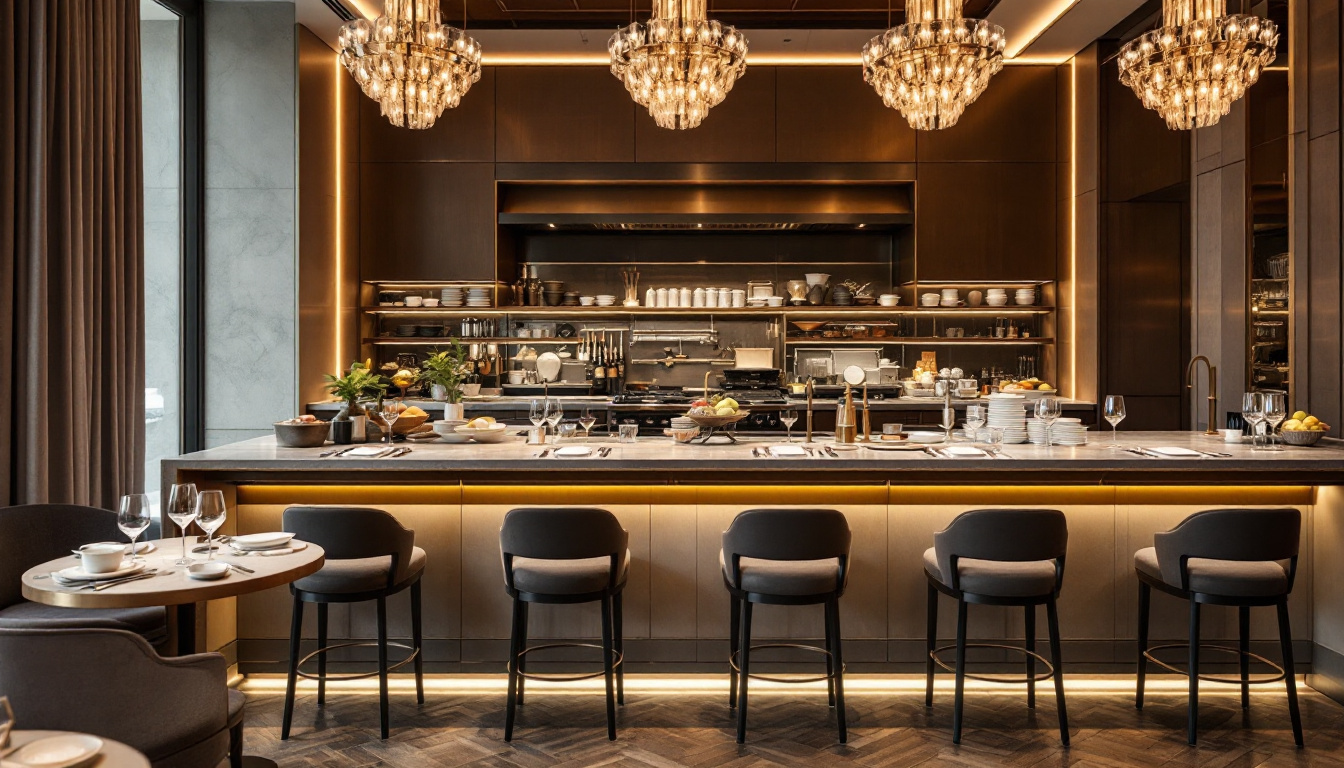
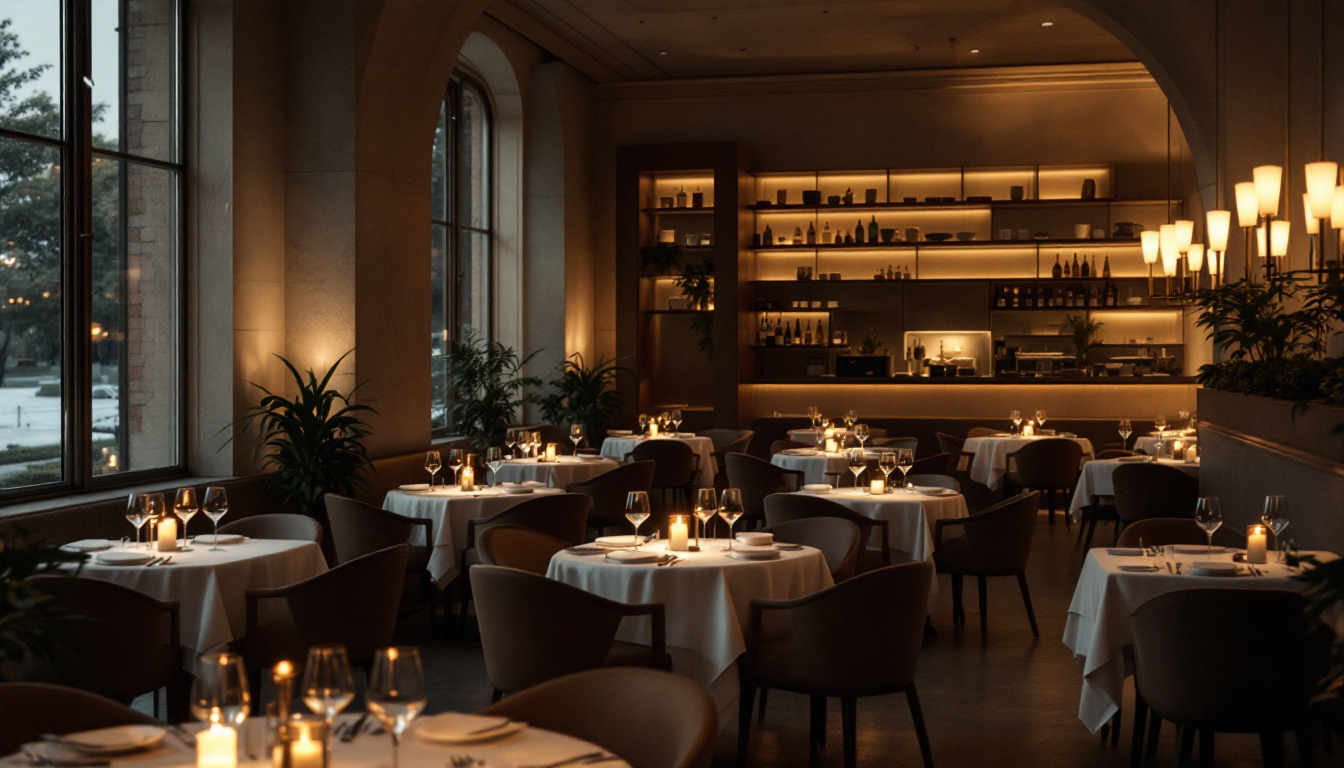
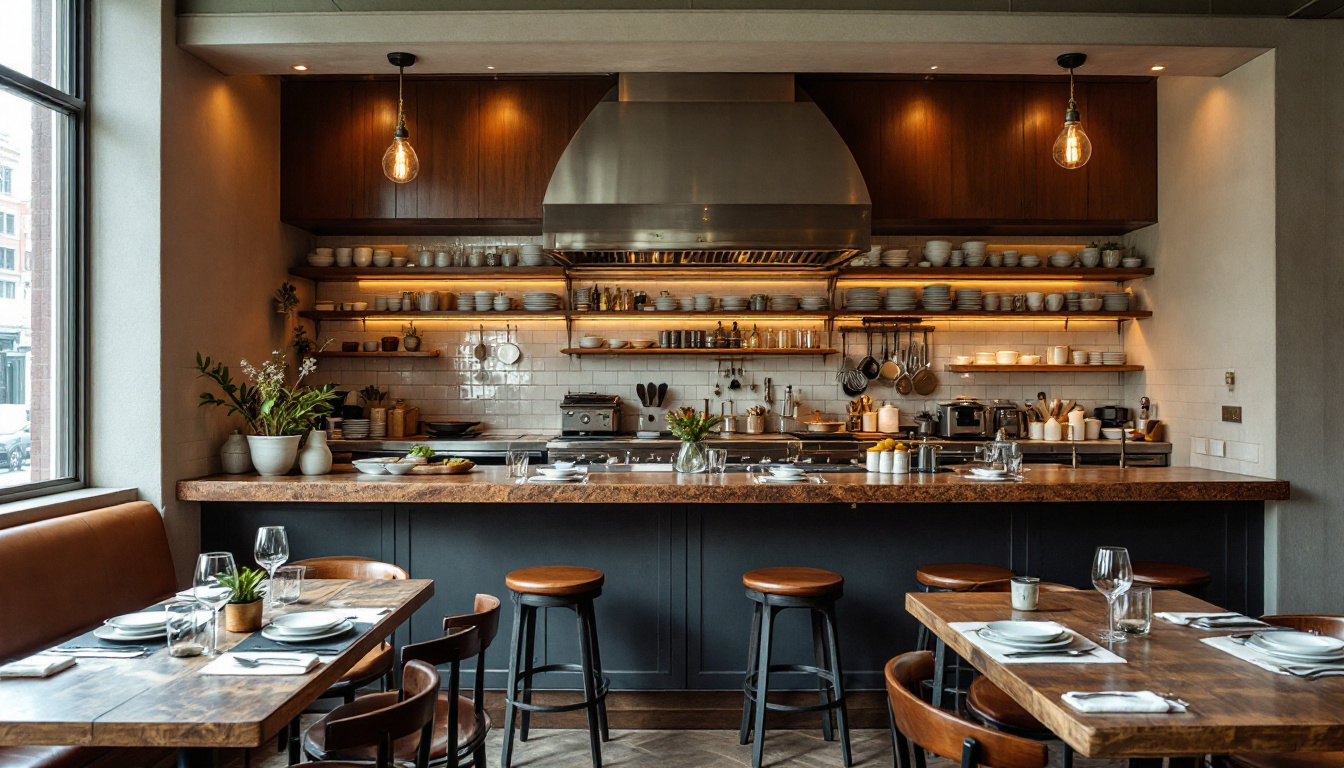
I sat at table six on a Wednesday evening in early March 2026, the table along the eastern wall closest to the kitchen pass, having walked the twelve minutes from the Battery up through Jackson Square and across Russian Hill in light evening fog. The room — long, narrow, perhaps thirty seats across the main dining floor and another four at a small chef’s-counter alcove that runs along the open kitchen window — is unchanged in its essential architecture since the 2018 refresh, when Crenn closed the room for six weeks and reworked the lighting, the flooring, and the back-of-house service flow. The walls are pale plaster with a few small Crenn-curated artworks. The flooring is dark oak. The lighting is low and warm. The tables are set with hand-thrown ceramic plates from a small Sonoma producer Crenn has worked with for nine years.
The chef
Dominique Crenn was born in Versailles in 1965 and raised in Brittany. She arrived in San Francisco in the late 1980s, worked at Stars under Jeremiah Tower, then at Campton Place, then at the Manhattan Country Club in Indonesia (where she was the country’s first female executive chef), and then at Luce in the Intercontinental in San Francisco from 2008 through 2010. She opened Atelier Crenn on Fillmore Street in January 2011 with a small kitchen team and a single eighteen-seat dining room. She received her first Michelin star in the 2012 guide — the first US-based female chef to receive one — and her second star in the 2013 guide. The third star arrived in the 2019 California guide, making her the first US-based female chef to hold three Michelin stars at the same restaurant. The kitchen has held three stars continuously through the 2026 guide.
In early 2018 Crenn removed all meat and poultry from the Atelier menu and committed the room to a fully pescatarian programme. The decision was made public in a New York Times interview that February and was, at the time, treated as a controversial move within the global three-star community. The room’s three-star designation in the 2019 guide — granted nine months after the change — settled the question; the cooking did not need the meat to land the star. The pescatarian commitment has held in the eight years since.
She runs the kitchen with executive chef Juan Contreras (originally from Mexico City, with the room since 2015) and a brigade of eighteen. She is at the pass for most services. She does, on most evenings, walk the room at the dessert service.
The opening
The meal opens, as it has since the room’s earliest days, with the printed poem. The menu is presented as a single sheet of hand-pressed paper printed with a poem Crenn has written for the season; the courses are not listed. The poem is the only document on the table. The kitchen will, on request, walk a guest through the courses at the end of the meal, but the working convention is that the meal is presented as a continuous sequence rather than as a numbered list. The intent is to ask the guest to taste the food without the cognitive frame of knowing what is coming.
The opening sequence on my evening ran through eight small bites in the first thirty-five minutes, presented as a cluster of small plates set down across two waves. The technical level of the opening was, as it has been on every visit I have made to the room since 2019, the highest in the city.
The first bite was a small leaf of nasturtium folded around a small spoonful of California Osetra caviar and a fold of crème fraîche from a producer in the East Bay. The leaf was from the kitchen’s own urban garden on a Crenn family plot in Sonoma. The caviar was from Tsar Nicoulai in Wilton (a 90-minute drive from the kitchen, the source Crenn has used since 2015). The crème fraîche was from Cowgirl Creamery in Point Reyes. The whole bite was, at the open of the meal, an argument about the depth of the California pantry — three ingredients sourced within two hours of the kitchen, presented in a form that took thirty seconds to eat and forty minutes to source.
The second bite was a small slice of cured trout from a producer in Mendocino, the trout cured for forty-eight hours in salt and sugar with juniper and angelica, set on a small biscuit of buckwheat and topped with a single petal of pickled rose. The third was a small tartlet of stone-ground white corn with a smoked oyster from Hog Island. The fourth was a single warm bite of fermented black garlic on a sourdough cracker. The fifth was a small bowl of clear seaweed broth with a single piece of grilled abalone. The pace through the opening was slower than at most three-star kitchens; the kitchen gives each bite time to land before the next arrives.
The middle sequence
The principal courses began at approximately 19:40 and ran through six dishes across the next ninety minutes. The cooking through this section of the menu is where the kitchen does its strongest argumentative work — the courses where Crenn is making her case for what a pescatarian three-star menu can do, in a fine-dining culture that has historically built its top tier around meat.
The first principal course was the kitchen’s signature seaweed cracker, served since the room’s first year — a thin, brittle, almost translucent sheet of dehydrated kombu and rice flour, brushed with a wash of squid ink and topped with a small dome of smoked sturgeon mousse, a few drops of meyer lemon emulsion, and a single petal of borage flower. The dish has been on the menu in essentially this form since 2012 and is the room’s most identifiable single piece of cooking. The cracker is made fresh every morning by a single member of the pastry team; the kitchen produces approximately forty crackers per service and breaks roughly six in the production process.
The second principal course was a small bowl of warm chestnut consommé with a single piece of grilled California uni from a diver in Mendocino (the kitchen has used the same diver since 2016) and a small spoonful of preserved chanterelle. The consommé was clarified through a raft of egg white and reduced for four hours. The temperature was held at exactly 62 degrees. The uni was placed at the centre of the bowl thirty seconds before service. The dish landed as one of the technically most precise things the kitchen has produced in the years I have been eating there.
The third principal course was a piece of slow-cooked monkfish from a fisherman at Half Moon Bay, glazed with a reduction of dashi and yuzu and served on a bed of preserved spring vegetables from the Sonoma garden. The fourth was a single piece of poached Pacific lobster (from the same Half Moon Bay supplier, sourced from the kitchen’s own pots that the supplier sets weekly) with a sauce of fermented carrot and a small dressing of toasted hazelnut. The fifth was a small bowl of risotto made with stone-ground Sonoma wheat berries, finished with a single shaving of black truffle from a producer Crenn has used since 2014 (the truffle window in early March is short and the kitchen times the bookings to land the dish during the peak). The sixth was the kitchen’s working centre of the menu — a piece of seared turbot from a French supplier (one of the very few imported elements on the menu; the kitchen has not yet found a Pacific turbot producer who matches the quality), set on a small fold of grilled leek and dressed with a sauce of fermented kelp and brown butter.
The desserts
The dessert sequence is run by pastry chef Juan Contreras and is, by the working judgement of the small group of San Francisco pastry people I trust, the strongest pastry programme in the city. The sequence runs four bites across thirty minutes.
The first dessert was the room’s longest-running signature — a hollow chocolate sphere set on a small bed of crushed pistachio, with a warm dark chocolate sauce poured over the sphere at the table to melt the dome and reveal a centre of warm hazelnut praline with a single dollop of crème fraîche ice cream. The dish has been on the menu in essentially this form since 2014. The pour is done by the server, slowly, in front of the guest. The sound of the chocolate breaking under the warm sauce is, after twelve years on the menu, still the most engineered single moment in the room.
The second was a small composed dessert of preserved Meyer lemon, fennel pollen, and a quenelle of olive oil ice cream. The third was a small bite of warm madeleine with a single drop of buckwheat honey. The fourth was a final small confection — a square of dark chocolate from a single producer in Madagascar, ganache made with smoked Hawaiian salt — served alongside the bill.
The wine
The cellar is run by wine director Ian Burrows, who joined the room in 2019 and who has built one of the most coherent California-focused programmes in the city. The list runs approximately 1,400 bins. The structural emphasis is on a small group of California producers Crenn has worked with personally for over a decade — Hirsch (the Sonoma Coast Pinot Noir specialist), Sandhi (Rajat Parr’s Santa Barbara Chardonnay project), Arnot-Roberts (Trousseau and Syrah from the Sonoma Coast and Sierra Foothills), Massican (the Napa white-wine project from Dan Petroski) — supplemented by a tighter selection of Burgundy (mostly grower wines from the Côte de Beaune and Chablis) and grower Champagne. The standard pairing runs nine glasses at USD 295. The reserve pairing — heavier on Burgundy and on aged Champagne — runs USD 595.
The non-alcoholic pairing at USD 165 is, on the evidence of three separate visits over the last eighteen months, the most serious non-alcoholic programme in San Francisco. The pairing runs through fermented juices made in-house, garden-vegetable distillates, low-alcohol kombuchas (well below the 0.5% threshold), and a single small pour of an alcohol-free sparkling wine from a French producer Crenn has worked with for four years.
The argument
The argument that the kitchen is making, after fifteen years on Fillmore Street and eight years as a fully pescatarian three-star room, is that the highest tier of European-trained cooking does not require meat or poultry to land. The cooking does not present itself as vegetarian, or as plant-based, or as ethical, or as any other category that the marketing world has tried to attach to it. The cooking is presented as cooking. The pescatarian commitment is treated, by the room and by Crenn herself, as a working constraint that the kitchen has chosen and that the cooking happens to fit within. The constraint is not the point. The cooking is the point.
The room is, on the evidence of a Wednesday in March 2026, doing this work at a level that no other San Francisco room currently matches. The technical precision is at the global three-star frontier. The pastry programme is, in my view, the strongest in the city. The wine programme is the most California-coherent in the city. The service is professional without being rehearsed. The pace is appropriate to the kitchen’s intent. The room is, fifteen years in, still the place against which the rest of the city’s fine-dining ambition is measured.
What it costs to eat at Atelier Crenn in 2026 — approximately USD 425 for the food plus USD 295 for the standard wine pairing plus tax and service — places the room in the upper bracket of US three-star pricing but below the Per Se / Eleven Madison Park / French Laundry tier. The value, on the basis of the technical level of the cooking and the seriousness of the pairing programmes, is honest. The room is, for a guest who has not eaten there before and who is willing to plan a San Francisco trip around the booking, the strongest single dining argument the city is currently making.
Standing Questions
- How do I book?
- Reservations open two months in advance on Tock (exploretock.com/ateliercrenn) at 09:00 Pacific on the first day of each month for the corresponding month two months ahead. The weekend services (Friday and Saturday) close within roughly two hours. Tuesday, Wednesday, and Thursday evenings hold availability for several days. Full prepayment is required at booking; the cancellation window is 72 hours before service for a partial refund, full forfeiture inside that window. The chef's counter alcove (four seats) opens separately and is significantly harder to land.
- What is the menu structure?
- A single tasting menu, presented as a printed poem with no explicit course listing. The sequence runs approximately twelve to fourteen courses across two and a half to three hours. The cooking is fully pescatarian (no meat, no poultry); seafood, vegetables, fermented elements, and dairy form the working palette. A fully vegan version of the menu is available with twenty-four hours' notice at no price difference. The kitchen will accommodate most allergies with notice; please flag at booking rather than at the table.
- Pairing or no pairing?
- If you drink wine, take the standard pairing at USD 295. The cellar is run by wine director Ian Burrows and is built around a small group of California producers Crenn has worked with for over a decade (Hirsch, Sandhi, Arnot-Roberts, Massican) plus a tighter selection of Burgundy and grower Champagne. The non-alcoholic pairing at USD 165 is genuinely serious — fermented juices, garden infusions, low-alcohol kombuchas — and is the better answer for guests who are not drinking. Skip the optional caviar supplement unless caviar is specifically on your list; the menu does not need it.
- What about Bar Crenn and Petit Crenn?
- Bar Crenn, the wine and snack room directly next door to Atelier on Fillmore, remains open and is the right answer for a one-hour visit if you cannot land the Atelier booking. The bar holds one Michelin star in the 2026 guide. Petit Crenn, the casual room in Hayes Valley that operated 2015 through 2022, closed permanently after the pandemic and has not reopened; the address is currently a different concept. Crenn's London room at Six Senses Bayswater remains in pre-opening as of June 2026.
- Where do I stay?
- The Battery (clubhouse hotel in Jackson Square, twelve minutes by taxi) is the strongest answer for a guest who wants a serious hotel and a short ride. The Inn at the Presidio (a smaller, quieter property inside the Presidio national park, eight minutes by car) is the right answer for a more reflective stay. The Four Seasons Embarcadero is fine but the room product has aged. Avoid Union Square hotels for an Atelier dinner; the traffic from Union Square to Cow Hollow on a Friday evening adds twenty unwelcome minutes.