I arrived at Klara Norra kyrkogata 26 at 18:55 on a Thursday in mid-January 2026, having walked the eight minutes from the Bank Hotel through the Norrmalm streets in light snow and a steady minus-three. The building — three storeys, narrow, set into the western side of a small Stockholm side street five minutes from the central station — has a single discreet entrance with a small brass plate carrying only the word “Frantzén” and no other indication that the building contains Sweden’s only three-Michelin-star kitchen and one of the most consequential restaurants in northern Europe. The door was opened at 18:58 by a young man in a dark grey suit who took my coat, addressed me by name, and walked me to the ground-floor reception lounge.
I have been writing about restaurants in northern Europe long enough to have a working theory about why so few of them reach the highest tier of European cooking. The constraints are real: short growing seasons, limited indigenous flavour palette, a national service culture that runs flat and unceremonious. Frantzén has, over the eighteen years since Björn Frantzén opened the original Frantzén/Lindeberg with pastry chef Daniel Lindeberg in 2008, built a kitchen and a service architecture that work against every one of those constraints simultaneously. The Stockholm flagship has held three Michelin stars since 2018; Frantzén himself is, at the time of writing, the only chef in the world holding three Michelin three-star restaurants (Stockholm 2018, Zén in Singapore 2021, FZN in Dubai 2025). The Frantzén Group operates more than thirty venues across Europe, the Middle East, and Asia, and several more are planned for 2026.
This review is about the Stockholm room only — the original kitchen, the head office, the place where the cooking still gets sharpened on a Tuesday morning before service.
The building
The building at Klara Norra kyrkogata 26 was a private commercial townhouse built in 1899, renovated and converted by the Frantzén Group in 2017 as the kitchen’s new home after the original Lindeberg-era restaurant on Lilla Nygatan in Gamla Stan closed in 2016. The three storeys of the new building are configured as a single integrated experience: the ground floor is the entrance hall, the cloakroom, and a small lounge where the first three courses are served as aperitif snacks; the first floor is the principal dining room, with a long counter looking into the open kitchen and twelve cover seats at the counter plus four tables of two against the opposite wall (for a working capacity of twenty per service); the third floor is the dessert lounge, a single low-ceilinged room in an old loft with five small tables and a single banquette, where the dessert and petit four service is taken away from the main room.
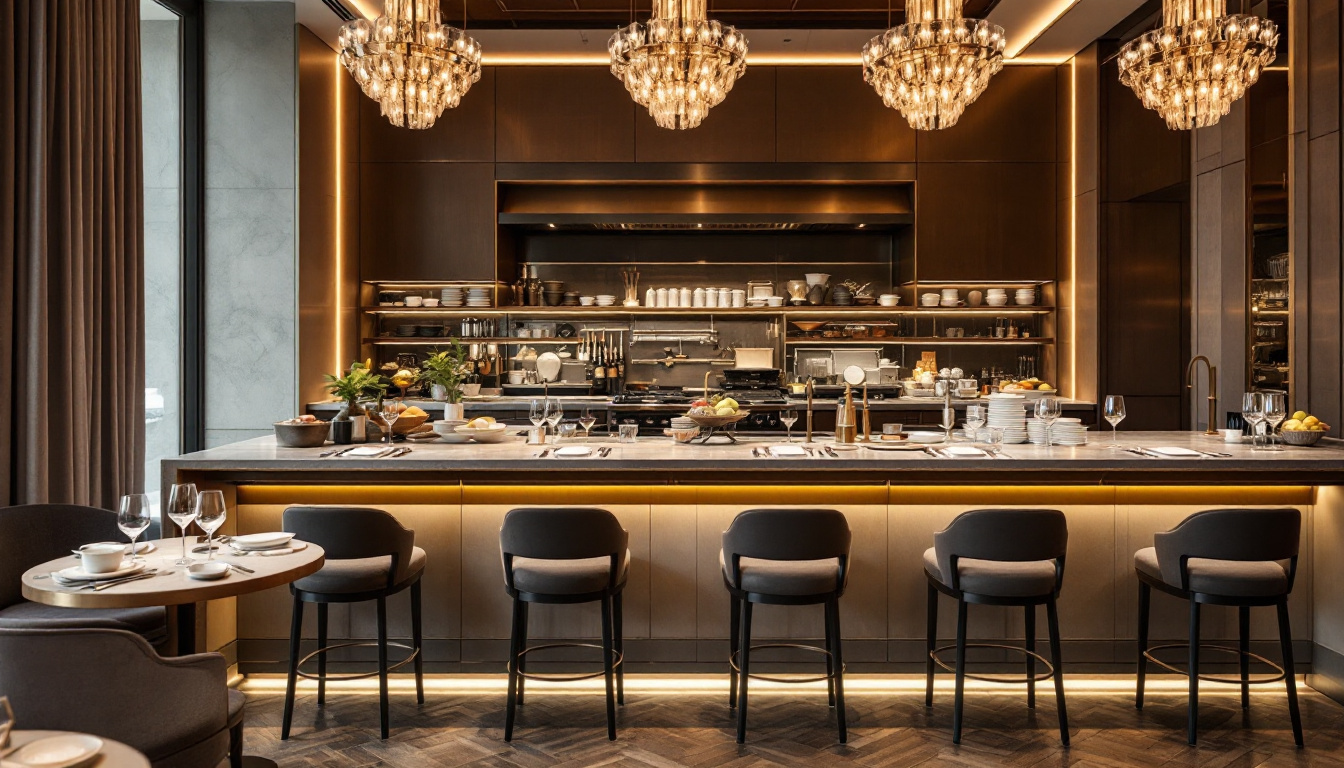
The architecture, by the Swedish studio Joyn Studio (with interior collaboration by the Frantzén Group’s in-house design team), is unusually restrained for a flagship of this rank. The walls are lime-washed white. The flooring is oiled oak board. The fittings are dark bronze. The lighting is low — pendant fixtures over each table, undercounter lighting along the kitchen pass, a few small wall sconces in the lounges. The single dramatic gesture is the open kitchen itself, which occupies the full eastern wall of the first floor and which is visible from every seat in the principal room. The cooking is, in this sense, on the menu in a way that very few three-star kitchens permit themselves.
The room takes a maximum of twenty covers per service, with two services on Friday and Saturday and one service Tuesday through Thursday. The restaurant is dark on Sunday and Monday. The annual closure runs from mid-July to mid-August.
The first floor
I was placed at the counter, on the second stool from the right end — the corner stool, which is the seat I had specifically requested at booking. The corner gives the most complete view of the kitchen: the pass, the long working surface, the cold station at the western end, the small dedicated patisserie station at the eastern end with the pastry chef visible at the table. The counter is set with a single piece of fitted oak the full length of the room (six metres, give or take), with twelve recessed plate stations spaced at intervals of approximately fifty centimetres. The covers at the counter eat at the same pace, in synchronised service; the four tables of two along the opposite wall run on a slightly looser schedule.
The opening courses — the three small snacks in the ground-floor lounge, then the four to five small courses at the counter that take the meal through its first hour — are the kitchen’s introduction. They are also where the cooking demonstrates that the Frantzén kitchen is, in 2026, technically working at the absolute frontier of European fine dining. Three of the openers from my evening:
The signature opener is the Bake — a small wedge of warm yeasted bread, brushed with brown butter and topped with a fold of cured cod roe, a thin slice of grilled white onion, and a small dressing of fermented chanterelle. The bread is made in house, on a sourdough starter that the kitchen has carried since 2008; the butter is browned to order at the pass; the cod roe is sourced from a single supplier on the west coast and cured in the kitchen for twelve days. The dish has been on the menu since 2017 in approximately its current form and is one of the small handful of European fine-dining bites that have entered the international canon.
The second course of the evening — a small bowl of langoustine consommé, served warm, with a single piece of langoustine tail set in the centre and a small spoonful of black pearl trout roe — was the dish that signalled the kitchen’s relationship with the Swedish coast. The langoustines are sourced from a single boat operating out of Smögen on the west coast (Daniel Frantzén, no relation to Björn, has been the kitchen’s principal langoustine supplier for eleven years); the consommé is made from the shells, clarified through a raft of egg white and reduced for ninety minutes; the trout roe is from a producer in Värmland.
The Satio Tempestas — Frantzén’s signature dish, served as the centre of the meal since the original restaurant opened in 2008 — arrived as the seventh course. The current version, on my evening, was a small composed salad of 51 ingredients (the kitchen lists them on a small printed card that is set on the counter alongside the dish) prepared in 13 different ways, including raw, pickled, fermented, grilled, smoked, dehydrated, and roasted preparations. The base of the dish is built around the kitchen’s own garden produce — Frantzén operates a 1.2-hectare working garden on Lidö island, two hours north of Stockholm by road, supplying the restaurant with vegetables, herbs, and edible flowers through the season and into a long pickling and preserving programme through the winter. In January, with the garden under snow, the dish is built around preserved and stored produce; in July, on a high summer service, the dish carries a different 50 to 60 ingredients drawn from that morning’s harvest. The composition changes daily. The intent does not. The Satio Tempestas is the kitchen’s continuing argument that the great food of Scandinavia is not about scarcity but about depth — that the small range of indigenous ingredients can be worked into a vocabulary as wide as any in European cooking when the technique is right.
The middle of the menu — through courses eight to fourteen — is where the kitchen demonstrates its Japanese influence most directly. Frantzén staged at Yoshihiro Murata’s Kikunoi in Kyoto for three months in 2010 and the trip changed the cooking. The middle of the menu now reads as a series of small Nordic-Japanese hybrid dishes: a sashimi of locally caught Arctic char with a single brushstroke of dashi and a small mound of grated daikon; a small grilled piece of Söderåsen pork belly with a Japanese-style dashi-cured turnip; a small bowl of Hokkaido scallop with a vegetable broth made from the kitchen garden’s leeks and a single grated chestnut. The cooking through this section is unusually precise — every plate is the product of a long sequence of small operations, each visible from the counter, each executed by a different member of the kitchen brigade.
The main savoury course — a small piece of Galician beef shortrib, slow-cooked for forty-eight hours, then briefly glazed with a soy-and-koji reduction and served with a single piece of grilled Jerusalem artichoke and a small spoonful of horseradish cream — was the heaviest dish of the meal and the one most clearly indebted to the kitchen’s classical French training. The beef was correctly cooked. The plate was well composed. It did not, in my reading, advance any argument that the earlier courses had not already made better.
The third floor
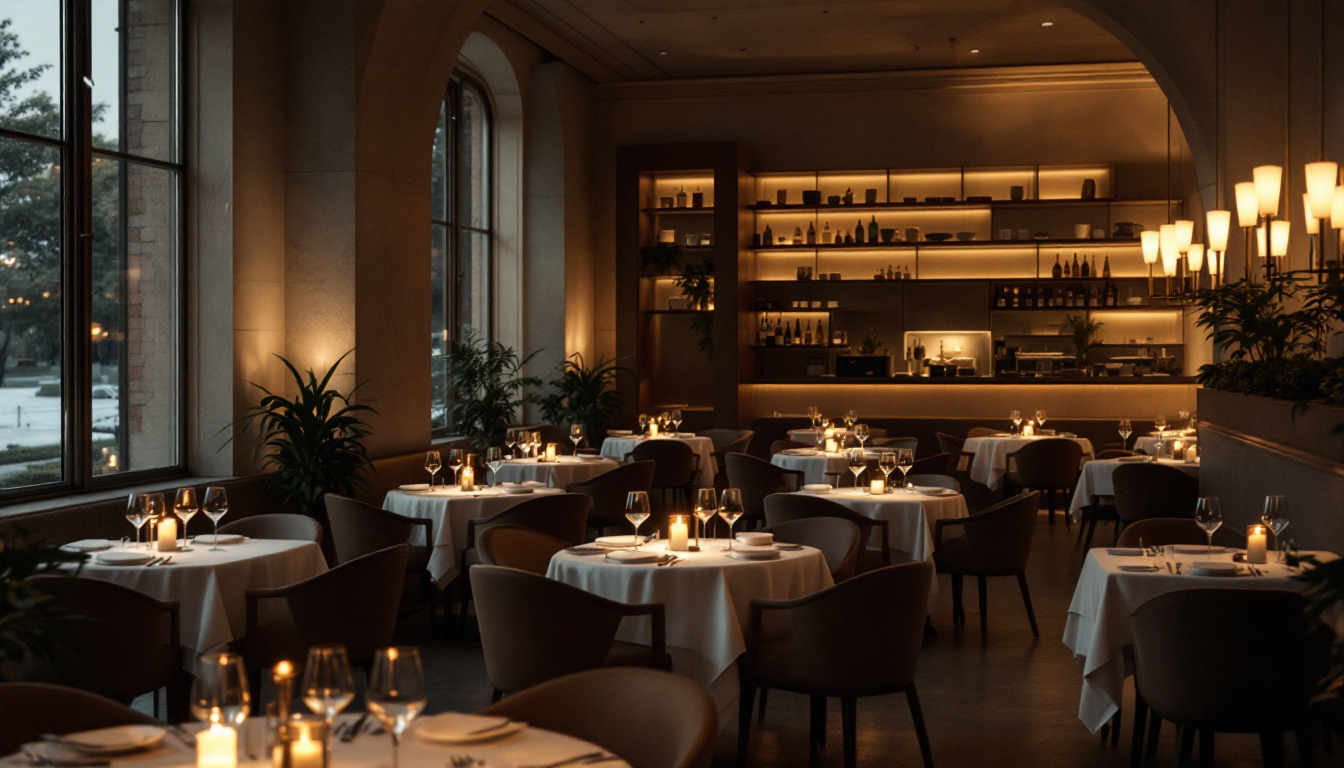
After the main savoury, the room is reset and the guests are walked up the narrow back stair to the third-floor lounge. This transition — the deliberate physical move from the principal dining room to the dessert space — is one of the small architectural decisions that defines the Frantzén experience. The dessert lounge is darker than the principal room, lower-ceilinged, more intimate. There is a single banquette and four small tables. The light is candlelit, the sound is hushed, the service shifts from the precise synchronisation of the counter to a more relaxed pace.
The dessert sequence runs approximately five small courses over forty minutes. The standout, on my evening, was a small composed plate of brown butter ice cream with grilled milk crumble and a single piece of caramelised birch syrup — the birch syrup from a small producer in northern Sweden, the ice cream churned in house. The petits fours that close the meal are made by the patisserie team in the small dedicated station I had watched through the principal service; a small box of six bites is sent to the table at the end, with espresso (Per Nordby’s roastery, single-origin Ethiopian, brewed on a Marzocco at the side station). The bill arrives at the end of the petit four service, presented in a small leather folder by the maître d’, who walks the guest back to the ground floor and the cloakroom personally.
The service
The service architecture at Frantzén is the part of the operation that is most visibly different from the comparable European three-star rooms. The principal service team — fourteen people across the three floors, with a head waiter on each floor and a maître d’ moving between them — operates in a register that is unusually warm for a kitchen at this rank. The Swedish service tradition is, in the main, flat and informal; the Frantzén service has retained the warmth and added a degree of structural precision that the broader Swedish tradition does not have. The head waiter at the counter on my evening was a Stockholmer in his early thirties named Erik Lundqvist, six years in the building, who walked the room with a measured visibility and stopped at the counter twice to ask intelligent questions about pace and preference. The maître d’ for the evening — Marcus Jernberg, who came to Frantzén from Geranium in Copenhagen in 2022 — was present at the opening of the meal, at the transition to the third floor, and at the close. He addressed me by name on each occasion and remembered, on the third occasion, a detail from the opening conversation that he should not reasonably have been expected to remember.
The wine service was led by sommelier Vincent Hsu, eight years at Frantzén, who took the table through the eight-glass pairing himself rather than delegating to a junior. The opening pour — a 2018 Krug Grande Cuvée Édition 171 — was correctly chilled and correctly poured. The mid-menu pour — a 2017 Domaine Leflaive Puligny-Montrachet 1er Cru Les Pucelles — was decanted thirty minutes before the course it was paired to, which is the right handling for a wine of that age and pedigree. The closing pour — a small glass of 2003 Château d’Yquem with the brown-butter dessert — was the moment of the evening at the wine pairing.
The Test Kitchen — the six-seat counter inside the working kitchen, available to a separate booking with its own slightly extended menu — was full on my evening and I observed it from the principal counter for the full three hours of service. The pace inside the Test Kitchen is more direct than in the principal room: courses are passed directly from the chef working a station to the guests at the counter, often with a brief explanation from the chef in either Swedish or English. The supplement (SEK 700 over the main room rate) is modest for the experience. The booking is the harder one to land.
The kitchen
I asked, at the end of the meal, whether I could see the kitchen properly — not just the open pass that the counter looks into, but the back of house. The maître d’ arranged it without difficulty. At 23:15, after the last service had finished and the room was being broken down, the head chef for the evening — JP Söderqvist, the executive chef who runs the day-to-day kitchen under Björn Frantzén’s direction — walked me through the back of house for approximately twenty-five minutes. The cold rooms, the small pastry station, the dedicated bread station (the kitchen runs a single bread programme with one full-time baker), the dishwash, the small staff dining table where the brigade had eaten at 17:30. Björn Frantzén himself was not in Stockholm on my evening — he was in Dubai at FZN, the kitchen the group opened in 2024 — and the operation ran without his presence in a way that suggested the back-of-house culture is fully baked.
The brigade is approximately twenty-two strong across the kitchen, the pastry, the cold station, and the back of house. The kitchen is genuinely international (the brigade I met carried Swedish, Norwegian, French, Spanish, Japanese, South Korean, and Italian passports) and substantially male (perhaps four women out of twenty-two), which is the same demographic problem that the broader three-star fine-dining world has not yet solved. The pace is measured. The pre-service mise en place runs for approximately six hours before each service. The breakdown after service runs another two hours.
The verdict
Restaurant Frantzén, eighteen years after the original kitchen opened in Gamla Stan, is in the most secure phase of its working life. The cooking is fully developed and continues to sharpen; the service architecture is the most successful integration of European structure and Swedish warmth in northern European fine dining; the wine programme is at the absolute top of the Scandinavian market; the Test Kitchen offers a genuine alternative experience for guests who want to see the operation from the inside. The Stockholm flagship is the centre of an empire now running across Europe, the Middle East, and Asia, but the Stockholm room is the one where the original argument is being made every Tuesday night.
Book three months out for any weekend service. Book six weeks out for a Tuesday or Wednesday. Take the pairing. Take the corner counter seat if you can. Stay at the Bank Hotel for one night or at Ett Hem for three. Walk the route home through the Norrmalm streets in the snow. The hour after the meal, walking back through the empty city, is the part of the meal that you do not pay for.
I will go back. I would like to do a summer service when the Lidö garden is at full output and the Satio Tempestas is in its July version. I would like to book the Test Kitchen for two. And I would like to see what the kitchen does when Björn Frantzén is on the pass — which, after eighteen years, is now the harder booking on his own list. I will report back.
Verification
Filed against the following sources, last verified on March 31, 2026. The desk re-checks the source URLs on every dated modification of the piece.
- https://www.restaurantfrantzen.com/
- https://guide.michelin.com/us/en/stockholm-region/stockholm/restaurant/frantzen
- https://www.frantzengroup.com/bjorn-frantzen-is-the-only-chef-in-the-world-with-three-michelin-three-star-restaurants/
- https://robbreport.com/food-drink/dining/bjorn-frantzen-michelin-restaurants-1237561660/
- https://www.theworlds50best.com/the-list/frantzen.html
- https://www.theworlds50best.com/stories/News/bjorn-frantzen-culinary-universe-neo-nordic.html
- https://www.facebook.com/restaurantfrantzen/posts/our-signature-dish-satio-tempestas-at-the-moment-51-ingredients-prepared-with-13/607384562760540/
- https://www.frantzengroup.com/restaurants/restaurant-frantzen/
Standing Questions
- How do I book Frantzén?
- Reservations open three months out on the restaurant's website (restaurantfrantzen.com). The booking window opens at 10:00 Central European Time on the first day of the month for the corresponding month three months ahead. Prime weekend services close within fifteen minutes. Tuesday, Wednesday, and Thursday evenings have more availability. Full prepayment is required at booking; cancellations refundable up to 14 days before service.
- What is the menu structure?
- A single tasting menu, no à la carte, no choices. Approximately 18-22 courses across three to three and a half hours. The structure runs through three distinct service spaces in the building: aperitifs and snacks in the ground-floor entrance, the principal sequence at the counter or table on the first floor, and the dessert and petit four service on the third-floor lounge. The signature Satio Tempestas salad (currently 51 ingredients prepared in 13 different ways from the restaurant's own garden) appears mid-menu and varies daily.
- Wine pairing or not?
- Take the pairing. The wine programme is among the most serious in Scandinavia, run by head sommelier Vincent Hsu (eight years in the building), and the matches genuinely improve the food. The standard pairing runs eight glasses at approximately SEK 2,800. A premium pairing — heavier on Burgundy and grower Champagne — runs SEK 4,800. The non-alcoholic pairing (fermented teas, vegetable distillates, kombuchas made in-house) is among the best in Europe at SEK 1,800.
- Is the Test Kitchen worth the supplement?
- Yes, if you are travelling as two and the timing aligns. The Test Kitchen seats six guests at a counter inside the working kitchen, the menu is slightly extended (a few additional courses, served direct from the pass), and the experience is at SEK 5,500 — a SEK 700 supplement over the main room. The booking is harder to land than the main room. The view of the kitchen at full service is itself part of the meal.
- Where do I stay?
- The Bank Hotel on Arsenalsgatan, a ten-minute walk from the restaurant through the Norrmalm streets, is the right answer for one or two nights. The Ett Hem (a small townhouse hotel in Östermalm; 22 rooms; design by Ilse Crawford) is the right answer for three or more nights. Avoid the Grand Hôtel on Södra Blasieholmshamnen unless you are travelling on per diem; the location is excellent, the rooms have not aged well, and the rate does not justify the gap.