I had a 17:30 reservation at The French Laundry on a Saturday in mid-February 2026, having driven up from San Francisco in the early afternoon and checked in at the Bardessono at 16:00. The walk from the hotel to the restaurant takes six minutes through the small grid of Yountville’s central commercial blocks — north up Washington Street past the Yountville Veterans Home, past Bouchon and the Bouchon Bakery (Keller’s casual and pastry properties, both running their own steady traffic on the Saturday afternoon), past the small Yountville library, to the two-storey stone building at 6640 Washington Street that has, since 1994, been the founding kitchen of the contemporary American fine-dining era.
The French Laundry is the property that Thomas Keller bought in 1994 from the original Don Schmitt operation, which had run the building as a restaurant since 1978. The building itself was a French steam laundry in the 1920s — the original wooden signage, faintly visible above the front entrance, reads ‘French Laundry’ in a 1920s typeface — and the stone exterior is unchanged from the original construction. Keller renovated the dining room in stages between 1994 and 2004, expanded the kitchen in 2006, and undertook the largest renovation in the property’s history from 2017 to 2020, when he commissioned San Francisco firm Snøhetta to rebuild the kitchen and back-of-house entirely while preserving the dining-room footprint. The renovated kitchen — a two-storey purpose-built workspace at the rear of the property with full open lines of sight to the dining room — reopened in mid-2020.
The kitchen has held three Michelin stars every year since the California Michelin Guide debuted in 2007 — a nineteen-year continuous run. The kitchen is, alongside Per Se in New York, one of two three-star American kitchens that Keller is the executive chef of record at; the actual day-to-day operation at The French Laundry is led by chef de cuisine David Breeden, who came up through the Keller properties starting at the original French Laundry kitchen in 2005 and who took over the day-to-day in 2009.
The room
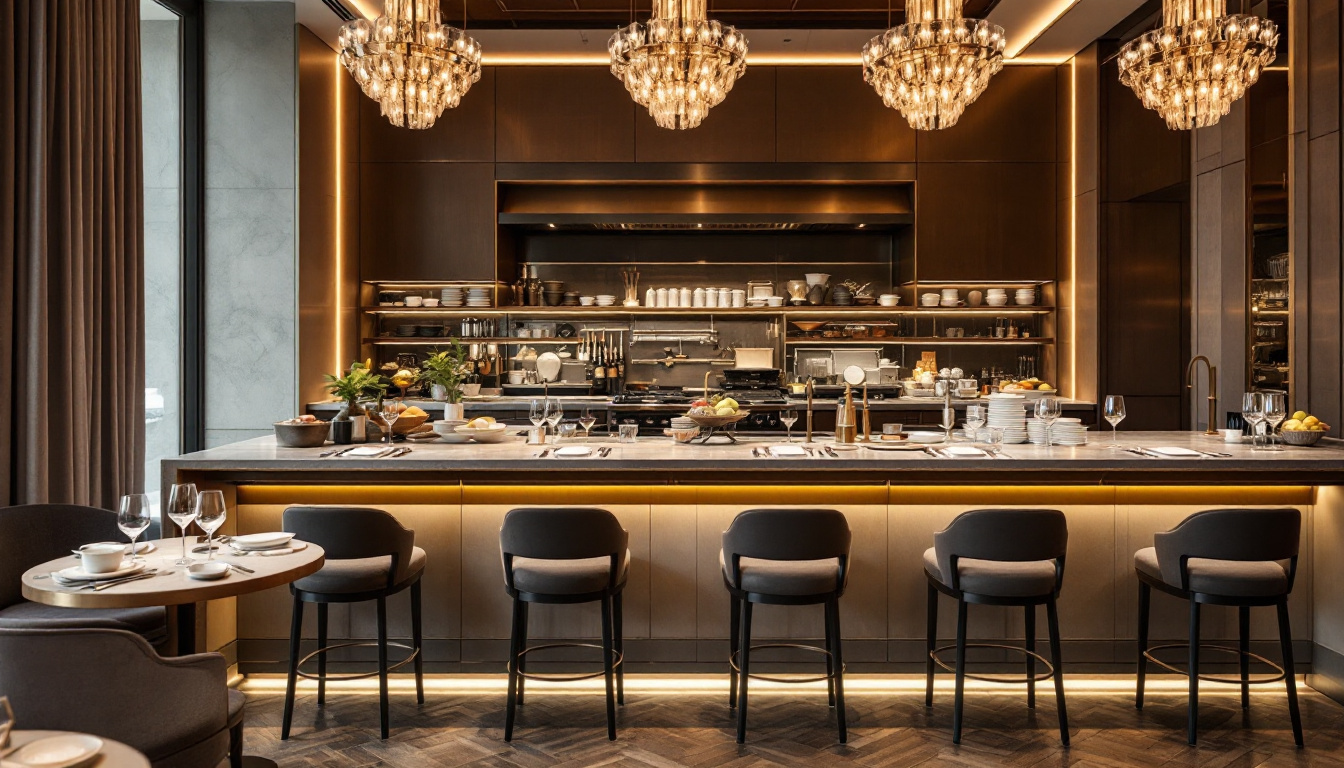
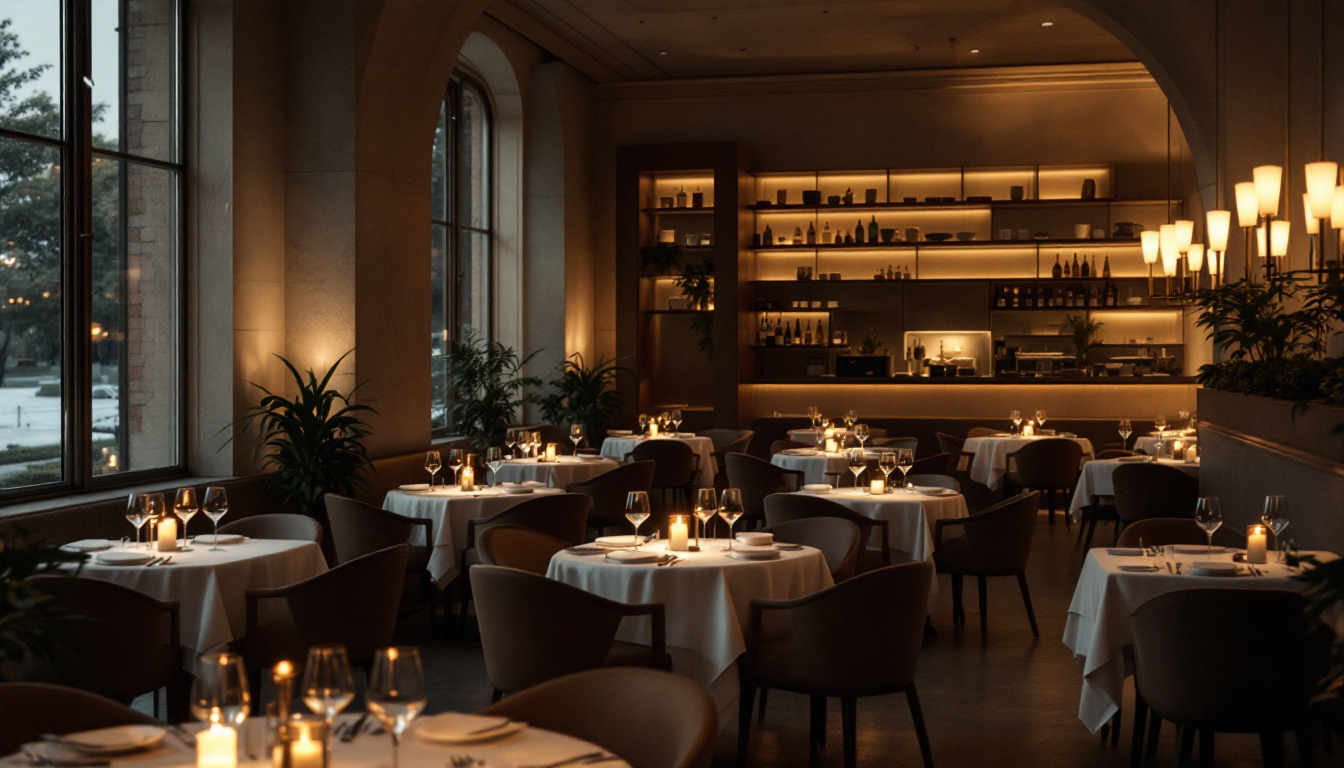
The dining room at The French Laundry occupies the ground floor of the original 1920s stone building, organised in two rooms that take a combined sixteen tables for approximately sixty-two covers per service. The front room — the smaller of the two, with a low coffered ceiling and a single large fireplace at the east wall — takes ten tables of two and four. The back room — the larger room, with a higher ceiling and full windows to the kitchen courtyard — takes six tables of larger parties.
The aesthetic of the room is the deliberate counterpart to the polished urban contemporary vocabulary of Per Se — exposed stone walls, antique wood furniture (the chairs are nineteenth-century French country chairs that Keller’s design team sourced from a Provence antique dealer in 2003), heavy white linen, candlelight from small votives at each table. The room is, in the literal sense, atmospheric — the lighting is warm and dropped low, the acoustics are softened by the heavy stone walls and the linen, the pacing of the room is set to the slow tempo that Keller has defined as the right tempo for the menu.
Service is led by general manager Erwan Louaisil with a brigade of eighteen on the floor for the early seating. The pacing is slower than Per Se — the same nine courses take approximately three hours fifteen minutes at The French Laundry vs two hours forty at Per Se, a deliberate function of the room rather than the kitchen. The slower pace is the right pace for the Napa setting and is, in my reading, the more atmospheric experience of the two.
The menu
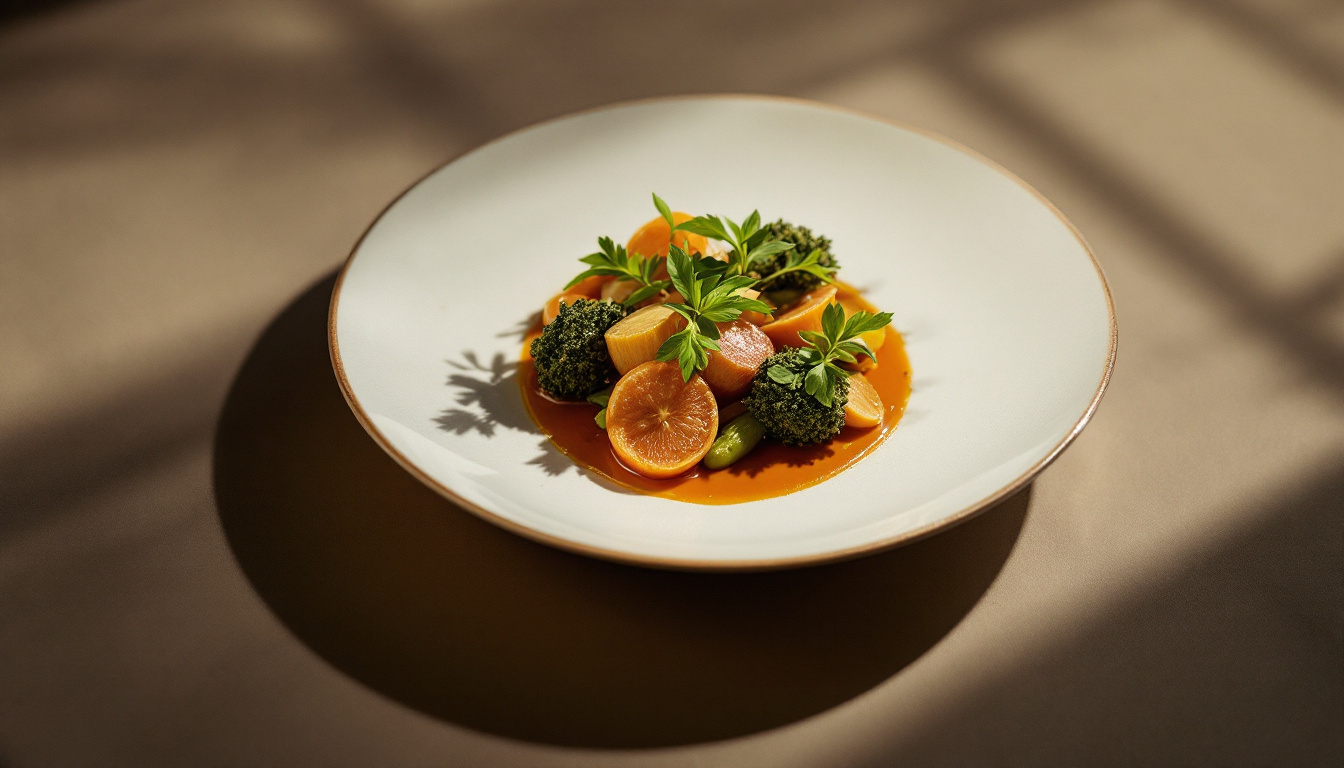
The French Laundry runs two nine-course tasting menus daily — the Chef’s Tasting Menu and the Tasting of Vegetables — and the kitchen’s standing rule is that diners at the same table can choose between the two menus independently. The Chef’s Tasting includes the kitchen’s signature Keller dishes (oysters-and-pearls, the salmon-tartare cornet, the Keller short rib); the Tasting of Vegetables runs a parallel structure with mostly distinct courses and includes a small but technically rigorous vegetable programme that Keller has been developing since the late 1990s.
I took the Chef’s Tasting on this evening. The opening course was the Keller signature oysters-and-pearls — a small flat dish containing a sabayon of pearl tapioca topped with two Island Creek oysters (sourced from the Massachusetts producer that Keller has worked with since 2003) and a single generous spoonful of sturgeon caviar from Sterling Caviar in California’s Sacramento Valley. The dish is the most-served single course across the Keller properties and has been on The French Laundry menu every day since the late 1990s. The sabayon was the right texture, the oysters were the right temperature, the caviar was the right pop on the palate.
The second course was the salmon-tartare cornet — the kitchen’s most photographed single course, a small twisted-cone of sesame tuile filled with a layer of crème fraîche and topped with a generous spoon of cured Norwegian salmon tartare. The cornet was the right crispness; the salmon tartare was the right cure; the crème fraîche underneath was the right richness. The course is the kitchen’s most precisely timed piece of theatre — the tuile begins to soften within sixty seconds of being filled, and the brigade walks the cornet individually to each table within that window.
The third course was a small bowl of warm Hudson Valley foie gras — sourced, like the Per Se foie, from La Belle Farms in upstate New York — served with a small spoon of California winter-fruit compote and a thin slice of brioche. The course was the menu’s most luxurious raw ingredient and the moment of greatest technical risk for the kitchen’s pickup.
The fourth course was a small dish of poached Maine lobster, served with a vanilla-and-bone-marrow emulsion and a small mound of fava beans. The lobster was sourced from a small day-boat operator in Stonington, Maine, and was poached at low temperature in butter for seven minutes — the same preparation as the lobster course on the Per Se menu, with the difference that The French Laundry serves the lobster slightly cooler at the centre and adds a touch more vanilla to the emulsion. Both versions are excellent; the French Laundry version is, in my reading, the slightly more refined.
The fifth course was a single piece of dry-aged Aylesbury duck breast, sourced from a small farm in Petaluma (the local supplier the kitchen has worked with since 2003), served with a small puree of celery root and a thin reduction of duck jus. The duck was twenty-eight days dry-aged and was, on this evening, the kitchen’s quietest piece of cooking — the surface caramelised to a deep amber, the interior still rare at the centre.
The sixth course was the menu’s substantial main — a single piece of slow-braised Wagyu short rib, cooked at low temperature for twelve hours, served with a small puree of black trumpet mushrooms and a thin reduction of red wine. The short rib is the kitchen’s standing signature and was, on this evening, the menu’s most accomplished single piece of work. The technical control on a twelve-hour braise of a high-fat cut is the technique that the kitchen is most famous for, and the piece on the plate was the right texture, the right depth, the right finish.
The seventh course was the cheese course — three farmhouse cheeses from California producers (a Cypress Grove Humboldt Fog goat cheese, a Point Reyes Original Blue, and a Bellwether Farms San Andreas sheep cheese), served with a small spoonful of honeycomb from a Sonoma County producer and a thin piece of toasted walnut bread.
The eighth course was a small bowl of grilled-pineapple sorbet with a thin layer of caramelised passion fruit — the menu’s palate cleanser before the formal dessert.
The ninth course was the formal dessert — a small dark-chocolate dome filled with hazelnut praline and a small pool of warm chocolate sauce poured at the table.
The closing mignardise programme — brought to the table on a small silver tray with eight separate small pastries and the kitchen’s signature small bag of house-made chocolate truffles — was the meal’s quiet close.
The wine
The wine list at The French Laundry runs to approximately 2,500 references and is the deepest cellar at a Keller property. The list is heavily weighted toward Burgundy (a Domaine de la Romanée-Conti vertical from 1985 to 2020 is the cellar’s spine, with multiple complete vintages of Romanée-Conti, Tâche, and Échezeaux), Bordeaux, and California Cabernet (a Harlan Estate vertical from 1995 to 2018 plus a parallel Screaming Eagle vertical from 1996 to 2018). The list is run by Tushar Patel, who took over the cellar in 2018 after a long stint at the Restaurant at Meadowood in St Helena.
The classic pairing on the nine-course tasting at USD 215 ran seven wines across the courses. The standout pairings were a 2018 Domaine Roulot Meursault Tessons with the lobster and a 2008 Domaine Dujac Clos de la Roche with the short rib — both were the right wines and the pairing as a whole was the most considered Napa pairing I have taken at any three-star kitchen.
For diners who prefer to drink by the bottle, the list’s deepest section is the California Cabernet from the early 2000s — the cellar has held a substantial library of the Harlan Estate, Screaming Eagle, Bryant Family, and Colgin bottlings from 2000 to 2010 that are now genuinely difficult to find at retail and that drink at this moment in their first peak window.
The verdict
The French Laundry is the founding kitchen of the modern American fine-dining era, and the kitchen at 6640 Washington Street in 2026 is, thirty-two years after Keller bought the operation, operating at the standards that defined the original ambition. The cooking is precise; the room is atmospheric; the wine programme is deep; the service is the slowest and most atmospheric of any American three-star.
The choice between The French Laundry and Per Se for a first-time Keller diner is a choice between rooms rather than between kitchens. The French Laundry is the more atmospheric experience; Per Se is the more polished one. For visitors to Napa, the trip should include the dinner; for visitors to New York, the trip should include Per Se. Neither is more essential than the other in 2026.
The bill, for the Chef’s Tasting with the classic pairing and service, came to USD 745 per guest. The walk back to the Bardessono in the cold February air took six minutes. The Napa night at 21:30 is quiet, dark, and clear — the right close to a three-hour-and-fifteen-minute meal.
Verification
Filed against the following sources, last verified on February 3, 2026. The desk re-checks the source URLs on every dated modification of the piece.
- https://en.wikipedia.org/wiki/The_French_Laundry
- https://thomaskeller.com/tfl/
- https://guide.michelin.com/us/en/california/yountville/restaurant/the-french-laundry
- https://thomaskeller.com/yountville-california/french-laundry/restaurant/
- https://www.tastingtable.com/890397/how-much-you-should-expect-to-pay-when-dining-at-the-french-laundry/
Standing Questions
- Where exactly is The French Laundry and how do I reach Yountville?
- The French Laundry occupies 6640 Washington Street in Yountville, on the north end of the town's main commercial strip. The drive from San Francisco runs roughly seventy-five minutes north on US-101 then east on CA-37 and north on CA-29 in light traffic; from Napa town it is twelve minutes north on CA-29. Charles M. Schulz Sonoma County Airport (STS) in Santa Rosa is forty minutes west on a slightly slower route through Sonoma. The most reliable airport access is SFO with a hired car; Oakland (OAK) is the second choice. The town of Yountville itself is small and walkable — Keller's other Yountville properties (Bouchon, Ad Hoc, Bouchon Bakery) are all within four blocks of the main restaurant.
- What does the tasting menu look like and what does it cost?
- The kitchen runs two nine-course tasting menus daily — the Chef's Tasting Menu (the classic format, anchored by Keller's standing dishes) and the Tasting of Vegetables (the kitchen's vegetable-only programme, parallel structure, mostly distinct courses). Both menus are priced at USD 425 per guest before wine, supplements, and service. The menus rotate daily and the printed menu given to the table is the actual menu of the day. Wine pairings run at three tiers — classic at USD 215, premium at USD 425, reserve at USD 850. Service charge of 20% added to bill. Cash and credit accepted.
- How do I book and how strict is the cancellation?
- Reservations open via Tock sixty days in advance, at 10:00 California time. Weekend windows (Friday 17:30, Saturday 17:00, Sunday 17:00) typically allocate within three to five minutes. Weeknight slots are achievable inside thirty days. A full deposit equal to the menu price is required at booking. The deposit is fully refundable up to seventy-two hours before service; within seventy-two hours, the full deposit is forfeit unless the table can be re-allocated. The restaurant does not offer a waitlist; cancelled slots are released back to the booking system in real time as they become available.
- Should I stay in Yountville for the night?
- Yes. The dinner runs three to three and a half hours and finishes between 21:00 and 22:00 depending on seating; the drive back to San Francisco at that hour is ninety minutes minimum and is not the right close to the evening. Stay in Yountville itself. The right two choices are the Bardessono (six-minute walk south, rooms from USD 750 in shoulder season) and the North Block (eight-minute walk south, rooms from USD 600). The third choice is the Carneros Resort & Spa, twenty minutes south on the way back to San Francisco, which has the most polished room product in the southern Napa Valley.
- How does the kitchen compare to Per Se in New York?
- Same chef-owner, same menu structure, mostly the same standing dishes. The differences are the room and the service tempo. The French Laundry is the older property (opened by Keller in 1994), the more atmospheric room (a converted French steam laundry rather than a purpose-designed dining hall), and the more relaxed service (three to three and a half hours vs Per Se's two and a half to two and three quarters). For first-time Keller diners who can choose, eat at whichever is in your geographic path — neither restaurant is meaningfully stronger than the other in 2026.