I have been writing about restaurants in Copenhagen for nine years, which is to say that I have watched the Geranium kitchen on the eighth floor of the Parken Stadium tower work through three distinct creative phases — the post-Noma Nordic-modern phase of 2014 through 2018, the technically peak meat-and-fish phase of 2019 through 2021 that culminated in the World’s 50 Best No. 1 designation in July 2022, and the seafood-and-vegetable phase that began with the announcement of the meat-free menu in autumn 2022 and that is now, in mid-2026, in its fourth full year. The current phase is the kitchen’s longest sustained creative period since the room opened in 2007, and the cooking is, on my most recent visit, doing some of the most interesting work in northern European fine dining.
I sat at table four on a Wednesday evening in late January 2026, a two-top against the eastern window of the room with a view across the football pitch (Parken hosts the FC København men’s team and the Danish national side; on the night of my visit the pitch was lit for a youth-academy training session) and out across the eastern Copenhagen rooftops towards the Øresund. The view at this height — the eighth floor is the top of the Parken tower, approximately 35 metres above street level — is one of the great working dining-room views in northern Europe and is the architectural reason the room functions as well as it does.
The setting
The Parken Stadium was completed in 1992 as the home ground of FC København. The northern tower of the stadium — a slender concrete building rising eight floors above the pitch-level concourse — was always intended to house function rooms and commercial tenants, and the eighth floor was leased to Rasmus Kofoed and Søren Ledet in 2007 as the original Geranium space. The original room held one Michelin star almost immediately, was redesigned in 2009, took two stars in 2010, lost both during a 2012 refurbishment and reopened in 2013, regained the second star in 2013, took the third in 2016, and has held three stars continuously through the 2026 Nordic guide.
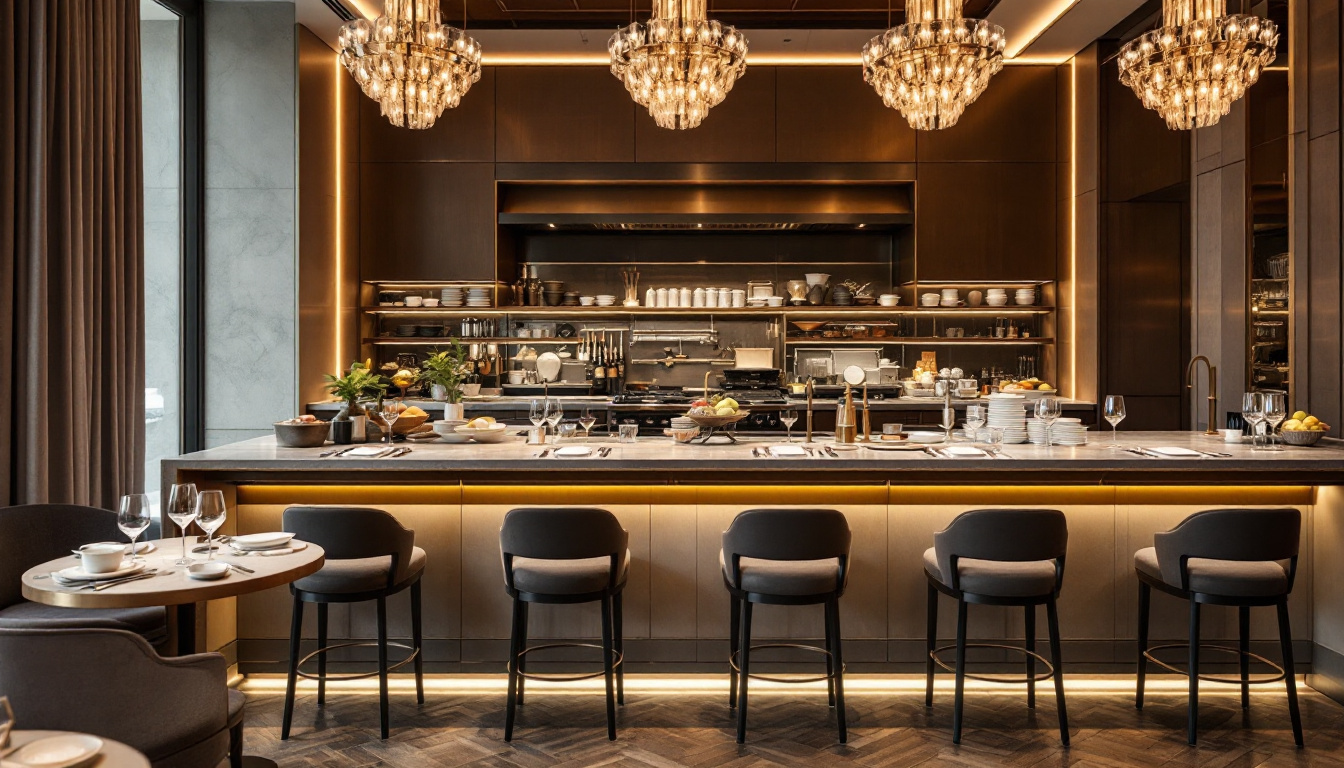
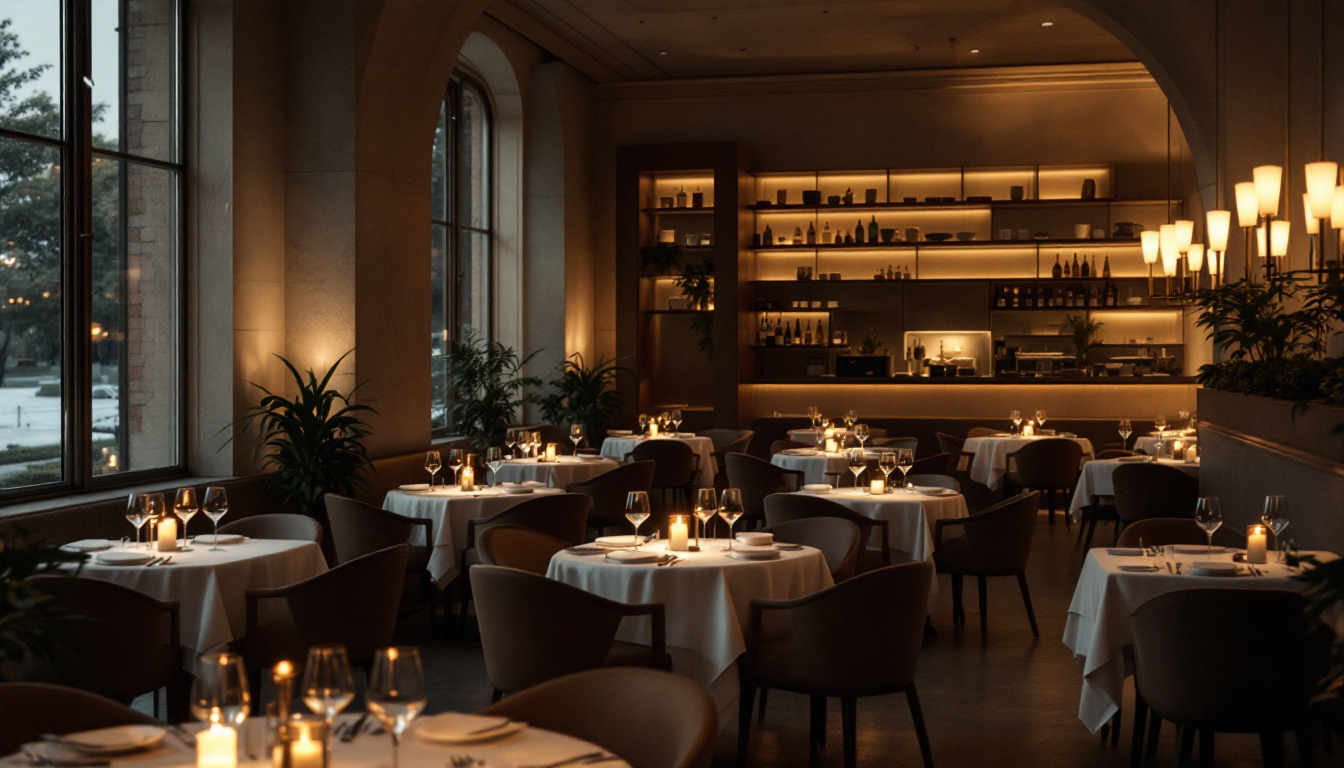
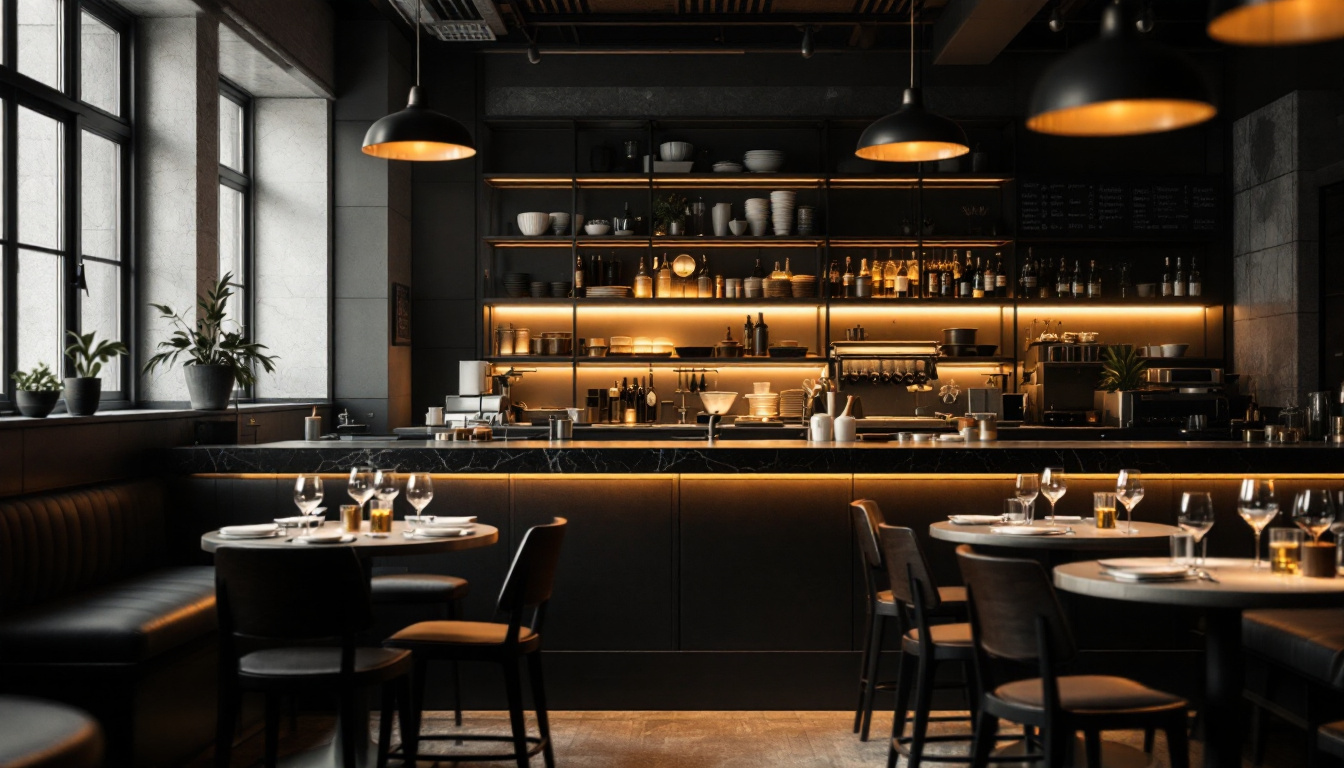
The current dining room — the third interior iteration of the space, designed by the Copenhagen studio OEO in 2016 and unchanged since — seats forty-two across thirteen tables arranged in a single long room along the eastern (pitch-facing) wall and the western (kitchen-facing) wall. The floor is wide-plank ash. The walls are plaster, off-white. The lighting is a series of small custom pendant fixtures over each table. The kitchen pass is set into the western wall as a long open counter; six of the tables have direct sight lines into the working kitchen. There is no music. The architectural intent of the room is restrained, quiet, and almost domestic in its scale despite the size of the space; the room avoids the corporate atmosphere that the Parken tower setting could easily produce.
The kitchen team
Rasmus Kofoed is the chef and co-owner. He was born in Faaborg on Funen in 1974, apprenticed in the Danish hotel-school tradition, and won the Bocuse d’Or competition in 2011 (the first Danish chef to do so). He had previously won the silver in 2007 and the bronze in 2005 — the only chef in the competition’s history to have taken all three medals across consecutive Bocuse cycles. He opened Geranium with Søren Ledet (the wine director and co-owner, also formerly of the Danish hotel-school tradition) in 2007.
Søren Ledet runs the floor and the wine programme. The two men have been business partners for nineteen years and operate the room as a small partnership — there are no external investors, the building lease is held in their personal name, and the staff structure is unusually flat for a three-star kitchen of this scale. The kitchen brigade is approximately twenty. The service team is approximately fourteen.
Sound Bites: The room is not affiliated with the Noma kitchen team. The two restaurants are sometimes spoken of as a pair because of their proximity, their shared Nordic cooking vocabulary, and their joint dominance of the global Nordic-fine-dining narrative through the 2010s. They have always been independent operations with different chef-owners and different working philosophies.
The meat decision
The decision to remove meat from the Geranium menu was announced publicly in May 2022, four months after the restaurant was named No. 1 in the World’s 50 Best 2022 list (the announcement was made at the awards ceremony in London on July 18, 2022; the menu change had been planned earlier in the year and was implemented over the autumn 2022 service season). Kofoed gave the explanation in a small group of Danish-language press interviews at the time: he had personally not been eating meat at home for approximately five years, the kitchen had been working on plant-based and seafood techniques on the staff menu for a similar period, and he had concluded that the integrity of the cooking would be stronger if the menu reflected what he was personally eating rather than what the room had historically served.
The Michelin announcement at the 2023 Nordic guide retained all three stars. The 2023, 2024, 2025, and 2026 guides have done the same. The room has continued to operate at full capacity through every service season since the change. The cooking, on the evidence of my January 2026 visit and on three previous post-change visits across 2023 and 2024, has not lost technical sharpness; if anything the kitchen has tightened.
The decision did not, importantly, convert the menu to a fully plant-based programme. The current menu retains seafood, dairy, and eggs. The kitchen runs a separate fully vegan programme — Angelika — at the same address during specific seasonal windows. Angelika is, in the kitchen’s own framing, the more aggressive expression of the plant-based commitment; the main Geranium menu is a seafood-and-vegetable programme.
The opening
The meal opens with five small snacks served at the open bar at the entrance to the dining room, before the guest is seated. The bar — a small bronze counter with eight stools, set into the eastern entrance of the dining room with a view of the pitch — is where the kitchen presents its opening vocabulary in a more relaxed posture. The snacks are accompanied by a small glass of grower Champagne from a producer Ledet has worked with for eleven years (a small grower from Cumières in the Marne valley, allocation roughly thirty cases a year to the room).
The first snack on my evening was a small dehydrated leaf of cabbage from the Søllerød farm, topped with a single quenelle of smoked cod-roe cream and a small spoonful of trout roe. The leaf was crisp; the cream was at body temperature; the roe was lightly salted. The second was a small cracker of fermented black garlic with a single dab of preserved horseradish. The third was a small warm bite of grilled langoustine (a single tail from a Faroese supplier the kitchen has used for six years), brushed with a wash of dashi and topped with a single petal of pickled rose. The fourth was a small tartlet of fermented spring onion. The fifth was a single warm madeleine made with browned butter and dried dill — the only butter-and-flour course on the menu, retained from the pre-2022 era.
The guests are walked from the bar to the table at approximately 19:00. The main meal begins immediately.
The main sequence
The principal courses began with a small composed plate of Limfjord oyster — a single live Bornholm oyster set in its half-shell on a small bed of crushed ice, dressed with a sauce of fermented gooseberry and a few drops of sea-buckthorn oil. The oyster was, on the evidence of two oysters from the same supplier in the last six months, the best Danish oyster I have eaten in 2026. The second course was a small piece of grilled monkfish liver (the kitchen has retained monkfish liver on the menu through the meat-free conversion — it is, strictly speaking, an organ but is treated as a seafood preparation in the kitchen’s working definition) with a single quenelle of preserved sea-buckthorn and a small biscuit of buckwheat. The third was a small piece of cured turbot from a North Sea supplier, set on a bed of pickled spring vegetables from the farm.
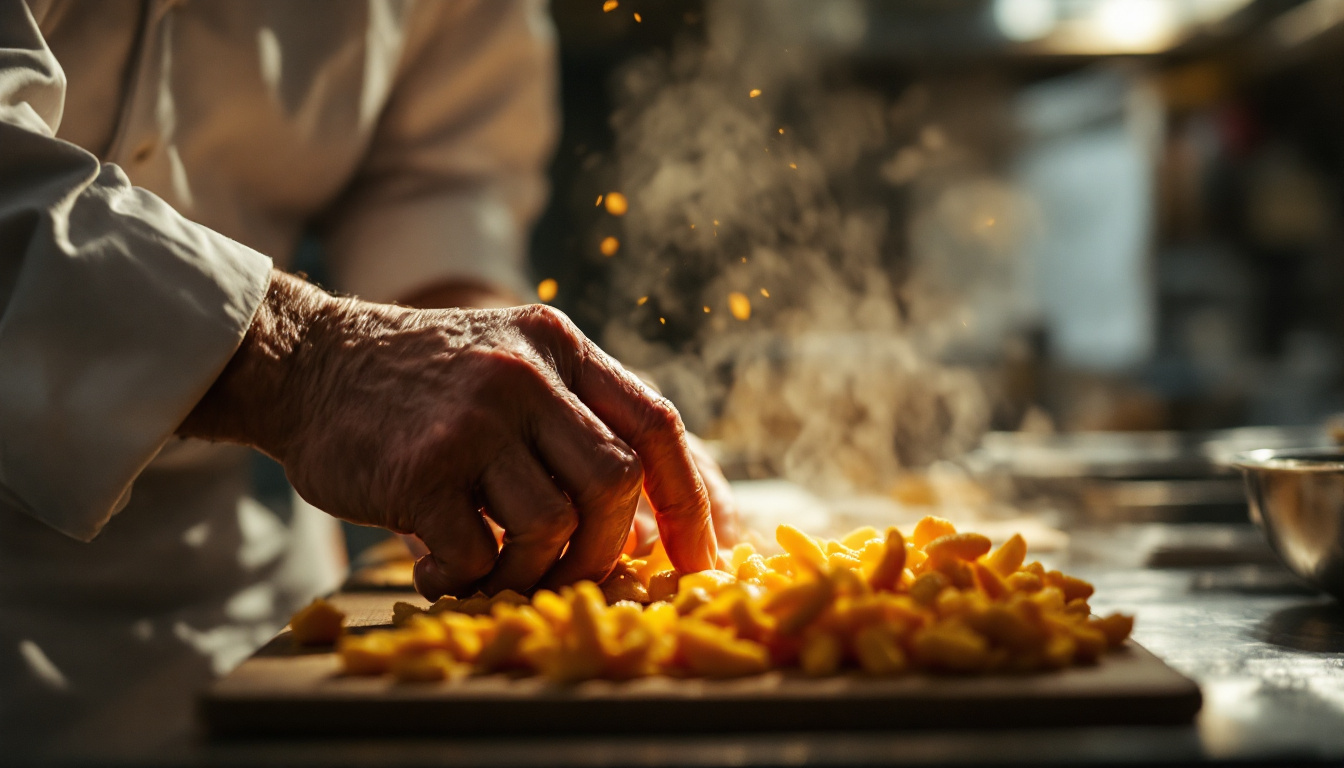
The kitchen’s technical centre — the dish on every menu since the 2018 season that the room treats as the working argument about what Danish seafood cooking can do — is the langoustine course at the seventh position. The current version is a single langoustine tail, brushed in koji and grilled over Danish beech charcoal for ninety seconds, set on a small puddle of clear langoustine consommé reduced for ninety minutes and dressed with a few drops of fermented green strawberry. The dish has been on the menu in different forms since 2018 and is the room’s most-copied piece of cooking.
The middle of the meal worked through five additional principal courses — a small risotto-style preparation of pearled barley with grilled morels and a single shaving of brown butter (substituted with cultured oat fat for guests who request it), a small bowl of clear nettle broth with a single piece of grilled spring lamb’s lettuce, a piece of slow-cooked halibut from a Faroese supplier with a sauce of fermented carrot and brown butter, a small composed cheese course (the only dairy course on the main menu — a single small triangle of aged Höjsbund from a Jutland producer with a small dollop of preserved gooseberry), and the kitchen’s signature warm sourdough bread with the cultured sweet butter from a producer in Funen.
The desserts
The dessert programme is run by pastry chef Jonas Sandberg Larsen (with the room since 2019) and is, on the evidence of three visits across the post-2022 era, one of the most coherent pastry programmes in Scandinavia. The sequence runs four bites across thirty-five minutes.
The first dessert was a small composed plate of preserved rhubarb (from the farm; the kitchen carries preserved rhubarb through the winter to maintain the dish across the off-season), a quenelle of buttermilk ice cream, and a single dab of toasted-malt caramel. The second was a small tart of fermented lingonberry with a single dab of clotted cream. The third was a single warm madeleine — the same cookie from the opening sequence, served again at the close of the meal as a small visual rhyme. The fourth was a small petits-fours sequence of three chocolates from a Faroese cacao programme the kitchen has worked with for four years.
The wine
Søren Ledet has run the cellar for nineteen years. The list runs approximately 2,200 bins. The structural emphasis is on Burgundy (heavy weighting on the Côte de Beaune for whites; a tighter selection of Côte de Nuits and Volnay for reds, though the menu’s seafood-and-vegetable orientation has shifted the natural pairings further towards white wine since 2022) and on grower Champagne. There is a small but serious German Riesling list, a tight Loire selection, and a small but growing collection of natural-leaning Danish and Swedish producers from the post-Noma generation.
The standard pairing runs eight glasses at DKK 2,800 and is the right answer for most guests. The premium pairing — DKK 4,500 — adds a series of older Burgundian whites and aged Champagne. The non-alcoholic pairing at DKK 1,800 is built around fermented juices made in the kitchen, garden distillates from the Søllerød farm, and low-alcohol kombuchas (well below the 0.5% threshold); the pairing is on the level of the best non-alcoholic pairings in Europe.
The argument
The argument the room is making, four years into the seafood-and-vegetable phase, is that the highest tier of European-trained Nordic fine dining can sustain a meaningful menu constraint without sacrificing the technical level of the cooking — and that the constraint, far from being a marketing posture, is part of the room’s continuing creative project. The cooking through this phase has not become repetitive or constrained-feeling. The vegetable preparations are doing some of the most inventive work in northern European fine dining (the koji-grilled langoustine and the fermented sea-buckthorn sauce are now widely copied across the Nordic three-star scene). The pastry programme has tightened. The wine pairing has shifted naturally towards the white-and-Champagne register that pairs best with seafood and is, in its current form, more coherent than the pre-2022 list was.
The room is, in my working view, in the strongest sustained creative period of its eighteen years. The seating is the most pleasant of any northern European three-star room I have eaten in (the eighth-floor pitch view is a genuinely unique feature). The pacing is generous without being slow. The service team is small and well-trained; the floor manager (Søren Ledet personally) walks the room twice during each service. The pricing — DKK 4,500 for the food, DKK 2,800 for the standard wine pairing, plus the 25% Danish VAT included — places the room at the lower end of the European three-star bracket while operating at the upper end of the technical scale.
The Geranium booking is the strongest dining argument Copenhagen is currently making, and is the right answer for a guest who is making one Nordic three-star booking in 2026.
Standing Questions
- Is Geranium fully vegan now?
- No. The kitchen removed all meat (beef, pork, lamb, poultry, game) from the menu in autumn 2022 but retained seafood, dairy, and eggs. The current menu is built around vegetables (largely from the kitchen's own organic farm at Søllerød Have, north of Copenhagen), fermented elements, fish from Limfjord and the North Sea, and shellfish from the Faroese, Norwegian, and Greenland fisheries. Rasmus Kofoed has been personally vegetarian since approximately 2017; the menu change reflects the kitchen's working judgement rather than a categorical commitment to veganism.
- How do I book?
- Reservations open three months in advance at geranium.dk at 10:00 Central European Time on the first day of each month for the corresponding month three months ahead. Prime weekend services close within twenty minutes. Tuesday and Wednesday evenings hold availability for several days. Full prepayment is required at booking; cancellations refundable up to 14 days before service. The kitchen will accommodate severe allergies with notice; please flag at booking.
- Pairing or no pairing?
- Take the pairing. Søren Ledet (the co-owner and sommelier, with the room since 2007) runs one of the most serious wine programmes in Scandinavia. The standard pairing — eight glasses — runs DKK 2,800. The premium pairing — heavier on Burgundy and on aged Champagne — runs DKK 4,500. A non-alcoholic pairing built around fermented juices, garden distillates, and low-alcohol kombuchas is DKK 1,800 and is genuinely serious.
- What's the Angelika sister restaurant?
- Angelika is the kitchen's plant-based pop-up programme, operated at the same eighth-floor address during specific seasonal windows since 2023. Angelika runs a fully vegan menu (no fish, no dairy) at roughly two-thirds the price of the main Geranium service, in a more relaxed format. The current Angelika window runs four weeks in early summer and four weeks in early winter; check the website for the next opening. The Angelika service is the right answer for a guest who is committed to a fully plant-based meal.
- Where do I stay?
- The Nimb Hotel (in the Tivoli Gardens at Bernstorffsgade 5, twelve minutes by taxi from Parken) is the right answer for a one- or two-night stay. The Sanders Hotel (at Tordenskjoldsgade 15, in the city centre, fourteen minutes by taxi) is the right answer for a more atmospheric small property. The Hotel d'Angleterre at Kongens Nytorv is fine but is over-scaled for a single-night Copenhagen visit. The Audo Hotel in the Nordhavn district, opened by Menu in 2019, is a design-led answer for a longer stay.