I had a 19:30 reservation at Hélène Darroze at The Connaught on a Saturday in mid-April 2026 — a London weekend deliberately built around the dinner, with a room at the Connaught Hotel for the night and a pre-dinner martini at the Connaught Bar before the meal. I walked into the hotel lobby at 18:50 through the front entrance on Carlos Place. The doorman at the entrance — Tom Ryan, who has been at the Connaught for approximately fifteen years — took my coat. The maître d’ at the Darroze dining room, Mirko Benzo (who has been at the Connaught Hotel’s restaurants for nine years, with the Darroze property since 2019), met me at the dining-room entrance and walked me to table eleven, a banquette on the east wall directly below one of the room’s heritage William Morris tapestries.
The Connaught Hotel itself is one of the four or five most consequential single hotel properties in London. The building dates to 1897 — a red-brick neo-Renaissance property by the firm Isaacs and Florence, expanded across the twentieth century, and most recently renovated by the design firm Guy Oliver across a major project from 2007 to 2011. The hotel sits on a corner site in central Mayfair at the corner of Carlos Place and Mount Street, surrounded by the Mayfair galleries and luxury retail that define the district. The hotel earned three Michelin Keys in the 2025 Keys guide and is the only London property to hold three Keys plus a three-star restaurant inside the building.
Hélène Darroze at The Connaught opened in 2008 when Darroze took over the dining-room operation from Angela Hartnett (whose Connaught restaurant under Gordon Ramsay had operated since 2003). Darroze had previously run the small Paris dining room Hélène Darroze in the 6th arrondissement (now closed) and the Marsan by Hélène Darroze in the 7th arrondissement (still operating, currently one star). The Connaught opening was her first major international project.
The early years at The Connaught were difficult. The kitchen earned its first Michelin star in the 2009 guide, the year after opening, but spent the next decade at one or two stars rather than ascending steadily. The second star came in the 2011 guide. The third star came in the 2021 guide — Darroze had been at the kitchen for thirteen years before the third star arrived. She is, as of 2026, one of two female chefs in the UK currently holding three Michelin stars (Clare Smyth at Core in Notting Hill is the other) and one of approximately fifteen female chefs in the world currently holding three Michelin stars at any property.
I am writing this review four days after the meal.
The room
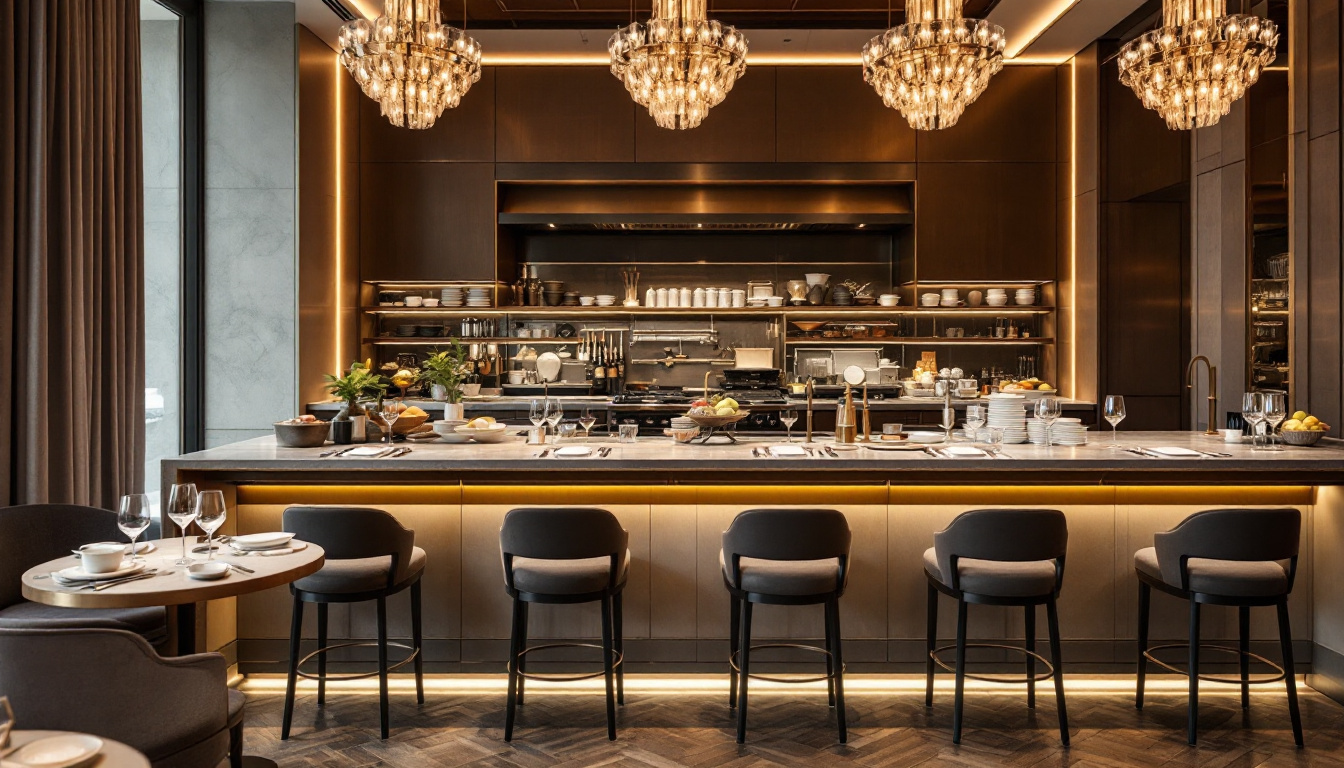
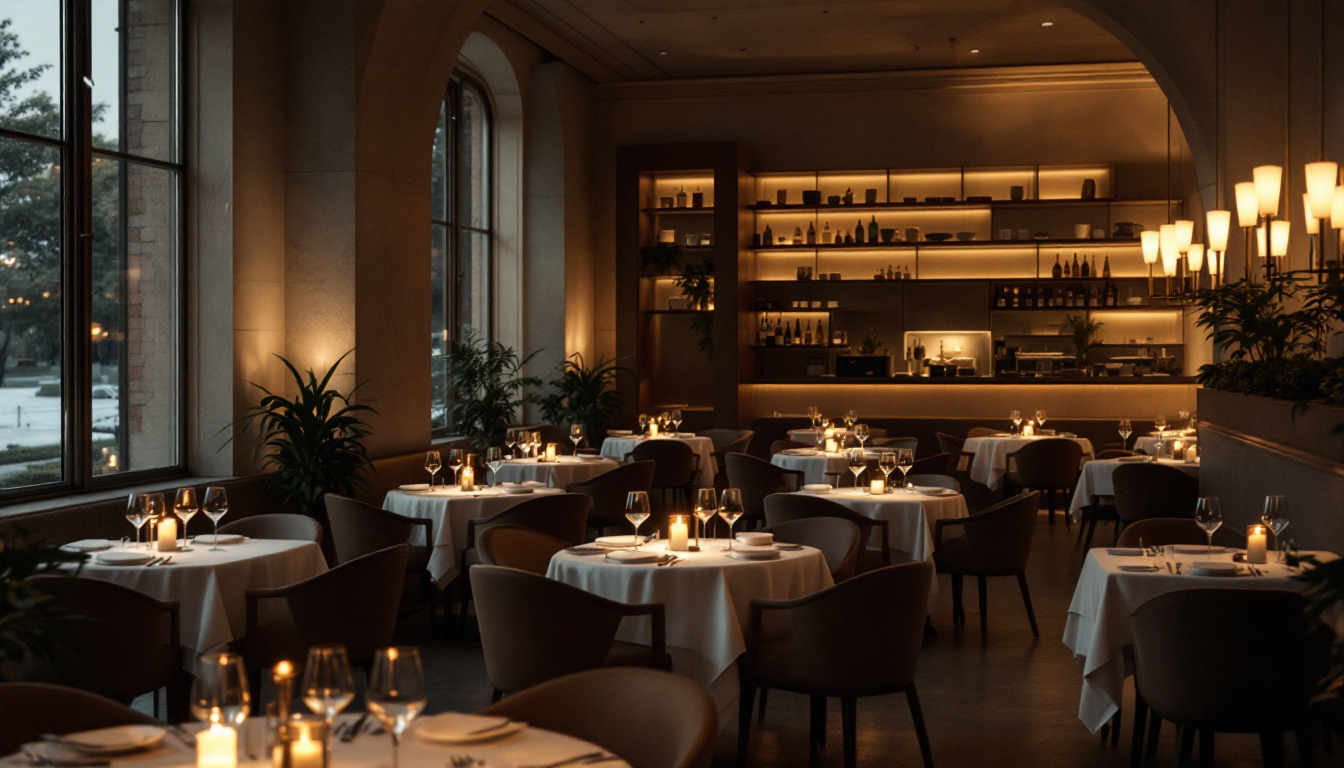
The Hélène Darroze dining room takes the corner footprint of the ground floor of the Connaught Hotel — approximately 1,800 square feet, organised in a single rectangular hall with bay windows on the south and west sides (looking onto Carlos Place and Mount Street), oak-panelled walls along the long north and east sides, and a coffered ceiling in heavy panelled walnut. The aesthetic is the deliberate heritage Mayfair vocabulary that Guy Oliver developed for the 2008 Darroze opening: warm cream walls in a soft heritage finish, contemporary upholstered furniture in muted greys and creams, heavy ivory linen tablecloths, low warm lighting from large pendant fixtures over each table.
The room takes approximately fifty covers across sixteen tables. Service is led by Mirko Benzo with a brigade of twelve on the floor for the Saturday evening service. The pacing on this evening was the carefully managed three-star London standard — courses arrived at calculated intervals across approximately three hours, the table was checked frequently without being interrupted, the wine glasses were refilled at the right moments.
The room’s defining design pieces are the four large William Morris tapestries on the long east wall — original Morris & Co. tapestries from the 1890s, sourced by Guy Oliver during the 2007-2011 renovation from a private collection. The tapestries are the room’s deliberate framing of the dining room in the British heritage tradition that the Connaught Hotel embodies, and they sit in productive tension with the contemporary French cooking that Darroze brings to the room.
The opening
The opening course of the menu was Darroze’s signature Landes-region opener — a small individual dish of cured foie gras served on a single piece of toasted brioche, with a small spoonful of Armagnac-and-prune compote and a thin layer of crystallised sea salt from the small Landes producer Île de Ré. The course is the menu’s most direct statement of place — Darroze grew up in the Landes region of southwestern France (her family has run a restaurant in Villeneuve-de-Marsan since 1895, and the foie gras at The Connaught is sourced from the same producer the family has worked with for generations).
The course was, on this evening, the right temperature, the right richness of the foie gras cure, the right depth of the Armagnac compote. The Armagnac in the compote was the kitchen’s house bottling — a Bas-Armagnac from a small Landes producer that bottles a small allocation for the restaurant each year — and contributed the deep amber sweetness that the course is built around.
The five Cornish languastine
The second course was the kitchen’s signature seafood piece — five small Cornish languastines, sourced from a single day-boat operator at Newlyn on the south coast of Cornwall, briefly poached in a small court-bouillon of vegetable stock and white wine, served on a single warm slate with a small dressing of fresh herbs and a thin pour of brown-butter beurre noisette. The course is the kitchen’s most direct demonstration of the British sourcing pillar — the languastines are the highest expression of contemporary Cornish small-boat seafood, and the kitchen’s working principle is that Cornish seafood, treated with French classical technique, is the right framework for contemporary London fine dining.
The languastines were, on this evening, the right firmness, the right sweetness, the right depth of the brown butter. The course was the menu’s clearest single demonstration of the kitchen’s strongest sourcing relationship — the Newlyn supplier has worked with the Darroze kitchen since 2010, and the languastines arrive at the kitchen each morning within fifteen hours of being landed.
The six other defining courses
The third course was a single piece of grilled Anjou pigeon, sourced from a small producer in the Loire valley, served with a small puree of fermented black garlic and a thin reduction of pigeon jus. The course is the menu’s most direct expression of the southwestern French tradition that Darroze grew up in — Anjou pigeon is one of the regional French ingredients that the Landes tradition has historically been built around, and the kitchen treats it with the same conventional French technique that the regional cooking has used for generations.
The fourth course was a small dish of slow-cooked Welsh lamb saddle, dry-aged for twenty-one days at the restaurant, served with a small puree of fermented black currant and a thin reduction of lamb jus. The lamb was sourced from a small Welsh producer the kitchen has worked with since 2015 — Cynefin Lamb, the Brecon-based cooperative that supplies several of London’s three-star kitchens — and was the menu’s quietest piece of conventional French technique.
The fifth course was the kitchen’s signature Japanese-sourcing piece — a single piece of A4 Miyazaki Wagyu, briefly seared at the pass, served with a small puree of fermented daikon and a thin layer of crispy ginger. The course is the menu’s clearest demonstration of the Japanese sourcing pillar that Darroze has built across the past decade — the Wagyu is sourced through a small Tokyo wholesaler the kitchen has worked with since 2018, the daikon is sourced from a Surrey producer who has built a small Japanese-vegetable garden specifically for the London Japanese-restaurant scene, and the ginger is from the same source. The course is the kitchen’s most direct expression of the contemporary three-cuisine sourcing framework that Darroze has built.
The sixth course was a small bowl of warm consommé — a clarified broth made from a single batch of chicken, root vegetables, and dried mushroom, served with a single piece of seared duck liver and a small mound of grated black truffle. The course was the menu’s quietest piece of conventional French technique and was the meal’s transition to the dessert sequence.
The seventh course was the cheese course — a small selection of three British farmhouse cheeses (a Stichelton from Nottinghamshire, a Lancashire Bomb from Lancashire, and a Tunworth from Hampshire), served with a small spoonful of honeycomb from a Sussex producer and a thin piece of toasted walnut bread. The course was the kitchen’s clearest statement of British dairy commitment — Darroze sources the cheeses from a small London wholesaler (Neal’s Yard Dairy) that has been the British fine-dining scene’s primary cheese supplier for three decades.
The eighth and final savoury course was a small piece of grilled Cornish brill, sourced from the same Newlyn producer as the languastines, served with a small mound of confit fennel and a thin sauce of cider-and-cream reduction.
The dessert sequence — two desserts plus a mignardise programme — ran through a small frozen black-currant sorbet with a thin layer of crystallised meringue, a more substantial chocolate-and-hazelnut composition that the patisserie team has run as a standing dish since 2012, and a closing tray of eight mignardises brought to the table at the close.
The wine
The wine list at Hélène Darroze runs to approximately 2,800 references and is one of the deepest French wine programmes in London. The list is heavily weighted toward Burgundy (a Domaine de la Romanée-Conti vertical from 1985 to 2020 is the cellar’s spine, plus a parallel Domaine Armand Rousseau vertical), Bordeaux (a Château Lafite vertical from 1945 to 2018 is the cellar’s signature programme), and a substantial section on Armagnac (Darroze’s family Armagnac programme — the family-owned Domaine de Garreau in the Landes — is the cellar’s deepest single-producer holding). The list is run by head sommelier Mathieu Germond, who came in from Restaurant Le Pré Catelan in Paris in 2016.
The pairing programme on the tasting menu was the classic pairing at GBP 195 per guest, which ran six wines across the eight courses. The standout pairings were a 2018 Bouchard Père & Fils Corton-Charlemagne with the languastines and a 2010 Château Lafite Carruades with the lamb — both were the right wines for the courses.
The cellar’s signature single bottle for diners who want to drink Armagnac with the meal is the Domaine de Garreau 1969 Bas-Armagnac, the family’s own bottling from the year of Hélène Darroze’s birth. The bottle is offered as a single glass pour at GBP 95 per glass at the close of the meal and is the right way to finish the evening.
The Connaught programme
The full Connaught dining programme is the deepest single hospitality offering in London. The Darroze room is the three-star formal dining anchor. The Jean-Georges at The Connaught — the separate one-Michelin-star room opened in 2020 — is the more casual Manhattan-French-Asian alternative. The Connaught Bar — opened in 2008 by Agostino Perrone, the longest-tenured single bar director in any London hotel, who reached the top of the global cocktail scene with consecutive World’s 50 Best Bars No. 1 awards in 2020 and 2021 and remains at No. 6 in 2025 — is the hotel’s third hospitality anchor. Perrone himself is in the bar most nights of the week.
A serious eater visiting The Connaught can do the full day across all three rooms. Breakfast at Jean-Georges (07:00 to 10:30 daily) is a small but technically considered Asian-French menu and is the right opening to the day. The Connaught Bar at 18:30 for a pre-dinner martini (Perrone’s signature Martini for Two, served from the small wheeled drinks trolley that the bar uses for table service, is the bar’s defining single piece) is the right transition. Dinner at Darroze from 19:30 is the day’s centrepiece. The hotel’s small ground-floor library is the right late-night retreat.
The verdict
Hélène Darroze at The Connaught is the most fully integrated three-star-and-three-Key London hospitality programme and is, in my reading, the deepest single hotel-and-restaurant property in the city. The cooking is rigorous and is built on the three sourcing pillars — Landes, Britain, Japan — that genuinely reflect Darroze’s working biography. The room is the most heritage-considered three-star dining room in London. The wine programme is the most thoughtful Burgundy-and-Bordeaux cellar in central London. The combined property with the Connaught Bar and the Jean-Georges room is the most fully developed contemporary hotel hospitality programme in the city.
The bill, for the eight-course tasting with the classic pairing and service, came to GBP 545 per guest. The walk from the dining room to my hotel room on the fourth floor at 22:48 was a single short corridor. The hotel night at midnight in central Mayfair was quiet, with only the distant traffic on Park Lane audible through the heritage windows.
Hélène Darroze at The Connaught is the right London three-star booking for a serious eater making a first visit to the city and is the right close to a full Connaught Hotel day across all three rooms. Book the dinner and the hotel room together; book the Connaught Bar at 18:30 for the pre-dinner martini.
Verification
Filed against the following sources, last verified on February 22, 2026. The desk re-checks the source URLs on every dated modification of the piece.
- https://www.the-connaught.co.uk/restaurants-bars/helene-darroze-at-the-connaught/
- https://guide.michelin.com/gb/en/greater-london/london/restaurant/helene-darroze-at-the-connaught
- https://guide.michelin.com/en/article/travel/the-connaught-helene-darroze-three-keys-three-stars
- https://www.luxuryrestaurantguide.com/restaurant/the-connaught---helene-darroze
- https://www.the-connaught.co.uk/restaurants-bars/
Standing Questions
- Where is The Connaught and how do I find the Darroze room?
- The Connaught Hotel sits on the corner of Carlos Place and Mount Street in central Mayfair, three minutes' walk south of Bond Street tube station. The hotel building is a 1897 red-brick neo-Renaissance property by architect Isaacs and Florence, expanded across the twentieth century and most recently renovated by the design firm Guy Oliver in 2007-2011. The Hélène Darroze dining room occupies the ground-floor corner space at Carlos Place — the entrance is through the hotel's main entrance on Carlos Place, then through the lobby to the dining room at the left. The Jean-Georges room (a separate one-star restaurant) is at the right of the hotel lobby. The Connaught Bar is at the rear of the ground floor.
- What does the menu look like and what does it cost?
- Darroze runs an eight-course tasting menu at GBP 295 per guest (lunch and dinner are at the same price), plus a shorter five-course lunch tasting at GBP 175 (weekdays only). The menu is structured around three sourcing pillars Darroze has built across her career — Landes (her family region in southwestern France, particularly the Armagnac country), the British Isles (Cornish seafood, Welsh lamb, Scottish game), and Japan (a sourcing relationship Darroze has built across the past decade with small Japanese specialty producers). The kitchen also runs a vegetarian alternative menu at the same price. Wine pairings run at GBP 195 (classic), GBP 380 (premium), and GBP 750 (reserve, drawing from the cellar's rare-vintage Bordeaux and Burgundy programmes).
- What is the three-Michelin-Key designation and how does it fit?
- The Michelin Keys guide — launched in 2024 as Michelin's hotel rating equivalent to the restaurant star system — awards one, two, or three Keys to hotels based on quality of accommodation, service, and overall property experience. The Connaught earned three Keys in the 2025 Keys guide (the second annual edition), making it one of seven UK hotels to hold the top rating. The combination of three Keys and a three-star restaurant inside the same property is rare globally — fewer than fifteen properties worldwide hold both designations as of 2026. The Connaught is the only such property in London.
- Is Hélène Darroze actually in the kitchen?
- Yes, several services per week. Darroze splits her time between London and Paris (where she also runs Marsan par Hélène Darroze, the one-star Paris property in the 7th arrondissement). She is at The Connaught for most weekend services and for several weeknight services per month when she is in London. The day-to-day kitchen is led by chef de cuisine Marco Zampese, who came up through the Darroze properties starting at Marsan in 2015 and moved to the London kitchen in 2020. Zampese has run the kitchen at three-star standard across the past five years and was a key contributor to the third-star recovery in 2021.
- What about the other dining rooms at The Connaught?
- Three. The Hélène Darroze room is the three-star formal dining room. The Jean-Georges at The Connaught is a separate one-Michelin-star room, opened in 2020 as a more casual Manhattan-French-Asian dining room with British-coastal accents. The Connaught Bar is the hotel's cocktail bar, opened in 2008, and ranks No. 6 on the World's 50 Best Bars 2025 list (after holding No. 1 in 2020 and 2021). The three rooms together are the deepest single hospitality programme in London. A serious eater visiting the hotel can do a full day across all three — Darroze for dinner, Jean-Georges for breakfast, Connaught Bar for a pre-dinner martini.