I had a 19:30 reservation at Jean-Georges on a Friday in mid-January 2026, and I walked the four blocks north from the Time Warner Center subway stop to the entrance of the Trump International Hotel at One Central Park West. The doorman at the hotel entrance — a man I have seen on this corner for the better part of two decades — held the door. I walked the small lobby past the concierge desk to the dining-room entrance at the south end of the building and was met by the maître d’, a tall French-accented man named Vincent Demarcy, who has been at the restaurant since 2014.
Jean-Georges Vongerichten’s eponymous flagship has occupied this corner since 1997. The restaurant opened on the heels of Vongerichten’s earlier New York successes (JoJo in 1991, Vong in 1992) as the chef’s first formally fine-dining property in Manhattan — a French-Asian kitchen organised around clean technique, clear acid, and the Vongerichten signature use of Southeast Asian aromatics within a French classical framework. The restaurant held three Michelin stars from the New York guide’s 2006 launch through 2017, when it was demoted to two stars. The demotion was the first downgrade of a New York three-star in the guide’s history and triggered, on Vongerichten’s part, the third-star campaign that has been the public framing of the restaurant’s late phase.
The 2017 demotion is, with the benefit of nine years’ perspective, the most consequential single Michelin decision in modern American fine dining. It signalled that the New York guide was willing to downgrade a long-tenured three-star and shifted the working assumption of the city’s other long-tenured three-stars (Per Se, Le Bernardin) toward greater attention to consistency. It also focused Vongerichten’s own attention. He pivoted the menu to tasting-only in 2019, brought in Mark Lapico as chef de cuisine in 2020, and has publicly committed to the third star as the goal of the late phase of his career. The Robb Report interview in February 2026 — in which Vongerichten said directly that the third star is the campaign of his career at this moment — was the most explicit public statement to date.
The room
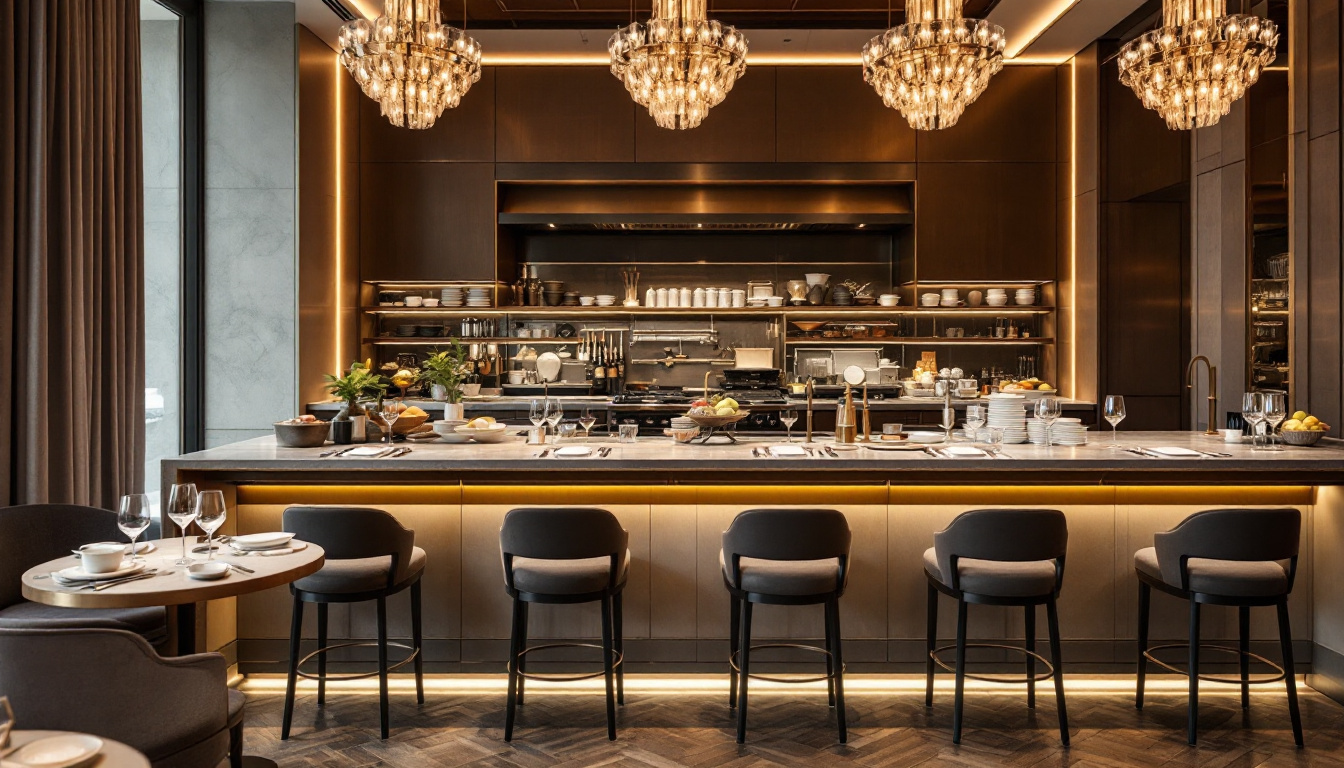
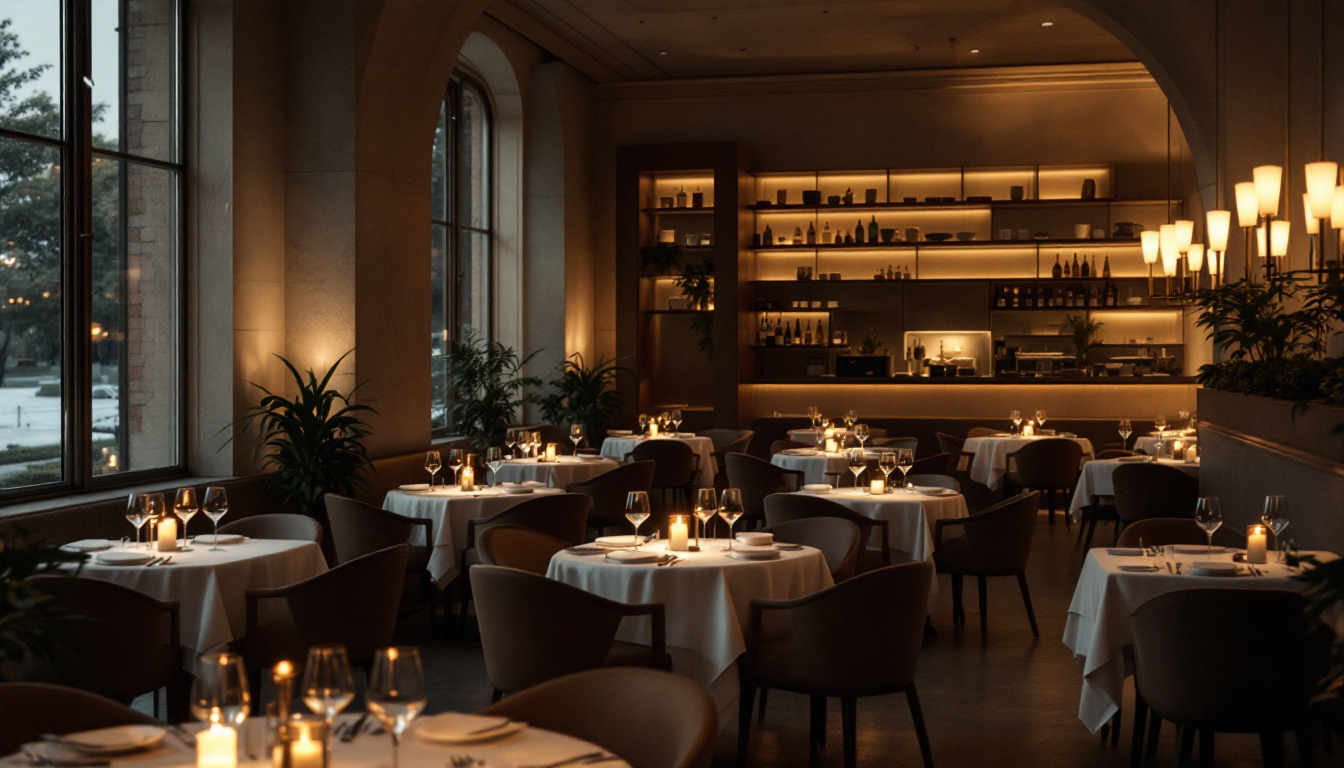
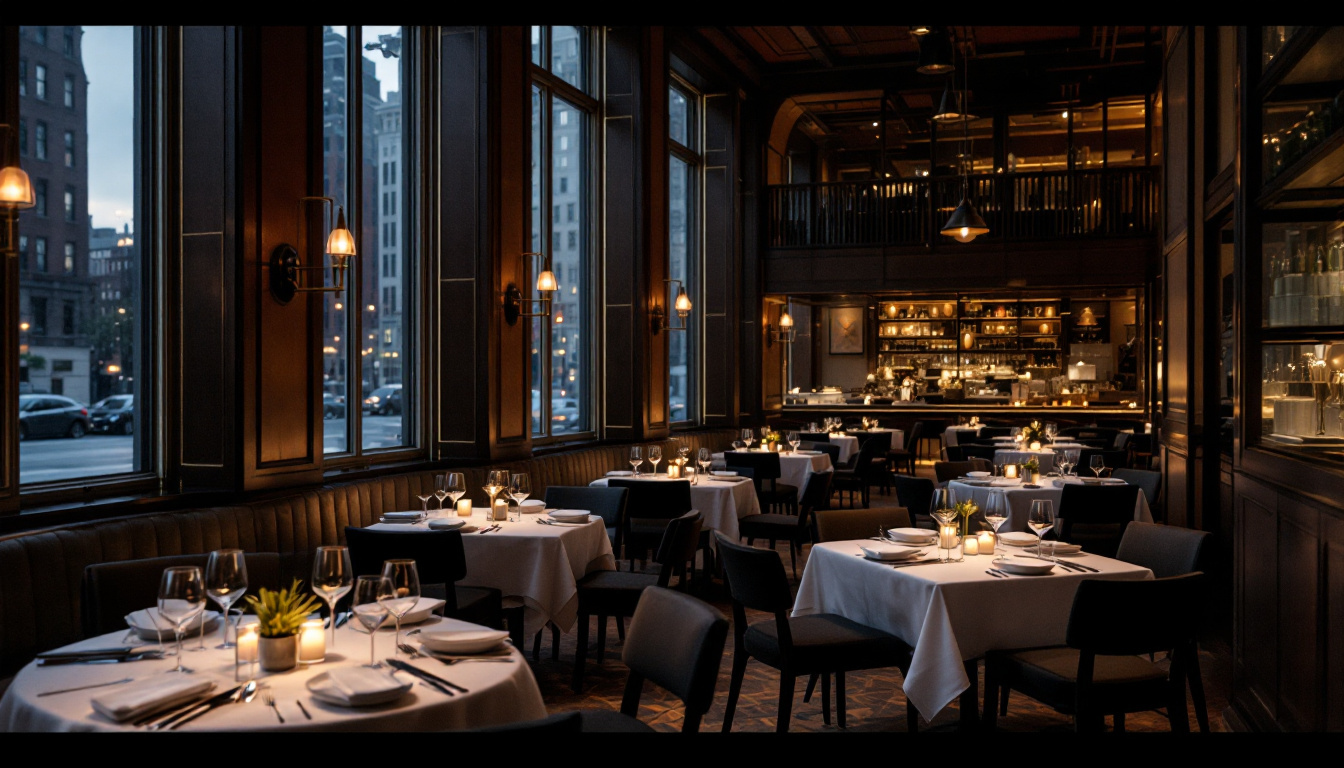
The Jean-Georges dining room takes the corner footprint of the Trump International Hotel ground floor — approximately 4,500 square feet, organised in a single long rectangular hall with floor-to-ceiling windows on two sides (north up Central Park West, east into Central Park). The room was redesigned by Adam Tihany in 2018 in a deliberate restrained idiom intended to reset the room’s identity after the demotion — pale grey walls, bleached-oak floors, white linen tablecloths, low warm lighting from small individual sconces at each table. The room is, in the literal sense, quieter than the 1997-2018 original: less brass, less dark wood, fewer mirrors, a deliberate move away from the polished 1990s vocabulary that the room had carried for two decades.
The room takes approximately seventy covers across forty tables, in a pattern of mostly two-tops along the windows and four-tops in the room’s interior. The adjacent Nougatine — a more casual all-day room operated under the same kitchen, taking the property’s eastern footprint — takes a separate forty-cover space.
Service is led by Vincent Demarcy with a brigade of twelve on the dining-room floor. The pacing was the New York three-star standard — courses arrived at calculated intervals, the table was checked frequently without being interrupted, the wine was poured at the right moments. The kitchen’s consistency under Lapico has been the operational theme of the past five years, and the service on this evening was as well-calibrated as any I have taken in New York.
The opening
The opening course of the Classics tasting at Jean-Georges is the dish that, more than any other, defined the restaurant in its 1997-2017 three-star era and that has been on the menu in essentially the same form since opening: egg caviar. The course is served in a hollowed-out boiled eggshell, set in a small egg-cup. The eggshell holds a soft scramble of egg yolk with a small spoon of crème fraîche, topped with a generous mound of sturgeon caviar from Sterling Caviar in California’s Sacramento Valley. The course is the menu’s most-served single piece and has been a Vongerichten signature for nearly three decades.
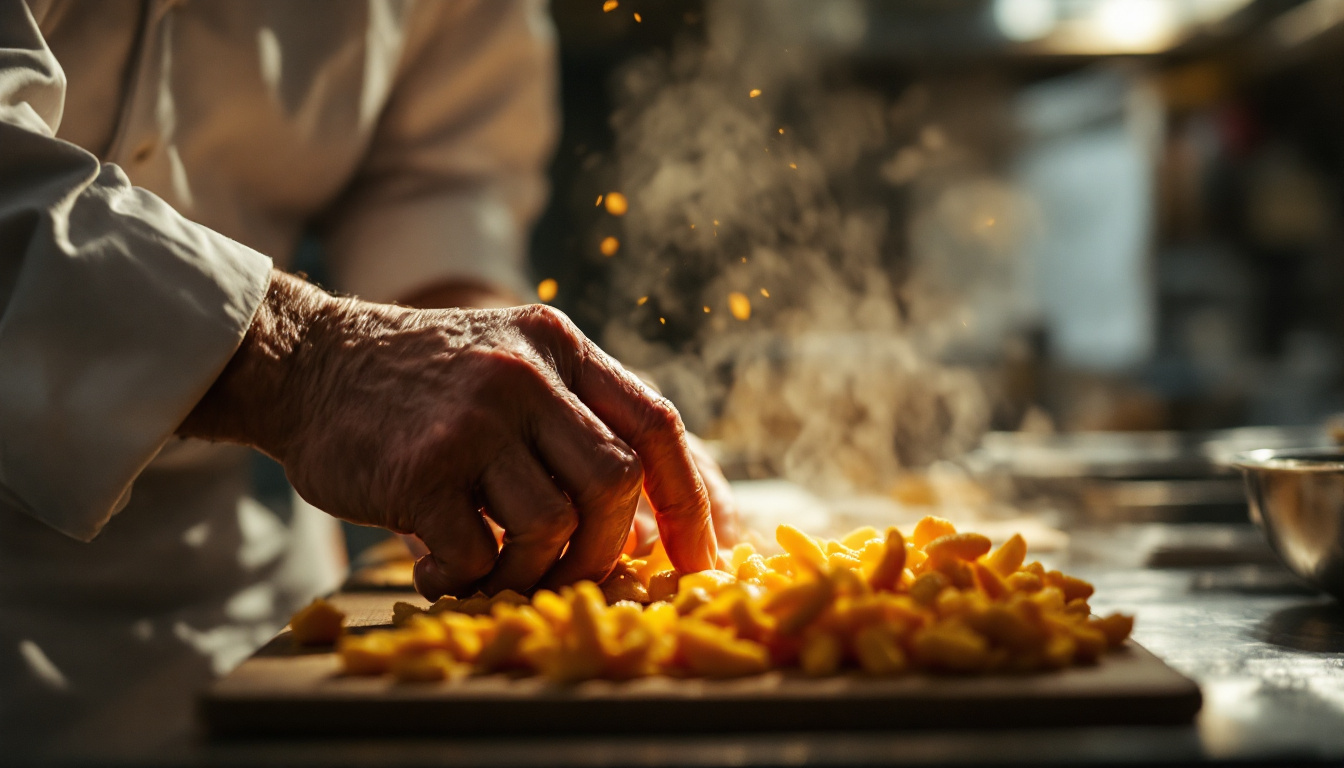
The technique behind the egg-caviar opener is the kitchen’s quietest piece of standing work — the scramble is held at low temperature, the caviar is grated cold over the warm scramble, the timing of the assembly to the service is calculated to the thirty-second window. The course was, on this evening, the right temperature, the right balance of warm and cold, the right intensity of the caviar against the egg.
The seven defining courses
The second course of the Classics tasting was the kitchen’s foie gras brûlée — a small disc of foie gras torchon, the top surface caramelised under the salamander to a thin sugar crust, served with a small spoon of stone-fruit compote and a thin slice of toasted brioche. The brûlée is the menu’s most photographed single course and has been on the rotation since the late 1990s. The technique on the caramelisation is precise — too long under the salamander and the foie melts, too short and the sugar does not crystallise — and the kitchen’s pickup window on the course is approximately forty-five seconds.
The third course was the menu’s first Asian-aromatics piece — a small bowl of warm sweet-pea soup with a single piece of poached lobster and a small dressing of yuzu-and-ginger reduction. The course is the menu’s clearest demonstration of Vongerichten’s working method, the integration of Southeast Asian aromatics (yuzu, ginger, lemongrass) into a French classical structure (the pea soup is essentially a velouté finished with cream). The lobster was sourced from a Maine day-boat operator and was the right firmness.
The fourth course was a single piece of pan-seared turbot, sourced from a North Sea producer, served with a small mound of confit fennel and a thin reduction of champagne-and-tarragon beurre blanc. The cooking on the turbot was forty-five seconds per side over high heat — the same technique as at Le Bernardin nine blocks south — and the fish was perfectly translucent at the centre.
The fifth course was a single piece of slow-roasted black bass with a soy-yuzu emulsion and a thin layer of crispy ginger over the skin. The course is one of the kitchen’s more recent additions (it has been on the menu since 2022) and is the most direct expression of Vongerichten’s contemporary work — the soy-yuzu emulsion is the kitchen’s signature sauce, the crispy ginger is a textural counterpoint, the bass underneath is treated with conventional French technique.
The sixth course was the menu’s substantial main — a single piece of slow-roasted lamb loin, dry-aged for twenty-one days, served with a small puree of fermented black garlic and a thin reduction of lamb jus. The lamb was sourced from a small farm in the Hudson Valley and was the menu’s quietest piece of cooking. The dry-ageing on the loin was the kitchen’s contribution of depth; the black-garlic puree was the kitchen’s contribution of fermentation. The plate as a whole was the kitchen’s most direct demonstration of the contemporary fine-dining vocabulary — controlled ferment, dry-age, lower-temperature roast — applied to a classical French structure.
The seventh course was the menu’s transition to dessert — a small bowl of yuzu-and-honey sorbet with a single piece of crystallised ginger and a thin layer of grated lime zest. The sorbet was the right cold, the yuzu was the right acid, the honey was the right sweetness.
The eighth course was the formal dessert — the kitchen’s molten chocolate cake, which Vongerichten has run as a standing dish since the early 1990s at JoJo and which has been on the Jean-Georges menu since 1997. The cake is a small individual chocolate sponge with a liquid chocolate centre that flows out when the cake is broken open at the table. The dish is the most famous single dessert in modern American fine dining (Vongerichten invented the format in 1987 and it is the original version of the molten chocolate cake that subsequently spread across global restaurant menus). The cake was the right temperature, the right viscosity of the molten centre, the right intensity of the cocoa.
The wine
The wine list at Jean-Georges runs to approximately 1,800 references and is one of the deepest French wine programmes in New York. The list is heavily weighted toward Burgundy (a Domaine Leflaive Montrachet vertical from 1995 to 2020 is the cellar’s spine) and Rhône (a Henri Bonneau vertical from 2000 to 2019 is the cellar’s second strongest programme), with a useful smaller section on California Cabernet and a thoughtful programme on grower Champagne. The list is run by Bernard Sun (who came in from the Le Bernardin team in 2014) and is one of the city’s best-edited contemporary lists.
The classic pairing on the Classics tasting at USD 150 per guest ran six wines across the courses. The standout pairings were a 2019 Domaine Leflaive Bourgogne Blanc with the egg-caviar opener and a 2010 Henri Bonneau Châteauneuf-du-Pape with the lamb. Both were the right wines for the courses; the pairing as a whole was well-judged.
The third-star question
The question that follows any 2026 visit to Jean-Georges is the question of the third star. The cooking under chef de cuisine Mark Lapico is, in my reading on this and two prior visits since 2022, comfortably at three-star standard — the technical control across the courses, the consistency of the pickup, the integration of the kitchen’s Asian-aromatic vocabulary into a French structure are at the level that the New York guide rewards at the top tier.
The question is whether Michelin will return the star. The 2026 guide (released in October 2025) maintained the two-star designation, but several New York food-press observers have noted that the restaurant is now among the most-watched candidates for re-promotion in the next two cycles. Vongerichten himself, in the February 2026 Robb Report interview, framed the campaign as the work of his late career and did not put a public timeline on it.
The cooking is the cooking. The kitchen is operating at the third-star level. Whether the Michelin guide returns the third designation in 2026, 2027, or 2028 is a separate question from whether the room is worth the booking now. The answer to the latter question is unambiguously yes.
The verdict
Jean-Georges is the most operationally consistent two-star kitchen in New York and is, in my reading, the New York property most likely to recover a three-star rating in the next two Michelin cycles. The cooking under Lapico is at three-star standard. The room under the Tihany 2018 redesign is the right contemporary setting for the kitchen’s late-phase work. The wine programme is among the city’s best.
The bill, for the Classics tasting with the classic pairing and service, came to USD 478 per guest. The walk back south to Columbus Circle through the cold January air took five minutes. The room behind me at 22:00 was still half-full with the second seating’s wine programme arriving.
If the third star returns, the booking at Jean-Georges will move from the achievable inside-thirty-day window to the genuinely difficult sixty-day-plus window of Per Se and Le Bernardin. The right time to book the room is now, before the inevitable Michelin decision changes the math.
Verification
Filed against the following sources, last verified on May 13, 2026. The desk re-checks the source URLs on every dated modification of the piece.
- https://www.jean-georges.com/restaurants/united-states/new-york/jean-georges
- https://en.wikipedia.org/wiki/Jean-Georges
- https://guide.michelin.com/us/en/new-york-state/new-york/restaurant/jean-georges
- https://robbreport.com/food-drink/dining/jean-georges-new-menu-michelin-stars-2868648/
- https://www.jean-georgesrestaurant.com/jean-georges/about/restaurant/
Standing Questions
- Where is the restaurant and what is the room like?
- Jean-Georges occupies the ground floor of the Trump International Hotel & Tower at One Central Park West, on the southwest corner of Columbus Circle. The entrance is through the hotel lobby on Central Park West; the dining room takes the corner footprint with floor-to-ceiling windows on two sides, looking north up Central Park West and east into Central Park. The room was last redesigned by Adam Tihany in 2018 in a deliberate restrained idiom — pale grey walls, bleached-oak floors, white linen tablecloths, low warm lighting. The room takes approximately seventy covers across forty tables. The adjacent Nougatine — a more casual all-day room operated under the same kitchen — takes a separate forty-cover space and is the right answer for a less formal Vongerichten meal.
- What are the current menu options and prices?
- The restaurant runs three menu formats at dinner. The Classics tasting is a six-course menu of Vongerichten signature dishes (the egg-caviar opener, the foie-gras brûlée, the molten chocolate cake) at USD 218 per guest. The Seasonal tasting is a six-course menu built around current market produce at USD 218. The three-course prix fixe is USD 138 and is the only à la carte-like option since the kitchen pivoted to tasting-only in 2019. Wine pairings run at two tiers — classic at USD 150 and reserve at USD 280. Lunch is offered as a three-course prix fixe at USD 98 in the dining room and as a more casual menu in Nougatine.
- Why was Jean-Georges demoted and what is the third-star campaign?
- The 2017 demotion from three stars to two was the first downgrade of a New York three-star since the guide's 2006 launch. Michelin's stated reason at the time was that the kitchen had become inconsistent across services; coverage at the time also speculated that the room's identity was no longer distinguishable from the broader Vongerichten group (the chef now operates over forty restaurants globally). Since 2018 Vongerichten has publicly framed the restaurant's third-star recovery as a central project — he pivoted to tasting-only in 2019, brought in Mark Lapico as chef de cuisine in 2020 to run the day-to-day kitchen with a stricter consistency framework, and as of a 2026 Robb Report interview confirmed the third-star is the active campaign of his late career.
- How do I book and how strict is the dress code?
- Reservations open via Resy thirty days in advance. Prime weekend windows (Friday 19:30, Saturday 19:00) are achievable but require booking the moment the window opens. Lunch is more accessible inside seven days. The dress code is 'business casual' — the room enforces a jacket requirement at dinner that was relaxed in 2022, but a sport coat remains the de facto norm; men in T-shirts will be politely asked to put on a hotel-provided jacket. Women are unrestricted by formal code but the room is dressed at the level of a Manhattan business-formal evening.
- Is the restaurant worth the visit at two stars, or do I wait for the third?
- The cooking under chef de cuisine Mark Lapico (who has run the day-to-day since 2020) is technically excellent across the menu and is, in my reading on multiple visits since the demotion, comfortably at three-star standard. The two-star designation is a Michelin scoring decision rather than a cooking-level decision. The restaurant is worth the visit now. If the third star returns — which Vongerichten is publicly working toward and which the 2026 reviews from the major publications suggest is closer than at any point since the demotion — the booking will become substantially harder. Eat now.