I had a 20:30 reservation at Masa on a Saturday in early February 2026, the second seating of the evening. I took the elevator up to the fourth floor of the Deutsche Bank Center at 20:21 and walked the small fourth-floor lobby past the Per Se entrance to the unsigned wooden door at the left, where the maître d’ Toru Hidekuma (also Takayama’s deputy chef) met me and walked me to my seat at the counter — seat eight, on the right side of the counter, two seats away from where Takayama himself was working.
Masa opened in November 2004, three months after Per Se, as the second three-star-grade restaurant in the same building. The two restaurants share the fourth-floor space, share an elevator lobby, and have shared a curious symbiosis across two decades — Per Se the elaborate Western nine-course tasting, Masa the focused Japanese omakase, both pricing at the absolute top tier of New York fine dining. The kitchen at Masa held three Michelin stars from the 2009 New York guide (the kitchen’s first year of eligibility) through the 2025 guide, a sixteen-year run, before the November 2025 announcement that the 2026 guide would demote the kitchen to two stars.
The demotion was the second major three-to-two-star demotion in New York Michelin history, after Jean-Georges in 2017. The announcement was unusual in that Michelin’s New York team made it publicly four weeks before the formal guide release, in the form of a press statement that named Masa specifically and cited inconsistency across services as the reason. Several New York critics, including Pete Wells in his retirement letter for the New York Times, publicly questioned the decision; Takayama himself declined comment.
I am writing this review four days after the meal. The visit was my first to Masa since 2021 and was deliberately scheduled to evaluate the kitchen’s current state against the demotion. What follows is one diner’s account of a single twenty-course omakase, served at counter seat eight, with Takayama himself working two seats away.
The counter
The Masa counter is, in physical terms, one of the most distinctive single pieces of furniture in any restaurant in the world. The counter is a single slab of solid hinoki cypress, taken from a single tree harvested in the Yoshino forests in central Japan, shipped to New York during 2004 construction, and finished in place by a team of Japanese carpenters. The slab is approximately twenty-eight feet long, four feet deep, and four inches thick at the working edge. The grain runs the full length. The surface is unfinished hinoki — no varnish, no oil, nothing between the counter and the cypress wood. The counter is wiped clean with a damp cloth at the close of each service and is sanded down lightly every six months to maintain its surface.
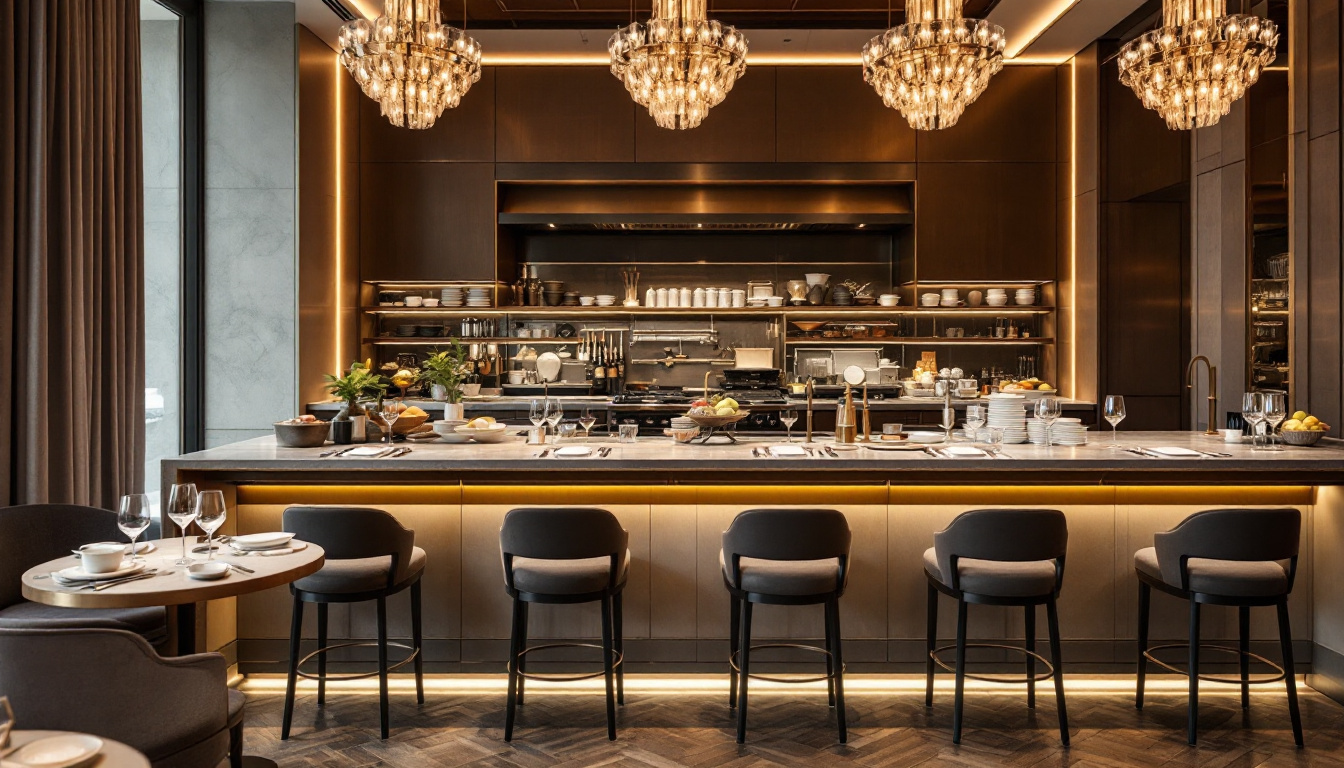
The counter takes fourteen seats — six along the front edge, four at each of the two side returns. The seats are simple unupholstered wooden stools. The lighting above the counter is dropped from a single line of small recessed fixtures and is warm and dim. There is no music. There are no menus. There are no tablecloths. The room is, in the genuine sense, the counter and nothing else.
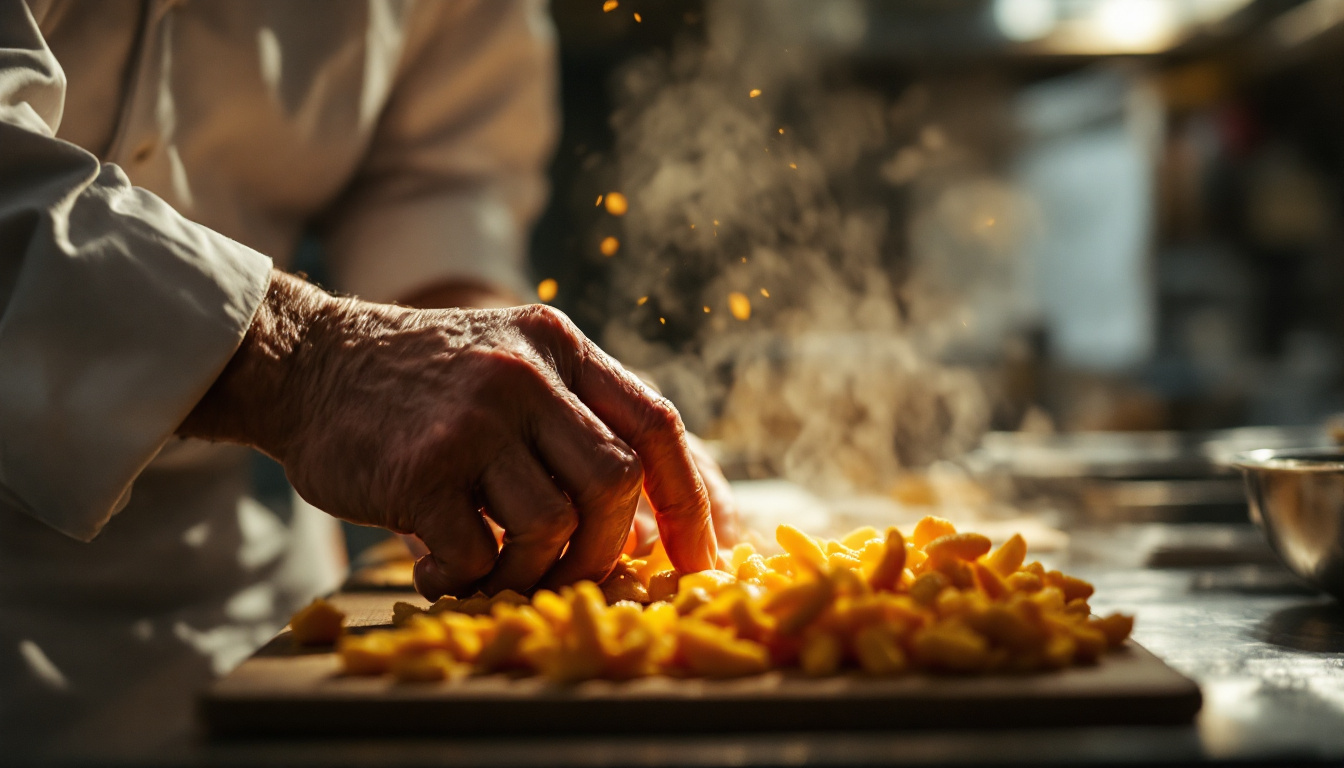
Behind the counter, working the cypress slab, are five sushi chefs: Takayama himself at the centre two seats, Hidekuma at the inner left, two senior chefs at the outer left and outer right, and one junior chef at the inner right. Each chef serves the three or four guests in front of him. The pickup is direct — the chef prepares each piece of nigiri at the counter, places the rice and topping by hand onto a small ceramic stand in front of the guest, and the guest eats the piece within ten seconds of placement. The format is the most direct expression of the Edomae omakase tradition in any restaurant outside Japan.
The opening
The omakase opened at 20:38, seven minutes after I sat down, with a single small bowl of warm chawanmushi — a Japanese savoury egg custard, served warm in a covered ceramic bowl, with a thin layer of dashi at the surface and a single piece of poached crab beneath. The chawanmushi is the menu’s traditional opening — every Edomae omakase since the early twentieth century has opened with a warm small course of this format — and the version at Masa was the right temperature, the right firmness of the custard, the right depth of the dashi.
The second course was a small dish of cured Japanese sea bream, sliced thin and served chilled with a small dressing of yuzu and a single drop of fresh wasabi. The fish was sourced from the Toyosu market in Tokyo (the kitchen receives a twice-weekly air freight from Toyosu directly to JFK, with the fish in the kitchen within thirty-six hours of catch), and was the menu’s first demonstration of the sourcing programme that Masa has built across two decades.
The third course was a single piece of A5 Miyazaki Wagyu, briefly seared at the counter on a small portable charcoal grill that Takayama maintains for the occasional cooked course, served with a single drop of fresh wasabi and a small spoon of soy reduction. The wagyu was the menu’s most luxurious raw ingredient and was the kitchen’s clearest demonstration of value-per-bite — approximately thirty grams of A5 at wholesale cost of roughly USD 80, treated with maximal restraint.
The nigiri sequence
The centre of the Masa omakase — and the segment where the kitchen’s reputation has been built — is the nigiri sequence, approximately twelve to fifteen pieces of single sushi prepared at the counter and placed directly in front of each guest. The sequence on my evening ran fourteen pieces.
The opening piece was a single piece of cured kohada (gizzard shad) — the traditional Edomae opening for the nigiri sequence, since the kohada cure is the most demanding piece of preparation in the working sushi chef’s repertoire and the opening tradition is meant to demonstrate the chef’s technical command. The kohada at Masa is cured for approximately ninety minutes in a brine of salt and rice vinegar, then briefly rinsed and pressed onto the rice at the moment of service. The cure was, on this evening, the right firmness — the fish was cured enough to deepen the flavour but not so much as to overwhelm the natural sweetness of the flesh.
The second piece was a single piece of maguro akami (lean tuna), sourced from a single bluefin caught off the Spanish coast and aged in the kitchen for seven days. The third was a single piece of chu-toro (medium-fatty tuna) from the same fish. The fourth was a single piece of o-toro (extra-fatty tuna) from the same fish. The three-piece tuna sequence is the kitchen’s most direct demonstration of the cut-and-age programme — the same single fish presented at three levels of fat content, in the order the Edomae tradition prescribes (lean to fatty), to allow the guest to taste the progression.
The fifth piece was a single piece of hirame (flounder) from the Japanese coast, cured briefly in kombu and served at room temperature. The sixth was a single piece of aji (horse mackerel) from a Japanese small-boat fisherman, cured for forty-five minutes in salt and served with a single piece of fresh ginger.
The seventh piece was the menu’s most demanding single piece — a single piece of saba (mackerel), cured for two hours in salt and rice vinegar and served at the moment the cure had brought the flesh to the right firmness. Saba is the Edomae tradition’s most difficult fish to time — the cure window is approximately twenty minutes — and the kitchen’s pickup on the piece is the operational test of the night.
The eighth through eleventh pieces ran a sequence of shellfish: a single piece of ikura (salmon roe) cured briefly in dashi, a single piece of uni (sea urchin roe) from Hokkaido served on a small piece of toasted nori, a single piece of botan ebi (sweet shrimp) served raw at room temperature, and a single piece of awabi (abalone) served warm with a small drop of liver sauce.
The twelfth and thirteenth pieces were a single piece of anago (sea eel) — served warm, the skin caramelised with a touch of sweet soy reduction — and a single piece of tamago (Japanese egg omelet), the closing piece of the traditional Edomae sequence. The tamago at Masa is the kitchen’s signature single piece — a thick slab of sweet egg omelet, cooked slowly for forty minutes in a small copper pan, served at room temperature with a thin glaze of mirin.
The fourteenth and final piece was a single bowl of warm miso soup with a small piece of poached white fish, served as the meal’s quiet close.
The dessert
The dessert at Masa is the kitchen’s quietest piece of programming — a single small bowl of black sesame ice cream with a thin shaving of yuzu zest and a small piece of crystallised ginger. The ice cream is made in-house, churned daily, and is the menu’s only Western touch.
The current state of the kitchen
The question of whether Masa is operating at three-star or two-star standard, as the demotion announcement framed it, is the question that follows any 2026 visit. My reading, after this evening’s omakase, is that the technical precision of the kitchen is at the level it has been across the past two decades. The cures were precise. The rice (which is the working sushi chef’s most demanding single piece of preparation, and which has been Takayama’s most-discussed technique across his career) was at the right temperature, the right firmness, the right vinegar concentration. The fish was at the right sourcing quality.
The areas where I can see the New York Michelin team’s concern were in the service pacing and in the overall room atmosphere. The pacing on my evening was good but uneven — there were two windows of approximately three minutes between pieces of nigiri where the chef in front of me was working with another guest’s piece and the rhythm of my own sequence slowed. The room atmosphere, with the demotion announcement now four months in the public record, was perceptibly quieter than on my prior visits in 2019 and 2021 — the second seating was full, but the conversation around the counter was muted.
The question of whether the demotion was the right Michelin call is, in my reading, genuinely debatable. The cooking at Masa is the cooking at Masa, and it is among the three or four most committed expressions of the Edomae tradition in North America. Whether the kitchen warrants the third star in 2026 against the kitchen’s own historical standard, or against the kitchens of comparable Japanese counters in the world, is a question that reasonable critics can disagree on.
The bill, with the classic sake pairing and tax and service, came to USD 1,562 per guest. The walk down to the elevator at 23:08 was the meal’s quiet close. Masa remains the most expensive single counter in North America, the most committed expression of the Edomae tradition outside Japan, and the New York three-star (now two-star) restaurant with the most singular identity. Book it once.
Verification
Filed against the following sources, last verified on February 8, 2026. The desk re-checks the source URLs on every dated modification of the piece.
- https://guide.michelin.com/us/en/new-york-state/new-york/restaurant/masa
- https://www.timeout.com/newyork/news/this-nyc-restaurant-just-lost-a-michelin-star-111325
- https://www.yelp.com/biz/masa-new-york
- https://www.tripadvisor.ca/Restaurant_Review-g60763-d425593-Reviews-Masa-New_York_City_New_York.html
- https://blog.resy.com/2026/04/cote-550-bar-chimera/
Standing Questions
- Where exactly is Masa and what does the room look like?
- Masa occupies a small interior space on the fourth floor of the Deutsche Bank Center at 10 Columbus Circle, one floor up from the building's main retail level and on the same floor as Per Se (the two restaurants share a fourth-floor lobby and an elevator). The Masa entrance is unsigned — a small wooden door to the left of the Per Se entrance, marked only with a small custom plaque. The interior is a single rectangular room with a fourteen-seat hinoki cypress counter as its centrepiece. The counter is a single slab of solid hinoki, taken from a single tree in the Japanese forests, shipped to New York during 2004 construction, and finished in place. The room is dim, deliberately small, and carries no music. There are no tables — the entire restaurant is the counter.
- What does the omakase actually look like and what does it cost?
- The omakase runs approximately twenty courses across two hours and twenty minutes. The format begins with a small sequence of starters (a chawanmushi, a small bowl of cured seafood, a single piece of A5 Wagyu prepared at the counter), moves through approximately twelve to fifteen pieces of nigiri sushi (the menu's centre, prepared one piece at a time by Takayama or his deputy and placed directly on the counter in front of each guest), and closes with a small dessert and a piece of tamago. The headline price was USD 1,025 per guest as of the 2026 fiscal year, plus a USD 100 service charge and tax. The sake pairing is offered at USD 280 (classic) or USD 580 (reserve).
- Is Takayama actually at the counter?
- Yes, most nights. Takayama works the centre two seats of the counter personally for most services when he is in New York, with his deputy chef Toru Hidekuma working the seats to either side and the brigade of three additional sushi cooks working the outer seats. Takayama travels periodically (typically two or three weeks per year, for sourcing trips to Japan and for occasional industry events) and during those services his deputy leads. The kitchen does not advertise Takayama's schedule, but the maître d' can confirm at booking whether he is in the room on a specific night. If you want to verify before committing, ask at the time of booking.
- What happened with the Michelin demotion in November 2025?
- Michelin's New York guide team announced in November 2025, four weeks before the formal 2026 guide release, that Masa would be demoted from three stars to two — an unusual mid-cycle announcement that the guide team made in the form of a press statement. The stated reason was inconsistency across services and a perceived decline in the kitchen's technical precision relative to the city's other top tier. The decision was controversial in the food press; several New York critics defended the kitchen's continued three-star standard, and Takayama himself declined to comment publicly. The 2026 guide (released in December 2025) confirmed the two-star designation.
- Is the meal worth the USD 1,025 ticket?
- The meal is worth the ticket if you want to eat at the most expensive sushi counter in North America, prepared by one of the three or four most consequential sushi chefs working outside Japan, in a room that has shaped the contemporary American omakase format. The meal is not worth the ticket if you are evaluating it purely on dollar-per-course efficiency — the same USD 1,025 would buy you a full evening at Per Se or two evenings at Le Bernardin with similar technical excellence. The Masa experience is the specific singular Masa experience, and it is the most committed expression of the Edomae omakase tradition in the United States. Book it once for the experience.