I had a 17:00 reservation at Per Se on a Friday in late January 2026 — the early seating, taken with the deliberate idea of finishing the meal before the second seating’s wine programme arrived in the room. I had walked the twelve blocks south from my hotel on Central Park West, arrived in the Deutsche Bank Center lobby at 16:52, and taken the elevator up to the fourth floor. The signature blue door — Thomas Keller’s calling card across all his properties since the original French Laundry — opens onto a small reception area with a dedicated coat check and a hostess station. The maître d’, Antonio Begonja (the floor’s senior figure since 2017), walked me through to the dining room.
Per Se opened in February 2004 as Thomas Keller’s New York counterpart to The French Laundry, which had been operating in Yountville since 1994. The opening of the Manhattan project was, at the time, the most-anticipated restaurant launch in the history of the city, and the kitchen has, in the twenty-two years since, sustained the standards that the launch promised. The kitchen has held three Michelin stars every year since the New York Michelin Guide debuted in 2006 — a twenty-year continuous run that places Per Se alongside Le Bernardin and Jean-Georges (the latter demoted to two stars in 2017) as the most consistently decorated New York dining rooms of the modern era.
The kitchen on the night I went was led by chef de cuisine Chad Palagi, who runs the day-to-day operation under Keller’s executive direction and who has held the kitchen at the standards Keller established. Keller was not in the restaurant on the night I went; he was at The French Laundry in Yountville, where he typically spends Fridays. The kitchen’s pacing, technical precision, and consistency under Palagi are the operation’s defining feature in 2026 — there is no falling-off at the second-tier kitchen, no perceptible difference between a Keller-led service and a Palagi-led service.
The room
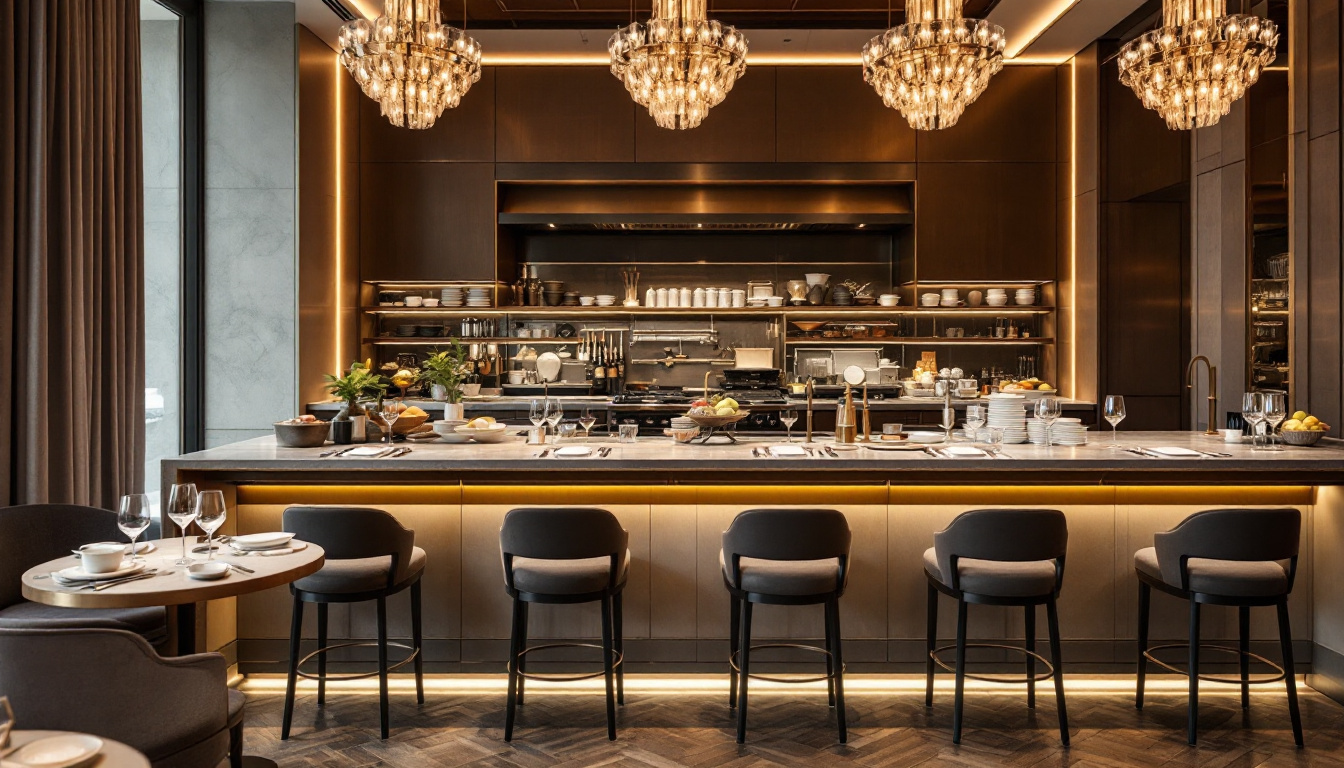
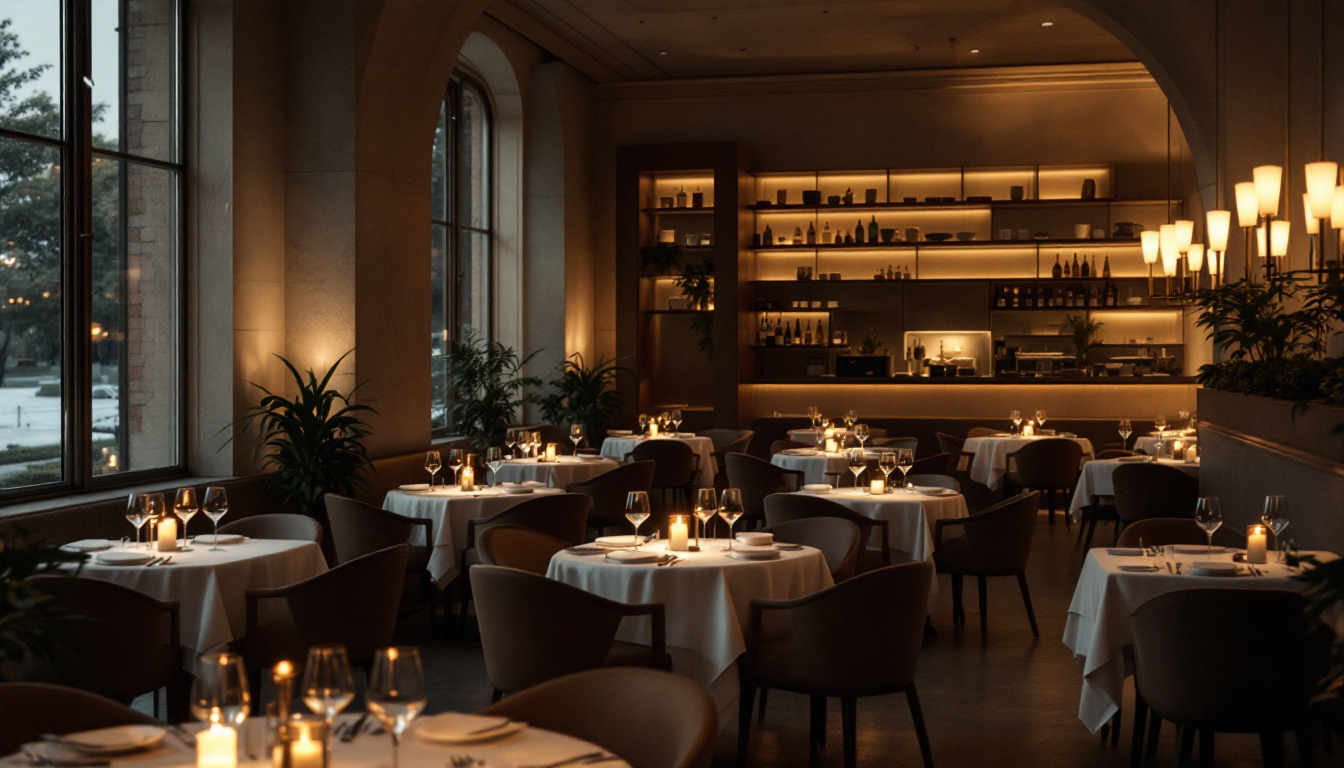
The Per Se dining room is the work of Adam Tihany, the New York hospitality designer who has worked on most of the city’s serious three-star rooms in the past two decades. The design vocabulary, when the room opened in 2004, was the most ambitious contemporary hospitality interior in New York — a long rectangular dining hall with floor-to-ceiling windows along the west wall (the Central Park view), a freestanding open fireplace at the centre of the room (a working wood-burning hearth in a glass enclosure that diners walk past on entry), and a coffered ceiling in a deep walnut veneer.
The room takes sixteen tables for approximately sixty-four covers across the dining room and the salon. The salon — a separate smaller room at the front of the property — takes eight tables of smaller bookings and the bar (which is the only walk-in element of the operation). The lighting is warm and dropped low. The tableware is the Keller custom programme — heavy silver flatware, a custom Riedel glassware spec, the signature Bernardaud porcelain plates that have run at all the Keller properties since the late 1990s.
Service is led by Antonio Begonja with a brigade of fourteen on the floor for the early seating. The pacing is the most precisely managed in any New York three-star — the kitchen has built a working service tempo around a target of two and a half to two and three-quarter hours for the nine-course tasting, and the brigade tracks this in real time. Courses arrive at calculated intervals. The wine glasses are refilled within five seconds of dropping below the half-line. The conversation at the table is monitored by the staff at the appropriate distance.
The menu
The Per Se menu has held to the nine-course tasting structure since opening in 2004. The structure is the work of Keller and was developed at The French Laundry in the late 1990s; the standing dishes — Keller’s oysters-and-pearls opening, the salmon-tartare cornet, the Keller short rib — have been on both menus since the early 2000s and rotate through the seasons in small variations.
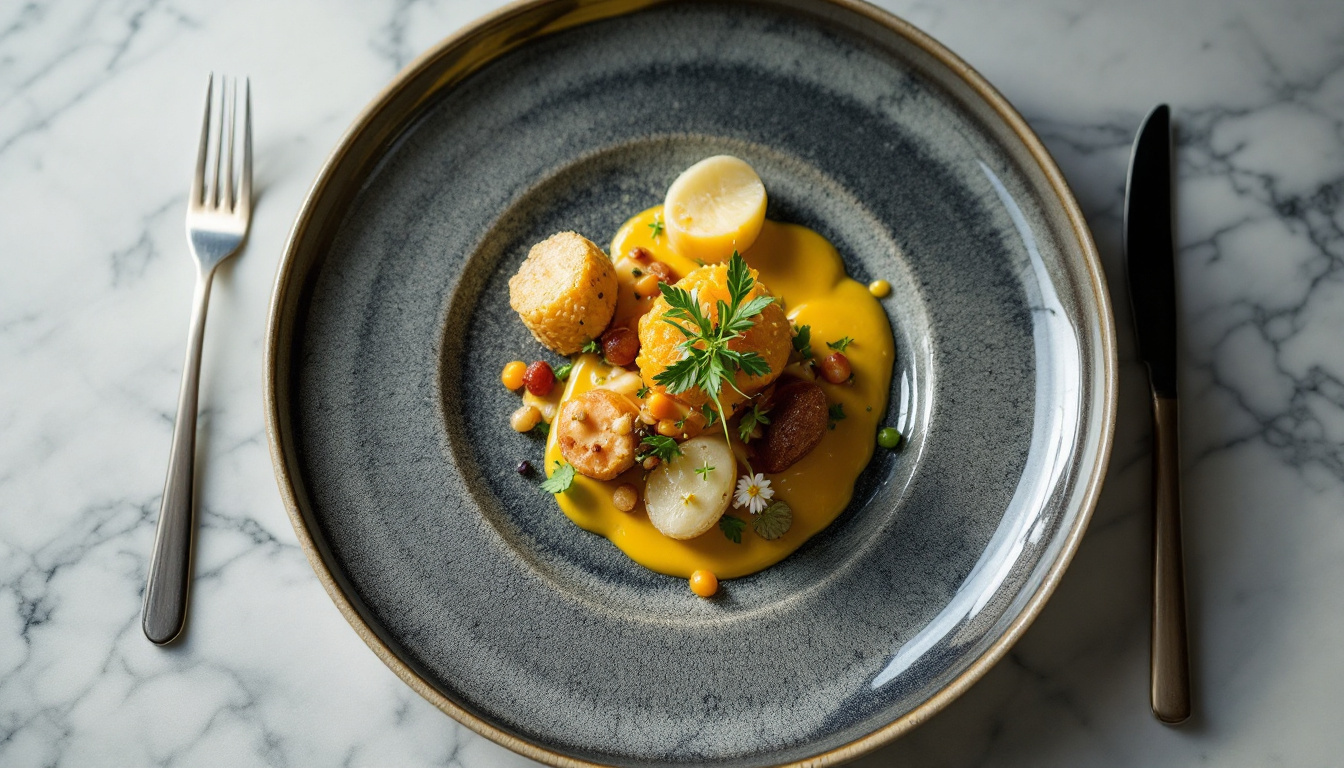
The opening course of the menu I took was the Keller signature oysters-and-pearls — a small flat dish containing a sabayon of pearl tapioca topped with two Island Creek oysters and a single generous spoonful of sturgeon caviar. The dish is the kitchen’s most-served single course across all the Keller properties and has been on the Per Se menu every day since opening in 2004. The technique behind the sabayon — a custard of egg yolk, cream, and tapioca, whipped at low heat for approximately twenty minutes — is the kitchen’s quietest piece of standard work, and it was, on this evening, the right richness and the right temperature.
The second course was the menu’s salmon-tartare cornet — a small twisted-cone of sesame tuile filled with a layer of crème fraîche and topped with a generous spoon of cured Norwegian salmon tartare. The cornet is the menu’s most photographed single course and has been a Keller signature since the late 1990s at The French Laundry. The cone is filled at the pass and walked individually to each guest with a thirty-second window before serving — the tuile begins to soften within sixty seconds of being filled, and the kitchen times the service to the second.
The third course on this menu was a small dish of warm Hudson Valley foie gras, sourced from La Belle Farms (the small upstate New York producer that has worked with the Keller properties since 2006), served with a small spoon of cherry compote and a thin slice of toasted brioche. The foie gras was the menu’s most luxurious raw ingredient and was the moment of greatest technical risk — overcooked, the foie collapses; undercooked, it stays cold at the centre. The portion on this evening was the right temperature, the right firmness.
The fourth course was a small bowl of poached lobster with a vanilla-and-bone-marrow emulsion — the lobster sourced from a small day-boat operator in Maine, poached at low temperature in butter for seven minutes, served with a small mound of fava beans and a generous pour of the emulsion at the table. The dish is the menu’s most technically demanding piece of poached seafood and has been on the rotation in some form since 2008.
The fifth course was the menu’s first land protein — a small piece of dry-aged Aylesbury duck, sourced from D’Artagnan, served with a small puree of celery root and a thin reduction of duck jus. The duck was twenty-eight days dry-aged and was the kitchen’s quietest piece of cooking on the menu — the surface caramelised to a deep amber, the interior still rare at the centre.
The sixth course was the menu’s substantial main — a single piece of slow-braised Wagyu short rib, cooked at low temperature for twelve hours, served with a small puree of black trumpet mushrooms and a thin reduction of red wine. The short rib is a Keller standing dish (it has appeared on the menus at The French Laundry and Per Se in some form since the late 1990s) and was, on this evening, the menu’s most accomplished single piece of work. The texture was the texture of properly slow-braised beef — yielding without falling apart, deeply flavoured without being heavy.
The seventh course was the cheese course — a small selection of three farmhouse cheeses (a Hudson Valley brie, a French Comté, and a small Spanish goat cheese), served with a small spoonful of honeycomb from a Hudson Valley producer and a thin piece of toasted walnut bread.
The eighth course was the first dessert — a small bowl of grilled-pineapple sorbet with a thin layer of caramelised passion fruit and a single piece of crystallised ginger.
The ninth course was the formal dessert — the menu’s chocolate-and-hazelnut composition, which the patisserie team has run as a standing dish since 2010, served as a small dark-chocolate dome filled with hazelnut praline and a small pool of warm chocolate sauce poured at the table.
The closing mignardise programme — brought to the table on a small silver tray with eight separate small pastries and the kitchen’s signature small bag of house-made chocolate truffles — was the meal’s quiet closing piece of theatre.
The wine
The wine list at Per Se runs to approximately 2,200 references and is one of the deepest cellars in New York. The list is heavily weighted toward Burgundy (a full Domaine de la Romanée-Conti vertical from 1985 to 2020 is the cellar’s spine), Bordeaux, and California Cabernet, with a useful smaller programme on small German Riesling producers and on grower Champagne. The list is run by Michel Couvreux, who came up through the Keller properties starting at Bouchon in 2006 and who took over the New York programme in 2019.
The classic pairing on the nine-course tasting at USD 215 ran seven wines across the courses. The standout pairings were a 2017 Coche-Dury Bourgogne Aligoté with the oysters-and-pearls and a 2010 Henri Bonneau Châteauneuf-du-Pape with the short rib — both were the right wines for the courses and the pairing as a whole was well-judged.
For diners who prefer to drink by the bottle, the list’s deepest sections are the white Burgundy (where Couvreux has built an unusually deep cellar across the Côte de Beaune and Chablis) and the California Cabernet (a Harlan Estate vertical from 1995 to 2018 is the cellar’s most ambitious single programme).
The current state of Per Se
The question that follows any visit to Per Se in 2026 is the question of how the restaurant compares to The French Laundry — the two properties are run by the same chef, on the same menu structure, with the same standing dishes, and the natural question is which is the more essential.
My reading, after this most recent visit to Per Se and a visit to The French Laundry in autumn 2025, is that the two restaurants are genuinely in good health and both are operating at the three-star standard. Per Se is the more polished room; The French Laundry is the more atmospheric room. Per Se is the more efficient service; The French Laundry is the more relaxed service. Per Se is the more accessible booking; The French Laundry is the more difficult booking. For a serious eater visiting from outside New York or California, the relevant choice is the trip rather than the restaurant — if you are in New York, eat at Per Se; if you are in Napa, eat at The French Laundry. The cooking is the same kitchen at both rooms.
The bill at Per Se for the nine-course tasting with the classic pairing came to USD 745 per guest. The meal finished at 19:34, two hours and thirty-four minutes after I sat down. The walk back down through the Central Park entrance at Columbus Circle in the post-meal half-hour was the right closing piece of the evening.
Per Se is the New York three-star that operates at the highest level of consistent technical precision across the longest run in the city. The room remains, twenty-two years after opening, the New York counterpart to one of the most consequential American kitchens of the past three decades.
Verification
Filed against the following sources, last verified on March 25, 2026. The desk re-checks the source URLs on every dated modification of the piece.
- https://en.wikipedia.org/wiki/Per_Se_(restaurant)
- https://www.exploretock.com/perse
- https://thomaskeller.com/perseny/
- https://guide.michelin.com/us/en/new-york-state/new-york/restaurant/per-se
- https://guide.michelin.com/us/en/article/travel/thomas-keller-new-york-city-guide-michelin-travel
Standing Questions
- Where exactly is Per Se and how do I find it?
- Per Se occupies the fourth floor of the Deutsche Bank Center (the building was Time Warner Center until the 2021 corporate transition, and many New Yorkers still call it that) at 10 Columbus Circle. The entrance is through the building's main lobby on the west side of Columbus Circle, then up the dedicated restaurant elevator to the fourth floor. The restaurant entrance opens onto a small reception area with the signature blue door that Keller has used at all his properties since the original French Laundry. The dining room is directly behind the reception. The view, west across Central Park, is one of the most distinctive in any New York three-star dining room.
- What are the menu options and the headline prices?
- The nine-course chef's tasting menu is USD 425 per guest. The nine-course vegetable tasting menu (the menu's vegetarian alternative) is the same price. The three-course salon menu is USD 185 and is offered only in the bar area at the front of the room. Both nine-course menus include a series of supplemental upgrades — additional courses of caviar, truffle, A5 wagyu, foie gras — that the kitchen offers at the maître d's discretion and that can push the total per-guest cost into the USD 700-800 range. Wine pairings are offered at three tiers — classic at USD 215, premium at USD 425, reserve at USD 850.
- How does Per Se differ from The French Laundry?
- Per Se is the urban counterpart to The French Laundry — same chef-owner, same menu structure (nine-course tasting plus vegetarian tasting), same standing dishes (oysters and pearls, the salmon tartare cornet, the Keller short rib). The menus are intentionally near-identical at any given moment, with each menu rotating its primary courses on roughly the same calendar. The differences are the room and the service. Per Se is the larger property (sixty-four covers across the dining room and salon vs The French Laundry's sixty-two), the more polished room (a deliberate Adam Tihany 2004 design vs The French Laundry's more rustic Napa farmhouse), and the more efficient pacing (Per Se runs the nine-course tasting in approximately two and a half hours vs three to three and a half at the original). For first-time visitors who can choose, The French Laundry is the more atmospheric room; Per Se is the more accessible one.
- How do I book and how far ahead?
- Reservations open via Tock sixty days in advance, at 10:00 New York time. Prime weekend slots (Friday 19:00, Saturday 18:30) are allocated within five minutes of the window opening; weeknight slots are achievable inside thirty days. The salon menu in the bar area is available to walk-ins on a first-come basis (eight bar seats plus two banquettes) and is the right answer if you have not booked. A full deposit equal to the menu price is taken at booking; cancellation is permitted up to seventy-two hours in advance.
- Is Thomas Keller in the kitchen?
- Occasionally. Keller has not been a permanent presence at Per Se for nearly two decades — the chef de cuisine of record is Chad Palagi, who runs the day-to-day kitchen under Keller's executive direction. Keller is at the New York restaurant for several services per month when he is in town and is more frequently at The French Laundry. The kitchen's standards under Palagi have remained consistent with the Keller programme; the cooking is, in my reading on this and prior visits, as technically precise as any I have eaten in New York.