The taxi from Kyoto station runs roughly twenty-five minutes north through the city, past Daitoku-ji and the back of Kinkaku-ji, until the buildings give way and the forest begins. The Aman Kyoto property is reached through a single gate set into the hillside; the gate opens onto a long stone path that winds through cedar and maple for perhaps four minutes before the lobby pavilion appears. The arrival sequence is the work of an architect who understood that the first impression of a property is not the building but the approach, and that the approach should slow you down.
The Site
The land has an unusual provenance. In the 1970s, a Japanese textile collector acquired the thirty-two-hectare parcel at the foot of the northern hills with the intention of building a private museum to house his collection. The architects laid out an extensive garden — paths, water features, mature plantings, a series of clearings — but the museum was never built and the garden was left, largely intact, to grow into the forest for the next four decades. Kerry Hill, the late Australian architect, was introduced to the site in 1995 by friends who knew the family. He kept it in mind through twenty-four years of other projects, and when Aman acquired the parcel in the late 2010s, Hill was the architect they appointed.
The site itself is now called Kerry Hill Garden, a renaming the property executed after Hill’s death in 2018, the year before the hotel opened. It is the only Aman property where the central landscape carries the architect’s name. The decision is the brand’s quiet acknowledgement that this is Hill’s last completed work, and that the work and the land are inseparable.
The Architecture
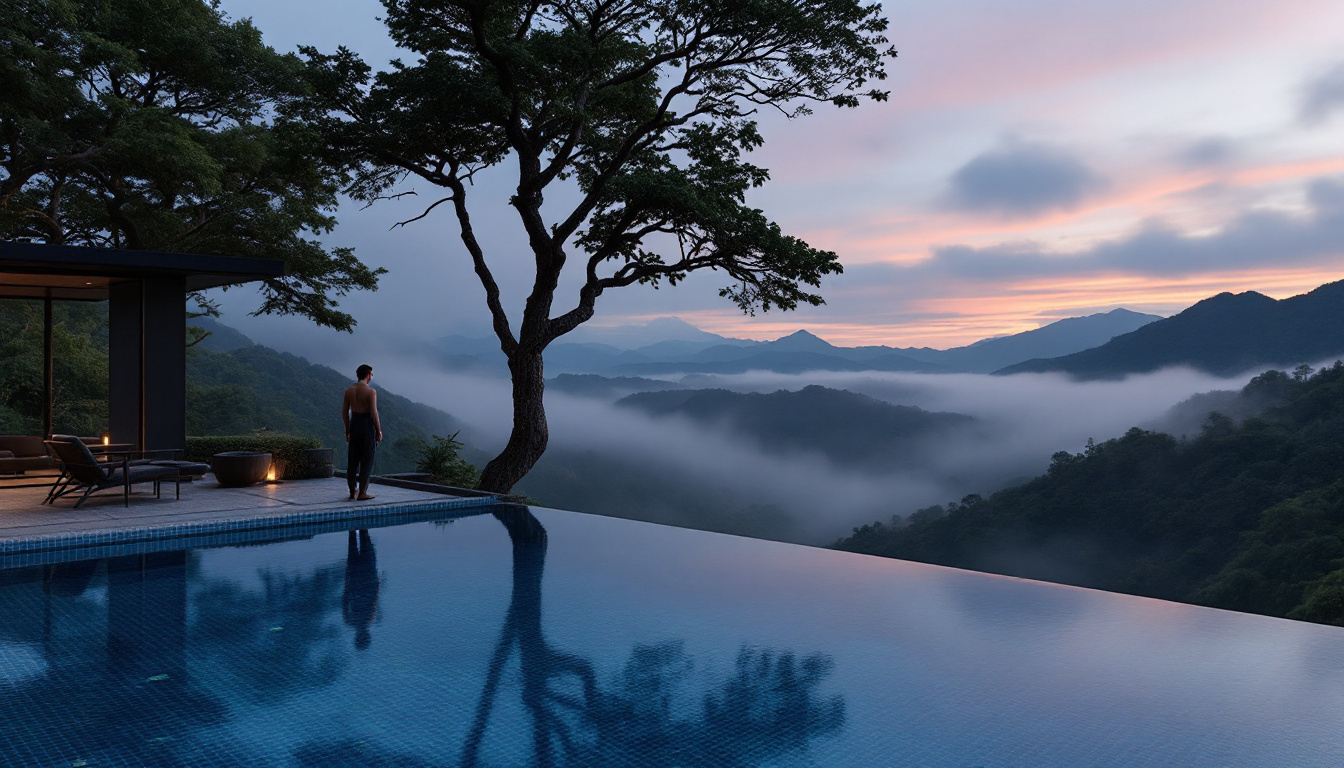
Hill’s vocabulary at Aman Kyoto is unusually restrained, even by his own standards. The buildings are low-rise, single-storey for the most part, with zinc-clad pitched roofs and walls of stained timber. The footprint is dispersed: the lobby pavilion is set on the north of the site, the spa pavilion is on the west, the dining room is at the south, and the five accommodation pavilions are distributed through the forest in a way that means no two pavilions are in line of sight from each other. The walking distances are real — the spa is perhaps four minutes’ walk from the room — and the choreography is deliberate.
The visual language draws on the traditional ryokan typology — the deep eaves, the engawa verandah, the careful framing of the garden through the principal openings — without imitating it. The materials are heavier and the proportions are slightly larger than a traditional ryokan would specify, but the spatial sensibility is the same. The buildings are designed to be experienced from the inside looking out; the garden is the principal furniture.
The Suites
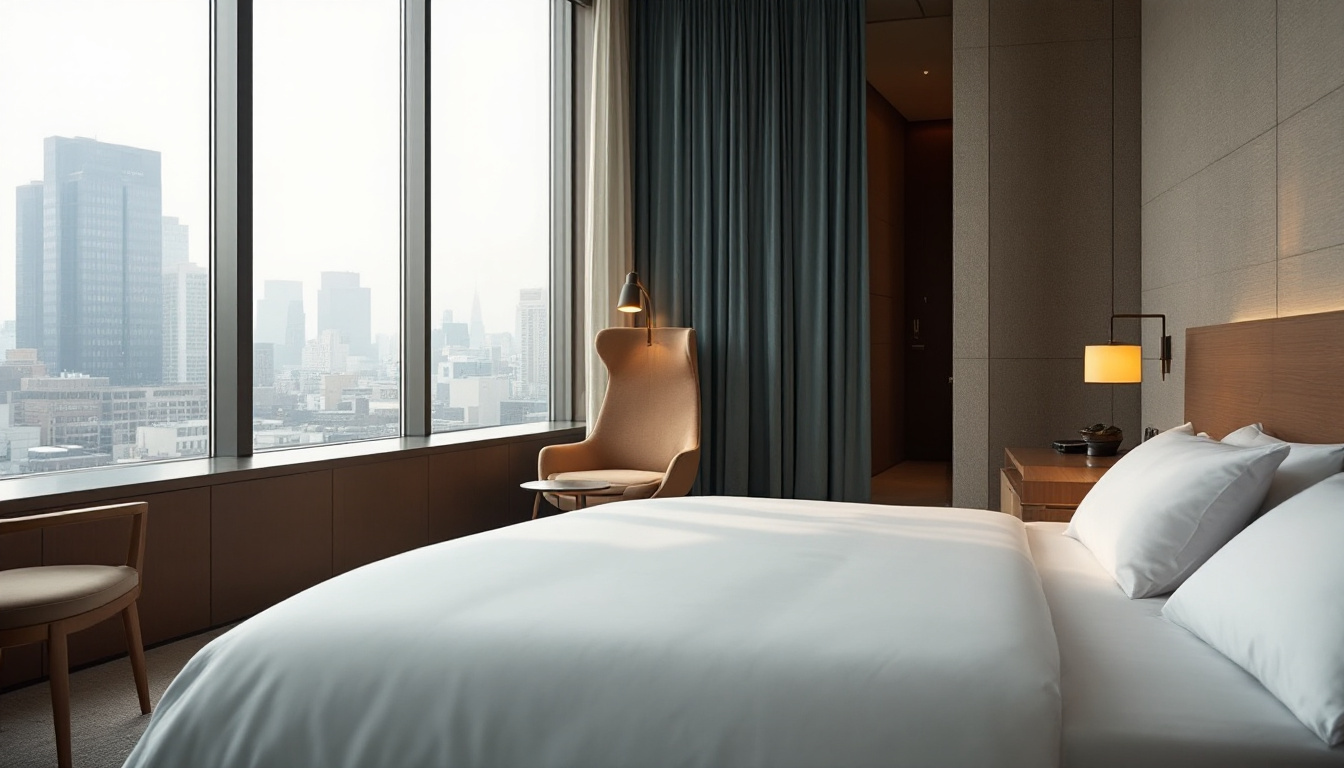
I had a Garden Suite in the easternmost pavilion, a room of roughly eighty square metres with a sitting room, a bedroom, a deep cedar bath, and a private terrace giving directly onto a moss garden. The room is the contemporary expression of a traditional ryokan room: tatami in the bedroom is replaced by a deep upholstered floor; the futon is replaced by a deep low bed; the formal tokonoma is replaced by a single contemporary ceramic; but the spatial logic is the same.
The bath is the part of the room I want to single out. It is a cedar tub, deep enough to submerge in, set into a stone-clad room with a window that gives onto a private section of the moss garden. The window is operable. Bathing in the early morning with the window open, the rain on the moss outside, the steam rising from the cedar — this is the experience the property is built around, and it justifies the trip on its own.
The technology is restrained almost to invisibility. There is no television in the principal sightline. The lighting is layered, warm and controlled by a single panel. The minibar is in a tall cedar cabinet. The internet is fast but you forget it is there. The room is, in the proper sense, contemplative.
The Onsen
Aman Kyoto is built around a natural hot spring discovered on the property during the construction phase, and the onsen experience is the second reason to come. The bathhouse is set into the forest, with separate male and female facilities (this is Japan, this is correct) and a sequence of indoor and outdoor pools. The water is mineral-rich and properly hot — the outdoor pool runs cool enough to spend extended time in, the indoor pool runs hot. The walk from your room to the onsen, in your yukata, through the forest, in the early morning when the mist is still on the moss, is the experience the property’s interior architecture is designed to set up.
The treatment programme is conventional Aman — long massages, facial work, the wellness diagnostics — and the execution is the brand’s standard, which is to say excellent. I had a 90-minute treatment on my second morning that I have thought about repeatedly since. The post-treatment lounge gives onto the forest; the meditation space at the back of the spa is, on a quiet afternoon, the most peaceful interior I have spent time in this year.
The Food
The Living Pavilion by Aman is the principal dining room, a low pavilion at the south of the site with the kitchen on one side and the dining room on the other, both opening through full-height glazing onto the garden. The cooking is a refined Japanese register, working closely with seasonal Kyoto produce and the local kaiseki tradition without sliding into the formal kaiseki idiom. The breakfast programme is the standout — the Japanese breakfast set, with the grilled fish, the rice, the miso, the multiple small dishes, and the persimmon when in season, is the version that justifies the work.
The Taka-an restaurant, the more formal dining room, runs a longer kaiseki tasting in the evenings. The chef has trained in the Kyoto kaiseki tradition for decades, and the menu changes with the season — the spring run with the wild mountain vegetables, the autumn run with the mushrooms, the winter run with the crab. The wine list is unusually deep in white Burgundy, which is the right answer for kaiseki, alongside a serious sake programme.
What Did Not Work
A few small calibrations. The property is genuinely remote within the city — the taxi to a central Kyoto restaurant is fifteen to twenty minutes, and the foot traffic patterns of the major shrines and temples do not pass nearby. This is the point of the property and the answer is to plan accordingly, but a guest expecting the convenience of a Gion ryokan will find the trade-off real. The dining options are limited to the two restaurants on site; if you eat in for four nights you will eat your way through the kitchen’s repertoire.
The rates are at the top of the Japanese market. The entry suite is the same nightly rate as a comparable room at Aman Tokyo, which is to say significantly above the Park Hyatt or the Mandarin Oriental Tokyo. The shoulder seasons — late November, early February — are the better proposition both on rate and on the experience of the city without the cherry-blossom and momiji crowds.
How It Sits
The property is six years old now, which means the trees have grown in, the operational team has stabilised, and the few small calibrations that any new Aman needs in its first two years have been executed. This is the property at maturity, and the maturity has improved it. The garden is denser; the moss has filled in; the staff have learned the property’s quirks; the menu has reached its proper register. This is the hotel the brand and the architect intended.
For a guest who has stayed at Aman Tokyo and is choosing the next Japanese Aman, the answer is straightforward: Aman Kyoto is the resort companion to the urban Tokyo property, and the two are designed to be experienced together as bookends — three nights in Tokyo, four nights in Kyoto, the train between them. The combined trip is one of the experiences the brand has built itself around offering, and it executes the assignment as well as anyone.
What I Would Book
A Garden Suite in the eastern pavilion for four nights, ideally in late November when the maples are at their peak. Breakfast in the Living Pavilion each morning. The full hammam and massage on the second day. Kaiseki at Taka-an on the third evening. A day excursion to Saiho-ji (the moss temple) with the property’s car. Long walks in the forest before dinner. The Shinkansen to Tokyo on the fifth morning.
Aman Kyoto is Kerry Hill’s final completed work. It is also, in my view, his finest one.
Verification
Filed against the following sources, last verified on April 3, 2026. The desk re-checks the source URLs on every dated modification of the piece.
- https://archeyes.com/aman-kyoto-resort-kerry-hill-architects/
- https://www.habitusliving.com/projects/aman-kyoto-kerry-hills-legacy-lives
- https://estliving.com/design-destination-aman-kyoto-kerry-hill-architects/
- https://www.cladglobal.com/CLADnews/architecture_design/Onsen-and-forest-bathing-underpin-Amans-third-Japanese-site/343461
- https://dnahotels.com/2019/10/31/aman-kyoto/
Standing Questions
- When did Aman Kyoto open?
- The property opened on 1 November 2019, the third Aman in Japan after Aman Tokyo (2014) and Amanemu (2016).
- Who designed the architecture?
- Kerry Hill, the late Singapore-based Australian architect, whose Aman work shaped the brand's modern architectural vocabulary. Aman Kyoto was his final completed project; the central garden was renamed Kerry Hill Garden in his memory after the property opened.
- How many keys does it have?
- Twenty-six suites in five low-rise pavilions, designed as a contemporary reinterpretation of the ryokan typology.
- What is the site?
- A thirty-two-hectare forest garden on the northern edge of Kyoto, near Kinkaku-ji and Daitoku-ji, originally laid out in the 1970s as the setting for a planned private textile museum that was never built.
- How does it differ from Aman Tokyo?
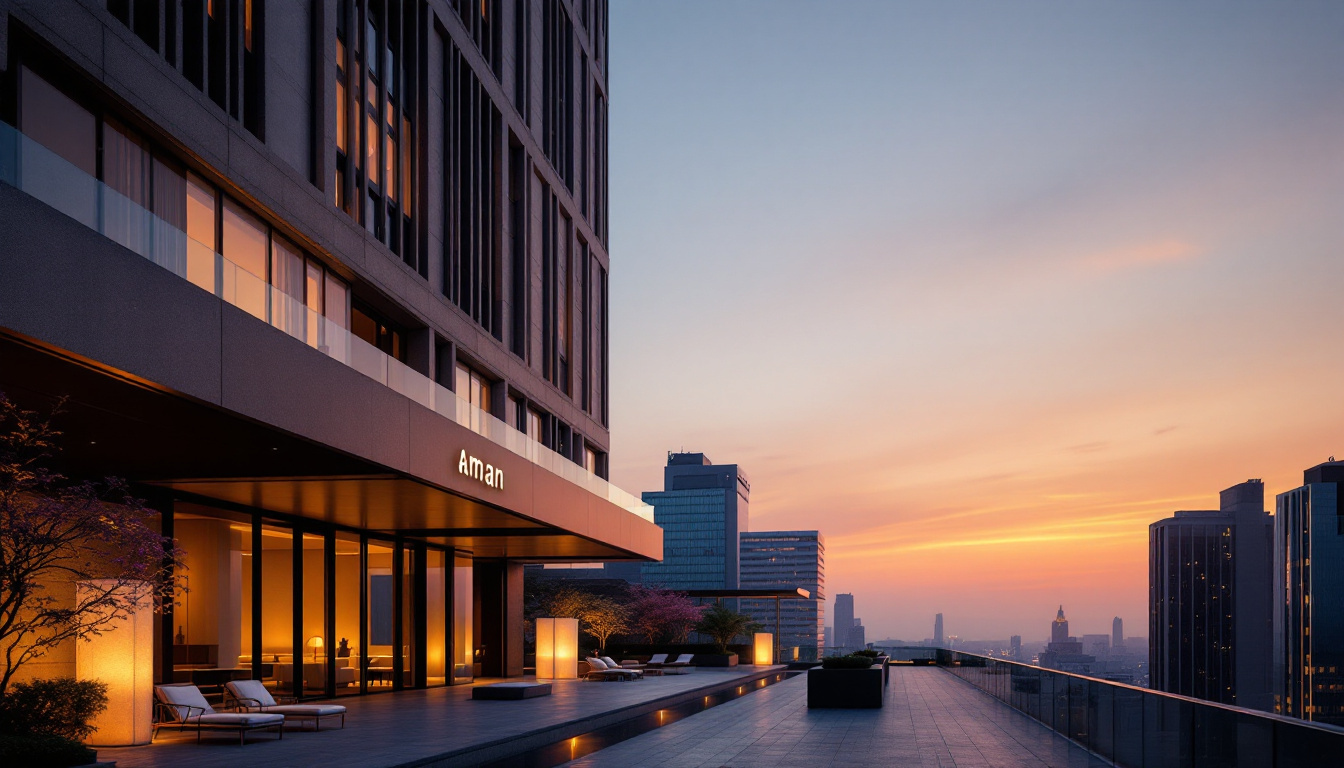
- Aman Tokyo is the urban Aman — a high-rise in Otemachi with the dramatic atrium and the city views. Aman Kyoto is the resort Aman — low-rise, forest-set, contemplative, with the onsen and the garden as the principal experience.