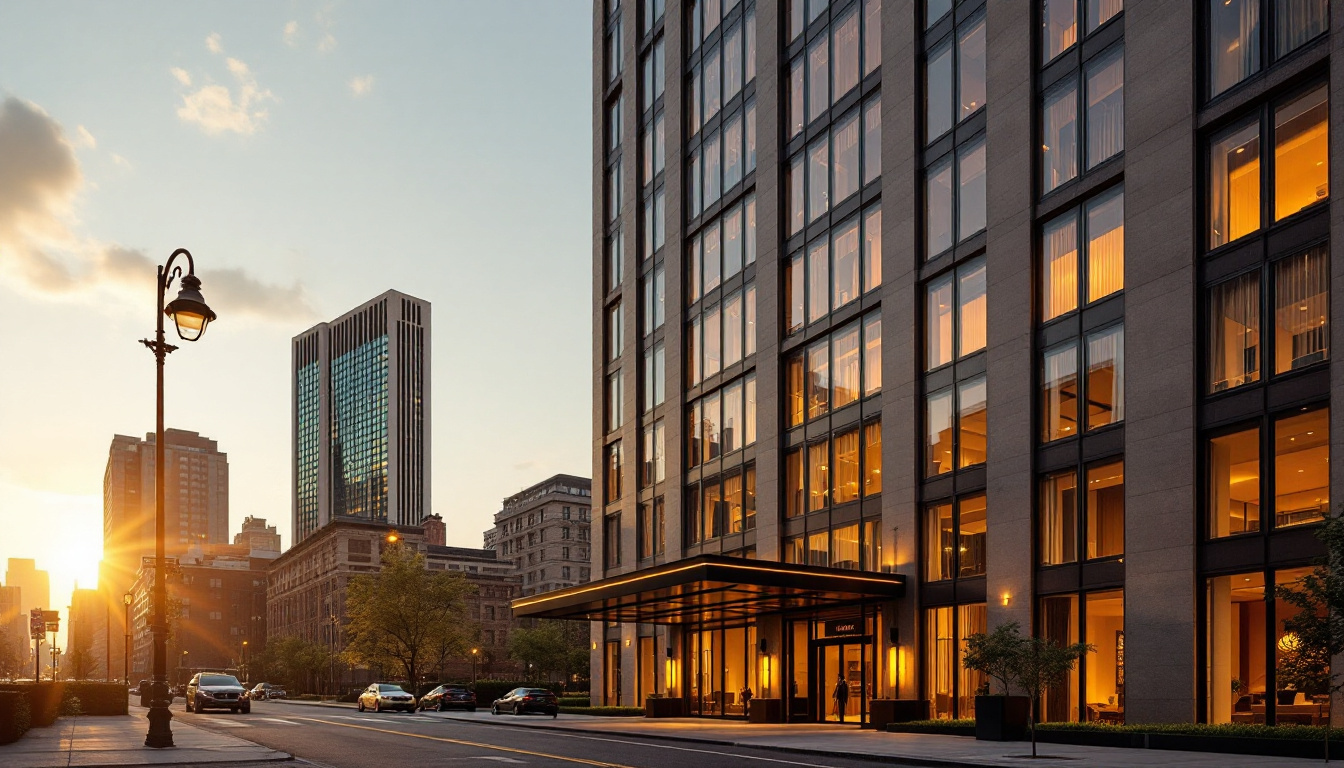
I checked in to Aman New York on the afternoon of 9 March 2026, a Monday, in the kind of bright cold that Manhattan does well between the late-February thaw and the first warm weekend in April. The temperature on Fifth Avenue was forty-one degrees Fahrenheit. The Crown Building’s south facade — the one that faces 57th Street and the Trump Tower atrium across the street — was washed in low afternoon sun, and the carved limestone garlands above the second-storey cornice were throwing the kind of long shadow that makes a hundred-year-old building look exactly its age. I had not stayed at the property since June 2023, ten months after its opening, when the staff still moved with the slightly over-rehearsed quality of a flagship trying to prove itself. I came back this March to see whether three years had loosened the choreography.
The short answer is that it has, and the property is better for it. The longer answer involves the lift attendant, the wellness floor, a quiet conversation with the head of restaurant service about why one of the two restaurants no longer takes lunch reservations, and the small detail of how the room key now comes in a plain brushed-steel sleeve rather than the engraved leather one that was used at opening.
The arrival
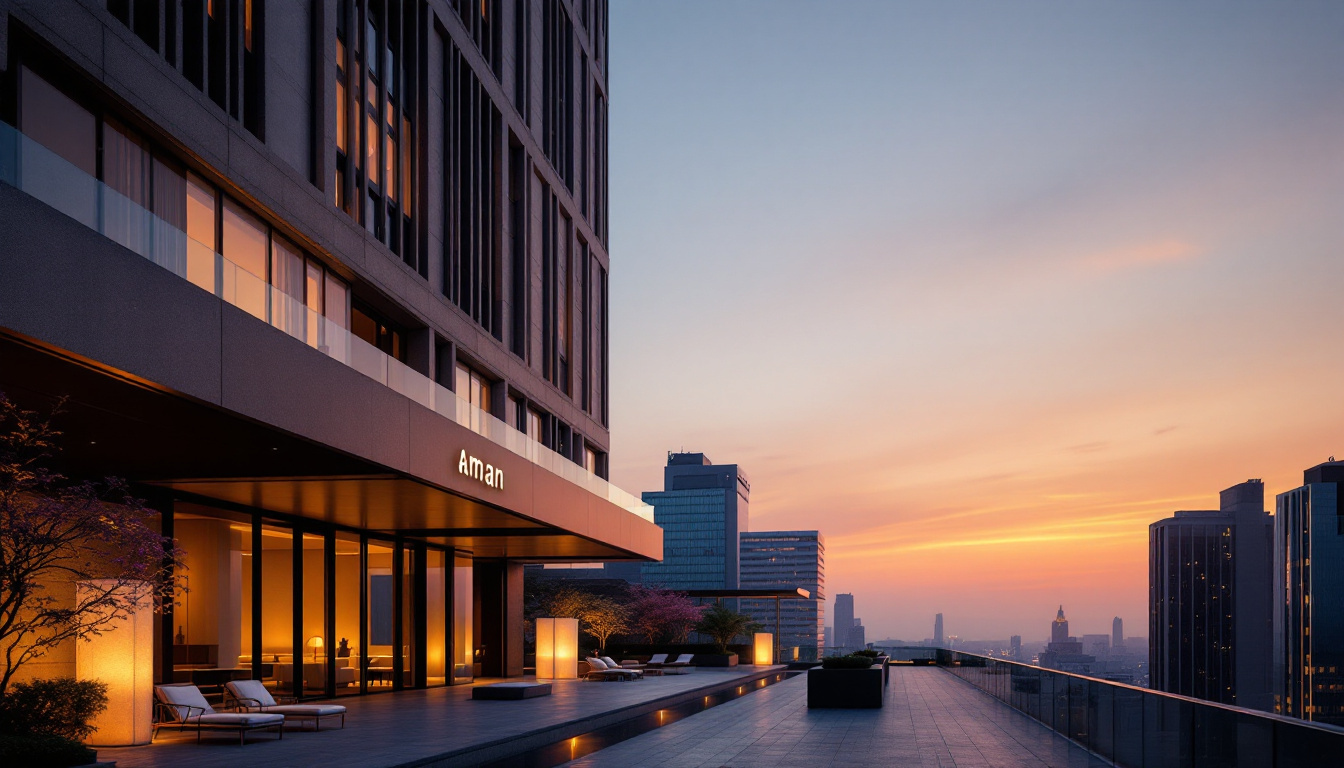
The Crown Building sits at the northeast corner of Fifth and 57th, a 1921 Warren and Wetmore commission that was the original home of the Museum of Modern Art and, for several decades thereafter, a Bulgari flagship and various floors of office tenancy. The Aman occupies the top portion of the building (floors seven through twenty-six, with the spa on the lower floors) and the entry sequence is one of the property’s deliberate set pieces. The hotel entrance is on 56th Street rather than on Fifth Avenue, a half-block off the busiest pedestrian corner in midtown, which removes you from the noise within about ten paces of the doorman.
I arrived by car at 14:48, a black Cadillac CT6 from a livery I had organised independently rather than through the hotel’s house car program. The doorman — a man named Dimitri who I would see on three of my four days — took both bags at the kerb without asking which were mine and without checking a manifest. The bags went one way; I went another, through the small ground-floor lobby (low-ceilinged, dim, deliberately unimpressive) and into the dedicated Aman lift bank, where the attendant — there is always an attendant — pressed the button for the seventh floor without my needing to confirm I was a hotel guest. There is, somewhere in the building’s security operation, a system for distinguishing arriving hotel guests from members of the private club, from residents of the 22 branded apartments on the upper floors, and from the daytime spa-only visitors. I did not see how it works. It worked.
The lift opens onto the seventh-floor sky lobby and the building does its trick. The lobby is a double-height room with a single enormous fireplace on the long wall, a glass-roofed inner courtyard at the back (the Garden Terrace, which I would use twice for breakfast), and a set of Gathy’s signature low daybeds in a putty-coloured raw silk arranged in clusters of three around the perimeter. The ceiling is coffered in a smoked oak, and the light is low — perceptibly lower than any other Manhattan hotel lobby I can name. The Aman New York lobby is the one room in the property that the design press wrote about at opening, and it has aged well in the three years since. The silk on the daybeds has dulled in the way good silk does; the wood has darkened by perhaps half a shade; the fire is real, with a tended bed of birch logs and a faint, intermittent smell of woodsmoke that the building’s air handling system has been engineered to permit.
Check-in happened from a chair, on an iPad, in approximately eight minutes. The host — Ms. Lin, who I would learn was the deputy front-of-house manager — offered a choice between a glass of champagne (Pol Roger, the house pour) and a yuzu and ginger shrub served in a Riedel old-fashioned glass with one large piece of clear ice. I took the shrub. The key card arrived in a brushed-steel sleeve, slim, unmarked except for the Aman wordmark embossed at the bottom edge. The leather sleeves the property used at opening, I asked about later, had been retired in late 2024 after wear issues; the steel sleeves are now standard and feel more durable than they look.
The suite
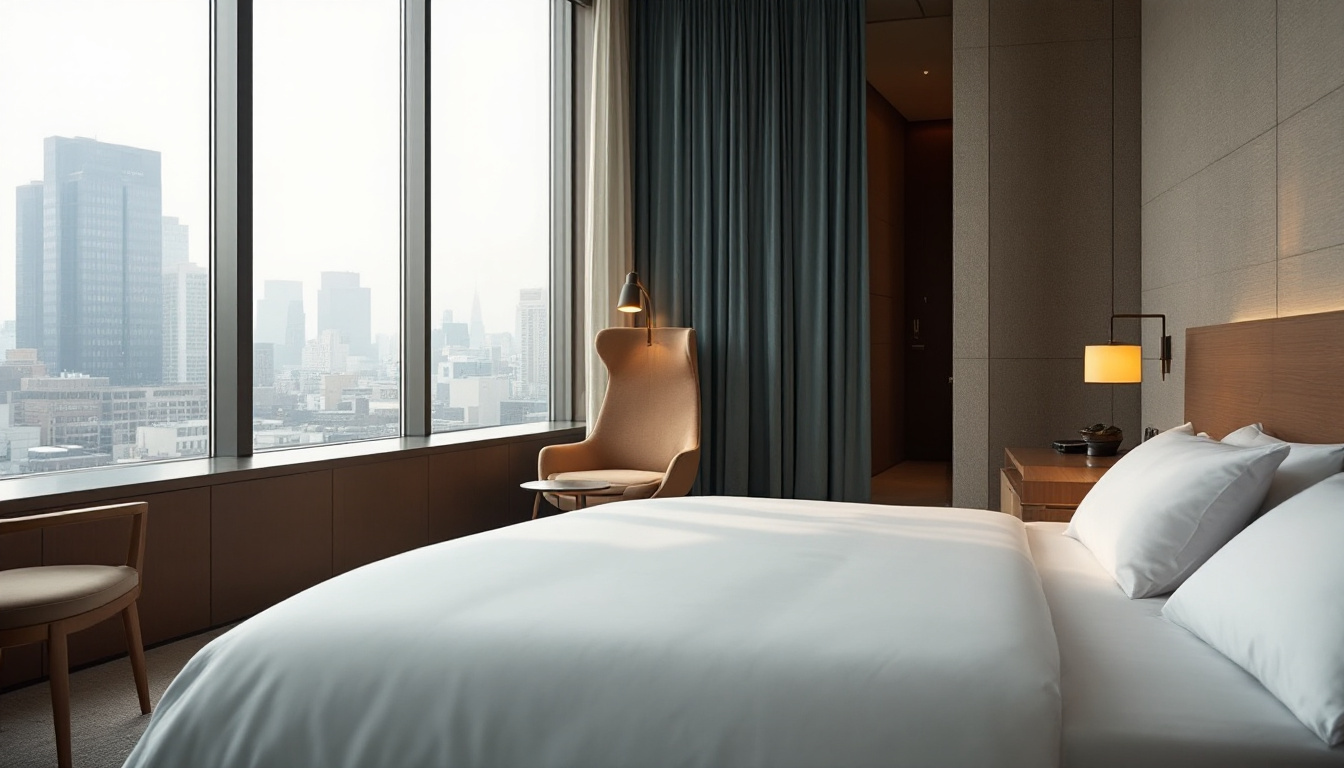
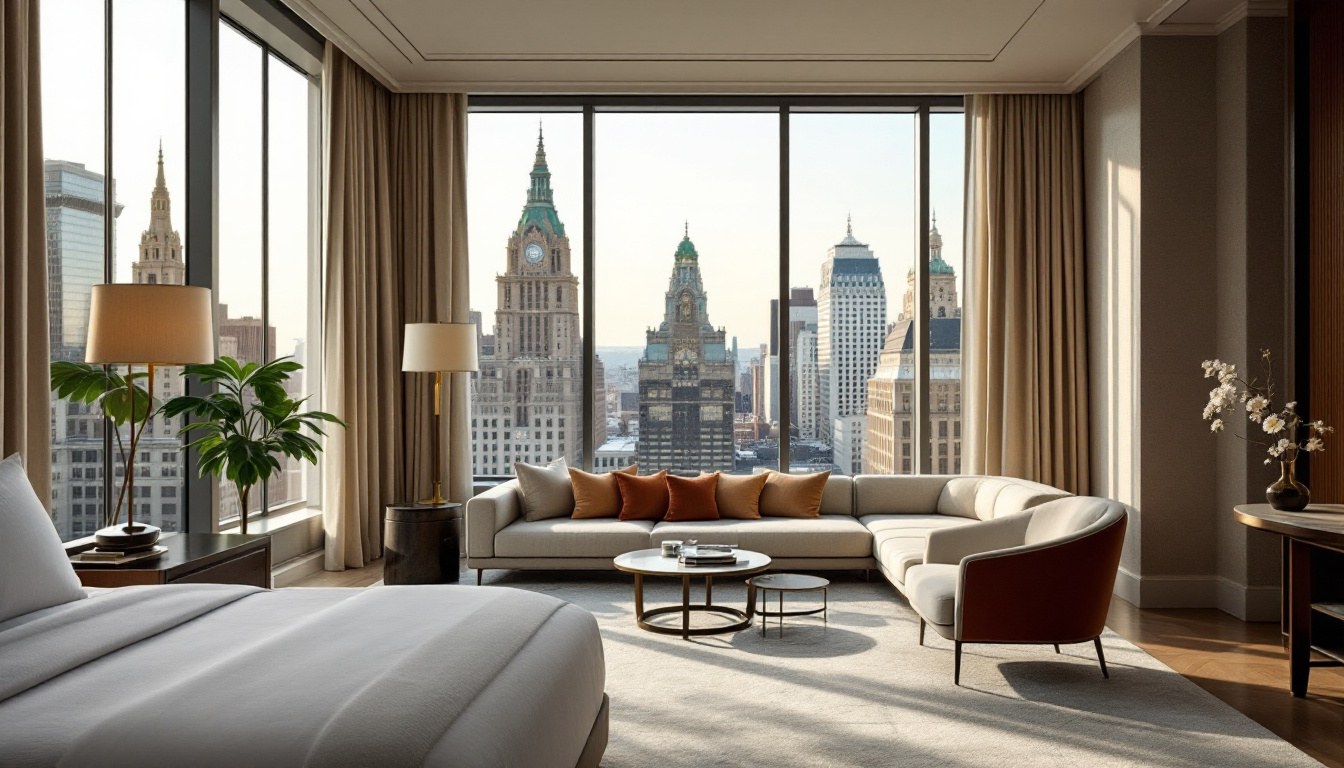
I had booked a Premier Suite, which sits one tier above the entry-level Deluxe and one below the Corner Suite. Mine was suite 1604, on the sixteenth floor, with a primary window line facing west across 56th toward Sixth Avenue and a secondary set of windows on the north elevation that gave a clipped but real view up the avenue toward Central Park, fourteen blocks north. The suite measured 105 square metres on the plan; in practice the room felt larger because of the ceiling height, which at 3.2 metres is unusual for a midtown property of any era and is a function of the original Warren and Wetmore floor-plate the Aman team was unwilling to compromise.
The room is organised as three connected zones — living room, bedroom, bathroom — separated by an architectural device Gathy uses across his Aman work: a freestanding hearth and chimney piece that runs floor to ceiling and acts as both the visual centrepiece and the wall between sitting and sleeping. The fireplace is gas, with a single throw of birch logs over the burner, and it lit on the suite’s iPad control with the touch of a single icon. It produced enough heat at full setting to noticeably warm the room within twelve minutes, which on a forty-degree afternoon was the right answer.
The materiality, three years in, is holding up. Floors are wide-plank French oak in a low-sheen oil finish, walls are silk-papered above a brushed limestone wainscot, and the principal feature wall — behind the bed — is hand-laid stone in a putty-coloured travertine from a single Italian quarry that Gathy uses across the brand. The travertine has a tiny vein of iron oxide that runs irregularly through one panel and reads, on close inspection, as a deliberate choice rather than a manufacturing flaw. The bathroom is the suite’s structural centrepiece: a freestanding limestone tub in a single carved block, a separate walk-in shower with both rain and handheld heads, a steam function in the shower that I tested twice, and a dual vanity in honed Calacatta with brushed-nickel fittings by THG Paris. Robes are 480gsm waffle by Frette, embroidered with the property mark in undyed thread. Slippers are cotton, replaced daily.
The desk is the right size — large enough to work from for a full day with a laptop, a notebook, and a printer if needed — and faces the window rather than the wall, which is the correct decision and one that many hotels at this rate get wrong. The chair is an Eames replica in walnut and dark leather; it is comfortable for two hours and noticeable after four. The minibar arrangement is the now-standard Aman one: a deep walnut drawer at counter height with a small but considered selection of spirits (Macallan 18 Sherry Oak, Hendrick’s, an Amaro Nonino, a Suntory Toki), a kettle, two tea caddies, and a refrigerated drawer below holding water (Mountain Valley spring water from Arkansas in glass bottles), a cold-pressed grapefruit juice, and three small bottles of a New York State sparkling rosé I did not recognise.
What you do not get in the suite, and which is worth flagging, is a separate guest powder room — the bathroom serves all functions, which is fine for the way the room is used in practice but would matter if you were entertaining. The Corner Suites and above have the separate powder; the Deluxe and Premier tiers do not.
The wellness floor
The wellness floor is the reason most of the people who actually return to Aman New York actually return to Aman New York, and it has improved measurably between my 2023 visit and this one.
The spa runs across three floors of the lower building (occupying roughly the second through fifth floors, depending on which programmatic element you count) and totals approximately 25,000 square feet, which makes it the largest hotel spa in Manhattan by a meaningful margin. The centrepiece is the swimming pool: a 20-metre lap pool in honed limestone, with a vaulted ceiling perforated by a constellation of small downlights that read, when you are floating on your back, as a stylised night sky. The pool is heated to 84 degrees Fahrenheit, which is two degrees warmer than the standard hotel pool and exactly right for the way it is used in practice — long, slow lengths rather than serious training. The pool is surrounded by twelve daybeds and four cabanas, with a pair of working fire pits at the far end. The fire pits are real, with seasoned wood, and the staff lights them in the late afternoon on the kind of grey midtown day that needs them.
I used the spa on three of my four days. The hammam is the strongest element: a vaulted marble chamber, large enough for six, with a central heated marble slab and a wash trough at the far end. The full hammam ritual, ninety minutes, includes a kese exfoliation by a trained attendant, a soap-foam wash with the Aman house soap (kuromoji and yuzu, the same line the brand uses in Tokyo), and a long rest period on the heated slab. The price at this stay was USD 575, which is at the upper end of the Manhattan range and roughly twenty percent above what the Mandarin Oriental NoMad charges for a comparable treatment. The execution justifies the premium.
The banya — a Russian-style steam room with a wood-burning stove at one end — is the second of the property’s signature wellness elements and is the one that has improved most since 2023. At opening, the venik treatment (a birch-branch massage performed on a heated wooden bench inside the banya) felt under-rehearsed and was offered by only one trained practitioner; on this visit, three practitioners were available across the week and the booking system showed multiple daily slots. I booked one. Mr. Volkov, who had moved over from a private bathhouse in the East Village in 2024, performed the treatment in the way one would actually want — neither aggressive nor performative, with the venik used in long, sweeping motions rather than the more theatrical slapping technique some practitioners default to. The session ran fifty minutes; the cost was USD 425.
The two banya and hammam houses can also be booked as private half-day or full-day experiences for two guests, which is a use case the property seems to have been engineered around. If you stay here in winter and you book one of the private wellness houses for a long afternoon, with a light kaiseki lunch served in the adjacent rest room and a cold plunge between sessions, you have the single best wellness day available inside a New York hotel.
The service
The principal change between my 2023 visit and this one is that the service has stopped trying to impress and started trying to operate.
In 2023 the staff at Aman New York moved with the over-precise quality of a service team that had been drilled to within an inch of its life by a brand standards consultant. Greetings were too consistent; eye contact was held a fraction too long; the language was almost identical from one host to the next. The effect was tonally off — too much hotel — and it produced the round of mixed early reviews that the property’s first eighteen months were marked by. By March 2026, the choreography has loosened. Greetings are still consistent but they have variation in them; staff use my name when it is appropriate and stop using it when it is not; the eye contact is calibrated to the moment rather than to a script.
My assigned butler for the stay was Ms. Hassan, an English-speaker of Egyptian background who had been on the property since opening and had — she mentioned in passing on the second evening — turned down a transfer to Aman Dubai earlier in the year. Her manner is the right Aman register: present but unobtrusive, observant without being conspicuous. She unpacked the bags on arrival, asked one specific question about a creased linen shirt (whether I wanted it pressed for the next morning or simply hung to release), and produced — unprompted — a small plate of biscotti from Arva on the second afternoon when she noticed I had asked the room service line about espresso.
The deliberate service test: at 22:18 on the night of the second day, I called the floor desk and asked whether a pair of black leather oxfords could be polished and returned before an 08:00 breakfast meeting the next morning. The shoes were collected within nine minutes by a junior staffer I had not met, returned at 06:54 the next morning, polished to the correct degree (worked into the welt, with a sole edge treatment that had not been there at intake), and placed in the corridor outside the suite door without a knock that would have woken me had I been asleep. The bill on the folio showed USD 45, which is the standard rate. The pickup-to-return time was nine and a half hours, which is fast by Manhattan standards and would have been impossible from most properties at this rate after 22:00.
The single service lapse worth recording came on the morning of the fourth day. I had asked the previous evening for a 06:30 wake-up call paired with a pot of coffee. The wake-up call came correctly; the coffee did not. When I rang the floor desk at 06:55, the coffee was at the door within seven minutes, and Ms. Hassan came on shift at 07:30 and produced a brief, accurate written acknowledgment of the error placed on the desk during turn-down the same evening. This is the correct recovery sequence and is the kind of thing that Aman properties get right more reliably than the competitive set.
Front-of-house density at any given moment in the public spaces is high — higher than at any other Manhattan hotel at the rate, with the possible exception of the Mandarin Oriental NoMad — and the staff-to-guest ratio across the property is reported at approximately 2.8 to 1, which shows.
The table
The property’s two restaurants are Arva (Italian, the brand’s signature global concept) and Nama (Japanese, washoku). Both occupy the fourteenth floor, accessed via the same dedicated lift bank as the spa, with the seventh-floor Garden Terrace serving as the third dining venue and the principal breakfast room.
I ate breakfast at the Garden Terrace on three mornings. The room — a glass-roofed conservatory with mature olive trees in honed limestone planters and a stone floor laid in a herringbone pattern — is the single most underused element of the property and, on a bright March morning with the temperature outside in the low forties and the room held at sixty-eight, is the right answer for a long, slow breakfast over coffee and the FT. The breakfast itself is included in the room rate (a fact the front desk does not foreground at check-in, and which is worth confirming). The à la carte menu runs the standard luxury hotel shape: eggs to order, smoked salmon, pastries from the in-house bakery, a yoghurt and grain bar, and a Japanese set option that is in fact a Nama crossover and is the most interesting choice on the menu. The miso soup is properly made, the rice is short-grain from a producer the kitchen would not name, and the grilled fish (mackerel, on two of three mornings) is correctly cooked.
I took dinner at Arva on the second evening. Arva is the brand’s flagship Italian concept across all Aman properties and the New York execution is run by an Italian-trained kitchen team led, when I asked, by a chef who had come from a one-Michelin-star property in Liguria. The menu is the now-standard Arva shape — antipasti, primi, secondi, with a tasting menu at USD 285 — and the kitchen does what it should. The highlights of my meal: a Hokkaido scallop crudo with Amalfi lemon and a single drop of Ligurian olive oil from a small Imperia producer; a tortelli of Parmigiano-Reggiano 36-month with a brown butter and sage; a primary course of dry-aged Berkshire pork chop, bone-in, cooked over wood and rested for the right amount of time; and a closing pre-dessert of olive-oil cake with mascarpone that was the only weak element of the meal. The wine list runs to roughly 850 references, with the expected depth in Tuscany (six vintages of Sassicaia, four of Ornellaia) and a more interesting depth in California — eight references from Sandhi, four from Domaine de la Côte, and a 2018 Sandhi Sanford & Benedict at a fair USD 295 markup over auction. I drank a half-bottle.
Nama I did not eat at on this visit, having had two recent meals there in 2024 and 2025. The omakase counter (eight seats, behind a curtain that is drawn during service) remains, by reputation, the property’s hardest reservation and the table at which the kitchen is doing its most considered work. The omakase price has risen to approximately USD 500 per person in the last twelve months.
The Jazz Club, downstairs on the lower-ground level, is the property’s other principal evening venue and the single most successfully executed adult social space in any New York hotel I can name. The room is small (capacity around eighty, with a tight bar and a low stage), the booking is members-and-guests-only, and the music programming is the work of a curator the property does not foreground but who has been responsible for, by my count, the consistently best mid-week jazz programming in midtown across the last two years. I went on the third night. The set was a Mingus tribute by a quintet I had not heard of; the room was full by 21:30; the cocktail list included three deliberately understated long drinks that the bar staff actually knew how to make. Cover is USD 100 for non-members.
The Detail
The single specific signature gesture at Aman New York is the lift attendant.
There is a lift attendant in every lift, on every floor, at every hour the property is open. This is not the same as a button-pressing concierge: the attendants are senior staff, English-fluent, briefed on the day’s bookings, and tasked with the soft handover between the public spaces and the private floors. The attendant on the lift to the wellness floor will know your treatment booking is at 14:30; the attendant on the lift to the restaurants will know your reservation is at Nama, not Arva; the attendant on the lift to your guest floor will know to step out at the threshold rather than walk you to the door. The attendants rotate on a known schedule, and across a four-night stay I encountered the same three faces repeatedly. The role exists because the lifting in a 100-year-old Crown Building is structurally constrained — there are fewer lifts than a purpose-built property would have — and because Aman wanted a permanent layer of soft service in a building whose vertical circulation could otherwise feel impersonal. The decision works. The lift attendants are the most distinctive single service position in any American urban hotel.
The other detail worth recording is the in-room turn-down. Aman New York’s turn-down is conservative — the bed is turned in the standard fold, the slippers are placed, the bottle of water is replaced — but the additional gesture, which appeared on two of my four nights, was a small wooden box containing a single chocolate truffle from a Brooklyn maker the front desk would not name and a printed quotation card on heavy cream stock. The card on the second night quoted from a Joseph Mitchell New Yorker essay about the Crown Building’s neighbourhood in 1942. The card on the third night quoted from a Lorca poem. The cards were not present on the first or fourth nights. The intermittent turn-down note is the correct version of a gesture that, done nightly, would be theatre.
The Standard
Setting — 4.8. The Crown Building is the principal asset and the seventh-floor lobby is the principal room. The midtown location — three blocks south of the southern edge of Central Park, two blocks east of MoMA, on the most expensive corner of Fifth Avenue — is the strongest urban hotel location in Manhattan after the Mandarin Oriental’s CPS perch. The half-point deduction is for the suite-level views, which are constrained by the surrounding tower line in a way that the Mandarin and the Aman Tokyo are not. Four-point-eight.
Suites — 4.6. Strong materiality, intelligent layouts, a working fireplace, a properly designed bathroom, and the floor-plate generosity the Crown Building allows. The deduction is for the absence of a powder room in the Deluxe and Premier tiers and for the in-room technology, which is functional but not class-leading. Four-point-six.
Service — 4.4. The improvement over 2023 is the principal story here. Ms. Hassan’s conduct, the lift attendant system, the shoe-polishing recovery, the wake-up call recovery. The deduction is for the morning coffee error, for one specific instance on the third day when the bar at the Jazz Club was understaffed during peak, and for the continuing reports — confirmed in conversation with the deputy front-of-house manager — that the spa is occasionally short of treatment-room staff during peak booking hours. The service is genuinely good but is still the soft element relative to the property’s hardware. Four-point-four.
Table — 4.5. Arva is reliably good and Nama is reliably excellent. The Garden Terrace breakfast is the property’s quiet asset. The deduction is for the absence of a casual all-day option for solo travellers — the property’s third restaurant slot is the private members club, which guests cannot access — and for the olive-oil cake at Arva, which is a small thing but worth flagging. Four-and-a-half.
The Detail — 4.7. The lift attendant system, the intermittent turn-down note, the calibration of the cold-towel temperature, the working fire pits at the pool, the brushed-steel key sleeve, the choice between champagne and yuzu shrub on arrival. Four-point-seven.
Average: 4.6. At the Standard.
Verdict
At the Standard. Aman New York at three is a property that has stopped performing and started operating. The wellness floor is the strongest in any American urban hotel and on its own justifies a stay. The service has stabilised and is now in the right register for the brand. The food is good without being the principal reason to come. The lift attendant system is the single most distinctive operational decision in any New York property at this rate.
Best for: a three-to-five night Manhattan base, particularly in the cold months when the wellness floor and the fire pits work hardest. Best for couples and solo travellers who value the spa and the Jazz Club. Best for guests who want a midtown location without the noise of the conventional Fifth Avenue hotel. Not for: families with young children, parties of more than two adults seeking a shared suite at this rate, or guests who want a high-energy restaurant scene attached to the lobby (the property is deliberately quiet).
Reservation lead times: I would book three to four months out for peak windows (late October through mid-December, mid-March through mid-April), six to eight weeks for the deep winter shoulder, and two to three weeks for the late-summer trough. Reserve direct through Aman or via a brand-recognised travel adviser for the Aman Privé welcome amenity. Rates from approximately USD 2,300 for the Deluxe Suite, rising to USD 8,000 for the corner suites and USD 25,000-plus for the Aman Suite during peak.
Standing Questions
When did Aman New York open?
The hotel opened on 2 August 2022, occupying the upper portion of the landmarked 1921 Crown Building at 730 Fifth Avenue.
Who designed the interiors?
Jean-Michel Gathy of Denniston International led the design, a follow-on to his work for Aman across two decades. The restoration of the Beaux-Arts shell was overseen by a separate landmark architecture team.
What is the entry-level rate?
Deluxe Suites (around 65 square metres) start at approximately USD 2,300 per night in shoulder season; signature suites and the Aman Suite range USD 8,000–25,000.
How does the spa compare to other Manhattan hotels?
Aman New York’s spa is the largest hotel spa in Manhattan at around 25,000 square feet across three floors, with a 20-metre indoor pool, a hammam, a banya, and seven treatment suites. No competing property approaches it.
Is the property suitable for families?
Children are accommodated but the property’s register — quiet public spaces, an adult-coded jazz club, a private members floor — points more toward couples and solo travellers than families.
Verification
Filed against the following sources, last verified on April 25, 2026. The desk re-checks the source URLs on every dated modification of the piece.
- https://www.aman.com/hotels/aman-new-york
- https://www.aman.com/hotels/aman-new-york/wellness
- https://www.aman.com/hotels/aman-new-york/dining/arva
- https://onemileatatime.com/news/aman-new-york/
- https://thepointsguy.com/hotel/reviews/aman-new-york/
- https://theluxurytravelexpert.com/review-aman-new-york/
- https://hoteldesigns.net/2022/in-conversation-with-architect-jean-michel-gathy-on-designing-aman-new-york/
- https://newyorkyimby.com/2022/01/aman-new-york-at-the-crown-building-readies-for-spring-debut-at-730-fifth-avenue-in-midtown-manhattan.html
- https://www.theluxuryspaedit.com/spa/aman-new-york/
- https://www.luxurytraveldiary.com/2025/04/review-aman-new-york/
Standing Questions
- When did Aman New York open?
- The hotel opened on 2 August 2022, occupying the upper portion of the landmarked 1921 Crown Building at 730 Fifth Avenue.
- Who designed the interiors?
- Jean-Michel Gathy of Denniston International led the design, a follow-on to his work for Aman across two decades. The restoration of the Beaux-Arts shell was overseen by a separate landmark architecture team.
- What is the entry-level rate?
- Deluxe Suites (around 65 square metres) start at approximately USD 2,300 per night in shoulder season; signature suites and the Aman Suite range USD 8,000–25,000.
- How does the spa compare to other Manhattan hotels?
- Aman New York's spa is the largest hotel spa in Manhattan at around 25,000 square feet across three floors, with a 20-metre indoor pool, a hammam, a banya, and seven treatment suites. No competing property approaches it.
- Is the property suitable for families?
- Children are accommodated but the property's register — quiet public spaces, an adult-coded jazz club, a private members floor — points more toward couples and solo travellers than families.