There is a particular Parisian moment that the Crillon, more than any other hotel in the city, has been engineered to deliver. You walk out the front door, turn left, and the Place de la Concorde opens in front of you — the obelisk in the centre, the fountains either side, the Tuileries beyond and the Arc de Triomphe in the long axial perspective up the Champs-Élysées. There are perhaps three or four hotels in the world that have an arrival address of this calibre. The Crillon is one of them.
The Building
The address has been a Parisian landmark since the eighteenth century. The two principal buildings on the north side of Place de la Concorde were designed by Ange-Jacques Gabriel for Louis XV in the 1760s, in the same classical-French idiom that produced the Petit Trianon and the École Militaire. The Crillon building, on the eastern half, was the home of the Comte de Crillon and his descendants until the early twentieth century, when the family sold it to the Société du Louvre, which converted it to a hotel in 1909. The Hôtel de la Marine, the matching building on the western half, remained government-owned and reopened to the public in 2021 as a museum.
The hotel has been continuously operated since 1909, with a series of renovations and reopenings — most consequentially the 1980s restoration under the Concorde Hotels group and the most recent four-year project, completed in 2017, executed under the ownership of Saudi investor Khalid Al-Atiq and the management of Rosewood Hotels & Resorts. The 2017 reopening is the property in its current form, and it is the version I am writing about.
The Restoration
The four-year project was unusual in its ambition. The heritage constraints were severe — the façade, the principal reception rooms on the second floor, and several of the historic suites are classified at the highest French heritage level — and the renovation had to deliver a contemporary luxury hotel inside an eighteenth-century classified shell. The project budget ran to a figure neither the hotel nor the owners have ever publicly disclosed, but which was widely reported in the trade press as being north of €200 million.
Richard Martinet, the French architect with a long history in Parisian heritage work, led the architectural restoration. The strategy was to preserve every original architectural element that was preservable, to restore the elements that had been damaged or modified during the previous century of operation, and to insert the contemporary infrastructure — services, sound insulation, fire compartmentation — invisibly. The corridors were reconfigured to give the larger rooms the brief required; the historic reception rooms on the second floor were returned to their eighteenth-century proportions; the courtyard was restored as a working garden.
Aline Asmar d’Amman, the Lebanese architect and designer of Culture in Architecture, served as artistic director. The position was unusually integrated — Asmar d’Amman was responsible for the overall coherence of the design, the curation of the art programme, and the brief for the four individual interior designers. The four designers — Tristan Auer, Chahan Minassian, Cyril Vergniol and Asmar d’Amman herself — each took a portion of the rooms and suites, with the artistic-direction layer ensuring the coherence of the whole. The result, walking through the property in 2026, is unusually integrated for a hotel of this size.
Karl Lagerfeld’s Suites
The two signature suites on Place de la Concorde — collectively Les Grands Appartements — were designed by Karl Lagerfeld in the years before his death in 2019. The brief was that Lagerfeld, who had a long-standing interest in eighteenth-century French interiors and an even longer-standing relationship with the Crillon as a guest, would translate his particular vision of French chic into a contemporary hotel context. The suites are, in his execution, the most personally legible interiors of any hotel anywhere — every element bears his fingerprints, from the colour palette (the silver-grey he favoured against deep saturated jewel tones) to the joinery to the curated objects.
The Lagerfeld suites have been preserved as he designed them since his death, with only the necessary technical updates. They book significantly in advance and rent for the kind of nightly rate that justifies the curation. I have not stayed in them. I have seen them. The work is extraordinary.
The Rooms
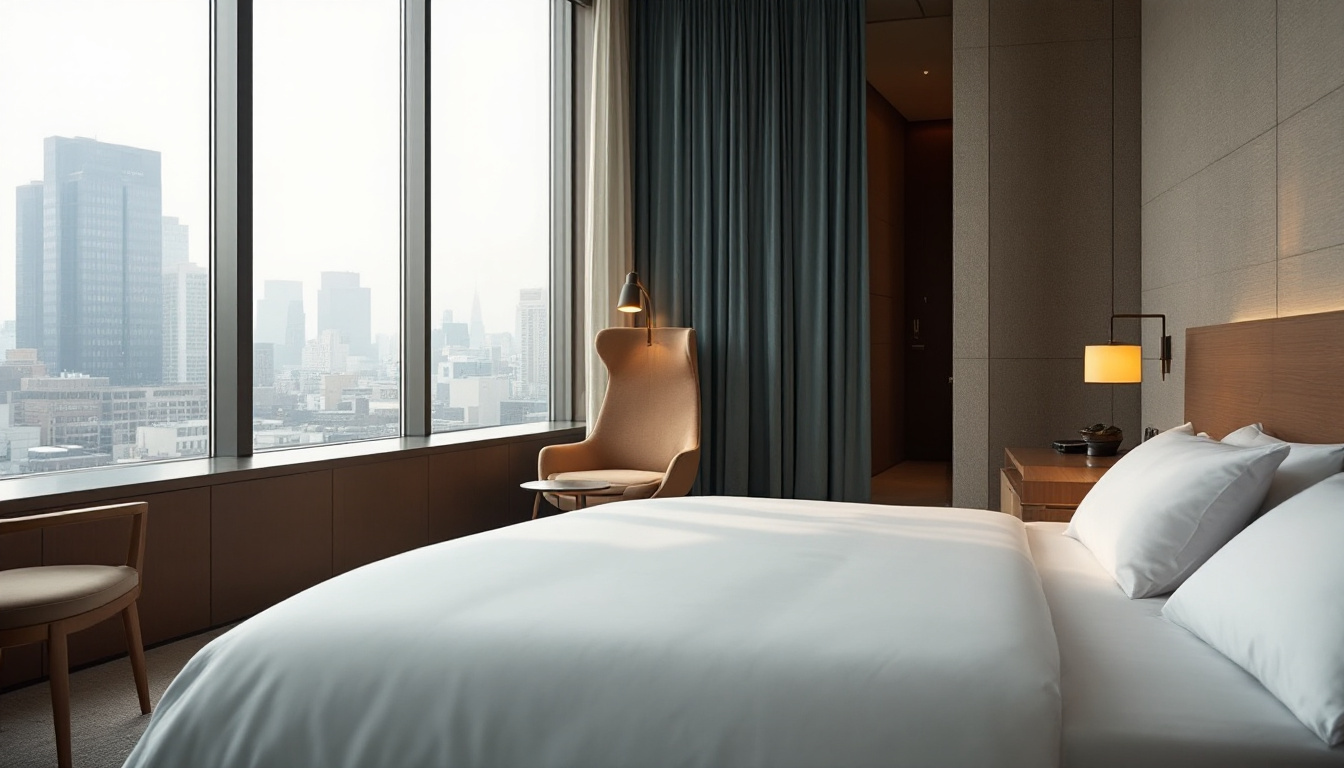
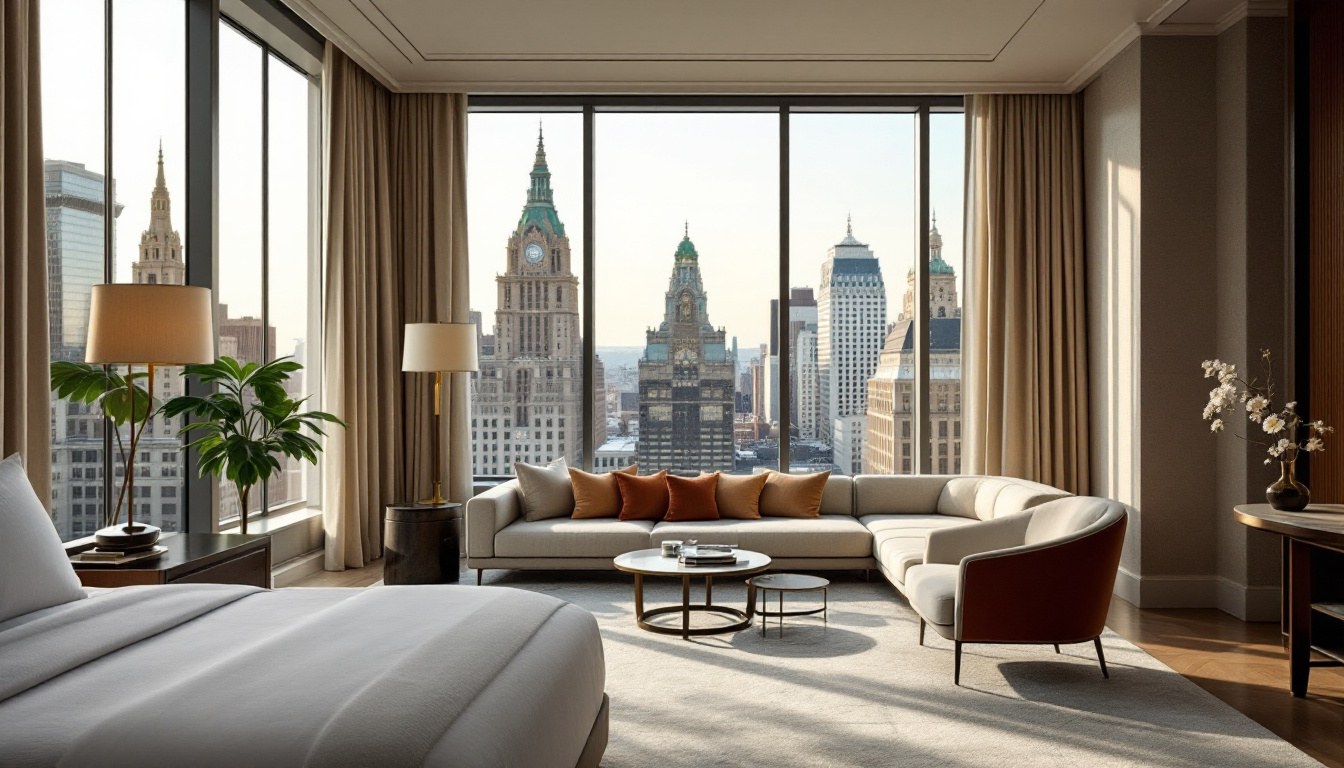
I stayed in a one-bedroom suite designed by Tristan Auer, on the third floor with a view across the inner courtyard to the Rue Royale. The room ran to roughly seventy square metres with a sitting room, bedroom, deep marble bath and a dressing room. Auer’s register is contemporary-classical — eighteenth-century proportions, mid-century furniture references, a colour palette of deep blue and warm cream, with brushed bronze on the fittings and white Carrara on the bath surfaces. The detailing is unusually serious; the cornices, the joinery, the door hardware are all the kind of work that costs a meaningful multiple of the standard hotel-fit-out budget.
The bed is the deepest I sleep in when I am in Paris. The bath is the kind of bath you draw, fill, and stay in for an hour. The dressing room runs the length of a corridor between the bedroom and the bath, with the kind of joinery you would specify in a residence. The acoustic performance, despite the address — Place de la Concorde is not a quiet plaza — is genuinely excellent. I did not hear the traffic.
The technology is restrained. The room phone is the discreet kind. The Wi-Fi is fast. The minibar is in a tall mahogany cabinet. There is a tablet by the bed for the room controls, but the lighting design is good enough that the controls are largely unnecessary.
L’Écrin
The principal dining room, L’Écrin, was a Michelin-starred destination under chef Boris Campanella through the early years of the renovation and has, more recently, recalibrated to a more accessible contemporary-French register under a new kitchen team. The room is the principal eighteenth-century salon of the building — high ceilings, original mouldings, a deep blue colour palette and crystal chandeliers — and the dining-room scale is the formal Parisian register that the address requires.
The cooking, in the current calibration, is precise and ingredient-led without straining for novelty. The wine list is unusually deep in Bordeaux and Champagne, which is the right register for the room. The cheese trolley is the version that justifies the work. The pastry programme at the end of dinner is among the better hotel pastry programmes in the city.
Brasserie d’Aumont, the more casual room off the courtyard, runs the all-day programme. The breakfast is the meal to optimise around — the French breakfast set, with the laminated dough on the croissant rather than next to it, is the version the city requires. Le Bar du Crillon runs the cocktail programme; the room is intimate, lit by candles, and the bar manager has assembled a programme built around French botanicals and the classical methods.
The Spa
The Sense Spa runs across the lower ground floor with a pool, hammam, sauna and a series of treatment rooms. The pool is small but properly executed — heated, well-lit, set into a vaulted room with the original stonework restored. The treatments are the conventional Rosewood register and the execution is excellent. The post-treatment lounge has the long pause the city requires.
The gym is small but well-equipped; if you train seriously, plan to use the gym at the Ritz or the George V, both of which are within walking distance.
What Did Not Work
A few small things. The arrival can be compressed — Place de la Concorde is one of the most heavily trafficked public spaces in Paris, the porte-cochère is set into the original façade and is not large, and the first ten minutes of a check-in at peak times can lack the choreography the address deserves. The breakfast room books out on weekends; reserve in advance.
The rates are at the top of the Paris market. The entry room in high season is north of €1,800 a night, and the suites scale steeply from there. The Lagerfeld suites rent at the kind of multiple that the artistic provenance commands. The shoulder seasons — late November, early February — are meaningfully better on both rate and the experience of the city.
How It Sits
Paris has a small group of grand-palace hotels: the Ritz, the George V, the Bristol, the Plaza Athénée, the Meurice, and the Crillon. The choice between them is, in some sense, the choice of which Paris you want to be inside. The Ritz is the Place Vendôme, the jewellery quarter and the literary tradition. The George V is the Champs-Élysées and the eighth arrondissement. The Bristol is the Faubourg Saint-Honoré and the gastronomic tradition. The Plaza Athénée is the avenue Montaigne and the fashion houses. The Meurice is the Tuileries and the contemporary-art tradition. The Crillon is the Place de la Concorde and the eighteenth-century-French tradition.
The choice, for me, comes down to the address. The Place de la Concorde is one of the great public spaces in Europe, and the experience of walking out the door of your hotel into it, twice a day, every day of a stay, is a particular Parisian pleasure that no other hotel in the city quite delivers. The Crillon is the hotel for the guest who wants exactly that.
What I Would Book
A one-bedroom suite designed by Auer or Asmar d’Amman, ideally on the third floor facing the courtyard, for four nights in late winter. Breakfast in the brasserie. Dinner at L’Écrin on the first night, lunch at Le Bristol on the second, dinner at Le Comptoir du Relais on the third. A long evening walk through the Tuileries to the Louvre after dark. A morning at the Musée d’Orsay. The train to London on a Sunday afternoon.
The Crillon is, eight years after the Rosewood reopening, the most coherent version of itself it has been in its century-plus of operation.
Verification
Filed against the following sources, last verified on March 12, 2026. The desk re-checks the source URLs on every dated modification of the piece.
- https://hoteldesigns.net/industry-news/introducing-hotel-de-crillon-a-rosewood-property/
- https://www.rosewoodhotels.com/en/media/press/2017/hotel-de-crillon-a-rosewood-hotel-re-opens-its-iconic-doors
- https://www.hospitalitynet.org/announcement/41000392.html
- https://www.sleepermagazine.com/stories/projects/hotel-de-crillon-reopens/
- https://en.wikipedia.org/wiki/H%C3%B4tel_de_Crillon
Standing Questions
- When did the current iteration of Hôtel de Crillon open?
- The hotel reopened in 2017 after a four-year restoration that ran from 2013 to 2017. The Place de la Concorde building has been a hotel since 1909.
- Who led the restoration?
- Architect Richard Martinet led the architectural restoration, including the landmark façade and the heritage-listed reception rooms. Lebanese designer Aline Asmar d'Amman (Culture in Architecture) served as artistic director, with four Paris-based designers — Tristan Auer, Chahan Minassian, Cyril Vergniol and Asmar d'Amman herself — handling individual room sets.
- What did Karl Lagerfeld design?
- Two signature suites on the Place de la Concorde, together called Les Grands Appartements, which were Lagerfeld's translation of his eighteenth-century-French sensibility into a contemporary hotel context. The suites have been preserved as Lagerfeld designed them since his death in 2019.
- How many keys does it have?
- 78 rooms, 36 suites and 10 signature suites — 124 in total, a notable reduction from the pre-renovation count to accommodate larger room footprints.
- Where exactly is it?
- 10 Place de la Concorde, on the north side of the square, between the Hôtel de la Marine and the entrance to the Rue Royale. The address is one of the four classified Paris palaces on the square.