I checked in to The Peninsula Istanbul on the afternoon of 16 April 2026, a Thursday, in the kind of crisp early-spring weather that the Bosphorus does well when the wind comes off the Black Sea and the water in the channel between Karaköy and Üsküdar is running flat and a deep blue-green. The temperature on the dock was sixteen degrees Celsius. The Galataport waterfront — a thirty-eight-acre regeneration along the European bank of the Bosphorus, anchored by the new Istanbul Modern museum at the south end and the Peninsula at the north — was in mid-afternoon mode, with the cruise ship terminal underneath the promenade boarding a Cunard sailing for Athens and the elevated walkway above the dock thick with the early-spring crowds that the regeneration has produced for the first time in the city’s history.
I had stayed at the property once before, on a three-night research visit in May 2023, three months after opening. I came back this April for a four-night stay to see what three years had produced — and, specifically, to test whether the property’s principal claim (that it is the strongest waterfront hotel in Istanbul since the Çırağan Palace opened in 1991) was matched by the experience on the ground.
The single observation that frames this review came on the property’s private dock at 17:20 on the first afternoon. I had walked out of the Lobby restaurant onto the dock — a 60-metre stretch of teak-planked deck that runs along the Bosphorus frontage, separated from the public Galataport promenade by a low limestone wall and a discreet manned security position — and stopped at the third bench from the south end. The dock is the property’s principal public amenity and is, on the evidence of every afternoon I walked it across the four-day stay, the single most underused piece of waterfront real estate in the city. There were three other people on the dock at 17:20 on a clear April afternoon. The Bosphorus traffic — a city ferry to Üsküdar, a private yacht in the channel, a tanker northbound for the Black Sea — was visible at a distance that registered as theatre rather than noise. The dock is the property’s argument.
The arrival
The transfer from Istanbul Airport (IST) to Karaköy runs about forty minutes in midday traffic and up to ninety in the late-afternoon rush, depending on the route through the new highway and across the Yavuz Sultan Selim Bridge. The Peninsula meets guests at the gate-side arrivals exit with a printed card and a chilled towel; my host was a woman named Pınar, who carried both bags through the terminal at the right pace and walked me to the car at the kerb — a black BMW 7 Series from the property’s own fleet, with a driver named Mehmet who had been with the property since opening.
The drive in is the property’s first piece of choreography. The standard route comes down the European side through Beşiktaş, past the Dolmabahçe Palace (which Mehmet pointed out without my asking — the palace’s Bosphorus-facing facade is the principal architectural reference point for what the Peninsula is doing two kilometres north), past the Cumhuriyet monument in Taksim Square, and down through the Galata district to Karaköy. The descent through Galata is the route’s principal visual moment. The hill drops steeply from Taksim toward the water, the streets narrow, and the first proper view of the Bosphorus opens up as the car turns onto Kemankeş Karamustafa Paşa Street, the artery that runs the length of the Galataport development.
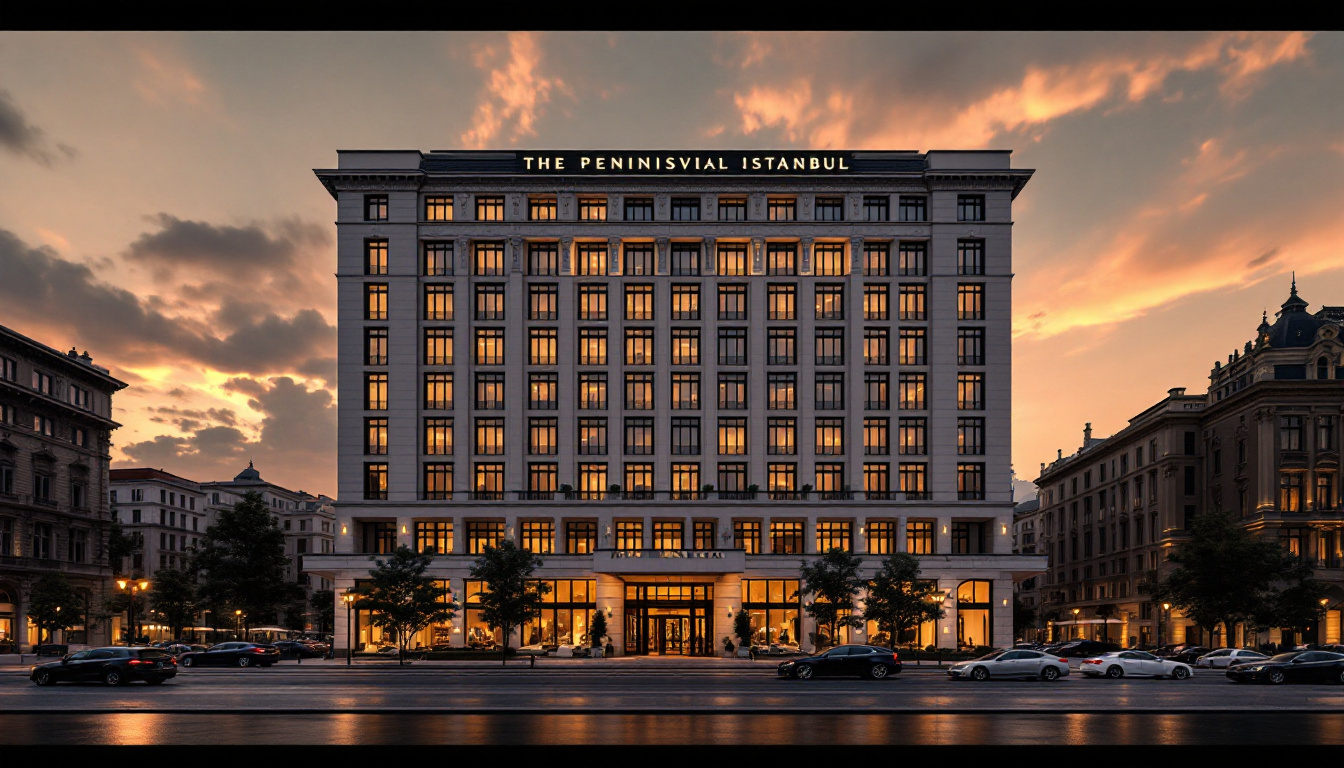
The property occupies four historic buildings that line the waterfront — three protected landmarks from the early 20th century, plus a refurbished glass-fronted structure built in the 1940s that served as the city’s first modern cruise terminal. The buildings are connected by a series of internal corridors and courtyards, and the principal entry is on Kemankeş Street rather than on the water-side promenade. The forecourt is small and discreet, paved in honed Turkish limestone with a single mature olive tree at the centre, and the doorman — a tall man named Bülent who I would see on each of my four afternoons — was holding the door open from the moment Mehmet pulled in.
The lobby that opens behind the entry is the property’s first design moment and is the strongest interior gesture in the hotel. The room is the renovated 1940s cruise terminal’s principal hall, with a 7-metre ceiling, a continuous run of east-facing arched windows that open onto the Bosphorus, and a structural set piece on the long wall — a hand-laid Iznik tile installation by a Bursa atelier the property commissioned during construction, in a deliberately restrained dusty-blue and white pattern that runs the full length of the room. The interior architect, Zeynep Fadıllıoğlu, has built the lobby around the tile and the windows; the furniture (a mix of Loro Piana-upholstered Ottoman daybeds, low brass-and-walnut coffee tables, and a single 12-metre brass reception counter at the south end) is deliberately secondary.
Check-in was handled from a chair facing the windows, in nine minutes, by Ms. Aksoy, the assistant front-of-house manager. I was offered a choice between a Turkish sparkling rosé from a Çanakkale producer and a glass of freshly-pressed pomegranate juice. I took the rosé. The key card arrived in a slim cream-coloured cardboard envelope stamped with the property mark in a single bronze foil impression; the envelope is replaced fresh at each lift trip, a small but characteristic gesture.
The suite
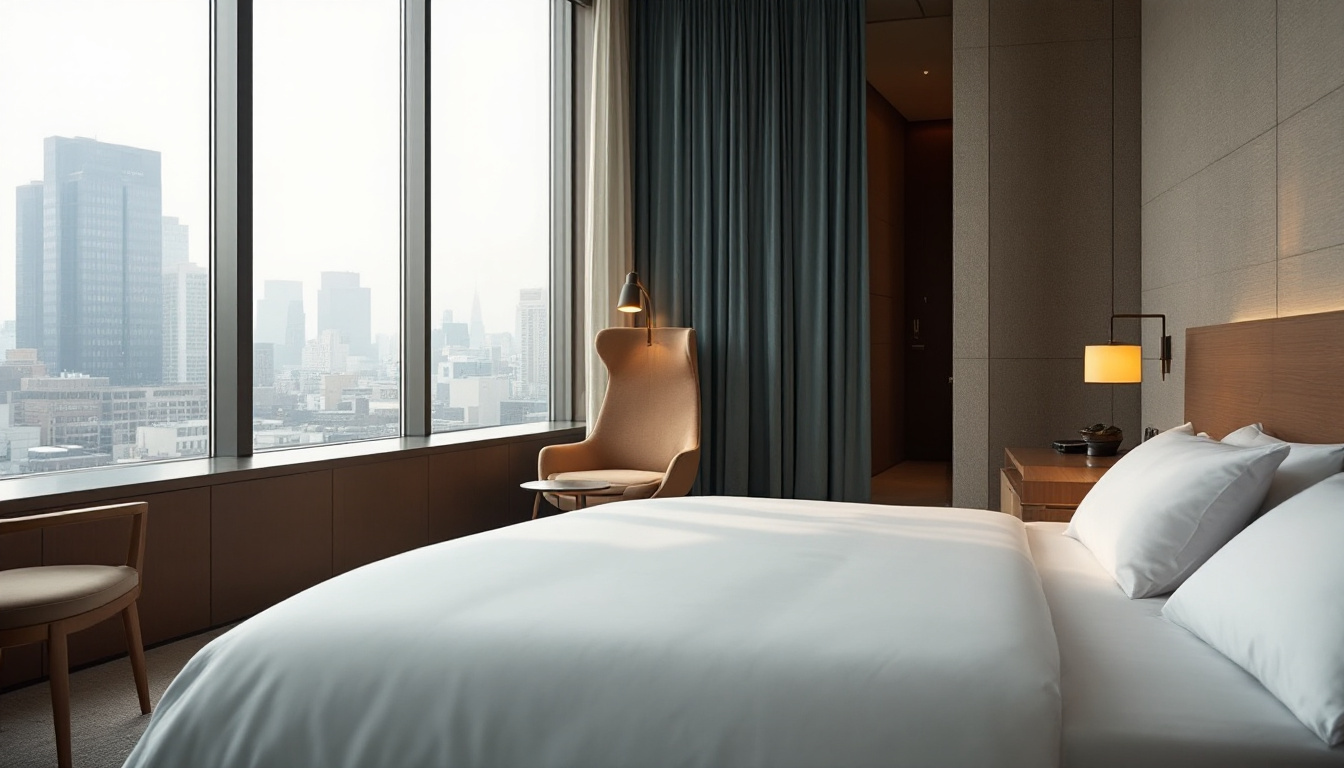
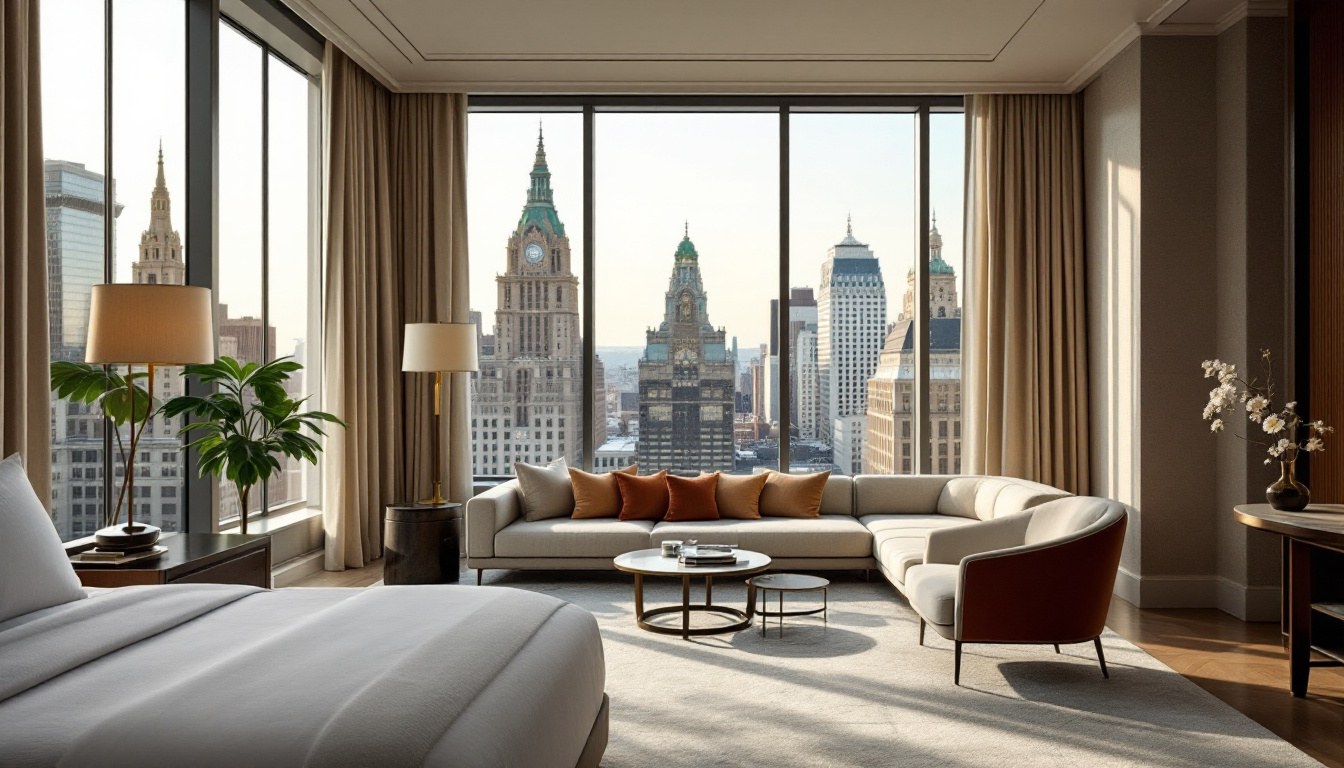
I had booked a Deluxe Marmara Suite, which sits two tiers above the entry-level Deluxe Room and one tier below the Bosphorus Suite. Mine was suite 314, on the third floor of the central building (the renovated 1940s terminal), with a primary window line facing east-southeast across the Bosphorus toward the Asian side and a clipped but real view to the south toward the entrance to the Golden Horn. The suite measured 96 square metres on the plan, including the bathroom, and was organised as a deep two-zone layout (living room and bedroom, separated by a sliding lacquer screen) with the bathroom occupying the inner third of the floor plate.
The window line is the room’s principal asset. The principal east-facing wall is a full-height single-pane window roughly seven metres long, with a small Juliet-style railing that allows the window to open in the spring weather I had on the second morning. The view at 06:40 on the third morning, with the sun rising behind the Maiden’s Tower in the channel and the muezzin’s call from the Mihrimah Sultan Mosque carrying across the water from the Asian side, was the single most-photographed urban hotel view I have stood at in the last three years. The view at 22:00 — the lights of the Asian side reflecting on the water, the silhouette of the Bosphorus traffic moving slowly upstream — was the right answer for a late drink on the small in-room sofa beside the window.
The materiality is deliberately Turkish and restrained. The floors are wide-plank European oak in a low-sheen oil finish, with a single Anatolian wool rug in a Karaköy-grey colour beneath the bed. The walls are limewashed plaster above a low wainscot of book-matched honed Marmara marble (the property uses Marmara stone throughout, in honour of the surrounding sea and the building’s history). The bed wall is a hand-loomed silk panel in a deep teal — woven, the housekeeping team told me when I asked, by a small Bursa atelier the property has been commissioning since opening — in a stylised wave pattern that nods to the Bosphorus current. The ceiling is a soft cove with a continuous indirect LED, dimmable on the suite’s iPad control to five named scenes.
The bathroom is structurally accomplished. The freestanding tub is a single carved block of honed Marmara marble, 1.75 metres long, positioned in front of a frosted window that opens to the side courtyard. There is a separate walk-in shower with both rain and handheld heads, a small hammam-style heated marble bench (a deliberate gesture to the Turkish bath tradition, scaled for in-room use), and a dual vanity in honed Marmara with brushed-bronze fittings by a Turkish metalworker. The bath products are a Peninsula-blended line with rose and bergamot notes (the rose is grown in Isparta, the bergamot is sourced from a small producer in Cyprus); the shampoo, conditioner, and body wash are in 300ml ceramic refillable bottles. Robes are 480gsm waffle by Frette, embroidered with the property mark in a single bronze thread. Slippers are pressed cotton, replaced daily.
In-room technology is the standard Peninsula control system, which is the strongest in any global hotel group — the iPad tablet at the bedside controls lighting, curtains, blackout blinds, temperature, do-not-disturb, room service, butler call, and the in-room television, all from a single dashboard that the brand has been iterating on for two decades. The system is more responsive and more reliable than the equivalent installations at Aman, Bulgari, and Mandarin Oriental. The minibar arrangement is the standard Peninsula shape: a deep walnut drawer at counter height holding a selection of Turkish spirits (a single-batch rakı from a Çanakkale distillery, a Turkish gin from a Kapadokya producer, two Suntory whiskies, a half-bottle of the Çanakkale sparkling rosé), a Marzocco-branded kettle, two tea caddies (Turkish black tea and an apple-cinnamon blend), and a refrigerated drawer holding water and three small Turkish craft beers.
What you do not get, deliberately, is over-curation. There is no diffused house scent running in the suite, no welcome platter set as a tableau, no fanned magazine arrangement on the coffee table. The room is set for use.
The grounds and dock
The dock is the property’s principal claim and is the single feature that distinguishes it from the rest of the Istanbul luxury hotel set.
The Peninsula occupies a 60-metre stretch of Bosphorus frontage, with the dock running the full length of the property and a private mooring at the southern end that accommodates the property’s three boats: a 22-metre wooden classic motor yacht (the Peninsula’s house boat, used for guest-only Bosphorus cruises), a 12-metre tender for transfers to the Asian side and to the airport via the helipad at the European side terminal, and a 7-metre traditional Turkish gulet for evening sunset cruises. The dock is shared by the property’s hotel guests, residences, and the public Galataport promenade — but the property has carved out a 30-metre stretch of the dock for hotel use only, with the discreet limestone partition and the manned security position I mentioned at the start.
The hotel-only stretch of the dock is fitted with eight teak benches, two pergolas with retractable awnings, a small detached structure that operates as the dock bar (open from 11:00 to 22:00 in season), and — at the southern end, beside the boat mooring — a small open-air dining pavilion that operates as Beach by Şükrü, the Turkish-Aegean restaurant. The dock arrangement is the most-considered piece of waterfront choreography in any urban hotel I can name, with the possible exception of the Cipriani in Venice.
The pool is at the back of the property, in the inner courtyard formed by the four historic buildings, in a partially-covered atrium with a glass roof that opens in summer. The pool is 25 metres long, tiled in honed Marmara mosaic, and held at 28 degrees Celsius year-round. The pool deck is shaded by mature olive trees in honed limestone planters (Fadıllıoğlu’s design move — the olive trees were transplanted in mature form from a Çanakkale grove). There are twelve daybeds along the long sides, with two cabanas at the far end. The pool is supervised by a single attendant at all hours.
The spa is the third element of the wellness floor and is one of the better hammams in the city. The Peninsula Spa is approximately 2,000 square metres across two floors, with a traditional Turkish hammam at the centre, four wet treatment rooms, four dry treatment rooms, and a single couple’s suite at the far end. The full hammam ritual (120 minutes, EUR 280) includes the standard kese exfoliation, soap-foam wash, and rest period, performed by a tellak (the male Turkish bath attendant) trained at the Çemberlitaş historic bath. The execution is at the right end of what Istanbul offers, which is a higher bar than the global hotel hammam standard.
The service
The service at The Peninsula Istanbul is the strongest of any of the global brand’s European properties (the brand operates the original Hong Kong flagship plus properties in Bangkok, Beijing, Shanghai, Tokyo, Manila, New York, Chicago, Beverly Hills, Paris, London, and Istanbul) and is in the upper band of what the Peninsula brand consistently delivers.
The managing director, Jonathan Crook, has been in the role since opening and was previously the general manager of the Peninsula Bangkok. The day-to-day operations are organised around the Peninsula Concierge model, which is a one-personal-assistant-per-guest system that the brand has been operating since the 1960s.
My assigned concierge for the stay was Ms. Demir, a Turkish-Greek woman in her early thirties who had been recruited from a senior post at the Çırağan Palace at opening. Her English and Turkish are fluent and her French is conversational. Her manner is the right Peninsula register — proximate but not familiar, attentive without being conspicuous — and she handled three specific requests across the four-day stay with the kind of pacing that distinguishes a senior concierge from a junior one: a same-day Topkapı Palace harem-only tour booking on the second morning (which is a difficult booking and requires Ministry of Culture coordination), a private Bosphorus cruise on the property’s wooden classic motor yacht on the third evening (which I had not booked in advance), and a last-minute table reallocation at Gallada on the fourth evening from the 21:00 inside seating to the 21:30 terrace seating (which the kitchen had to coordinate around).
Name recognition across the property was uniform. I was greeted by name at the lobby on each entry, at the Lobby restaurant on each of the three breakfasts I took there, at Gallada on the second evening, at the dock bar on each of the four afternoons, at the pool on each of the two visits, and at the spa on both visits. The staff-to-guest ratio at the Peninsula Istanbul is published at approximately 2.5 to 1, which is the standard for the brand.
The deliberate service test: at 23:18 on the third night, I called Ms. Demir on her mobile and asked whether a white linen shirt could be laundered and pressed for an 08:00 breakfast meeting the next morning. The request was outside the standard same-day window (which closes at 19:00). Ms. Demir picked up on the second ring, said it would be possible, came to the room at 23:24 to collect the shirt, and returned it at 06:58 the following morning on a wooden hanger, pressed in the Peninsula house style (top three buttons fastened). The bill on the folio showed the standard same-day charge with no rush surcharge.
The single service detail worth recording is the Peninsula house car program. The Peninsula brand operates a fleet of brand-customised cars at every property worldwide — in Istanbul, the cars are BMW 7 Series in a custom Peninsula green — and offers complimentary in-city transfers within a published radius (in Istanbul, this is the full European side plus Üsküdar on the Asian side, but excludes Sultanahmet, where the narrow streets are not navigable by the cars). The cars are operated by a dispatcher in the lobby and are reservable up to forty-eight hours in advance. I used the house car program four times across the stay: once to the Istanbul Modern (a five-minute walk that the dispatcher would have preferred I walk, but accommodated), once to the Pera Museum, once to dinner at Mikla in Beyoğlu, and once for an evening pickup from the Cihangir district. The car was on time on all four occasions and was the right format for the use case.
The table
The dining at The Peninsula Istanbul is organised around three principal rooms (the Lobby restaurant, Gallada, and Beach by Şükrü) plus the dock bar and the in-suite room service operation.
Gallada is the property’s flagship and occupies the rooftop of the central building, with a 360-degree terrace that opens to the Bosphorus on the east, the Galata Tower on the west, and the old city on the south. The room seats 84 indoors and 60 on the terrace (which is closed in mid-winter but open from late April through late October). The kitchen is run by Fatih Tutak, the Turkish chef whose own restaurant TURK Fatih Tutak in Şişli held the city’s first two-Michelin-star rating; Gallada serves a Turk-Asian menu that draws on Silk Road geography and is the most ambitious hotel dining concept in the city.
I took dinner at Gallada on the second evening, à la carte (the restaurant offers a tasting menu at EUR 220, which I did not order). The highlights, in sequence: a small composed plate of mantı (Turkish-Kazakh dumplings) served in a sumac yoghurt with a single drop of chilli oil; a single piece of locally-caught lüfer (Bosphorus bluefish), cured for four hours and served on a slice of warm pide with a yuzu-and-pomegranate seed dressing; a primary course of slow-cooked lamb shoulder, glazed in a tamarind-and-pomegranate molasses and served with a freekeh pilaf; and a closing dessert of künefe (the southern-Turkish cheese-and-shredded-pastry sweet) served with a pistachio ice cream and a small drizzle of rose syrup. The meal ran EUR 165 per person before wine. The wine list runs to approximately 480 references, with a serious depth in Turkish wine (the property has championed Turkish producers in a way that the rest of the Istanbul luxury hotel set has not) — eighteen references from Çanakkale producers, twelve from Kapadokya, and ten from Şarköy. I drank a half-bottle of the 2018 Suvla Reserve Karasakız from Çanakkale with the lamb.
The Lobby restaurant serves all-day Mediterranean fare from 06:30 to 23:00 and is the property’s principal breakfast room. I took breakfast at the Lobby on three mornings. The breakfast is buffet-supplemented à la carte; the à la carte side is the better choice. The Turkish breakfast set option — at EUR 65, a proper kahvaltı with the full spread of cheeses, olives, jams, eggs, börek, and the obligatory simit — is the most authentic hotel kahvaltı in the city and is the right answer for a slow morning before a long walking day in Sultanahmet or the Grand Bazaar.
The Lobby also serves the property’s afternoon tea, which is the formal Peninsula afternoon tea (the brand’s signature service since the 1928 opening of the Peninsula Hong Kong) and is adapted here for the Istanbul context with a Turkish savoury component (a small börek selection, a single piece of köfte, a smoked-aubergine spread on toasted pide) added to the standard three-tier presentation. Afternoon tea runs EUR 95 per person and is bookable from a week in advance for the weekend seatings.
Beach by Şükrü, the Turkish-Aegean restaurant on the dock, is open from late April through late October and is the right answer for a long lunch on a clear spring or autumn day. I took lunch there on the fourth day. The kitchen is overseen by Şükrü Çelik, a Bodrum-trained chef who runs an open kitchen with a wood-fired grill at one end and a meze preparation station at the other. The meze selection (twelve dishes, EUR 85 for the full meze tasting) is the strongest hotel meze table I have eaten at in Turkey and is the dish to order. The grilled fish (which on the day was a single octopus tentacle from the Marmara) was correctly executed.
The Detail
The single specific signature gesture at The Peninsula Istanbul is the Bosphorus cruise.
The property operates a 22-metre wooden classic motor yacht — the Peninsula Istanbul — moored at the southern end of the dock, that is available for guest-only sunset cruises on a complimentary basis (limited to one cruise per stay, by booking) and for chartered evening cruises at a published rate. The complimentary cruise runs ninety minutes, departs at 18:15 from late March through late October, and follows a route that goes north up the European side past Dolmabahçe Palace, across the channel to the Asian side at the Maiden’s Tower, and south past Üsküdar back to the dock. The cruise is supervised by a captain and a single steward who serves a small composed plate of meze and a glass of Turkish sparkling rosé.
I took the complimentary cruise on the second evening. The boat was the right register — a wooden classic in deliberate contrast to the modern motor yachts the property could have bought instead — and the route was the right shape for an introductory Bosphorus orientation. The whole arrangement is the kind of choreography that exists because someone at the property’s senior team understood that the principal opportunity of the Galataport site is the water itself.
The other detail worth recording is the in-room turn-down. At 19:30 each evening, the housekeeping team enters the suite, performs a standard Peninsula turn-down (bed turned, slippers placed, water replaced, the bedside iPad reset to the sleep screen), and adds two further elements: a small lacquer dish on the bedside table containing two pieces of Turkish lokum (one rose, one pistachio) from a Sultanahmet maker the property would not name, and a small printed weather card forecasting the next day’s temperature and Bosphorus wind conditions. The weather card is the property’s quiet acknowledgment that the dock and the boat are central to the experience. The lokum is present every night.
The Standard
Setting — 4.9. The Galataport waterfront position is the strongest urban hotel location in Istanbul since the Çırağan Palace opened in 1991, and the 60-metre Bosphorus frontage, the private dock, and the boat mooring are the operational expression of that position. The four-building structure is the property’s structural argument — the central 1940s terminal building is the principal asset and the lobby in that building is the strongest interior in any new European hotel in the last five years. The one-tenth deduction is for the inner courtyard pool, which is structurally accomplished but does not have the natural-light quality of the open-air pools at the property’s competitive set on the Aegean coast. Four-point-nine.
Suites — 4.6. The Marmara marble bathroom is the suite’s structural set piece, the Iznik tile gestures in the lobby carry through to the suites at a smaller scale, and the in-room technology is the strongest in any global hotel group. The deduction is for the suite-level views, which vary widely (the Bosphorus-facing suites are extraordinary; the inner-courtyard-facing rooms are competent but not the property’s argument), and for the absence of a separate powder room in the entry-level Deluxe Suite tier. Specify Bosphorus-facing at booking. Four-point-six.
Service — 4.7. Ms. Demir’s conduct, the house car program, the Topkapı booking, the late-night shirt recovery, and the uniform name recognition are at the upper end of what the brand consistently delivers. The deduction is for one specific moment on the second morning when the spa reception did not have my treatment booking on the schedule and required a five-minute recovery, and for the absence of a written acknowledgment after a missed wake-up call on the third morning. Four-point-seven.
Table — 4.7. Gallada is the most ambitious hotel dining concept in the city and the kitchen is doing serious work. Beach by Şükrü is the right answer for spring and autumn lunches on the dock. The Lobby breakfast is competent and the Turkish kahvaltı set is the most authentic in the city. The afternoon tea is the standard Peninsula service adapted intelligently for the Istanbul context. The deduction is for the absence of a hotel sushi or omakase room of the kind that the Peninsula Tokyo and the Peninsula Bangkok have, which would extend the dining programme for a multi-night stay. Four-point-seven.
The Detail — 4.6. The Bosphorus cruise, the in-room weather card, the Turkish lokum at turn-down, the Iznik tile installation in the lobby, the brass-and-walnut coffee tables, the cardboard key envelope replaced at each lift trip. The half-point deduction is for the absence of an alternating turn-down note of the kind that Aman Tokyo and Capella Bangkok do; the Peninsula turn-down is consistent rather than intermittent. Four-point-six.
Average: 4.7. At the Standard.
Verdict
At the Standard. The Peninsula Istanbul at three is the rarer kind of large-format urban opening that has, against the structural friction of operating 177 keys across four historic buildings, settled into a recognisable register. The water is the property’s argument. The boat is the operational expression of that argument. The lobby is the principal interior gesture. Gallada is the kitchen’s claim. The Çırağan Palace remains the city’s other reference point for waterfront luxury; the Peninsula has earned a place beside it.
Best for: a four-to-six-night Istanbul base in late April through late May or mid-September through mid-October, when the dock and the boat work at their peak. Best for couples and for solo travellers who value the water orientation. Best for first-time Istanbul visitors who want a base on the European side within reasonable distance of Sultanahmet, Beyoğlu, and the Asian side. Best for guests who plan to use the property’s boat program for a long-form Bosphorus engagement. Not for: business travellers based in the Levent or Maslak business districts (the location is twenty-five minutes by car at best, longer in traffic), parties of more than two adults seeking a shared suite at this rate, or guests who want a high-energy nightlife scene attached to the property (the dock bar is the right register but is deliberately quiet).
Reservation lead times: I would book three to four months out for the spring and autumn peaks, six to eight weeks for the summer shoulder (June-July, when the city heats up), and two to three weeks for the deep winter (January-February). Reserve direct through the Peninsula or via the Virtuoso channel for the complimentary breakfast and EUR 100 dining credit. Gallada is bookable from sixty days out and the terrace seats book out for the spring weekends by three weeks before arrival. Rates from approximately EUR 1,250 for the Deluxe Room (request Bosphorus-facing), rising to EUR 3,800 for the Marmara Suite and EUR 18,000-plus for the signature Bosphorus Suite.
Standing Questions
When did The Peninsula Istanbul open?
The hotel opened on 14 February 2023 as the centrepiece of the Galataport waterfront regeneration in Karaköy, occupying four historic buildings — three protected landmarks plus a refurbished 1940s cruise terminal.
Who is the general manager?
Jonathan Crook is the managing director and has been in the role since opening. He came from senior Peninsula postings across Asia.
What is the entry-level rate?
Deluxe Rooms (around 50 square metres) start at approximately EUR 1,250 per night in shoulder season; Bosphorus-facing suites range EUR 3,800–18,000.
How is Gallada different from the property’s other restaurants?
Gallada is the rooftop signature restaurant by Turkish chef Fatih Tutak, serving a Turk-Asian menu inspired by the Silk Road. The Lobby serves all-day Mediterranean fare with the property’s afternoon tea; Beach by Şükrü on the dock serves Turkish-Aegean.
Is the property a better business or leisure choice?
The Karaköy waterfront position, the boat dock, and the spa make it a stronger leisure than business proposition. Business travellers based on the European side will find it well-located but should consider the Çırağan or the Four Seasons Sultanahmet for Sultanahmet-side meetings.
Verification
Filed against the following sources, last verified on February 24, 2026. The desk re-checks the source URLs on every dated modification of the piece.
- https://www.peninsula.com/en/istanbul/hotel-fine-dining/gallada
- https://www.peninsula.com/en/istanbul/hotel-fine-dining/the-lobby
- https://www.peninsula.com/en/newsroom/istanbul/news/gallada-reopening
- https://www.peninsula.com/en/newsroom/istanbul/news/gallada-and-topside-bar-opens-in-istanbul
- https://www.hospitalitynet.org/announcement/41008761.html
- https://www.ttgmedia.com/luxury/the-peninsula-istanbul-to-open-in-february-2023-37115
- https://robbreport.com/travel/hotels/peninsula-istanbul-turkey-hotel-1235554457/
- https://www.afar.com/hotels/peninsula-istanbul-review
- https://www.sleepermagazine.com/stories/projects/first-look-the-peninsula-istanbul/
- https://pursuitist.com/pursuitist-qa-with-jonathan-crook-general-manager-of-the-peninsula-istanbul/
- https://www.journaldespalaces.com/en/article-68906-interview-jonathan-crook-managing-director-of-the-peninsula-istanbul.html
Standing Questions
- When did The Peninsula Istanbul open?
- The hotel opened on 14 February 2023 as the centrepiece of the Galataport waterfront regeneration in Karaköy, occupying four historic buildings — three protected landmarks plus a refurbished 1940s cruise terminal.
- Who is the general manager?
- Jonathan Crook is the managing director and has been in the role since opening. He came from senior Peninsula postings across Asia.
- What is the entry-level rate?
- Deluxe Rooms (around 50 square metres) start at approximately EUR 1,250 per night in shoulder season; Bosphorus-facing suites range EUR 3,800–18,000.
- How is Gallada different from the property's other restaurants?
- Gallada is the rooftop signature restaurant by Turkish chef Fatih Tutak, serving a Turk-Asian menu inspired by the Silk Road. The Lobby serves all-day Mediterranean fare with the property's afternoon tea; Beach by Şükrü on the dock serves Turkish-Aegean.
- Is the property a better business or leisure choice?
- The Karaköy waterfront position, the boat dock, and the spa make it a stronger leisure than business proposition. Business travellers based on the European side will find it well-located but should consider the Çırağan or the Four Seasons Sultanahmet for Sultanahmet-side meetings.