São Paulo does not announce its hotels the way Rio does its beaches; the city makes you go and look. The taxi from Guarulhos runs roughly forty minutes in light traffic and an hour and a half in the wrong slot, and the address — Cidade Matarazzo, in the Jardins district — is one of those São Paulo addresses that does not give itself away from the street. You turn off Alameda Rocha Azevedo, the gate opens, and you are inside the most ambitious piece of urban regeneration the city has executed in this century.
The Site
The Matarazzo family built the maternity hospital on this site in 1944, when the family was the largest industrial conglomerate in Brazil and the matriarch — Filomena Matarazzo — wanted a clinic for the women of the household and the families of the workforce. The complex closed in 1993, sat empty for a decade and a half, and was acquired in the late 2000s by the French entrepreneur Alexandre Allard, who has spent most of the past fifteen years assembling the team to convert the buildings into Cidade Matarazzo.
The brief was unusual. The original maternity, designed in a stripped-classical idiom that reads as broadly Mediterranean, had to be preserved — it is a listed heritage building. A new tower had to deliver the scale the project required for financial viability. The whole had to feel like a contemporary cultural address rather than a hotel-shaped extraction from a historic site. Allard’s solution was to commission Jean Nouvel for the tower, Philippe Starck for the interiors, and a programme of contemporary art commissions that runs through the complex.
The Tower
Jean Nouvel’s Mata Atlantica Tower is the structural centre of the project, and it is genuinely unlike any other hotel building I have walked through. The plan is twenty-five storeys, stepping inward as it rises, so that the upper floors recede and the lower floors throw out the deep balconies that the building’s name advertises. The façade is wrapped in wooden lattices — vertical timber slats, set away from the glass — and the lattices are planted with species drawn from the Mata Atlantica rainforest, the threatened biome that historically covered this part of Brazil.
The planting is not decorative. The Cidade Matarazzo project has run a parallel biodiversity programme — collecting seeds, propagating native species, repopulating fauna where viable — and the tower’s façade is, in effect, a vertical garden inside the urban fabric. The leaves move in the wind. The light through the lattice changes the room temperature visibly across a day. From the upper floors you look down into a hotel that the city has, in places, mistaken for a forest.
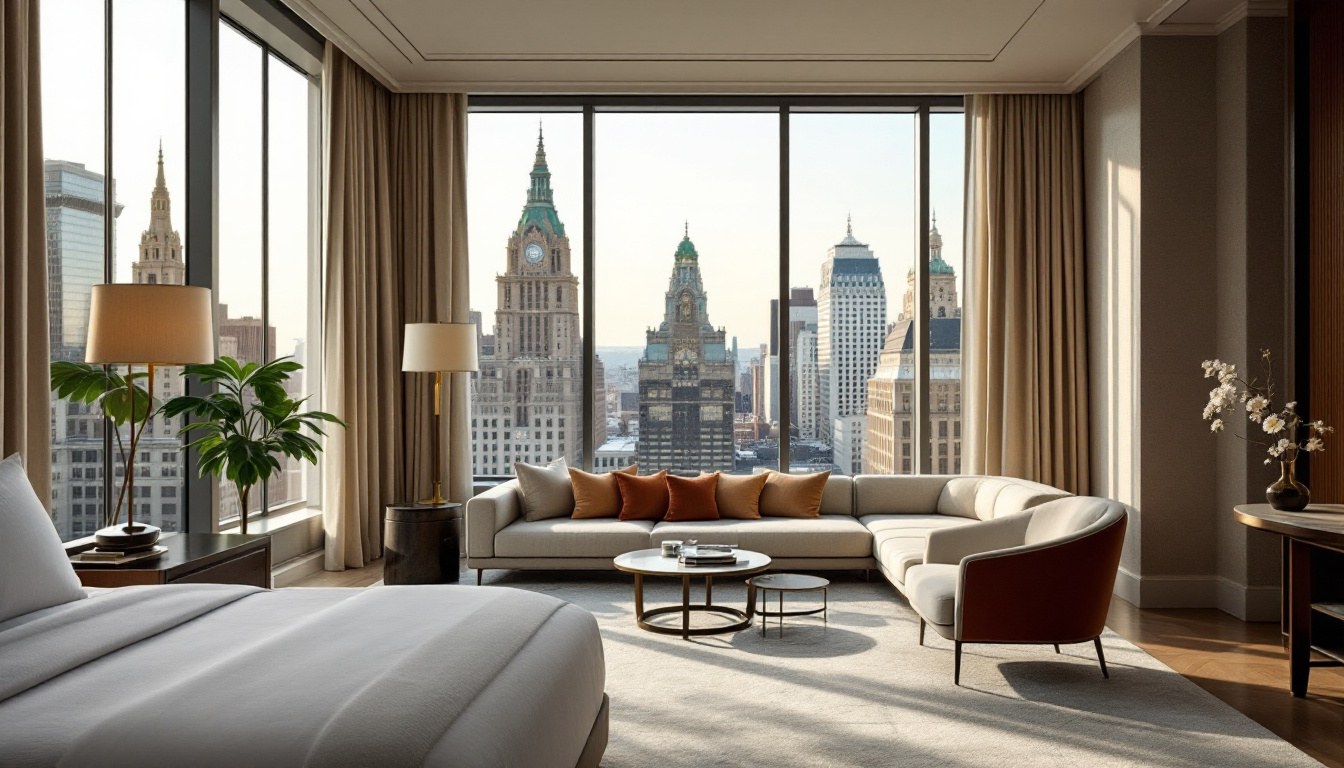
I had a room on the seventeenth floor, looking south across the Jardins. The balcony was deep enough — perhaps three metres — to function as an outdoor room, with planting on both sides and a small dining table set against the rail. The morning view is the canopy of Jardim Paulista; the evening view is the city lit. There is no other hotel in São Paulo that gives you this experience.
Starck’s Interiors
Philippe Starck served as artistic director, which is a more involved role than the title sometimes implies. The interiors are unified across the public rooms, the guest rooms and the residences, and the unifying gesture is the material specification: every wood, marble, tile and textile in the property is Brazilian-sourced. The hardwoods are jatobá, ipê and the various rosewoods; the marbles come from Espírito Santo and Bahia; the textiles are woven by a co-operative of artisans in the northeast.
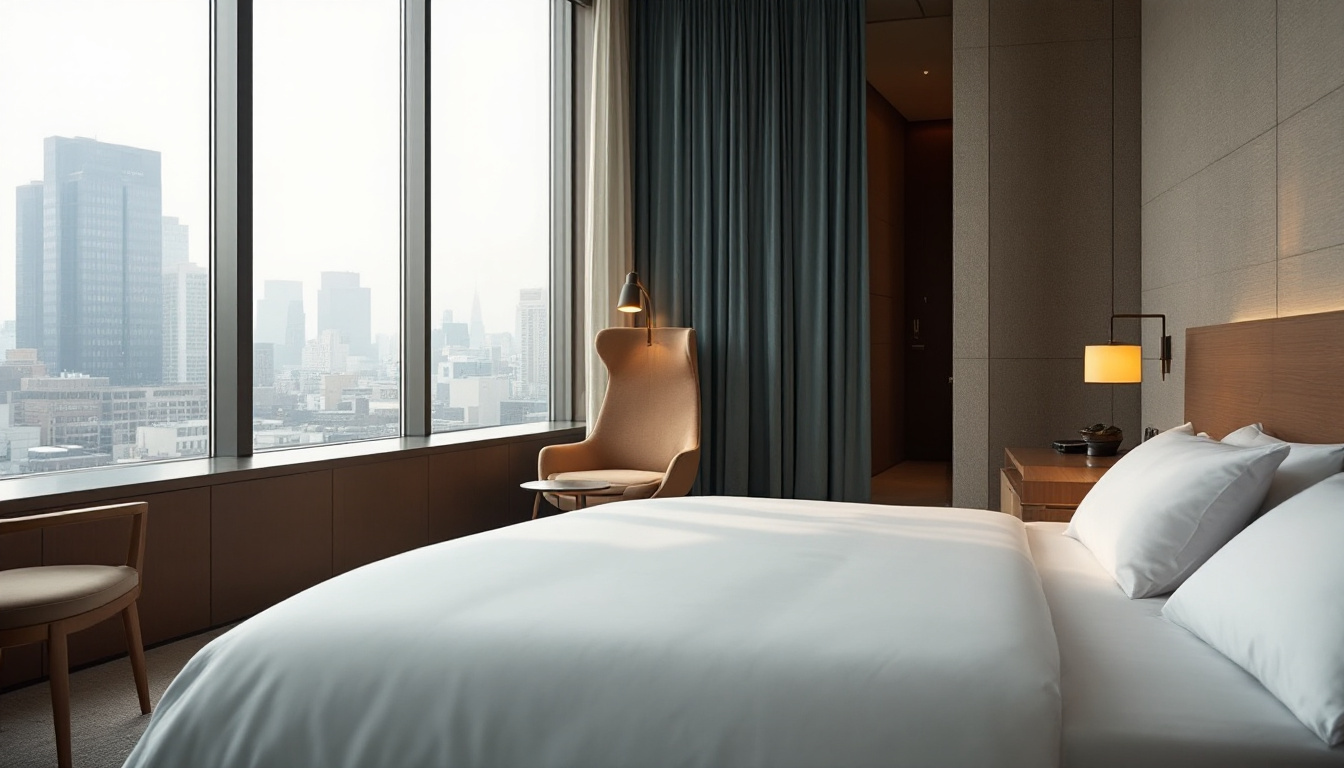
The room itself reads as confident rather than fashion-led. The floor is dark Brazilian hardwood, the bed wall is upholstered in a heavy linen the colour of unbleached cotton, the bath is a single block of pink granite quarried in the interior. The colour palette is muted earth, the lighting is warm, and the joinery is heavy. Starck’s signature flourishes — the eccentric objects, the contrarian moments — are present but restrained. The room reads first as a São Paulo apartment, then as a hotel room, which is the correct order.
The closet detailing is unusually serious; the bath has a separate water closet with a window; the desk is positioned facing into the room rather than against a wall. These are residential conventions, not hotel conventions, and they are correct.
The Art
The art programme is the second reason to come. The cultural foundation runs through the converted maternity and into the public rooms of the hotel; the commissions are by significant contemporary artists — Anselm Kiefer, Vik Muniz, Henrique Oliveira among others — and they are installed at scale rather than as wall decoration. The Kiefer commission, a vast lead and ash work, occupies a chapel space inside the old maternity. The Oliveira commission, a tree-root assemblage that runs across two storeys, sits in the lobby of the tower. You can spend a productive afternoon in the property without leaving the building, which is not something I say often.
The Food
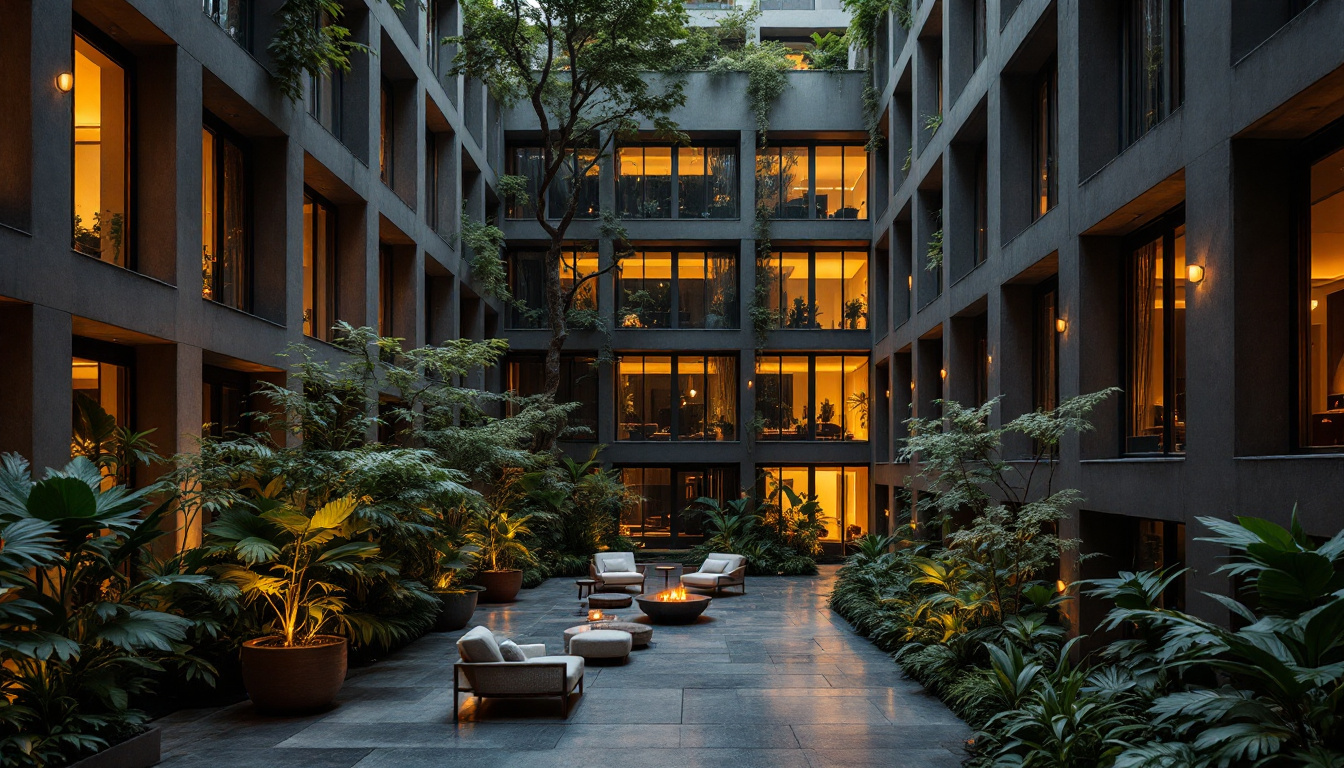
The headline restaurant is Le Jardin, on the ground floor, run by a kitchen that splits its register between a French formal lunch and a Brazilian-tropical dinner. The room is, in good weather, partially open to a courtyard with the same Mata Atlantica planting as the tower façade. The cooking is excellent without being adventurous; the wine list is unusually deep in Brazilian sparkling and Brazilian Vale dos Vinhedos still wines, which is a useful corrective to the conventional French-Italian default in this part of the world.
The rooftop bar — Rabo di Galo, on the top of the tower — is the social moment of the property. The view runs the length of the Avenida Paulista corridor and across the city to the Serra da Cantareira on a clear evening. The cocktail programme is built around cachaça and Brazilian botanicals; the by-the-glass list is short and well-chosen. Book a table by the window; the queue without a booking is real.
The Spa
The spa runs across the lower floors of the old maternity, in rooms that were originally the operating theatres. The conversion is handled with discretion — the high ceilings and the original tile have been preserved, the equipment is concealed in the millwork, and the treatment rooms are sized to a register that is closer to a residential bath than a hotel spa. The signature treatment is a long massage built around hot stones from the Bahian coast; I had the version with the herbal compress and emerged genuinely sedated.
The pool is a single long lap pool, lit from below, with the surrounding deck planted in the same native species as the tower façade. Swimming in the morning, before the city wakes up, is the recovery move I would optimise around if I were staying multiple nights.
What Did Not Work
São Paulo is a hard city to get around. The hotel sits inside a walled compound, which is correct given the security context of the city but which makes the building feel more isolated than the address actually is. Walking out to Jardim Paulista is genuinely possible and worth doing, but most guests will use the cars; budget for that.
The food and beverage programme has had turnover. The opening team has rotated, the restaurant concepts have been calibrated more than once, and on my third visit I was eating a different menu in the rooftop bar than I had eaten on my second. The current rotation is the strongest I have seen, but if you are reading this twelve months from publication, confirm the kitchen with the concierge before you book a long dinner.
The residences component shares circulation with the hotel in a small number of places, and the operating team is still working out the protocols. None of this affects the room experience.
What I Would Book
A high-floor balcony room for three nights, Wednesday to Saturday. A long Friday lunch at D.O.M. across town to anchor the trip. A Saturday morning at the art museum on Avenida Paulista. Dinner at A Casa do Porco the same night. Two long mornings on the hotel balcony with strong coffee and the canopy. The flight home on the Sunday redeye.
São Paulo did not have a hotel of this register before Rosewood opened, and the opening has shifted the city’s place in the South American luxury market. It is now, with confidence, the strongest hotel address in Brazil.
Verification
Filed against the following sources, last verified on February 15, 2026. The desk re-checks the source URLs on every dated modification of the piece.
- https://www.starck.com/cidade-matarazzo-rosewood-sao-paulo-p2494
- https://www.dezeen.com/2024/11/15/jean-nouvel-philippe-starck-rosewood-sao-paulo-hotel/
- https://www.jeannouvel.com/en/projects/torre-rosewood/
- https://galeriemagazine.com/hotel-of-the-week-rosewood-sao-paulo/
- https://archello.com/project/rosewood-sao-paulo-tower
Standing Questions
- When did Rosewood São Paulo open?
- The hotel opened in 2022 inside the restored Matarazzo Maternity complex and the adjoining Mata Atlantica Tower.
- Who designed the buildings?
- Pritzker Prize-winning architect Jean Nouvel designed the 25-storey vertical-garden tower; Philippe Starck served as artistic director responsible for the interiors throughout.
- How many rooms are there?
- The property has 160 hotel rooms and suites, plus 100 private Rosewood Suites available for residential purchase.
- What is Cidade Matarazzo?
- A mixed-use urban regeneration project on the site of the former Matarazzo Maternity hospital in Jardins, including the hotel, a cultural foundation, retail and dining.
- How does it sit in São Paulo's hotel market?
- Above the Tivoli Mofarrej and the Fasano Jardins in scale and ambition. The strongest opening São Paulo has had in a generation.