The Cessna Caravan dropped onto the Sasakwa airstrip at 14:42 on 11 March 2026, a single bounce on a graded-earth runway laid along the spine of the escarpment, and when the propellor wound down the only sound left was wind moving through the acacia. An open Land Rover Defender — 110-series, the long-wheelbase, in the matte stone-grey Singita has used since the early 2000s — was parked twenty metres off the strip with its bonnet pointed back toward the lodge road. The tracker at the wheel introduced himself as Mara Mtui, said he had been at Sasakwa for nine seasons, and put my single duffel onto the rear bench without ceremony. The smell on the air was the safari smell every East Africa hand will recognise instantly: dust raised by a recent vehicle, dry grass, the faint pepper of leleshwa, and somewhere underneath it the green note of acacia gum.
I came to Sasakwa to test a single thesis. Singita is the only operator left in East Africa committed to the Edwardian-lodge conceit at full conviction — the brass-fitted bathrooms, the polished mahogany, the four-poster beds dressed in mosquito netting, the cellar tucked into the hillside — and most of its competition has moved decisively the other way, toward tented camps and engineered restraint, on the assumption that the Edwardian register has aged into kitsch. The thesis I came to test is whether Singita has aged with it, or whether the lodge still earns its own architecture. The short answer, which I will spend the rest of this piece justifying, is that it does, and the reason it does is not the buildings.
The arrival
The transit chain runs Kilimanjaro International (JRO) → Arusha → Sasakwa, with the second leg flown by Auric Air on a Cessna 208B Grand Caravan that boards at the small-aircraft terminal on the western edge of Arusha airfield. My flight cleared Arusha at 13:35 and ran 67 minutes to Sasakwa with one routing detour around a build-up of afternoon weather over the Loliondo plain. The Singita team had emailed the day before to flag that ground transfer from the Sasakwa airstrip to the lodge would take 40 minutes; in fact it took 51, because we stopped twice — once for a journey of giraffe ambling across the road in no hurry whatsoever, and once because Mara had spotted lion tracks crossing east-to-west, fresh, three hours old at most, and he wanted to radio them in.
This is the first observation of consequence. The drive from the airstrip is not a transfer. It is the opening act of the safari, and Singita treats it as such — Mara was already in tracking posture before we had cleared the runway, the radio was already live, the .375 H&H rifle was already racked behind the driver’s seat. The transition from passenger to guest does not happen at the lodge gate. It happens the moment your foot touches the ground at the airstrip.
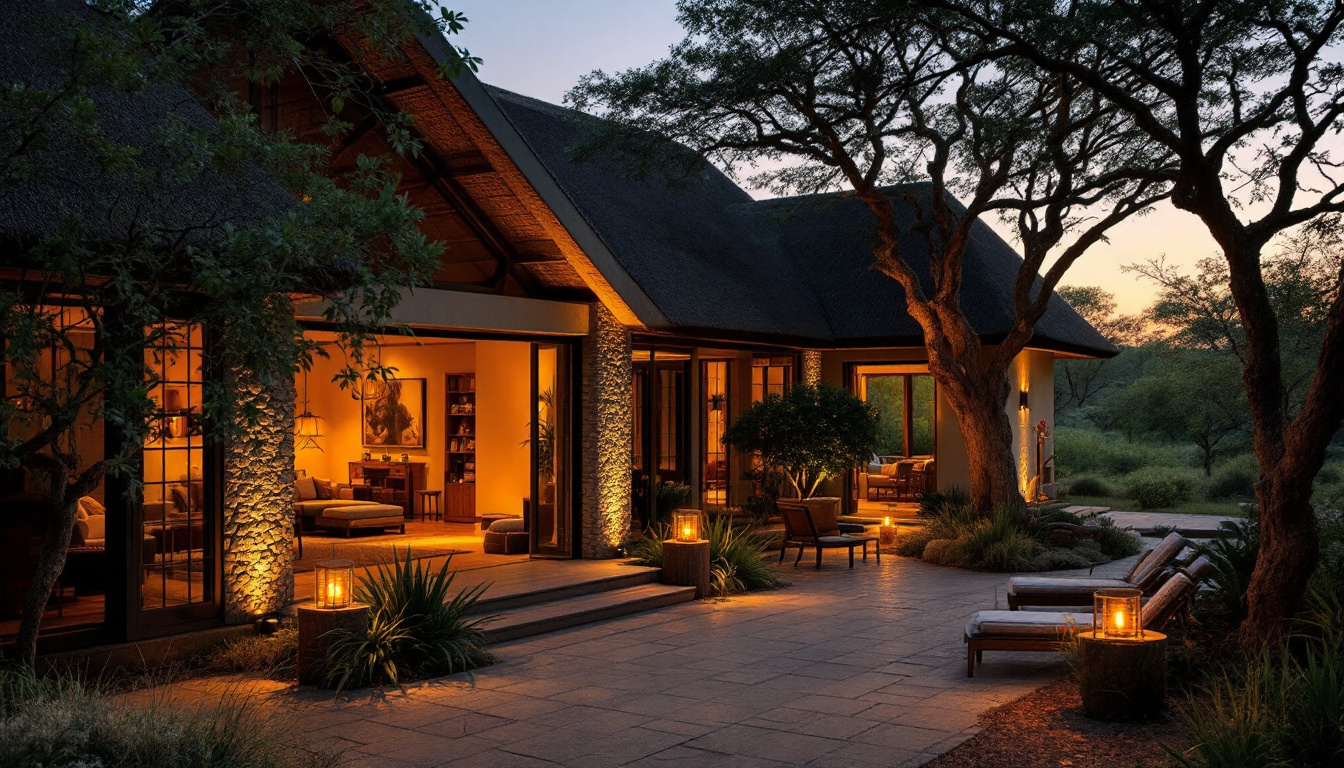
The lodge sits on the crest of Sasakwa Hill, 1,820 metres above sea level, with the Grumeti plain falling away to the north and west for what looks, from the main lawn, like the entire horizon. The buildings appear in the road before you have time to register them: a manor house in dressed local stone, twin wings, a portico, the kind of two-storey colonial silhouette that would not be entirely out of place above a lake in the Scottish Highlands. The conceit is announced without irony. You either accept it or you turn around.
The welcome was on the lawn. Hugh Marshall was waiting at the top of the stone steps in a pressed bush shirt and a tie I did not at first believe was real (it was — a green-and-gold regimental stripe, the King’s African Rifles, which Marshall told me later, when I asked, had belonged to his grandfather). The lodge manager, a Tanzanian woman named Grace Ngowi, walked beside him with a clipboard she never once consulted. Tea was offered on the verandah; I asked for water instead and was handed a glass within ninety seconds, chilled but not iced, with a thin slice of cucumber. The first sundowner — gin, Indian tonic, juniper, a sprig of African basil grown in the kitchen garden — was delivered to me on the western lawn at 18:14, with the sun ten minutes off the horizon and a herd of impala on the slope below moving in the long shadow of the manor house. I had been on the property forty-three minutes.
The suite
I was assigned Cottage 4, the fourth of ten and the northernmost on the ridge — meaning the cottage with the longest, cleanest view down the line of the escarpment, no other roofline interrupting the eye between the verandah rail and the Mara River, sixty kilometres off. The walk from the manor house to the cottage door is 380 metres along a hand-laid stone path edged with night-flowering jasmine and lit, after dark, by oil lanterns at four-metre intervals — never electric path lights, which is a small thing and not a small thing at the same time.
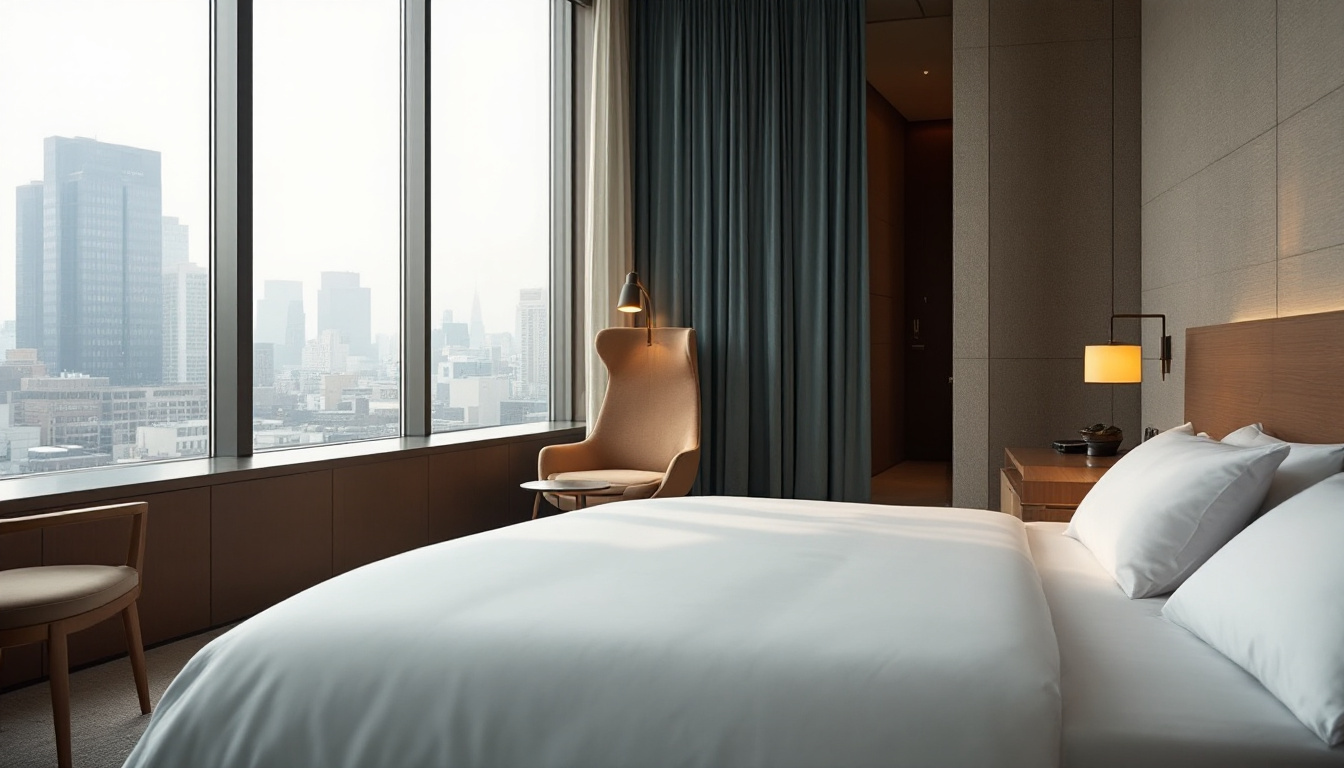
The cottage is 248 square metres, a stand-alone structure of dressed stone and thatch under a steep pitched roof, with a verandah running the full width of the western face and a private plunge pool — 8 metres by 2.4 metres, salt-treated, heated to 28°C — set into the lawn beyond. The interior is the work of Cécile & Boyd of Cape Town, who have done every Singita property since the original Ebony Lodge and whose vocabulary at Sasakwa is the lodge’s most consequential design decision. The room is committed Edwardian without being precious about it. The bed is a full four-poster in dark stained mahogany, dressed in a Frette linen weight I would estimate at 600-thread Egyptian cotton, with a separate mosquito netting structure suspended from a brass ring above the canopy that lowers on a cord and weight system. There is no plastic in the bedroom. The light switches are brass toggle, the kind that travel from the off position to the on position with a satisfying mechanical click; the lamps are bronze, with paper shades; the floor is wide-plank dark wood, oiled rather than varnished, with a single zebra hide laid at the foot of the bed.
The fireplace is the room’s anchor. It is a working stone hearth, six feet wide, with a cast-iron firedog set, and on the night I arrived the butler — a man named Emmanuel Massawe, who introduced himself in the cottage at 17:55 with a small leather portfolio listing the activities I had pre-booked — had laid a fire that he lit when I returned from dinner at 22:10. The wood is fever tree and leadwood from felled deadfall on the concession. The smell is unmistakable and quite difficult to forget afterwards.
The bathroom is the room’s most theatrical gesture. It runs the full depth of the cottage’s eastern wing: a freestanding copper bath at the centre, claw-footed, deep enough that the water comes to mid-chest on a six-foot adult; twin brass-fitted basins on a slab of black granite; a separate shower in floor-to-ceiling glass that looks out, through a screened wall, onto a small private garden of aloe and frangipani. The fittings throughout are unlacquered brass, which means they will age and tarnish, which is the point — the lodge has chosen patina over polish, and the brass on the older cottages (4 included) has the warm brown bloom of two decades of use. Bath amenities are Africology, the South African botanical line, which is the standard Singita house specification and a defensible one — they are not Aesop, not Diptyque, not anything you would find in a hotel bathroom in Paris, and that is precisely why they belong here.
The verandah is where the cottage actually lives. It runs 14 metres along the western face, deep enough at three metres to accommodate a daybed, two armchairs, a writing desk and a small dining table for two, all in stained teak. The roof overhang is heavy enough to make the verandah usable during the short rains. Beyond the verandah rail, the plunge pool; beyond the pool, the unbroken slope of the escarpment falling away into the plain. At 06:00 on the morning of 12 March, with a thermos of coffee Emmanuel had left on the writing desk at 05:45, I watched a herd of seventeen elephant move along the salt pan at the base of the hill, and I cannot in good conscience put a price on the experience, but the rate sheet does, so I will: USD 4,800 per person per night, fully inclusive, was the figure on my booking. I have stayed in hotels at three times the per-night cost that have not delivered an equivalent fifteen minutes.
The service
Singita’s brand promise — and the reason a serious safari traveller will pay the Singita rate over a comparable Wilderness, andBeyond or Asilia rate — rests almost entirely on the service. The architecture is a wager; the food is good and inconsistent; the concession is genuine and rare. But the service is the load-bearing wall of the entire proposition, and at Sasakwa in March 2026 it was the most disciplined service operation I have observed at any safari lodge in East Africa.
Hugh Marshall has been at Sasakwa since 2022, having moved across from Singita Kruger after eleven years there. He is in his mid-forties, Cape Town-raised, the son of a wine farmer in Elgin, and his register with guests is the register Singita has trained into its general managers across the group: present without hovering, conversant on the wine list and the wildlife and the politics of the concession in roughly equal measure, and entirely unafraid to say “I don’t know, let me find out.” He checked in with me personally three times across four nights — once at the welcome, once at the boma dinner on night two, and once unannounced at the cottage verandah on the morning of day three, when he sat for eleven minutes with a coffee and asked the only question that mattered: was there anything that wasn’t working.
There was, in fact, one thing that wasn’t working, and the recovery is worth describing in detail because it is the test moment of this review. On the afternoon of day two, after the morning drive, I had requested a specific bottle of wine for that evening — a Mullineux Old Vines White 2022, which I had noticed on the cellar list at dinner the night before. At 17:45, Emmanuel returned to the cottage to tell me, with audible regret, that the cellar had recorded a single remaining bottle of the 2022 in the inventory but had not been able to physically locate it; would I accept either the 2021 or a different white altogether. I said the 2021 would be fine. At 19:20, walking into dinner, I was met at the door by the head sommelier, a young Zimbabwean named Tendai, who explained that the 2022 had in fact been found — it had been moved during a cellar rotation the previous week and mis-shelved — and that it would be served at my table. The bottle arrived at 19:34. At no point in the evening did Marshall or Grace reference the episode unprompted. The next morning, however, a hand-written note on the breakfast tray from Marshall read, in full: “Apologies for the cellar confusion last night. The mis-shelving has been corrected and the wine team have been spoken to. HM.”
The note is the detail that distinguishes Sasakwa from the operations I would rank just below it. The recovery itself — finding the bottle, serving it — is the minimum a lodge at this rate is expected to perform. The written acknowledgement the next morning, unprompted, from the general manager, with the operational consequence (“the wine team have been spoken to”) spelled out — that is the Singita differential, and I have seen it nowhere else in the African market at this consistency.
The game-drive logistics are the other place the service shows its discipline. The dawn drive departs at 06:00 with a 04:30 wake-up; the wake-up is a knock on the cottage door followed by a tray of coffee and a single rusk left on the verandah table. By 05:45 the boots I had left outside the cottage door the night before — a pair of well-worn Le Chameaus, in for a clean — had been polished and returned, dry, with the leather conditioned. The Land Rover, parked at the cottage at 05:55, had blankets warmed by hot-water bottles tucked into the footwells of each seat, a thermos of coffee in the door pocket, and a small wicker basket of fruit and biltong on the passenger bench. Breakfast on the savanna — the tailgate breakfast that is the dawn drive’s punctuation — was set up at 08:30 on the morning of day two on the bank of a seasonal drainage line about 14 kilometres south of the lodge: a folded white linen cloth on the Land Rover’s lowered tailgate, a single-burner gas hob for fresh eggs cooked to order, a tin of fresh-baked muffins, a press of coffee, and two crystal flutes of Pol Roger NV chilled in a small zinc bucket of river ice. The setup took the tracker and the guide four minutes from a cold start. I timed it.
The table
The kitchen at Sasakwa is run by Chef Patience Mhlanga, who came across to Singita from the kitchen at Birkenhead House in Hermanus in 2024 and who is — and I will come back to this — the single area of the operation where Sasakwa scores meaningfully below its own ceiling. Mhlanga is a talented cook. The dinner service is consistently good. The boma night on day two was, in the way these things are when the staff genuinely commit to them, genuinely excellent. But the kitchen does not yet match the bar set by the rest of the lodge, and the breakfast spread is the place this shows.
The boma dinner on the night of 12 March was the operational set piece. Boma is the Swahili word for an enclosed compound, and at Sasakwa the boma is a circular reed-walled space twenty metres below the manor house, with a fire pit at its centre, a long banquet table for sixteen, lanterns hung from a single iron ring overhead, and an open-fire grill operated by two cooks in chef whites. The menu was a five-course tasting: a chilled cucumber and dill soup as the amuse; a tartare of fresh Mara tilapia with green mango, lime and coriander; a wood-grilled springbok loin with a smoked maize purée and pickled chanterelles; a goat-milk panna cotta with grilled stone fruit; petits fours and a small cup of espresso. The springbok was the dish of the evening — the loin had been brined for six hours, grilled over leadwood coals, and rested under a damp cloth before being sliced to the table. It was a serious piece of cooking. The Maasai choir entered after the panna cotta, twelve men in shuka robes, and sang for eleven minutes; the performance was committed and unembarrassing, neither tourist-spectacle nor token gesture, and the lead singer — a man named Lemayian from the village of Robanda, twenty-two kilometres west of the lodge — sat down with us afterward for coffee and spoke at length about the community trust’s school programme.
The cellar is the table’s secondary statement. Singita keeps an actual climate-controlled cellar at Sasakwa — not a glass-fronted display case, an actual stone-walled cellar set into the eastern slope of the hill, accessed through a small door off the dining room’s antechamber, with about 2,800 bottles in active inventory and a further 25,000 across the group’s network. The list at Sasakwa runs heavy on South African whites and reds (the Cape — Sadie, Mullineux, Boekenhoutskloof, Hamilton Russell — is the cellar’s centre of gravity), with a credible Bordeaux page, a thin but well-chosen Burgundy page, and a Champagne selection that runs from Pol Roger NV to a 2008 Krug Clos d’Ambonnay. The cellar tasting on the afternoon of day three was conducted by Tendai with no script and no upsell. It was the best wine education I have had at a lodge anywhere.
The breakfast spread, however, is the weak point. The buffet on the lodge’s east verandah at 09:30 each morning included the expected components — a fruit station, a yoghurt bar, a charcuterie selection, a pastry tray, hot eggs to order — and all of it was competent and none of it was memorable. The pastries were Singita’s standard group-trained product (decent, not French); the fruit was excellent because Tanzania grows excellent fruit; the eggs station ran without delay. But a serious comparison would put the breakfast spread at Asilia’s Sayari Camp, or at Wilderness’s Bisate in Rwanda, or at the small kitchen at Tortilis Camp in Amboseli, ahead of Sasakwa’s, in inventiveness if not in execution. The 4.5 on Table reflects this single weakness; without it the score would be 4.8.
The Detail
The Detail is the dimension of the Standard hardest to fake. It is the un-asked-for, the un-prompted, the texture of the operation when no one is watching. Sasakwa scores 4.7 here, and the score belongs to a single nightly ritual: the gin trolley.
At 18:30 each evening, with the sun forty minutes off the horizon and the cottage verandah holding the last warm light, Emmanuel rolled a wheeled brass-and-mahogany trolley along the stone path to the cottage door, parked it at the verandah rail, and stood beside it in the bush-shirt-and-shorts evening kit while I selected the night’s gin. The trolley carried six bottles — a Tanqueray No. Ten, a Monkey 47, a Hendrick’s, a local Tanzanian Konyagi-distilled small-batch gin called Mawe, a Procera African Juniper from the Kenyan distillery in Nairobi, and a single bottle of Plymouth Navy Strength — and a tray of botanicals laid out in small porcelain bowls: pink peppercorn, cardamom, juniper berries, dried hibiscus, a slice of orange peel cured in the kitchen, a sprig of African basil, a thin coin of cucumber. Emmanuel asked which gin and then which two botanicals. He poured the measure (50 ml, slightly more than the British standard) into a heavy crystal coupe, dropped the botanicals, added Fever-Tree Indian tonic from a chilled 200 ml bottle, and finished with a single block of clear ice cut to fit. The drink took ninety seconds to make. It cost USD 0 because the rate is inclusive. Across four nights I worked through the trolley methodically — the Procera with cardamom and orange peel on night one, the Mawe with hibiscus and basil on night two, the Monkey 47 with pink peppercorn and cucumber on night three, and a return to the Procera on night four because it was the best of the six.
The trolley is the lodge’s signature small gesture, and it is exactly the right kind of small gesture for a property at this rate. It is not a turn-down chocolate. It is not a printed weather card. It is a five-minute ritual, repeated nightly, that asks the guest to pay attention and gives the guest a small choice. That is what The Detail is supposed to be.
The other detail worth noting briefly: the Singita Grumeti Fund operates an anti-poaching unit on the concession that includes a canine team (Belgian Malinois, three handlers, two dogs in March 2026), and guests can — on request, and with no pressure — join a morning patrol with the unit’s commander. I did, on the morning of day four, and walked five kilometres along a snare-line transect with a ranger named Joseph and one of the dogs. We found no snares. The walk was the most affecting hour of the trip, and I will not write more about it because the unit’s operational details are not mine to publish.
The Standard
| Dimension | Score | Note |
|---|---|---|
| Setting | 5.0 | The 350,000-acre Grumeti concession, the Sasakwa Hill site, the unbroken western horizon. Among the rarest assets in East African safari. |
| Suites | 4.8 | The Edwardian conceit fully committed and fully justified. Patina over polish. The 0.2 is the bathroom plumbing in the older cottages, which is showing its age. |
| Service | 5.0 | The most disciplined service operation I have observed at a safari lodge in East Africa. The cellar recovery and the next-morning note are the test moment. |
| Table | 4.5 | The dinner service is consistently good; the boma night is excellent; the cellar is the strongest single asset. The breakfast spread is the weak point. |
| The Detail | 4.7 | The gin trolley. The fire laid and lit while you are at dinner. The boots polished overnight. The unprompted GM check-in on day three. |
| Property score | 4.8 | At the Standard. |
The 5.0 on Service requires a written justification, since I do not award full fives on this dimension casually. The justification is this: in four nights on the property I observed two operational errors (the wine mis-shelving on night two; a fifteen-minute delay in the afternoon tea service on day three), and both were caught by the staff before I had cause to raise them, recovered without fuss, and acknowledged the next day at the GM level. The staff-to-guest ratio at Sasakwa is, by Marshall’s count, 16 to 1; the name-recognition discipline (every staff member I encountered, from the gardener to the head sommelier, addressed me by name from the second day forward) is the kind of operational habit that is taught and drilled, not improvised. I have seen this kind of consistency at Cap Juluca in Anguilla, at the Singita sister lodges I have visited (Faru Faru and Castleton), and at one ryokan in Hakone. I have not seen it at any other safari operation in East Africa.
Verdict
Sasakwa is At the Standard, at 4.8, and the property is — as of March 2026 — the best safari lodge experience available in Tanzania at any price. The Singita Privé layer (the group’s loyalty programme, which kicks in after a guest’s first three properties visited and which delivers, principally, priority access to the harder-to-book sister lodges in Rwanda and Zimbabwe) is worth the entry on its own terms; if you are likely to make more than one Singita visit in your lifetime, the second visit is the one that begins to compound the value of the first.
Booking lead time is the operational constraint. For the peak migration window — mid-July through early September, with the Mara River crossings the headline event — Sasakwa is consistently full 12 to 18 months in advance, and the manor villa (a separate 3-bedroom booking and not the property I reviewed) often goes further out than that. For shoulder-season visits (March, which is when I went; or November, which is the green season) lead time compresses to 4 to 6 months. The walking-safari licence runs year-round but is best in March, when the grass is short enough to see far but green enough to be alive; the calving in the southern Serengeti is happening in February-March and adds a possible second-leg itinerary at Sayari or Namiri Plains if you are willing to fly south for two nights mid-stay.
The reservation I will register, mildly: the lodge is the most expensive single property in the Singita group, and at USD 4,800 per person per night the cost-per-incremental-experience over Faru Faru (the sister lodge fifteen minutes down the hill, in a similar concession, with a more contemporary tented vocabulary and roughly 65 percent of the rate) is not, in pure rand-and-cents terms, easy to justify. What Sasakwa delivers that Faru Faru does not is the Edwardian-lodge experience, the manor-house architecture, the cellar, the gin trolley, the four-poster beds and brass fittings and the entire register of an operation that has decided what it is and committed to it without apology. That is what the rate is buying. Whether the conceit is worth the premium is the question every Sasakwa guest answers individually. My answer, having tested it, is yes — for one of every three nights you are spending in the Grumeti. The other two nights are better spent at Faru Faru.
I will go back. I expect to take eighteen months to do so.
Standing Questions
When is the best time to visit Sasakwa for the migration? The wildebeest migration enters the northern Serengeti and Grumeti Reserves from late June, peaks in July through September, and tails off in October. For mating-season Mara River crossings — the headline footage event of the migration — plan a stay between mid-July and early September. The Grumeti concession sees the herds earlier than the Mara Triangle to the north, which is the Sasakwa advantage over Kenyan camps.
How long should I stay? Four nights is the working minimum at one Singita property; anything shorter and the rhythm of dawn drive, mid-morning bush walk, afternoon rest and evening drive never settles into the body. Five to seven nights split across Sasakwa and one of the sister lodges (Faru Faru for the tented contrast, Sabora for the open-plain experience) gives the broadest exposure to terrain and game density. A ten-night Singita Grumeti circuit across all three sisters is the most complete reading of the concession.
Is the lodge family-friendly? Yes. Sasakwa accepts children of all ages and runs a dedicated children’s programme staffed separately from the main lodge team. Cottages 7 and 8 are configured for families with adjoining sleeping arrangements; the manor villa is the better booking for a multi-generational party. The dawn drive minimum age is six.
What does the rate include? Fully inclusive: accommodation, all meals (boma dinners included), beverages including most wines (the rarer Bordeaux and Burgundy from the cellar list carry a small supplement), twice-daily game drives, walking safaris with an armed ranger, all laundry, and internal road transfers within the concession. Hot-air ballooning (operated externally by Serengeti Balloon Safaris), helicopter transfers, spa treatments, and external excursions to the Olduvai Gorge or Lake Eyasi are extra and bookable through the lodge concierge.
How do I get to Sasakwa? From Europe and the Gulf, fly to Kilimanjaro International (JRO) and connect via Coastal Aviation or Auric Air to the Sasakwa airstrip; the second leg is roughly 75 minutes and typically routes via Arusha. From Nairobi, fly to Mwanza and connect to Sasakwa, or charter direct. The Singita team handles all internal logistics from the moment you land in country, including the meet-and-greet at the JRO arrivals hall, the airstrip transfer, and the visa-on-arrival paperwork. Singita will not, currently, manage the international leg.
Standing Questions
- When is the best time to visit Sasakwa for the migration?
- The wildebeest migration enters the northern Serengeti and Grumeti Reserves from late June, peaks in July through September, and tails off in October. For mating-season Mara River crossings, plan a stay between mid-July and early September.
- How long should I stay?
- Four nights is the working minimum at one Singita property. Five to seven nights split across Sasakwa and one of the sister lodges (Faru Faru or Sabora) gives the broadest exposure to terrain and game density.
- Is the lodge family-friendly?
- Yes — Sasakwa accepts children of all ages and has a dedicated children's programme. Cottages can be configured for families.
- What does the rate include?
- Fully inclusive: accommodation, all meals, beverages (including most wines), twice-daily game drives, walking safaris, and laundry. Hot-air ballooning, helicopter transfers and external excursions are extra.
- How do I get to Sasakwa?
- From Kilimanjaro or Arusha, fly via Coastal Aviation or Auric Air to the Sasakwa airstrip. From Nairobi, fly to Mwanza and connect to Sasakwa. The Singita team handles all internal logistics from the moment you land in country.