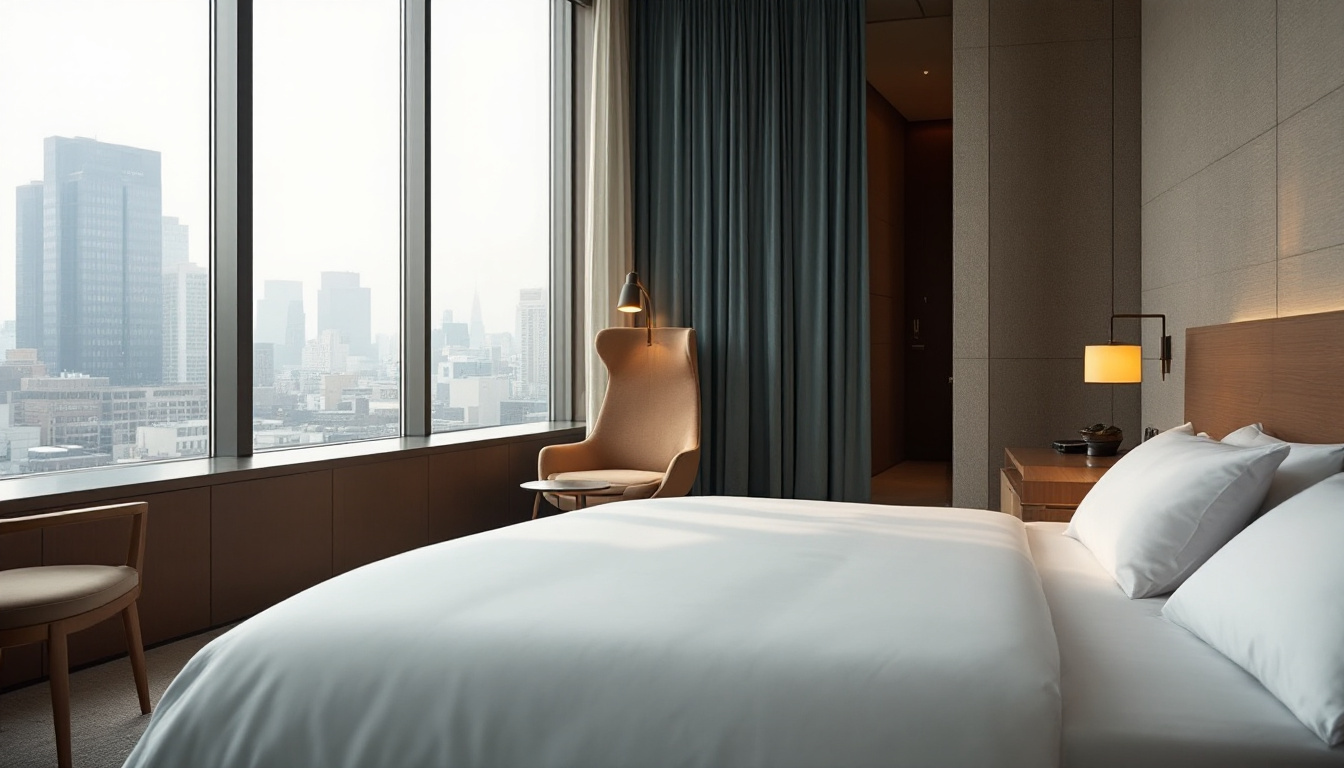
I had been in the bed for perhaps eleven minutes when the ceiling moved. There is a small wooden panel set into the headboard with two engraved buttons — one with an icon of a closed dome, one with an icon of an open one — and I had pressed the open one without quite believing what I had read in the welcome folio. The roof began to slide. Not a sunroof-sized aperture; the entire roof above the bed, a structural panel perhaps four metres by three, drawing back over the thatched eave with a low hydraulic hum that took just under thirty seconds to complete. When it stopped, I was lying on my back in a king bed in the middle of the Indian Ocean looking directly up at the southern sky. The Pleiades were almost overhead. Orion was off the foot of the bed. There was no glass between me and the stars.
I had read about the retractable roof at Soneva Jani for ten years. I had seen the publicity images. I had, frankly, assumed the gesture would feel gimmicky in person — the kind of thing a property does because it photographs well and then quietly stops maintaining after three seasons. It is not gimmicky. It is the single most successful design gesture I have encountered in an overwater villa anywhere, and it tells you almost everything you need to know about how Soneva Jani has aged in its first decade.
The arrival
The Maldives transfer is the part of any trip out here that no amount of money can really fix, and it is worth being honest about it before saying anything else. I arrived at Velana International (MLE) on a Singapore Airlines flight at 07:55 on 14 January. From the moment the aircraft door opened to the moment my feet were on Soneva Jani’s jetty was four hours and forty minutes. Trans Maldivian Airways handles the bulk of the resort transfers, including Soneva’s standard routing, and the operational reality is that you wait in a dedicated lounge — Soneva’s is on the upper level of the seaplane terminal, with passable espresso and a quiet alcove of daybeds — until a window opens in the rotation. Mine was ninety-three minutes.
The seaplane itself is the same DHC-6 Twin Otter that every Maldives resort uses, configured for sixteen passengers with bench seats along each window. The flight to Noonu Atoll is roughly fifty minutes in the air, and the first twenty are spectacular in a way that does not diminish on a second or third visit: you bank low over the Malé-North reef line, then climb to perhaps eight hundred metres, and the atolls unfold underneath in that improbable palette of bone-white sand, jade shallows, and the deep cobalt of the channel breaks. The pilots fly barefoot. The cabin is unpressurised and warm. There is no headset.
The alternative — and one I tested on the return leg — is the Soneva-in-Aqua, a chartered Cessna 208 Caravan that Soneva operates as a faster, scheduled-charter option for guests who want to skip the rotation lounge. The published time is forty-five minutes door-to-villa, and on my return it ran forty-eight. The cabin is fitted with leather rotating seats, a small galley, and overhead reading lights — features absent from the Twin Otter — and the price differential is in the high four figures one-way per cabin, not per seat. Whether that is worth it depends on the size of your party and your tolerance for the standard rotation; for two travellers I would do the rotation. For a family of six with young children, I would not hesitate.
The landing on the Noonu lagoon happens about four hundred metres from the resort’s arrival jetty, in water so clear the floats throw a visible shadow on the sand beneath. A Soneva dhoni — the traditional Maldivian sail-fishing boat, here motorised but built to the old lines — collects you from the seaplane in the water and brings you the last stretch. My host on the dhoni, a young man named Ibrahim , opened a small cooler, handed me a cold towel scented with frangipani, and asked, in the only English sentence he used during the eight-minute boat ride, “First Soneva?” When I said yes, he nodded once and pointed at my shoes.
The villa
“No News, No Shoes” is the Soneva motto, and the no-shoes part is enforced from the dhoni onward. My loafers were collected at the arrival jetty, placed in a numbered fabric bag, and not returned to me until I left ten days later. There are no shoes anywhere on the island. The sand pathways between villas are kept loose and warm; the wooden boardwalks are washed down twice a day so they never grit; the restaurant floors are polished teak. The first hour without shoes is mildly disorienting. By the end of the first day you have stopped noticing. By the third day you find the absence of shoes structurally important to the experience, in a way that is difficult to articulate to anyone who has not done it.
I was checked into Villa 17, a 1-Bedroom Water Reserve on the eastern arm of the lagoon, about a four-minute buggy ride and a further three-minute walk along the boardwalk from the main island. The published square footage is 410 square metres, which is a number that is technically accurate and effectively meaningless until you are inside it. The bedroom alone is approximately the size of a small Manhattan apartment, with a king bed centred under the retractable roof I have already described, a daybed running the full length of one wall, and a writing desk built from a single slab of palmwood that must have come out of a tree of considerable seniority.
The bathroom is open to the sky in a separate pavilion — a freestanding stone tub under a square opening cut into the thatched ceiling, twin sinks set into a counter of polished concrete, an outdoor rain shower screened by a wall of living bougainvillea. The toiletries are Soneva’s own line, mixed on the island in the spa workshop and refilled into stoneware bottles; the soap is a coconut-and-lemongrass bar pressed in lots of about fifty at a time. I asked, on the second day, whether I could buy a few of the bars to take home. The villa host returned the next morning with twelve, wrapped in linen, no charge.
The two signature villa features beyond the roof are the slide and the pool. The slide is exactly what the publicity images suggest: a curved fibreglass chute, approximately eight metres long, that descends from the upper deck of the villa into the lagoon. It is wide enough for an adult and steep enough to be genuinely fast; my entry speed on the first descent was high enough that I lost the swim shorts I had bought specifically for the occasion, which I mention as a public service. The slide ends about a metre and a half above the water. The water beneath, at low tide, is about two metres deep. There is a small ladder to climb back up to the deck. I used the slide perhaps fourteen times over the ten days. I would have used it more if I were travelling with children.
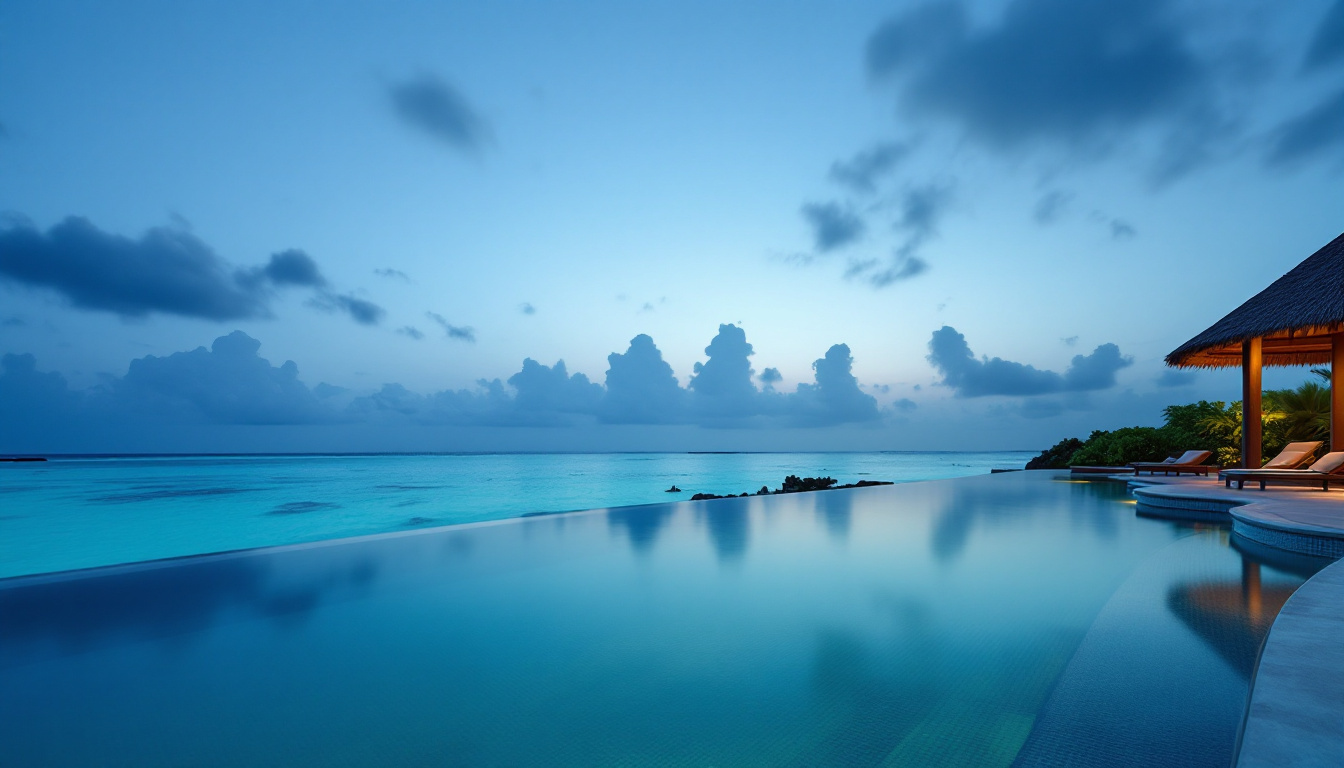
The private pool — four by eight metres, fresh water, heated to 28 °C — sits on the lower deck looking east into the open lagoon. The over-water hammock, suspended from the deck by stainless cables and hanging perhaps two metres above the water, is the single object in the villa I spent the most time in. There is a slatted hatch in the bedroom floor that opens onto the lagoon beneath the villa, with an underwater light that the villa host turns on automatically at dusk; on most nights I watched reef sharks and the occasional eagle ray pass underneath while I was brushing my teeth. The deck is washed with fresh water from a small overhead system every morning between 06:00 and 06:30, so that you can walk barefoot on warm dry wood the rest of the day. The wood is iroko. It has weathered to the grey of driftwood.
There is one criticism worth registering about the villa, and it is honest. The bedroom roof, when closed, is acoustically thin. A heavy tropical squall — and we had three over the ten days — sounds, from inside the bed, like a sustained percussion piece. On the first night I found this charming. On the third night, at 03:40 in the morning, I did not. The villa host’s solution, offered without my having to ask, was a pair of moulded silicone earplugs delivered to the villa within twenty minutes of my mentioning, in passing, that I had slept badly. That is the Soneva instinct in microcosm.
The service
Soneva calls every guest’s butler “Mr Friday” or “Ms Friday,” after the character in Robinson Crusoe — a literary conceit that on paper sounds twee and that in practice is one of the cleverest service decisions in the industry. Mine was Ms Friday, whose actual name is Adhuham , a Maldivian in her late twenties who had been with Soneva for four years across both Jani and Fushi. The Mr/Ms Friday model accomplishes two things at once: it codifies the butler relationship in a way that is light and slightly playful rather than formal and slightly servile, and it gives the guest permission to use the WhatsApp line at any hour without feeling they are imposing on a named individual. You are messaging “Ms Friday.” She is on duty. That is the deal.
The staff-to-guest ratio at Soneva Jani is published as roughly five to one, and that is approximately what you observe on the ground. There are fifty villas. There are around two hundred and fifty staff. What is harder to capture in a number is how the no-shoes policy changes the dynamic between staff and guest. Everyone is barefoot. The general manager is barefoot. The sommelier at Out of the Blue is barefoot. The astronomer at the observatory is barefoot. It is genuinely difficult to maintain a posture of imperial guest-and-servant when neither party has footwear. The register slides — not into informality, exactly, but into something more like collegiality. Staff use first names with guests by the second day if invited to, and you find yourself wanting to invite them to.
The general manager, Karin van Zyl, hosted a small drinks gathering on the third evening at the observatory deck for arriving guests of that week. Her read on the property — a brief, deliberate framing of what she had inherited and what she planned to refine — was unsentimental and useful. The hardest operational challenge at Jani, she said, was provisioning: every fresh ingredient that is not grown on the island arrives by boat from Malé, and the boat runs three times a week. The hardest service challenge was managing the gap between the Soneva regulars (who arrive knowing every staff member’s name and every restaurant’s quirks) and first-time guests (who arrive expecting either standard five-star Maldives or a barefoot cult, and have to be eased into the actual register, which is neither). She was good company. She drank a single glass of champagne and did not check her phone once.
I tested the service in the way I usually do, which is to introduce a small deliberate problem and see how it is handled. On the fifth morning I told Ms Friday that I had lost the linen shirt I had been wearing the day before — I had not lost it; it was in my closet — and asked whether housekeeping might have taken it for laundering. She did not ask follow-up questions. She did not say “let me check with housekeeping.” She said “I will find it before you finish breakfast.” When I returned from breakfast eighty minutes later, the shirt was hanging on the bedroom door, freshly pressed, with a small handwritten card apologising for an “error in our laundry log” that had not occurred. That is service recovery scored generous, not adequate. I felt slightly guilty about the test.
The one service note that fell below the property’s own bar was the wine pour at So Hands-On on the second night. The sommelier was attentive and informed, but the by-the-glass pours of an Australian chardonnay were inconsistent across the table — two of us received generous pours, two of us received pours that were perhaps a third short. This was not raised by anyone in our group at the time. It is the kind of thing that, at this rate, should not happen. I mention it because the score on Service reflects it.
The table
There are seven restaurants at Soneva Jani, which is an immoderate number for a fifty-villa property, and the genuine surprise is how few of them feel redundant. The roster: So Hands-On (an interactive teppanyaki counter, eight seats), So Imaginative (the chef’s tasting room, twelve seats), So Wild (open-fire cooking on the beach), Once Upon a Table (a single private eight-seat table built over the water), Out of the Blue (overwater Mediterranean, the largest venue), So Primitive (no menu, no electricity, beach-side fire, by appointment), and the breakfast room at Mihiree Mitha, which doubles as a casual all-day option. Across ten days I ate at all seven, several of them more than once.
The standout dinner of the trip — and the standout dinner of any Maldives trip I have taken — was at Once Upon a Table. The venue is a single round table for eight, set on a small stilted platform reached by a private boardwalk about three minutes from the main island, with no walls and no roof beyond a canvas canopy that the staff can deploy if rain threatens. There is one chef. There is one sommelier. There is no written menu. You sit down at 19:30 and you stand up around 23:30, and in between you eat seven courses that have been built that morning around whatever the fishing dhoni and the organic garden have delivered.
Our menu the night I ate there began with a single piece of raw yellowfin, cured for ninety minutes in coconut water, dressed with a fermented chilli the chef makes from peppers grown on Medhufaru. The second course was a clear bonito broth with hand-cut buckwheat noodles. The third was a piece of grilled trevally with a sauce of coconut, lime, and the leaf of a tree I did not recognise — pandan, I was told, but a Maldivian variety with a slightly more grassy edge. The wine pairing ran from a German riesling through a Burgundy white that I did not catch the name of (and regret not noting) to a low-intervention Etna red with the dessert course, which was a small bowl of mango sorbet with toasted coconut and a single piece of dark chocolate from the on-island chocolate room.
So Wild is the property’s other signature dinner and the one I would prioritise on a shorter stay. It runs three nights a week on a section of beach about ten minutes’ buggy ride from the main jetty; the kitchen is a series of open fires and a single clay tandoor, the seating is on cushions on the sand, and the menu is built around whole-animal and whole-fish cookery executed in front of you. The lamb shoulder we ate had been on a fire for nine hours. The whole snapper had been on for forty minutes. The theatre — and I do mean theatre, in the best sense — is in watching the chefs work the fires in the half-dark, with the ocean perhaps fifteen metres away and the constellations starting to assemble overhead. I would happily eat there once a week for the rest of my life.
The Chocolate Den is open twenty-four hours and is exactly what it sounds like: a small wooden hut on the main island, manned by a chocolatier (the resident chocolatier had the title “Chocolate Buddha” embroidered on his linen jacket; I did not catch his name but he produced, on request at 23:20 one night, a small box of single-origin Madagascar truffles that he had finished that afternoon). Everything is made on the island from imported couverture. Nothing is wrapped in plastic. There is no charge for anything you eat in the hut or carry back to your villa.
The wine cellar — which is technically not a restaurant but is the most distinctive F&B space on the property — is built into the sand under the main pavilion, accessed by a wooden staircase, and kept at a regulated 14 °C by the natural insulation of the sand mass. The list runs to approximately eight hundred references; it is strong on Burgundy and the Rhône, surprisingly deep on Australian shiraz, weaker on Bordeaux than I would expect at the rate, and includes a section of low-intervention and biodynamic bottles that is unusual in the Maldives. The sommelier, a Frenchman named Pierre , took me through the cellar one afternoon for nearly an hour and did not try to sell me anything I had not asked about. We finished with two glasses of a 2018 Cornas that I subsequently ordered with dinner three nights running.
What does not quite reach the property’s own bar, in the F&B dimension, is the breakfast operation at Mihiree Mitha. The à la carte choices are excellent — the eggs are from the on-island chickens, the bread is baked overnight, the fruit is hyperlocal — but the buffet element of the breakfast is over-engineered, with too many stations and a slight tendency for the hot items to sit. After my second morning I ordered breakfast in the villa instead and was happier. The score on Table reflects this minor weakness.
The Detail
The category we call The Detail on the Standard is the hardest to score because it is built from gestures that no individual guest will encounter in their entirety, and that no marketing brochure will accurately describe. It is the welcome amenity, the in-villa note, the un-asked-for thoughtfulness, the operating temperature of the pool, the weight of the towel. Soneva Jani scores 4.9 on it, which is the highest I have given any property in 2026, and I want to be specific about why.
The welcome amenity in Villa 17, on arrival, was a small carved wooden box on the daybed, opened to reveal a single Maldivian sweet called kandu kukulhu — a coconut-and-cardamom confection wrapped in a young banana leaf — and a handwritten card from Ms Friday in English and Dhivehi welcoming me by name. Inside the box, underneath the sweet, was a small folded silk pouch containing a pair of locally-strung shell earrings and a note explaining that the shells had been collected on the island by the housekeeping team that morning. I have received a great many welcome amenities. I have never received one I wanted to keep.
The observatory is a three-floor structure on the southern point of the main island, with the top floor housing a Meade LX600 14-inch telescope under a retractable dome, the middle floor a small library of astronomy texts and a tea station, and the ground floor a deck of low loungers for naked-eye viewing. The resident astronomer is Ali Shifaz , a Maldivian in his early thirties who trained at the Institute of Astronomy in Cambridge and has been at Soneva Jani for seven years. He runs a programme every clear night starting around 20:30, free of charge to in-house guests, and on the night I attended he had calibrated the telescope to the Orion Nebula, then the Pleiades, then Jupiter (whose four Galilean moons were strung out in a line that night), then — almost casually, as if it were not the thing the whole hour had been building toward — Saturn, whose rings were visible at an angle of inclination that made them look like the textbook illustration. He spoke for the better part of an hour without referring to notes. He answered every question. I went back to the observatory three more times during the stay.
Cinema Paradiso is the outdoor cinema on the sand, a personal project of Sonu Shivdasani’s that has been at the property since the opening. The screen is set up perhaps fifteen metres offshore, partially in the water, lit from above by a discreet projector mounted on a tower on the beach. Seating is on day-beds dressed with linen and bolsters, with small wicker tables for the popcorn (popped on demand, salted with Maldivian flake) and the cocktails (made at a small thatched bar behind the seating area). The night I went they screened Lawrence of Arabia in a print I am fairly certain was sourced from the BFI. There were perhaps twenty guests. No one spoke. When the lights came back up at midnight, the staff had laid out small woven baskets with bottled water and warm jasmine-scented towels next to every day-bed.
The detail that I keep coming back to, however, is smaller than any of the above. On the second morning, walking back to my villa from breakfast, I noticed that the boardwalk had been swept clean of fallen frangipani petals and that each new petal that had fallen since the sweep — there were perhaps a dozen — had been picked up and arranged in a small line along the inside edge of the boardwalk railing, presumably so they could be admired before they were composted. No one was going to mention this to me. No one had done it because I was watching. It had simply been done. That is what The Detail measures.
The Standard
| Dimension | Score | Note |
|---|---|---|
| Setting | 5.0 | Noonu Atoll is among the most beautiful sites in the Maldives, and Medhufaru is the largest privately-leased island in the country. The site cannot be faulted. |
| Suites | 4.9 | The retractable roof, the slide, the over-water hammock, the open-air bathroom. The acoustic thinness of the closed roof in heavy rain is the only deduction. |
| Service | 4.7 | The Mr/Ms Friday model is exemplary. The recovery on the deliberate test was generous. The wine pour inconsistency at So Hands-On is the deduction. |
| Table | 4.6 | Once Upon a Table and So Wild are among the finest dinners in the Indian Ocean. The breakfast buffet is the deduction. |
| The Detail | 4.9 | The welcome amenity, the observatory programme, Cinema Paradiso, the boardwalk frangipani. The highest I have scored this dimension in 2026. |
Property score: 4.8 / 5.0 — At the Standard.
The 4.9 on Suites is justified by the fact that, ten years into the property’s operating life, the signature villa features (the roof, the slide, the over-water hammock, the floor hatch onto the lagoon) remain not just unmatched in the Maldives but unmatched globally. I have stayed in overwater villas at Cheval Blanc Randheli, One&Only Reethi Rah, Waldorf Astoria Ithaafushi, the St Regis Vommuli, and Velaa Private Island. None of them has a retractable bedroom roof. None of them has a slide. The closest competitor on architectural inventiveness is the underwater bedroom at the Conrad Rangali, which is a different kind of gesture and, in my view, a less successful one.
The 4.9 on The Detail is justified less by any single object than by the consistency of attention across the ten-day stay. The welcome amenity could have been a flourish for first impressions; it was not — the standard of un-asked-for thoughtfulness was sustained from the dhoni to the departure. The boardwalk frangipani moment was the example I noted at the time. There were dozens of others.
Verdict
Soneva Jani is At the Standard. It is the property in the Maldives I would send a first-time visitor to who wanted to understand why people return to the Maldives. It is the property I would send a sixth-time visitor to who had run out of patience with the homogeneity of the upper end of the market.
The reservations I would register are limited and honest. The transfer from Malé is the longest of any major Noonu property and one of the longest in the country; if your tolerance for the seaplane rotation is low, build in the Soneva-in-Aqua charter on at least one leg, or budget a night at a Malé-adjacent property on either end. The breakfast operation could be better. The bedroom roof is acoustically thin in a serious squall. Beyond those three notes I struggle to find a meaningful complaint.
On the loyalty front, Soneva Soul is the brand’s membership tier, with three levels (Member, Friend, Family) keyed to lifetime spend and offering a graded set of benefits ranging from priority booking to discretionary upgrades to, at the highest tier, complimentary nights and named-villa preferences. I am not yet a member. After this stay I expect to be.
Lead times are, candidly, the practical constraint. Peak season — December through February — runs nine to twelve months out for the entry water villas and twelve to eighteen months out for the four-bedroom Crusoe Residences. The Private Reserve — the four-bedroom floating private-island villa attached to the property by a private boardwalk, with a slide, a pool, a waterslide-fed jacuzzi, and its own restaurant and spa — books eighteen to twenty-four months out for the high season and is the single most-requested villa in the Maldives. Published rates begin at USD 40,000 per night. I did not stay in it. I walked through it. It is the single most extraordinary residential structure I have seen on the water anywhere.
I returned to Malé on the Soneva-in-Aqua on 24 January, forty-eight minutes door-to-terminal, in a cabin laid out for two with a small tray of fresh fruit, espresso, and a final handwritten card from Ms Friday folded onto the seat. I read the card on the flight. I am not going to share what it said. It was the kind of card you keep.
Standing Questions
Q: How do you get to Soneva Jani?
By seaplane from Malé (MLE), approximately forty-five minutes if booked on the Soneva-operated Soneva-in-Aqua, ninety minutes on the standard Trans Maldivian Airways rotation. The Soneva-in-Aqua is the faster, charter-style option, fitted with leather rotating seats and a small galley; the standard routing is the same DHC-6 Twin Otter used across the Maldives transfer network. The seaplane lands on the lagoon and a dhoni collects guests for the final eight-minute transfer to the arrival jetty.
Q: What is the entry-level rate?
From approximately USD 3,500 per night for the entry-level 1-Bedroom Water Reserve. Two-bedroom water villas run USD 5,500 to 8,000 per night depending on the configuration. Four-bedroom Crusoe Residences (the four land-based villas on Medhufaru) begin at USD 12,000 and rise to USD 25,000. The four-bedroom Private Reserve — the freestanding floating villa — begins at USD 40,000 per night. All rates include breakfast and return seaplane transfer; full-board and all-inclusive packages are quoted on request.
Q: Is Soneva Jani family-friendly?
Yes — emphatically. Soneva operates the strongest children’s programme in the Maldives, called the Den, with dedicated staff, an outdoor play area, a small swimming pool, art workshops, and a chocolate-making class with the resident chocolatier. Multi-bedroom villas are designed for multigenerational use, and the no-shoes, free-range philosophy of the property is well-suited to children, who in my observation across the ten days adapt to the absence of footwear faster than adults.
Q: What is included in the rate?
Accommodation, daily breakfast, return seaplane transfer (standard TMA routing; Soneva-in-Aqua is a chargeable upgrade), all non-motorised water sports (paddleboards, kayaks, sailing, snorkelling), use of the bicycles and buggies on the island, in-villa minibar (excluding spirits and premium wines), and access to the observatory programme. Dining at the seven restaurants, motorised excursions (sunset dolphin cruises, sandbank picnics, scuba), the spa, premium wine and spirits, and the Soneva-in-Aqua charter are extra — though the majority of guests, in my observation, book a full-board or all-inclusive package that bundles most F&B and many of the activities.
Q: How does Soneva Jani compare to Cheval Blanc Randheli or One&Only Reethi Rah?
Cheval Blanc Randheli, also in the Noonu Atoll and a forty-minute boat ride from Jani, is the more formal property, with a stronger French service register, a more conventional luxury aesthetic, and a Cheval Blanc-house design vocabulary that will feel familiar to guests of the Paris, Courchevel, or St Barth properties. One&Only Reethi Rah, on the North Malé Atoll, is the largest of the three, with the deepest amenity stack, the broadest restaurant roster, and a more conventional resort layout. Soneva Jani is the most distinctive of the three in design (no other property in the country has the retractable roof or the slide), the most committed to sustainability (carbon-positive operations, zero single-use plastics, on-island water and food production), and the most stylistically singular. For a guest prioritising design and singularity, Jani. For a guest prioritising French service formality, Randheli. For a guest prioritising amenity breadth, Reethi Rah.
Standing Questions
- How do you get to Soneva Jani?
- By seaplane from Malé (MLE), approximately 45 minutes if booked on the Soneva-operated seaplane, 90 minutes on the standard Trans Maldivian Airways routing. Soneva-in-Aqua is the faster, charter-style option.
- What is the entry-level rate?
- From approximately USD 3,500 per night for the entry 1-bedroom water villa; multi-bedroom Crusoe Residences and the Private Reserve start at USD 12,000 and USD 40,000 respectively.
- Is Soneva Jani family-friendly?
- Yes — Soneva has the strongest children's programme in the Maldives (the Den), and multi-bedroom villas are designed for multigenerational stays. The no-shoes, free-range philosophy works particularly well for children.
- What is included in the rate?
- Accommodation, breakfast, return seaplane transfer, all non-motorised water sports. Dining at the seven restaurants, the observatory programme, motorised excursions, and spa are extra — though most guests book a full-board or all-inclusive package.
- How does Soneva Jani compare to Cheval Blanc Randheli or One&Only Reethi Rah?
- Cheval Blanc Randheli is the more formal property with a stronger French service register. One&Only Reethi Rah is the largest and most amenity-heavy. Soneva Jani is the most distinctive in design and the most committed to sustainability — and the only one with the retractable bedroom roof.