The Carlyle is the hotel that, more than any other in New York, has been built into the city’s idea of what Manhattan luxury means. It opened in 1930, in the middle of the Great Depression, on a plot at 76th and Madison that the developer Moses Ginsberg had assembled in the 1920s with the intention of building one of the great residential hotels of the city. The building was named for the Scottish historian Thomas Carlyle, was designed by the architects Sylvan Bien and Harry M. Prince in an Art Deco idiom that was still rare in New York at the time, and was dressed by Dorothy Draper at the height of her career. It has been continuously operated as a luxury hotel for ninety-six years.
The Building
The architectural register is the Art Deco of the very late 1920s — the moment just before the style hardened into the more standardised vocabulary of the next decade. Bien and Prince’s design is a 35-storey slab on a one-block footprint, with a stepped tower form (mandated by the 1916 zoning ordinance), a deep limestone base, a brick-clad shaft, and a series of setbacks that give the upper floors the smaller plates and the deeper terraces that distinguish the building from its neighbours. The crown is a small spire that, on a clear night, is visible from the Reservoir in Central Park.
The interior plan was unusual for the period. Roughly a third of the rooms were always operated as conventional hotel rooms; the remaining two-thirds were originally leased as residential apartments for long-staying guests, with full kitchens, multiple bedrooms and the kind of square-footage that conventional hotel rooms did not deliver. The model — the residential hotel — was a particular New York invention of the early twentieth century, and the Carlyle was the most successful execution of it. The mix has rebalanced over the decades; the property now operates 189 hotel keys and a smaller number of long-term residential leases.
The Renovations and Tony Chi
Rosewood acquired the hotel in 2001 and has executed the property under the brand’s standards since. The most recent significant intervention is the current renovation programme, begun in 2019 and ongoing through 2025, in which the New York-based studio of Tony Chi has redesigned 155 of the 189 rooms and suites. Chi, who has done a meaningful share of the Mandarin Oriental and Park Hyatt portfolios globally and has built a particular relationship with the Carlyle over two decades, has been working in collaboration with the hotel’s long-tenured operations team to preserve the property’s particular character while updating the rooms to a contemporary standard.
The strategy has been to honour Dorothy Draper’s original vocabulary — the deep colour palette, the heavy materials, the considered formality — while updating the room functionality, the bathrooms and the technology. The result, in the rooms I have stayed in across multiple visits, is unusually successful. The rooms read first as residential New York and second as hotel rooms, which is the correct order for this property.
The Rooms
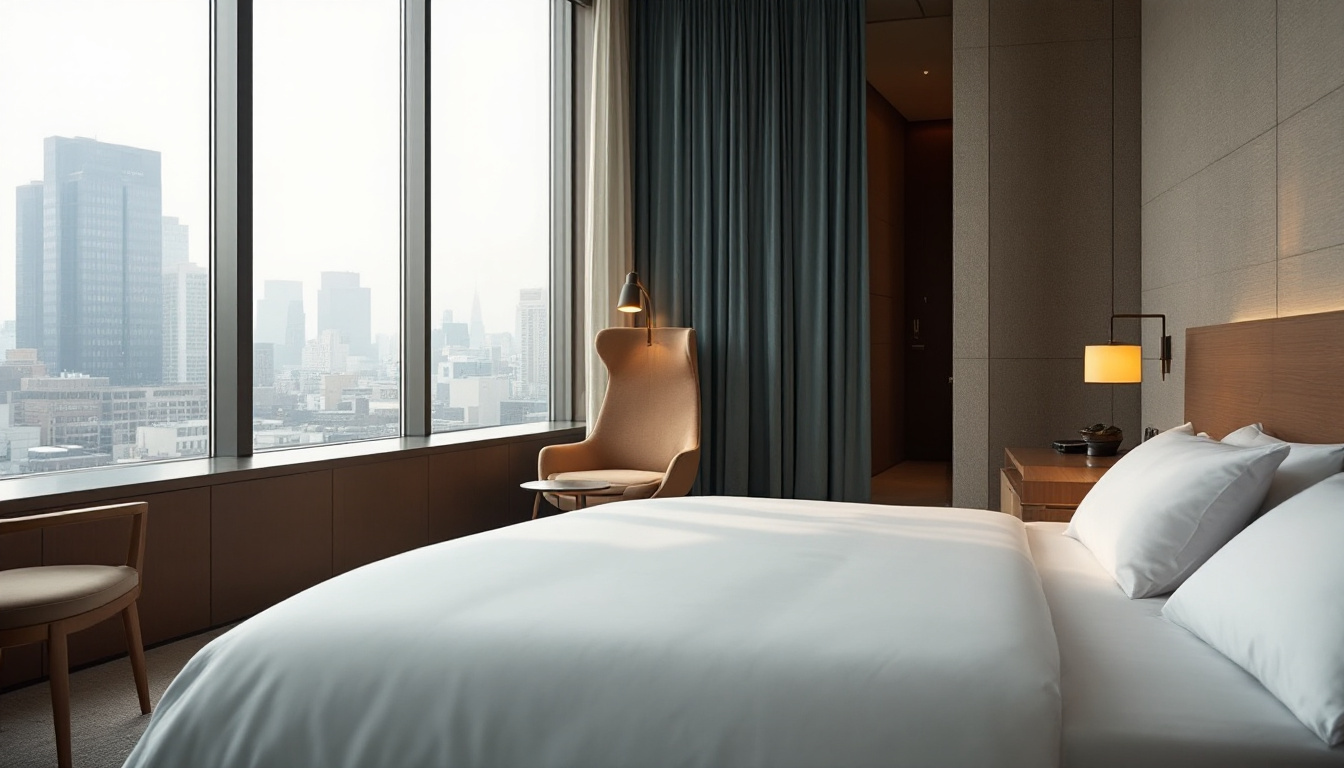
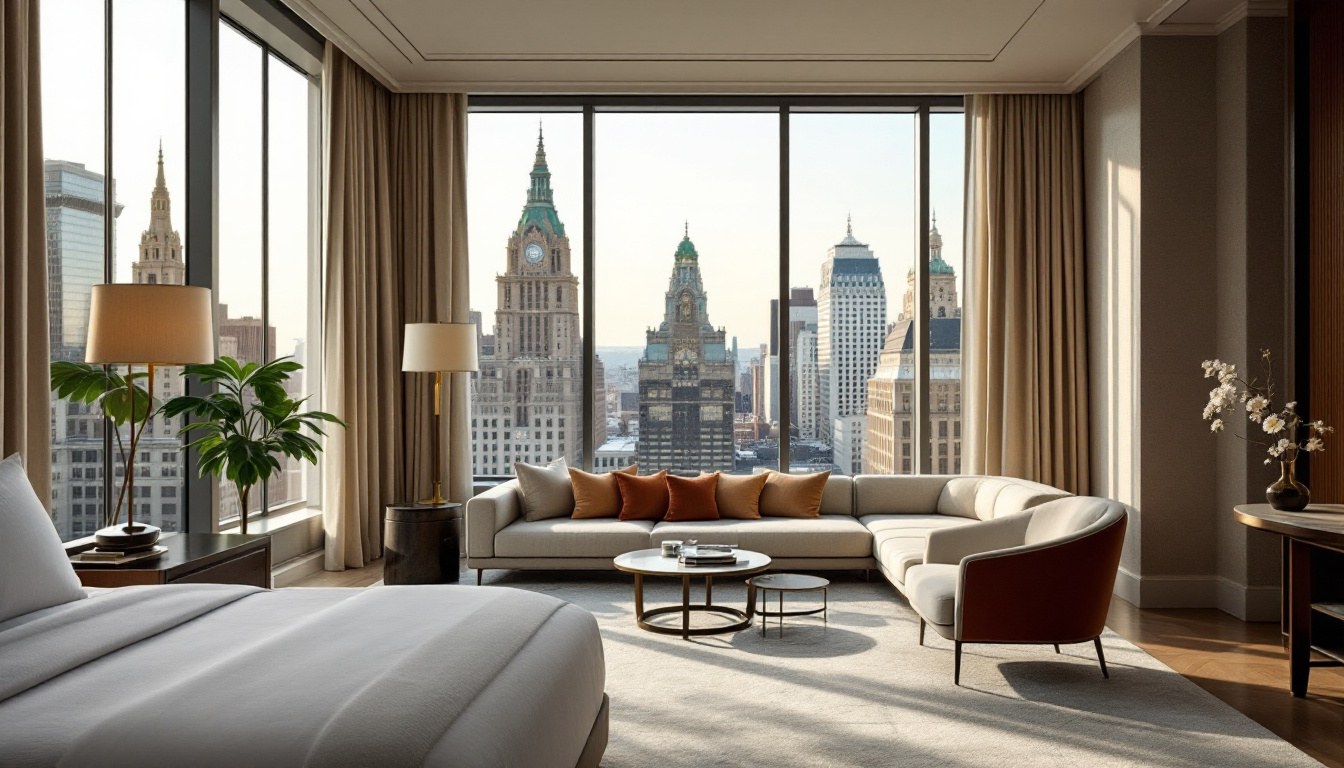
My most recent stay was in a one-bedroom Tower Suite on the twenty-second floor, looking east across the Upper East Side. The room ran to roughly eighty-five square metres, with a sitting room, separate bedroom, full marble bath and a small kitchen pantry. The colour palette is a deep amber and warm cream, with the brushed bronze fittings, the deep wool carpet, the silk-walled bedroom and the lacquered black-and-white panelling that has become Chi’s signature gesture in his Carlyle work.
The detailing is unusually serious. The joinery is hand-built and the door hardware is the kind that costs significant money. The wallpapers — bespoke designs by Chi’s studio, with whimsical Central Park vignettes — are hand-painted. The art in the room is curated by the property’s in-house art director, with a rotation of works that includes pieces from the Carlyle’s permanent collection. The desk, the chairs, the side tables, the lamps — every piece is bespoke. This is not the standard hotel room.
The bath is the kind of bath you draw and stay in. The dressing room has the joinery of a residence. The acoustic performance, despite the address, is excellent. The bed is deep, the linen is appropriate, the pillow menu is the version with seven options and a guide.
Bemelmans Bar
The bar — the hotel’s principal social moment — is one of the genuinely unique rooms in New York, and worth a section. In 1947, Ludwig Bemelmans, the Austrian-American author and illustrator best known for the Madeline children’s books, was a guest at the Carlyle through a difficult financial period. The hotel offered to host Bemelmans and his family in exchange for the artist painting the murals in the small basement bar. He took eighteen months to do the work. The murals — Central Park rendered in Bemelmans’ particular whimsical idiom, with rabbits in waistcoats, elephants on roller-skates, the Madeline character making cameo appearances — cover the bar’s walls and ceiling and are the only Bemelmans installation in any public space anywhere.
The bar’s operating register has been preserved over seventy years. The bartenders wear the white dinner jackets the room has used since the 1950s. The cocktail programme runs the classical American repertoire — the Martinis, the Manhattans, the Old Fashioneds — executed precisely. The piano is in the corner. The room is, on a Friday or Saturday evening, full of a particular New York that exists in this bar and nowhere else. Reservations are strongly advised.
Café Carlyle, the more formal cabaret room down the hall, runs the legendary cabaret programme that has featured (and continues to feature) the kind of performers — Bobby Short for decades, more recently Steve Tyrell, Isaac Mizrahi, Sandra Bernhard, the rotating Woody Allen Wednesday Night clarinet residency through 2020 — that justify the room’s reputation. The programme runs roughly thirty weeks a year.
The Food
The Carlyle Restaurant, the principal dining room, runs a contemporary-American programme that is competent without being adventurous. The room is what you book for a power lunch with an Upper East Side resident or a quiet dinner before the cabaret; the food is the supporting role, not the star. The breakfast programme is the meal to optimise around — the eggs Benedict are the standard, the pastry programme is serious, the coffee is the version that works.
For dinner in the neighbourhood, the Carlyle’s concierge has the relationships with the major Upper East Side restaurants — the Daniel, the Café Boulud (which sits in the hotel’s same building and is operated under a separate kitchen team), Sant Ambroeus across Madison, the JG Melon at the corner. Book in advance and let the concierge make the call; the relationships are real and the tables that the public booking systems show as unavailable are often available through the hotel.
What Did Not Work
A few small things. The hotel is genuinely older than most of its peers, and the renovation programme — though excellent — has been executed in phases across six years, with the result that on some visits you will encounter rooms that have been recently redone and on others, rooms that are scheduled to be redone in the next cycle. Ask the reservations team for a Tony Chi-renovated room when you book; the property is unusually transparent about which rooms have been updated.
The pool and the spa are not present at this property — the building does not have the basement footprint for a serious spa programme, and the brand’s solution is to direct guests to the spa at the Aman New York or to the longer-running spa programmes at the Mark or the Carlyle’s sister properties. If you need a serious gym and spa, this is not the hotel for you.
The rates are at the top of the New York market. The entry room in peak season is north of US$1,200 a night, and the suites scale steeply from there. The shoulder seasons — late January, early August — are the better proposition.
How It Sits
The Carlyle is the senior member of a particular cohort of New York hotels — the Pierre, the Mark, the Plaza, the St. Regis, more recently the Aman New York and the Mandarin Oriental — that operate at the top of the city’s market with different positionings. The Carlyle is the most rooted in the city’s particular twentieth-century social history, the most consistently operated over the longest period, and the most associated with a particular New York that the other properties either do not have access to or have not chosen to invest in. The Bemelmans Bar alone justifies a long stay; the cabaret programme adds to it; the residential register of the rooms is the third anchor.
For a guest choosing between the Carlyle and the Mark across the street, the choice is real. The Mark is the more contemporary, more fashion-led, more international property. The Carlyle is the more historically rooted, more residential, more particularly New York property. Both are correct answers. The Carlyle is the one I book.
What I Would Book
A one-bedroom Tower Suite on a high floor (the Tony Chi-renovated rooms) for four nights. A long Friday lunch at the Carlyle Restaurant before a meeting. The Bemelmans Bar at six o’clock on the first evening. The Café Carlyle cabaret on the second night if the programme is good (check the calendar before you book the trip). A long Saturday morning at the Met, ten minutes’ walk south. Dinner at Daniel on the second night. The afternoon flight home on Sunday.
Ninety-six years in, the Carlyle remains the most authentically Manhattan of the Manhattan luxury hotels.
Verification
Filed against the following sources, last verified on April 4, 2026. The desk re-checks the source URLs on every dated modification of the piece.
- https://m.rosewoodhotels.com/en/the-carlyle-new-york/overview/our-story
- https://www.rosewoodhotels.com/en/the-carlyle-new-york/media/press-kit/hotel-fact-sheet
- https://en.wikipedia.org/wiki/Carlyle_Hotel
- https://www.americanexpress.com/en-gb/travel/discover/property/New-York-US/New-York/the-carlyle-a-rosewood-hotel
Standing Questions
- When did The Carlyle open?
- The hotel opened in 1930, designed by Sylvan Bien and Harry M. Prince in the Art Deco idiom and named for the Scottish historian Thomas Carlyle. It has been a continuously operated luxury hotel since.
- Who owns and runs it?
- Rosewood Hotels & Resorts has owned and operated the property since 2001. The current renovation programme, begun in 2019, has redesigned 155 of the hotel's 189 rooms and suites under the direction of Tony Chi's New York studio.
- Who originally designed the interiors?
- Dorothy Draper, the American interior designer whose work shaped the mid-century American hotel aesthetic, designed the original interiors at the hotel's opening. Tony Chi's renovation has reinterpreted rather than replaced her vocabulary.
- What is Bemelmans Bar?
- The hotel's principal bar, with murals by Ludwig Bemelmans (creator of the Madeline children's books) painted in the late 1940s in exchange for a year and a half's lodging for himself and his family. The murals are the only public Bemelmans installation anywhere.
- Where exactly is the hotel?
- 35 East 76th Street, on the corner of Madison Avenue, in the heart of the Upper East Side and two blocks from Central Park.