I have stayed at Cheval Blanc Paris twice — once in February 2026 for three nights in a Deluxe Seine-view room, and a single night in October 2022 in a Pont Neuf entry-grade room shortly after the property opened. I have also taken two dinners at Plénitude (March 2023 and June 2024) and a lunch at Langosteria (November 2025). This review reflects the February 2026 stay, with the cumulative dining as supporting evidence.
The arrival
Cheval Blanc Paris does not arrive the way Paris hotels usually arrive. The Ritz arrives with a Place Vendôme drop and a doorman in tails; the Bristol arrives with a Faubourg Saint-Honoré awning and a fleet of Bentleys; the Plaza Athénée arrives with red geraniums and a wide pavement on Avenue Montaigne. Cheval Blanc arrives on the Quai du Louvre — the river side of the Samaritaine — through a small, almost discreet entrance set into the cleaned limestone of the 1928 Pont-Neuf wing, with the Seine immediately behind you and the Pont des Arts visible to the right.
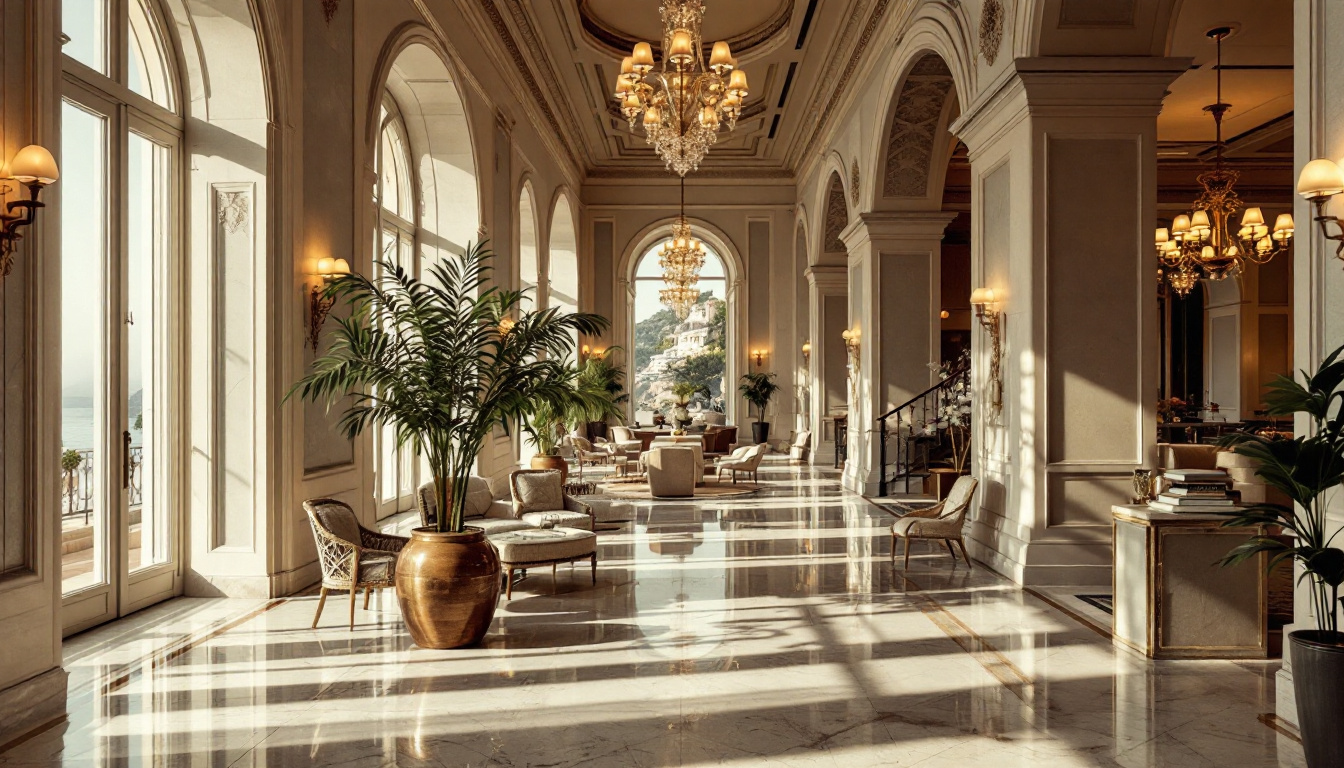
The discretion is deliberate. LVMH and the building’s restoration team — the architects Edouard François (for the Pont-Neuf wing restoration) and SANAA (for the Rivoli wing) — decided early in the programme that the hotel would not announce itself the way a Place Vendôme grand hotel would. The arrival on Quai du Louvre is intended to feel like the arrival at a private maison: a single doorman, a small bronze plaque, and a marble-paved entry that opens into a vaulted ground-floor lobby with Peter Marino’s full-height bronze sculpture as the focal point.
Check-in happens in the seated reception on the first floor, reached by either the staff-accompanied lift or by the Art Nouveau staircase that the restoration team kept exposed. On my arrival on 14 February 2026 the duty manager who handled the welcome was Léa Berthier (working from a small writing-desk rather than a counter), who walked me through the building before the room — the lobby, the Limbar tea-lounge, the Langosteria entrance, the Plénitude vestibule, the Dior Spa lift — in the half-hour before keys.
The arrival is the second-most-architecturally-serious arrival of any Paris hotel I know (after the Hotel de Crillon’s reopened entry on Place de la Concorde, which has the older bones). The half-point deduction in the setting score is the river noise on the Quai du Louvre side in the small hours — the Pont-Neuf bus traffic continues until midnight on weekends — and the fact that the Samaritaine’s Rivoli entrance, which most guests assume serves the hotel, does not. The address is the Seine; the address is correct.
Setting score: 4.8. The deduction is the river-side traffic in the early hours and the small but real friction of explaining to a taxi driver that the hotel entrance is on Quai du Louvre rather than the more prominent Rue de Rivoli facade.
The suite
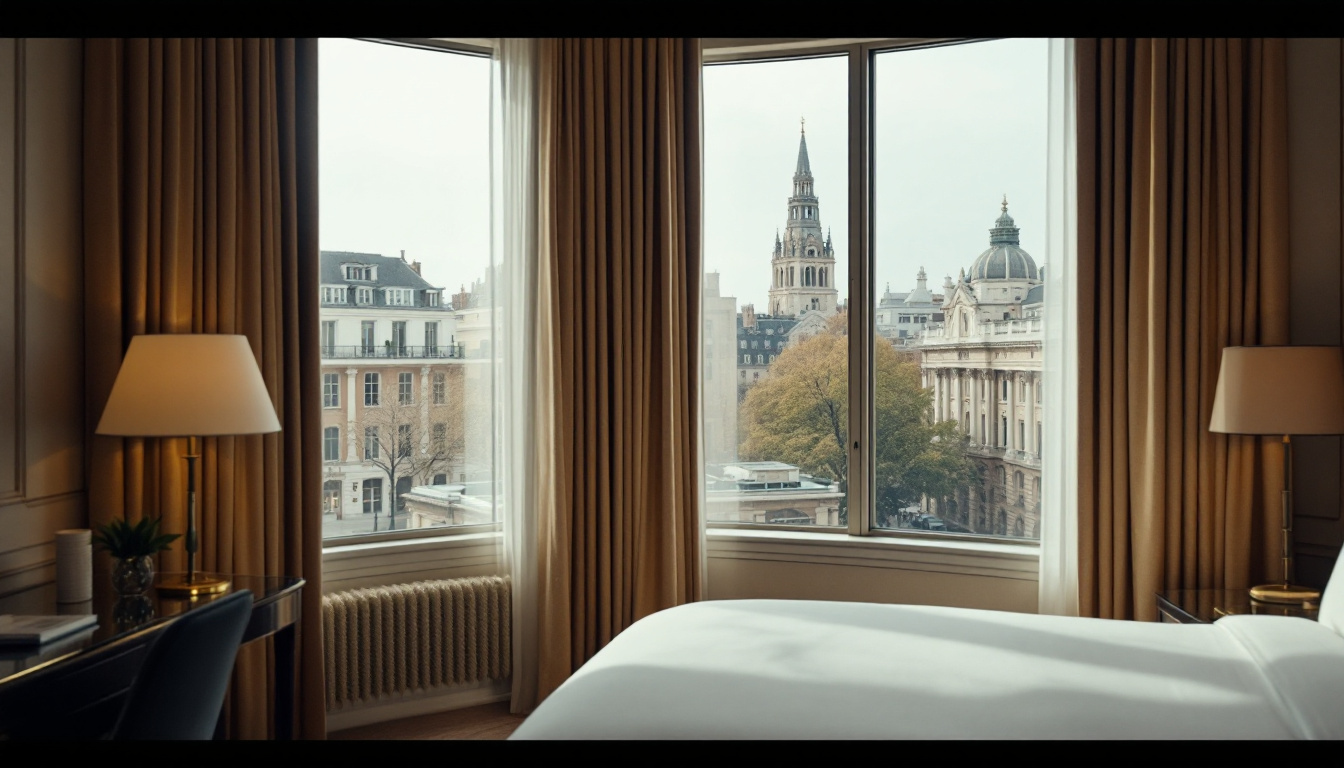
I took a Deluxe Seine-view room — the entry-grade Seine-facing category, on the fifth floor, looking south across the Pont Neuf and the Île de la Cité — at 65 square metres. The room is in the upper third of Paris luxury inventory by floor area, and the proportions are unusual: the ceiling height runs to 3.4 metres (a function of the 1928 Pont-Neuf wing’s original retail layout, which required taller ceilings to admit light), and the windows are tall enough that the Seine view occupies more than half the wall on the river side.
Material specifics, from my notes:
- The interiors are Peter Marino’s, executed in his Parisian-residential register rather than the more theatrical Marino of the Dior Avenue Montaigne flagship or the Chanel boutique on Rue Cambon. The palette is warm — bronze, cream, soft taupe, with single accent colours per room. The Deluxe Seine-view category runs in pale apricot.
- The floor is wide-plank Versailles oak parquet, varnished but not glossed, with a single hand-tufted wool rug under the bed. The parquet is fitted with under-floor heating, audible only as a faint sub-90Hz hum.
- The bed is a bespoke Treca de Paris frame on a 2.10 m by 2.10 m mattress dressed in Quagliotti linens. The pillow menu offered five densities, of which I requested two.
- The bathroom is in Bianco Carrara marble with a freestanding Boffi tub, a separate walk-in shower clad in the same marble, and a separate WC. Amenities are Guerlain’s bespoke L’Art et la Matière range, in glass bottles, refilled rather than disposable.
- The minibar is filled by category rather than by inventory — a tray of cured almonds, a small selection of three Champagne half-bottles (Krug Grande Cuvée, Ruinart Blanc de Blancs, Salon when available), still and sparkling water in glass, and a Limbar tea selection. The minibar is complimentary.
- The technology is the most-cleanly-integrated I have seen in a Paris hotel: a single bedside touchscreen runs lighting, curtains, climate, and room service, with redundant analogue switches on the wall behind. The room iPad is a tutorial, not the primary control surface — a small but real upgrade in operating mind.
The Pont-Neuf rooms (the entry-grade courtyard category) start at 50 square metres. The Deluxe Seine-view runs 65. The Junior Suites jump to 80; the Duplex Suites to 130. The Quai d’Orsay Penthouse Suite, on the seventh floor with a private terrace, runs 350 and is one of the largest hotel suites in central Paris.
Suites score: 4.7. The deduction is the courtyard-facing entry-grade category: the Pont Neuf rooms are well-finished but lack the river-view drama that defines the property. The Seine-view categories deserve the 4.8.
The service
Service at Cheval Blanc Paris is the dimension on which the property most clearly carries the LVMH-portfolio ambition: it intends to deliver what the brand calls a “majordome” — a single, named, full-stay point of contact who handles the whole stay rather than the hotel’s general staff. The system is the same one used at Cheval Blanc St. Barth, St-Tropez, and Courchevel, and it is the property’s headline service promise.
In practice during my February stay the majordome was Camille Renaud, a former Plaza Athénée concierge who had moved across to Cheval Blanc in 2023. The system worked the way it is supposed to work. Pre-arrival, Renaud sent a short questionnaire (preferred breakfast time, dietary lines, any specific dinner requests in Paris). On the morning of check-in the room had a small dish of the cured almonds I had asked for in the questionnaire, the Plénitude reservation for the second evening was confirmed at a table I had asked for (window-side, two-top), and the pre-arranged Bobsleigh — the in-house car — was on the kerb at the time I had requested.
The friction I had was at the periphery rather than the centre. The room iPad on the first evening would not connect to the hotel’s media server; the in-room IT response time was 14 minutes (longer than I would have expected, comparable to what I would expect at a four-star); the issue was the iPad, replaced rather than fixed. The second friction: a Limbar afternoon tea on the second day was 22 minutes late to the room, with a brief explanation but no comp. Neither friction broke the stay, but both should not have happened at the rate Cheval Blanc charges.
Against the frictions, the service strengths the team did deliver. The majordome system pre-arrived the room with a small selection of three Maison Pierre Hermé macarons on the writing desk (Hermé is the in-house pâtissier for the property, and the gesture is house-standard, but the variety was the variety I had ordered at Plénitude eighteen months earlier — the LVMH cross-property guest history is being used). The housekeeping team on the third day noticed that I had been reading in low light and silently moved the writing-desk lamp to a better position. The Plénitude reservation on the second evening was held five minutes past the time I had said I would arrive, without comment.
The Cheval Blanc Paris service operates at the 80th percentile of the hotel’s parent group standard. The team is mostly young (the property is four years open), and the majordome system is the operating asset; the in-room responsiveness for routine technical issues is still calibrating.
Service score: 4.6. The majordome system is the strongest single-point-of-contact arrangement I have used in Paris. The deduction is the in-room IT response time and the late Limbar tea, both of which are operationally fixable.
The table
Cheval Blanc Paris runs four food and beverage outlets: Plénitude (Arnaud Donckele, three Michelin stars since January 2022, 30 covers, three services per week), Le Tout-Paris (the all-day brasserie on the seventh floor with a 360-degree view, two services daily), Langosteria (the Milanese seafood import, dinner only, six services per week), and Limbar (the ground-floor tea and pastry lounge, all-day, Maison Pierre Hermé pastries). The four-outlet structure is the most ambitious F&B programme of any new Paris hotel in the past decade.
I took dinner at Plénitude on the second evening of the February stay, lunch at Le Tout-Paris on the third day, and one Limbar tea (the late one) on the second afternoon. Cumulative coverage with prior visits gives me three Plénitude dinners and one Langosteria dinner across the property’s first four-and-a-half years.
Plénitude is the dining room that justifies the rate. Arnaud Donckele’s cooking — the menu is the same broad approach he runs at La Vague d’Or in St-Tropez, where he has held three stars since 2013 — is built around sauces (he is the sauce-driven chef of his generation), with the same vegetable-driven, low-meat, high-fish register as the St-Tropez kitchen. The February tasting ran nine courses for EUR 480 (the menu has held this price since 2024) plus wine pairings at EUR 290. The standout courses were the cured turbot with a beurre blanc reduction made with four separate Sauternes vintages, and the closing pre-dessert of green almond, fennel pollen, and a sauce of melted bee pollen. The wine pairing was conservative but well-executed; the sommelier (Vincent Léauté, who came across from La Vague d’Or in 2021) does not push.
Le Tout-Paris is a different proposition: it is the seventh-floor all-day brasserie, designed by Peter Marino in a different register from the rest of the hotel (warmer, more residential), with a 360-degree wraparound view that takes in the Pompidou, the Sacré-Cœur, the Tour Saint-Jacques, and the Seine. The cooking is brasserie-classic — sole meunière, steak tartare cut to order, a strong vol-au-vent — at a brasserie-plus rate (lunch averaged EUR 140 a head with wine). The kitchen is run separately from Plénitude, under chef Maxime Frédéric, who handles pastry across the whole property as well.
Langosteria is a faithful franchise of the Milan original — the same crudo programme, the same spaghetti vongole, the same pricing structure (around EUR 180 a head with wine). The kitchen is overseen from Milan, with the Paris operations under Italian executive chef Davide Bisetto.
Limbar is the property’s daytime asset. Pierre Hermé’s pastry is the same Hermé pastry on sale at Rue Bonaparte, but the Limbar setting (Marino’s lacquered tea-room) is the better way to take it. The tea selection runs to 50 references, and the in-house blends are unusual.
Table score: 4.8. The deduction is the in-house breakfast, which is delivered to room rather than offered at a dedicated breakfast room — a minor friction at a property of this rank, and one that the team appears unwilling to change. The Plénitude/Tout-Paris/Langosteria/Limbar combination is the strongest F&B programme of any Paris hotel I know.
The detail
The detail dimension at Cheval Blanc Paris is the dimension on which the property is most uneven. The strengths are the strengths I have already noted — the Peter Marino interiors, the cross-portfolio guest-history integration, the Bobsleigh house car, the Hermé pastry, the Marino bronze in the lobby. The friction is in the smaller operational details that distinguish a four-year-old property from a Connaught or a Cipriani.
The smaller details, in my notes:
- The in-room writing pad is Pineider, the in-room pen is a Cheval Blanc-branded Caran d’Ache, the in-room slippers are leather-soled (not the cotton-towel slippers most hotels offer) and embroidered with the in-room number. Each of these is a small operating win.
- The turndown service is restrained: a single Hermé chocolate, the bedside reading light dimmed to a single warm tone, and a printed weather forecast for the morning. The restraint is the Marino brief.
- The in-room television, hidden behind a Marino-designed bronze-and-lacquer cabinet, is a 65-inch OLED that pivots into the room on a soft-close hinge. The mechanism is impressive; the menu structure is not (the cable channels are accessed through a five-deep menu that I never bothered to memorise).
- The Bobsleigh car (a custom-bodied Mercedes Vito) is the in-house transfer asset. It is offered on a complimentary basis within central Paris (the 1st, 2nd, 6th, 7th, and 8th arrondissements), with the only condition being that the requesting guest is in-house. The driver on my February stay was Patrice Lemoine, on his second year with the property, who knew the cut-throughs.
- The in-room flowers (a small ikebana-style arrangement) are changed every 48 hours rather than daily. The flowers were attributed to a Maison de Fleurs Vincent in the 6th arrondissement; on inquiry, the housekeeping team named the florist (Mireille Vincent) directly.
Against these strengths, the smaller failures. The bedside-table USB chargers are USB-A only (no USB-C in February 2026 in a property charging EUR 2,400 a night). The bathroom hair dryer is a hotel-standard Valera (not a Dyson) — a minor point but a point. The room safe was difficult to operate and required a desk call to reset on the second day. None of these breaks a stay; each is a small friction at a property that intends to be friction-free.
Detail score: 4.5. The deduction is the small operational misses I have catalogued. The strengths — the Marino, the Hermé, the Bobsleigh, the cross-portfolio guest history — are the strongest set of small details in any Paris luxury opening of the past decade.
The Standard
The five-dimension breakdown, with the published Standard rubric:
- Setting: 4.8. The Seine and the Samaritaine; the address is Paris’s most architecturally serious quayside.
- Suites: 4.7. Peter Marino’s interiors at Versailles-parquet floor and Bianco Carrara bathroom standard; courtyard-facing entry-grade deducts.
- Service: 4.6. The majordome system is the asset; in-room IT responsiveness is the friction.
- Table: 4.8. Plénitude at three stars, Tout-Paris on the seventh floor, Langosteria at the Milan standard, Limbar as the daytime tea room.
- Detail: 4.5. The Marino, the Hermé, the Bobsleigh — but USB-A only and a stiff safe.
Property score: 4.68. Rounded one decimal: 4.7.
Verdict: at-the-standard. The Cheval Blanc Paris is the best new Paris hotel of the post-pandemic decade — the better question is not whether it deserves the score but whether it is the right hotel for the trip. For an architectural-Paris trip in which the Samaritaine, the Louvre, and the Pont Neuf are the geographic anchors, the answer is yes. For a Place Vendôme or Faubourg Saint-Honoré trip, the Bristol or the Ritz may be the better address.
Verdict and reservations
Cheval Blanc Paris, 8 Quai du Louvre, 75001 Paris. Reservations through the Cheval Blanc website, through the LVMH Hotel Management central reservations line, or through the property directly at +33 1 79 35 50 00. February (low-season) Pont Neuf rooms from EUR 1,950; Deluxe Seine-view rooms from EUR 2,400; Junior Suites from EUR 3,800; the Quai d’Orsay Penthouse from EUR 36,000. Plénitude reservations through the property; non-resident reservations subject to availability and a 90-day booking window. Langosteria reservations through the in-room concierge or directly through OpenTable. Limbar walk-ins accepted; tea reservations preferred for Saturday afternoon service.
The right room is a Deluxe Seine-view or a Junior Suite Seine-view at minimum. The right meal is Plénitude on a quiet midweek evening with the EUR 290 wine pairing. The right time of year is late winter (the river light) or early autumn (the late-summer warmth, with the Tout-Paris terrace open). The wrong room is the Pont-Neuf entry-grade in high season at the rate charged. The wrong meal is Le Tout-Paris on a Saturday lunch in July (the brasserie is too well-known and the kitchen runs late). The wrong move is to expect the Place Vendôme set-piece arrival; Cheval Blanc Paris is the river-side maison, and the discretion is the brief.
Standing Questions
- Is Cheval Blanc Paris in the original Samaritaine building?
- Yes. The hotel occupies the Pont-Neuf wing of the restored La Samaritaine complex on the Rive Droite, which LVMH bought in 2001 and reopened in 2021 after a sixteen-year restoration. The hotel entrance is on Quai du Louvre; the department store entrance is around the corner on Rue de Rivoli.
- Does Plénitude still hold three Michelin stars?
- Yes. Arnaud Donckele's Plénitude was awarded three Michelin stars in 2022, ten months after the property opened, and has retained them in every guide since. Reservations open three months ahead and tend to fill within a week for Friday and Saturday service.
- Can non-residents use the spa?
- No. The Dior Spa Cheval Blanc, on the lower-ground floor, is reserved for in-house guests. Day-pass arrangements are not offered. Spa treatments may be booked by hotel residents only, with most appointments held until 24 hours before service for in-house demand.
- Is there a Seine view in every room?
- No. Roughly half the keys face the Seine; the remainder face the internal Cour Sully or the Rue de l'Arbre Sec. The entry-grade Pont Neuf rooms are courtyard-facing. Seine-view rooms begin at the Deluxe category and continue through the suites.
- Did LVMH really restore the whole Samaritaine?
- Yes. The complete restoration of the four-building Samaritaine complex cost a reported EUR 750 million over sixteen years, with the SANAA-designed Rivoli facade and the Frantz Jourdain Art Nouveau wing both restored to grade. The hotel is the smallest of the four programmes inside the complex; the department store, the residential apartments, and the social-housing component fill the rest.