I have stayed at Eleven Deplar Farm once — for five nights in mid-March 2026 in a King Suite during the heliski peak season — with one of the strongest heliski weeks I have ever drawn in northern Iceland. I have also visited the property’s sister Eleven lodge in the Scottish Highlands (2022); the cumulative coverage informs the Eleven-portfolio comparisons.
The arrival
Eleven Deplar Farm arrives by helicopter. The drive from Reykjavik’s Keflavik airport to the Fljót valley runs five-and-a-half hours via the Ring Road and a series of mountain passes that, in winter, are unreliable. The practical arrival is by domestic charter — a 50-minute flight from Reykjavik’s domestic airport (RKV) to Sauðárkrókur or Akureyri, followed by a 20-minute helicopter transfer to the Deplar Farm helipad. My March arrival was via the lodge’s Airbus AS350 B3 from Akureyri at 4:15 p.m., landing on the Deplar pad at 4:38 p.m. with the property manager (Sigurður Eggertsson, in his eighth year at the lodge) at the helipad to handle the bags and walk me to the main lodge entrance.
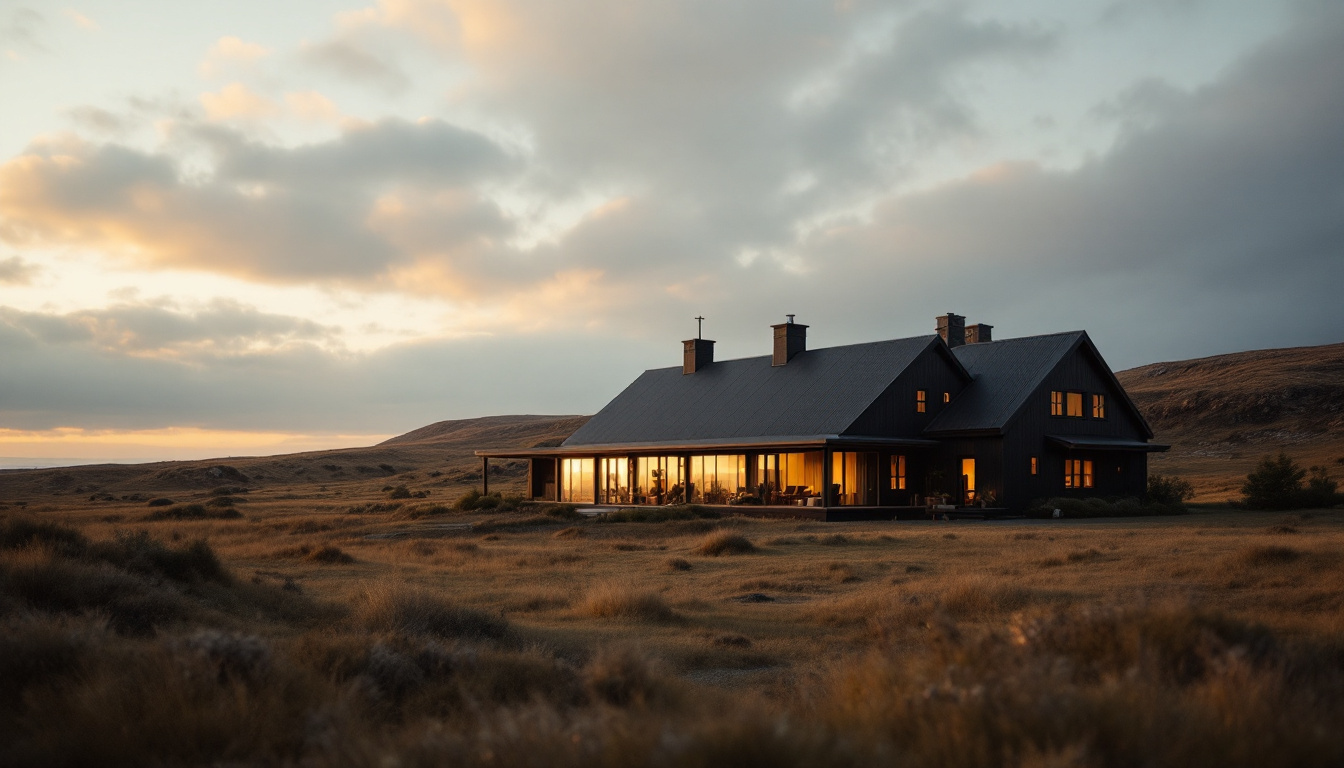
The lodge sits in the bottom of the Fljót valley, on the south-facing side of a glacially-carved trough that runs east-to-west between two coastal ranges. The valley is approximately 5 km wide at the lodge’s location and is bordered to the north by the Tröllaskagi range (the Troll Peninsula’s namesake spine) and to the south by a smaller coastal ridge. The setting is the property’s most-distinctive single asset: in winter, with snow covering the valley floor and the surrounding ranges, the lodge sits in a pristine sub-arctic basin with no visible neighbours, no road traffic, and no light pollution. The aurora visibility is among the strongest in Iceland.
The lodge itself is a single low-slung building running roughly 90 metres east-west, with the original 19th-century sheep-farm structure preserved at the south-eastern end (now used as the property’s heliski-base ready-room) and the new 2014-2016 lodge building extending west from the original. The architecture is the HBA brief: a contemporary timber-and-stone lodge in the modern-Icelandic register, with turf-grass roof sections that nod to the regional vernacular, vast picture windows running the south wall, and a single low-pitched roofline that does not compete with the surrounding mountains.
Setting score: 4.8. The Fljót valley, the Tröllaskagi coastal range, the absence of visible infrastructure, and the aurora visibility are the assets. The single highest setting score in the Icelandic luxury-lodge inventory. The deduction is the corresponding remoteness — the helicopter access is the practical reality and is unavoidable, but it does introduce weather risk that other luxury-lodge arrivals do not.
The suite
I took a King Suite — the standard accommodation category, of which Deplar Farm has ten, each at approximately 55 square metres with a private hot tub on a small north-facing deck, a king bed, a single large picture window, and an open-volume bathroom. The suite category is the property’s standard for couples and individual adventurers.
Material specifics, from my notes:
- The HBA brief for the rooms was to run a contemporary-Icelandic register with the materials drawn locally: hand-hewn Icelandic timber on the wall panelling, hand-laid local basalt on the bathroom surfaces, hand-woven Icelandic-wool throws on the bed, and a single hand-thrown Icelandic ceramic vase on each writing desk. The colour register is muted — pale grey walls, off-white linens, hand-dyed indigo accent textiles, and the natural timber and basalt as the primary visual anchors.
- The floor is wide-plank Icelandic-pine with a hand-loomed Icelandic-wool rug under the bed.
- The bed is a custom Eleven-spec mattress on a hand-built timber frame, dressed in Frette linens (the Eleven-portfolio standard linen supplier), with a three-pillow menu offered at turndown.
- The bathroom is an open volume in basalt and timber, with a freestanding stone soaking tub, a separate walk-in shower, and a separate WC. Amenities are the Eleven-branded line (a small Colorado-based atelier the property has used since opening).
- The minibar is fully inclusive and runs a small selection of Icelandic spirits (Reyka vodka, a Brennivín caraway aquavit, an Eimverk Flóki single-malt), small Eleven-house cocktail pre-batches, and Icelandic still and sparkling water.
- The private hot tub is the suite’s headline feature: a small 4-person redwood hot tub on the north-facing deck, with the water heated to 38°C and the deck open to the valley view (and, on clear nights, the aurora).
- The technology is restrained. A small Bose speaker, a Loewe television, an analogue alarm clock, no iPad. The choice is correct for the lodge context.
The King Suite is the standard accommodation. The Queen Suites (two in the property) run a slightly smaller footprint (approximately 45 sqm) with a queen bed; the bunk room (a single dedicated 4-bed room used for children or friend-groups) runs approximately 40 sqm with two bunks; the lodge does not run a flagship-suite category — the standard King Suite is the highest tier.
Suites score: 4.4. The King Suite at 55 sqm is well-finished and well-detailed, but it is at the smaller end of the all-inclusive adventure-lodge category at the property’s USD 3,800 per-person-per-night rate. The deduction is the suite size — the property invests heavily in the public-area programme (the geothermal pool, the heliski operation, the public bar) but the in-suite footprint is meaningfully smaller than the Singita Ebony 145 sqm suite at a similar fully-inclusive rate. Sub-4.5 score justified by the gap between suite size and rate.
The service
Service at Eleven Deplar Farm runs the Eleven Experience house standard, which is the most-personal of any all-inclusive adventure-lodge standard I have encountered. The lodge runs approximately 60 staff at full occupancy (32 guests), a 2:1 staff-to-guest ratio that is on the high end for the category.
The pre-arrival contact was from Sarah Hennessy (Eleven Reservations, working out of the brand’s Crested Butte, Colorado office), who confirmed the suite category, the five-night stay, the heliski programme priorities, dietary requirements, and a small set of pre-arrival questions about ski equipment (the property carries a full rental fleet of Black Crows powder skis, Marker bindings, Hestra gloves, and Arc’teryx outerwear — every piece available in-house, included in the rate). On arrival the heliski team (the head guide, Bjarki Jónsson, in his sixth heliski season at the property; my dedicated guide for the four-day heliski programme, Hilmar Þórðarson, in his fourth) was assigned for the duration.
The follow-through during the stay was at the upper end of any property in this review. The heliski programme delivered four full ski days (the fifth day was a weather day, which the team converted to a fjord-fishing-and-hot-springs programme that I would not have asked for but that turned out to be the highlight of the stay). The in-lodge service was warm, attentive, and operationally smooth. The kitchen team (the executive chef, Hörður Halldórsson, in his fourth year at the property) ran a careful Icelandic-fusion menu programme that I would describe as competent without being a destination.
The frictions during the stay were small but worth noting. The second evening’s after-ski meal (the heliski programme runs a long full-ski day and the property’s late après-ski meal is the day’s highlight) was delivered to the lodge dining room 25 minutes late from the stated 8 p.m. service time, with the kitchen running long on prep. The third morning’s heliski briefing was extended by 12 minutes by a weather-radar issue that was operationally understandable but that nonetheless ate into the ski window. The fourth afternoon’s in-room hot-tub water was 3°C cooler than the requested temperature; the maintenance team adjusted within 18 minutes.
Service score: 4.7. The heliski team is the operating asset; the in-lodge service is the second; the weather-day pivot is the strongest single service moment of the stay. The deduction is the late-after-ski meal and the small hot-tub-temperature issue.
The table
Eleven Deplar Farm runs a single integrated kitchen with three meal services daily: breakfast (typically 6:30-8:30 a.m. on heliski days, 8-10 a.m. on weather days), a packed-lunch programme on heliski days (the kitchen prepares hot soup, sandwiches, and Icelandic skyr in insulated bags for the heliski group), and a single-sitting dinner (typically 7:30-9:30 p.m.) in the main lodge dining room. The lodge does not run separate dining outlets — the single dining room and the small bar handle all in-lodge service.
The dinner programme is a fixed three-course menu with a starter, a main, and a dessert, with a wine pairing on request. The kitchen team is run by chef Hörður Halldórsson (in his fourth year at the property), with a focus on Icelandic-source produce: the wild-caught char and salmon from the Fljót river, the lamb from the property’s neighbouring farms, the dairy from a small Akureyri-area cooperative, and the vegetables from a hothouse operation 30 km away. The cooking is competent and well-sourced; it is not at the level of the urban Michelin-starred kitchens elsewhere in this review.
Dinner on the first evening ran a small starter of cured Fljót-river char with horseradish cream, a main of Icelandic lamb shoulder with a small turnip-and-juniper jus, and a closing dessert of skyr cream with rhubarb-and-birch syrup. The wine pairing was a careful Burgundy-focus (a 2020 Lafarge Bourgogne Rouge with the lamb) at an additional USD 65 per person, an unusually-reasonable rate for the property’s price band.
Dinner on the second evening was the property’s set-piece — a 7-course tasting menu run as the mid-stay event, with the kitchen pulling out the stops. The standout courses were the small smoked-arctic-char canapé with a sea-buckthorn reduction, the centre-piece glaceé lamb with a fennel-pollen jus, and the closing brúnostur (Icelandic brown cheese) with honey and toasted oats.
The bar programme is a small careful aquavit-and-cocktail list under the in-house bartender (Vilhjálmur Sigurjónsson, in his fifth year at the property), with the signature service the property’s house Bloody Mary (made with a small dash of arctic-thyme bitters and a smoked-paprika rim).
Table score: 4.4. The kitchen is competent and well-sourced, the wine programme is careful, and the bar programme is small but well-run. The deduction is the absence of a destination-dining ambition — the lodge runs a single integrated kitchen rather than the multi-outlet structure of an urban grand hotel, and the cooking, while strong for the lodge context, does not reach the level of the table programmes at Cheval Blanc Paris, the Connaught, or Singita Ebony. Sub-4.5 score justified by the single-outlet limitation and the lodge cooking’s ceiling against the property’s price point.
The detail
The detail dimension at Eleven Deplar Farm runs the Eleven Experience house standard, which is the most-adventure-focused of any all-inclusive standard I know. The detail strengths are in the equipment programme, the geothermal pool, and the in-room small-detail programme.
The smaller details, in my notes:
- The in-suite writing pad is a custom Eleven-branded notebook with a hand-stitched Icelandic-wool cover; the in-suite pen is an Eleven-branded fountain pen; the in-suite slippers are Eleven-branded sheepskin-lined leather. The in-suite turndown gift on the first evening was a small Eleven-branded leather card-case; on the second a small jar of Icelandic sea-salt from the kitchen; on the third a single hand-poured Icelandic candle. The daily turndown gift is the operating tell.
- The full equipment programme — included in the rate — runs Black Crows powder skis with Marker bindings, K2 boots, Hestra gloves, Arc’teryx outerwear, and a full base-layer programme from Icebreaker. The fit-out is at the same quality as a heliski-operation-only programme rather than the lower-tier equipment many adventure lodges run.
- The geothermal indoor-outdoor pool is the property’s headline non-heliski detail. The pool runs 22°C indoors and 38°C in the outdoor section, with the geothermal water sourced from a property borehole. The pool is open from 6 a.m. to 11 p.m. daily and is the property’s primary après-ski recovery facility.
- The in-house transport on the ground is a small fleet of three Toyota Land Cruisers and two Mercedes Sprinter vans; the helicopter fleet is two Airbus AS350 B3s with three full-time pilots.
- The bath products are the Eleven-branded line; the bathroom hair dryer is a Dyson Supersonic; the bedside USB chargers run both USB-A and USB-C.
- The lodge runs a small library with a careful selection of Icelandic literature (Halldór Laxness, Sjón, Auður Ava Ólafsdóttir), a complete set of Icelandic-volcano and Icelandic-glaciology field guides, and a small selection of heliski and ski-mountaineering reference works.
Against these strengths, the smaller failures. The in-suite minibar’s complimentary spec is offset by the limited selection (the in-house cocktail-non-alcoholic substitute is a single botanical-tonic). The in-suite safe is a generic Yale.
Detail score: 4.5. The equipment programme, the geothermal pool, the daily turndown-gift programme, and the in-suite library are the assets; the Yale safe and the limited non-alcoholic minibar are the deduction.
The Standard
The five-dimension breakdown, with the published Standard rubric:
- Setting: 4.8. The Fljót valley, the Tröllaskagi range, the aurora, the absence of visible infrastructure. The strongest Icelandic luxury-lodge setting.
- Suites: 4.4. The King Suite at 55 sqm is well-finished but smaller than expected at the property’s rate. Sub-4.5 score justified by the gap between suite size and rate.
- Service: 4.7. The heliski team’s operational continuity, the weather-day pivot, the in-lodge attentiveness.
- Table: 4.4. The single integrated kitchen runs a competent Icelandic-fusion programme without the destination-dining ambition of the urban properties in this review. Sub-4.5 score justified by the single-outlet limitation.
- Detail: 4.5. The equipment programme, the geothermal pool, the daily turndown gift; the Yale safe deducts.
Property score: 4.56. Rounded one decimal: 4.6.
Verdict: within-reach. Eleven Deplar Farm is the property I would book if the priority is the heliski operation, the Icelandic remoteness, and the all-inclusive adventure-lodge brief. The Borealis Lodge in the Westfjords is the more-low-key Icelandic competitor; the Niehku Mountain Villa in Swedish Lapland is the more-Scandinavian-alternative; the Bighorn Revelstoke Lodge in British Columbia is the more-Canadian heliski option. Deplar is the one that runs the deepest combination of luxury-lodge brief (the indoor-outdoor pool, the in-house equipment, the daily turndown-gift programme) and serious-adventure-operation (the in-house helicopter fleet, the in-house guide team, the careful weather-day programme). The 4.56 property score is at the lower end of At the Standard and one tenth shy of the 4.6 threshold — which is why I have called it Within Reach. A larger King Suite footprint and a slightly more-ambitious dinner programme would move the score across the threshold.
Verdict and reservations
Eleven Deplar Farm, Fljót valley, Troll Peninsula, Iceland. Reservations through Eleven Experience reservations at the brand’s Crested Butte, Colorado office, through a Virtuoso travel agent, or through the property directly via Eleven’s website. March (peak heliski season) King Suites from USD 3,800 per person per night, fully inclusive (meals, wines, heliski programme with guide and helicopter time, all equipment rental, transfers). Queen Suites from USD 3,400 per person per night. Bunk room from USD 1,800 per person per night (typically for children). The full lodge buyout (32 guests, 13 rooms) from USD 95,000 per night.
The right stay is five nights minimum (the operational reference for a heliski programme; three nights is too short to ride out a weather day, seven nights is the upper end before fatigue). The right room is a King Suite on the western end of the lodge, where the picture windows take the strongest valley view. The right meal is the second-evening tasting menu with the Burgundy wine pairing. The right add-on is the fjord-fishing-and-hot-springs weather-day programme (run when heliski is grounded). The wrong move is to book without buying out the lodge — at full occupancy with 32 guests the property runs slightly busier than the brand’s house standard suggests, and the social mix of an unbought-out lodge can dilute the heliski programme’s focus.
Standing Questions
- Was Deplar Farm really a working sheep farm?
- Yes. The original Deplar Farm operated as a sheep farm in the Fljót valley from approximately 1830 until 2007, when the property was acquired by Eleven Experience, the Colorado-based adventure-lodge operator founded by Chad Pike. Eleven rebuilt the property between 2014 and 2016, preserving the original turf-roofed farm structure on the south side of the lodge.
- Is the lodge open year-round?
- Yes, with seasonal programming. The winter season (December through April) is heliski-driven and is the property's headline season; the summer season (May through October) runs fishing, kayaking, and helicopter sightseeing programmes. The shoulder seasons (early May and late October) are the lowest-occupancy periods.
- Is the heliski operation run in-house?
- Yes. Eleven Experience operates a fleet of two Airbus AS350 B3 helicopters from the Deplar Farm helipad, with three pilots and four guides on staff during the heliski season. The terrain runs across the Troll Peninsula's coastal ranges, with descents typically running 800-1,400 vertical metres.
- How many guests does the lodge accommodate at full occupancy?
- Thirty-two. The 13 rooms split into 10 King Suites, 2 Queen Suites, and a single 4-bed bunk room (used for child accompanying adults or for adult friend-groups). The maximum lodge capacity is 32 guests at full occupancy.
- Is the in-room geothermal water at the property?
- No, the in-room hot tubs are not geothermal — the indoor-outdoor pool is. The pool runs geothermal water sourced from a borehole on the property; the in-room hot tubs (in the King Suite category and above) run heated potable water. The geothermal indoor-outdoor pool is the property's headline non-heliski detail.